
Review · MAINZ TOURS
Exclusive Wine & Food Tasting in Historic Cellar | Mainz Old Town
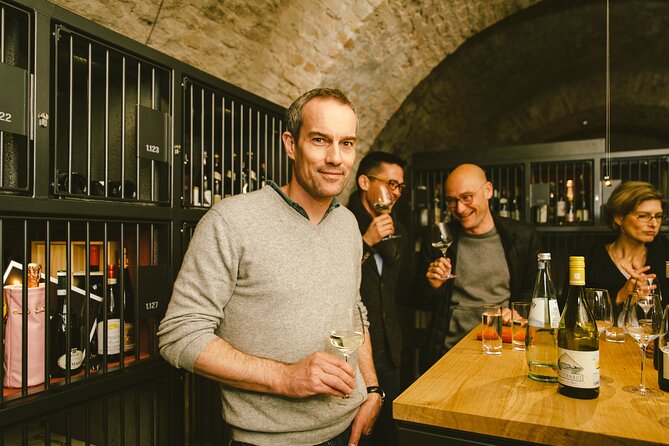
Mainz’s most memorable wine experience happens below street level, in a historic cellar cut into the hillside. Over about two hours, Jérôme guides you through six German wines, matching each with small local bites that explain how Mainz eats and drinks.
I like two things right away: the small group of no more than 12 makes room for questions, and the tasting moves beyond simple sipping. You learn how German labels work, why Riesling matters here, and how food changes the taste of a wine. The main drawback is practical: the cellar can be chilly, and its underground setting is not a good fit for people with mobility issues.
Key points to know before booking
- Six wines, not just one local specialty: Taste Sekt, Riesling, Grauburgunder, Spätburgunder, and a red blend.
- Food is part of the lesson: Sausage, cheese, Spundekäs, and other small plates show how wine fits Mainz food traditions.
- Jérôme leads the evening: He speaks excellent English and explains wine history, production, labels, and buying tips in an easygoing way.
- The cellar sets the mood: The venue is atmospheric and unusual, though you should bring a jacket.
- It starts at 5:30 pm: The timing makes this a useful first stop before dinner or an evening walk through Mainz.
- The price is $102.12 per person: That is a serious tasting price, but it includes five to six wines, food pairings, water, and all fees.
Why the cellar changes the Mainz wine experience
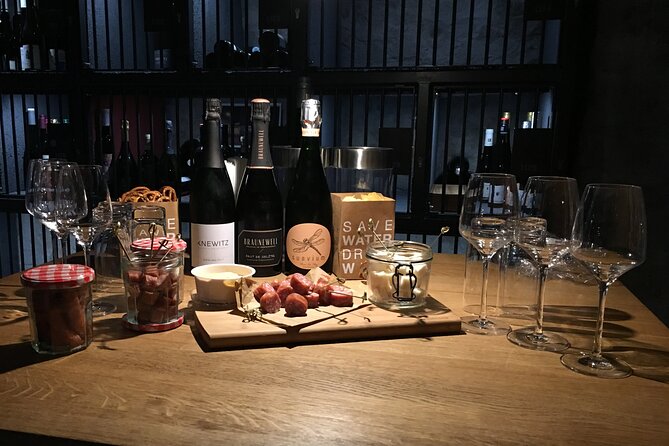
Mainz is closely tied to the vineyards along the Rhine and nearby German wine regions. A tasting in a cellar gives you a better sense of that connection than a quick glass at a restaurant. You are not simply ordering a familiar white wine. You are being shown how grapes, place, food, and local custom fit together.
The setting is one of the strongest parts of the evening. You meet at Kupferbergterrasse 23 in Mainz Old Town, then spend the tasting in a cellar below the city. The space has the cool, enclosed feel you want from an old wine venue. It is atmospheric rather than polished in a modern restaurant sense, so set your expectations accordingly.
One useful detail is the temperature. At least one tasting group found the cellar chilly, and a jacket is sensible even if the evening outside is mild. The same underground character that gives the room its appeal can make it less comfortable for anyone sensitive to cold.
The cellar also has mobility limits. The experience is not recommended for people with mobility issues, so check the access details before paying. The meeting point is near public transportation, and the activity finishes where it begins.
More old town walks in Germany:
- Dresden: Semperoper and Old Town Tour
★ 4.8 · 5,735 reviews - Nuremberg: Old Town Guided Walking Tour
★ 4.6 · 2,416 reviews - Munich: Old Town & Viktualienmarkt City Walk in German
★ 4.7 · 2,304 reviews
A 5:30 pm start that works before dinner
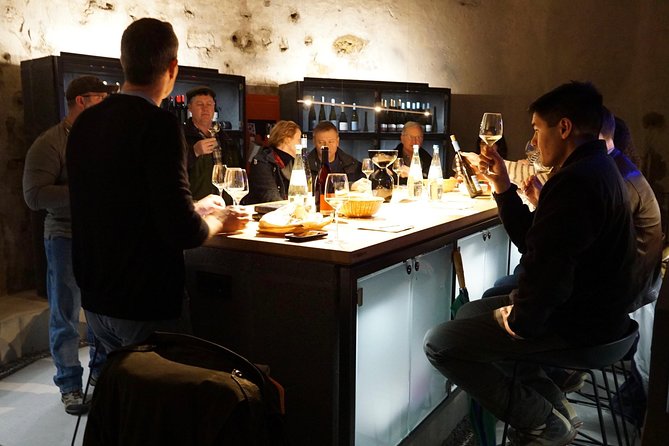
The tasting begins at 5:30 pm and lasts about two hours. That makes it a natural opening to a Mainz evening. You can taste, learn, and leave with enough time for a later meal, though the snacks are substantial enough that you may not want to plan an especially early dinner.
The event is limited to 12 people. That number matters. Wine tastings become much less useful when the guide has to repeat every answer for a large room. Here, you have a better chance to ask about a label, a grape, or a wine you normally avoid.
Jérôme is central to the experience. He explains German wine in English and keeps the tone relaxed rather than formal. His style includes practical points, such as how to spot a reputable producer, what information on a label means, and where a sensible price range may begin when shopping for wine.
That last point adds real value. Many tastings give you a pleasant evening, then leave you unsure what to buy later. Learning how to read German wine labels and judge everyday bottles can help long after you leave Mainz.
Opening with Sekt and a lesson in German sparkling wine
The evening starts with Classic Sekt, Germany’s traditional sparkling wine. The exact bottle and food match may change, but this first pour introduces an important connection between German sparkling wine and French Champagne.
Sekt is often treated as a party drink rather than a serious wine. This tasting gives it more attention. You can learn how German producers approach sparkling wine and why some bottles deserve more respect than their low-cost reputation suggests.
The surprise pairing is useful because it asks you to notice how the first bite affects the wine. That is a recurring idea throughout the evening. The food is not placed on the side as decoration. It is used to show how texture, salt, fat, and seasoning can change what you taste in the glass.
If you rarely drink sparkling wine, this is a gentle beginning. You get a celebratory first glass without spending the entire evening on one style.
Dry Riesling with sausage, the Mainz way
The next pairing brings together dry Riesling and sausage. It reflects Mainz’s local food phrase, Weck, Woscht & Woi, which refers to bread, sausage, and wine.
This is a particularly good introduction to German Riesling because it moves away from the assumption that all Riesling is sweet. The dry version has enough freshness to work with sausage, while the savory food gives the wine a fuller role at the table.
If you think you dislike Riesling, pay attention here. One useful tasting technique taught during the event is to take three sips before deciding what you think. The first taste can seem sharp or unfamiliar. By the third, the wine may feel more balanced and easier to understand.
The sausage pairing also keeps the tasting rooted in Mainz rather than turning into a generic European wine class. You are learning through food that people in the region actually associate with casual eating and local identity.
More Germany wineries worth an afternoon:
- Trier: Guided City Walk with Wine Tasting
★ 4.8 · 979 reviews - Hamburg: Harbor Cruise with Wine and Cheese
★ 4.7 · 795 reviews - Trier: Discovery Tour – Germany’s Oldest Wine Cellar
★ 4.7 · 218 reviews - Freiburg: Veni, vidi, vino – wine hike and tasting
★ 4.5 · 144 reviews
Grauburgunder and cheese show the value of pairing
Grauburgunder, the German name for Pinot Grigio, is paired with cheese from northern and southern parts of Germany. This is a good chance to compare a grape that many people know from inexpensive restaurant pours with a more serious regional expression.
The point is not simply that one bottle is better than another. It is that the same grape can taste different depending on how it is grown, made, and served. Cheese adds salt and creaminess, which can make a white wine feel rounder and more generous.
This course should appeal to you if you usually reach for familiar international labels. Jérôme encourages the group to try wines they might not choose alone, and the format makes that low-risk. You receive a small pour, hear the reason for the match, then decide what you notice.
The food portions are described as small plates and snacks, not a full meal. They are enough to keep the tasting comfortable and make each wine more memorable, but you should still plan on dinner if you expect a substantial evening meal.
Spätburgunder brings a red wine pause
Spätburgunder is Germany’s name for Pinot Noir. Here it is served with dry-cured sausage, another practical pairing that places a regional red beside salty, savory food.
German wine discussions often focus heavily on white varieties, especially Riesling. Including Spätburgunder gives the tasting better range. You see that German wine culture is not limited to crisp whites, and you get a sense of how the country’s red wines can work at the table.
The dry-cured sausage is a strong match for a red with savory character. It also gives the tasting a change of pace after the sparkling wine and whites. That progression helps the evening feel like a guided meal rather than six unrelated samples.
Specific wines depend on the season and what is available. You should not book this expecting a fixed producer list. The broad styles and pairings are the dependable part, while individual bottles may change.
Red blend and Spundekäs bring Mainz to the table
The red blend is paired with Spundekäs, a local favorite made with a soft cheese mixture and traditionally served as a snack. It is one of the most distinctly Mainz-focused moments of the tasting.
This pairing shows why local food matters in a wine lesson. Spundekäs has a different weight and texture from hard cheese, sausage, or cured meat. A red blend with French roots gives you another comparison point and shows how regional eating can include outside influences.
You will likely get more from this course if you stay curious rather than trying to identify every grape. The aim is to understand balance. Does the wine cut through the food? Does the cheese make the wine seem softer? Does the red become more inviting with a salty bite?
Those are simple questions, but they teach you how to make better choices at home and in restaurants.
Riesling and dessert close the evening
The final pairing returns to Riesling, this time with a surprise dessert match. The goal is to challenge the idea that sweet Riesling is difficult to pair.
This ending is well chosen. It revisits the grape that shaped much of the evening, but in a different form. You can compare the dry Riesling served with sausage to the sweeter version served with dessert and see how acidity keeps the wine from feeling heavy.
The exact dessert pairing can vary, just like the other wines and snacks. That uncertainty is worth accepting because it allows the host to work with seasonal ingredients and current bottles. If you prefer a fixed menu, this may feel less predictable. If you like tasting what is best available at the time, it is a plus.
Jérôme’s teaching style and English-language access
Jérôme’s role is more than pouring wine. He explains the history of wine in Mainz, the region’s geography, how wine is produced, and what German labels tell you. He also leaves space for questions, which is important if German wine terms usually leave you puzzled.
His English is described as excellent, so English-speaking visitors should not worry about missing the main points. The atmosphere is informal and often funny, which helps when the subject becomes technical.
I especially like the practical side of his explanations. You can leave knowing more than the difference between Riesling and Pinot Noir. You may also understand how to choose an entry-level bottle, how to identify a reputable producer, and which price range makes sense for a particular style.
The small group helps here. With a maximum of 12 people, the conversation can adapt to the group’s interests. You may get more detail on German wine laws, food pairing, or shopping advice, depending on the questions people ask.
Is $102.12 a fair price?
At $102.12 per person, this is not a casual budget wine stop. The value depends on what you want from the evening.
You receive five to six wines, local snacks matched to each pour, water, the guide’s instruction, the cellar setting, and all fees and taxes. A standard restaurant tasting might offer similar wine volume, but it would not necessarily include the same focused explanation of Mainz wine culture or label-reading advice.
The price makes the most sense if you are new to German wine, enjoy food pairing, or want an organized evening that combines education with a social setting. It is less compelling if you only want a single glass of local Riesling or already know exactly which German producers you prefer.
There is also no pressure to buy wine at the end. That matters. You can ask what to look for in a shop without feeling that the tasting is mainly a sales pitch.
The booking pattern is another useful clue for planning. This experience averages 43 days booked in advance, so it is wise to reserve early, particularly if your Mainz visit falls on a busy date. Confirmation arrives at booking, and free cancellation is available up to 24 hours before the 5:30 pm start. Changes or cancellations inside that window are not refunded.
Who will enjoy this tasting most?
I would choose this experience for you if you want a focused introduction to German wine without committing to a full vineyard tour. It suits couples, friends, solo visitors, and food lovers who enjoy asking questions.
It is also a good option on a first night in Mainz. The 5:30 pm start gives you a pleasant orientation to local food and drink, and the cellar creates a sense of place that a standard bar tasting may lack.
You should think twice if you dislike enclosed spaces, get cold easily, or have mobility issues. The event is not presented as a full dinner, so hungry diners should plan another meal afterward.
It is also not the best choice if you require a guaranteed list of producers or exact bottles. The selection can change with the season and availability.
Should you book the Mainz cellar tasting?
Yes, if you want more than a quick wine sample. The combination of Jérôme’s clear English explanations, six changing local wines, Mainz snacks, and an underground cellar gives you a useful introduction to the region in a compact evening.
Book it especially if Riesling seems too sweet, German labels seem confusing, or you normally choose only familiar international grapes. The tasting is designed to broaden your choices without making wine feel like homework.
Bring a jacket, arrive ready to taste small portions rather than eat a full meal, and reserve ahead if your dates are fixed. At $102.12, it is a splurge, but the food, instruction, setting, and practical buying advice make it a reasonable one for a serious first look at Mainz wine.
FAQ
Where does the wine tasting begin?
The meeting point is Kupferbergterrasse 23, 55116 Mainz, Germany. The activity ends back at the meeting point.
What time does the experience start?
The tasting starts at 5:30 pm and lasts approximately two hours.
How many wines will be served?
You will taste five to six wines. The standard progression includes sparkling Sekt, dry Riesling, Grauburgunder, Spätburgunder, a red blend, and a final Riesling pairing. Specific wines can change with the season and availability.
What food is included?
The wines are matched with local snacks, including sausage, cheese, dry-cured sausage, Spundekäs, and surprise pairings for the opening Sekt and final Riesling.
Is the experience offered in English?
Yes. The activity is offered in English, and Jérôme leads the tasting.
Can I cancel for a refund?
Yes. You can cancel at least 24 hours before the experience start time for a full refund. Cancellations or changes made less than 24 hours before the start are not refunded.
More Historical Tours in Germany
- Leipzig: City History Canal Sightseeing Tour on a Motorboat
★ 4.7 · 6,232 reviews - Berlin: Natural History Museum Entrance Ticket
★ 4.6 · 3,382 reviews - Leipzig: 1.5-Hour Historical Walking Tour in German
★ 4.7 · 2,217 reviews - Berlin: World Heritage Cruise to Potsdam
★ 4.5 · 1,435 reviews
More Food Tours in Germany
- Cologne: Brewery Tour with 3 Kölsch Beer Tastings
★ 4.7 · 3,108 reviews - Hamburg: St. Pauli Highlights Guided Tour with Beer for 18+
★ 4.7 · 2,353 reviews - Hamburg: Elbphilharmonie Plaza and HafenCity Food Tour
★ 4.7 · 1,711 reviews - Bavarian Beer and Food Evening Tour in Munich
★ 4.5 · 1,575 reviews
Just added around Germany
- From Berlin: Gardens & Palaces of Potsdam Bike Tour★ 5.0 · 61 reviews
- Berlin: Battle for Seelow Heights WW2 tour -Clash of Titans★ 5.0 · 27 reviews
- From Amsterdam: Cologne Private Sightseeing Tour★ 5.0 · 4 reviews
- From Berlin: Historical Gems of Potsdam Private Day Trip★ 4.4 · 4 reviews
- Freiburg: Veni, vidi, vino – wine hike and tasting★ 4.5 · 144 reviews
- From Alken: Return Day Trip by Boat to Cochem★ 4.6 · 141 reviews
- Fritz Haarmann – Die Mördertour★ 4.6 · 41 reviews
- Friedrichshafen: Zeppelin Museum Entry Ticket★ 4.1 · 83 reviews
Mainz Tours, compared.


Guided tour in Mainz on the Rhine in german and english
Read our review →
Small Group Rheingau Vineyards Tour with Castles and Abbeys
Read our review →Browse the lists this tour appears in