
Review · BERLIN TOURS
Dark Berlin Criminal Tour
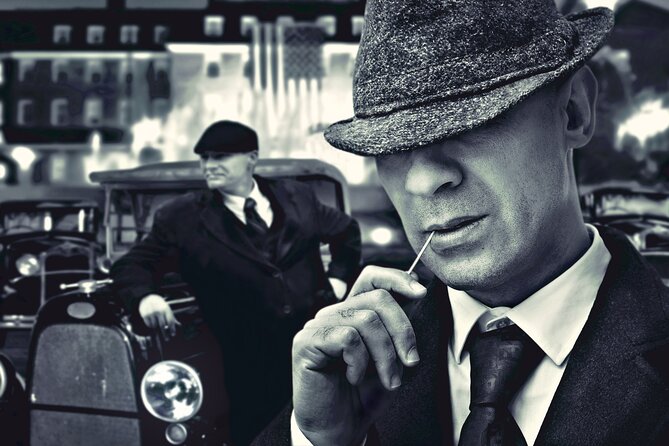
Berlin’s grand center tells one story. This walking tour tells the other one: murder, gang crime, betrayal, greed, and scandal on the streets around Alexanderplatz. You’ll visit the Volksbühne, Scheunenviertel, Alexa, Littenstraße, and Rotes Rathaus while your certified guide links each stop to a crime or curious episode.
I like two things right away. The route uses original locations, so the city itself becomes part of the evidence. I also like the mix of grim cases and odd, comic details. The tone is not simply dark from start to finish, and the local focus can reveal things even longtime Berlin residents have never heard.
The main drawback is the fixed, non-refundable booking policy. The tour also needs decent weather and a minimum number of people to run, so you should avoid booking it if your plans are too tight or your Berlin visit depends on one specific afternoon.
Key points about Berlin’s criminal past
- A two-hour route through old Berlin: Begin at Rosa-Luxemburg-Platz and finish at Rotes Rathaus.
- Six stops with real local links: The route covers the Volksbühne, Scheunenviertel, Alexanderplatz, Alexa, Littenstraße, and the Red City Hall.
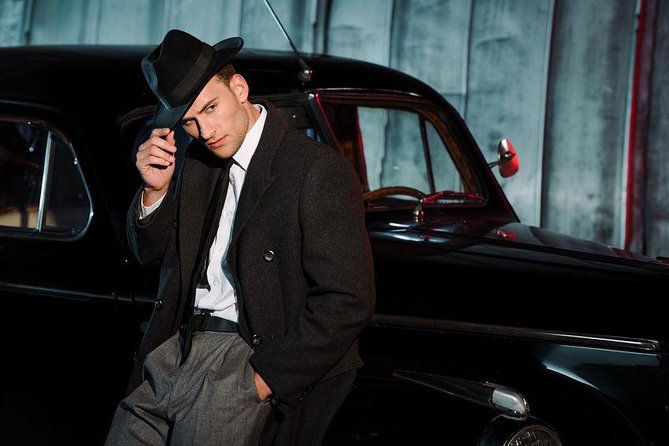
- Crime beyond the usual tourist story: Expect gang activity, protection rackets, prostitution, stolen goods, political violence, legal drama, and banking fraud.
- A guide-led history walk: A certified guide explains the cases, their background, and the people connected to each location.
- A small maximum group: The tour accepts up to 25 people, a useful limit for a city walk with frequent storytelling.
- Low-cost access to unusual Berlin history: At $18.52 per person, the price is modest for a two-hour guided walk, though the strict cancellation terms matter.
Why this tour takes a different route through Berlin
Most first visits to Berlin focus on imperial buildings, the Berlin Wall, museums, and the crimes of the 20th century. This walk takes a narrower path through urban crime from the late 19th century to today.
That focus gives the tour a clear shape. You are not simply hearing random tales while walking between famous sights. Each stop has a connection to crime, policing, law, organized gangs, or public scandal. The result should suit you if you prefer history told through people and incidents rather than dates and monuments.
The route also covers familiar parts of central Berlin. Alexanderplatz is not an obscure corner, and Rotes Rathaus is easy to find. Yet the stories attached to these places can be surprising, especially when you learn what occupied a site before a modern shopping center or how a square became known by its current name.
The mood is serious at times, but the tour is not presented as a grim catalogue of corpses. The description promises bizarre and comic episodes alongside violence and betrayal. That balance matters. Two hours of unrelenting crime can become tiring, while a mix of tragedy, absurdity, and social history keeps the walk easier to follow.
A few more Berlin half-days to weigh up
- Berlin: Reichstag, Dome and Government District Guided Tour
★ 4.7 · 18,288 reviews - Berlin: 1-Hour City Tour by Boat with Guaranteed Seating
★ 4.3 · 16,993 reviews - Berlin: Boat Tour Along the River Spree
★ 4.4 · 11,252 reviews
Meeting at Rosa-Luxemburg-Platz at 2 pm
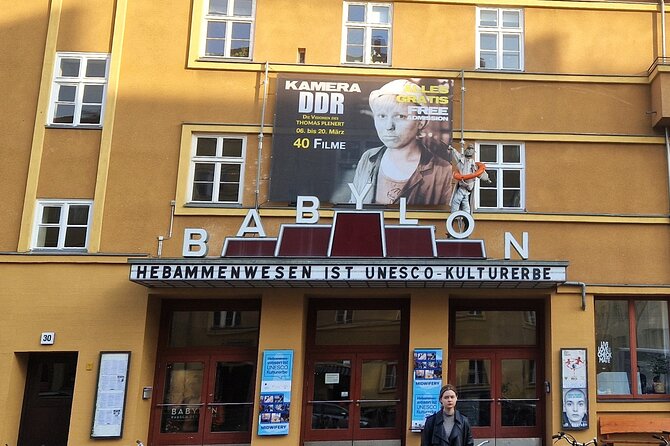
The tour begins at Rosa-Luxemburg-Platz 1, beside the U-Bahn access, at 2:00 pm. The underground connection makes the starting point practical, particularly if you are coming from another part of central Berlin.
Arrive early enough to locate the correct entrance and settle in before the guide begins. A mobile ticket is provided, so keep your booking confirmation available on your phone. The walk ends at Rotes Rathaus, where there is also direct underground access. That start and finish make it simple to connect the tour with the rest of your day.
The group can include up to 25 people. That is not a private walk, but it is still a manageable size for a guide moving through city streets. You should expect to listen while standing at several stops, then walk on to the next location. Comfortable shoes are sensible, though no special equipment is listed.
The route lasts about two hours. The stop descriptions are short, often about five or ten minutes, but the walking between them fills out the rest of the time. That format suits you if you like several compact stories rather than one long lecture in a single place.
The Volksbühne and a 1931 police shooting
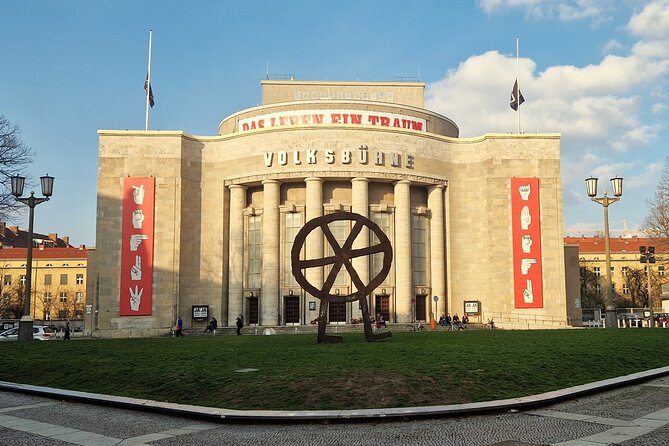
The first stop is the Volksbühne Berlin. Here the guide tells the story of a gruesome crime that took place on August 9, 1931, when two police officers were shot by men connected to the later East German state security minister.
That detail gives the opening story political weight as well as criminal drama. You are not just hearing that a shooting happened. You are asked to consider the background that led to it, the people involved, and the later importance of one of those figures.
The stop lasts about five minutes, so expect a concise introduction rather than a long examination of the case. The value comes from standing at the location and then carrying the story into the next part of the route. If you want a full account of 1930s German politics, this tour will not provide it. If you want a sharp story that connects street crime with later political power, it is an effective start.
Scheunenviertel, workers, pimps, and street life
The walk then reaches Scheunenviertel, with about ten minutes devoted to the district as it appeared in the 1920s. The picture is crowded and sharply drawn: factory workers returning from shifts, office workers in worn clothing, people stopping for a beer, prostitutes, crooks, and pimps.
This is one of the more useful stops because it places crime inside everyday city life. Protection rackets, prostitution, and receiving stolen goods did not operate in isolation. They were tied to crowded neighborhoods, changing work patterns, poverty, nightlife, and the people who controlled particular streets or businesses.
The tour also uses this part of the route to explain how organized crime gained ground in Berlin. The central question is not only who committed crimes, but how a criminal economy worked. Protection money and stolen goods point to a system with regular income, relationships, and influence.
Scheunenviertel may appeal most to you if you want social history with your crime stories. The limitation is that the stop covers a broad atmosphere in a short time. You will get a strong sense of the district and its cast of characters, but not a detailed architectural tour or a complete account of every group that lived there.
Same city, a completely different sort of afternoon:
- Discover Berlin Half-Day Walking Tour
★ 5.0 · 9,624 reviews - Berlin: Hop-on Hop-off Bus Tour with Live Commentary
★ 4.3 · 8,579 reviews - Berlin: Government District around the Reichstag Guided Tour
★ 4.7 · 8,447 reviews - Berlin: Reichstag, Plenary Chamber, Cupola & Government Tour
★ 4.6 · 8,422 reviews
Alexanderplatz and a gang that frightened Berlin
At Alexanderplatz, known affectionately as Alex by Berliners, the guide turns to the square’s name and to a gang of young people that terrified the city during the war years.
This stop combines a familiar public place with a less familiar story. You may already know Alexanderplatz as a transport hub and meeting point. The tour asks you to picture it through the experience of people dealing with fear, violence, and public disorder.
The story of the young gang is likely to be one of the walk’s stronger narrative moments. A group that could frighten an entire city raises practical questions: How did it operate? Why did it gain such power? How did the police and public respond? The tour’s short format means the guide must keep the account moving, but the setting gives the story immediate force.
The square is busy and open, so listening may require attention. You are standing in a public urban space, not a quiet museum room. That is part of the appeal, but it also means street noise and crowds can compete with the guide.
Alexa and the building that once drew world attention
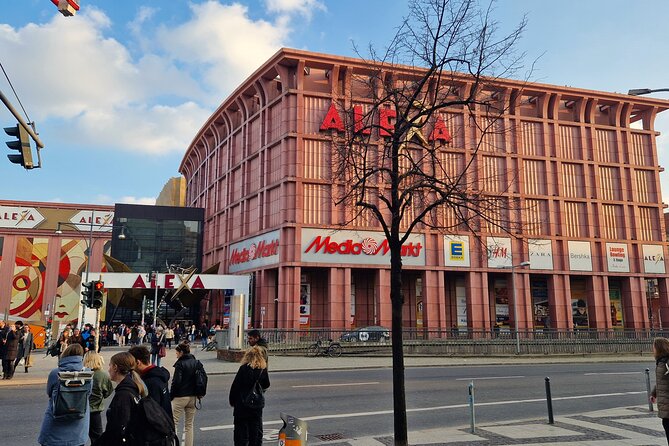
The next stop is Alexa, now a shopping center where people shop and spend time. The guide explains what occupied this site before the war and why that earlier building gained worldwide fame and high regard.
This is a good example of the tour’s method. Instead of treating the present-day city as the whole story, it asks you to look beneath the current use of a place. A shopping center can hide the memory of an institution, building, or event that once mattered far beyond Berlin.
The available details do not identify the former building, so the surprise is best left for the guide to explain on site. That is also a reminder not to expect every story to be fully spelled out in advance. The pleasure here comes from the contrast between the modern retail setting and the earlier reputation of the location.
The stop is short, about five minutes. Think of it as a compact historical reveal rather than a chance to explore Alexa itself. If shopping is your goal, you will have to return later. During the tour, the center functions mainly as a marker for a vanished chapter of Berlin.
Littenstraße and a famous defense attorney

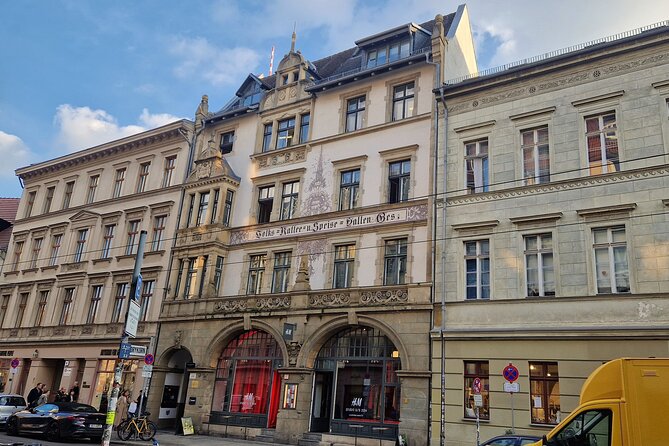
At Littenstraße, the present-day Mitte district court provides the setting for a story about one of Berlin’s most famous defense attorneys of the 1920s. The description also hints at a connection to Lola, adding a personal and theatrical note to the legal story.
This stop broadens the tour beyond criminals and police. Courts and defense lawyers shaped the public drama of Berlin crime, and a strong attorney could become a public figure in his own right. You will hear about the lawyer’s reputation and the people who drew his attention.
The location is especially useful because it keeps the legal system in view. Crime history is not only about the act itself. It also includes trials, courtroom tactics, public fascination, and the personalities who turned cases into major events.
Again, the stop is only about five minutes. You should expect the guide to sketch the lawyer and his setting rather than provide a full biography. That brevity works if you enjoy a series of connected snapshots. It may feel too quick if you already have a strong interest in Berlin’s legal history and want long explanations.
Rotes Rathaus and Berlin’s first banking scandal
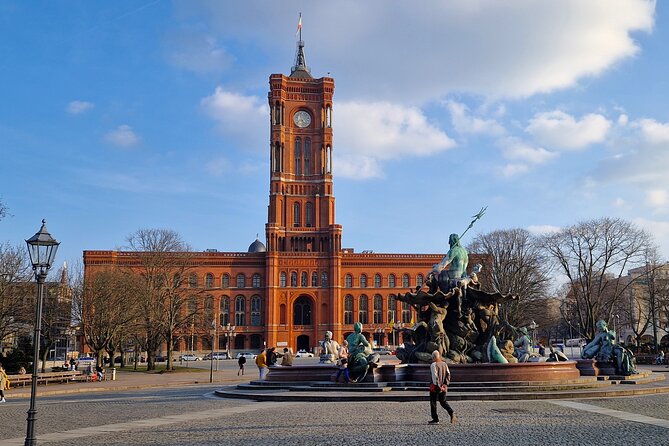
The walk ends at Rotes Rathaus, Berlin’s Red City Hall. Here the final story concerns the city’s first banking scandal in the 1920s, including the mayor’s involvement.
Ending with a financial scandal is a smart change of pace. The tour begins with street violence and organized crime, then finishes with wrongdoing linked to public office and banking. It leaves you with a wider idea of crime, one that includes respectable institutions and political influence.
The Red City Hall is also a practical endpoint. You finish near direct underground access, so you can continue to another part of Berlin without retracing the route. If you are planning dinner or an evening activity, a 4 pm finish gives you plenty of time, assuming the walk begins on schedule and runs for its expected two hours.
The final stop lasts about five minutes in the stated outline. The guide may connect the banking scandal to the larger themes of greed, trust, and city power. That makes it a fitting close to a tour that has followed crime from street corners to official offices.
What the guide’s storytelling adds
A route like this depends heavily on the person leading it. The guide must do more than name a crime and point at a building. The best moments should explain the setting, the people, the motive, and the strange detail that makes the story stick.
The tour uses a certified guide, and the guide’s role is especially important because the sites are mostly public streets rather than formal attractions. There are no admission tickets at the listed stops. You are paying for interpretation, organization, and the link between present-day Berlin and past events.
The strongest praised qualities are clear: the stories connect well to the places where events happened, and the guide is sympathetic and well informed. The walk also aims to offer something new to people who already know Berlin. That is useful if you have visited before and want a fresh way to read the center.
You should still keep your expectations realistic. A two-hour walk cannot give equal depth to murder, organized crime, police history, prostitution, legal drama, and banking fraud. The reward is range and atmosphere. You get several memorable stories, not an academic course.
Price, group size, and the value of two hours
At $18.52 per person, this is a reasonably priced guided experience in central Berlin. You are not paying museum admission, transport, or a meal. The cost covers a certified guide and a focused two-hour walk through several well-known areas.
I see the best value here in the route design. You could walk from Rosa-Luxemburg-Platz to Rotes Rathaus for free, but you would not automatically know which locations connect to police shootings, organized crime, a notorious gang, legal history, or a banking scandal. The guide supplies the context that turns an ordinary city walk into a themed history lesson.
The maximum group size of 25 is worth noting. It keeps the cost lower than a private tour, but it can affect how easily you hear every detail in a noisy city. If you prefer personal attention or want to ask many questions, a smaller walk may suit you better. If you are comfortable in a modest group, the limit is reasonable.
The booking pattern suggests many people reserve about 44 days ahead. You do not need to treat that as a rule, but it is a useful planning clue if your dates are fixed. The tour runs at 2 pm, so check that the afternoon timing fits your museum plans and meal schedule.
The strict booking terms and weather risk
This experience is non-refundable and cannot be changed for any reason after booking. That is the biggest practical weakness. Do not reserve it until your Berlin dates are firm.
The walk also requires good weather. If poor weather causes cancellation, you are offered another date or a full refund. If the minimum number of people is not reached, you are offered another date or experience, or a full refund.
Those protections apply when the operator cancels. They do not remove the risk of your own change of plans. You should also remember that this is an outdoor walking tour, so an umbrella or suitable clothing may make the afternoon more comfortable, though the supplied information does not specify any weather gear.
The activity is near public transportation, begins and ends by underground access, and most people can participate. No special accessibility details are provided, so you should ask the provider directly if you need specific assistance.
Who will enjoy this walk most
This tour is a good match for you if you enjoy:
- City history told through real cases and personalities
- Short stops with frequent changes of setting
- The less polished side of famous districts
- Stories about police, gangs, courts, political figures, and financial crime
- A compact afternoon activity at a modest price
- Berlin experiences that can still offer something new after earlier visits
It may not suit you if you want museum interiors, a long scholarly lecture, or a tour focused mainly on architecture. It is also not ideal for a schedule that cannot absorb a weather change or a provider cancellation.
Families with older children may find the stories engaging, but the themes include violence, death, prostitution, and organized crime. The supplied information says most people can participate, but it does not give a recommended minimum age. Use your own judgment about the subject matter.
Should you book the Dark Berlin Criminal Tour?
Book it if you want to see central Berlin through crime, scandal, and human behavior, rather than only through monuments and political history. The route is well placed, the price is fair, and the stories connect familiar locations with events you might otherwise walk past without noticing.
I would especially choose it for a second or third Berlin visit, when Alexanderplatz, Scheunenviertel, and Rotes Rathaus are no longer entirely new. It also works well on an afternoon when you want a guided activity without committing half a day.
Skip it if the non-refundable policy makes you uneasy, if rain is likely and your schedule has no flexibility, or if you need a quiet, highly detailed treatment of one subject. For the right audience, though, this is a lively way to discover that Berlin’s old center has more than grand buildings and official history. Its streets also carry tales of fear, ambition, corruption, and the occasional absurd twist.
FAQ
Where does the Dark Berlin Criminal Tour begin?
The tour begins at Rosa-Luxemburg-Platz 1/u, 10178 Berlin, Germany, near the U-Bahn access.
What time does the tour start?
The scheduled start time is 2:00 pm.
How long does the tour last?
The walking tour lasts approximately two hours.
Where does the tour end?
The tour ends at Rotes Rathaus, at the entrance to the Red City Hall with direct access to the underground.
How many people can join the tour?
The maximum group size is 25 people.
Is the tour available with a mobile ticket?
Yes. A mobile ticket is provided, and booking confirmation is received at the time of booking.
What happens if the tour is canceled because of bad weather or too few people?
If poor weather causes cancellation, you are offered a different date or a full refund. If the minimum number of people is not reached, you are offered a different date or experience, or a full refund.
Just added around Berlin
- eSIM for Germany and 34 European Countries★ 4.5 · 16 reviews
- Your ticket to The Wall Museum Berlin★ 3.0 · 60 reviews
- Walking on the Wall: 3-Hour Tour in Berlin★ 4.5 · 34 reviews
- Rickshaw Tours Berlin – Groups of up to 16 people with several rickshaws★ 4.0 · 97 reviews
- Warnemuende Shore Excursion: Private Berlin Tour★ 4.5 · 27 reviews
- Love and War in Berlin: Self-Guided Story Puzzle Walk★ 5.0 · 7 reviews
- Warnemuende Shore Excursion: Berlin Private Sightseeing Tour from Rostock★ 5.0 · 4 reviews
- Karl-Marx-Allee Tour: Life and Architecture in East Berlin★ 5.0 · 19 reviews
Berlin Tours, compared.

Reichstag, Dome and Government District Guided Tour
Read our review →
1-Hour City Tour by Boat with Guaranteed Seating
Read our review →




Reichstag, Plenary Chamber, Cupola & Government Tour
Read our review →