
Review · BERLIN TOURS
Berlin Reunited and Revived! 3-Hour Alternative Tour
Berlin’s most revealing sights are not always its grand monuments. This private walk shows how four very different neighborhoods changed after reunification, from restored Mitte buildings to the political murals of Friedrichshain and Kreuzberg. I especially like the visit to the Kulturbrauerei, where an old brewery now serves as a cultural center, and the final stop at the Turkish Market beside the Landwehr canal.
I also like that the tour deals with Berlin as a living city, not just a museum of the Cold War. You’ll hear about gentrification, corporate development, rising rents, and daily life for ordinary residents. The main drawback is its limited schedule: it runs only on Tuesdays and Fridays from April through October, so you’ll need to plan around it.
Key points to know
- Four neighborhoods in three hours: Cover Mitte, Prenzlauer Berg, Friedrichshain, and Kreuzberg without being tied to a bus.
- A changing Berlin: Follow the city from neglected East Berlin buildings to restored apartments, cultural centers, and growing corporate influence.
- Kulturbrauerei stop: See how a former brewery became a home for culture and the arts.
- East Side Gallery: Study a colorful surviving section of the Berlin Wall and discuss the politics behind Berlin’s street art.
- Turkish Market finale: End beside the Landwehr canal with food, fabrics, local produce, artists, and occasional live music.
- Private and flexible: The $352 price covers a group of up to 20 people, with hotel pickup and an English or German-speaking guide.
Berlin after the Wall, told through its neighborhoods
The strength of this tour is its structure. Instead of giving you a long list of Berlin sights, it uses neighborhoods as chapters in the city’s modern story.
Mitte shows what happened when neglected buildings suddenly became valuable. Prenzlauer Berg shows how an artistic district can change when professionals and families move in. Friedrichshain and Kreuzberg bring the argument into the present, where alternative culture, business investment, and rent pressure meet on the same streets.
That approach gives you useful context for the rest of your visit. You may see Berlin’s old industrial buildings, painted walls, cafés, and renovated apartments more clearly after learning who uses them, who can afford them, and how quickly the city changed after 1989.
The tour lasts three hours and is a walking experience, so you should expect a steady pace across several districts. Hotel pickup is included. You’ll wait in the lobby five minutes before the scheduled time, and the guide wears a yellow name tag for recognition.
A few more Berlin half-days to weigh up
- Berlin Highlights 3-Hour Bike Tour
★ 5.0 · 948 reviews - Berlin Highlights: 3-Hour Bike Tour
★ 4.9 · 809 reviews - Berlin: 3-Hour Street Art Tour
★ 4.7 · 778 reviews
Mitte and the first wave of reunification
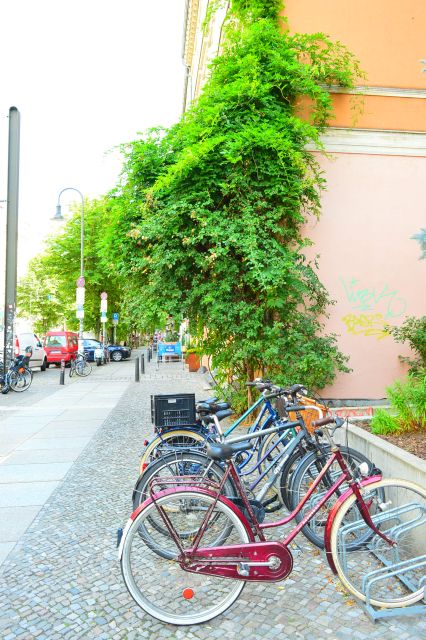
The tour begins in Mitte, the central district that became one of the earliest showcases of post-Wall renewal.
After reunification, many buildings in the former East Berlin had been neglected for decades. Restoration came quickly in some parts of Mitte, bringing old facades back into use and changing the feel of streets that had once sat outside the main flow of Western investment.
This is a useful place to begin because it makes reunification visible without relying only on famous Cold War sights. You’ll look at the built environment and consider how ownership, restoration, and new investment reshaped central Berlin.
I like this opening because it avoids a simple before-and-after story. Restoration can save important buildings, but it can also make central neighborhoods more expensive and less accessible to the people who lived there before. The tour’s focus on gentrification helps you see both sides.
Do not expect a long stop at every location. In three hours, the guide needs to keep moving. The reward is the wider pattern, not an exhaustive architectural tour of Mitte.
Prenzlauer Berg and the Kulturbrauerei
Next comes Prenzlauer Berg, once a center for artists during the 1990s. Its story is one of Berlin’s clearest examples of cultural change followed by commercial change.
The district now attracts young professionals and families. That shift brings renovated housing, new services, and a different social mix. It also raises a familiar question: what happens to an alternative neighborhood when the qualities that made it attractive begin drawing wealthier residents?
The Kulturbrauerei provides a strong, concrete stop. This former brewery has been refurbished as a center for culture and the arts. Its industrial past and current use make it a neat example of how old East Berlin spaces have been given new purposes.
For me, this is one of the most worthwhile parts of the route. You are not simply told that Berlin changed. You see a former working site now used for cultural activity, and you can connect that change to the wider story of East Berlin’s redevelopment.
The district may be especially interesting if you want to understand Berlin beyond the Wall itself. Prenzlauer Berg shows that reunification did not end the city’s transformation. It started a new phase, with creative life, property investment, and family housing all competing for room.
Friedrichshain and the politics of alternative Berlin
The route then heads to Friedrichshain, one of the districts associated with Berlin’s alternative scene.
Here, the discussion turns more directly to corporate businesses and landlords raising rents. Left-wing residents continue to resist those pressures, and the district helps explain why Berlin politics often appears on walls, in building campaigns, and in debates over who has the right to remain in a neighborhood.
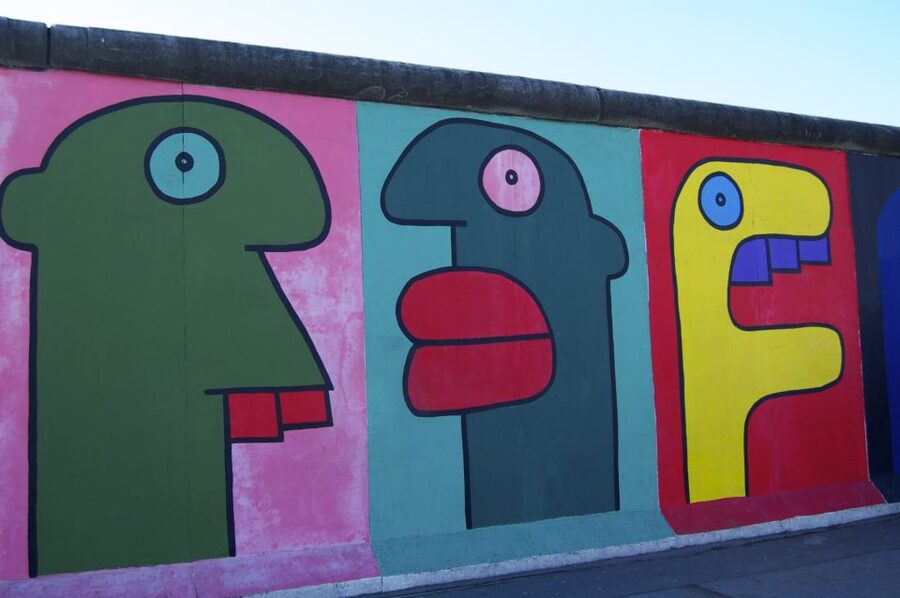
This is not a tour that treats street art as decoration only. You’ll discuss its political overtones and the ideas behind Berlin’s famous painted walls. That makes the art easier to read. A mural can be a memorial, a protest, a joke, or a statement about ownership of public space.
The subject is also a good reminder that Berlin’s alternative identity is not just a marketing label. It grew from particular political conditions and from the availability of neglected buildings after the Wall fell. As property values rise, that culture faces pressure.
You should keep an open mind here. The tour presents an active argument about urban change rather than a tidy conclusion. If you prefer sightseeing without social or political discussion, parts of this section may feel more serious than a standard city walk.
Same city, a completely different sort of afternoon:
- Berlin: Reichstag, Dome and Government District Guided Tour
★ 4.7 · 18,288 reviews - Berlin: 1-Hour City Tour by Boat with Guaranteed Seating
★ 4.3 · 16,993 reviews - Berlin: Boat Tour Along the River Spree
★ 4.4 · 11,252 reviews - Discover Berlin Half-Day Walking Tour
★ 5.0 · 9,624 reviews
East Side Gallery and a wall turned into public art
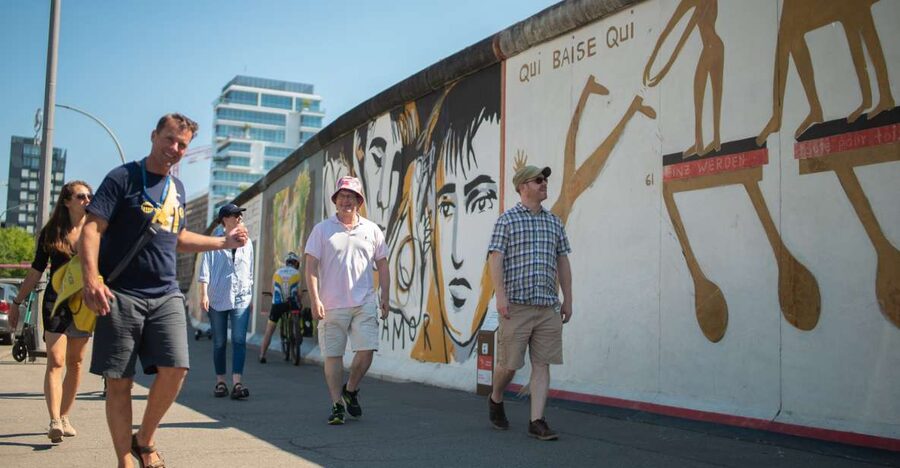
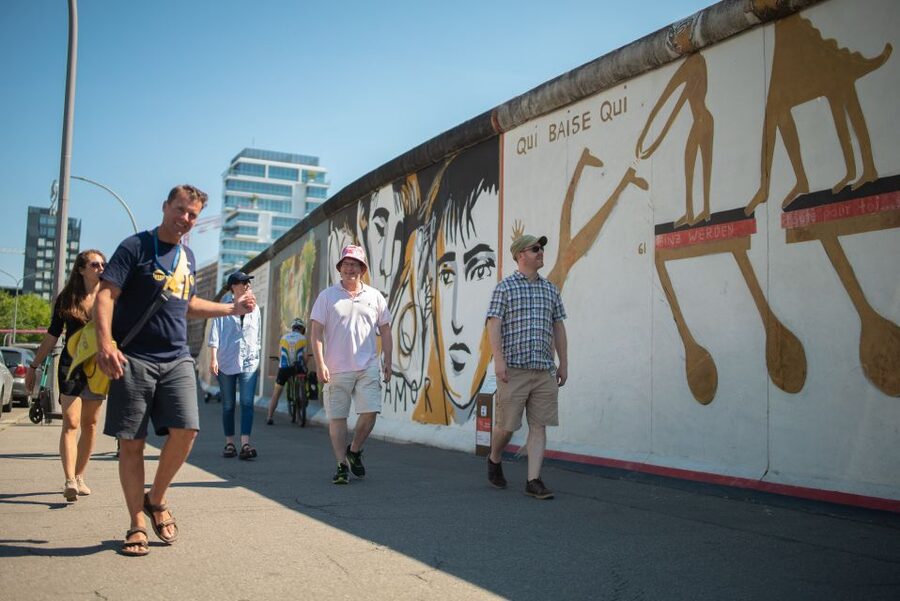
The East Side Gallery is the route’s most famous landmark. This colorful section of the Berlin Wall is now the world’s largest open-air gallery.
Its importance comes from the contradiction. The Wall once divided families, streets, and a city. Now part of it has become a public art site visited by people from around the world. The paintings turn a structure of control into a space for expression, but the original political weight has not disappeared.
Your guide will connect the murals to the origins and political meaning of Berlin’s street art scene. That context matters because the pictures can otherwise become a quick photo stop. You’ll have a better sense of why the Wall became a surface for artists and why the city’s painted walls carry such strong political messages.
The East Side Gallery is also likely to be one of the busier parts of the experience. The tour description does not promise a private section of the Wall or a long period for independent viewing, so you should think of this as a guided stop within a larger route.
Even so, it fits the tour’s theme perfectly. Berlin did not erase every sign of division. It reused some of them, argued over them, and gave them new meaning.
Kreuzberg and the Turkish Market finale
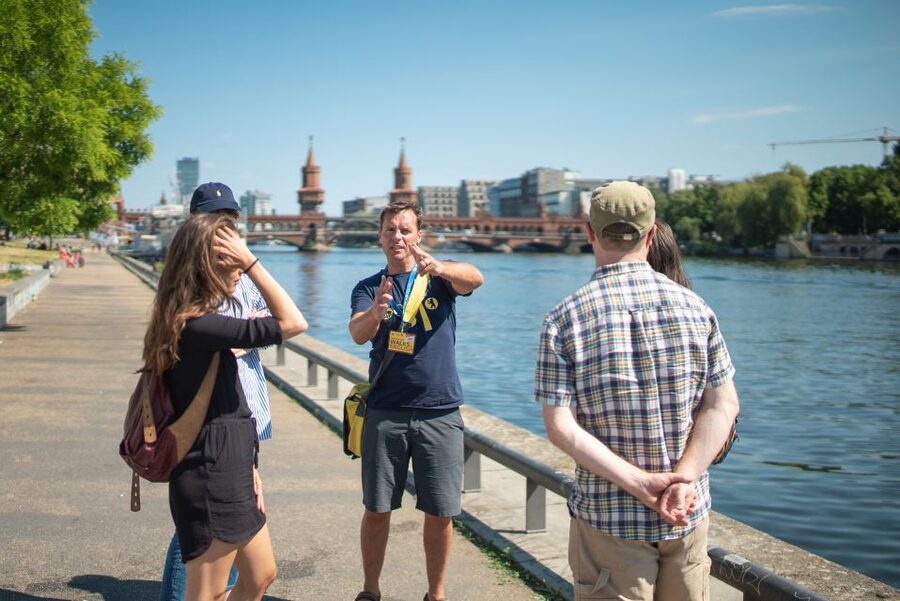
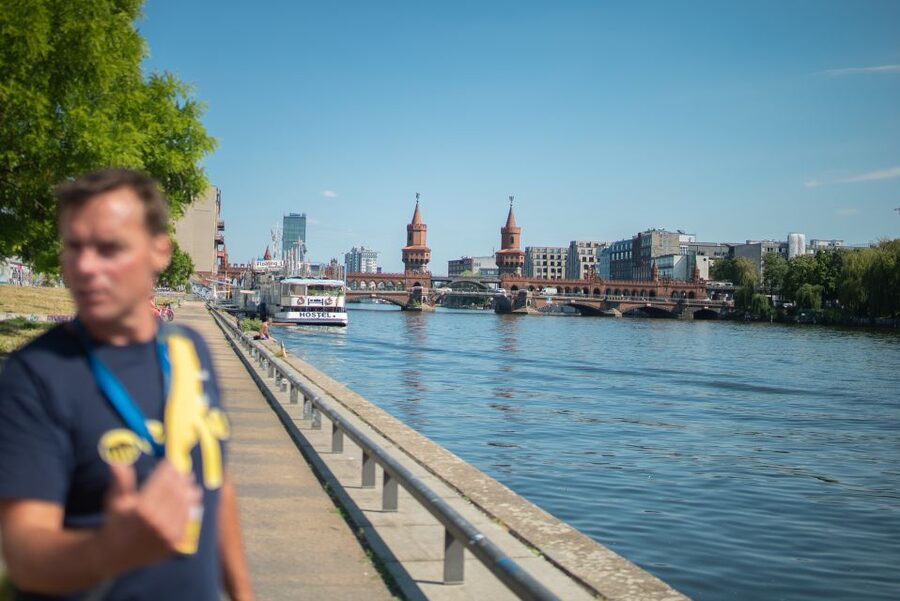
The final district is Kreuzberg, where the tour ends at the Turkish Market beside the Landwehr canal.
The market began with fresh produce, Turkish food, and brightly patterned fabrics. It has since expanded to include Berlin artisans, local farmers, and occasional live music. That mix gives you a direct look at the city’s varied population and its everyday commercial life.
I like ending here because the market brings the discussion down to street level. After hearing about restoration, gentrification, and the fate of alternative districts, you reach a place where people shop, eat, sell, listen, and socialize.
Food and drinks are not included, but that is not necessarily a weakness at this stop. You can decide for yourself if you want to buy something at the market, though the tour price does not cover those purchases.
The market is also a more informal finish than a monument would be. Conditions can vary by market day, and the amount of live music or the range of stalls is not guaranteed. Still, the setting beside the canal and the mix of food, fabric, produce, and handmade goods give the tour a fitting final note.
What the guide adds to the experience
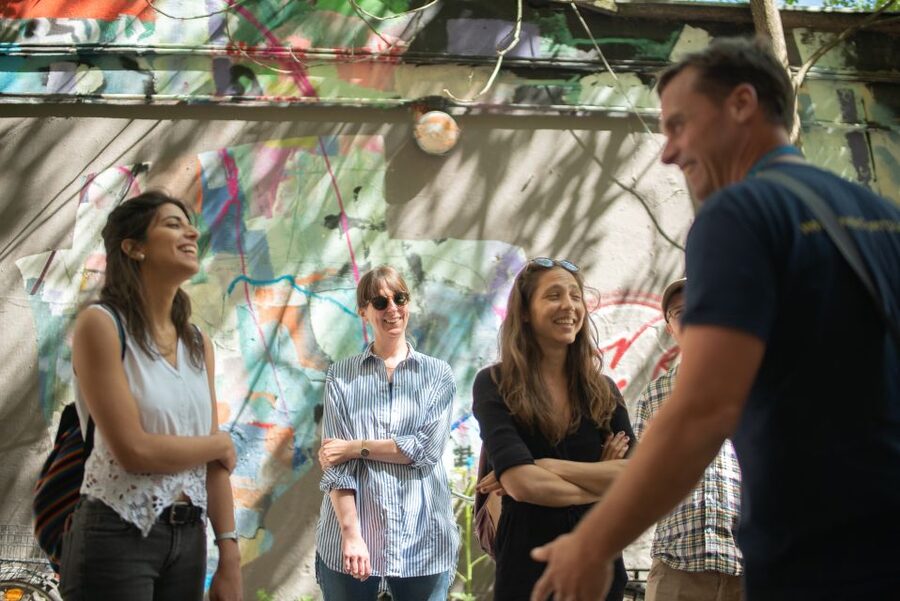
A route like this depends heavily on the guide. The subject is not just where Berlin is, but why it looks and feels different from one district to the next.
The experience is available in English or German. Past guide names connected with the tour include Tom, Maria, and JJ. One guest specifically praised Tom’s humor and American charm, while Maria was described as lively and interesting. JJ was noted for his enthusiasm and humor while leading an English tour for a group that included a Chinese exchange student.
Those details suggest that guide personality is an important part of the experience. You are booking a private group rather than joining a large public walk, so you can expect the guide’s style to shape the day.
The private format is useful for families, friends, or small organizations that want to ask questions about Berlin’s politics and daily life. The listed capacity is up to 20 people, which is a large private group even if your own party is smaller. If you are booking near that maximum, the walking pace and ability to hear the guide may feel different than they would with only a few people.
Is $352 good value for a private three-hour walk?
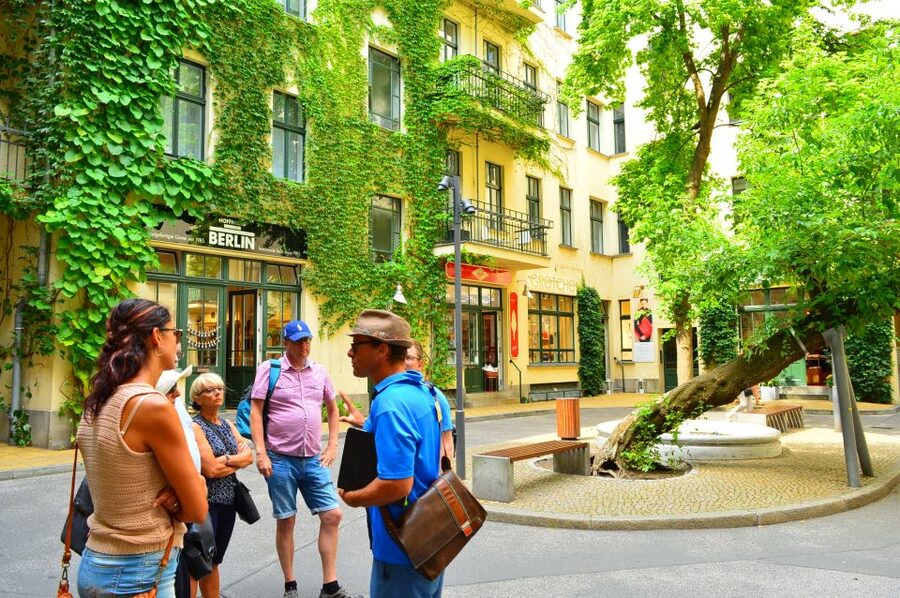
The price is $352 per group, with up to 20 people included. For a solo visitor or a couple, that is a substantial cost. For a larger party, the calculation changes quickly because the price is divided among the group.
At 20 people, the cost works out to about $17.60 per person. With 10 people, it is $35.20 each. With only two people, it becomes $176 per person. That makes this experience most attractive to families, school groups, friend groups, and other parties that can share the fixed fee.
You are paying for more than a standard route between landmarks. The value lies in having a guide connect four districts through one subject: how Berlin changed after reunification and what those changes mean now.
The tour does not include food or drinks, and it is not designed as a full historical survey of Berlin. You should book it for local context, neighborhood contrasts, and discussion of urban change. If you mainly want the Brandenburg Gate, Museum Island, or a broad list of famous sights, another tour may give you more of what you want.
Timing, clothing, and access
Tours run on Tuesdays and Fridays from April through October. This narrow operating window is the biggest practical limitation, especially if your Berlin visit is short or falls outside those months.
The start time varies, so you need to check availability when booking. Hotel pickup is included, and you should be in the lobby five minutes early with weather-appropriate clothing.
Because the experience is a walking tour across four districts, comfortable clothing matters. The activity is listed as wheelchair accessible, but the supplied information does not explain the exact route surfaces, restroom access, or market conditions. If you use a wheelchair, it is sensible to confirm route details when arranging the tour.
Free cancellation is available up to 24 hours before the start for a full refund. You can also reserve now and pay later, which is useful if your schedule is still taking shape.
Who should book this Berlin neighborhood tour?
I would recommend it to you if you have already seen Berlin’s main monuments or want the city explained through its streets rather than through a checklist of famous buildings.
It suits visitors interested in:
- The effects of reunification on daily life
- Gentrification and rising rents
- Berlin’s alternative culture and street art
- Former industrial buildings reused for culture
- The connection between Turkish, German, and international city life
- A private walk with room for questions
It may be less suitable if you want a relaxed pace, a food-focused outing, or a tour centered on major historical landmarks. The route covers a lot of ground in three hours, and the subject includes social and political issues.
Families can use it as a way to explain modern German history to older children and teenagers, especially at the East Side Gallery. Adults who follow architecture, public art, or city planning will also get plenty to think about.
Should you book it?
Book this tour if you want to understand how Berlin became its current self, not just where the Wall once stood. The four-district route, Kulturbrauerei, East Side Gallery, and Turkish Market create a clear story about restoration, creativity, conflict, and change.
The best value comes with a group large enough to share the $352 fee. Check the Tuesday or Friday schedule carefully, dress for the weather, and allow time for a brisk walk. If those conditions work for you, this is a useful and engaging way to meet the less polished, more complicated Berlin that exists beyond the headline sights.
FAQ
How long does the Berlin Reunited and Revived tour last?
The tour lasts three hours.
Which Berlin neighborhoods does the tour visit?
The route includes Mitte, Prenzlauer Berg, Friedrichshain, and Kreuzberg.
Is the tour private?
Yes. It is a private group experience for up to 20 people.
What languages are available?
The live guide can lead the tour in English or German.
Does the tour include hotel pickup?
Yes. You should wait in your hotel lobby five minutes before the scheduled pickup time. The guide will wear a yellow name tag.
Are food and drinks included?
No. Food and drinks are not included in the tour price.
When does the tour operate?
Tours run on Tuesdays and Fridays from April through October. Starting times depend on availability.
Just added around Berlin
- From Berlin: Gardens & Palaces of Potsdam Bike Tour★ 5.0 · 61 reviews
- Berlin: Battle for Seelow Heights WW2 tour -Clash of Titans★ 5.0 · 27 reviews
- From Berlin: Historical Gems of Potsdam Private Day Trip★ 4.4 · 4 reviews
- Berlin: Französischer Dom 360° Panorama & Crémant to go★ 3.9 · 5 reviews
- Explore Berlin Tour: History and Highlights★ 4.7 · 5 reviews
- Berlin: Evening Yacht Cruise with Aperitif & Dinner Upgrade★ 4.6 · 178 reviews
- Berlin: Expats in Berlin Comedy Show Ticket★ 4.7 · 182 reviews
- Berlin: The Epic Comedy Club Friday Night Showcase★ 4.8 · 28 reviews
Berlin Tours, compared.
Reichstag, Dome and Government District Guided Tour
Read our review →
1-Hour City Tour by Boat with Guaranteed Seating
Read our review →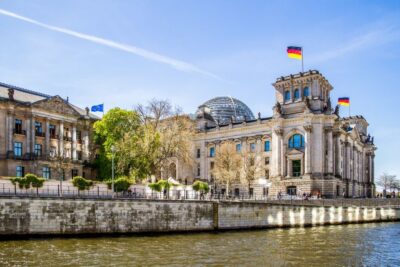
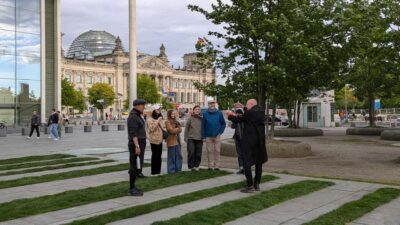
Reichstag, Plenary Chamber, Cupola & Government Tour
Read our review →
Browse the lists this tour appears in