
Review · BERLIN TOURS
Alternative Berlin Private Tour with Jacob – Graffiti and Squats
Berlin’s alternative side comes into focus on this private route, which links graffiti, squats, LGBTQ culture, and street food with major landmarks such as the Brandenburg Gate and East Side Gallery. It is less a standard monument tour than a look at how Berlin’s counterculture grew around the Wall, reunification, nightlife, and public art.
I like the one-to-one attention and the chance to ask N. Jacob about subjects that rarely get much time on a conventional city tour. I also like the practical extras: hotel, apartment, Airbnb, train station, or airport pickup, plus a subway map and a folder with guidance pictures.
The main consideration is pace. You cover nine stops in about 2 hours and 45 minutes, and several are spread across Berlin. Public transportation costs extra, from 3 to 11 euros per person, while a private van and driver require a separate request.
Key points to know before booking
- N. Jacob leads a private route through Berlin’s alternative culture, with time for questions and personal discussion.
- The tour covers both famous sights and lesser-known cultural subjects, including the LGBTQ community, hippies, squats, murals, and Berlin street food.
- Haus Schwarzenberg gets a full 30 minutes, making it the best stop for the city’s underground art and squat culture.
- Hotel, apartment, Airbnb, train station, and airport pickup are included, but public transportation is not.
- The route is built for active visitors, with multiple stops and movement between central, eastern, and Kreuzberg locations.
- The price is $310 per group of up to 15, making it more attractive for a family or small group than for a solo visitor.
Berlin beyond the postcard sights
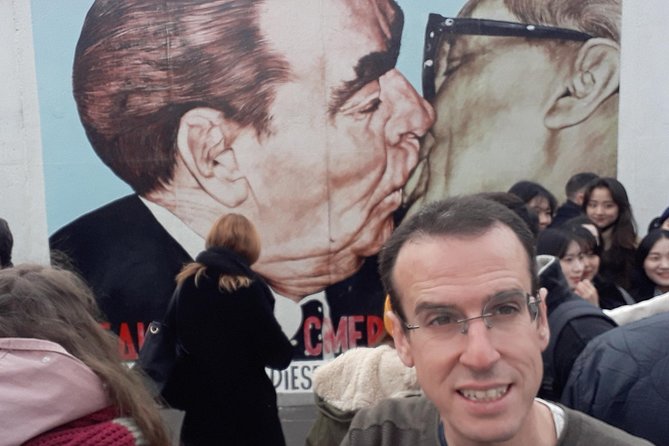
Many Berlin tours begin and end with the Brandenburg Gate, the Wall, and Checkpoint Charlie. This one uses those places as a frame for a different story. You see how Berlin’s public spaces became tied to political protest, queer life, independent art, music, nightlife, and food sold from small stands.
That mix is the tour’s real appeal. You are not simply collecting photographs of monuments. You are being asked to connect Berlin’s grand national symbols with the city’s rougher, more creative side.
The route also gives you a useful spread of Berlin. It begins near the Tiergarten and central landmarks, moves through the courtyards and food stalls around Hackescher Markt, then heads east toward Warschauer Strasse, Kreuzberg, and the East Side Gallery. Because the route covers so much ground, the public transportation cost matters. Add it to your budget from the start.
The private format changes the experience. With only your own group participating, you can ask N. Jacob to spend more time on subjects that interest you, such as LGBTQ history, WWII memorial art, graffiti, or the former squats. You also avoid waiting for a large group to gather at each stop.
A few more Berlin half-days to weigh up
- Berlin: Reichstag, Dome and Government District Guided Tour
★ 4.7 · 18,288 reviews - Berlin: 1-Hour City Tour by Boat with Guaranteed Seating
★ 4.3 · 16,993 reviews - Berlin: Boat Tour Along the River Spree
★ 4.4 · 11,252 reviews
Victory Column and Berlin’s LGBTQ community
The Victory Column is the opening stop, with about 15 minutes set aside. Admission is free, and the emphasis here is not simply the monument itself. The discussion turns to Berlin’s gay parade and the city’s LGBTQ community.
That is a smart beginning. Berlin is often presented through Prussian power and 20th-century conflict, yet its modern identity also includes a strong queer culture. Starting with this topic signals that the tour will look at the city through social change and public life, not just architecture.
Fifteen minutes is enough for an introduction, but not a long historical lesson. If LGBTQ culture is your main reason for booking, tell N. Jacob when you reserve the tour and again at the start. The private setup gives you a better chance of shaping the conversation than a fixed group excursion.
Potsdamer Platz, cinema, business, and a changed city
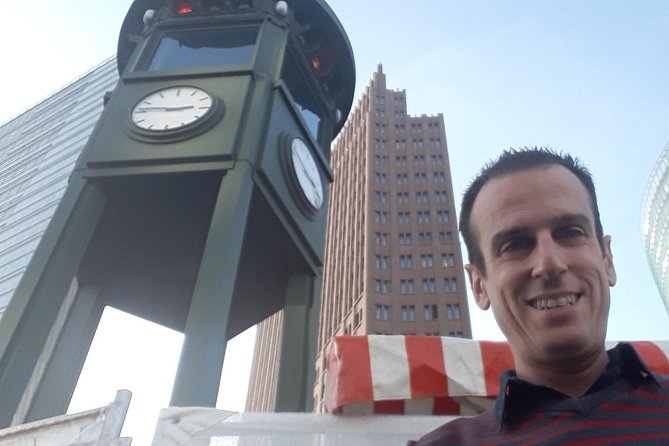
Potsdamer Platz receives about 20 minutes. The subject here is Berlin as a center of culture, cinema, and business.
This area works well as a contrast to the later graffiti stops. Potsdamer Platz represents the polished, rebuilt face of Berlin, while places such as Haus Schwarzenberg and Kreuzberg show the city’s improvised and independent side. Together, they help explain why Berlin can feel so different from one neighborhood to the next.
You should expect a compact stop rather than a full architectural tour. The value comes from the comparison. Berlin’s modern business district is part of the same city that produced squats, murals, and alternative clubs.
Brandenburg Gate, the Wall, and the hippies
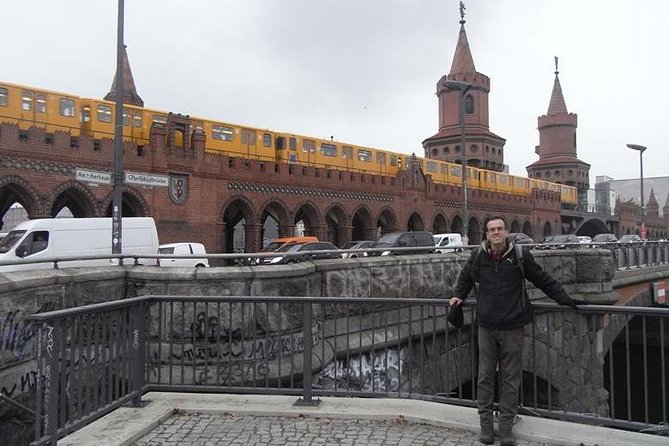
At the Brandenburg Gate, the tour turns to the Wall and the hippie movement, with about 20 minutes planned.
The gate is one of Berlin’s busiest photo spots, but its importance goes well beyond the familiar image. It became a powerful symbol during the division of the city and after reunification. Here, N. Jacob can connect the physical Wall with the people and movements that challenged conventional politics and social rules.
The hippie reference adds an unusual angle. It suggests a discussion of the people who used Berlin as a place to reject the expected path, much as later artists and squatters did. The stop is short, so you will get the broad story rather than an extended political lecture.
If you have already seen the Brandenburg Gate on another tour, this stop may still be worthwhile because the focus is different. You are looking at the site through counterculture and division, not only through royal and national history.
Same city, a completely different sort of afternoon:
- Discover Berlin Half-Day Walking Tour
★ 5.0 · 9,624 reviews - Berlin: Hop-on Hop-off Bus Tour with Live Commentary
★ 4.3 · 8,579 reviews - Berlin: Government District around the Reichstag Guided Tour
★ 4.7 · 8,447 reviews - Berlin: Reichstag, Plenary Chamber, Cupola & Government Tour
★ 4.6 · 8,422 reviews
Hackesche Höfe and the city after dark
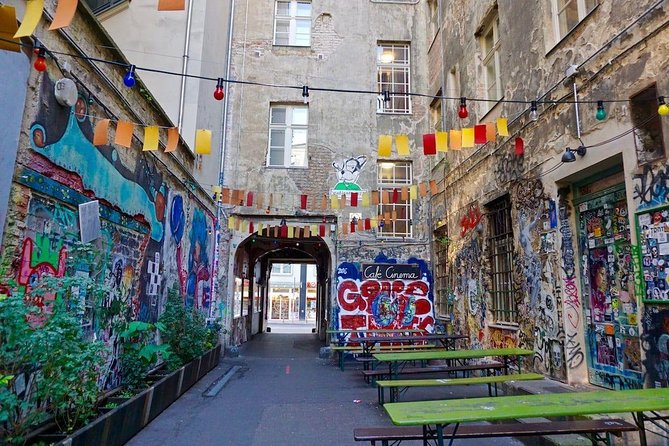
The route then moves to Hackesche Höfe for around 20 minutes. These renovated courtyards are tied to Berlin’s nightlife and changing urban identity.
The courtyards give you a useful look at how old spaces can take on new uses. Their restored appearance also contrasts with the rougher, less polished art spaces later in the tour. That contrast is one of the strongest themes of the day: Berlin is constantly balancing preservation, redevelopment, commerce, and creative freedom.
The stop is especially useful if you want to understand the central neighborhoods before returning later for nightlife or food. You can ask about what has changed and how renovated areas fit into Berlin’s larger alternative culture.
One caution: a stop described through nightlife does not mean the tour becomes a bar crawl. The experience lasts in the daytime or at your selected start time, and the published route gives you cultural context rather than included drinks or evening entertainment.
Hackescher Markt and Berlin’s portable meals
Hackescher Markt gets another 20 minutes, this time for Berlin street food. The two featured dishes are currywurst and döner kebab.
That food focus is more useful than it may first appear. Currywurst is closely tied to Berlin’s everyday identity, while döner kebab reflects the city’s large Turkish influence and the way immigrant food became part of ordinary Berlin life. You get a quick, tasty way to discuss culture without turning the tour into a formal food walk.
Food is not listed as included, so plan to pay for anything you choose to eat. The schedule also does not promise a full tasting, meal, or restaurant stop. Think of this as a chance to learn what to look for and, if time allows, make your own purchase.
For many people, this will be one of the easiest parts of the tour to remember. Berlin’s alternative scene is not found only in galleries and squats. It is also found at the counter of a kebab shop or in a paper wrapper of currywurst.
Haus Schwarzenberg, Tacheles, and the former squats
Haus Schwarzenberg is the longest stop, at about 30 minutes, and probably the heart of the experience.
The focus includes Tacheles and the Dead Chicken squats. These names point to Berlin’s tradition of artists taking over neglected or threatened spaces and turning them into places for murals, installations, performance, and community life. The subject can be difficult to simplify. Squats were not simply colorful art sites, and redevelopment did not always treat them gently.
This is where a private guide is most valuable. You can ask what made these places important, how their role changed, and how to distinguish a working cultural space from a former one. The information provided does not promise entry to every building or an active squat visit, so expect an exterior and neighborhood-based look unless N. Jacob explains otherwise.
The strongest praise for this experience centers on seeing local artist work and learning about WWII memorials with N. Jacob. That combination is worth noting. Berlin’s art is not only decoration. Much of it responds to war, dictatorship, division, memory, and the pressure of rebuilding.
Give this stop your full attention. It is the clearest expression of the tour’s purpose, and the 30-minute allocation gives it more breathing room than most of the other locations.
Warschauer Strasse and Berlin’s hangout culture
Warschauer Strasse receives about 20 minutes and is presented as an area for hanging out.
This is a change of tone from the formal center. The stop is about how people use the city in their free time, especially around nightlife and informal social life. It also helps link the older alternative culture of squats with the newer commercial and entertainment side of eastern Berlin.
You may find this stop more atmospheric than fact-heavy. That is not a weakness, but it is worth knowing. If you prefer museums and long historical explanations, you may want to ask N. Jacob to add more background. If you want to see where Berlin’s social energy gathers, this part of the route should feel more relevant.
The timing is brief, so do not expect an extended evening out. It is a snapshot of the area, not a nightlife experience with admission or drinks included.
Kreuzberg’s murals and graffiti
Kreuzberg gets about 10 minutes for murals and graffiti. That is a short window, especially for a subject that rewards stopping, looking, and asking questions.
Still, the stop fits the tour’s larger story. Kreuzberg is one of the places where political expression, immigrant life, independent art, and urban change meet. The murals are not just colorful backgrounds. They can carry messages about identity, protest, neighborhood life, and memory.
The route does not promise a graffiti workshop, artist meeting, or guaranteed access to a particular mural. Artwork changes, and outdoor art can disappear under paint or redevelopment. The benefit is having a guide point out what matters now and explain the local setting instead of wandering without context.
If murals are your top priority, mention that at booking. The private format gives you the best chance of making the short Kreuzberg stop count.
East Side Gallery and the longest open-air gallery
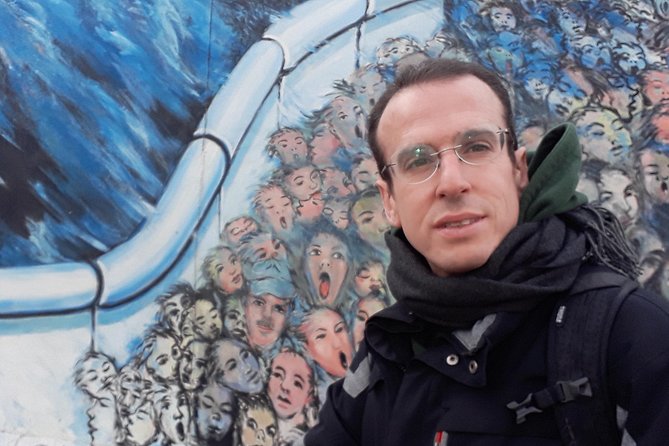
The final stop is the East Side Gallery, described as the longest gallery in the world, with about 10 minutes planned.
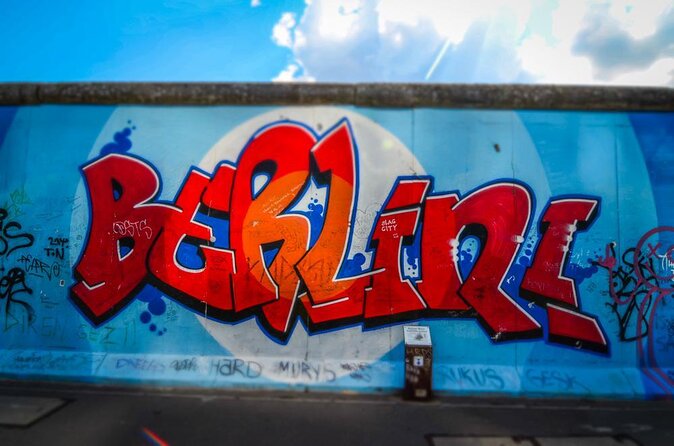
This is one of Berlin’s most recognizable stretches of public art. It links the former Wall with painted commentary, hope, political memory, and the changing meaning of the city after division. Ending here gives the tour a clear visual finish.
Ten minutes is enough to see a small section and hear an explanation, but it is not enough for a slow walk along the full gallery. If you want to study many paintings or take your time with photographs, you will need to return independently.
That limitation is important. The tour offers an introduction to the East Side Gallery, not a complete visit. The same is true of several other stops: the strength lies in the range of ideas, while the tradeoff is limited time at each place.
What $310 means for your group
The price is $310 per group of up to 15 people. For one or two people, that is a serious expense. For a family, a group of friends, or a larger private party, the price becomes easier to justify because it does not rise with each person up to the stated limit.
The value comes from three things. First, you get a private guide rather than a fixed group. Second, pickup is included from a hotel, apartment, Airbnb, train station, or airport in Berlin. Third, the route covers several parts of the city and comes with a subway system map and an A3 guidance picture folder.
Public transportation is extra, at 3 to 11 euros per person for a one-time or daily ticket. A private van and driver are also extra and available on request. If your group wants less walking or has luggage, ask about the vehicle before booking rather than assuming it is part of the $310 price.
The included WhatsApp availability is another practical touch. You can use it for questions or help with your Berlin visit, though the supplied information does not define the hours or scope of that support. Treat it as useful trip assistance, not a full concierge service.
The tour is booked about 44 days ahead on average. That does not guarantee that every date sells out, but it is a good reason to reserve early if you want a particular start time. You are asked to provide your preferred start time when booking.
Who will get the most from this route
I would choose this tour if you want Berlin explained through people, art, and social change rather than through monuments alone. It suits active visitors who are comfortable moving between several districts and using public transportation.
It is also a strong fit for groups with different interests. One person can ask about WWII memorial art, another about graffiti, another about LGBTQ culture, and another about currywurst or döner kebab. A private guide can adjust the emphasis more easily than a large scheduled group.
You may want another tour if you need long interior visits, museum time, or a slow architectural walk. The schedule is packed, and admission tickets are not listed because the experience is built around public places and neighborhood interpretation.
Most people can participate, service animals are allowed, and the tour begins in Berlin with pickup offered. Since the route is active and spread across the city, wear practical shoes and tell the provider about any needs before the day begins.
Free cancellation is available if you cancel at least 24 hours before the local start time. A later cancellation or last-minute change is not refunded.
Should you book Alternative Berlin Private Tour with Jacob?
Book it if you want a personal, fast-moving introduction to Berlin’s alternative culture, especially local art, former squats, graffiti, queer life, street food, and the connection between the Wall and modern city life. N. Jacob’s role is particularly useful if you want to ask questions about artist work or WWII memorials rather than simply take photographs.
The best value comes when several people share the $310 cost and make use of the private format. Before booking, confirm your preferred start time, ask how your group will move between stops, and request a private van if public transportation is not suitable.
Skip it if you want to spend a full hour at the East Side Gallery, eat a complete meal, or enter major museums. This is a broad cultural introduction with short stops. For the right group, it offers a lively look at the Berlin that exists behind the postcard.
FAQ
How long is the Alternative Berlin Private Tour with Jacob?
The tour lasts approximately 2 hours and 45 minutes.
How much does the private tour cost?
The price is $310 per group of up to 15 people.
Is hotel pickup included?
Yes. Pickup is offered from a hotel, apartment, Airbnb, train station, or airport in Berlin.
Are public transportation costs included?
No. Public transportation costs between 3 and 11 euros per person for a one-time or daily ticket. A private van and driver can be requested separately.
Is this a private activity?
Yes. Only your group participates in the activity.
Can I cancel for a full refund?
Yes, if you cancel at least 24 hours before the experience start time. Cancellations and changes made less than 24 hours before the local start time are not refunded.
Just added around Berlin
- eSIM for Germany and 34 European Countries★ 4.5 · 16 reviews
- Your ticket to The Wall Museum Berlin★ 3.0 · 60 reviews
- Walking on the Wall: 3-Hour Tour in Berlin★ 4.5 · 34 reviews
- Rickshaw Tours Berlin – Groups of up to 16 people with several rickshaws★ 4.0 · 97 reviews
- Warnemuende Shore Excursion: Private Berlin Tour★ 4.5 · 27 reviews
- Love and War in Berlin: Self-Guided Story Puzzle Walk★ 5.0 · 7 reviews
- Warnemuende Shore Excursion: Berlin Private Sightseeing Tour from Rostock★ 5.0 · 4 reviews
- Karl-Marx-Allee Tour: Life and Architecture in East Berlin★ 5.0 · 19 reviews
Berlin Tours, compared.

Reichstag, Dome and Government District Guided Tour
Read our review →
1-Hour City Tour by Boat with Guaranteed Seating
Read our review →




Reichstag, Plenary Chamber, Cupola & Government Tour
Read our review →