
Review · NUREMBERG TOURS
Nuremberg: St. Johannis Friedhof &Hesperidengärten IN GERMAN
Nuremberg’s St. Johannis Cemetery is no ordinary burial ground. Its closely set graves, carved epitaphs, and links to artists, craftsmen, politicians, and old patrician families make it one of the clearest places in the city to read Nuremberg’s past in stone. The nearby Hesperidengärten add a quieter second act, with formal gardens once used for leisure and for growing Mediterranean fruit.
I like this tour for two reasons: it gives you a local guide’s view of Nuremberg rather than another pass through the Old Town, and it connects memorial art with everyday city history. Guides such as Sabine Peters bring biographies and dates to life in a way that makes the cemetery feel human, not merely historic. The main consideration is simple: the tour is held in German, and the Hesperides Gardens are available only from May through October.
Key points at a glance
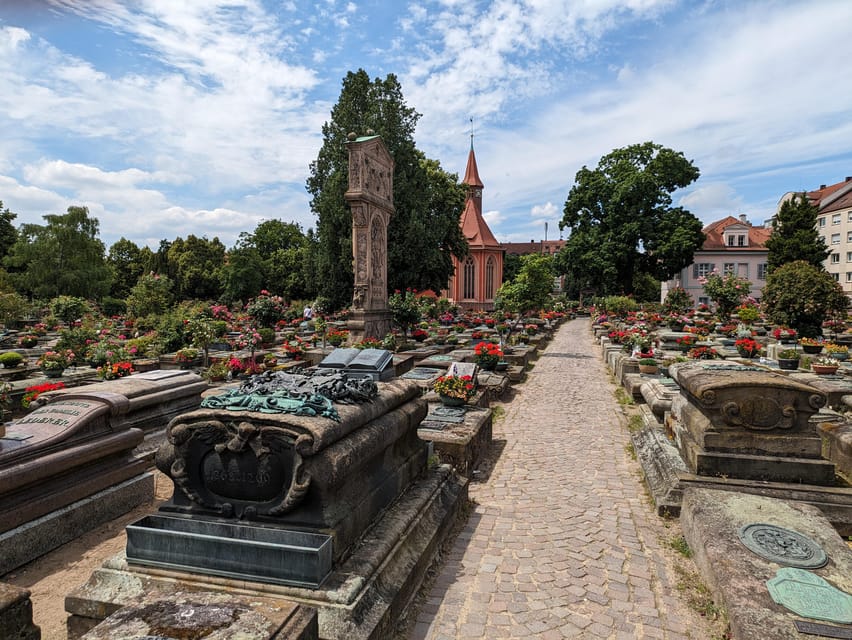
- A cemetery voted Germany’s most beautiful in 2013, with centuries of Nuremberg life recorded on its graves.
- Albrecht Dürer’s grave is part of the guided route.
- Artistic epitaphs show how families honored the dead and displayed their place in society.
- The Hesperidengärten add garden culture, recreation, and Mediterranean fruit growing to the visit.
- About 1 kilometer of walking is covered in roughly 90 minutes.
- German-language guiding and a minimum of two participants are important booking conditions.
Why St. Johannis Cemetery tells Nuremberg’s story so well
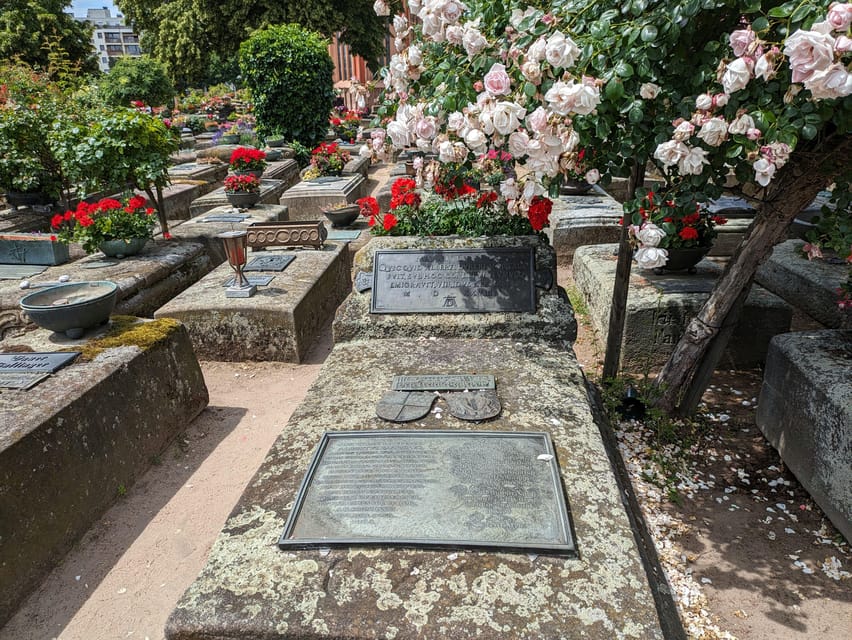
I find cemeteries most useful when they explain a city rather than simply list famous names. St. Johannis Cemetery does exactly that. The graves belong to patricians, artisans, artists, and politicians, giving your guide many ways to explain how Nuremberg worked and who shaped it.
The cemetery is regarded as one of Europe’s best-known burial grounds and was voted Germany’s most beautiful cemetery in 2013. That title is subjective, of course, but the setting has a strong visual character. You move among old graves and carved memorials rather than through a conventional museum, so the past is spread around you at human scale.
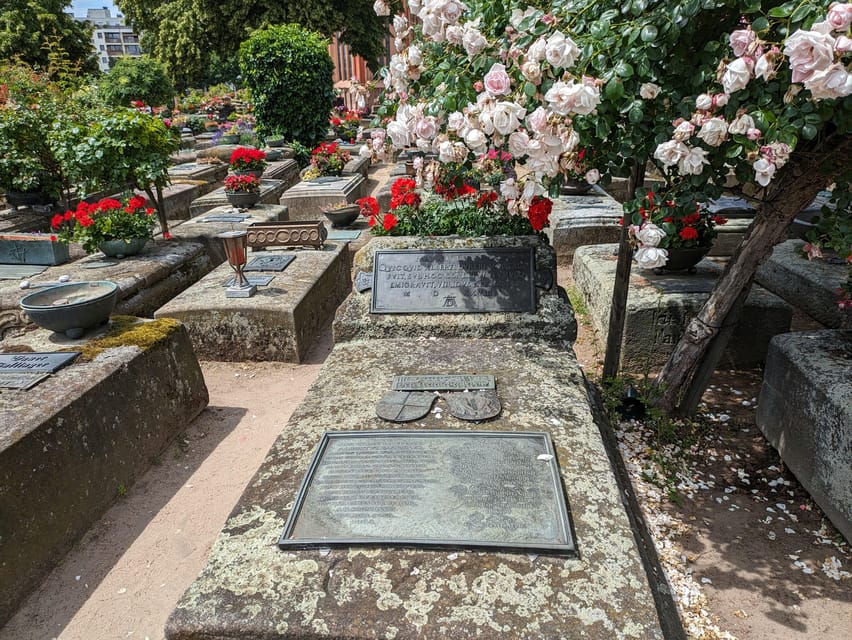
The epitaphs are especially important. These artistic memorials remember individuals, but they also tell you about their families, status, beliefs, and public identity. A good guide can turn a name and a date into a short account of how that person fitted into Nuremberg life.
I would not choose this tour if you want a fast list of headline attractions. I would choose it if you like places that reward attention. The cemetery asks you to slow down, look closely, and let the guide connect separate graves into a larger picture.
A few more Nuremberg half-days to weigh up
- Nuremberg: City Tour with the Bimmelbahn Train
★ 4.4 · 2,475 reviews - Nuremberg: Old Town Guided Walking Tour
★ 4.6 · 2,416 reviews - Nuremberg: Tunnels and Secret Passages in the City Wall Tour
★ 4.8 · 2,334 reviews
Meeting at Lindengasse and Johannisstraße
The tour begins at the east entrance of St. Johannis Cemetery, at the corner of Lindengasse and Johannisstraße. The meeting point matters because a large historic cemetery can have more than one entrance, and arriving at the wrong side could create an unnecessary scramble before the tour begins.
Give yourself enough time to identify the entrance and settle in. The supplied meeting information points specifically to the east entrance, so do not rely only on the name St. Johannis Cemetery when finding the starting place.
Wear comfortable shoes. The route covers about 1 kilometer, and the experience is built around walking from one point of interest to another. One piece of feedback described the route as manageable even for older people with a strong interest in history, but the tour is not suitable for people with a low level of fitness.
The group needs at least two participants for the tour to run. That is worth checking before you set your day around it, especially if you are visiting in a quieter period.
Reading the graves of patricians, craftsmen, and artists
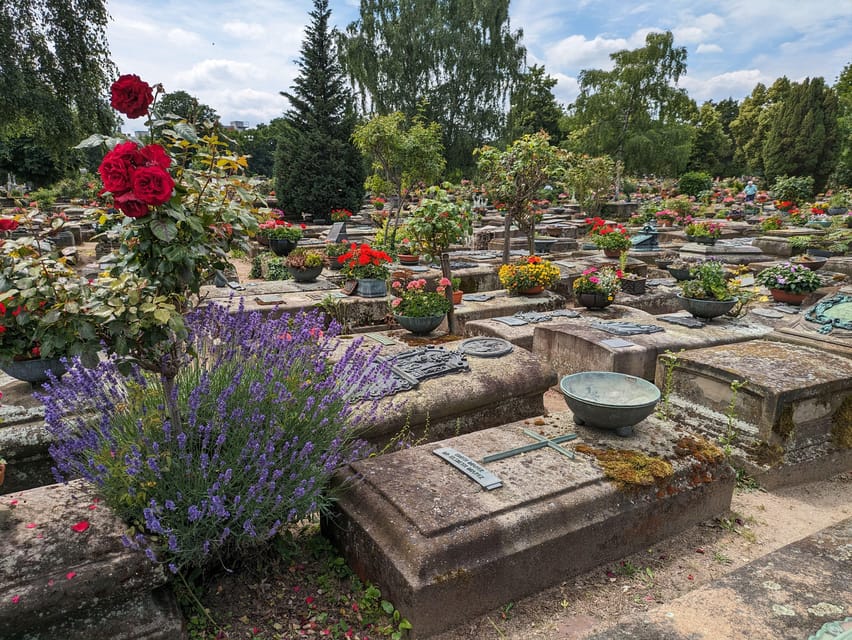
The first main section takes you through St. Johannis Cemetery itself. Rather than treating every grave as an isolated monument, the guide uses the burial ground to explain the city’s social and cultural past.
You can expect attention to the graves of patricians, craftsmen, artists, and politicians. That range is valuable because it avoids reducing Nuremberg to a few celebrated figures. The city’s story becomes broader when you see how different professions and social groups are remembered side by side.
The artistic epitaphs provide much of the visual interest. These memorials were not only practical markers. They also carried messages about family, reputation, faith, and memory. Your guide’s commentary helps you notice details you could easily pass without understanding.
This is where the quality of the guide matters most. Sabine Peters has been praised for presenting extensive historical information in an entertaining way, and another assessment described the biographies and history as coming alive. Those comments point to the tour’s real value: you are paying for interpretation, not simply access to a cemetery.
The experience remains personal even when the subject is serious. A cemetery can feel quiet and solemn, but the focus on individual lives gives the walk variety. You hear about people, families, work, and civic life rather than receiving only a general lecture about death and architecture.
Albrecht Dürer’s grave and the city’s artistic identity
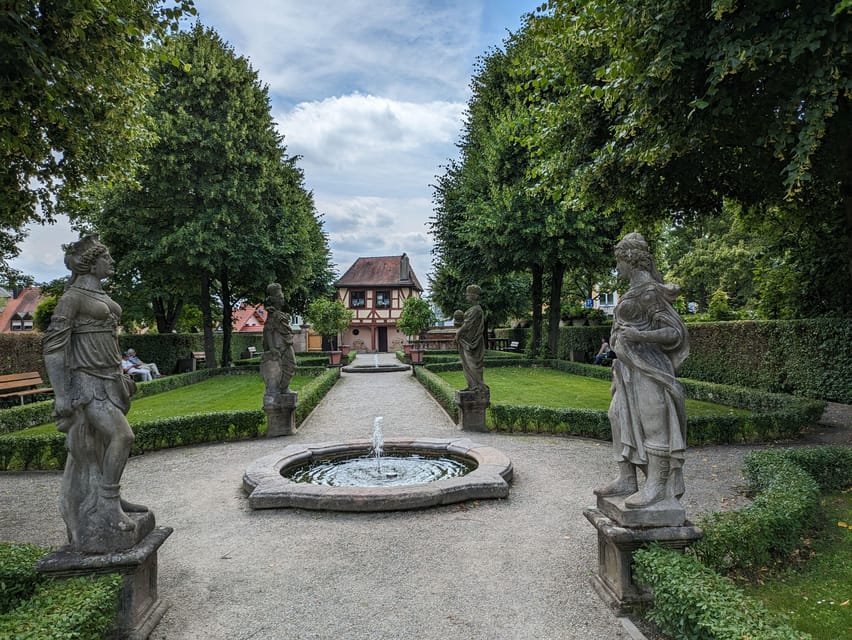
Albrecht Dürer’s grave is one of the named stops on the route. His name gives the cemetery a clear link to Nuremberg’s artistic identity and helps place the burial ground within the city’s wider cultural story.
The tour does not present Dürer’s grave as a stand-alone celebrity stop. It appears within a broader walk through the cemetery, alongside memorials connected to other parts of Nuremberg society. That balance is useful. You get a recognizable name, but you also see why the cemetery matters beyond one famous artist.
If you already know Dürer’s work, the stop gives you a physical connection to Nuremberg. If you do not, it still provides an anchor for the guide’s explanation of the city’s artists and public figures. I appreciate that the route combines a major cultural name with less familiar biographies.
Do not expect a long museum-style presentation devoted only to Dürer. The tour lasts 1.5 hours and includes both the cemetery and the Hesperidengärten. The grave is an important point in the walk, not the entire purpose of the experience.
Same city, a completely different sort of afternoon:
- Nuremberg: Medieval Dungeons Guided Tour
★ 4.8 · 1,726 reviews - Nuremberg: Walking Tour of Former Nazi Party Rally Grounds
★ 4.7 · 1,665 reviews - Medieval Tour in Nuremberg in Spanish
★ 5.0 · 1,374 reviews - Nuremberg: Historischer Kunstbunker WWII Art Bunker Tour
★ 4.8 · 921 reviews
The Hesperidengärten from May through October
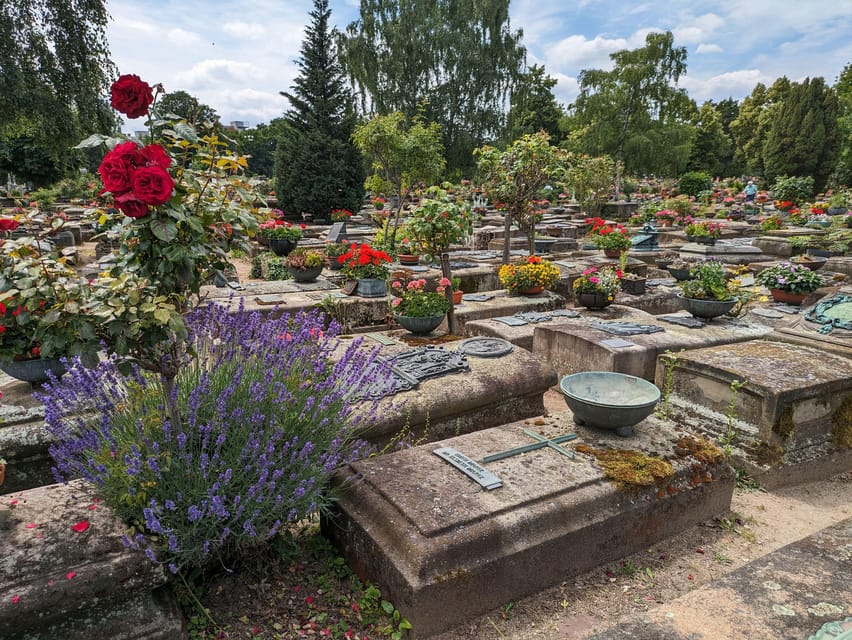
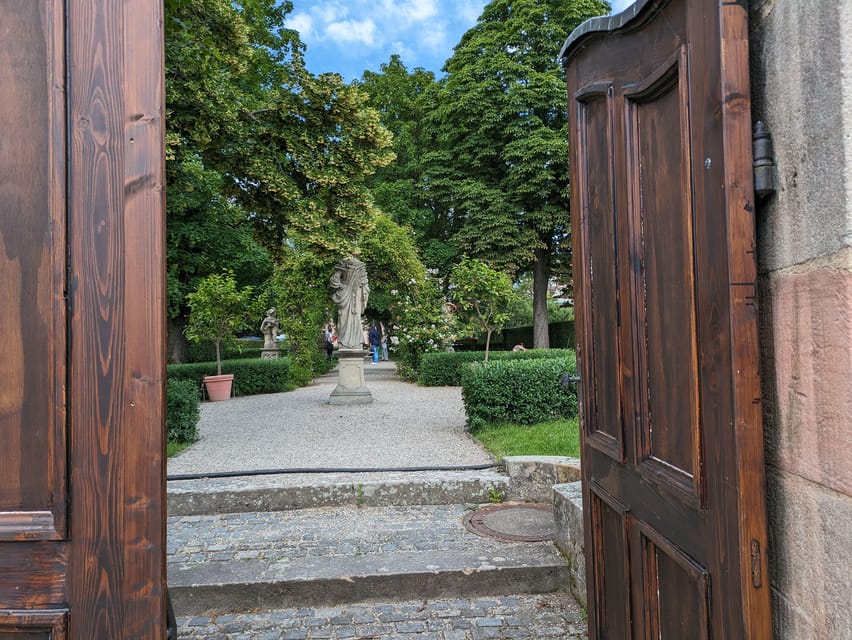
The final part of the route visits the Hesperides Gardens, known in German as the Hesperidengärten. These gardens were used for recreation and for cultivating Mediterranean fruit, which adds an unexpected layer to the Johannis district.
The garden stop changes the mood of the tour. After graves, epitaphs, and biographies, you move into a setting connected with leisure, plants, and private enjoyment. That contrast helps explain why the area is sometimes considered the green Johannis district.
I like this part because it shows that local history is not only found in churches, monuments, and official buildings. Gardens also reveal how people spent free time and what they valued. The Mediterranean fruit connection is a particularly interesting detail, since it links Nuremberg’s local garden culture with plants associated with a warmer climate.
The Hesperides Gardens are open for this tour only from May through October. If you book outside those months, the advertised garden portion cannot be visited. Even during the open season, keep your expectations measured. One assessment found the garden less interesting than the cemetery, and intense summer heat may have affected that impression. I would treat it as a worthwhile complement rather than the main reason to book.
The tour finishes at the Hesperidengärten. That ending is practical because you do not simply return to the starting entrance after the garden visit. You can plan the rest of your time from the garden area, though the supplied information does not specify onward transport or nearby stops.
What the guide adds in 90 minutes
A 1.5-hour tour is long enough to provide context but short enough to fit beside other Nuremberg plans. The route is not an all-day commitment, and the walking distance is modest at roughly 1 kilometer.
The strongest part of the guiding is the way information is packaged. Uwe K. described receiving extensive knowledge, while Carsten specifically praised Sabine Peters for making the tour both informed and entertaining. That combination matters. A long list of facts can blur together, but short biographies and clear connections give the cemetery a human shape.
Because the tour is conducted in German, your language ability will shape the experience. You should be comfortable following spoken German for historical explanations and biographies. The booking information lists German as the only language, so this is not a suitable choice if you need an English-language tour.
There is also a practical difference between joining a small group and arriving at a crowded attraction. The minimum group size is two, but no maximum group size is provided. I would not assume a private tour unless that is confirmed separately.
Is $17 a fair price?
At $17 per person, I consider the tour reasonably priced if you want interpretation rather than a self-guided walk. You are paying for 90 minutes with a live German-speaking guide, a structured route through two connected sites, and historical context that would be difficult to assemble from the gravestones alone.
The value is strongest for people who enjoy local history, memorial art, and unusual city attractions. The tour also gives you a focused way to visit a part of Nuremberg that can be overlooked in favor of better-known central sights.
The value is weaker if you only want to see a famous grave or stroll through a garden. You can expect the experience to spend most of its time on historical explanation, and the cemetery is the main attraction. The Hesperidengärten are a useful addition, but they may not satisfy someone looking for an elaborate botanical display.
Flexible booking helps reduce the risk. You can cancel up to 24 hours before the start for a full refund, and you can reserve now and pay later. Those terms are useful when your Nuremberg plans depend on weather, opening dates, or a changing schedule.
Who should book this Nuremberg walk?
I would recommend this tour to you if you enjoy:
- Local history told through real people and places
- Cemetery art, epitaphs, and historic memorials
- Albrecht Dürer and Nuremberg’s artistic past
- Quiet walks away from the busiest attractions
- Guided tours in German
- A short experience that fits into a larger city visit
It may not suit you if you need wheelchair access, have significant visual impairment, or find 1 kilometer of walking difficult. The activity is specifically not suitable for wheelchair users, visually impaired people, or people with a low level of fitness.
Hot weather is another factor to consider. One participant found the garden portion less appealing during a period of very high heat and suggested considering a different time of day. Since the cemetery and gardens are outdoors, a cooler morning or later part of the day may be more comfortable when those options are available.
The tour also works best when you are willing to listen. This is not a quick photo stop. Its appeal comes from the guide’s stories, and those stories are delivered in German.
Practical advice before you go
Bring comfortable shoes and plan to walk at an easy but steady pace. The route is not described as strenuous, but the activity is unsuitable for people with a low level of fitness.
Arrive at the east entrance at Lindengasse and Johannisstraße, not just somewhere in the wider Johannis district. I would also check that the garden portion is available in your travel month, since the Hesperidengärten can only be visited from May through October.
If you are visiting in summer, prepare for heat. The garden section may be less enjoyable in very hot conditions, and there is little reason to rush through a place whose appeal depends on looking carefully.
If you are visiting in October, bring a layer. A tour in chilly weather can still be rewarding, but the cemetery is an open-air setting. Brigitta from Canada found the historical material engaging despite cool conditions, which is a good reminder that the guide’s storytelling carries much of the experience.
Should you book the St. Johannis Cemetery tour?
Book it if you want a thoughtful, German-language look at Nuremberg through its people, graves, art, and gardens. The cemetery is the clear star, Albrecht Dürer’s grave gives the route a strong cultural link, and the Hesperidengärten add a pleasant connection to recreation and Mediterranean fruit growing.
Skip it if you want an English tour, need step-free access, or are mainly interested in grand interiors and famous central sights. Also think twice if your visit falls outside May to October and the garden stop is important to you.
For the price, the tour makes a good choice for German speakers who like history with a local scale. You get a manageable walk, a live guide, and a part of Nuremberg that many short city visits miss.
FAQ
Where does the tour begin?
The meeting point is at the east entrance of St. Johannis Cemetery, at Lindengasse and Johannisstraße in Nuremberg.
Where does the tour finish?
The tour finishes at the Hesperidengärten.
How long does the tour last?
The tour lasts 1.5 hours.
How much walking is involved?
The route covers about 1 kilometer of walking.
Is the tour available in English?
No. The tour is conducted in German, and German is the only language listed.
Does the tour visit Albrecht Dürer’s grave?
Yes. Albrecht Dürer’s grave is one of the guided stops.
Can I visit the Hesperidengärten all year?
No. The Hesperidengärten can only be visited as part of this tour from May through October.
How many people are needed for the tour to run?
A minimum of two participants is required.
Is the tour suitable for wheelchair users?
No. The activity is not suitable for wheelchair users, visually impaired people, or people with a low level of fitness.
Just added around Nuremberg
- Tour en español al Campo Zeppelin★ 5.0 · 8 reviews
- Stein: Public guided tour of the “Old Mine” museum★ 4.5 · 18 reviews
- “Rotes Bier” and “Blaue Zipfel”. A historical-culinary walk★ 4.4 · 190 reviews
- Nuremberg: Old Town Guided Tour By Bus★ 4.4 · 198 reviews
- Nürnberg Bachelor(ette) Party with Night PubCrawl★ 4.2 · 5 reviews
- Nuremberg: Bar and Club Tour with Free Shots and Free Entry★ 3.8 · 23 reviews
- Nürnberg kennenlernen: Highlights in der Altstadt★ 4.7 · 189 reviews
- Nuremberg: World War 2 History Tour with Beer Tasting★ 5.0 · 4 reviews
Nuremberg Tours, compared.


Tunnels and Secret Passages in the City Wall Tour
Read our review →

Walking Tour of Former Nazi Party Rally Grounds
Read our review →
Browse the lists this tour appears in