
Review · NUREMBERG TOURS
Nürnberg: Mörder, Fälscher, Messerstecher
Nuremberg’s Old Town looks polished today, but this walking tour pulls back the curtain on its grim medieval past. You’ll hear about hangman Franz Schmidt, witch hunts, public punishment, debtor’s prison, and the cramped Lochgefängnisse, all while walking through the city center. I love the way the route ties dark stories to places you might otherwise pass without a second thought. I also like the modest $15 price for two hours with a live guide.
The main drawback is language: the tour is in German only. You also won’t enter the Hangman’s House, town hall, or medieval dungeons, since admission is not included. Still, if you understand German and want something more focused than a standard sightseeing walk, this is a strong way to see Nuremberg from an unusual angle.
Key points at a glance
- Franz Schmidt at the Hangman’s House: Learn about Nuremberg’s most famous executioner and the unusual place he called home.
- Crime along the everyday city route: The tour connects witch hunts, public punishment, and executions with the wine market, town hall, Hauptmarkt, and Fleischbrücke.
- Medieval prisons: Hear how the Lochgefängnisse worked and what conditions prisoners faced underground.
- A focused two-hour walk: The route covers several central Old Town sights without turning into a full survey of Nuremberg.
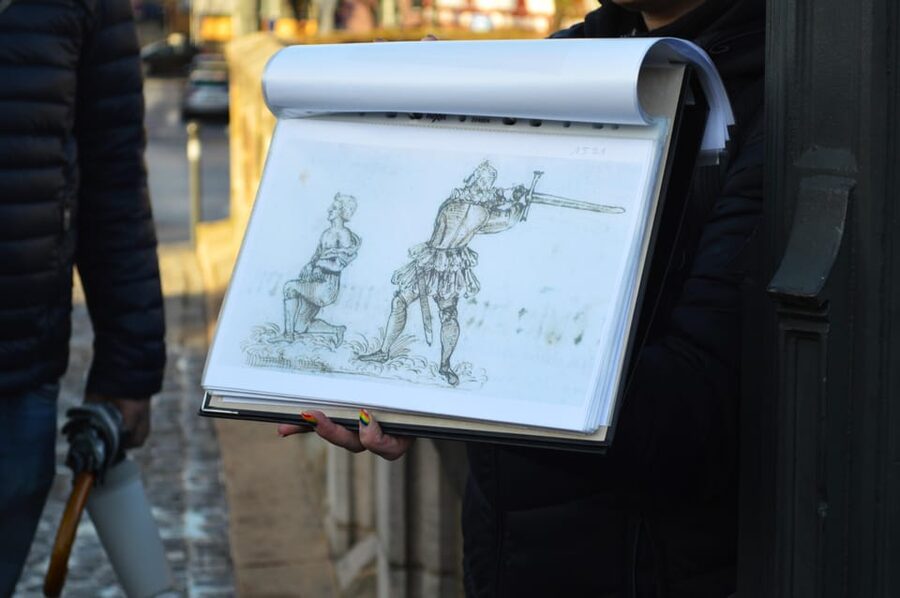
- German-language guiding: The guide carries a picture folder and a green Geschichte Für Alle name tag.
- Good value at $15: The fee covers the walking tour and qualified guide, while entry fees are separate.
Nuremberg’s darker story begins at the Hangman’s House
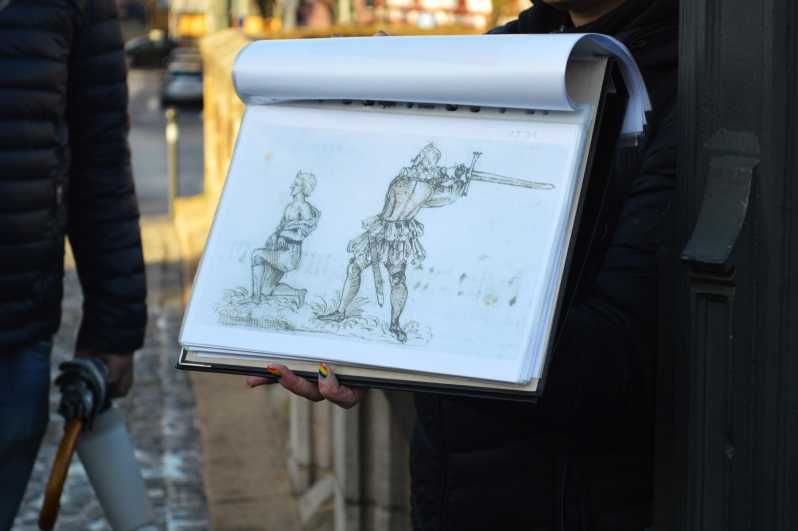
Meet your guide in front of the Henkerhaus Museum, also called the Hangman’s House. Look for a guide carrying a picture folder and wearing a green name tag marked Geschichte Für Alle. This clear meeting point is useful in a busy Old Town, especially if you are arriving close to the start time.
The first subject is Franz Schmidt, Nuremberg’s best-known hangman. His story gives the tour a human face from the beginning. Executioners held an uneasy place in medieval society. Their work was official, yet their profession could set them apart from ordinary citizens. Schmidt’s career offers a way to understand that contradiction, along with the rules and rituals surrounding capital punishment.
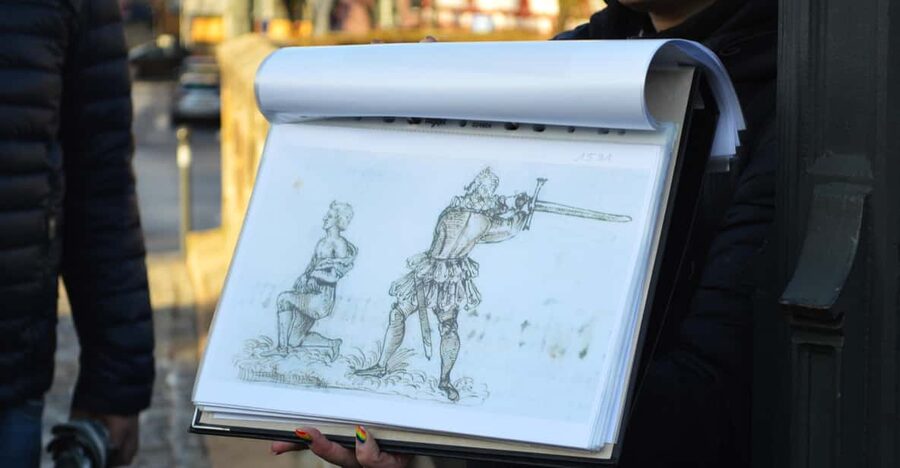
The stop is outside the museum, so you should not expect a museum visit as part of the $15 fee. Entry to the Hangman’s House is not included. That is an important detail if you hoped to see the building’s interior or exhibits. The guide’s picture folder helps add visual context, but the experience remains a walking talk rather than a series of indoor visits.
I like this opening because it sets the tone at once. You are not simply hearing old crimes as isolated tales. You are learning how Nuremberg organized authority, punishment, and social order, using a real place and a real official as your starting point.
A few more Nuremberg half-days to weigh up
- Nuremberg: City Tour with the Bimmelbahn Train
★ 4.4 · 2,475 reviews - Nuremberg: Old Town Guided Walking Tour
★ 4.6 · 2,416 reviews - Nuremberg: Tunnels and Secret Passages in the City Wall Tour
★ 4.8 · 2,334 reviews
The Weinmarkt and the history of witch hunts
From the Hangman’s House, the group walks for about four minutes to the Weinmarkt. This is a short transfer, so the route stays compact and easy to follow. At the wine market, the subject shifts to witch hunts in Nuremberg.
Witch-hunt stories can easily become sensational. A good guide needs to explain more than accusations and punishments, and the tour’s approach is built around the city’s justice system and social fears. You will hear how suspicion could become a legal matter and how authorities dealt with people accused of witchcraft.
This stop also shows why a themed walk can add value to a familiar city center. You might visit the Weinmarkt for its architecture or location, then leave without considering the darker events connected with it. Here, the square becomes part of a wider story about accusation, law, and death.
The tour does not present Nuremberg only as a place of crimes. It also looks at the machinery behind them. That distinction matters. You get a picture of the officials, courts, prisons, punishments, and public spaces that shaped daily life.
The town hall and Nuremberg’s medieval justice system
After the Weinmarkt, the route takes about three minutes to the Old City Hall. This is one of the central stops, though the tour remains outside the building. Admission to the town hall is not included.
Here, the guide explains more about Nuremberg’s medieval justice system. This part should appeal to you if you want context rather than a string of gruesome anecdotes. The town hall represents civic power, and the discussion helps connect that power to the cases already introduced at the Hangman’s House and Weinmarkt.
The short distance between stops keeps the pace manageable. You spend most of the two hours listening rather than rushing across town. That makes the tour a good choice for a first afternoon in Nuremberg, when you want to get oriented while exploring a specific theme.
I would not book this as a substitute for a standard town hall visit. If you want rooms, displays, or an interior tour, you will need a separate admission. Think of this stop as an outdoor history lesson tied to the building’s role in city government.
Inside the story of the Lochgefängnisse
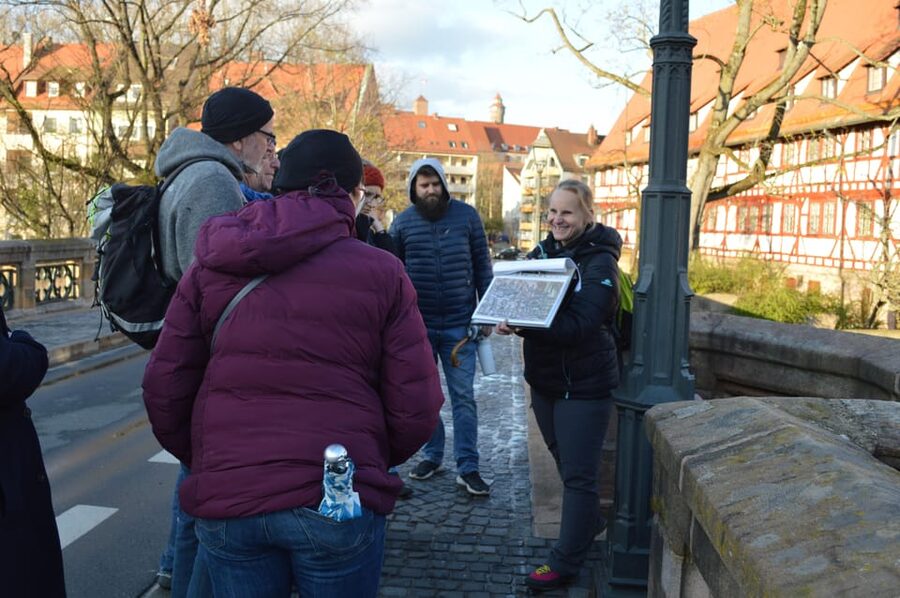
The next stop is the medieval prison known as the Lochgefängnisse. The name refers to the old prison complex, and the guide explains its purpose and conditions. The route places special attention on what imprisonment meant in medieval Nuremberg.
Entry to the dungeons is not included. That means you will hear about the prison, but you should not assume you will go underground. This is one of the clearest practical limits of the tour. If seeing the cells is high on your list, check separately for an admission option or another opening.
Even without entry, the subject is valuable because it adds a missing part of the justice story. The Hangman’s House introduces the person who carried out sentences. The town hall represents civic authority. The Lochgefängnisse shows where accused or convicted people could be held.
The guide’s explanations are likely to be most useful here if you care about living conditions and the purpose of punishment. The tour does not only ask who was punished. It also considers how the city stored prisoners and how medieval authorities used confinement.
Same city, a completely different sort of afternoon:
- Nuremberg: Medieval Dungeons Guided Tour
★ 4.8 · 1,726 reviews - Nuremberg: Walking Tour of Former Nazi Party Rally Grounds
★ 4.7 · 1,665 reviews - Medieval Tour in Nuremberg in Spanish
★ 5.0 · 1,374 reviews - Nuremberg: Historischer Kunstbunker WWII Art Bunker Tour
★ 4.8 · 921 reviews
Hauptmarkt, Christkindlesmarkt, and public death
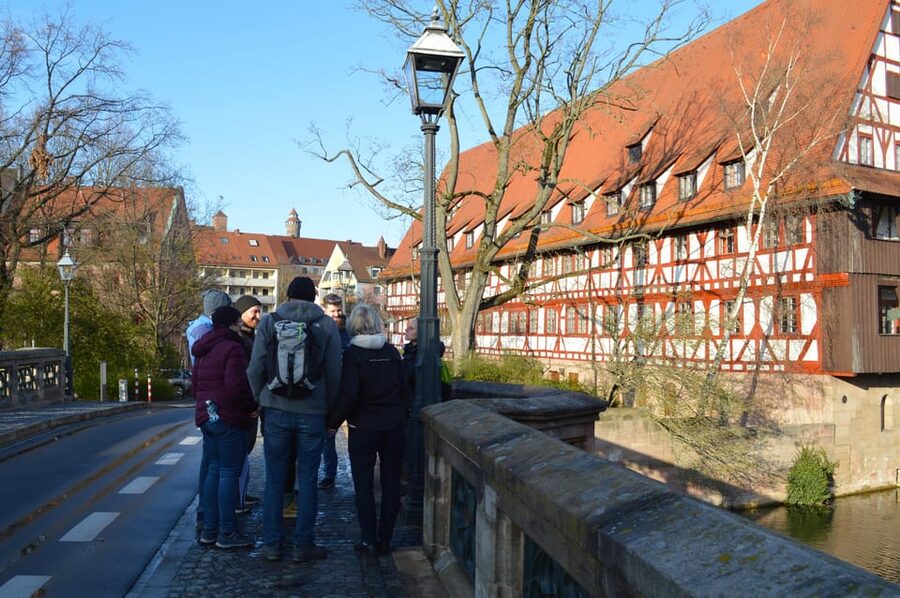
The walk then moves to the Hauptmarkt, Nuremberg’s famous main market. In December, this is the setting for the Christkindlesmarkt, one of the city’s best-known annual events. During the rest of the year, it remains a key public square and an essential stop on any central Nuremberg walk.
The tour gives the square a darker context. You will learn how the Hauptmarkt related to everyday crime and the death penalty. That contrast is striking. The same broad public space associated with food stalls, seasonal shopping, and festive lights also had a connection with public justice and death.
This is one of the tour’s strongest ideas: familiar places do not have only one story. You can return to the Hauptmarkt later for the Christkindlesmarkt, then remember that public squares once served far more severe civic purposes.
The stop may feel especially worthwhile if you have already seen the square on a regular sightseeing walk. It adds a second layer without requiring a long detour. Keep in mind that the tour does not promise a special Christmas market visit. If you book in December, you will walk through the market area, but the focus remains crime and punishment.
Fleischbrücke and corporal punishment
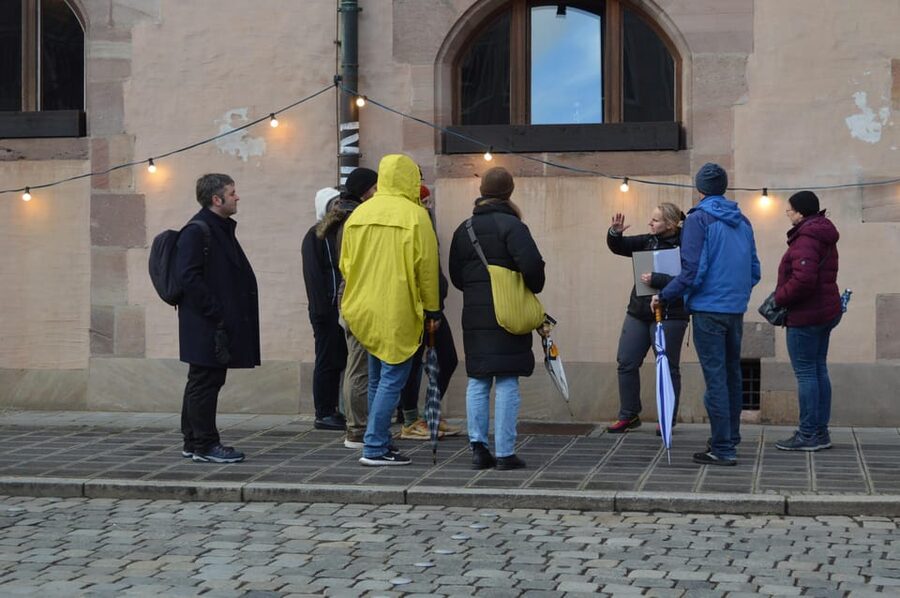
From the Hauptmarkt, it is about two minutes on foot to the Fleischbrücke. The bridge provides the setting for a discussion of corporal punishment in the Middle Ages.
This subject can be uncomfortable, but it is central to understanding the period. Punishment was often public, physical, and intended to warn everyone who watched. The tour places those practices in the actual street pattern of the city, rather than treating them as distant textbook material.
I appreciate the short walk here. The route keeps shifting between major landmarks and less obvious points, so you get both orientation and detail. Fleischbrücke may not be the stop you would choose for a crime-themed tour on your own, which makes the guide’s local focus useful.
The guide also helps you understand how punishment fitted into ordinary urban life. Markets, bridges, civic buildings, and streets were not separate from justice. They were part of the same public world.
Findelgasse and the watchmaker Peter Henlein
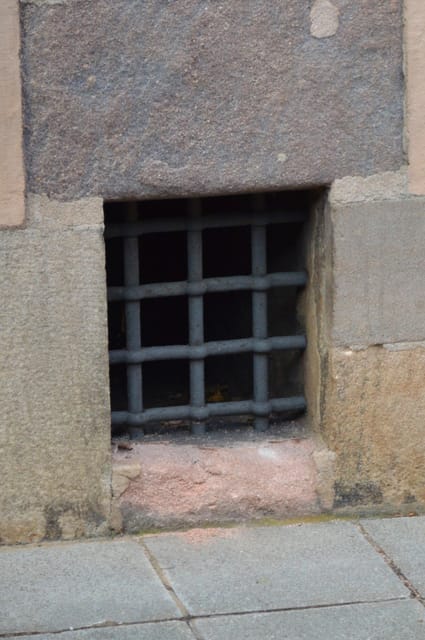
The route continues for about five minutes to Findelgasse. Here, the focus changes from punishment to the story of Peter Henlein, a famous watchmaker.
This shift is welcome. A two-hour tour filled only with executions and prison conditions could become heavy. Peter Henlein’s story gives the walk another side of medieval and early modern urban life, while still fitting the tour’s interest in people whose work shaped Nuremberg.
The stop also shows that the experience is not simply a list of violent episodes. Its wider subject is the city’s people, trades, laws, and public spaces. You move from a hangman to accused witches, civic officials, prisoners, victims of corporal punishment, and a watchmaker.
Findelgasse is near the end of the route, so the guide’s storytelling may also help tie the different subjects together. You have seen how a city can preserve famous names for very different reasons.
The Schuldturm and the end of the walk
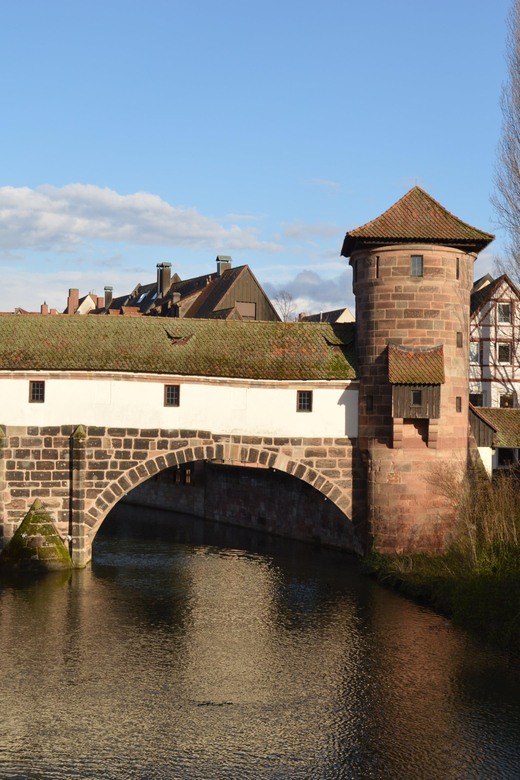
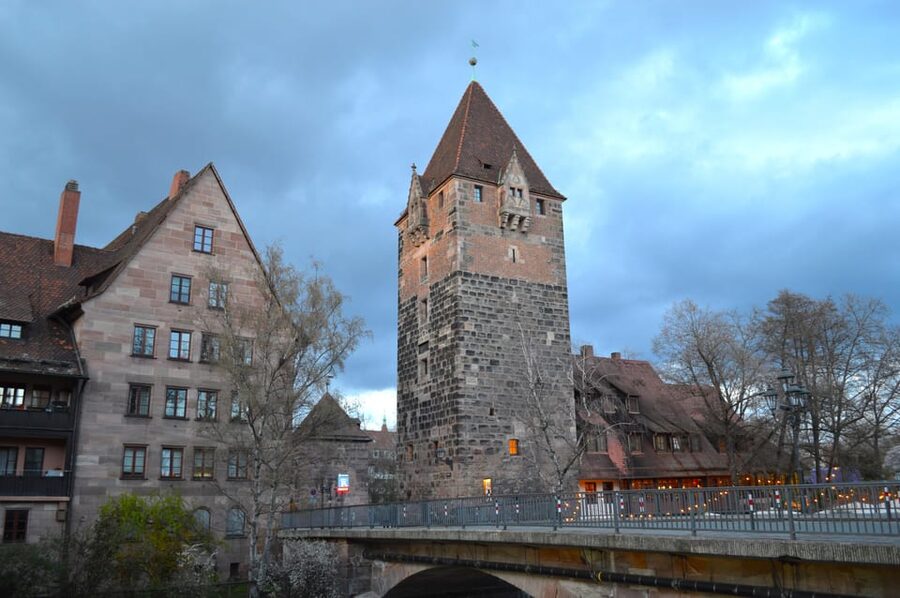
The final historical stop is the Schuldturm, or debtors’ tower. The guide explains its purpose and the people held there. This brings the route back to imprisonment, but from a different angle than the Lochgefängnisse.
A debtors’ tower raises practical questions about the old justice system. Who could be locked up for money owed? What did confinement mean when the offense involved debt rather than violence? The tour uses this final stop to broaden your view of medieval punishment.
The tour ends at Vordere Insel Schütt, in central Nuremberg. The end point is not the same as the starting point, but both are within the Old Town area. You can continue exploring on foot after the tour, though the provided information does not specify a particular nearby attraction or transport connection.
Because the route finishes after the Schuldturm, wear comfortable shoes and dress for the weather. The walk includes several short transfers, but it is still a two-hour outdoor experience. It is not suitable for people with mobility impairments.
What the guide adds to the experience
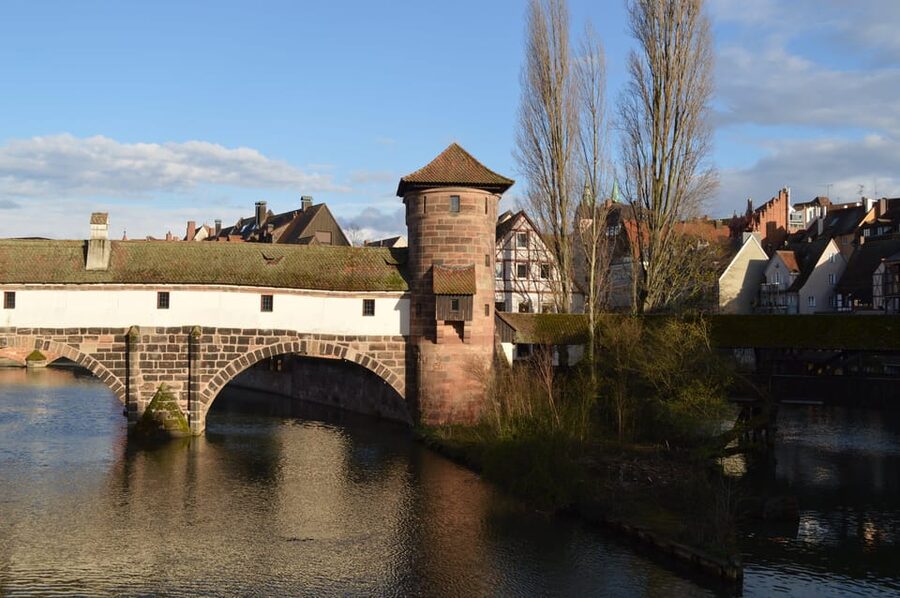
The guide is German-speaking, and German is the only stated tour language. You should book only if you can follow a detailed historical talk in German. This is not a multilingual outing with an English option.
The guide carries a picture folder, which can help explain buildings, people, and events that are difficult to picture from the street. The green Geschichte Für Alle name tag also makes the guide easier to spot at the Hangman’s House.
The strongest feedback about the guiding points to clear, professional delivery, useful answers to questions, and a lively pace. One German-speaking participant specifically valued the guide’s openness and care when handling both the presentation and questions. Another found the tour easy to follow even in rain and darkness, and praised its short, lively storytelling.
That matters because dark history can become either too dry or too theatrical. The guide’s job is to keep the material human and clear. The reported experience suggests the tour handles questions well, which is useful if you want more than a memorized speech.
No guide’s personal name is provided in the available details, so I cannot point you to a specific presenter. The provider is Geschichte Für Alle e.V., a local organization focused on presenting Nuremberg’s past through guided experiences.
Is $15 a fair price?
At $15 per person, this is a good-value tour if you want two hours of structured guiding in the Old Town. The fee includes the walking tour and a qualified guide. For a compact route covering the Hangman’s House, Weinmarkt, town hall, medieval dungeons, Hauptmarkt, Fleischbrücke, Findelgasse, and Schuldturm, the cost is modest.
The value is strongest when you want interpretation. You can walk past several of these places for free, but the tour explains why they matter and connects them into one story. That saves you from piecing together separate information as you go.
The price is less attractive if you expect indoor access. Entry to the Hangman’s House, town hall, and medieval dungeons is not included. You may need to pay separately if you want to enter those sites, so add those costs to your plan.
You can cancel up to 24 hours before the start for a full refund, and you can reserve now and pay later. For groups of 10 or more, contact Geschichte Für Alle e.V. by email at [email protected]. Bookings made through GetYourGuide do not receive a separate invoice, with the booking confirmation serving as proof of payment.
Who should book this Nuremberg walk?
I would recommend this tour to German-speaking visitors who have already seen the main Old Town sights and want a more specific theme. It also suits history fans, visitors interested in legal systems, and anyone who prefers local stories over a broad list of monuments.
It may work well on a first visit if you want an introduction to central Nuremberg with a clear focus. The route includes major places such as the Hauptmarkt and town hall, so you still gain some orientation. Just do not expect a general overview of every important sight in the city.
Families with older children may find the subject compelling, but the themes include executions, witch hunts, prison conditions, and corporal punishment. Consider the age and comfort level of everyone in your group before booking.
I would skip it if you need an English-language tour, cannot walk comfortably for two hours, or mainly want interior visits. The tour is also not the best match for someone looking for a light, festive introduction to the Christkindlesmarkt. Its purpose is to examine the darker side of Nuremberg, even when the route passes through cheerful public places.
My booking verdict
Book this walk if you understand German and want a focused look at how crime and justice shaped Nuremberg’s Old Town. The Franz Schmidt material, witch-hunt discussion, Lochgefängnisse, Hauptmarkt, Fleischbrücke, and Schuldturm create a clear story, while the $15 cost keeps the risk low.
Skip it if you need English, indoor admissions, or full mobility access. For the right visitor, this is an informative and well-paced way to see familiar Nuremberg places with their harder stories brought back into view.
FAQ
Where does the tour start?
The tour starts in front of the entrance to the Henkerhaus Museum, also called the Hangman’s House, in Nuremberg’s Old Town.
How do I identify the guide?
The guide carries a picture folder and wears a green name tag marked Geschichte Für Alle.
How long does the tour last?
The walking tour lasts two hours.
What language is the tour in?
The live tour guide speaks German. German is the only language listed for this activity.
Is entry to the Hangman’s House included?
No. Entry to the Hangman’s House is not included in the tour price.
Can I enter the town hall during the tour?
Entry to the town hall is not included. The tour provides a guided stop at the Old City Hall.
Is entry to the medieval dungeons included?
No. Admission to the Lochgefängnisse, also called the medieval dungeons, is not included.
Where does the tour finish?
The tour finishes at Vordere Insel Schütt, 90403 Nürnberg-Mitte, Germany.
Is the tour suitable for people with mobility impairments?
No. The activity is listed as unsuitable for people with mobility impairments.
Can I cancel my booking?
Yes. You can cancel up to 24 hours in advance for a full refund. You can also reserve now and pay later.
Just added around Nuremberg
- Tour en español al Campo Zeppelin★ 5.0 · 8 reviews
- Stein: Public guided tour of the “Old Mine” museum★ 4.5 · 18 reviews
- “Rotes Bier” and “Blaue Zipfel”. A historical-culinary walk★ 4.4 · 190 reviews
- Nuremberg: Old Town Guided Tour By Bus★ 4.4 · 198 reviews
- Nürnberg kennenlernen: Highlights in der Altstadt★ 4.7 · 189 reviews
- Nürnberg Bachelor(ette) Party with Night PubCrawl★ 4.2 · 5 reviews
- Nuremberg: Bar and Club Tour with Free Shots and Free Entry★ 3.8 · 23 reviews
- Nuremberg: World War 2 History Tour with Beer Tasting★ 5.0 · 4 reviews
Nuremberg Tours, compared.

Tunnels and Secret Passages in the City Wall Tour
Read our review →

Walking Tour of Former Nazi Party Rally Grounds
Read our review →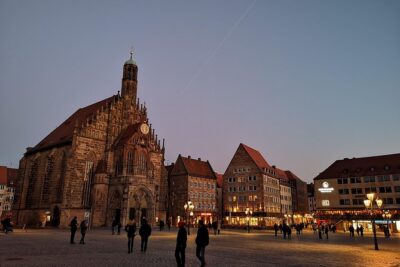
Browse the lists this tour appears in