
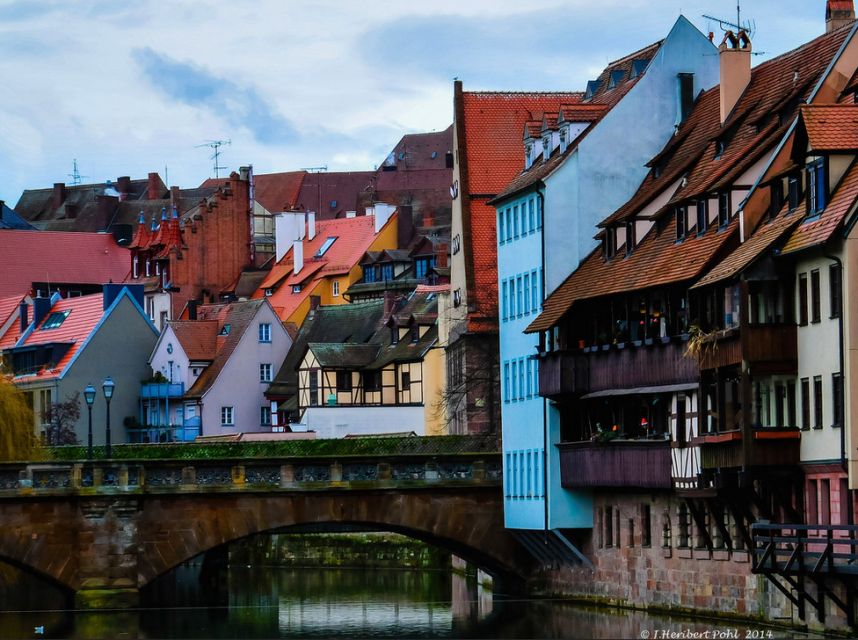
Review · NUREMBERG TOURS
Nuremberg: 1.5-Hour Medieval Tour
Nuremberg’s medieval story comes alive on foot, beginning at the Schöner Brunnen fountain and climbing toward Nuremberg Castle. The route links grand landmarks with the streets where artists, merchants, and other city figures lived and worked.
I like the focus on Albrecht Dürer, whose former home gives the walk a personal face, and I like the way the route connects the Sebalder and Lorenzer old towns rather than treating the castle as an isolated sight. The guide brings useful local context, with Claudia singled out for making the past vivid and easy to follow.
The main drawback is practical: the tour is conducted in German, needs at least 10 participants, and is not suitable for wheelchair users. At 1.5 hours, it gives you a strong introduction rather than a full visit to Nuremberg’s museums or castle interiors.
Key points at a glance
- Starts at Hauptmarkt: Meet beside the Schöner Brunnen, one of the city’s best-known central landmarks.
- Castle-centered route: Hear about Nuremberg Castle and the history of the Burgfreiung.
- Dürer’s Nuremberg: Visit the outside of Albrecht Dürer’s house and learn about his work and difficult times.
- Two old towns in one walk: See both the Sebalder Altstadt and Lorenzer Altstadt.
- Italian connections: Learn how Italian influence shaped Nuremberg’s place in German history.
- Simple, good-value format: A 90-minute guided walk costs $23 per person, with entrance fees and transport left out.
Why this 90-minute walk works well
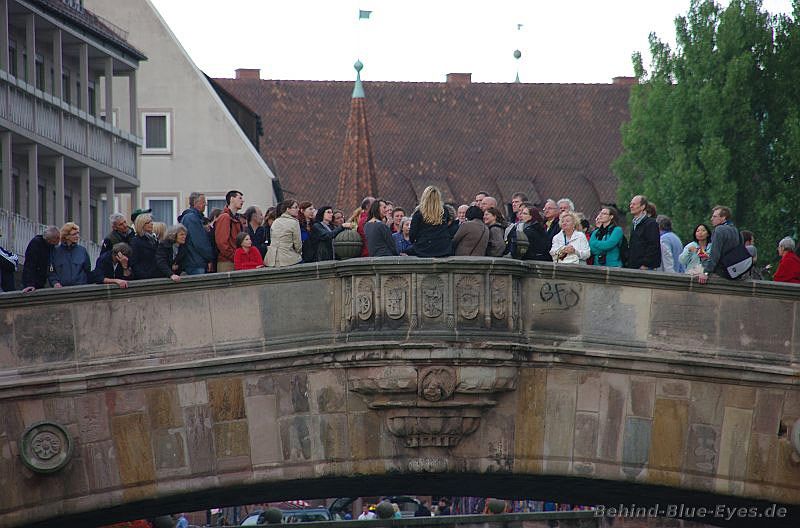
Nuremberg is easy to underestimate. Its old town has handsome squares, churches, fountains, and restored buildings, but a quick stroll can leave you with a collection of attractive sights and no clear sense of how they fit together. This tour gives those places a common thread: the medieval growth of Nuremberg as a city of power, trade, religion, art, and international connections.
The route is short enough to fit into a busy day. You can take it early in your stay to get your bearings, or use it near the end as a final look at the old town. I especially like the length for visitors who want context without committing to a half-day program.
The format is a guided walking tour, not a museum visit. Your $23 pays for the guide’s explanation and the organized route. Food, drinks, public transport, and entrance fees are not included, so think of this as an outdoor introduction. That is useful if you plan to visit the castle or Dürer’s house separately, since you can choose later which interiors deserve your time and money.
The guide speaks German. That point matters more than the low price. If you do not understand German, this is not the right choice for your main introduction to Nuremberg. If you do speak German, the tour offers a direct way to hear local history in the language of the city.
A few more Nuremberg half-days to weigh up
- Nuremberg: City Tour with the Bimmelbahn Train
★ 4.4 · 2,475 reviews - Nuremberg: Old Town Guided Walking Tour
★ 4.6 · 2,416 reviews - Nuremberg: Tunnels and Secret Passages in the City Wall Tour
★ 4.8 · 2,334 reviews
Meeting at the Schöner Brunnen
The tour begins at Hauptmarkt, Nuremberg’s central market square, beside the Schöner Brunnen. This is a practical meeting point because it is prominent and easy to identify, though you should allow time to find the fountain in the square rather than arriving at the last moment.
Beginning here puts you in the middle of Nuremberg’s public life. The square helps set up the story of a city that was shaped by commerce, civic power, and movement through its central streets. Your guide can explain the setting before leading you toward the castle district.
The fountain itself gives the tour a strong visual starting point. You are not meeting beside an anonymous office or hotel entrance. You begin beside one of the old town’s major landmarks, already surrounded by the architecture that gives Nuremberg its character.
The activity ends back at the same meeting point. That makes the walk easy to combine with lunch, shopping, or another appointment in the old town. It also means you do not need to arrange a return bus or learn a new route at the end.
Nuremberg Castle and the Burgfreiung
The castle is the route’s main dramatic stop. From its position above the old town, Nuremberg Castle helps you understand the city’s importance and its relationship with rulers and civic power. The tour includes an explanation of the castle and the Burgfreiung, the area associated with the castle’s special status.
You should expect to hear history from the outside rather than take a full castle tour as part of this activity. Entrance fees are not included, so the guide’s role here is to explain what you are seeing, point out the significance of the area, and place the castle within Nuremberg’s medieval development.
That approach suits visitors who want orientation before deciding on an interior visit. A castle can be hard to read without context. Walls, courtyards, towers, and open spaces tell only part of the story. A guide can help connect the physical site with the people and institutions that used it.
The route may also involve uneven streets and changes in level. The information specifically says the activity is not suitable for wheelchair users, so anyone with mobility concerns should take that warning seriously. Comfortable shoes are a sensible choice for any walk through the old town.
Albrecht Dürer’s house and the city’s artistic life
The stop at Albrecht Dürer’s house gives the tour a human focus. Instead of hearing only about rulers and buildings, you hear about a working artist who lived in Nuremberg and whose name remains closely tied to the city.
The guide discusses Dürer’s work, his life, and the troubled times around him. That combination is useful. You get more than a famous name and a photo stop. You hear how an individual career fits into the wider story of medieval and early modern Nuremberg.
The experience does not include an entrance fee, so plan on seeing the house as part of the walking route unless you arrange a separate visit. This is one of the tour’s built-in limitations, but also one of its strengths. The guide can introduce Dürer without turning the whole outing into a museum visit.
I like this balance because it leaves room for your own choices. If Dürer interests you, you can return later and spend more time at the house. If your main interest is the city itself, the stop remains focused and does not consume the entire afternoon.
The tour also brings in other personalities who lived and worked in Nuremberg during the Middle Ages. The supplied details do not name all of them, so you should expect a broader city story rather than a fixed list of famous figures. That is a good reason to listen closely and ask questions in German if you can.
Same city, a completely different sort of afternoon:
- Nuremberg: Medieval Dungeons Guided Tour
★ 4.8 · 1,726 reviews - Nuremberg: Walking Tour of Former Nazi Party Rally Grounds
★ 4.7 · 1,665 reviews - Medieval Tour in Nuremberg in Spanish
★ 5.0 · 1,374 reviews - Nuremberg: Historischer Kunstbunker WWII Art Bunker Tour
★ 4.8 · 921 reviews
Sebalder and Lorenzer Altstadt
Nuremberg’s old town is split into distinct areas, and the tour covers both the Sebalder Altstadt and the Lorenzer Altstadt. This is one of the best reasons to choose the walk over a simple castle visit. You see how different parts of the historic center relate to one another.
The Sebalder side is connected with the castle and Dürer’s house, making it a natural part of the opening route. As you move through its streets, the guide explains how people lived and worked in the medieval city and how those living conditions have changed over time.
The Lorenzer side adds a second perspective. Rather than turning back after the castle district, the tour continues across the old town and shows you another part of Nuremberg’s historic center. The walk helps you picture the city as a functioning place, not just a row of preserved monuments.
Do not expect every building to receive a long explanation. Ninety minutes passes quickly, especially when the group stops at several important points. The benefit is the overall map in your head. Afterward, you can return to the streets or sights that caught your attention.
Venetian Nuremberg and Italian influence
The final part of the route introduces what is described as Venetian Nuremberg and the influence of Italians on German history. This is a less obvious angle than the castle or Dürer, and it gives the tour a welcome wider frame.
Nuremberg’s story was not sealed inside its walls. The city was connected to people, ideas, goods, and artistic influences from elsewhere. The Italian connection helps explain how German cities developed through contact with the wider European world.
You should not book this walk expecting a detailed study of Italian architecture or a dedicated food experience. Food and drinks are not included, and the tour remains a medieval history walk. Still, this section adds variety and keeps the route from becoming a simple parade of local landmarks.
For me, this is the sort of detail that can make a short tour worthwhile. A guide can point out a connection you might otherwise miss, then leave you with a question to explore later. That is a useful outcome from a 90-minute introduction.
The guide makes the difference
The strongest praise attached to this experience focuses on the guide’s storytelling. Claudia is specifically thanked for bringing history to life and making the walk feel distinctive. Another review highlights how much a good guide can communicate compared with reading alone and describes the guide as well informed and good at choosing interesting places.
Those comments point to the real value of this activity. The buildings are already in Nuremberg. You can walk past the castle, Dürer’s house, and the old town streets without paying for a guide. You pay here for selection, order, and explanation.
The tour is offered in German, and a private group is available. The provided details do not state the private-group price or exact arrangements, so you should check those before booking. A private option may suit families, clubs, or groups that want to ask more questions, but the standard price is the clearer value for individual bookings.
The minimum group size is 10 people. This is important when you are planning around a specific day. Check availability for the start time and confirm that the minimum is met before building the rest of your schedule around the walk.
What $23 buys you
At $23 per person, the tour is priced as a modest guided introduction to central Nuremberg. I consider that fair if you want a local explanation and prefer a clear route to wandering without a plan.
The price does not cover admissions. That keeps the basic cost down, but it also means you may spend more if you decide to enter the castle or Dürer’s house afterward. Public transport is not included either, though the start and finish in the old town make this less important once you are already in central Nuremberg.
You should judge the value by your interests. If you enjoy city history, want to understand the old town’s layout, and speak German, the price is sensible. If you want a museum-heavy visit, a detailed castle interior tour, or commentary in English, you will need another arrangement.
The free cancellation policy adds flexibility. You can cancel up to 24 hours in advance for a full refund, and you can reserve now while paying later. Those terms are useful when your itinerary is still changing, especially since the minimum group size can affect whether the departure works for you.
Who should book this Nuremberg walk
This tour suits you best if you want a focused introduction to Nuremberg’s medieval center rather than a long day of sightseeing. It works particularly well for:
- German-speaking visitors who want local historical context
- First-time visitors who want to understand the old town’s layout
- People interested in Albrecht Dürer and the city’s artistic past
- Visitors who want to compare the Sebalder and Lorenzer districts
- Anyone with only 90 minutes available
- Private groups looking for a tailored booking option
It is less suitable if you need wheelchair access, want commentary in English, or prefer to spend most of your time inside museums. It is also not the best match if you need a guaranteed departure for fewer than 10 people.
Because the route returns to Hauptmarkt, you can use the tour as a starting point for the rest of your day. Afterward, you can decide which sights deserve a closer look. That makes the walk practical even for independent visitors who normally avoid guided activities.
Practical details before you go
Meet at the fountain Schöner Brunnen in Hauptmarkt. The tour ends at the same place, which keeps the plan simple and avoids a one-way route that leaves you searching for your next connection.
The duration is 1.5 hours. Starting times vary, so check availability before booking. The tour includes a live German-speaking guide, but no food, drinks, public transport, or entrance fees.
The activity is not suitable for wheelchair users. Since the route goes through the castle area and historic old-town streets, wear shoes that are comfortable for walking and expect the ground to be less even than a modern city pavement.
The published rating is 4.6 from 33 reviews. The most praised feature is the guide’s ability to make history understandable and engaging, with Claudia receiving especially warm thanks. That praise does not remove the language limitation, but it does tell you where the experience earns its price: in the guide’s explanation rather than in included admissions or extras.
Should you book it?
Book this tour if you speak German and want a compact, well-organized introduction to Nuremberg’s medieval heart. The combination of Nuremberg Castle, Dürer’s house, both old towns, and the Italian connection gives the 90 minutes a useful range.
Skip it if you need an English-language tour, wheelchair access, or a full castle and museum visit. Also check the minimum of 10 participants before you rely on a particular departure.
For the right visitor, $23 is a reasonable way to turn a pretty old town into a city you understand. You leave with the main landmarks connected, a better sense of where to explore next, and a clearer picture of why Nuremberg mattered.
FAQ
How long is the Nuremberg Medieval Tour?
The tour lasts 1.5 hours.
How much does the tour cost?
The listed price is $23 per person.
Where does the tour begin?
It begins at Hauptmarkt square, at the Schöner Brunnen fountain.
Where does the tour end?
The activity ends back at the meeting point at Hauptmarkt.
What language is the tour conducted in?
The live tour guide speaks German.
Is the tour suitable for wheelchair users?
No. The activity is not suitable for wheelchair users.
What is the minimum number of participants?
The minimum number of participants is 10 people.
Are entrance fees included?
No. Entrance fees are not included in the tour price.
Can I cancel for a full refund?
Yes. You can cancel up to 24 hours in advance for a full refund.
Just added around Nuremberg
- Tour en español al Campo Zeppelin★ 5.0 · 8 reviews
- Stein: Public guided tour of the “Old Mine” museum★ 4.5 · 18 reviews
- “Rotes Bier” and “Blaue Zipfel”. A historical-culinary walk★ 4.4 · 190 reviews
- Nuremberg: Old Town Guided Tour By Bus★ 4.4 · 198 reviews
- Nürnberg Bachelor(ette) Party with Night PubCrawl★ 4.2 · 5 reviews
- Nuremberg: Bar and Club Tour with Free Shots and Free Entry★ 3.8 · 23 reviews
- Nürnberg kennenlernen: Highlights in der Altstadt★ 4.7 · 189 reviews
- Nuremberg: World War 2 History Tour with Beer Tasting★ 5.0 · 4 reviews
Nuremberg Tours, compared.
Tunnels and Secret Passages in the City Wall Tour
Read our review →

Walking Tour of Former Nazi Party Rally Grounds
Read our review →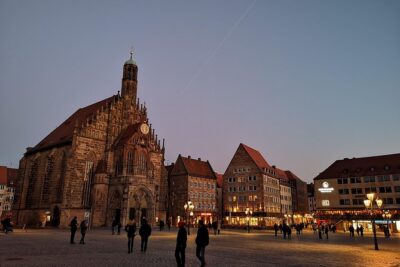
Browse the lists this tour appears in