
Review · MUNICH TOURS
Munich: Historical Walking Tour Maxvorstadt with GEO Epoche
Munich’s Maxvorstadt is more than a student district. On this two-hour walk, you move from the elegant Theatinerkirche and Odeonsplatz into streets shaped by royal ambition, Italian style, bohemian artists, and the darkest years of the 20th century. Brienner Street, Munich’s first boulevard, gives the tour a strong backbone.
I like the way the route links grand buildings to the ideas behind them, rather than treating them as pretty façades. I also like the mix of glamour and painful history, plus the clear, friendly guiding style praised by German-speaking guests, especially guide Axel. The main drawback is simple: the tour is conducted in German, takes place rain or shine, and is not suitable for people with mobility impairments.
Key points at a glance
- Brienner Street tells a royal story: Follow Munich’s first boulevard and learn how Ludwig I wanted to create Athens on the Isar.
- The route starts at Theatinerkirche: Meet your guide in front of one of Munich’s most recognizable churches, near Odeonsplatz.
- Maxvorstadt appears in several shades: The walk covers Italian flair, artists, concert halls, cafés, palaces, and wartime sites.
- History comes through stories: The guide connects major events to the streets and places where they happened.
- A GEO Epoche collaboration shapes the tour: The route was developed with the respected German history magazine.
- Plan for a serious walking outing: Wear comfortable shoes, bring water, and dress for the weather.
From Theatinerkirche into Munich’s past
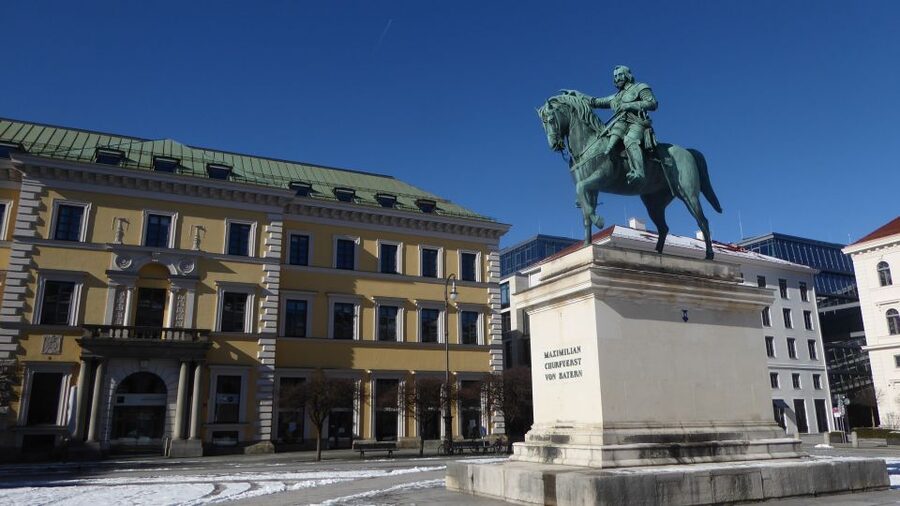
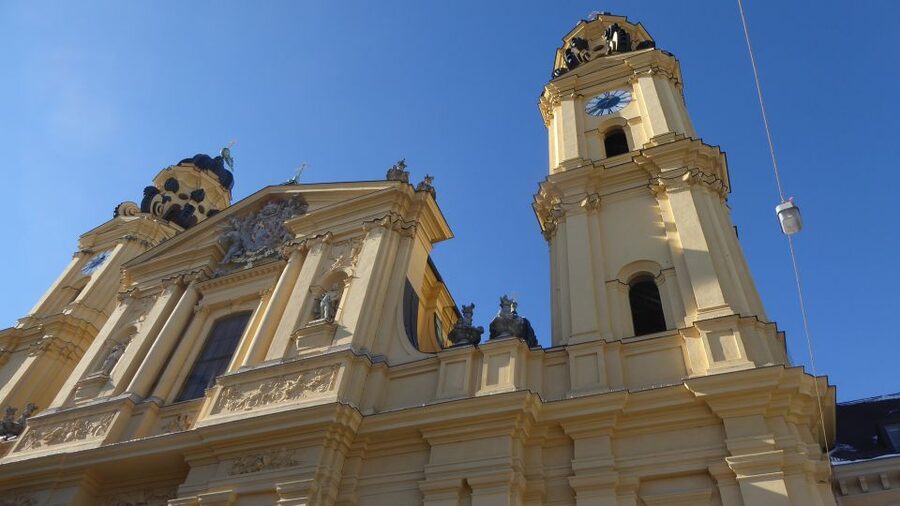
The meeting point is in front of the Theatinerkirche, right at Odeonsplatz. That is a useful starting place because you begin in one of central Munich’s grandest settings, then move toward Maxvorstadt on foot rather than spending the tour getting from one distant sight to another.
The walk presents Maxvorstadt as a district of contrasts. Today, it is known for its student population and young residents, but its streets carry older ambitions. Royal planning, art, music, politics, and war all left marks here. You are not simply shown buildings. You are asked to connect them with the people and plans that shaped Munich.
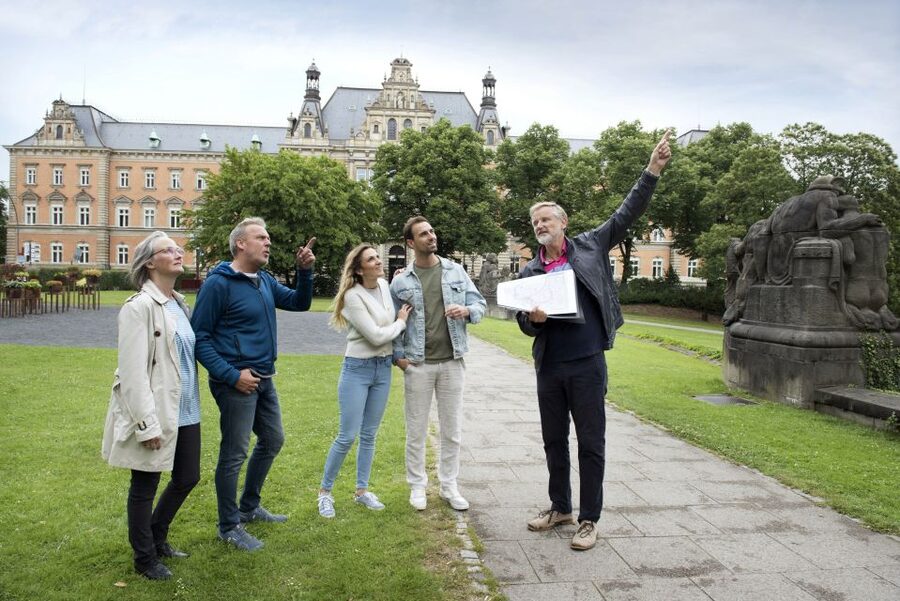
The guide leads in German and explains the district as you walk. That format suits you if you prefer stories tied to real places. Instead of hearing a general lecture about Bavaria, you hear why a street was laid out, what a building represented, and how Munich changed over time.
The tour lasts two hours, which is long enough to create a clear picture of Maxvorstadt without taking over your entire day. You should still treat it as a proper walking activity. Comfortable shoes matter, and a bottle of water is sensible. Since the tour runs in all weather, bring clothing that fits the forecast.
More history-led days in Munich:
- Munich: Guided Tour of the historic Town Hall on Marienplatz
★ 4.8 · 63 reviews - Munich and Nazi History Combination Day Tour Small Group
★ 5.0 · 31 reviews - Munich: Nazi History 2-Hour Small Group Walking Tour
★ 5.0 · 30 reviews
Brienner Street and the dream of Athens on the Isar
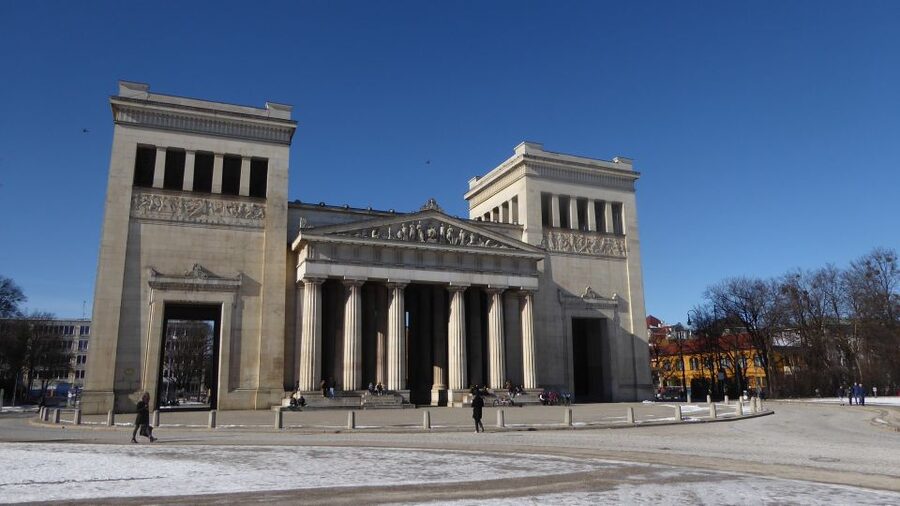
The tour’s central theme is Ludwig I’s vision for Munich. He wanted the Bavarian capital to feel like a northern Athens, with classical buildings, grand avenues, art, and public culture. That ambition is easiest to understand along Brienner Street, described as Munich’s first boulevard.
This is where the city’s royal face comes forward. The route points out the palaces, concert halls, and cafés connected with the period when Munich aimed to present itself as a cultural center. You get a sense of how a street can express political goals. It was not merely a road for getting across town. It helped stage Munich as a sophisticated European capital.
I especially like this part of the walk because it gives the architecture a reason. Without context, a classical façade can blur into the next one. With a guide explaining Ludwig I’s plans, the buildings become evidence of a ruler’s taste, priorities, and wish to reshape the city.
The Italian influence also helps explain why this part of Munich feels different from the city’s older Bavarian core. The tour presents the district through its Italian flair and Mediterranean ambitions, showing how Munich borrowed visual ideas from farther south. You can look at the buildings with a sharper eye after hearing that story.
Do not expect a full architectural survey of every palace or concert hall. The experience is a neighborhood history walk, not a specialist building tour. Its strength is the connection between streets, events, and larger ideas.
Artists, cafés, and the student district
Maxvorstadt later became associated with artists and bohemian life, and the route includes that more relaxed side of the neighborhood. The glamorous cafés and cultural venues fit naturally into the story of a district that drew people interested in art, music, and new ideas.
Today’s student character adds another layer. Maxvorstadt is described as the part of Munich with the youngest residents, so the district’s current energy is quite different from the formal world imagined by Ludwig I. The tour helps you see that change rather than treating the neighborhood as a frozen royal quarter.
This contrast is one of the most useful parts of the experience. You can walk past a grand building built to project power, then consider how the same district later became linked with artists, students, and everyday city life. Munich’s past is not presented as one tidy story. It is a series of changes placed on the same streets.
The guide also adds anecdotes and less obvious details. The published feedback gives particular credit to Axel for being both sympathetic and effective, while another German-speaking guest described the tour as competent, pleasant, and entertaining. Those comments point to an important strength: the walk aims to keep information moving at street level, rather than burying you in dates.
Because the guide speaks German, you will get the most from it if you can follow spoken German comfortably. The activity data names German as the tour language, with no English option listed. If you need an English tour, this is a key point to settle before booking.
When Maxvorstadt turns dark
The walk does not stop at royal design and café culture. It also deals with Munich’s role during World War II and takes you toward places tied to that painful period. This gives the outing a more serious edge than a standard sightseeing stroll.
That balance matters. A tour focused only on Ludwig I’s classical Munich could leave you with a polished but incomplete picture. By bringing in war and political terror, the guide shows how the same city that promoted art and grandeur was also involved in some of Germany’s darkest events.
The description promises stories connected to the locations where events took place. That approach can make difficult history more direct. You are not hearing about war as something remote and abstract. You are standing in the neighborhood and considering what happened there.
Expect the tone to shift during this part. The experience includes glamorous places and grim ones, so it is not designed as a lighthearted walk with occasional historical decoration. If you want only architecture and café culture, the wartime material may feel heavier than expected. If you want a more honest account of Munich, it is one of the tour’s strongest features.
The guide’s job here is especially important. A good walk through difficult history needs clarity and restraint. The available feedback repeatedly praises the guide’s informative and pleasant manner, with Axel singled out by name. That suggests a thoughtful presentation, though the exact guide for your departure is not guaranteed in the supplied information.
More walking tours in Munich:
- Munich: Third Reich & WWII Walking Tour
★ 4.6 · 6,181 reviews - Third Reich Walking Tour Munich
★ 4.5 · 4,291 reviews - Munich: Old Town & Viktualienmarkt City Walk in German
★ 4.7 · 2,304 reviews - Munich: Night Watchman Walking Tour
★ 4.7 · 2,092 reviews
What the GEO Epoche connection adds
The tour was developed together with GEO Epoche, a prominent German history magazine. That does not turn the walk into an academic seminar, but it helps explain the focus on historical context and carefully chosen locations.
You can expect the guide to move beyond the basic facts found on a plaque. The route is built around connections: Ludwig I’s city plans, Brienner Street, cultural life, the artists’ world, the student district, and World War II. The included tour brochure may help you keep track of the main themes afterward.
I find that kind of design useful in Munich, where major sights can seem scattered across the city. A magazine-developed route gives the walk a clear editorial point of view. It asks what Maxvorstadt says about Munich, rather than simply counting landmarks.
Still, the experience is only two hours. It cannot explain every corner of the district or provide a complete account of Munich from Roman times to the present. Think of it as a focused introduction to one neighborhood, with enough detail to make a later solo walk more rewarding.
Is $29 a fair price?
At $29 per person, the tour costs more than walking around Maxvorstadt with a guidebook, but the comparison is not quite fair. You are paying for a live German-speaking guide, a planned route, local storytelling, and the chance to connect several different periods in one outing.
The value is strongest if you enjoy history but do not want to spend hours inside museums. In two hours, you get royal urban planning, architecture, cultural life, and World War II context. That is a useful amount of coverage for a first day in Munich, especially if you want to understand how the central districts fit together.
The price is less attractive if you already know Maxvorstadt well or want a narrow specialty such as art museums, church interiors, or detailed architecture. The route is broad and interpretive. Its purpose is to explain the district as a whole.
The included brochure is a small but practical extra. You also have free cancellation up to 24 hours before the tour and the option to reserve now and pay later. Those policies make it easier to fit the walk into a changing Munich schedule, but the main value still comes from the guide.
Who should book this walking tour?
I would choose this tour if you want a structured introduction to Maxvorstadt and can follow German. It suits history-minded adults, architecture fans, and anyone curious about how Munich moved from royal showpiece to student quarter.
It is also a good choice early in a stay. After the walk, you will have more context for Brienner Street, Odeonsplatz, and the cultural buildings around Maxvorstadt. You can then return on your own to explore at a slower pace.
The tour may not fit you if you have limited mobility. The activity is a walking route through city streets, and the information states that it is not suitable for people with mobility impairments. Pets are not allowed either.
Weather is another practical concern. The walk takes place rain or shine, so shoes, a water bottle, and weather-appropriate clothing are essential. There is no promise of indoor shelter during the route.
Should you book the Maxvorstadt walk?
Book it if German is comfortable for you and you want Munich explained through its streets, not just viewed from outside. The mix of royal ambition, artistic life, and wartime history gives the walk more substance than a simple architectural circuit.
At $29, it is a reasonable buy for a focused two-hour tour, particularly if the guide is as warm and clear as Axel was for several departures. Skip it if you need English, require an accessible route, or prefer to explore at your own pace without a fixed walking program.
FAQ
Where does the tour meet?
The guide waits in front of the Theatinerkirche.
How long does the tour last?
The walking tour lasts two hours.
What language is the tour conducted in?
The live tour is conducted in German.
What area does the route cover?
The tour begins at Odeonsplatz and leads through Munich’s Maxvorstadt district, including Brienner Street.
What is Brienner Street known for on this tour?
Brienner Street is presented as Munich’s first boulevard, with links to Ludwig I’s plans for palaces, concert halls, cafés, and a classical vision of Munich.
Does the tour run in bad weather?
Yes. The tour takes place rain or shine, so you should bring weather-appropriate clothing.
What should I bring?
Wear comfortable shoes and bring water. Clothing should suit the weather.
Is the tour suitable for people with mobility impairments or pets?
The activity is not suitable for people with mobility impairments, and pets are not allowed.
Just added around Munich
- Pub crawl incl. Oktoberfest museum guided tour with beer tasting (private)★ 5.0 · 5 reviews
- South Tyrolean specialties and wine tasting★ 5.0 · 5 reviews
- Size Matters Beer Tour Munich★ 4.6 · 105 reviews
- Secret Food Tours Munich★ 4.8 · 5 reviews
- Short & sweet: Tasting the Viktualienmarkt★ 4.8 · 37 reviews
- Residence of Munich private tour with skip the line ticket★ 5.0 · 4 reviews
- Munich: Romantic Wine Experience for Two at Viktualienmarkt★ 4.2 · 14 reviews
- Munich: Resistance against Hitler – Historical Walking Tour★ 5.0 · 5 reviews
Munich Tours, compared.


Neuschwanstein & Linderhof Castle-Fairytale Day Tour from Munich
Read our review →
Dachau Concentration Camp Memorial Site Tour from Munich by Train
Read our review →
Munich Hop-On Hop-Off Tour: 1-Day or 2-Day Ticket
Read our review →Browse the lists this tour appears in