
Review · MUNICH TOURS
Munich: Third Reich and World War II Segway Tour of the City
Munich’s Nazi-era story comes into sharper focus when you move through the streets where it unfolded. This three-hour tour links Hitler’s former apartments, the Brown House, the Führer’s building, the Old Synagogue site, and Königsplatz, while also adding royal Munich and everyday city life.
I like the careful Segway training before you set off, especially for first-timers. I also like how much ground you cover in one outing, from central squares to the English Garden and major historical sites. The main drawback is that riding beside traffic can feel tense if you are not confident on two wheels, and the history commentary may be lighter than a specialist walking tour.
Key points to know before you book
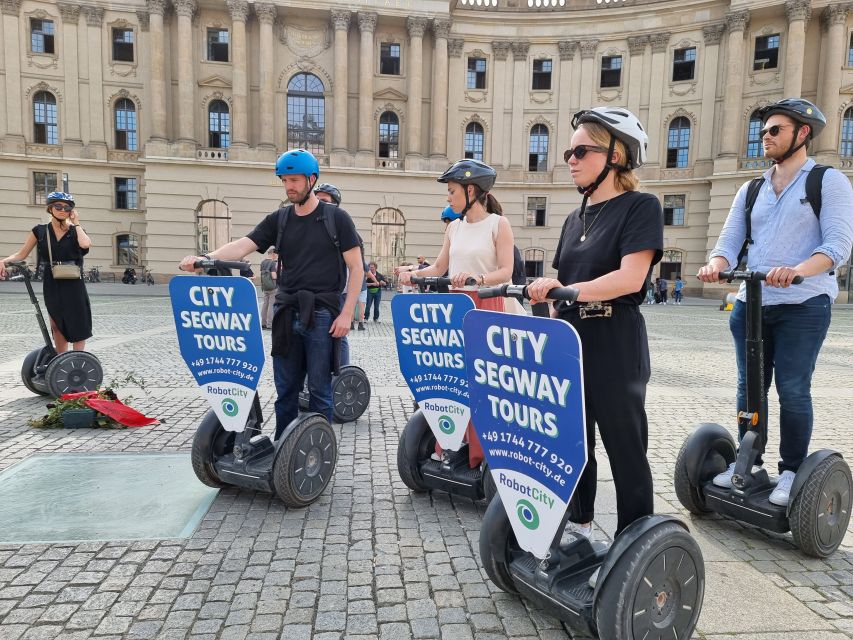
- Training comes first: You receive instruction and practice before riding into Munich.
- A compact history lesson: The route connects Bavarian kings, Nazi power, World War II, and postwar landmarks.
- Hitler-related locations: You pass his Munich apartments from 1920 to 1929 and from 1933, along with the Brown House and Führer’s building.
- Small groups help: Groups are limited to 10, giving the guide room to help nervous riders.
- You cover serious ground: A Segway lets you reach more sights in three hours than you could comfortably walk between.
- Weather matters: The tour runs in rain, snow, and cold, so dress for the forecast.
Why this Segway tour works for Munich
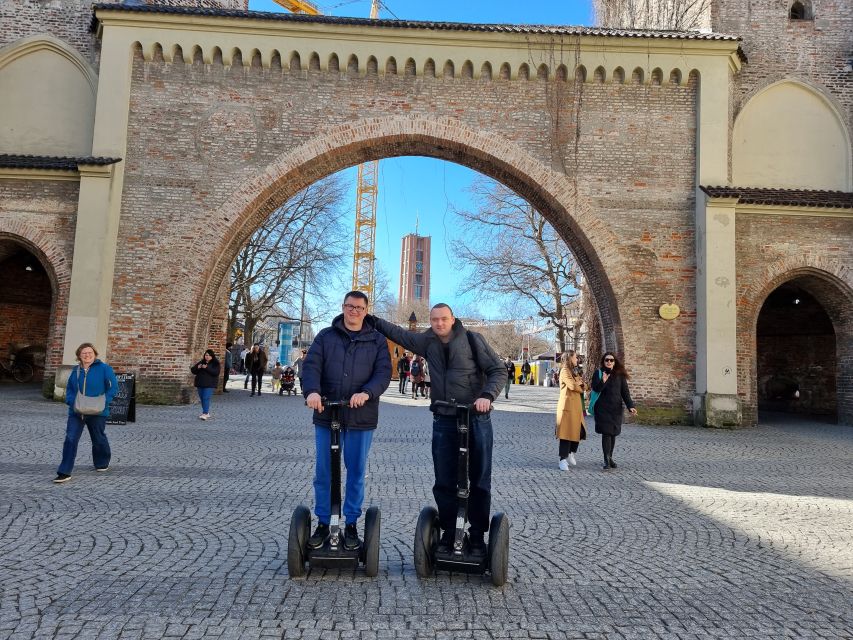
Munich is easy to explore on foot, but its important sites are spread across a broad central area. A walking tour can take you to the main squares, yet you may spend much of your time getting from one stop to the next. On a Segway, you move quickly between locations and still have time to stop for explanations.
That makes this a useful first-day activity. You get a rough map of central Munich, hear the basic story of the Bavarian capital, and collect ideas for places to return to later. The guide may point you toward the Hofbräuhaus am Platzl, built as a beer hall in 1589, or Hofbräukeller for Bavarian food.
The route also has an unusual focus. This is not simply a quick ride past churches and pretty squares. The central subject is Munich’s role in the rise of Hitler and the Nazi movement, with royal history and local city life added around it.
You should expect outdoor commentary rather than museum-level interpretation. The strongest guides make the past easy to follow and keep the ride lively. But if you want a long, detailed account of Nazi ideology, resistance, deportation, and wartime destruction, add a dedicated museum or walking tour.
More Segway Tours in Munich
- Munich: City Highlights Guided Segway Tour
★ 4.6 · 266 reviews - Munich 3-Hour Segway Tour: Nazi Munich & Royal Architecture
★ 4.9 · 194 reviews - Munich Segway Tour
★ 5.0 · 181 reviews
Starting at Robot City Segway Tour München
You meet the guide at the Robot City Segway Tour München office. The tour includes the Segway, a helmet, and a live guide in English or German. Hotel pickup and drop-off are not included, so you need to make your own way to the meeting point.
The first part is practical. Your guide explains how to use the Segway, then gives you time to practice. This matters more than it may sound. Several people who had never ridden before found the machines manageable after the instructions, and the patient teaching from guides such as Abdel and Jamal received especially strong praise.
Do not rush this part. A Segway responds to your balance and body movement, so confidence grows through a few quiet practice minutes. If one person in your group is nervous, tell the guide early. The small group limit of 10 gives the guide a better chance to offer individual help than a large sightseeing group would.
Once the guide is satisfied that everyone can control the machine, you head into the city. Helmets are included, but you should still wear shoes and clothing that let you balance comfortably. This is a three-hour outdoor activity, not a ride where you remain protected from the weather.
Riding through Munich’s historic center
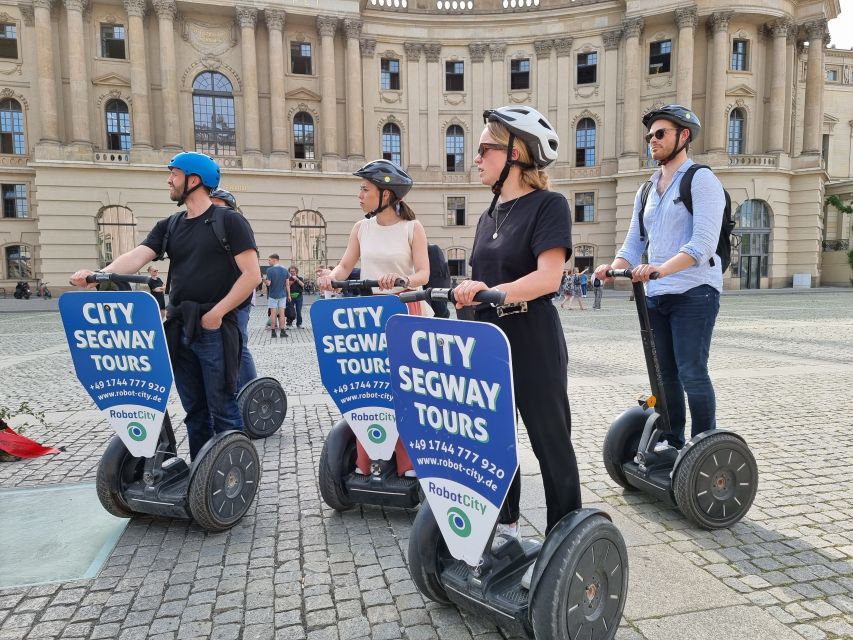
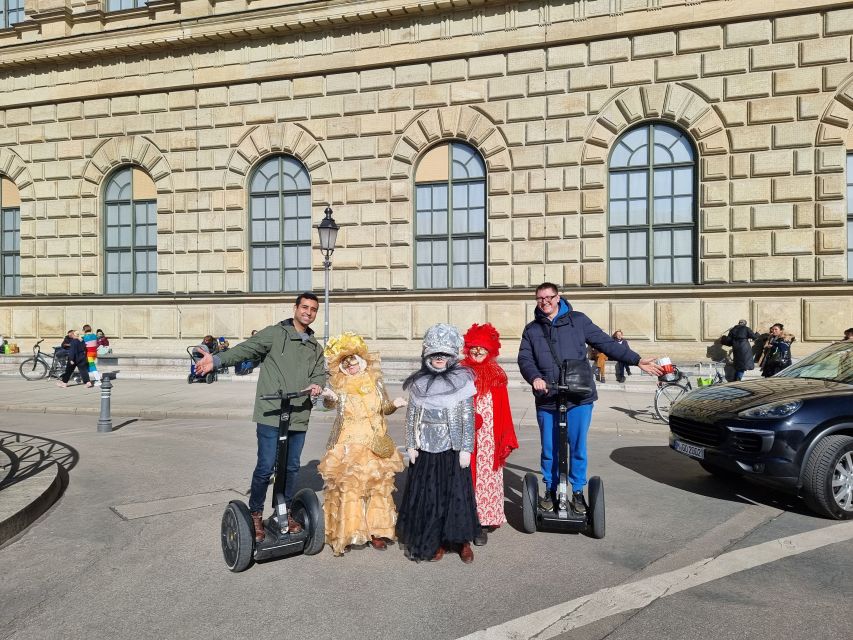
The tour combines riding with short stops. You glide through the streets, then pause outside important buildings and squares while the guide explains what happened there. That rhythm keeps the outing moving, though it also means each place receives a compact explanation rather than a long one.
Munich’s royal past appears along the way. The guide discusses the Bavarian kings and points out the city’s major buildings and public spaces. This background helps explain why Munich became a powerful political and cultural center before the Nazi period.
You also get a broad look at the city’s layout. A first-time visitor may not yet understand how the old center, museum quarter, major avenues, and park areas relate to one another. The Segway route gives you that sense of scale quickly.
The tradeoff is pace. You need to watch the road, pedestrians, bicycles, and the rider ahead of you. That leaves less attention for architecture than you would have on a slow walking tour. I would treat this as an orientation ride with historical stops, not as the best choice for studying every façade.
Königsplatz and the Nazi center of power
Königsplatz is one of the key stops. The grand square has a strong connection to Nazi-era Munich, and the guide uses it to explain how public spaces became settings for political display and mass gatherings.
From here, the tour connects with other locations tied to the Nazi movement, including the Brown House and the Führer’s building. These names matter because Munich was not a distant backdrop to Hitler’s rise. It was one of the main places where the movement organized, presented itself, and built political force.
You do not enter a museum or receive an indoor exhibit as part of this ride. The value comes from standing in the actual urban setting and seeing how nearby streets and squares fit together. A good guide can turn a passing building into a clear piece of the larger story.
This is also where guide quality matters most. The experience includes entertaining commentary, but the amount of detail can vary. One person wanted more information about some sights, including the archway at the end of Leopoldstrasse. If you want every stop fully explained, ask questions as you go.
More WWII History Tours in Munich
- Munich: Third Reich & WWII Walking Tour
★ 4.6 · 6,181 reviews - Dachau Concentration Camp Memorial Site Tour from Munich by Train
★ 4.5 · 5,637 reviews - Third Reich Walking Tour Munich
★ 4.5 · 4,291 reviews - From Munich: Dachau Memorial Site Day Tour
★ 4.8 · 2,723 reviews
Odeonsplatz and the road to power
Odeonsplatz brings another major chapter into view. The square is one of Munich’s best-known public spaces, and the tour uses it to discuss the city during the years when Hitler was building influence.
The route does not reduce the period to a list of dates. It places political events in the streets you are moving through. That physical connection is the reason this tour can work well for someone interested in World War II history but short on time.
Still, keep your expectations measured. You are not spending three hours at one site with documents, photographs, or a specialist lecture. The guide gives you an overview while you ride, and you may want to follow up at a Munich museum afterward for more depth.
The Segway itself changes how you experience the square. You can arrive with less effort, stop with the group, and continue without a long walk between locations. During busy periods such as Oktoberfest, the ability to move around more easily can be useful, though crowded streets may require extra care.
Hitler’s Munich apartments
The tour passes the locations of Hitler’s apartments in Munich from 1920 to 1929 and again in 1933. These stops are valuable because they show the ordinary urban settings connected to his political career, rather than presenting him only through grand government buildings.
The guide explains the period when Hitler lived in Munich and how he rose to power. You should expect to view the locations from outside. The significance comes from the address and the surrounding city, not from a preserved private interior.
For anyone interested in the mechanics of political power, these stops add a human-scale layer to the tour. You see where a major figure lived during different stages of his career and connect those years with the public sites visited elsewhere.
This section also calls for sober attention. The tour discusses a destructive chapter in German and European history. It is best approached as a chance to understand how Munich became tied to the Nazi movement, not as an attempt to make the subject entertaining. The guide’s lighter tone can make the ride approachable, but the topic itself deserves care.
The Old Synagogue site and Munich’s Jewish history
The stop at the site of the old synagogue brings the human cost of Nazi rule into the route. Here, you learn what happened in Munich during World War II and how the city’s Jewish community was affected.
A short outdoor stop cannot tell the whole story. It can, however, prevent the tour from becoming only a parade of Nazi offices and political landmarks. This part reminds you that the period involved real communities, persecution, destruction, and loss.
If this is your main reason for booking, set aside extra time for a museum or memorial elsewhere in Munich. The Segway tour gives you the location and a guide’s explanation, but it is not a full Jewish history program.
Schelling-Salon and the city’s everyday side
Schelling-Salon adds a different kind of historical detail. The pub remained open throughout World War I and World War II, making it a link to ordinary social life during periods of enormous upheaval.
This stop helps break up the political focus. You are not only looking at official buildings and former Nazi sites. You are also seeing a place where people ate, drank, and carried on with daily routines while Europe was at war.
The tour guide may recommend returning to local establishments such as Schelling-Salon, Hofbräuhaus am Platzl, or Hofbräukeller. These suggestions are useful because you finish the ride with more than a list of monuments. You get ideas for a meal and a place to continue experiencing Munich after the tour.
The English Garden and the riding experience
A portion of the route takes you through the English Garden or along cycle tracks and park areas. This is where the Segway becomes most enjoyable. You can feel the speed, cover ground without tiring your feet, and enjoy a more relaxed ride away from the most demanding city streets.
One rider wanted more time using the Segway in the English Garden, which tells you something important about the tour’s balance. The ride is built around history and city coverage, not extended free riding. Confident riders may wish for more open-park time, while beginners may appreciate the shorter stretches.
Road conditions can affect your enjoyment. Some people find city riding scary, particularly near traffic or busy crossings. The guide stays attentive and helps the group, but you remain responsible for controlling the machine and following instructions.
Rain, snow, and freezing temperatures do not necessarily stop the tour. The experience has gone ahead in wet and very cold conditions, so check the forecast before booking and dress accordingly. Munich weather can make the park portion magical, but it can also make three hours outdoors feel long.
How good are the guides?
The strongest part of this experience is the guide support. Abdel is repeatedly singled out for being patient, friendly, professional, and helpful, especially with first-time riders. Jamal is also associated with detailed initial training and a pleasant introduction to central Munich.
You should not assume a particular guide will lead your departure, but the company offers live guiding in English or German. Clear English has been a major strength for English-speaking groups, and the small group format helps the guide keep an eye on everyone.
There has been at least one language mix-up, with an interpreter brought in to help. That appears to be an exception rather than the normal setup, but it is a reminder to confirm your preferred language when booking.
Guide depth can vary. You may receive an engaging overview and useful local suggestions, but not every building will receive a full explanation. Ask about anything that catches your eye. A curious question can turn a quick pass into a better history lesson.
Is $100 a fair price?
At about $100 per person, this is not a cheap way to get around Munich. You are paying for the machine, helmet, instruction, guide, and three hours of sightseeing rather than for admission to indoor attractions.
The value depends on how you use the time. If you want to see many central locations quickly, the price can make sense. You cover more ground than on foot, receive historical context along the way, and avoid paying separately for a basic city orientation and a Segway rental.
It is less appealing if you already know Munich well, dislike riding near roads, or want a slow and highly detailed history tour. Walking tours and museums may give you more depth for less money, though they will not provide the same range or riding experience.
The small group limit of 10 improves the value. A guide can offer more help during training and keep the group together more easily than on a large departure. For a couple or small group that wants an active introduction to Munich, the combination is reasonable.
Who should book this Munich Segway tour?
I would choose this for a first visit, especially if you have only a short time in the city. It suits adults and anyone aged 14 or older who wants a history lesson with movement rather than a three-hour walk.
It is also a good match for a group with mixed interests. One person can focus on World War II history, another can enjoy Bavarian kings and city architecture, and everyone gets a practical orientation to Munich.
You should think twice if you are pregnant, under 14, uncomfortable balancing, or uneasy around traffic. The guide offers training, but the tour still requires you to ride through city streets and follow the group.
The activity works best when you bring realistic expectations. You will see many sites and hear the main connections between them. You will not spend long inside buildings, and the commentary may not cover every architectural detail.
Should you book it?
Book this tour if you want an active way to connect Munich’s Nazi-era sites, royal landmarks, and central streets in one morning or afternoon. The careful instruction, small group size, and patient guides make it approachable for beginners, while the range of stops gives history-minded visitors a useful city framework.
Skip it if you want a specialist World War II seminar, a museum visit, or a leisurely ride with lots of open park time. For most first-time visitors who are comfortable on a Segway, the tour offers a memorable and efficient introduction to Munich, with the important caveat that weather and traffic can shape the experience.
FAQ
How long is the Munich Third Reich and World War II Segway Tour?
The tour lasts three hours, including Segway instruction, practice, city riding, historical stops, and the return to the guide’s office.
Where does the tour meet?
You meet the guide at Robot City Segway Tour München in Munich. Hotel pickup and drop-off are not included.
What does the price include?
The price includes the guide, Segway, and helmet. It does not include hotel transportation.
What languages are available?
The tour is offered with a live guide in English or German.
How large is the group?
The group is limited to 10 participants.
Do I need previous Segway experience?
Previous experience is not stated as a requirement. The tour includes a safety briefing, instruction, and practice before you ride into the city.
Which historical places does the tour visit or pass?
The route includes Hitler’s apartments from 1920 to 1929 and from 1933, the Old Synagogue site, Königsplatz, Odeonsplatz, the Führer’s building, the Brown House, and Schelling-Salon.
Who cannot take this tour?
Children under 14 and pregnant women are not suitable for this activity.
Just added around Munich
- Pub crawl incl. Oktoberfest museum guided tour with beer tasting (private)★ 5.0 · 5 reviews
- South Tyrolean specialties and wine tasting★ 5.0 · 5 reviews
- Size Matters Beer Tour Munich★ 4.6 · 105 reviews
- Secret Food Tours Munich★ 4.8 · 5 reviews
- Short & sweet: Tasting the Viktualienmarkt★ 4.8 · 37 reviews
- Residence of Munich private tour with skip the line ticket★ 5.0 · 4 reviews
- Munich: Romantic Wine Experience for Two at Viktualienmarkt★ 4.2 · 14 reviews
- Munich: Resistance against Hitler – Historical Walking Tour★ 5.0 · 5 reviews
Munich Tours, compared.

Neuschwanstein & Linderhof Castle-Fairytale Day Tour from Munich
Read our review →
Dachau Concentration Camp Memorial Site Tour from Munich by Train
Read our review →
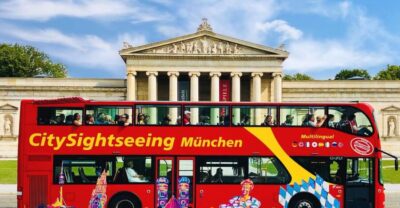
Munich Hop-On Hop-Off Tour: 1-Day or 2-Day Ticket
Read our review →Browse the lists this tour appears in