
Review · LUBECK TOURS
Lübeck: Architecture and Local Craft Private Guided Tour
Lübeck’s brick buildings tell a better story than a row of pretty façades. On this private walk, you’ll learn how medieval builders expanded the city, why houses sagged, how gables changed, and why mastering brick-making mattered to Lübeck’s merchants and residents. I like the focus on small passages and courtyards, along with the chance to ask your guide questions as you go. The main drawback is the short 90-minute length, which gives you a lively introduction rather than time for long church visits.
The tour earns its strongest praise for its engaged, well-informed guides. Reviews describe the guide as highly competent, friendly, and able to answer questions in detail. No guide names are provided, but you can book in English or German and arrange a start time between 9 AM and 7 PM.
Key points at a glance
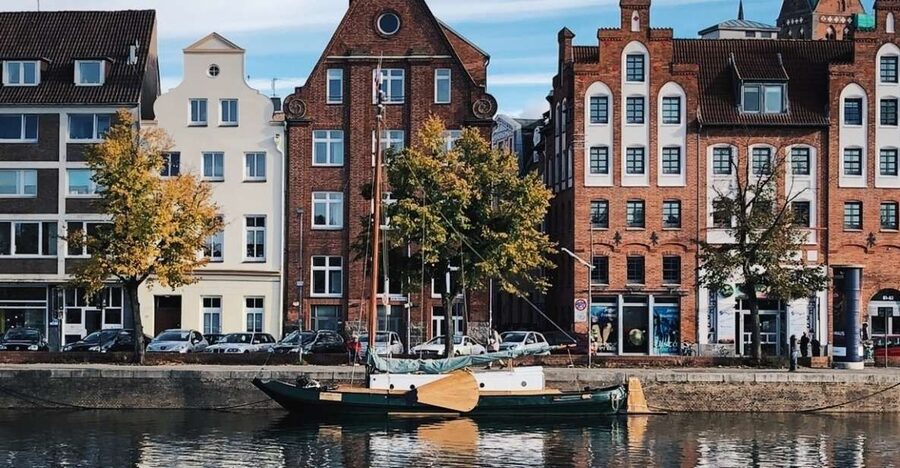
- Medieval brickwork explained: Learn how Hanseatic building methods shaped Lübeck’s churches, townhouses, and public buildings.
- Private group format: Your group of up to eight receives a guide’s attention without strangers joining the walk.
- Courtyards on Glockengießerstraße: See passages and tucked-away spaces that reveal how people lived behind the main street.
- Market square landmarks: Study the town hall and St. Marien, known locally as the Ratskirche.
- Craft and commerce connection: Visit a local merchant’s house and hear why brick production was central to Lübeck’s success.
- Flexible timing: Choose a start between 9 AM and 7 PM after the guide contacts you.
Why Lübeck’s brick architecture deserves a guided look
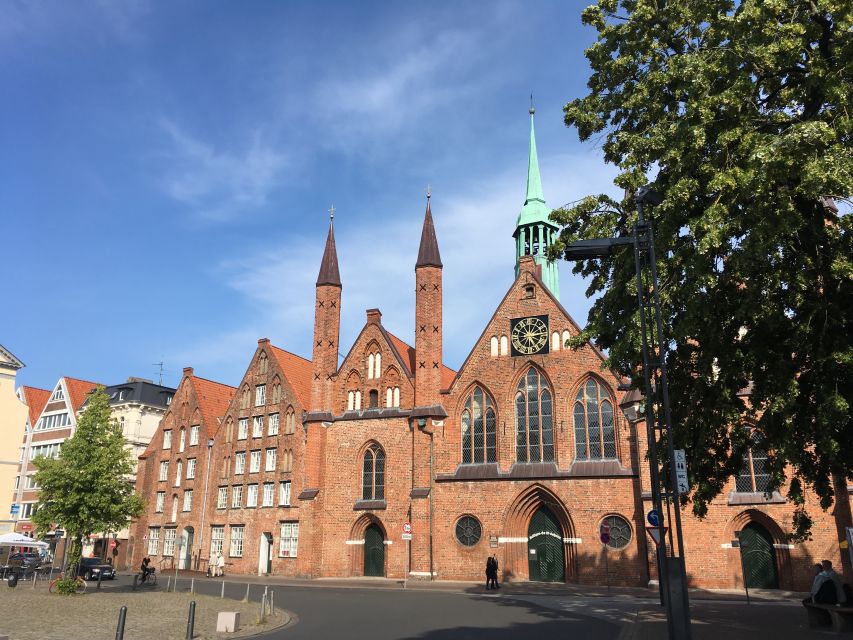
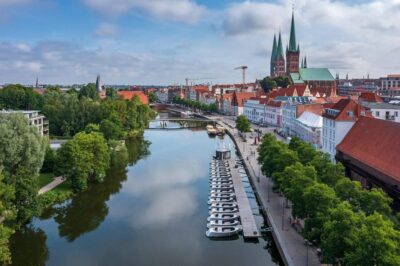
Lübeck is one of northern Germany’s best places to understand Gothic brick architecture. Stone was not always easy to obtain in the Baltic region, so brick became the practical building material for churches, civic halls, merchant houses, and homes.
At first glance, brick can seem simpler than carved stone. In Lübeck, it is anything but plain. Builders used patterns, arches, stepped gables, decorative shapes, and changing brick tones to give large buildings character. A guide can point out details you might pass without noticing, then connect them to the city’s place in the medieval Hanseatic trading world.
I like that this walk treats architecture as evidence of daily life. You are not simply told that a building is old. You hear about the original street plan, artificial expansion of building areas during the Middle Ages, sagging houses, and later changes to gables. Those details make the city feel practical and human.
The UNESCO World Heritage designation gives Lübeck’s center added importance, but you do not need a formal interest in preservation to enjoy the walk. The useful question is simple: how did people build, trade, worship, and squeeze homes into a growing medieval city? This tour uses the streets themselves to answer it.
A few more Lubeck half-days to weigh up
- Lübeck: 1-Hour Splash Bus City Tour
★ 4.0 · 2,626 reviews - Lübeck: entertaining guided tour to old town highlights
★ 4.7 · 594 reviews - Lübeck: Entertaining Tour Through Hidden Courtyards
★ 4.8 · 483 reviews
Starting at the Holstentor
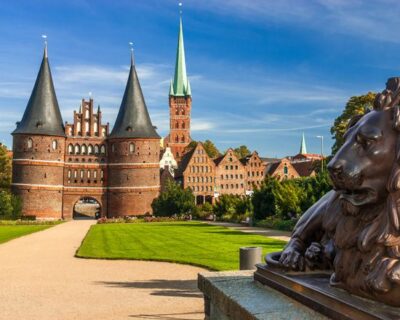
Your meeting point is the Holstentor, directly at the entrance. This is one of Lübeck’s most recognizable landmarks and a sensible place to get your bearings before walking into the old center.
The gate provides an immediate lesson in the city’s defensive and civic identity. It is a mighty brick structure, and its heavy form prepares you for the churches, town hall, and merchant houses ahead. Your guide then leads you onto Lübeck’s streets, where the focus shifts from one famous monument to the way the entire center fits together.
You should arrive a little early. The instructions ask you to wait directly at the entrance, and the guide contacts you after booking to arrange the exact start time. Since the tour is private, the timing can be set at your preference within the stated 9 AM to 7 PM range.
The route information also mentions the Holstentor as the last major highlight. The published description does not promise a specific end point, so you should confirm the finishing location with your guide when the time is arranged. That small check can help you plan lunch, a museum visit, or your next train.
The market, town hall, and St. Marien
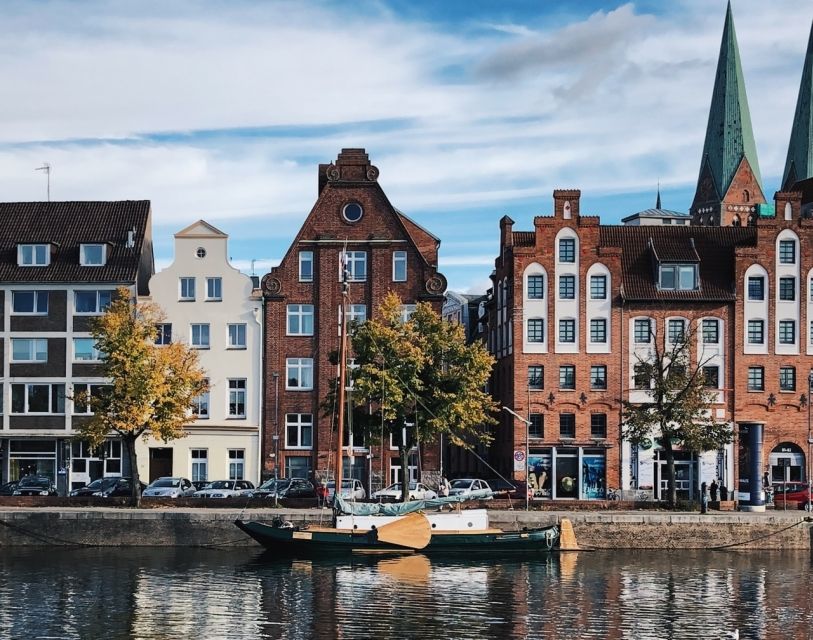
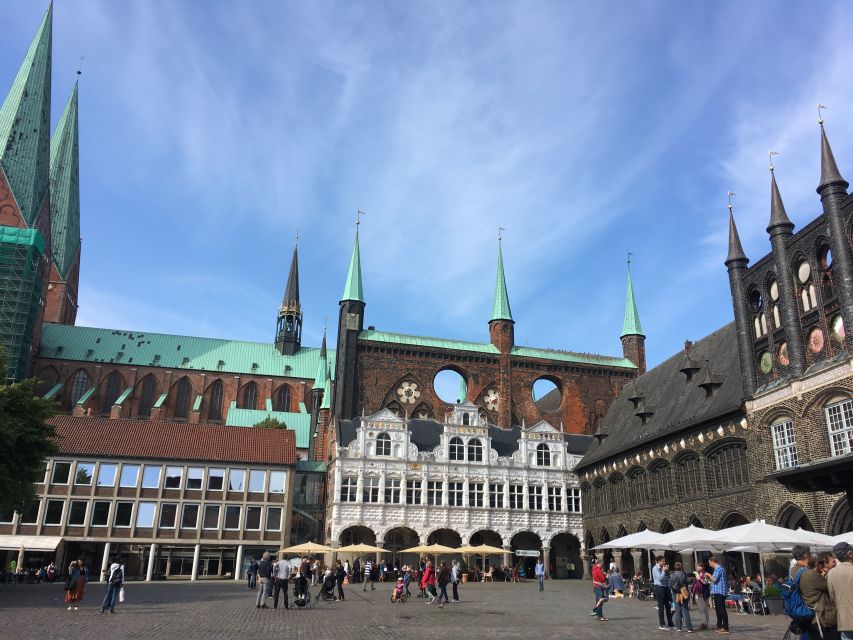
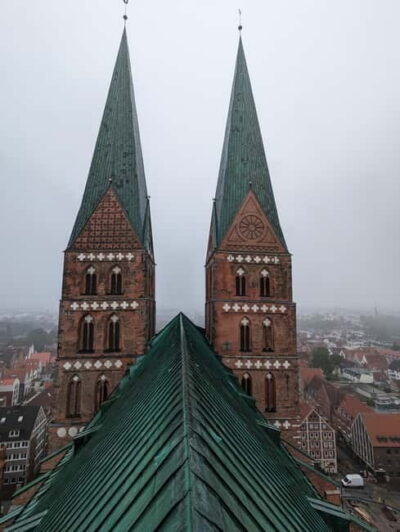
A central part of the walk takes you through Lübeck’s town market. Here, you can examine the town hall and the famous Ratskirche St. Marienchurch, one of the city’s major church buildings.
The market is valuable because it brings civic and religious power together in one place. The town hall speaks to administration and trade. St. Marien points to the influence of the church and the resources available to a wealthy medieval city. Your guide can tie those large institutions to the people who paid for them, built them, and used the surrounding streets.
The church is also a good place to ask questions about brick Gothic design. The tour is built around observation, so you can compare the church’s scale and decorative treatment with the smaller houses nearby. Church entrance fees are not included, and optional entry is listed at €2. The tour itself may remain focused on the exterior and surrounding architecture, so ask your guide if you want to go inside.
I appreciate this kind of arrangement. You are not forced to pay for an interior you may not have time to see, yet you have the option to add it for a small fee. The tradeoff is that the 90-minute schedule may feel tight if you want a slow church visit, detailed photography, and plenty of questions.
Buddenbrockhaus and the city’s changing façades
The route passes through the Baroque Buddenbrockhaus. This gives the tour a useful change of pace. Instead of looking only at medieval forms, you see how Lübeck continued to alter and decorate its buildings in later periods.
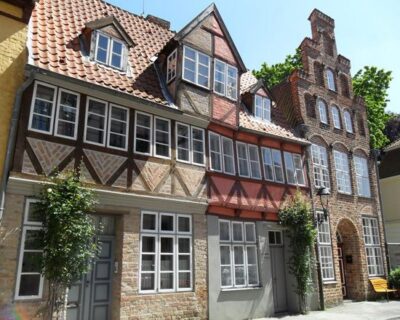
The supplied details refer to modern gable alterations as well as older construction. That matters because historic cities are not frozen in one year. A house may have a medieval core, a later façade, a changed roofline, or repairs that altered its appearance. A guide can help you separate original features from later work.
You will also hear about sagging houses. This is the sort of detail I find more memorable than a list of dates. Old buildings can shift, settle, and bend over time, especially in dense urban areas with long building histories. The point is not just that a house looks crooked. The shape can tell you something about its age, construction, and the pressures placed on the building.
The description does not promise entry into every building along the route. Plan on a street-based tour with selected interior access only where stated. You will get the most from it by looking closely at upper façades, rooflines, arches, and the relationship between the buildings on either side of each street.
Same city, a completely different sort of afternoon:
- SEA LIFE Timmendorfer Strand Ticket
★ 4.0 · 256 reviews - Lübeck: Electric Boat Rental – without driving licence
★ 4.8 · 174 reviews - Lübeck: Classic Tour of the Hanseatic City
★ 4.8 · 64 reviews - Lübeck: Hanseatic League History Walking Tour
★ 4.9 · 57 reviews
Glockengießerstraße and the courtyards behind the street
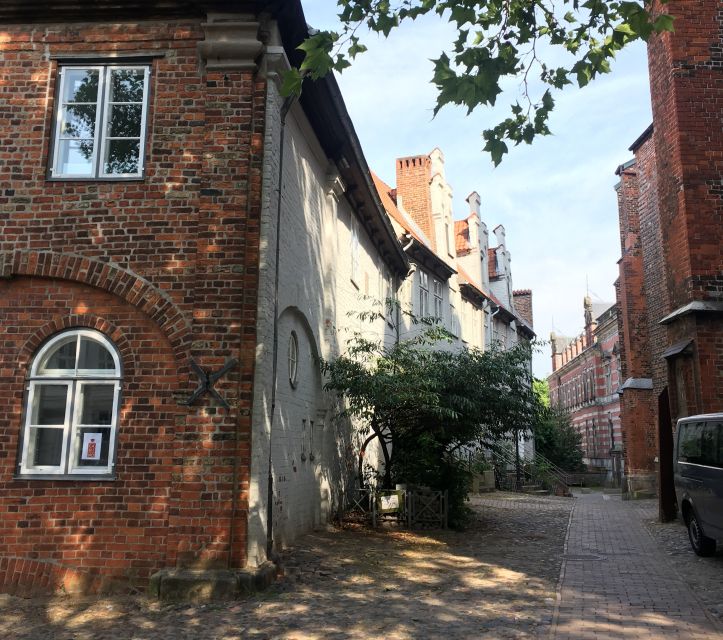
One of the most appealing sections takes you to Glockengießerstraße, where you can see several passages and courtyards. These spaces offer a different view of Lübeck than the market and major churches.
Main streets show the city’s public face. Passages and courtyards show how limited urban space was used behind it. They help explain how homes, workshops, and other buildings were fitted into a dense medieval center. The tour includes information about their history and construction, so you are encouraged to look beyond the front door and notice how the blocks are arranged.
This is also where the private format should be especially useful. In a group of up to eight, you can stop to ask why a passage was built, how the courtyard served the surrounding houses, or how the buildings changed over time. A large group would make these narrow spaces harder to enjoy and could limit the guide’s ability to answer individual questions.
The route is a walking tour through quaint streets, so sensible shoes matter. The information provided does not give a precise distance or accessibility details. If you need a specific route surface or have mobility concerns, ask the provider before booking rather than assuming every passage will be easy to enter.
A merchant’s house and the craft of brick-making
The visit to a local merchant’s house adds an important human link. Lübeck’s architecture was not produced by anonymous builders alone. Merchants, property owners, craftsmen, and workers shaped the city, and the houses reflected their status and needs.
You will hear about brick-making and why controlling this craft was so important to Lübeck and its inhabitants. That subject gives the tour more substance than a standard old-town stroll. Building material affected what could be constructed, how quickly it could be repaired, and how the city presented its wealth.
The merchant’s house also helps you think about the connection between trade and architecture. Large brick buildings required money, labor, and materials. A city involved in Hanseatic commerce had reasons to invest in impressive churches, public buildings, and private homes. The tour does not just show you attractive architecture. It explains some of the economic forces behind it.
The available information does not identify the merchant’s house by name or guarantee a particular interior. Treat this as a stop for local context rather than a full museum visit. If you are especially interested in domestic history, ask what parts of the house you will see when the guide confirms your appointment.
What the 90-minute private format means
Ninety minutes is enough to make sense of Lübeck’s center, but it is not enough for every church, courtyard, and building to receive equal attention. I see that as a useful limit for a first orientation, especially if you have only a short stay in town.
The private group format changes the feel of the walk. You can ask about a façade that catches your eye, request a little more explanation about brick construction, or slow down at a church without worrying about holding up a bus-sized group. The group limit is eight people, so the price works best when shared.
At $277 per group, the cost is not a bargain for one person. For eight people, it works out to about $35 per person. For four, it is roughly $69 per person, and for two, about $139 each. That makes the tour most appealing to families or small groups who value a private guide and flexible timing.
A standard group walk may cost less, but it usually gives you less control over the start time and fewer chances to ask personal questions. This experience earns its price through privacy, not through a long duration or included admissions. Food, drinks, and church entry fees are extra.
The guides and languages
The tour is offered in English or German. The written feedback gives the clearest signal about the guiding: the guides are described as friendly, engaged, highly competent, and willing to answer questions at length.
One Danish review specifically praises the guide’s command of local history. German-language feedback describes an informative tour and a guide who provided an exciting look at Lübeck’s past while answering questions in detail. Another review calls the guide highly competent. Those comments point to the strongest reason to book: the quality of the explanation should matter more here than simply ticking off landmarks.
No individual guide names are supplied, so I would not book this expecting a particular person. Instead, tell the provider your preferred language and what interests you most, such as churches, urban planning, merchant houses, or construction methods.
Who will get the most from this walk
I would choose this tour if you enjoy buildings but want help reading them. It suits first-time visitors who want a clear introduction to Lübeck before exploring on their own, as well as repeat visitors who want to notice courtyards and construction details they missed earlier.
It is a good match for families with older children who can handle a 90-minute walk. The stories about sagging houses, changed gables, and brick-making may hold attention better than a long chronology of rulers and wars.
Architecture students, heritage fans, and photographers may also find value in the route, though the short length limits how much time you have for careful study. You should ask ahead if you need extended time inside churches or specific buildings.
I would hesitate if you want a full-day historical tour, many interiors, food tastings, or a broad survey of museums. This experience focuses on architecture, urban form, local craft, and stories tied to the streets. It is narrow in subject, but that focus is its strength.
Practical booking advice for Lübeck
Arrange the tour for your first day in the city if you can. The explanations about the street system, building areas, gables, and courtyards will give you a better eye for the rest of Lübeck.
Choose a start time that leaves room after the walk for your own church visits. Since church entry is optional and costs €2, you can decide at the time rather than paying for every possible admission in advance.
The tour offers free cancellation up to 24 hours before the start, and you can reserve now and pay later. Those terms help if your northern Germany plans are still shifting. Still, keep the guide’s scheduling contact handy because the exact start time is arranged after booking.
Wear comfortable shoes and bring questions. This is not a performance where you need to remain silent. The best use of a private guide is to ask about the odd detail in front of you, especially a crooked house, a decorative gable, or a passage whose purpose is not obvious.
Should you book the Lübeck architecture tour?
Book it if you want a focused, private introduction to Lübeck’s brick architecture and prefer conversation over a fixed script. The market, St. Marien, Buddenbrockhaus, Glockengießerstraße courtyards, merchant’s house, and Holstentor create a well-chosen route through the city’s public and private sides.
The value improves sharply when six to eight people share the $277 price. Solo visitors and couples may find it expensive for 90 minutes, especially since food, drinks, and church admissions are not included.
For most visitors, I would treat it as an orientation walk, not the complete Lübeck experience. It gives you the tools to understand the city, then leaves time for your own museum visits, church interiors, and unhurried wandering.
FAQ
Where does the tour meet?
Your guide meets you at the Holstentor. Wait directly at the entrance of the Holstentor.
How long does the tour last?
The tour lasts 90 minutes.
Is the tour private?
Yes. It is a private group tour for up to eight people.
What languages are available?
The tour is available in English and German.
What time can the tour start?
The tour can start at any time between 9 AM and 7 PM, based on your preference. The guide contacts you after booking to arrange the time.
What buildings and areas does the tour visit?
The route includes the Holstentor, Lübeck’s town market, the town hall, St. Marien, Buddenbrockhaus, Glockengießerstraße passages and courtyards, and a local merchant’s house.
Are church entrance fees included?
No. Church entry is optional and costs €2.
Are food and drinks included?
No. Food and drinks are not included.
Can I cancel for a full refund?
Yes. You can cancel up to 24 hours in advance for a full refund. You can also reserve now and pay later.
Just added around Lubeck
- Timmendorfer Strand: SEA LIFE Behind the Scenes Tour★ 4.9 · 15 reviews
- Lübeck zwischen Grusel und Geschichte Truecrime zu Halloween★ 4.9 · 35 reviews
- Lübeck: Old Town Highlights Private Walking Tour★ 4.8 · 8 reviews
- Lübeck: Private Historical and Architectural Walking Tour★ 4.5 · 6 reviews
- Lübeck Day Pass – Day ticket for Lübeck museums★ 4.0 · 15 reviews
- Lübeck: Express Walk with a Local★ 4.9 · 10 reviews
- Lübeck: Hanseatic League History Walking Tour★ 4.9 · 57 reviews
- Lübeck: Electric Boat Rental – without driving licence★ 4.8 · 174 reviews
Lubeck Tours, compared.
entertaining guided tour to old town highlights
Read our review →

Lübeck zwischen Grusel und Geschichte Truecrime zu Halloween
Read our review →Browse the lists this tour appears in