

Review · STUTTGART TOURS
Stuttgart: Mercedes-Benz Museum Entry Ticket
The Mercedes-Benz Museum does more than line up shiny cars. Its 16,500 square meters connect the automobile to industry, daily life, social change, aircraft, trams, racing, and popular culture. You move through a carefully ordered story that begins with Carl Benz’s 1886 invention and reaches into the future.
I especially like the two-track layout, which lets you follow the Legend route or the Collection route, and the free audioguide in eight languages. The main thing to plan around is time: 90 minutes feels rushed, while three to five hours gives you room to read, listen, and pause at the cars that catch your eye.
Key points to know before you go
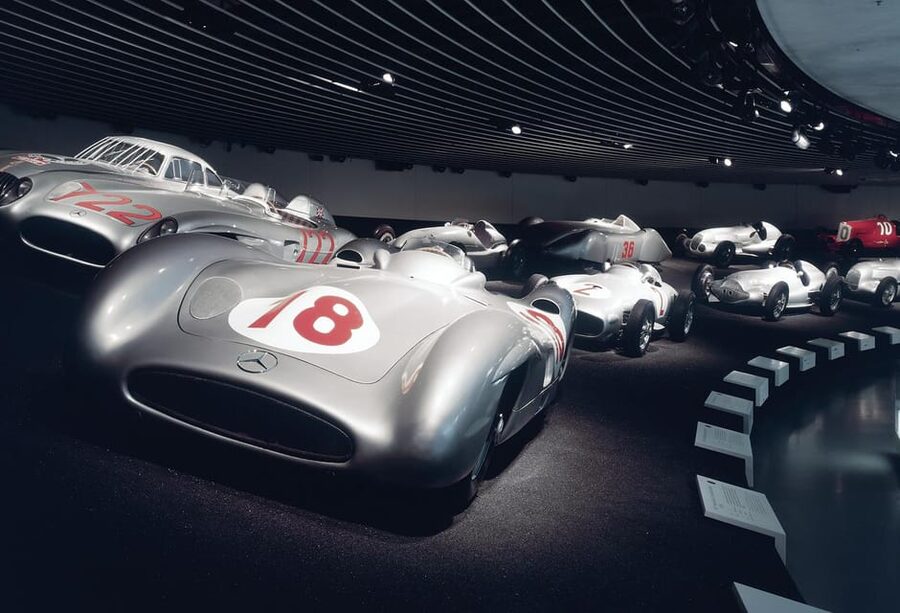
- More than 160 vehicles: See early automobiles, elegant classics, racing cars, commercial vehicles, and futuristic research models.
- A museum about more than cars: Displays place Mercedes-Benz technology alongside major events and changes in German and world society.
- Two ways through the collection: The Legend and Collection narratives give the large exhibition a clear structure.
- Allow at least two to three hours: Dedicated car fans may need four or five hours, while a quick visit of 90 minutes covers only part of the museum.
- Eight audioguide languages: Choose German, English, Italian, Spanish, French, Chinese, Japanese, or Russian.
- Good value at $18: The ticket covers a full day of access to the permanent exhibition, making it a strong choice for a substantial museum visit.
Why this Stuttgart museum is about more than Mercedes
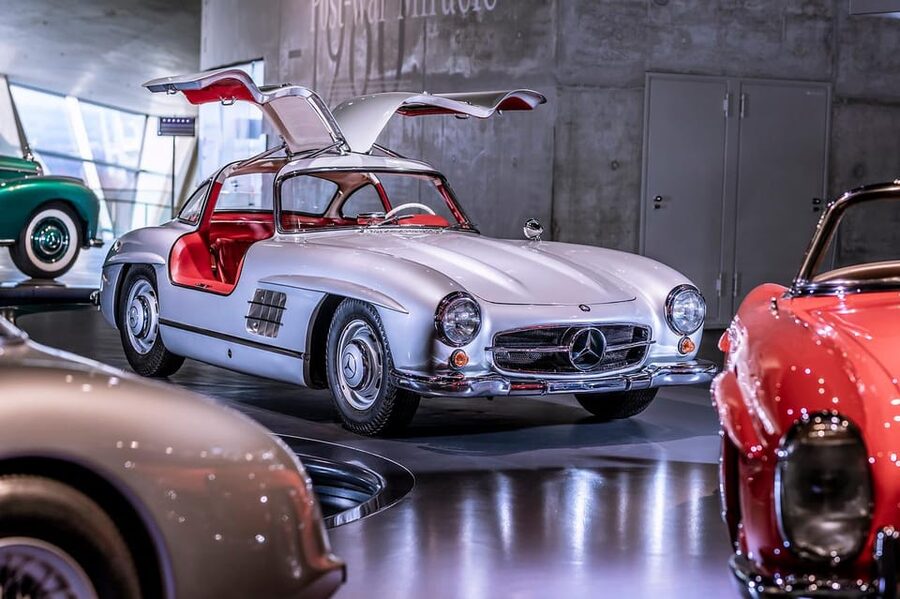
The museum tells the story of the automobile through the company that helped invent it. That distinction matters. You are not simply looking at old vehicles in a showroom. You are following the effect of the motor car on work, travel, design, engineering, sport, and ordinary life.
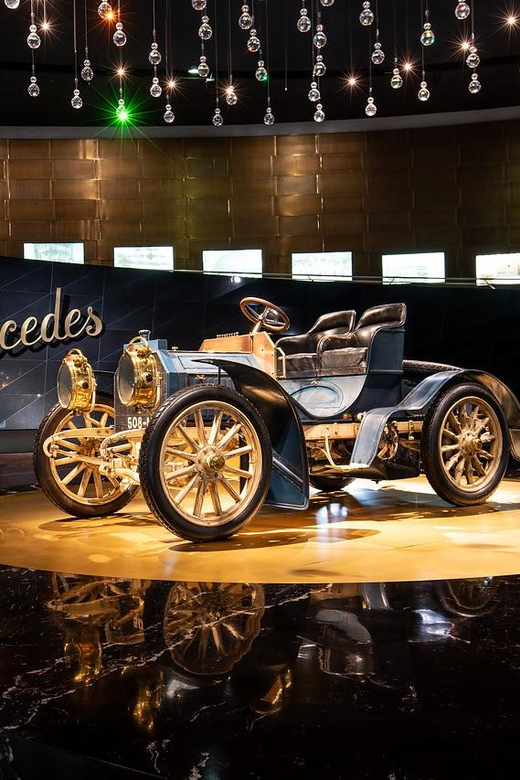
Carl Benz’s 1886 motorcar provides the starting point. From there, the exhibition follows technological change across different eras. The vehicles are the main characters, but the surrounding material explains why each period mattered and how the company responded to it.
I like this approach because you do not need to know the difference between every Mercedes model to enjoy the visit. The cars appeal to enthusiasts, but the wider setting gives non-car fans plenty to consider. You can look at the design of a classic vehicle, then think about the roads, factories, social habits, and industries that made it possible.
The museum also connects automotive engineering with other uses of engines and transport. Aircraft and trams are part of the story, which helps explain the wider reach of Mercedes-Benz technology. If your companion is not interested in cars, this broader material may be what keeps the visit engaging.
More museums and galleries in Germany:
- Berlin: Jewish Museum Berlin Entrance Ticket
★ 4.5 · 8,393 reviews - Berlin: DDR Museum Tickets
★ 4.3 · 3,443 reviews - Berlin: Natural History Museum Entrance Ticket
★ 4.6 · 3,382 reviews
Entering the 16,500-square-meter exhibition
You enter directly through the main entrance. The museum is open Tuesday through Sunday from 9 a.m. to 6 p.m., with final admission at 5 p.m. That closing time is important because the building is large, and a late entry can leave you with little more than a quick look.
The permanent exhibition covers twelve rooms and is arranged across a multi-level route. Several visitors describe the experience as seven floors, so expect a substantial walk rather than a small collection you can finish in an hour.
The building itself is part of the experience. Its modern design sets up the sense of movement before you reach the individual vehicles. The interior layout is one of the museum’s strongest features: instead of wandering through unrelated displays, you follow a chronological rise through automotive development.
A prepaid ticket can be scanned at the entrance, avoiding the ordinary ticket queue. Still, look for clear directions when you arrive. One useful practical point is that a ticket with a late entry time can work against you. A 4:30 p.m. arrival leaves only 90 minutes before closing, which is not enough if you want to follow the story carefully.
The Legend route, from invention to iconic cars
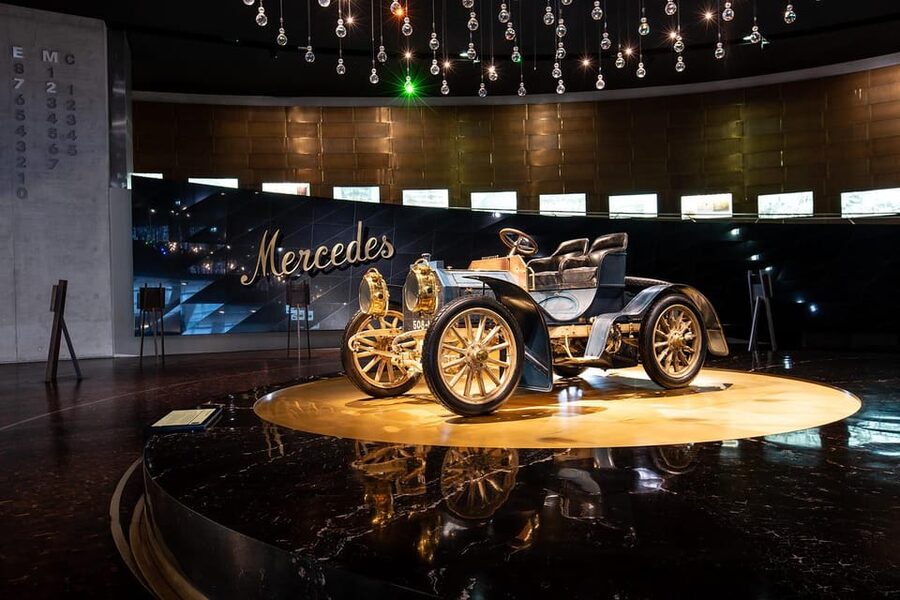
The Legend route is the natural choice if you want a chronological account of Mercedes-Benz. It begins with the earliest automobiles and follows major stages in the development of the car.
The first section gives you the foundation: the invention of the automobile and the engineering ideas behind it. This part is valuable even if you are not a mechanical expert because it places the motorcar in its late nineteenth-century setting. You see how an invention moved from an unusual machine into a form of transport that would reshape daily life.
As you continue, the cars become more familiar and more visually varied. Early vehicles show how far automobile design has changed, while later models reveal shifts in comfort, speed, body shape, and production. The chronological order makes those changes easy to follow.
This is where the audioguide earns its keep. Rather than trying to read every panel, you can listen to the main explanation and then spend your time looking closely at the vehicles. The guide is available in English, German, Italian, Spanish, French, Chinese, Japanese, and Russian.
There is one small practical weakness. The handheld units may not activate immediately at every exhibit, so you may need to move closer or try again. One visitor also found the volume too low in a noisy area. Check your unit early, and do not hesitate to ask staff for help.
The Collection route for design, purpose, and variety
The Collection route groups vehicles by their type or role rather than presenting only a straight timeline. This is useful if you are especially interested in a particular category, such as racing, touring, commercial transport, or special-purpose vehicles.
The choice between the two routes gives the visit some flexibility. Start with Legend if you want the broad story. Choose Collection when you would rather compare vehicles by function and design. You can also use the two narratives to return to subjects that interested you most.
The scale of the collection is easy to underestimate. More than 160 vehicles fill the exhibition, and they range from some of the oldest automobiles ever built to modern research vehicles. That range is the reason a short stop can feel incomplete.
I would not try to see every vehicle in equal detail. Pick a few turning points and give them your attention. Early motorcars, famous racing machines, elegant classic cars, and futuristic concepts each offer a different reason to stop. If you have only two hours, listen selectively and keep moving. With four or five hours, you can read more of the social and technical material.
A few more Germany half-days to weigh up
- Stuttgart 24-Hour Hop-On Hop-Off Sightseeing Bus Tour
★ 4.4 · 1,647 reviews - Tickets SWR Fernsehturm Stuttgart
★ 4.5 · 674 reviews - Stuttgart: Guided Ghost Walking Tour
★ 4.5 · 662 reviews - Sinsheim: Technik Museum Day Pass and IMAX 3D Ticket
★ 4.8 · 616 reviews
Racing cars and futuristic research vehicles
The racing section provides a lively finish to the museum’s story. After seeing the slow, experimental beginnings of the automobile, you reach machines built around speed, competition, and technical performance.
These cars have a different visual energy from the early road vehicles. Their shapes are driven by function, aerodynamics, and the demands of racing. Even visitors who skip long technical explanations may find this section memorable because the vehicles communicate their purpose at a glance.
The futuristic research cars extend the story beyond familiar Mercedes-Benz models. They show how a company looks at possible forms and uses for the automobile. This gives the museum a forward-looking ending rather than leaving you with a display of finished products from the past.
Some people would like more interactive features, including a simulator. Do not book this visit expecting an amusement-park experience. Its strength is the scale, organization, and physical presence of the vehicles, supported by the audio commentary and videos.
Family appeal and the pace of a full visit
The museum works well for families because the collection offers different levels of interest. Children can focus on the shapes, size, and color of the vehicles, while older visitors can follow the engineering and social material.
Special activities for younger children include coloring, and a children’s audioguide and puzzles are available. Videos on the floors can also give teenagers a quicker way to connect with the subject. A ten-year-old who already loves cars will have plenty to enjoy, but the museum is not limited to young enthusiasts.
The main family issue is stamina. The route is large, and there are many things to read and hear. Build in pauses rather than trying to push through every room. Some visitors would welcome more resting points, so families should expect a substantial walking visit.
For adults without a strong interest in cars, the historical framing is the key. The museum explains how engines and vehicles fit into industrial change and wider society. Classic cars also provide a visual entry point, even when detailed specifications do not interest you.
How long should you spend inside?
Use these time estimates as a planning guide:
- 90 minutes: A fast overview only. This can work if you have a flight or train to catch, but you will skip much of the written and audio material.
- Two hours: Enough for a focused visit with selected stops, especially if you already know which vehicles interest you.
- Three hours: A sensible minimum for a first visit. You can follow the main route without treating every display as a quick photograph.
- Four to five hours: Best for car enthusiasts and for anyone who wants to listen to much of the audioguide and read the historical context.
A full day ticket gives you flexibility, but the museum closes at 6 p.m. It does not mean you can arrive at any time and still see everything. If the museum is a main reason for visiting Stuttgart, go earlier rather than choosing the last available admission.
The layout can also be tiring because the visit unfolds across multiple levels. Comfortable shoes help, and a slower pace will make the exhibition more enjoyable.
Is $18 a fair price?
At $18 per person, the ticket offers good value for a large permanent exhibition. You receive admission and the audioguide, and the ticket is valid for one day. Compared with a short attraction that lasts an hour, this is a better deal for anyone willing to spend several hours inside.
The value is strongest for car enthusiasts, families, and visitors who enjoy museums with a clear timeline. You are paying for scale as much as for individual vehicles: twelve rooms, 16,500 square meters, and more than 160 cars and related exhibits create a substantial visit.
The price is less compelling if you only have 60 to 90 minutes. You can still see impressive vehicles, but you will not get the full benefit of the chronological story. If your schedule is tight, a shorter visit is possible, though I would not choose a late entry unless it is your only option.
Free cancellation up to 24 hours before the visit and the option to reserve now and pay later add useful flexibility. The ticket is also wheelchair accessible. These details matter when you are building a Stuttgart day around changing weather or transport plans.
What to know about the audioguide
The audioguide is included and offered in eight languages: German, English, Italian, Spanish, French, Chinese, Japanese, and Russian. It helps turn a large collection into a readable story, especially when you want context without stopping at every panel.
I would use it selectively. Listen to the introduction and the sections that explain major changes, then pause the commentary when a vehicle deserves a close look. Trying to hear every track can slow the visit and make the museum feel like an audio assignment.
Test the unit as soon as you begin. A few handheld devices have had activation problems, and low volume can be an issue when the museum is noisy. Staff assistance may be needed if a recording does not start.
If you are visiting with children, ask about the children’s audio content and puzzles. Those features give younger visitors something active to do while adults examine the technical displays.
Who will enjoy the Mercedes-Benz Museum most?
You should book this experience if you enjoy:
- Automotive design, racing, engineering, or industrial history
- Museums arranged as a clear chronological story
- Classic vehicles and futuristic concept cars
- Family attractions with activities for different ages
- Exhibitions that connect technology with society and daily life
You do not need to be a Mercedes-Benz expert. The museum explains the company’s development from the first motorcar onward, and the wider historical material gives non-specialists a reason to keep going.
You may want to skip it if you have very little time in Stuttgart or dislike large museums with extensive reading and audio content. The building and vehicles can still impress you, but the visit works best when you are not watching the clock.
Should you book this museum ticket?
Yes, if you can give it at least two to three hours. The museum combines a major vehicle collection with a clear account of invention, industry, racing, and social change, so it offers more than a brand display.
Book ahead if you want to scan in without joining the ordinary ticket queue, and aim for an earlier arrival. At $18, the ticket is a strong buy for families, car fans, and curious visitors who want one of Stuttgart’s most substantial indoor attractions.
Give yourself four or five hours if Mercedes-Benz is a personal interest. If you have only 90 minutes, enter with a plan and accept that you will see highlights rather than the full story.
FAQ
Where is the Mercedes-Benz Museum?
The museum is in Stuttgart, in the Baden-Württemberg region of Germany. Enter directly through the museum’s main entrance.
What are the museum’s opening hours?
It is open Tuesday through Sunday from 9 a.m. to 6 p.m. The last admission is at 5 p.m.
How long is the ticket valid?
The ticket is valid for one day.
What does the ticket include?
It includes admission to the Mercedes-Benz Museum exhibition and an audioguide.
How many vehicles are on display?
More than 160 vehicles are displayed, including early automobiles, racing cars, classic vehicles, and futuristic research vehicles.
How large is the exhibition?
The permanent exhibition covers 16,500 square meters across twelve rooms.
Which audioguide languages are available?
The audioguide is available in German, English, Italian, Spanish, French, Chinese, Japanese, and Russian.
Is the museum wheelchair accessible?
Yes, the activity is wheelchair accessible.
Can I cancel the ticket?
Yes. You can cancel up to 24 hours in advance for a full refund. You can also reserve now and pay later.
Just added around Germany
- Berlin: Battle for Seelow Heights WW2 tour -Clash of Titans★ 5.0 · 27 reviews
- From Berlin: Gardens & Palaces of Potsdam Bike Tour★ 5.0 · 61 reviews
- From Amsterdam: Cologne Private Sightseeing Tour★ 5.0 · 4 reviews
- From Berlin: Historical Gems of Potsdam Private Day Trip★ 4.4 · 4 reviews
- Freiburg: Veni, vidi, vino – wine hike and tasting★ 4.5 · 144 reviews
- From Alken: Return Day Trip by Boat to Cochem★ 4.6 · 141 reviews
- Fritz Haarmann – Die Mördertour★ 4.6 · 41 reviews
- Freiburg: Tour of the city with cathedral visit★ 4.7 · 167 reviews
Stuttgart Tours, compared.

Stuttgart 24-Hour Hop-On Hop-Off Sightseeing Bus Tour
Read our review →


Sinsheim: Technik Museum Day Pass and IMAX 3D Ticket
Read our review →



Browse the lists this tour appears in