
Review · ROSTOCK TOURS
Rostock: Private Guided Walking Tour
Rostock’s story is written in rebuilt churches, old defensive walls, and a Town Hall that mixes Gothic and Baroque styles. This private walk gives you a clear route through the city’s Hanseatic past, wartime destruction, and modern role as a Baltic port.
I especially like the focus on St. Mary’s astronomical clock, one of the city’s most unusual surviving treasures, and the chance to shape the walk with your own guide. The private format also makes questions easy, and guide Jana is specifically praised for sharing fine local insights. The main catch is price: $280 is sensible for a full group of 15, but costly for one or two people.
Key points
- Meet at Seagulls’ Fountain: Begin in New Market Square, a central spot surrounded by major landmarks.
- See Rostock’s seven-towered Town Hall: Learn how Gothic and Baroque design meet in the city’s main civic building.
- Visit St. Mary’s Church: Focus on its 15th-century astronomical clock and survival during the WWII air raids.
- Follow the city’s defenses: Walk along surviving walls, ramparts, guard houses, and a section of wooden wall walk.
- Connect past and present: Understand Rostock’s Hanseatic trade, university life, port economy, and links to Scandinavia.
- Private and adjustable: Your local guide can tailor the two-hour walk to your group’s interests on the spot.
Starting at Seagulls’ Fountain in New Market Square
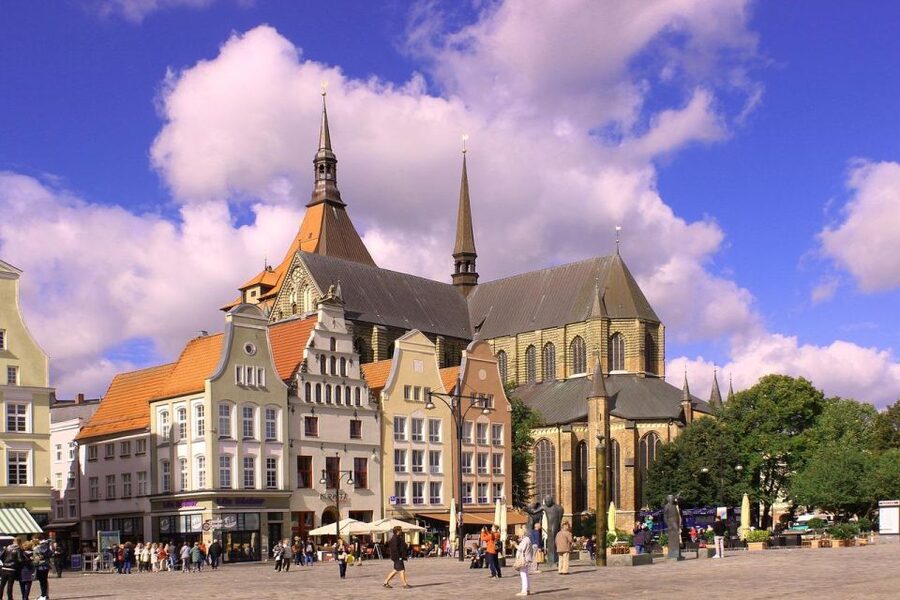
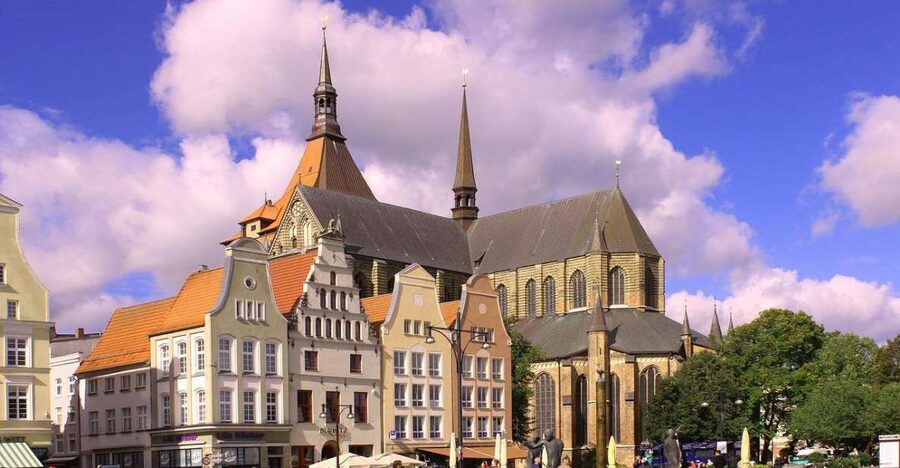
Your meeting point is the Seagulls’ Fountain in Neuer Markt, or New Market Square. This is a useful place to begin because the square puts several of Rostock’s main sights within easy walking distance.
The fountain depicts Neptune, the Roman god of the sea, with his sons. That maritime theme is fitting for Rostock, a city whose fortunes have long been tied to ships, trade, fishing, and the Baltic Sea.
This is also where you start learning about the city’s name and early importance. The walk is not simply a parade of façades. Your guide connects individual buildings to the larger story of Rostock as a port, a university city, and a member of the Hanseatic League.
The square itself is one of the city’s most attractive open spaces. Take a moment to look around before the walk moves on. You can see how civic power, religion, trade, and public life were once concentrated within a small part of the old city.
More walking tours in Rostock:
- Rostock: City Walking Tour
★ 4.9 · 198 reviews - Discover Berlin Half-Day Walking Tour
★ 5.0 · 9,624 reviews - Berlin: Third Reich and Cold War 2 Hour Walking Tour
★ 4.9 · 6,830 reviews
The Town Hall and Rostock’s Hanseatic power
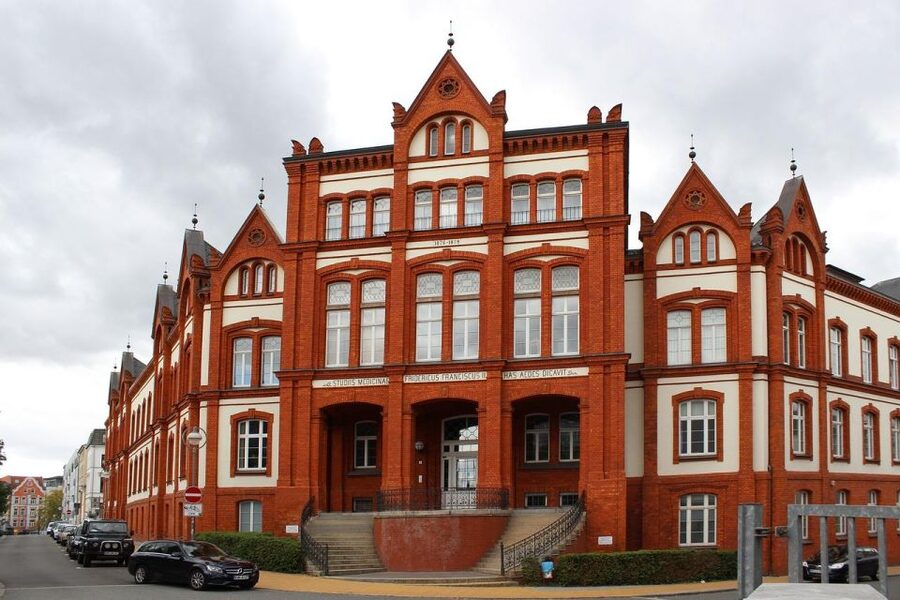
The Town Hall is the first major architectural stop, and it is easy to see why it anchors the tour. Its design combines Gothic and Baroque elements, creating a building that looks both medieval and later, more decorative.
Seven towers give the building an unmistakable profile. Your guide explains what the Town Hall meant in a city shaped by commerce and local government. Rostock was an important member of the Hanseatic League, the trading network that linked northern European cities through business, shipping, and shared political interests.
That context matters. The Hanseatic League was not just a historical label placed on a sign. It helps explain why Rostock developed impressive civic buildings, churches, fortifications, and trading connections. The city’s position on the Baltic helped link Germany with Scandinavia and with wider routes served by ships.
I like this part of the walk because the Town Hall gives you something solid to look at while the guide explains the city’s economic rise. You do not need to know much about medieval trade before arriving. The building and square provide an easy starting point.
The drawback is that a two-hour route can only sketch this subject. If Hanseatic commerce is your main interest, use the private format to ask your guide for more detail. The option to customize the walk is most useful here, since you can request more economic history instead of moving quickly from one landmark to the next.
St. Mary’s Church and its remarkable clock
St. Mary’s Church is one of the most important stops. It was the only main Rostock church to survive the WWII air raids, making it a powerful place to discuss both the city’s medieval past and its 20th-century losses.
Inside, the famous astronomical clock takes center stage. It was built in the 15th century and reflects the period’s interest in measuring time, the movement of the heavens, and the organization of daily life.
The clock gives this stop a personal scale. Rostock’s history can sound grand when you hear about ports, trade leagues, and wartime destruction. Here, you are looking at a carefully made object that survived centuries of change. It helps you picture the skill and ambition of the city’s medieval craftsmen.
Entrance fees are not included, so check with your guide about what can be seen inside during your walk. The tour promises the church and its clock as key sights, but admission is a separate cost. That is a small detail, yet it matters if you are counting every euro or planning several paid visits in one day.
I would give this stop extra attention. The church is not simply another Gothic building on the route. Its survival gives the guide a natural way to explain how Rostock was damaged and how parts of the city were rebuilt.
St. Petri Church and a landmark for sailors
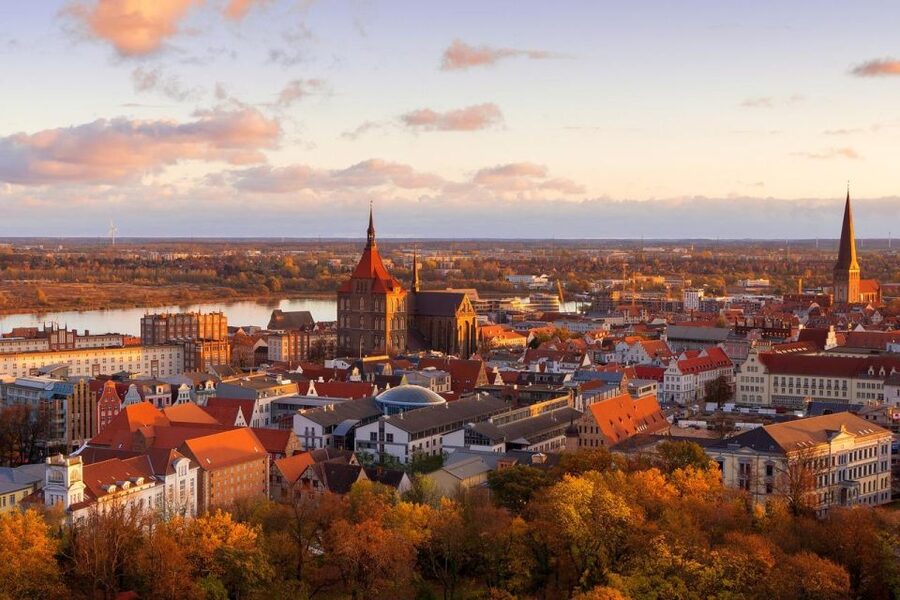
St. Petri Church offers a different view of Rostock’s religious and maritime identity. Its Gothic tower served as a landmark for fishermen in the area, linking the city skyline to the working life of the Baltic coast.
The church was destroyed during WWII and later rebuilt. That contrast with St. Mary’s Church is central to the tour. One church survived the air raids, while another had to be reconstructed. Together, they show that Rostock’s story is not a simple sequence of old buildings left untouched.
The tower is the main visual point here. Your guide can explain how such a tall structure helped people approaching from the water recognize the city. Rostock’s port is still important today. It is described as Germany’s fourth-largest port city and the largest on the Baltic coast, with connections to Scandinavian destinations, cruise routes, and the wider world.
This stop helps you connect the medieval city with the present-day port. You are not looking at an isolated church tower. You are seeing a marker that served fishermen, survived destruction in altered form, and remains part of Rostock’s identity.
If you are particularly interested in climbing towers or entering churches, remember that entrance fees are not part of the tour. The listed experience is a guided walking tour, so ask about available access rather than assuming every interior or tower visit is included.
A few more Rostock half-days to weigh up
- Rostock: Guided tour of the historic city center
★ 4.5 · 311 reviews - Best Berlin Shore Excursion from Warnemunde or Rostock Port
★ 4.8 · 200 reviews - Rostock: Full-Day, Half-Day, or Sunset Sailing Experience
★ 4.7 · 174 reviews - Rostock: Electric Boat Rental on the Warnow River
★ 4.8 · 106 reviews
City walls, ramparts, and the wooden wall walk
Rostock’s remaining fortifications provide some of the most atmospheric walking on the route. Parts of the old walls still survive, along with ramparts, built-in guard houses, and a section of wooden wall walk.
These fragments make the city’s defensive system easier to imagine. A church or civic building can look complete and polished. A wall with guard houses shows a more practical side of medieval urban life, when protecting trade, residents, and the harbor was a constant concern.
The fortifications also add variety to the tour. You move away from the grand public buildings and see the less formal edges of the old city. That change is welcome during a two-hour walk, especially if you enjoy places where history is visible in the layout rather than only in decorative architecture.
The surviving sections are partial, not a complete circuit. Keep your expectations realistic. You are not walking an intact medieval wall around Rostock. You are seeing selected remains, including the ramparts and wooden wall walk, while your guide explains how they fit into the former defenses.
This is another place where a private guide adds value. You can ask how the fortifications related to the port, gates, and surrounding streets. A larger group tour might keep moving, while a private walk lets you pause when the physical remains raise a question.
Stone Gate and a message about civic life
The Dutch Renaissance Stone Gate gives the walk a change of architectural mood. Its design reflects a later period than the Gothic churches, and its motto expresses an ideal of civic order and prosperity.
The Latin inscription translates as a wish for harmony and public happiness within the city walls. That message fits Rostock’s role as a self-governing trading center. It also gives your guide a chance to discuss how architecture communicated political values, not just practical needs.
Look closely at the gate rather than treating it as a quick photo stop. Gates once controlled movement into and out of a fortified city. They also announced the city’s confidence and status to people arriving from outside.
The combination of Stone Gate, the surviving walls, and the Town Hall gives you a useful sequence. You see how Rostock defended itself, governed itself, and presented itself. Those three ideas are easy to remember after the walk.
Rostock University and the Fountain of Happiness
The tour also introduces Rostock University, founded in 1419. It is one of the oldest universities in the world and the oldest in the Baltic region.
This matters because Rostock was not only a port. It was also a place of study, ideas, and institutional life. The university helps explain why the city’s importance continued beyond medieval trade. Its presence adds an intellectual layer to the story told by the churches, walls, and harbor connections.
The Fountain of Happiness provides a lighter stop near the university. After so much discussion of war, defense, and commerce, a fountain associated with happiness changes the tone. It is a reminder that public spaces serve daily life as well as civic display.
Ask your guide to explain the fountain’s local meaning if that subject interests you. The tour allows possible customization on the spot, which is useful when your group has mixed interests. One person may want more university history, while another may prefer architecture or wartime reconstruction.
Rostock after WWII: destruction and rebuilding
The wartime story is not an add-on. It shapes the way you read the city.
Rostock suffered WWII air raids, and the damage affected important churches and buildings. St. Mary’s survival makes it especially significant, while St. Petri Church shows the scale of later rebuilding. The city’s recovery is presented as a story of resilience, but the physical evidence keeps it grounded.
You will see a city that was not simply preserved for modern visitors. Some landmarks survived, some were destroyed, and some were rebuilt. That mix explains why Rostock can feel both old and renewed during the same walk.
I appreciate the chance to hear about reconstruction while looking directly at the affected buildings. A general history talk can make wartime damage seem distant. Here, the contrast between surviving medieval fabric and rebuilt landmarks gives the subject a clear shape.
Do not expect a specialist military history tour. The experience combines wartime history with architecture, the university, Hanseatic trade, and the port. If you want a detailed account of bombing campaigns or postwar planning, you will need to steer the conversation in that direction and accept that other stops may receive less time.
Why the private format matters
The group limit is 15 people, but the key point is that this is a private group. Your guide is with your party only, and the walk can be adjusted during the experience.
That makes the tour useful for families, friends, and small groups with different priorities. You can ask for more time at St. Mary’s clock, more detail about the Hanseatic League, or a stronger focus on the effects of WWII. You also avoid sharing the guide’s attention with strangers.
The English and German language options make the tour practical for international visitors and German-speaking groups. The guide associated with the strongest personal praise is Jana, described as warm and especially good at offering local insights. Because guide assignments can vary, treat Jana as a possible guide rather than a guaranteed one.
Two hours is a good length for a first look at Rostock. It is long enough to cover the principal landmarks without turning into an all-day commitment. You will still need your own time afterward if you want extended church visits, paid entrances, shopping, or a slower look at the port area.
Is $280 good value?
At $280 for a group of up to 15, the price works best when several people share it. With 15 participants, the cost comes to about $18.67 per person. With 10 people, it is $28 each. For a couple, the full group price becomes $140 per person, which is much harder to justify unless private guiding is a top priority.
The value comes from the guide’s time and flexibility, not from included admissions. Entrance fees are excluded, so budget separately for any interior visits that require payment.
I would consider this a fair choice for a family or organized group that wants a tailored introduction to Rostock. It is less attractive for a solo visitor or couple who mainly want a low-cost overview and are comfortable joining a shared walk.
The reserve-now, pay-later option and free cancellation up to 24 hours before the tour make planning easier. Still, those policies should not overshadow the main buying question: are you likely to use the private format? If yes, the shared group cost can be good. If not, compare the price with a standard group tour.
Who should book this Rostock walk?
I would recommend it most strongly to first-time visitors who want the city explained in a clear order. The route links the New Market Square, Town Hall, St. Mary’s Church, St. Petri Church, fortifications, Stone Gate, and university area into one readable story.
It also suits anyone interested in the meeting point between architecture and wartime history. You get Gothic churches, Renaissance design, defensive remains, a medieval astronomical clock, and rebuilt landmarks in a compact visit.
Cruise passengers and people using Rostock as a Baltic gateway may find the two-hour length especially useful. Rostock connects Germany with Scandinavian destinations and worldwide cruise routes, so a short private walk can give you a firm sense of the city before you continue elsewhere.
I would be more cautious if you dislike guided interpretation or want extensive interior access. This experience is built around walking and explanation. Since admission fees are not included, it is not the best fit for someone seeking a package of paid museum and church entrances.
Should you book it?
Book this tour if you are sharing the cost with a group and want more than a quick photo stop in Rostock. The best reasons are the private guide, the chance to adjust the route, St. Mary’s 15th-century astronomical clock, and the direct connection between Hanseatic trade, port life, university history, and WWII rebuilding.
For two people, the price deserves careful thought. You may still value the privacy and the chance to ask detailed questions, but $280 is a serious outlay for two hours.
Before booking, decide which theme matters most to you and tell the guide at the start. Ask for extra time at the astronomical clock, the fortifications, or the university if one of those is your priority. With the right expectations, this is a focused and flexible introduction to Rostock rather than a rushed checklist of sights.
FAQ
Where does the Rostock walking tour meet?
The meeting point is by Seagulls’ Fountain in New Market Square, Neuer Markt, 18055 Rostock.
How long does the tour last?
The walking tour lasts two hours.
How much does the private tour cost?
The price is $280 per group, for up to 15 people.
Is the tour private?
Yes. It is offered for a private group, with a local professional guide accompanying your group only.
Which languages are available?
The tour is available in English and German.
Are entrance fees included?
No. Entrance fees are not included in the tour price.
Can the tour be customized?
Possible customization can be arranged with your local guide on the spot.
What is the cancellation policy?
You can cancel up to 24 hours in advance for a full refund. You can also reserve now and pay later.
Just added around Rostock
- Rostock: Electric Boat Rental on the Warnow River★ 4.8 · 106 reviews
- Rostock: Tour with the Rostocker Executioner★ 4.7 · 28 reviews
- Rostock: Hot Rod Sightseeing Tour to Warnemünde★ 5.0 · 19 reviews
- Rostock: Hot Rod Harbor City Tour★ 4.9 · 16 reviews
- Berlin and Sachsenhausen: Shore Trip from Warnemünde Port★ 4.8 · 40 reviews
- Distillery tour with guide!★ 4.7 · 14 reviews
- Discover Rostock: A Guided City Tour for Cruise Guests★ 3.7 · 7 reviews
- Brewery tour with guide!★ 4.8 · 13 reviews
Rostock Tours, compared.
Best Berlin Shore Excursion from Warnemunde or Rostock Port
Read our review →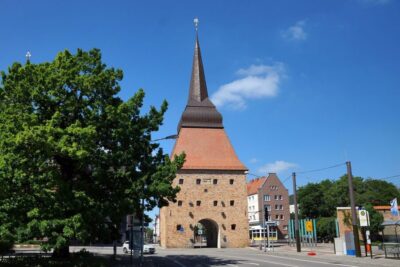

Full-Day, Half-Day, or Sunset Sailing Experience
Read our review →

Berlin and Sachsenhausen: Shore Trip from Warnemünde Port
Read our review →

Browse the lists this tour appears in