

Review · ROSTOCK TOURS
Rostock: Tour with the Rostocker Executioner
Rostock’s dark side comes with a walking route, a costumed executioner, and a surprising amount of everyday history. Starting at the town hall, you move through the old center while learning what the hangman actually did, how justice worked, and why odd phrases about hair, streets, and torture still echo in modern speech. I like the mix of grim facts and sly humor, and I like that the tour covers architecture as well as crime. The main catch is simple: it is in German, and the executioner may speak fast.
I also like the short, focused format. At $16 per person for 90 minutes, you get a lively introduction to Rostock without giving up half a day. This is best for visitors aged 14 and up who enjoy dark tales, unusual city history, and a guide who performs a role rather than simply reciting dates.
Key points at a glance
- The route covers central Rostock: Begin at the town hall and continue through the Kerkhoff, Krahnstöverhaus, Kuh, Steintor, Neuer Markt, St. Mary’s Church, and Heiligengeisthof.
- The hangman explains his trade: Learn about the executioner’s duties, local law, punishments, and the place of the profession in medieval society.
- Odd customs come into focus: The sparrow tax, the removal of privies, and the need to keep hair off the streets all become part of the story.
- The tone is dark but not grim: A trained actor brings scary and funny tales to the streets.
- The tour stays compact: Ninety minutes gives you a strong old-town orientation, though the amount of information can feel brisk.
- Plan for German and stairs or uneven ground: The live tour is in German and is not suitable for people with mobility impairments.
Meeting Rostock’s executioner at the town hall
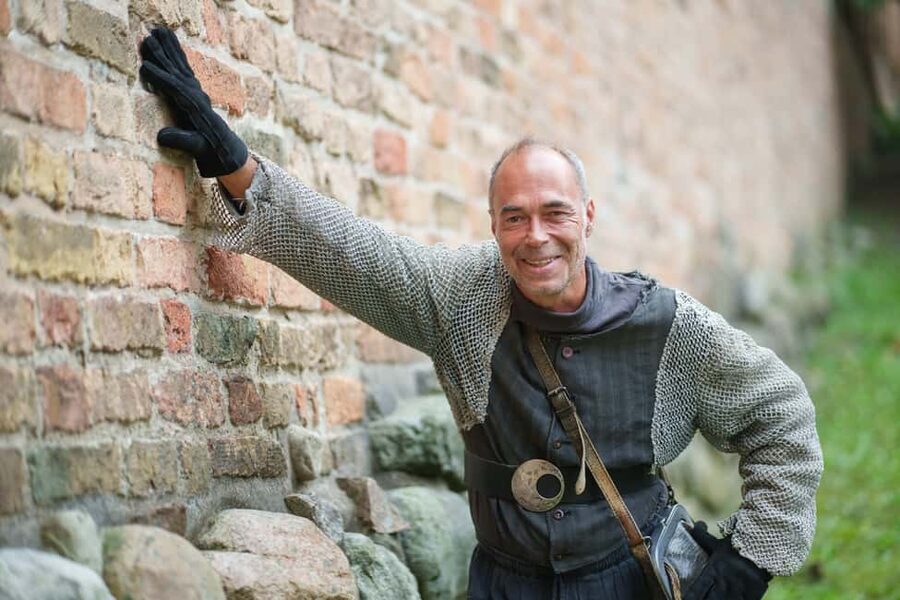
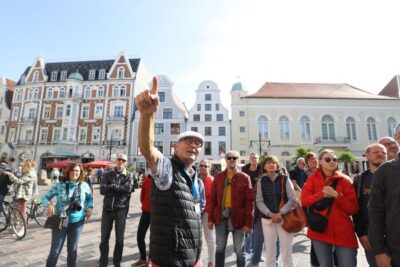
The tour begins under the arcades in front of Rostock’s town hall. Look for one hangman, not a crowd of costumed characters. The meeting point is easy to identify, and the joke in the meeting instructions fits the experience: there will be only one executioner there.
The role is performed by a trained actor. That matters because this walk depends on delivery as much as content. The executioner is meant to entertain you, not simply point at buildings and list dates. Expect a character who can tell a frightening tale, land a joke, and then explain the historical point behind it.
Tobias Hamann is named as the provider of the experience. The information supplied does not identify a separate guide by name, so I would not assume Hamann himself will lead every departure. What you can count on is a live German-language guide playing the executioner.
The first minutes set the mood. Rostock’s town hall is not just a convenient meeting point. It represents civic authority, law, and the public machinery that once judged people. From there, the tour links the handsome center to the less comfortable questions of who was punished, why punishments were public, and what work fell to the person carrying them out.
A few more Rostock half-days to weigh up
- Rostock: Guided tour of the historic city center
★ 4.5 · 311 reviews - Best Berlin Shore Excursion from Warnemunde or Rostock Port
★ 4.8 · 200 reviews - Rostock: City Walking Tour
★ 4.9 · 198 reviews
The old center, seen from its harshest angle
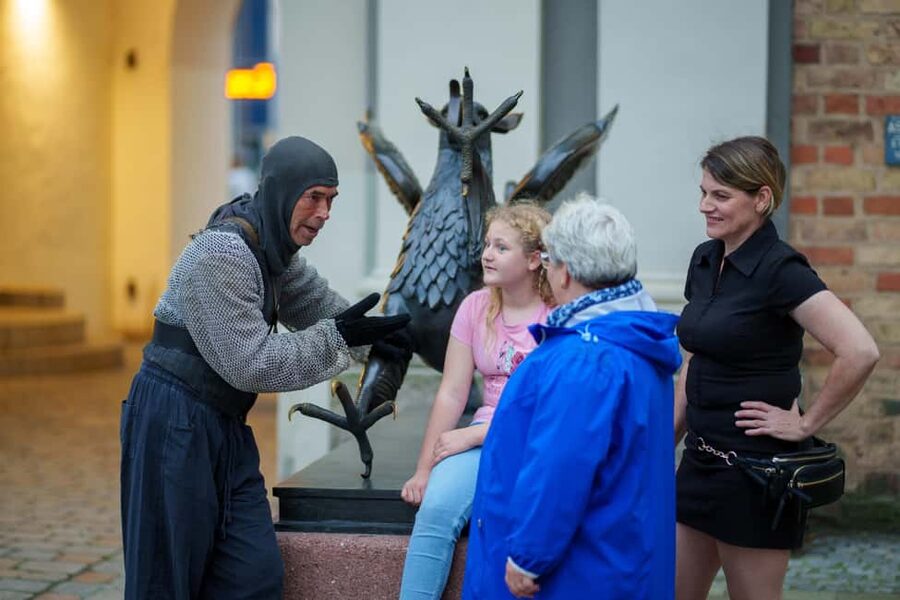
This walk focuses on Rostock’s oldest and most attractive district, but it does not treat the old town as a postcard. You see the streets through the eyes of someone connected to law, crime, and punishment.
That shift in viewpoint is the tour’s best idea. A standard city walk might point out façades, churches, and merchant houses. This one asks what happened in the same public spaces when a town needed to shame, punish, or execute someone. You get architecture, but with a sharper edge.
The route moves through several central landmarks:
- The town hall, where civic authority frames the story
- The Kerkhoff and Krahnstöverhaus
- Kuh and Steintor
- Neuer Markt
- St. Mary’s Church
- Heiligengeisthof
The supplied route does not assign a fixed amount of time to each stop. That is useful to know. The tour is a connected story rather than a series of long visits inside each place. You should expect to remain outdoors and keep walking, with the guide using each location to explain a piece of Rostock’s past.
The route also gives you a good first look at the old center. If you are new to Rostock, the sequence of streets and landmarks can help you get your bearings. If you already know the city, the executioner’s point of view may make familiar buildings feel less familiar.
What an executioner really did
The title may suggest that the whole tour is about public executions. The content is wider than that. You learn about the executioner’s various tasks, the legal system of the time, and the punishments used by authorities.
That broader focus is important. In medieval and early modern towns, an executioner was connected to more than one act of killing. The role sat within a system of courts, penalties, physical punishment, and social control. The tour uses the character to explain that system in a way that is easier to remember than a string of legal terms.
You also get a sense of the executioner as a person who occupied an awkward place in society. The supplied information does not spell out every detail of that status, so I would not expect a full lecture on social history. Still, questions about the trade and its duties give the guide room to explain why the profession was unusual and how it fitted into civic life.
The best parts are likely the small, strange details. Those are the facts that turn an old street into a scene with a story. One minute you are looking at a building, and the next you are hearing why a town cared about sparrows, privies, or hair in the road.
The sparrow tax, privies, and hair in the street
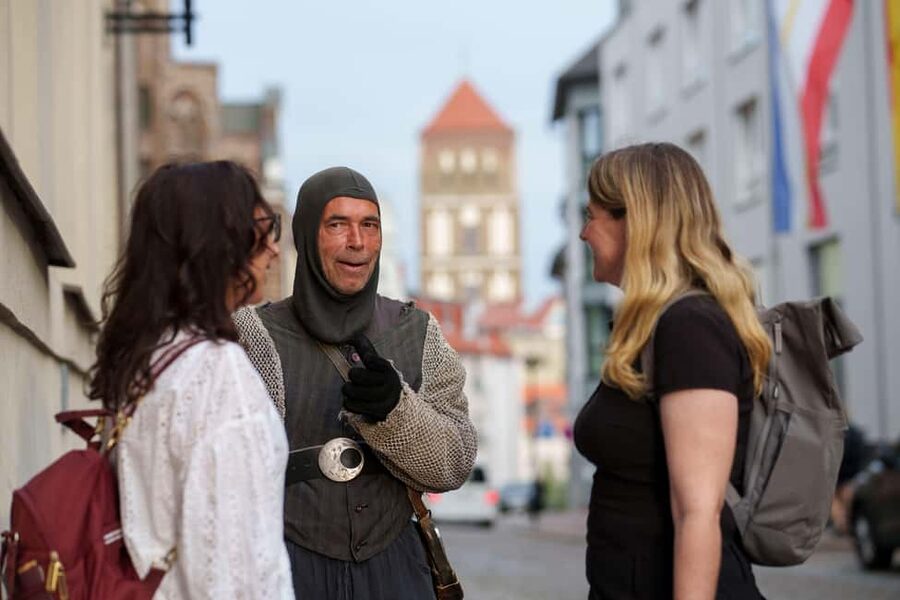
Three questions are specifically built into the tour:
What was the sparrow tax?
What did Ausbringen der Priveten mean?
Why did the hair have to come off the streets?
These subjects show the kind of history you can expect. They are not grand battles or famous rulers. They concern pests, sanitation, household waste, street cleanliness, and the daily rules that shaped city life.
The sparrow tax is the sort of odd custom that makes a tour memorable. The supplied information does not provide the full explanation, so you will need to hear the guide’s account for the local details. The same is true of Ausbringen der Priveten, a phrase tied to the removal or emptying of privies. It points toward the practical problems of keeping a dense old town usable before modern sanitation.
The question about hair brings another street-level detail into view. You are not just learning how authorities punished serious crimes. You are also hearing about rules governing what could be left in public places and how towns tried to control their streets.
I like this part of the concept because it connects law to ordinary life. You do not need specialist knowledge to care about waste, pests, or dirty streets. These subjects make the past feel close, even when the customs themselves seem strange.
Same city, a completely different sort of afternoon:
- Rostock: Full-Day, Half-Day, or Sunset Sailing Experience
★ 4.7 · 174 reviews - Rostock: Electric Boat Rental on the Warnow River
★ 4.8 · 106 reviews - Berlin and Sachsenhausen: Shore Trip from Warnemünde Port
★ 4.8 · 40 reviews - Rostock: Hot Rod Sightseeing Tour to Warnemünde
★ 5.0 · 19 reviews
From scary tales to modern phrases
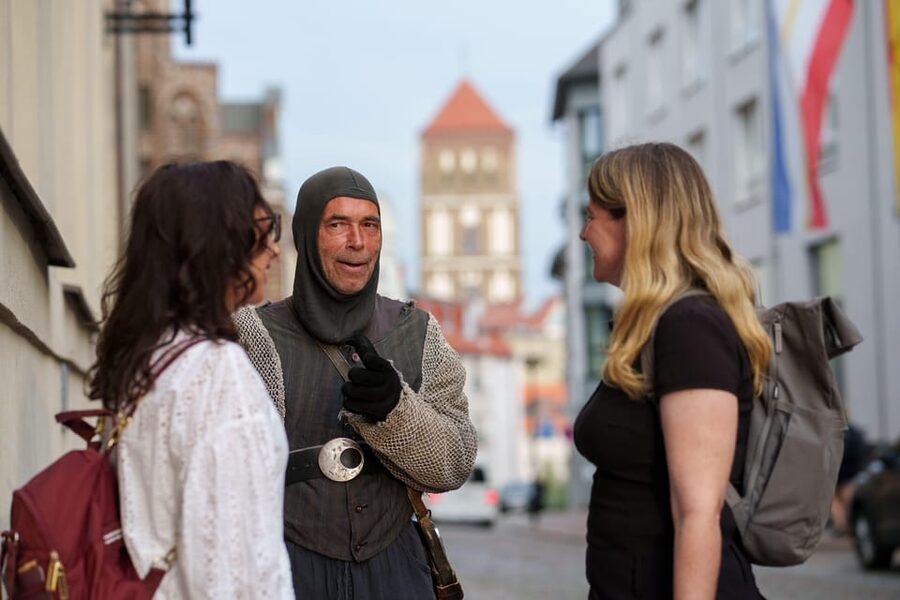
The executioner also tells criminal stories from Rostock. The exact cases are not provided, so I would avoid expecting a set list of famous crimes. The appeal lies in hearing local wrongdoing tied to the streets around you.
The tone is meant to be both scary and funny. That balance is central. A tour devoted only to torture and death could become heavy after 90 minutes. The actor’s humor gives the walk room to breathe, while the darker stories give the old town a sense of danger and consequence.
One especially clever theme is the way medieval methods of torture and death entered modern language. You may recognize expressions without realizing that they carry a violent past. The guide points out those connections and lets you hear familiar speech in a new way.
This kind of language lesson is a strong reason to choose the tour over a basic sightseeing walk. You are not only memorizing a date or a building name. You are learning how old practices remain in everyday words. The information provided does not list the expressions, so I cannot promise which phrases will be covered, but the topic is clearly part of the program.
If you are sensitive to graphic material, keep the format in mind. The tour is built around punishment, crime, torture, and death. It is presented with humor, but the subject matter does not disappear. That is why the minimum age is 14.
Neuer Markt, St. Mary’s, and the public face of justice
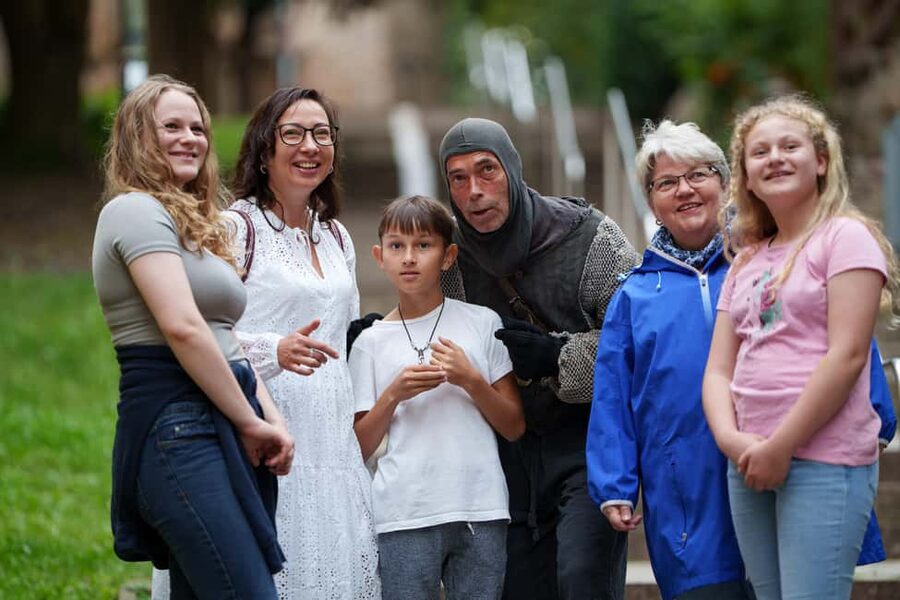
As the route reaches Neuer Markt and St. Mary’s Church, the story gains a broader civic and religious setting. These are not isolated dark-history sites. They are part of the public center where commerce, worship, authority, and community life met.
The guide’s job is to connect these places to the law of the time. Public punishment makes little sense without a public audience, and the route through the center helps explain that relationship. The executioner’s work belonged to the visible town, not to a distant courtroom hidden from ordinary people.
St. Mary’s Church also widens the subject beyond crime. The tour is not advertised as a church interior visit, and no entry is promised, so you should not book it expecting a detailed look inside. Instead, the church forms part of the town setting in which ideas about guilt, morality, punishment, and public order existed.
At Heiligengeisthof, the route reaches another central point before the walk ends. The supplied information does not describe a final ceremony or special stop activity. Treat it as part of the walking story and another chance to see Rostock’s old center through the guide’s unusual role.
A lively pace, with a lot packed into 90 minutes
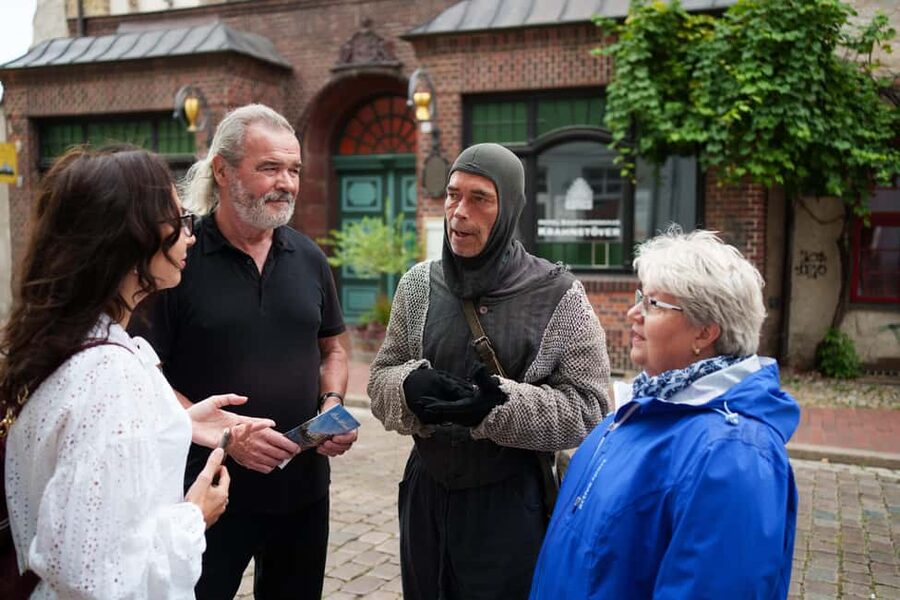
Ninety minutes is a good length for this subject. It gives you enough time for several landmarks and a clear story without turning the walk into an all-day commitment. At the same time, the amount of material can come at you quickly.
One German-language comment specifically noted that the guide spoke fast enough for some parts to be harder to understand. Another person felt that the tour contained a great deal of information in a short time. I would take both points seriously, especially if German is not your first language.
You can make the experience easier by arriving ready to listen rather than trying to photograph every building. Keep your attention on the guide during the explanations, then take pictures while the group moves or pauses. If you miss a word, ask for clarification. The guide is described as able to answer additional questions.
The pace also explains why the tour feels useful for a first day in Rostock. You cover a number of central points and get a working sense of the old district. But if you want long pauses for photographs, quiet architectural study, or detailed church history, this is not the right format.
What the $16 price delivers
At $16 per person, this is a modestly priced city experience. The value comes from the trained actor, the local route, and the specialized subject. You are not paying for transport, a meal, or admission to a major attraction. You are paying for 90 minutes of interpretation delivered in character.
That can be a good deal if you like guided walks with a clear theme. A general old-town tour may give you wider coverage, but this one offers a stronger hook. The sparrow tax, privies, street hair, criminal cases, and old torture terms are the kind of details you may remember after the names of several buildings have faded.
The value drops if you do not understand German well. The tour has no listed English option, and the material is delivered live. Since one German-speaking participant found the delivery quick at times, you should be comfortable following spoken German at a brisk pace.
The booking terms also make planning less risky. You can cancel up to 24 hours before the start for a full refund, and you can reserve now while paying later. Starting times vary, so you need to check availability for your date. Those details are useful if your Rostock schedule is still taking shape.
Who should join this dark-history walk?
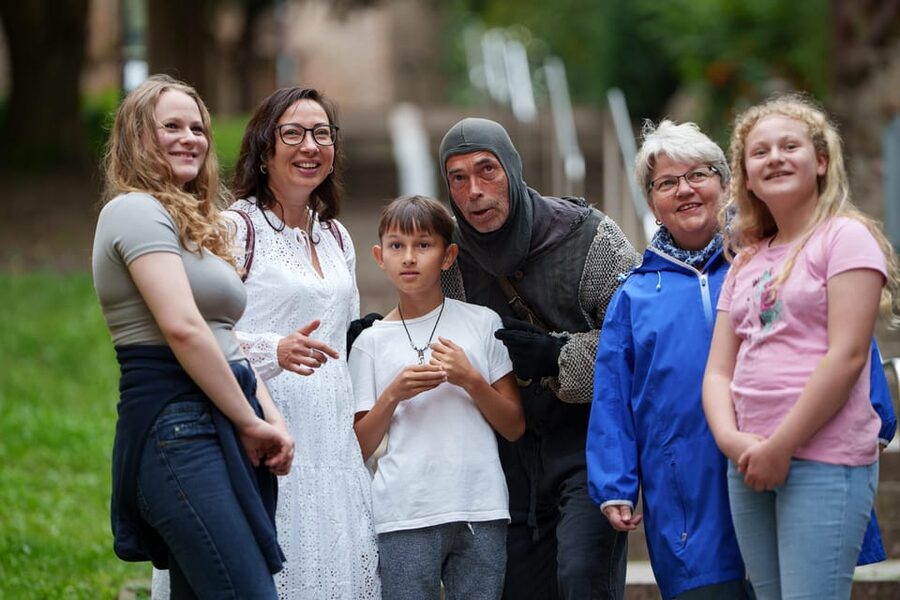
I would choose this tour for adults and older teenagers who enjoy unusual local stories. It suits you especially well if you like:
- Dark history presented with humor
- Walking tours built around a character
- Medieval law and punishment
- Small details about sanitation, street rules, and daily life
- Historic city centers viewed from an unexpected angle
- A short activity that fits around other sightseeing
The age limit is under 14, so younger children cannot join. Even for older children, consider their comfort with stories about executions, torture, crime, and death.
I would skip it if you need an English-language tour, have difficulty walking through an old town, or prefer a calm art and architecture presentation. The route includes several central stops, and the activity is not suitable for people with mobility impairments. The supplied details do not specify the length of pauses, ground conditions, or toilet access, so do not assume those features are provided.
How this tour fits into a Rostock visit
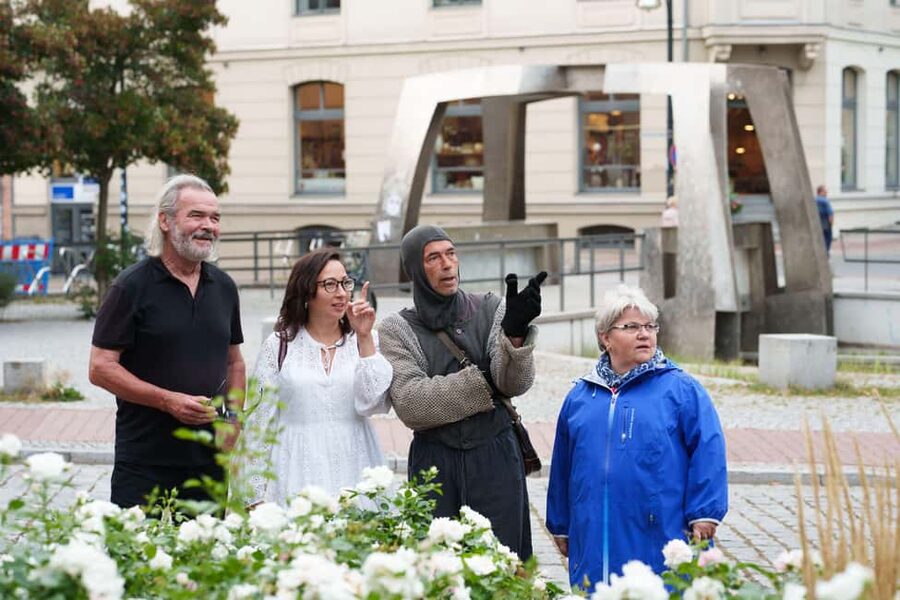
The meeting point under the town hall arcades makes the walk easy to pair with other central sightseeing. Since the route includes the old center, you can use the 90 minutes as a themed introduction before exploring the town on your own.
I would schedule it early in your stay if you enjoy guided orientation. The route names give you a useful list of places to revisit, and the stories may change how you look at the streets afterward. You can then return to the town hall, Neuer Markt, St. Mary’s Church, or the other stops with more context.
You can also place it later in the day if you want a change from standard sightseeing. The subject gives the old town a different mood, and the actor’s performance makes it feel like an event rather than another list of buildings.
The tour is in German, with Tobias Hamann identified as the provider. No group size is given, so I would not plan around a small private walk. The only guide promised is one executioner, which is part of the charm but also means the experience depends on how well you follow the live presentation.
Should you book the Rostock executioner tour?
I would book it if you want Rostock explained through crime, punishment, and the strange rules of city life. The strongest features are the character guide, the central old-town route, and the specific oddities that go beyond the usual sightseeing script. The price is fair for a focused 90-minute walk.
I would not book it simply because you want a standard historical tour in English. This is German only, and the pace may feel quick. You should also be comfortable with dark themes and walking through the old center.
For German speakers aged 14 and up, this is a smart pick for an entertaining look at Rostock’s past. Bring your curiosity, listen closely, and be ready to discover that modern language can carry some very old, very unpleasant baggage.
FAQ
Where does the Rostock executioner tour begin?
The meeting point is under the arcades in front of Rostock’s town hall.
How long does the tour last?
The tour lasts 1.5 hours, or 90 minutes.
What language is the tour in?
The live tour guide speaks German. No other language is listed.
Who leads the experience?
A trained actor serves as the executioner and tour guide. Tobias Hamann is identified as the experience provider.
What places are included on the route?
The route goes from the town hall through the Kerkhoff, Krahnstöverhaus, Kuh, Steintor, Neuer Markt, St. Mary’s Church, and Heiligengeisthof.
Is the tour suitable for children?
The tour is not suitable for children under 14.
Can I cancel and receive a refund?
You can cancel up to 24 hours before the tour for a full refund. You can also reserve your place and pay later.
Just added around Rostock
- Rostock: Electric Boat Rental on the Warnow River★ 4.8 · 106 reviews
- Rostock: Private Guided Walking Tour★ 5.0 · 4 reviews
- Rostock: Hot Rod Sightseeing Tour to Warnemünde★ 5.0 · 19 reviews
- Rostock: Hot Rod Harbor City Tour★ 4.9 · 16 reviews
- Berlin and Sachsenhausen: Shore Trip from Warnemünde Port★ 4.8 · 40 reviews
- Distillery tour with guide!★ 4.7 · 14 reviews
- Discover Rostock: A Guided City Tour for Cruise Guests★ 3.7 · 7 reviews
- Brewery tour with guide!★ 4.8 · 13 reviews
Rostock Tours, compared.

Best Berlin Shore Excursion from Warnemunde or Rostock Port
Read our review →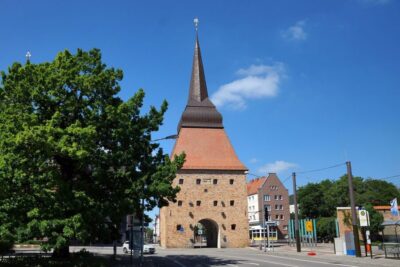

Full-Day, Half-Day, or Sunset Sailing Experience
Read our review →

Berlin and Sachsenhausen: Shore Trip from Warnemünde Port
Read our review →

Browse the lists this tour appears in