
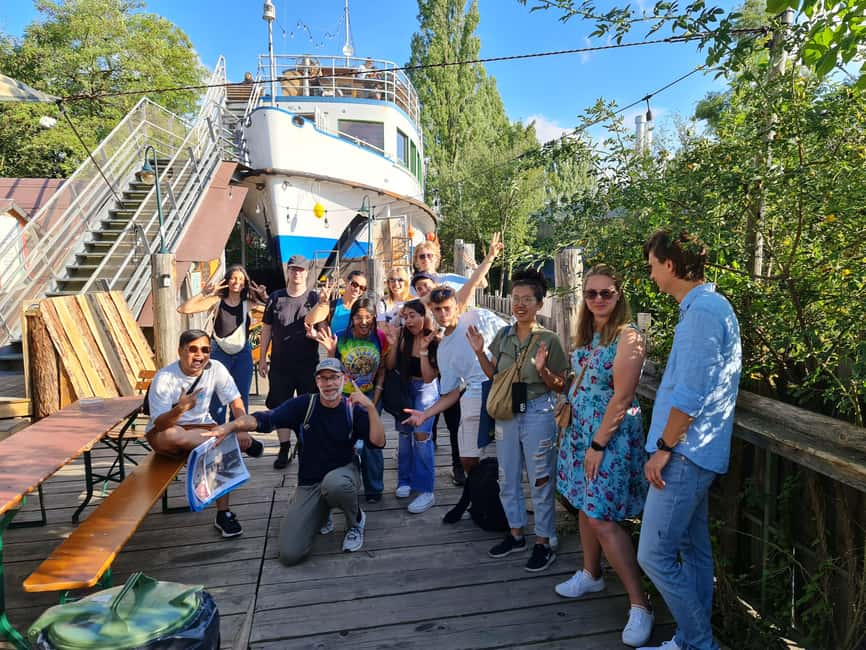
Review · MUNICH TOURS
Munich’s Hidden Architecture Guided Tour
Munich’s south offers a very different face from the grand squares and palace streets downtown. This two-hour walk with architect Philipp leads you through street art, old neighborhoods, creative cultural spaces, the Isar River, and three alternative Christmas markets, ending near Gans Woanders.
I like the way the tour connects architecture with everyday city life, rather than treating buildings as isolated sights. I also like the chance to see places such as Bahnwärter Thiel and Alte Utting, two playful cultural spaces that are easy to miss if you stick to the historic center.
The main consideration is the pace and terrain. This is a walking tour through several southern districts, with outdoor stops and winter weather. It is not suitable for wheelchair users or people with mobility impairments, and you will want warm clothes and comfortable shoes.
Key points to know before booking
- Alte Utting on a bridge: See the unusual former passenger ship turned cultural venue, a place that drew attention from The New York Times.
- Munich beyond the old center: Walk through Giesing and other southern districts with more local character than the postcard core.
- Three Christmas markets: The seasonal stops add food, lights, and a festive mood, though food and drinks cost extra.
- An architect as your guide: Philipp brings professional experience in architecture and explains small details that are easy to pass without context.
- Isar River and Willow Island: The route includes nature, river views, bridges, and the area known as Little Venice.
- A winter evening option: Some departures offer Munich by night, so dress for cold temperatures and changing conditions.
Why Munich’s south is worth your time
Many first visits to Munich focus on Marienplatz, the Residenz, the Frauenkirche, and the grand museums. Those places deserve attention, but they do not tell the whole city’s story. South of the center, Munich becomes less formal and more experimental.
This tour is built around that contrast. You see older districts with more than 700 years of history, then move toward spaces made from shipping containers, wood, and repurposed structures. The result is not a standard architecture walk where you simply admire façades. You are encouraged to notice how residents, artists, and local groups have adapted ordinary urban spaces.
Philipp is a professional architect, and that matters here. The tour’s appeal depends on interpretation. Without a guide, you might see a boat on a bridge, a decorated market, or an unusual building and simply take a photograph. With Philipp, those details become part of a larger story about how Munich changes while keeping traces of its past.
His speaking style is also a practical strength. The supplied feedback describes him as an engaging speaker who answers questions, explains carefully, and offers useful suggestions during and after the walk. That makes this a good choice if you want more than a list of stops.
A few more Munich half-days to weigh up
- From Munich: Neuschwanstein & Linderhof Castle Full-Day Trip
★ 4.5 · 12,494 reviews - Neuschwanstein & Linderhof Castle-Fairytale Day Tour from Munich
★ 4.5 · 7,275 reviews - Munich: Third Reich & WWII Walking Tour
★ 4.6 · 6,181 reviews
Starting at Piazza Zenetti
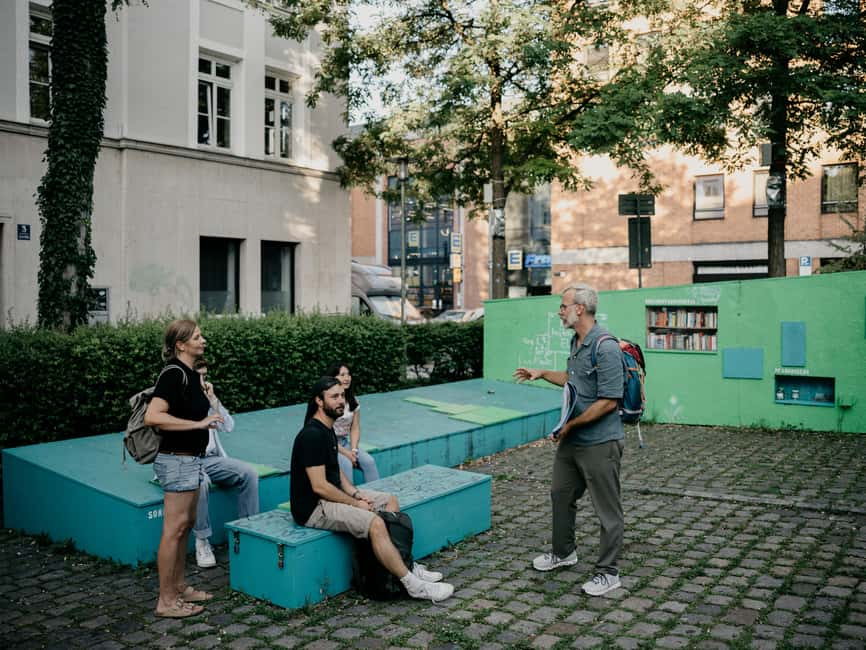
The meeting point is Piazza Zenetti, at the intersection of Tumblingerstrasse and Zenettistrasse. Look for the turquoise and green outdoor furniture and small trees in boxes. Philipp will be carrying a blue folder and wearing a colorful backpack.
For public transportation, get off at Goetheplatz on the U3 or U6 lines. From there, the walk to the meeting point takes about 10 minutes. Allow extra time, especially in winter, since arriving late could be awkward once the group has moved on.
Piazza Zenetti sets the tone for the tour. You are not beginning beside a famous monument or a grand ceremonial square. You are starting in a neighborhood setting, which makes the shift away from central Munich feel immediate.
Münchner Volkstheater and the first change of scene
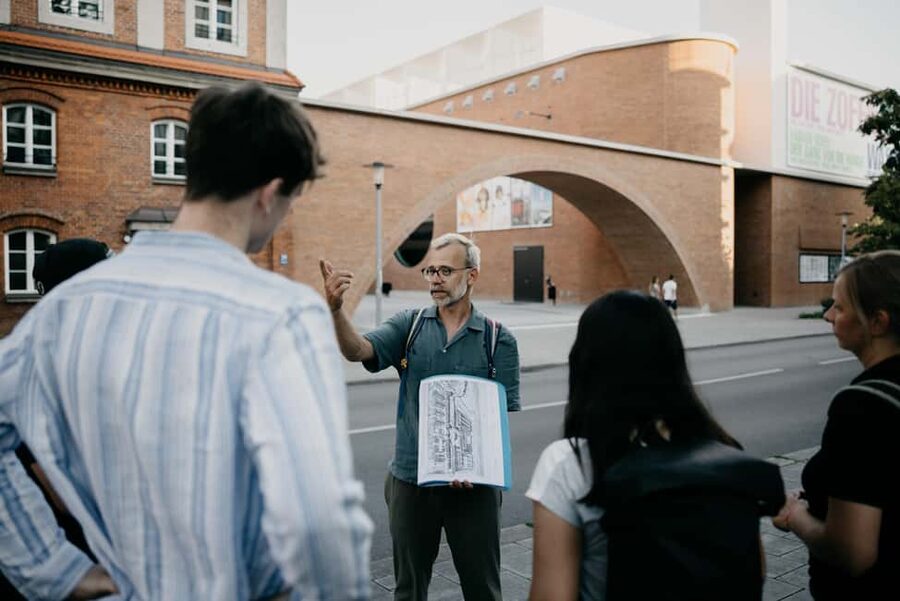
The route includes Münchner Volkstheater, where Philipp provides a guided explanation. The theater is a useful early stop because it links culture with the city’s changing southern districts.
You can expect the focus to be on the building and its place in Munich’s cultural life, rather than a theater performance. This is an exterior walking-tour stop, so do not book the experience expecting an indoor visit or a show.
I like this part of the route because it helps establish a theme that continues through the afternoon or evening: Munich’s cultural life is not limited to traditional institutions. The tour moves between formal arts venues and more improvised spaces, showing how different kinds of culture share the same city.
Bahnwärter Thiel and creative reuse
Bahnwärter Thiel is one of the tour’s most distinctive stops. It is a cultural space built around unusual materials and temporary-looking structures, including shipping containers and wood.
This is the sort of place that rewards a guide. The visual details are immediate, but its meaning is less obvious. Philipp can explain why such spaces matter in a city where land, construction, and cultural use often compete with one another.
Expect a creative setting rather than polished historic architecture. That is precisely the point. If you prefer formal churches, royal residences, and carefully preserved interiors, this stop may feel rough around the edges. If you enjoy street art, adaptive reuse, and places shaped by local cultural energy, it is likely to be one of the strongest parts of the walk.
The tour’s earlier feedback repeatedly highlights this mix of art, architecture, and overlooked places. I would give this stop special weight when deciding if the experience matches your interests.
Same city, a completely different sort of afternoon:
- Dachau Concentration Camp Memorial Site Tour from Munich by Train
★ 4.5 · 5,637 reviews - Neuschwanstein Castle Tour from Munich
★ 4.5 · 5,117 reviews - Third Reich Walking Tour Munich
★ 4.5 · 4,291 reviews - Munich Hop-On Hop-Off Tour: 1-Day or 2-Day Ticket
★ 4.3 · 4,161 reviews
Alte Utting, the boat on the bridge
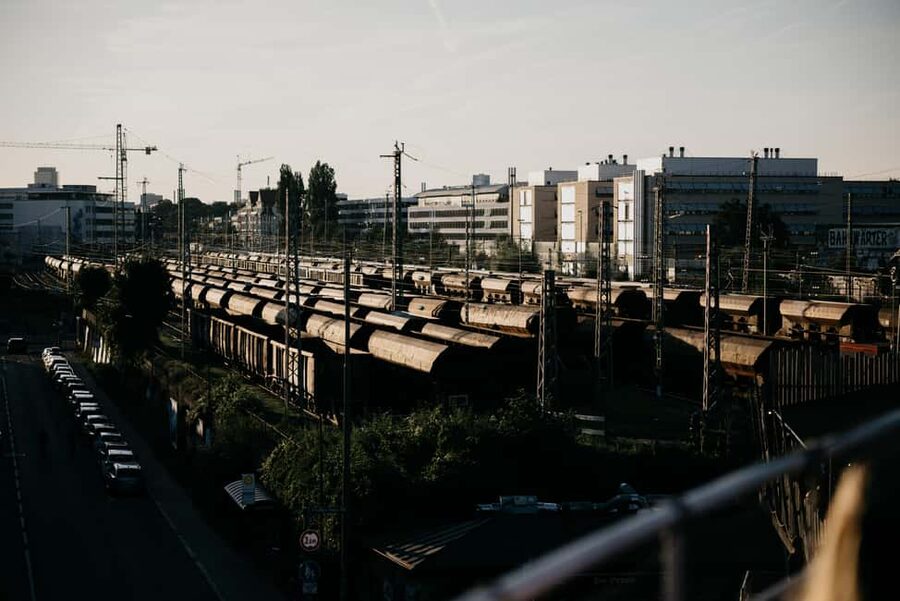
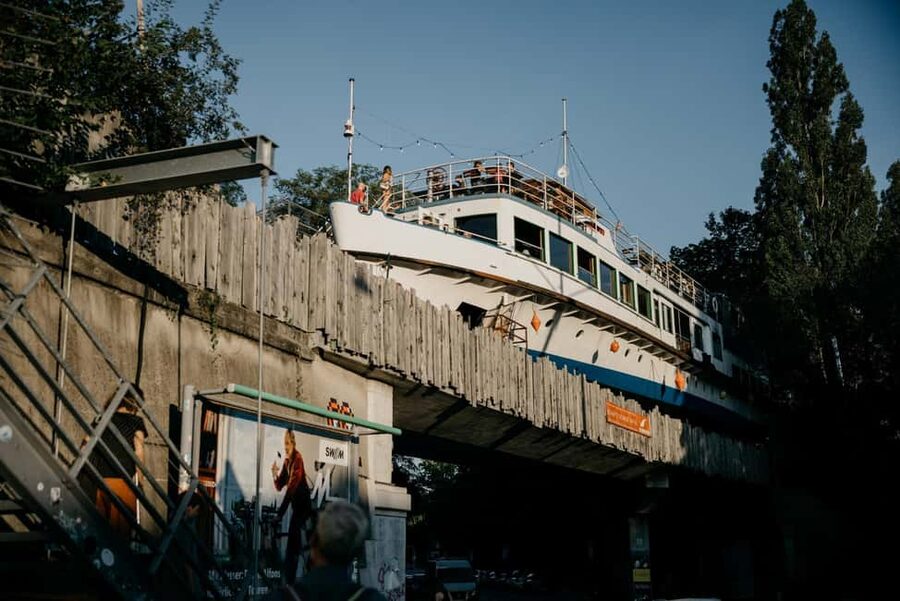
Alte Utting is the tour’s most memorable visual stop. It is an old passenger ship positioned on a bridge at Lagerhausstrasse, now used as a cultural venue.
The image is wonderfully odd: a boat where you do not expect a boat. The setting gives the tour a strong sense of place, and it is easy to understand why the site received attention from The New York Times under the question of whether Munich was getting cool.
That newspaper reference is not the reason to visit, though. The value is seeing how Munich has given a second life to an object and turned an infrastructure site into a meeting place. Philipp’s architectural background helps you read the choice of materials, the setting, and the relationship between the boat and the surrounding city.
You may want to pause for photographs here. The tour does not include food or drinks, so any refreshments at stops such as this are your own expense. If you are hoping to spend a long time inside, ask Philipp about the exact plan for your departure, since this is a guided walking route with several stops rather than a visit focused on one venue.
Dreimühlenstrasse and the riverward route
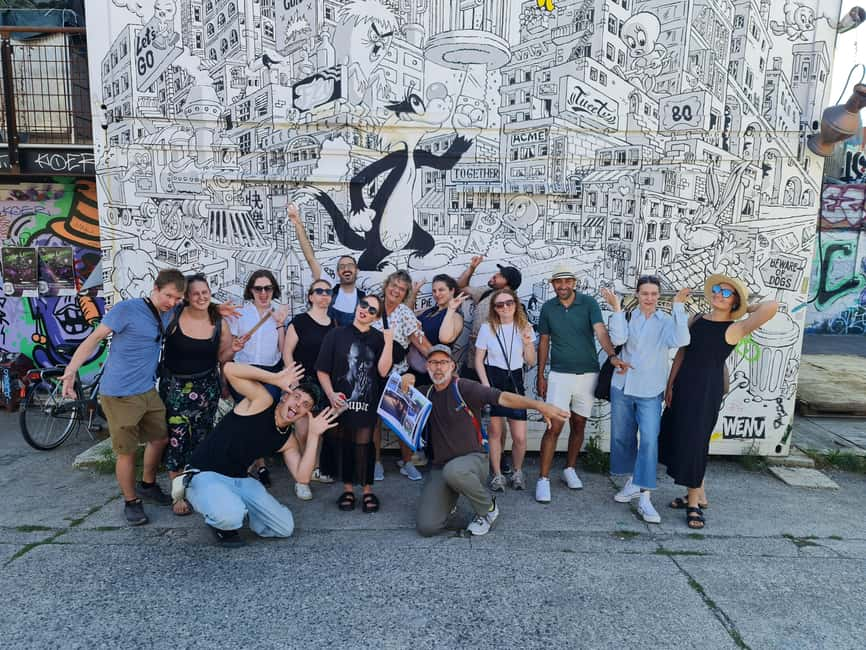
From Alte Utting, the walk continues through Dreimühlenstrasse. This section helps connect the creative venues with the everyday streets of the southern city.
The appeal is in the transition. Munich’s alternative spaces do not sit in a separate theme park. They appear among residential streets, bridges, old routes, and working parts of the city. You are moving through a real neighborhood, not simply checking off attractions.
The route also begins to bring the Isar into view. In winter, the river and open areas can feel especially atmospheric after dark, but cold temperatures will be part of the experience. Wear a coat that handles wind, and do not rely on the idea that Munich’s winter will be mild.
Wittelsbacherbrücke and Claude-Lorrain-Strasse
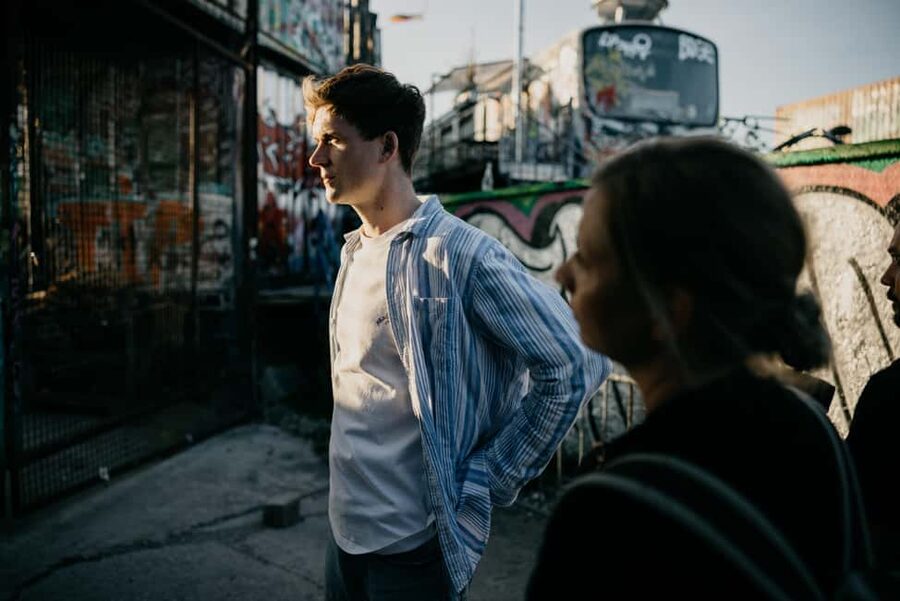
Wittelsbacherbrücke gives the walk a bridge and river perspective. This is one of the places where the tour’s balance of city and nature becomes clear. You are not only looking at architecture. You are also seeing how the Isar cuts through Munich and shapes movement between districts.
The bridge is likely to be more enjoyable for people who like urban views and photography than for visitors searching for a major monument. The value comes from the setting and the guide’s explanation, not from a ticketed attraction.
The walk then continues toward Claude-Lorrain-Strasse. The district’s character is part of the experience, with the route offering a close look at southern Munich rather than a quick drive-by view. This is where Philipp’s comments about local history and architectural details can turn an ordinary street into a more interesting place.
The route includes more than 700 years of history in these southern districts. That does not mean every stop is a preserved medieval building. Instead, you get a layered view of Munich, where older neighborhoods, newer art spaces, and changing cultural uses sit side by side.
Little Venice and the Willow Island
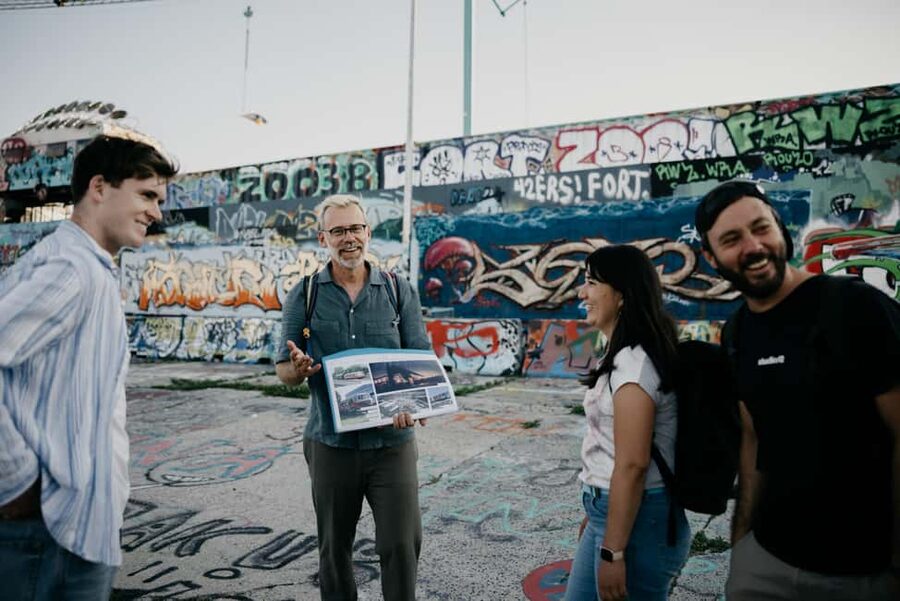
The Isar portion continues toward Little Venice and the beautiful Willow Island. These are among the calmer parts of the walk, giving you a change from street art and creative hubs.
The name Little Venice suggests a water-focused setting, but the supplied details do not promise gondolas, canals, or a replica of Venice. Think of it as a local riverside area with water, trees, and a distinct atmosphere. The Willow Island adds a nature element to a tour otherwise centered on urban culture.
I like this change of pace. A two-hour walk can feel crowded if every stop is another building or art installation. The river, bridges, and island create breathing room and show that Munich’s southern appeal comes from its combination of city and open space.
If you take a winter departure near sunset, the river section may be especially atmospheric. At the same time, low light can make walking surfaces harder to see. Good shoes are not optional here.
Three Christmas markets with a different feel
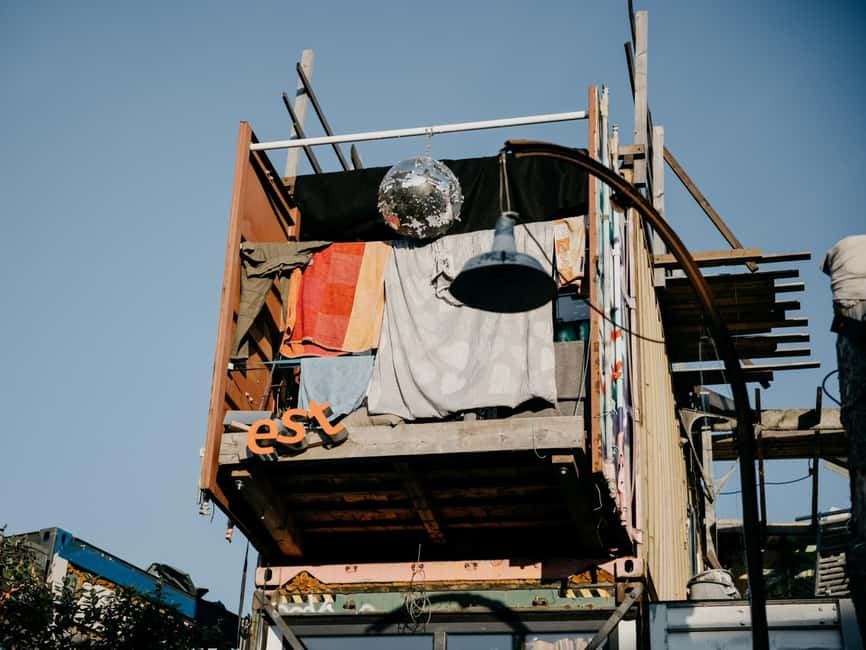
The tour includes three cool and alternative Christmas markets, with a visit to one of the city’s more unusual seasonal markets emphasized as a highlight. These are not presented as the classic central Munich markets, and that difference is the reason to include them.
You can expect a festive setting with seasonal decorations and places to buy food or drinks. Those purchases are not included in the $36 tour price, so carry a payment method and budget for extras if you want to stop for a snack or warm drink.
The markets add a social side to the walk. You see how Christmas is celebrated in districts that feel more local and creative than the central tourist areas. I would especially recommend this timing if you have already seen the main market at Marienplatz and want something less traditional.
The drawback is that Christmas markets are seasonal. The tour description presents the experience as an alternative winter tour, so check available dates and starting times carefully. If you book outside the relevant season, do not assume the same market stops will operate.
What the $36 price buys you
At $36 per person, this tour sits in a reasonable range for a two-hour guided walk, particularly because the route covers several districts and includes a guide with professional architectural training.
The price is best judged against the type of experience. You are not paying for entry to a museum, a meal, or transportation. You are paying for local direction and interpretation in places you might not find easily on your own.
That distinction matters. Someone who enjoys wandering without a plan may prefer to explore the south independently. But getting between Piazza Zenetti, Bahnwärter Thiel, Alte Utting, the Isar, Giesing, and Gans Woanders takes time and some research. Philipp provides the route, context, and a chance to ask questions.
The value is strongest if you care about architecture, street art, urban change, and local cultural spaces. It is less convincing if your priority is a short list of famous landmarks or indoor sights.
Private groups are available. That can make the price calculation different, especially if you want a more personal pace or have special requests. You can message Philipp about private tours, Christmas vouchers, or other arrangements.
Timing, footwear, and practical comfort
The tour lasts two hours, but the experience is outdoors and involves walking through multiple areas. Comfortable shoes are essential. The activity is not suitable for wheelchair users or people with mobility impairments, and participation is at your own risk.
Warm clothing matters more than usual because the route includes the Isar and may take place at night. Wear layers, cover your hands, and bring a camera if you want to capture the river, bridges, street art, and Alte Utting.
Smoking is not allowed during the activity. Food and drinks are not included, and transportation to the meeting point is your responsibility.
The tour is offered in English or German. A private group option is available, which may suit families or friends who want to ask more questions without holding up a larger group.
Free cancellation is available up to 24 hours before the start for a full refund. You can also reserve now and pay later, which is useful when winter weather or a changing Munich schedule makes firm planning difficult.
Who will enjoy this Munich walking tour
I would choose this experience for you if you have already seen the central sights or if you want to begin with a less formal side of Munich. It suits people who enjoy architecture, street art, cultural centers, unusual buildings, and neighborhood history.
It is also a good fit for photographers. The route offers strong visual variety: colorful creative spaces, a boat on a bridge, river views, bridges, winter markets, and the willow-covered island.
The tour may not suit you if you want a relaxed café crawl, a museum visit, or a short route with frequent indoor breaks. It is also a poor match if you have limited mobility or dislike cold-weather walking.
Families, couples, solo visitors, and local residents can all get something from it. The feedback includes people who had lived in Munich for nearly 25 years and still found new information and new places, which tells you that the route is not aimed only at first-time visitors.
Should you book Munich’s Hidden Architecture Guided Tour?
Book it if you want Munich explained through its less familiar southern districts rather than through its royal center. Philipp’s architectural training, clear explanations, and personal recommendations give the walk more substance than a simple neighborhood stroll.
The best reasons to go are Bahnwärter Thiel, Alte Utting, the Isar route, and the chance to see three alternative Christmas markets in one outing. The main trade-off is outdoor comfort: winter weather, walking distance, and limited accessibility are part of the deal.
At $36, I consider it good value for an active two-hour introduction to Munich’s creative south. Bring warm clothes, wear sturdy shoes, and check the departure time and seasonal market availability before booking.
FAQ
How long does the tour last?
The tour lasts two hours.
What is the price?
The price is $36 per person.
Where does the tour start?
The tour starts at Piazza Zenetti, at the intersection of Tumblingerstrasse and Zenettistrasse.
How do I reach Piazza Zenetti?
The recommended route is to take the U3 or U6 to Goetheplatz, then walk about 10 minutes to Zenettiplatz.
Where does the tour finish?
The stated finish is at Gans Woanders.
Is the tour offered in English?
Yes. The tour is available in English and German.
Are food and drinks included?
No. Food and drinks are not included in the tour price.
What should I bring?
Bring comfortable walking shoes, warm clothing, and a camera if you want to photograph the sights.
Is the tour suitable for wheelchair users?
No. The activity is not suitable for wheelchair users or people with mobility impairments.
Just added around Munich
- Pub crawl incl. Oktoberfest museum guided tour with beer tasting (private)★ 5.0 · 5 reviews
- South Tyrolean specialties and wine tasting★ 5.0 · 5 reviews
- Size Matters Beer Tour Munich★ 4.6 · 105 reviews
- Secret Food Tours Munich★ 4.8 · 5 reviews
- Short & sweet: Tasting the Viktualienmarkt★ 4.8 · 37 reviews
- Munich: Romantic Wine Experience for Two at Viktualienmarkt★ 4.2 · 14 reviews
- Residence of Munich private tour with skip the line ticket★ 5.0 · 4 reviews
- Munich: Resistance against Hitler – Historical Walking Tour★ 5.0 · 5 reviews
Munich Tours, compared.
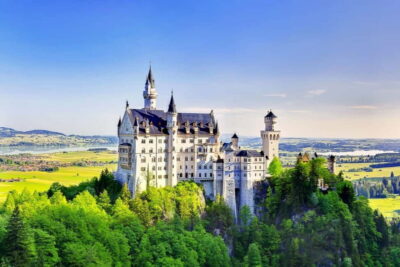

Neuschwanstein & Linderhof Castle-Fairytale Day Tour from Munich
Read our review →
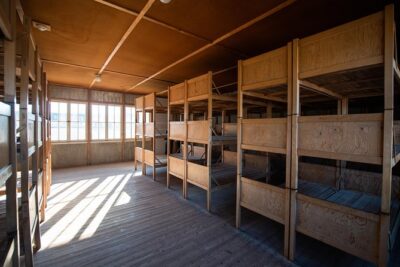
Dachau Concentration Camp Memorial Site Tour from Munich by Train
Read our review →
Munich Hop-On Hop-Off Tour: 1-Day or 2-Day Ticket
Read our review →Browse the lists this tour appears in