
Review · MUNICH TOURS
Munich’s 500 Years of Architecture Guided Tour
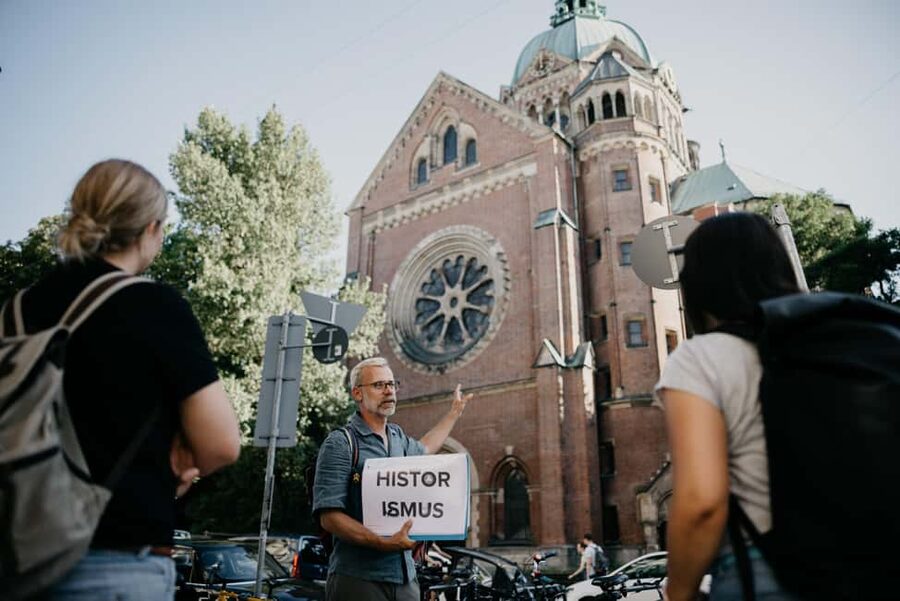
Munich’s story is written in its buildings, and this two-hour tour reads that story in order, from the late Gothic Frauenkirche to Jugendstil, street art, and a curious modern museum. Guide Philipp links grand churches with royal tales, local legends, darker chapters, and two unusual world records by the Isar.
I like the chronological design, because each stop has a clear place in Munich’s architectural timeline. I also like the shift from crowded Old Town streets to the quieter river area, plus the chance to see up to three impressive buildings from inside.
The main drawback is the pace. Two hours covers a lot, including several churches, a tram ride, riverside stops, and a museum. You’ll need comfortable shoes, warm clothing, and a willingness to keep moving. The route is not suitable for wheelchair users or people with mobility impairments.
Key points to know before booking
- Five centuries in two hours: Follow Munich from Gothic design through Renaissance, Baroque, Neo-Classicism, Historicism, Art Nouveau, street art, and modern architecture.
- Philipp leads in English or German: His style combines architecture with royal stories, legends, humor, and less comfortable parts of the city’s past.
- The route changes character: Begin at the Frauenkirche, cross the Old Town, then take a tram toward the calmer Isar River.
- Three interior visits may be possible: The Frauenkirche, St. Michael’s Church, Trinity Church, Theatine Church, and other stops form the architectural core, though the exact interiors available can depend on conditions.
- Winter markets are part of the setting: The tour includes several Christmas market areas, including a medieval-style market in a special historic setting.
- The finish is unusual: Müllersche Volksbad, street art, and the Sudetendeutsches Museum give the final part a modern and playful turn.
Why this tour works as a Munich introduction
Many city walks keep you inside the Old Town and point out the same central sights. This one takes a wider view. Philipp begins with Munich’s late 15th-century Gothic style, then moves forward through the centuries instead of jumping randomly between famous buildings.
That order matters. You see how Munich changed from a medieval religious center into a royal capital and then into a city with modern art and reused industrial spaces. The buildings become part of a story, not just a string of photo stops.
The route also has a useful change of pace. The Old Town brings churches, royal avenues, opera architecture, and Christmas markets. Then the tour heads by tram toward the Isar River, where the mood becomes calmer and the architecture less formal.
Philipp’s approach is especially useful if you want more than dates and building names. He brings in royal family stories, amusing legends, and some of Munich’s darker episodes. That mix helps you remember the places after the tour ends.
A few more Munich half-days to weigh up
- From Munich: Neuschwanstein & Linderhof Castle Full-Day Trip
★ 4.5 · 12,494 reviews - Neuschwanstein & Linderhof Castle-Fairytale Day Tour from Munich
★ 4.5 · 7,275 reviews - Munich: Third Reich & WWII Walking Tour
★ 4.6 · 6,181 reviews
Starting beneath the Frauenkirche towers
Meet Philipp outside the main entrance of the Frauenkirche at Frauenplatz 1. He can be recognized by a yellow winter hat, yellow backpack, and large blue presentation folder, a useful detail when the square is busy.
The easiest public transport connection is Marienplatz station, served by the S-Bahn and U3 and U6 subway lines. From there, allow about five minutes on foot. Munich’s main railway station, Hauptbahnhof München, is about a 15-minute walk away.
The Frauenkirche is an excellent opening stop because it gives the tour a firm starting point in the late 15th century. Its Gothic design introduces the medieval world before the route moves into later forms. You’ll hear stories connected to the building and the era, rather than simply taking a quick exterior photograph.
This first stop can also be one of the tour’s possible interior visits. Church access can vary, so treat entry as an opportunity rather than an absolute promise. Dress respectfully and remember that a working church may have services or restrictions.
Renaissance ambition at St. Michael’s Church
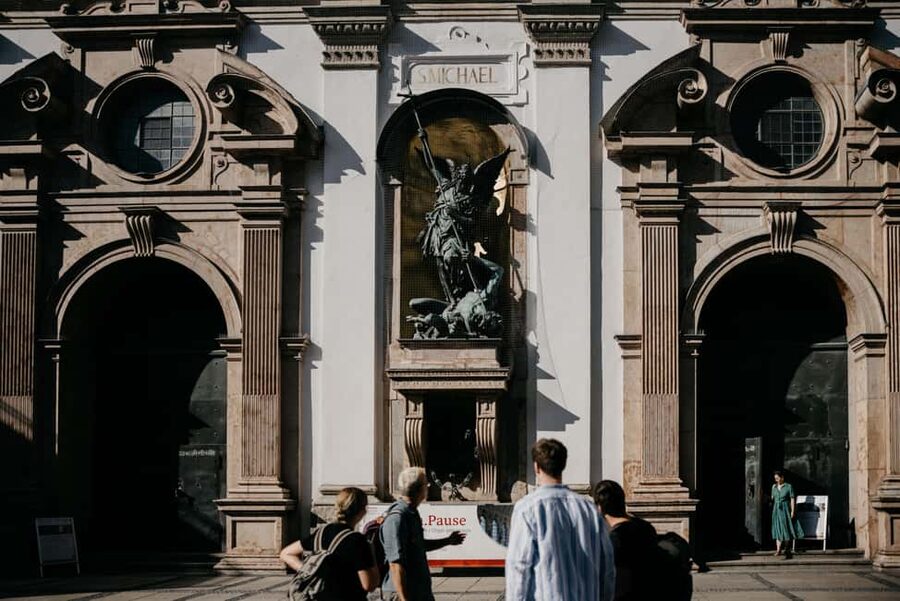
The next major architectural shift comes at St. Michael’s Church. Built in the Renaissance style, it represents Munich’s move away from the medieval look of the Frauenkirche.
The church is described as a world-record-holding masterpiece, so Philipp has a strong architectural talking point here. You can expect the explanation to focus on why the building mattered in its period and how it fits into the city’s larger story.
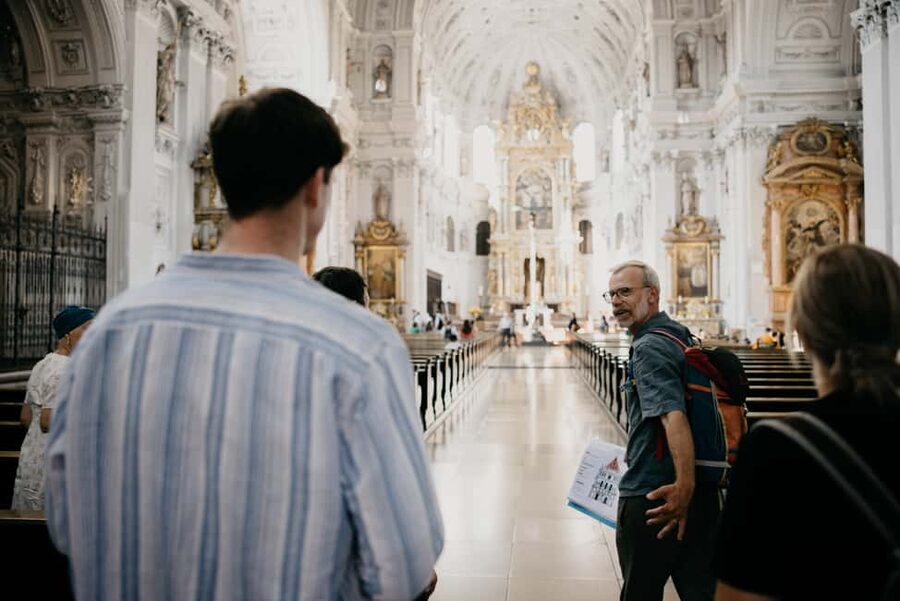
St. Michael’s is also one of the stops where an interior visit may be included. For you, that means the tour can move beyond façades and street views. Seeing the inside of a large church makes the contrast with the Gothic opening more understandable.
Since the tour covers several major buildings in a short time, this is not the setting for a long, quiet church visit. If you want detailed time in every interior, a dedicated church tour would be better. If you want a brisk sequence of major examples, the format makes sense.
Trinity Church, Theatine Church, and the royal city
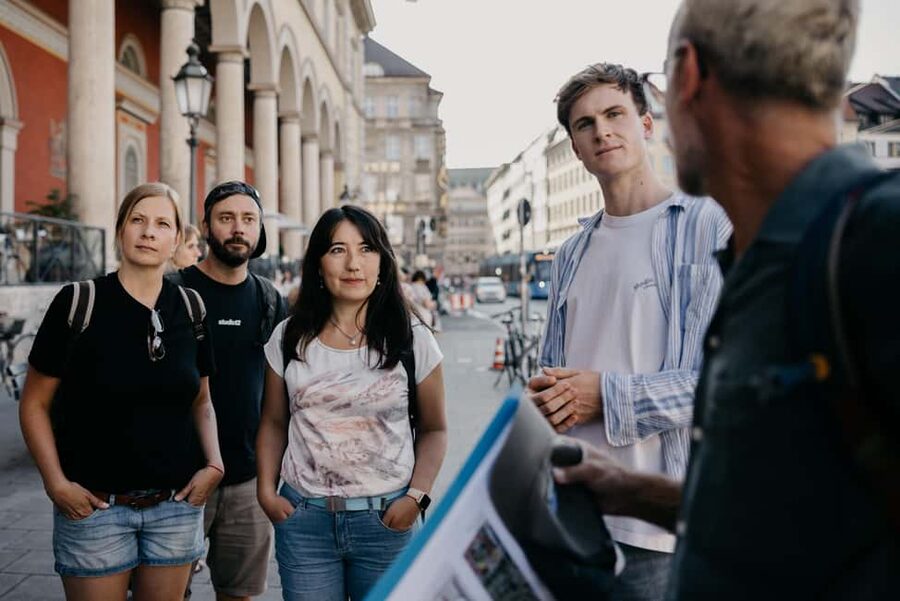
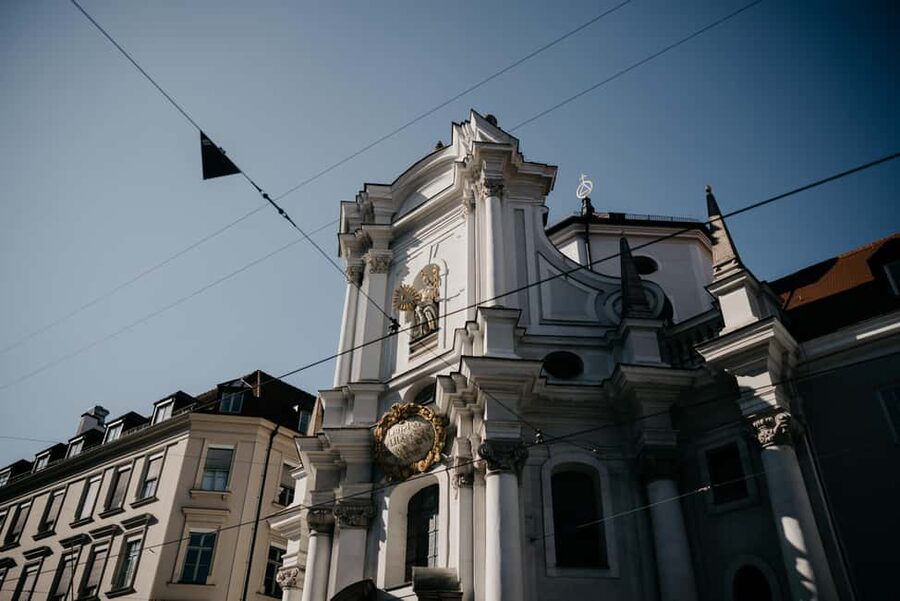
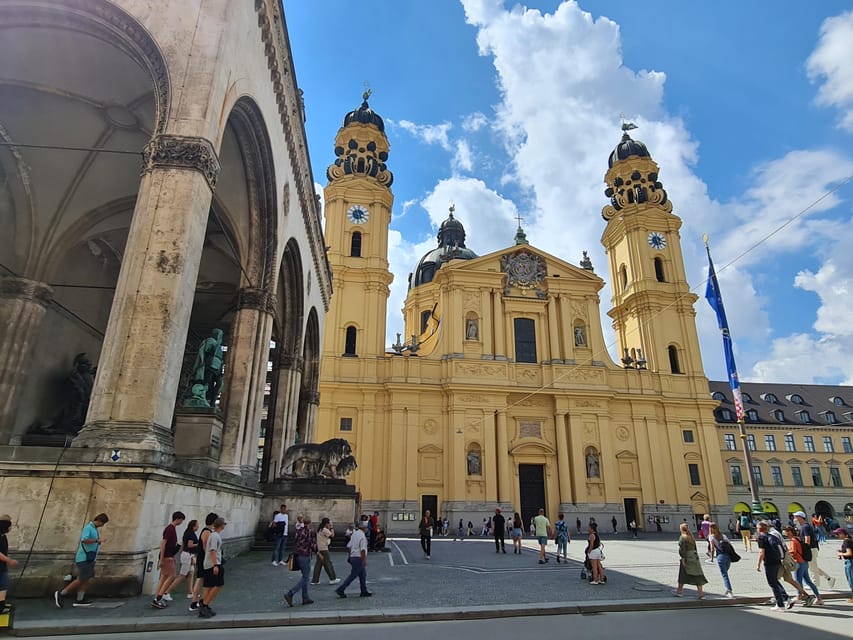
Trinity Church and the Theatine Church continue the Old Town section. Here the style shifts toward Baroque and the more ornate world favored by Bavaria’s rulers and religious institutions.
The Theatine Church is closely tied to the royal center around Munich, making it a good place for Philipp to connect architecture with the Bavarian court. The route does not treat royal power as dry political history. Expect stories about the royal family, local legends, and the human details behind grand buildings.
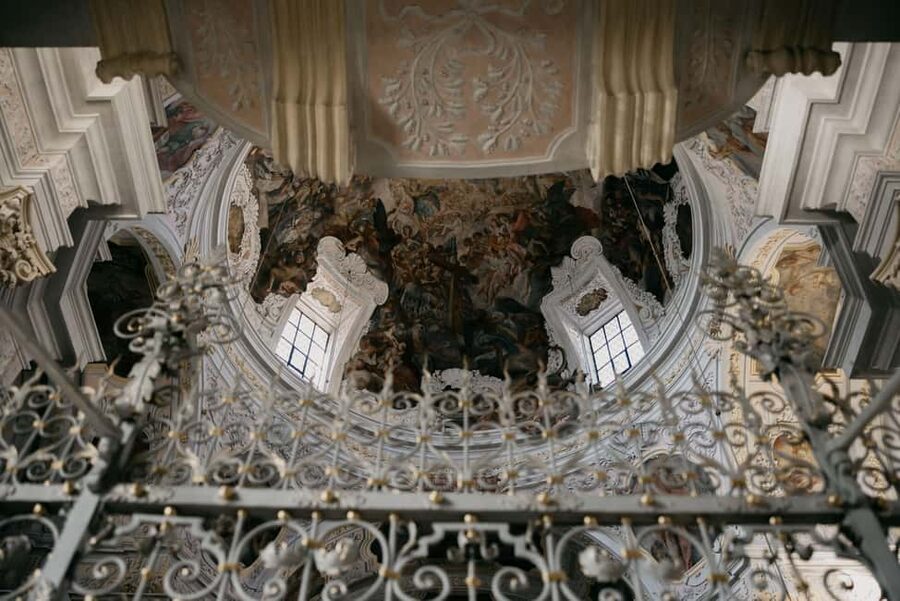
Trinity Church adds another important interior and exterior example. Together, these churches show how Munich’s religious architecture changed in tone. The Gothic opening feels vertical and medieval, while later churches place more weight on ceremony, decoration, and courtly display.
The tour includes the chance to visit up to three impressive buildings from inside. The information does not promise entry into every church on every departure, so ask Philipp at the start which interiors are practical that day.
Same city, a completely different sort of afternoon:
- Dachau Concentration Camp Memorial Site Tour from Munich by Train
★ 4.5 · 5,637 reviews - Neuschwanstein Castle Tour from Munich
★ 4.5 · 5,117 reviews - Third Reich Walking Tour Munich
★ 4.5 · 4,291 reviews - Munich Hop-On Hop-Off Tour: 1-Day or 2-Day Ticket
★ 4.3 · 4,161 reviews
From the Bavarian State Opera to Maximilianstraße
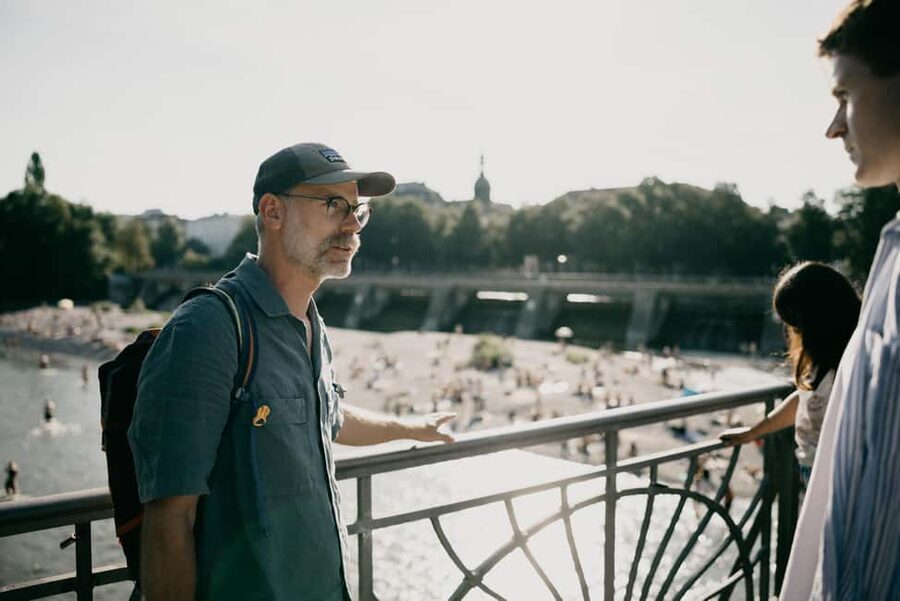
The route then reaches the Bavarian State Opera and continues along Maximilianstraße. This section shifts the focus from churches to royal and civic architecture.
The opera house gives you a window into Munich’s performance culture and the city’s public face. Maximilianstraße adds a grand urban setting, with a scale suited to royal ambition and formal city planning.
Philipp places these sights within the broader movement toward Neo-Classicism and Historicism. Those labels can sound academic, but the walking route makes them easier to grasp. You can compare the clean classical influence with later buildings that borrow, reshape, or combine earlier styles.
This is also one of the busiest parts of the route, especially during the Christmas season. Markets can add atmosphere and seasonal color, but they also mean tighter walking space and more distractions. Keep close to the group and listen for the meeting instructions before moving on.
Medieval Christmas markets in a historic setting
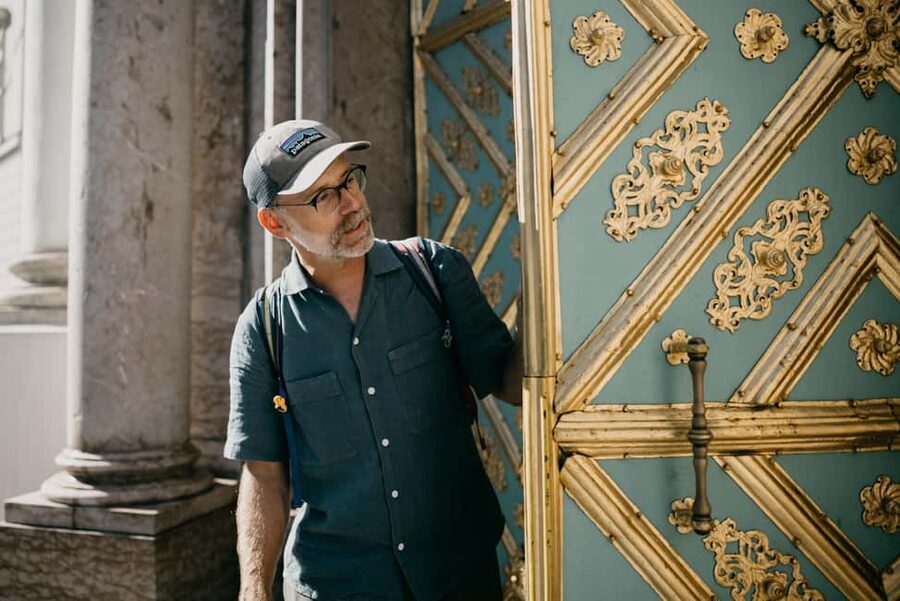
Christmas markets are woven into the Old Town section, including a distinctive medieval-style market in a memorable setting. This is a seasonal feature, so it should not be treated as a year-round part of the experience.
A market visit adds something a standard architecture lecture cannot. You see historic buildings used as part of modern city life, with stalls and public activity filling spaces that once served very different purposes. Philipp can use that contrast to explain how Munich’s old center functions today.
The tradeoff is time. Markets are places where you may want to stop for food, drinks, shopping, or photographs, but those purchases are not included. The tour price covers the guide and tour itself, not refreshments.
If you are visiting Munich in winter, bring warm clothing rather than relying on the short distance between stops. The route includes outdoor walking and a riverside section later, where conditions may feel colder.
Leaving the Old Town for St. Lukas and the Isar
One of the best ideas in this tour is the move away from central Munich. After the Old Town, you take a tram toward the Isar River and the St. Lukas area.
The tram ride breaks up the walking and shows you that Munich’s architecture is not confined to Marienplatz and the royal center. It also gives the tour a more local rhythm. You move from famous sights to quieter riverside surroundings, then return to architecture through different periods and building types.
St. Lukas is part of this river section. The stop helps connect religious architecture with the wider city beyond the central squares. Philipp also promises two more world records and surprising stories in this part of the route, giving the middle section a sense of discovery without turning it into a simple sightseeing checklist.
The river area is a welcome breather, but it is not a rest stop in the usual sense. You are still on a guided walk, and the route may involve uneven or demanding walking. Anyone who finds long periods on foot difficult should consider a different activity.
Müllersche Volksbad and Munich’s Art Nouveau turn
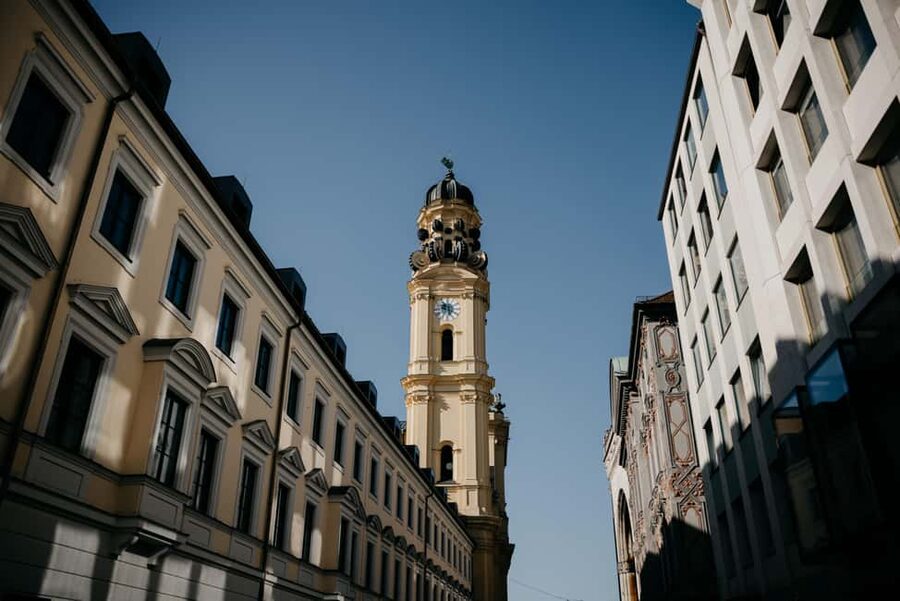
Müllersche Volksbad brings the tour into Jugendstil, the German form of Art Nouveau. This is a useful change from the churches and royal buildings because it shows how Munich’s design language moved into public facilities and everyday civic life.
The building is presented as part of the tour’s Art Nouveau section, where Philipp explains the playful style and its place in Munich’s development. You’ll see how the city’s architectural story includes more than palaces and cathedrals.
This stop also helps explain why the tour is broader than a classic Old Town walk. By reaching the Isar and including a public bath, the route shows architecture in different settings and for different audiences.
The exact amount of time at each stop is limited by the two-hour schedule. You should expect an informed overview with strong visual comparisons, not a full technical study of every building.
Street art and the modern museum finish
The final section moves from Jugendstil to street art and a contemporary museum. This change might seem surprising after so many historic churches, but it gives the tour a clear point: Munich’s architecture did not stop in the 19th century.
Street art brings color and informal expression into the route. It also creates a useful contrast with the official, carefully planned buildings seen earlier. The modern museum then gives Philipp a final place to connect past design ideas with the present day.
The tour finishes at the Sudetendeutsches Museum according to the route details. A separate meeting note says the activity ends back at the meeting point, so confirm the final drop-off point with Philipp before setting another appointment. That small inconsistency is worth checking, especially if you have dinner reservations or a train to catch.
The modern ending is one of the most distinctive parts of the experience. You do not finish with one more predictable church façade. Instead, the tour closes with modern architecture and a building described as fantastic and unusual, giving the whole route a playful final note.
What the $36 price buys you
At $36 per person, the value depends on how you like to see a city. The price is reasonable if you want a guide to organize a large amount of context across several neighborhoods, churches, architectural periods, and a tram connection.
You are not paying only for a walk around the Old Town. The fee includes a guided tour of the historic center and Isar area, multiple Christmas market locations, and the possibility of entering up to three notable buildings. That wider route would be harder to arrange on your own in only two hours.
Food, drinks, and transport to the starting point are not included. You will also need to cover the tram ride used during the tour, unless Philipp advises otherwise at the time of booking. The provided information identifies transportation to and from the meeting point as your responsibility.
A private group option is available. That may suit families or small parties that want to ask more questions or adjust the emphasis, but no private-group supplement is provided, so check the price before booking.
Free cancellation is available up to 24 hours before the start, and you can reserve now and pay later. Those terms are useful when winter plans are still changing.
Who should book this experience
I would choose this tour if you want architecture explained in plain language and tied to stories about people, power, religion, and daily city life. It is especially useful for a first or second visit to Munich when you want to understand how the Old Town connects to the river district.
The tour suits adults and older children who can walk steadily for two hours and handle winter conditions. English and German are available, and Philipp’s personable style, along with his humorous and memorable storytelling, is a major part of the experience.
You should skip it if you need a wheelchair-accessible route, have a mobility impairment, or prefer a slow visit with lots of time inside each church. The tour is also not suitable for people over 95 years, according to the activity information.
Wear comfortable shoes and warm clothes. Bring a camera if you like architectural details, but keep your hands free enough to walk safely through crowded market streets.
Final call: book it for the wide view of Munich
Book this tour if you want Munich in fast but thoughtful outline: Gothic church, Renaissance church, Baroque and royal architecture, opera and boulevard, river district, Jugendstil, street art, and modern museum. Philipp gives the route a personal thread through legends, royal stories, and darker historical moments.
Do not book it expecting a relaxed church-by-church study or a fully accessible excursion. The strongest reason to choose it is the unusual range packed into two hours, especially the tram ride to the Isar and the modern ending. For a compact introduction with personality and a clear sense of change across five centuries, $36 is a fair price.
FAQ
How long does the Munich architecture tour last?
The tour lasts two hours. Starting times depend on availability.
What languages are offered?
The live tour is offered in English and German.
Where does the tour begin?
Meet Philipp outside the main entrance of the Frauenkirche at Frauenplatz 1.
How will I recognize the guide?
Philipp will have a yellow winter hat, a yellow backpack, and a large blue presentation folder.
How do I get to the meeting point?
The easiest route is to leave the S-Bahn or U3 and U6 subway at Marienplatz, then walk about five minutes. Hauptbahnhof München is about a 15-minute walk away.
Is transportation included?
Transportation to and from the meeting point is not included. The route includes a tram ride toward the Isar River, so confirm the transport arrangements with Philipp.
Are food and drinks included?
No. Food and drinks are not included in the $36 price.
Can I book a private tour?
Yes. A private group option is available.
Is the tour suitable for wheelchair users?
No. The activity is not suitable for wheelchair users or people with mobility impairments. Participation is at your own risk.
Just added around Munich
- Pub crawl incl. Oktoberfest museum guided tour with beer tasting (private)★ 5.0 · 5 reviews
- South Tyrolean specialties and wine tasting★ 5.0 · 5 reviews
- Size Matters Beer Tour Munich★ 4.6 · 105 reviews
- Secret Food Tours Munich★ 4.8 · 5 reviews
- Short & sweet: Tasting the Viktualienmarkt★ 4.8 · 37 reviews
- Residence of Munich private tour with skip the line ticket★ 5.0 · 4 reviews
- Munich: Romantic Wine Experience for Two at Viktualienmarkt★ 4.2 · 14 reviews
- Munich: Resistance against Hitler – Historical Walking Tour★ 5.0 · 5 reviews
Munich Tours, compared.
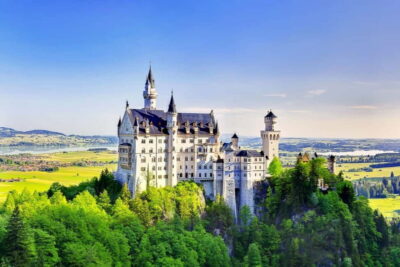

Neuschwanstein & Linderhof Castle-Fairytale Day Tour from Munich
Read our review →
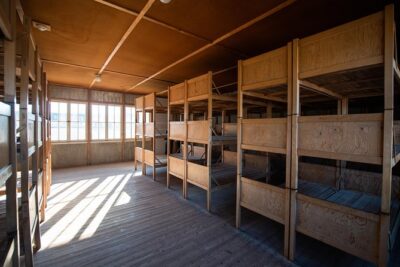
Dachau Concentration Camp Memorial Site Tour from Munich by Train
Read our review →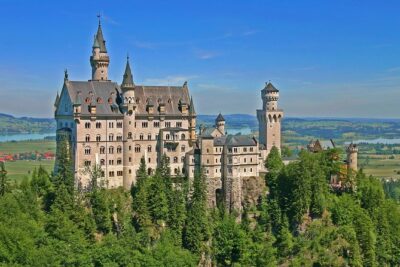
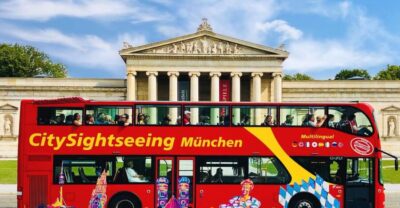
Munich Hop-On Hop-Off Tour: 1-Day or 2-Day Ticket
Read our review →Browse the lists this tour appears in