
Review · MUNICH TOURS
Munich Private Walking Tour with the BMW Museum and BMW Welt
Munich’s story gets much more interesting when you put BMW’s racing machines beside royal scandals, Nazi-era events, resistance heroes, and beer halls. This four-hour private tour links the BMW Museum and BMW Welt with the old town, giving you both polished engineering and complicated human history in one outing.
I like the way the tour pairs the BMW Museum’s cars, motorcycles, and engines with places such as Odeonsplatz, Frauenkirche, and the Hofbräuhaus. I also like having one guide for your own group, especially if you get Claudio, whose warm manner and broad command of history have earned especially strong praise. The main drawback is pace: four hours is a lot of ground, and public transportation, food, drinks, and the BMW Welt showroom are not included in the price.
Key points to know before booking
- BMW Museum and BMW Welt make a strong opening pair: One explains the company’s past, while the other points toward its future designs and technology.
- Munich’s difficult past is treated directly: The route covers the Beer-Hall Putsch, Hitler’s rise, Eva Braun, the White Rose, and Georg Elser.
- The private format keeps the history flexible: Your guide can shape explanations for your group rather than delivering a fixed lecture to strangers.
- Marienplatz is the meeting point: Find the guide at the Fish Fountain in front of Munich’s city hall.
- Plan for extra costs: Public transportation is not included, and neither are food, drinks, or other personal expenses.
- The tour ends where it begins: You return to the Marienplatz meeting point after the city-center walk.
From BMW racing machines to Munich’s royal square
The tour starts at the Fish Fountain in front of the city hall at Marienplatz. That is a useful meeting place because it sits at the center of Munich’s old town, but the first major stop is the BMW Museum, so you will need public transportation to reach it. The fare is not included, and your guide can direct the route, but you should still allow a little time to get organized.
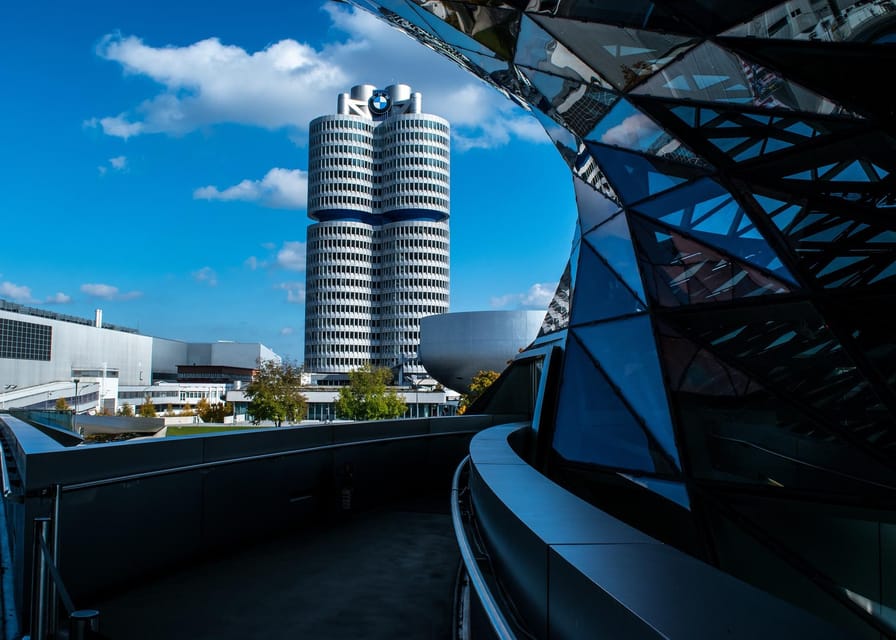
The BMW Museum presents roughly a century of the company’s development through cars, motorcycles, and engines. The appeal is not limited to modern luxury vehicles. You can see how racing shaped BMW’s identity, how engineering decisions changed over time, and how speed, design, and mechanical craft became part of the brand’s public image.
I would pay close attention to the motorsport displays. Legendary racing cars help explain BMW’s success in competition in a way that a standard showroom cannot. The displays also give the visit a clear thread: BMW is not just selling polished road cars, it is showing how performance testing and competition helped shape the machines people know today.
The museum is a particularly good match for mixed groups. A car enthusiast can study the engineering and racing details, while someone less interested in automobiles can focus on industrial design, changing materials, and the way a famous German company built its identity. Since the entrance is included, you do not have to decide at the door if the museum is worth an extra charge.
More museums and galleries in Munich:
- Munich: Beer and Food Tour with Dinner & Oktoberfest Museum
★ 4.7 · 1,086 reviews - Munich: FC Bayern Museum + Arena View
★ 4.5 · 944 reviews - Munich: FC Bayern Museum Entry Ticket
★ 4.6 · 193 reviews
BMW Welt shows the brand’s forward-looking side
BMW Welt offers a different experience from the museum. The museum looks backward at company milestones, while BMW Welt presents current designs, future ideas, and the meeting point between technology and style. The space includes BMW vehicles as well as MINIs and Rolls-Royces, giving you a broader view of the brands connected with the company.
You can expect carefully presented cars and a strong emphasis on craftsmanship. This is less about dusty old artifacts and more about how manufacturers want you to see the automobile today. The contrast with the museum is useful: first you see the brand’s past achievements, then you see the image BMW wants to project for the years ahead.
There is an important practical distinction here. Entrance to the BMW Museum is included, but the information provided does not list a separate BMW Welt admission. Ask your guide what is covered on your date before you arrive, especially if you want time inside every display area. The tour description promises a look at BMW Welt’s designs and technology, but it does not promise a private factory visit or production-floor access.
Public transportation connects two very different Munichs
After the BMW portion, the tour uses public transportation to return to the historic center. This is one reason the four-hour schedule needs some discipline. You are not spending the whole morning in one compact district, so the time includes movement as well as sightseeing.
Public transportation is not included in the tour price. That is a small but important detail for families and larger groups. With up to 15 people, buying the right tickets can take a few minutes, so have a plan for this expense and ask the guide for help with the appropriate route.
The advantage is that you get two sides of Munich in one booking. The BMW Museum sits apart from the old town experience, while Marienplatz and the surrounding streets put you in the city’s ceremonial and political center. A tour focused only on the old town would miss BMW, and a BMW visit on its own would miss the stories that make Munich feel like a city rather than a corporate address.
Marienplatz, city hall, and the Glockenspiel
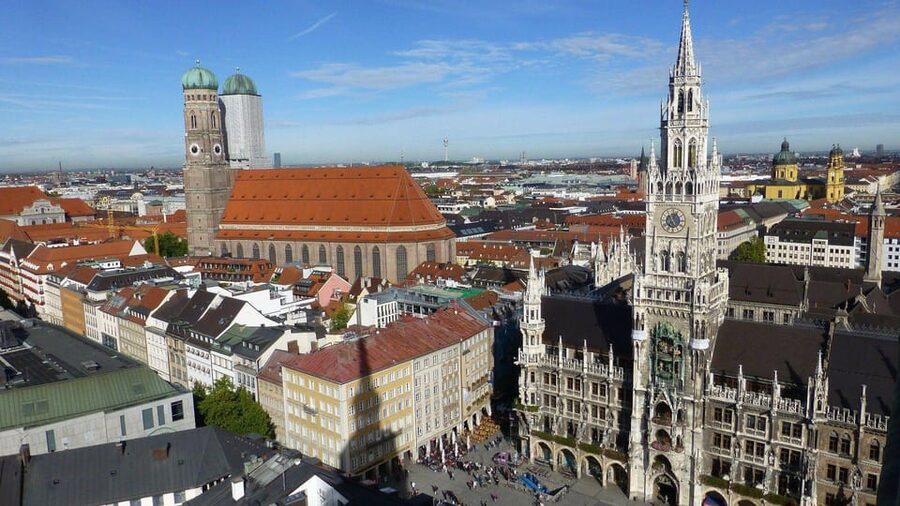
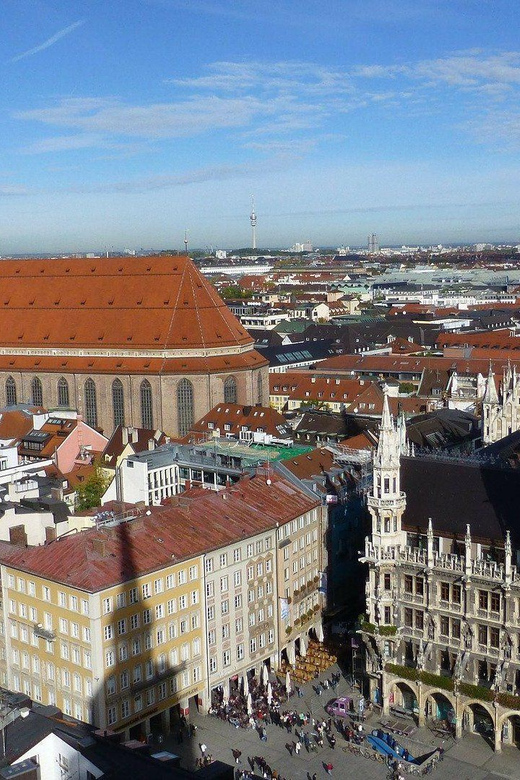
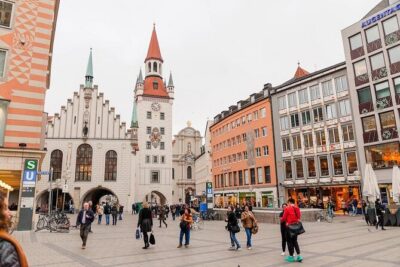
Back in the center, the route returns to Marienplatz, Munich’s main square. You will see Mary’s Column, the Old Town Hall, and the New Town Hall, including the famous Glockenspiel in the clock tower. These are among the city’s most recognizable sights, but a good guide can connect the stonework and ceremonies to the people and events behind them.
The New Town Hall is especially easy to treat as a quick photo stop. Do not rush past it. The tower and clock mechanism are part of Munich’s public theater, and the square helps explain how the city presents its identity to visitors and residents alike.
Mary’s Column gives the square a religious and civic focus. From here, the walking route can lead you through the old town toward St. Peter’s Church and Frauenkirche. The distances are manageable, but this remains a walking tour, so comfortable shoes matter more than stylish ones.
More walking tours in Munich:
- Munich: Third Reich & WWII Walking Tour
★ 4.6 · 6,181 reviews - Third Reich Walking Tour Munich
★ 4.5 · 4,291 reviews - Munich: Old Town & Viktualienmarkt City Walk in German
★ 4.7 · 2,304 reviews - Munich: Night Watchman Walking Tour
★ 4.7 · 2,092 reviews
Royal scandals and the complicated Ludwig family
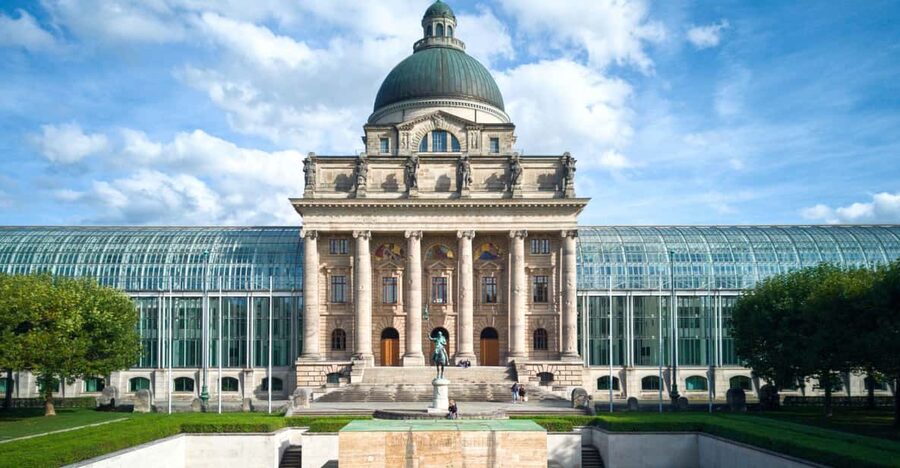
One of the tour’s more unusual themes is royal love and scandal. You hear about King Ludwig I and Lola Montez, whose relationship caused a political uproar and became one of the most memorable episodes in Bavarian royal life. It is a lively way to understand the pressures around monarchy, public reputation, and private desire.
The tour also covers Ludwig II, often called the Not So Mad King. That description invites a more careful look at a ruler who is often reduced to fairy-tale castles and eccentric behavior. You can expect the guide to place him in the larger story of Bavarian identity rather than treating him as a simple oddball.
This part adds welcome variety after the BMW exhibits. Machines can show you how technology changes, but royal stories show how personal choices can affect a whole country’s politics and public mood. I like that the itinerary does not limit Munich to famous buildings. It gives you people to remember.
St. Peter’s and Frauenkirche’s devilish footprint
St. Peter’s Church is identified as Munich’s oldest Catholic church. Its age gives the walk a sense of continuity, linking today’s city with a much earlier religious center. Even if you are not focused on church architecture, the stop helps you understand why Munich’s old town developed around sacred and civic institutions.
Frauenkirche provides one of the city’s strongest visual landmarks, with its distinctive towers. The tour also shares the legend of the devil’s footprint. Treat this as folklore rather than documented fact, but it is exactly the kind of local tale that makes a building easier to remember.
The church stop is not presented as a long architectural lecture. Instead, it fits into the broader story of Munich’s beliefs, legends, and public life. That keeps the pace moving, though anyone hoping for an extended interior visit should ask how much time the guide plans to spend inside.
Odeonsplatz and Munich’s road to dictatorship
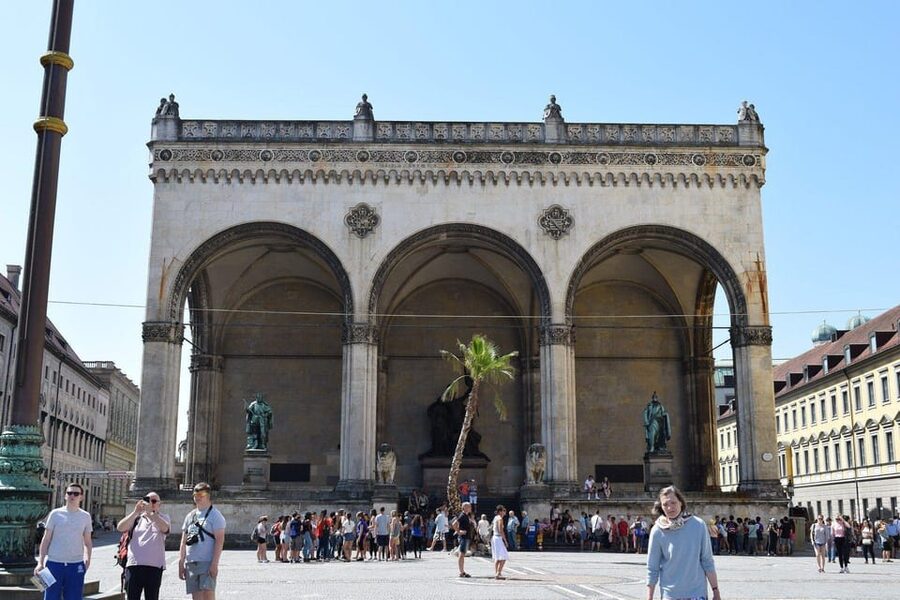
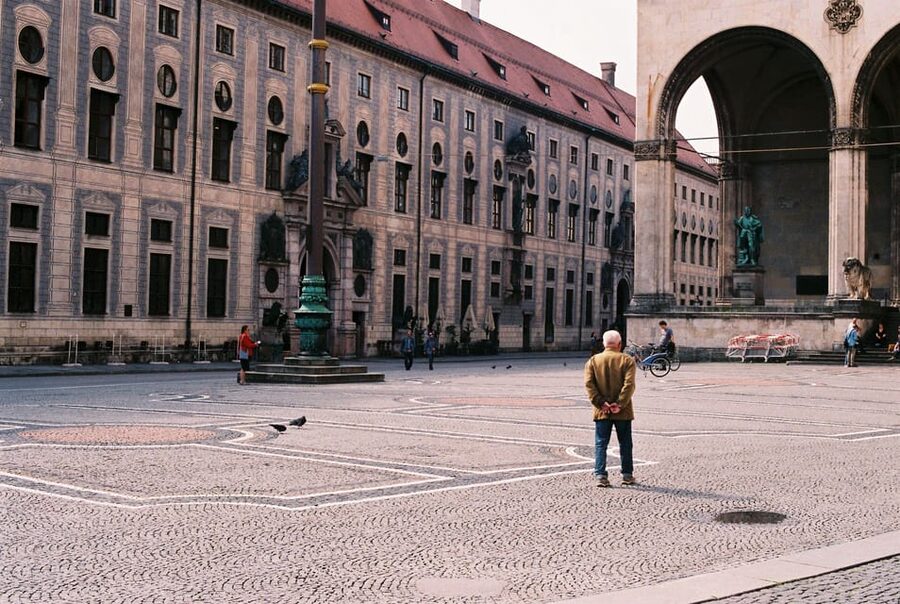
At Odeonsplatz, the tour addresses the Beer-Hall Putsch, the failed 1923 attempt by Hitler and his followers to seize power. This is one of the most important historical stops because it connects a specific Munich location with the early Nazi movement.
The subject deserves a steady, serious explanation. A private guide can be helpful here because you can ask questions and pause when the material needs more context. The tour also covers Hitler’s impact on Munich, as well as the misunderstood life of Eva Braun, who later became known as Hitler’s wife.
The route does not stop with the people at the center of Nazi power. It also introduces the White Rose resistance movement and Georg Elser, whose bold attempt to kill Hitler is a reminder that opposition existed even under a brutal dictatorship. These stories give the tour a broader moral and human frame.
I consider this one of the tour’s strongest features. Munich is often sold through beer, palaces, and handsome squares, but ignoring its role in Nazi history leaves visitors with a false picture. This itinerary asks you to face that past while also learning about people who resisted it.
Hofbräuhaus brings the beer culture into focus
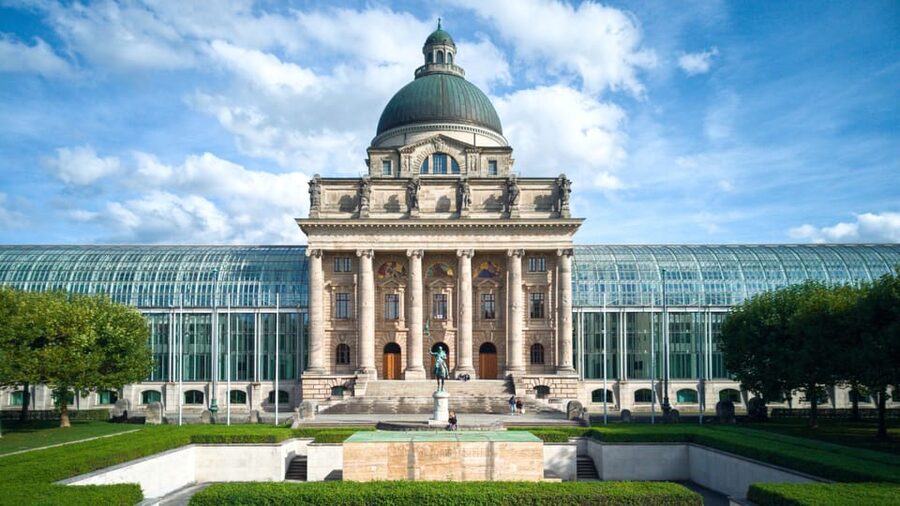
The final major theme is Munich’s beer culture, with the Hofbräuhaus as the obvious anchor. Established in 1589, it has a long place in the city’s public life. The hall is known for its lively atmosphere, local food, and beer, but remember that your meal and drinks are not included.
You can stop for refreshments or simply take in the setting, depending on the time available and your group’s wishes. A private tour gives you some room to decide, but four hours must also cover BMW, transportation, and the old town. If you want a full meal at the Hofbräuhaus, ask how that will affect the remaining walk.
The beer stop works because it is more than a restaurant recommendation. It connects Munich’s social customs with the city’s political past. Beer halls were places where people gathered, argued, organized, and built public identities. The Hofbräuhaus is therefore both a cultural stop and a setting with historical weight.
What the $539 group price means
The listed price is $539 for a private group of up to 15 people. That figure looks high for a four-hour walk if you are traveling alone or as a couple. Split among a full group of 15, however, it comes to about $36 per person before transportation and any food or drinks.
The value rests mainly in the private guide, not in admission alone. You receive a guide dedicated to your group, entrance to the BMW Museum, and a route that combines a specialist museum with several parts of central Munich. If your group wants one person to manage the historical connections and answer questions, the cost can make sense.
For two people, the calculation is much less attractive. You are paying for privacy and a broad itinerary, so compare it with booking a smaller BMW visit and exploring Marienplatz independently. Families and groups of friends get the better deal, particularly if they are interested in both automobiles and 20th-century history.
The overall rating is 4.2 from 13 reviews, which suggests a generally good experience with some room for variation. The strongest praise centers on the guide. Claudio is described as warm, affable, and exceptionally well informed across history and general subjects. If he is assigned to your booking, you can expect a guide who brings personality as well as facts. Guide quality always matters on a history-heavy tour, so it is reasonable to ask about the assigned guide when booking.
Timing, language, and who should book
The experience lasts four hours, with starting times based on availability. It is offered in English or German and operates as a private group. Those details make it useful for families, couples, and small groups with a specific schedule, but you should not expect a slow museum day followed by a leisurely pub crawl.
I would book this for people who want context. It suits a first visit to Munich if you want the major old-town sights explained while also making time for BMW. It is also a good fit for groups with mixed interests, since the itinerary moves from cars and design to churches, royal stories, resistance history, and beer.
I would be more cautious if you dislike switching subjects or using public transportation during a timed tour. The range is the selling point, but it can also feel packed. You will get a broad introduction rather than a long, specialist examination of any single site.
Cancellation is flexible up to 24 hours before the start for a full refund, and you can reserve while paying later. Keep in mind that the tour ends back at Marienplatz, so you can continue your own evening in the old town after the guide says goodbye.
Should you book this Munich private tour?
Book it if you want BMW and Munich’s old town in one private outing, especially with a group large enough to share the $539 cost. The combination of racing history, royal drama, Nazi-era sites, resistance stories, churches, and Hofbräuhaus gives you a much fuller picture than a simple landmark walk.
Skip it if you want an unhurried museum visit, a dedicated Nazi-history tour, or a long meal with beer. For everyone else, the tour offers a smart mix, with the guide’s quality likely to determine how well the many subjects connect. Ask about Claudio if his schedule is available, budget for transit and refreshments, and treat the four hours as a lively overview rather than a deep study of every stop.
FAQ
Where does the tour begin?
It begins at the Fish Fountain in front of the city hall at Marienplatz Square, Am Marienplatz, 80809 München, Germany.
Where does the tour end?
The tour ends back at the Marienplatz meeting point.
Is admission to the BMW Museum included?
Yes. Entrance to the BMW Museum is included in the tour price.
Is public transportation included?
No. Public transportation is not included, so you will need to pay for those tickets separately.
What languages are available?
The live guide is available in English or German.
How large can the private group be?
The price covers a private group of up to 15 people.
Just added around Munich
- Pub crawl incl. Oktoberfest museum guided tour with beer tasting (private)★ 5.0 · 5 reviews
- South Tyrolean specialties and wine tasting★ 5.0 · 5 reviews
- Size Matters Beer Tour Munich★ 4.6 · 105 reviews
- Secret Food Tours Munich★ 4.8 · 5 reviews
- Short & sweet: Tasting the Viktualienmarkt★ 4.8 · 37 reviews
- Residence of Munich private tour with skip the line ticket★ 5.0 · 4 reviews
- Munich: Romantic Wine Experience for Two at Viktualienmarkt★ 4.2 · 14 reviews
- Munich: Resistance against Hitler – Historical Walking Tour★ 5.0 · 5 reviews
Munich Tours, compared.

Neuschwanstein & Linderhof Castle-Fairytale Day Tour from Munich
Read our review →
Dachau Concentration Camp Memorial Site Tour from Munich by Train
Read our review →
Munich Hop-On Hop-Off Tour: 1-Day or 2-Day Ticket
Read our review →Browse the lists this tour appears in