
Review · MUNICH TOURS
Munich: Nymphenburg Palace with official Guide
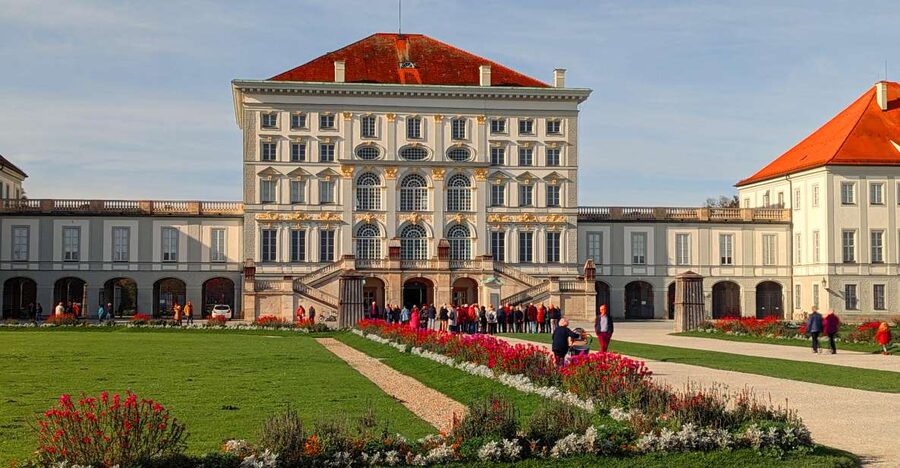
Nymphenburg Palace is more than a pretty royal residence. Its enormous Baroque frontage, stretching over 600 meters, hints at the power of Bavaria’s Wittelsbach rulers before you even enter. Then the palace rooms bring that power down to a human scale, with royal apartments, family stories, and the room where King Ludwig II was born.
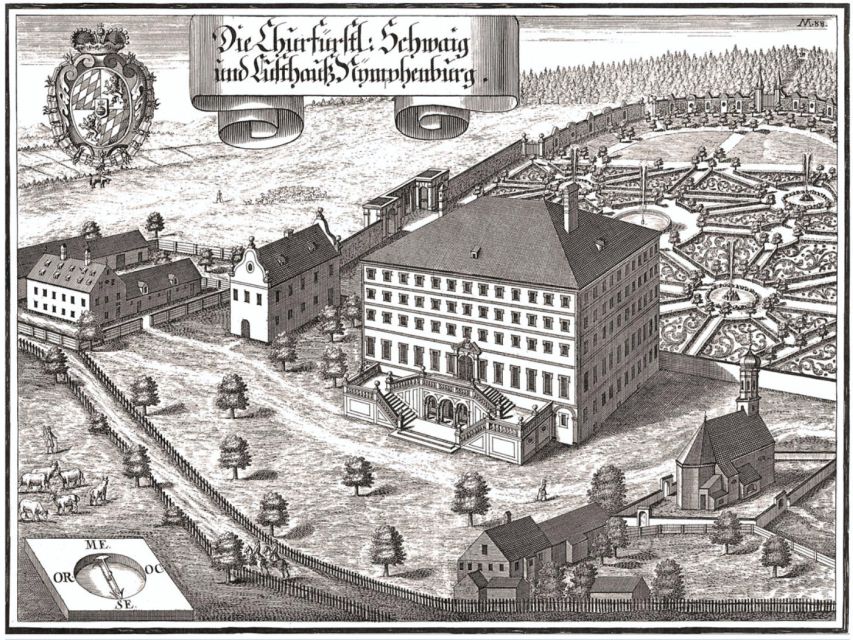
I especially like the outside introduction, which explains how a 17th-century love story led to the palace’s creation and how later electors expanded it. I also like Wolfgang Brehm’s story-led approach. He connects palace figures with Munich streets, buildings, and other castles, helping you place Nymphenburg in a wider setting.
The main catch is simple but important: your palace admission ticket is not included. You must buy it online before the tour begins. The tour itself costs $259 for a private group of up to 15, so it makes the most sense when several people share the price.
Key points at a glance
- A private 90-minute tour: Your group receives a dedicated official city guide rather than joining a large general tour.
- Wolfgang Brehm leads in English or German: He is praised for clear explanations, humor, personal stories, and answering questions.
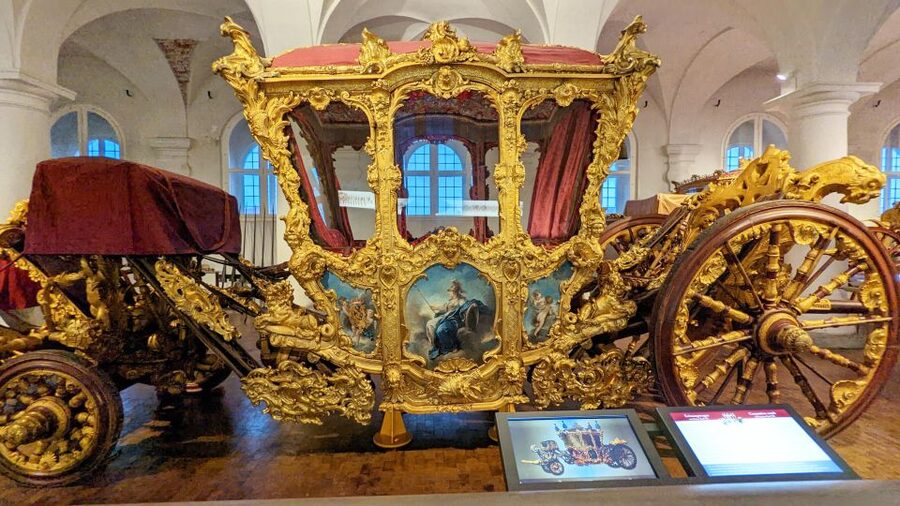
- The Stone Hall is the grand opening interior: This ceremonial room gives you a strong sense of how the palace was used for display and court events.
- You see both male and female royal spaces: The route includes the elector’s rooms, electress’s rooms, galleries, and the queen’s apartment.
- Ludwig I and Ludwig II receive special attention: Expect the Gallery of Beauties and the birth room of King Ludwig II.
- Admission is separate: Purchase the palace ticket in advance, then meet in front of the palace entrance 10 minutes early.
Why Nymphenburg works well with a guide
Nymphenburg can impress you without any explanation. The scale is clear at once, and the palace interiors provide plenty of visual drama. But a self-guided visit can leave you with a string of grand rooms and a hazy sense of who used them.
This tour gives those rooms a job and a cast of characters. You learn why the palace began, how the Wittelsbach family altered it, and how ceremonial spaces differed from private apartments. That context matters here because Nymphenburg was not built as one neat project. It grew over time as the family’s status, tastes, and political needs changed.
I find that approach useful for first-time palace visits. Instead of treating every gilded surface as decoration, you can ask what it was for. Was the room meant to impress visitors, serve the family, display royal taste, or mark a personal event? The guide’s job is to make those distinctions clear.
The tour is also private, which changes the feel of the visit. Your group can ask questions and follow points that interest you. The available group size is up to 15 people, so the value improves sharply when you are traveling with family or friends and divide the $259 price among the group.
A few more Munich half-days to weigh up
- From Munich: Neuschwanstein & Linderhof Castle Full-Day Trip
★ 4.5 · 12,494 reviews - Neuschwanstein & Linderhof Castle-Fairytale Day Tour from Munich
★ 4.5 · 7,275 reviews - Munich: Third Reich & WWII Walking Tour
★ 4.6 · 6,181 reviews
Starting outside with a 17th-century love story
Meet in front of the entrance to Nymphenburg Palace 10 minutes before the activity starts. The outside portion is not filler. It gives you the basic story of why this vast residence was built in the first place.
The palace began with a love story in the 17th century. From there, the guide explains the Baroque additions made by the Wittelsbach electors. This is a smart way to begin because the exterior is so large that it can be hard to read at a glance. You need some explanation to understand that the building developed in stages rather than appearing all at once.
The palace is described as more than 600 meters wide, a measurement that puts its scale into perspective. You can see why the exterior mattered to the ruling family. This was not merely a home. It was also a public statement about rank, wealth, and dynastic importance.
You will also hear about the building’s current use. That detail helps connect the historic residence to the place you are visiting now, rather than leaving it frozen in the past. Since the activity takes place rain or shine, dress for the conditions and expect the opening discussion to happen outdoors.
The Stone Hall sets the royal tone
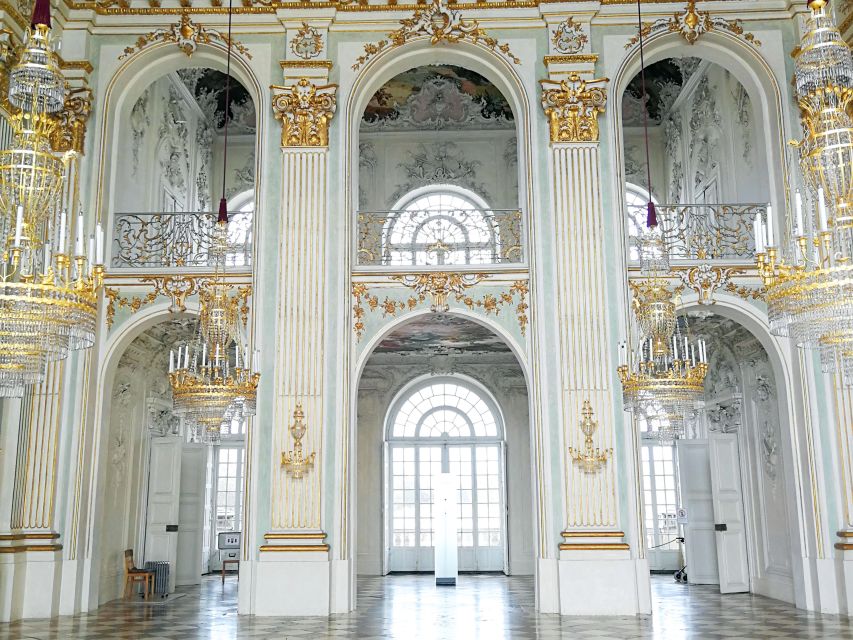
Inside, the tour begins with the Stone Hall, the former ceremonial hall of the palace. This is the room to watch for if you want the clearest sense of royal theater.
Ceremonial halls were built to control how people entered, gathered, and viewed the ruler. The Stone Hall’s importance is not just its appearance. It represents the public side of court life, where architecture helped reinforce the authority of the electors and kings.
I like having this room early in the visit because it gives you a reference point for everything that follows. After seeing the official, formal side of the palace, the transition into private rooms becomes easier to understand. You can compare spaces designed for ceremony with rooms used by individual members of the family.
Give yourself time to look upward and across the room, but keep listening for the explanation of how the hall functioned. Without that, it is easy to remember only surfaces. With it, you begin to picture people arriving, waiting, meeting, and being seen.
Elector’s rooms, electress’s rooms, and royal apartments
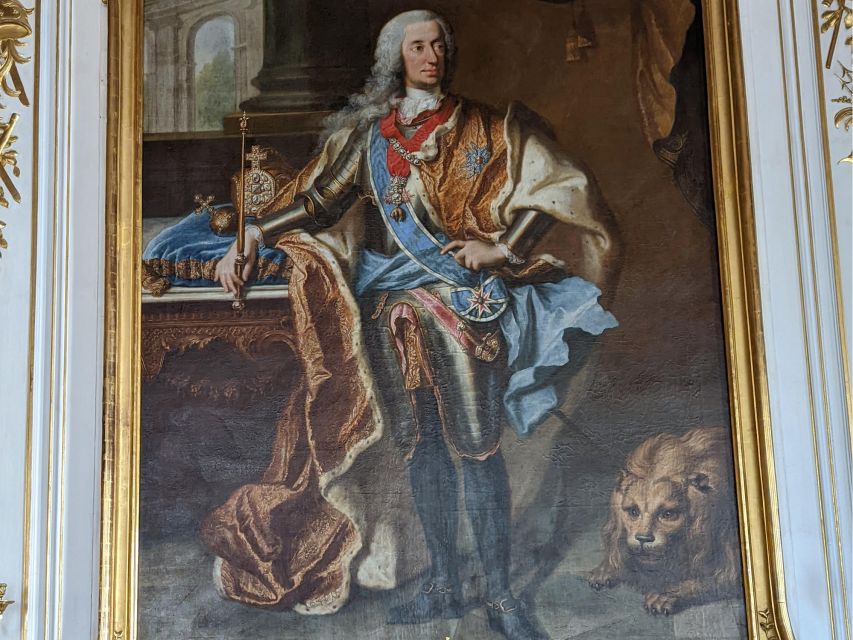
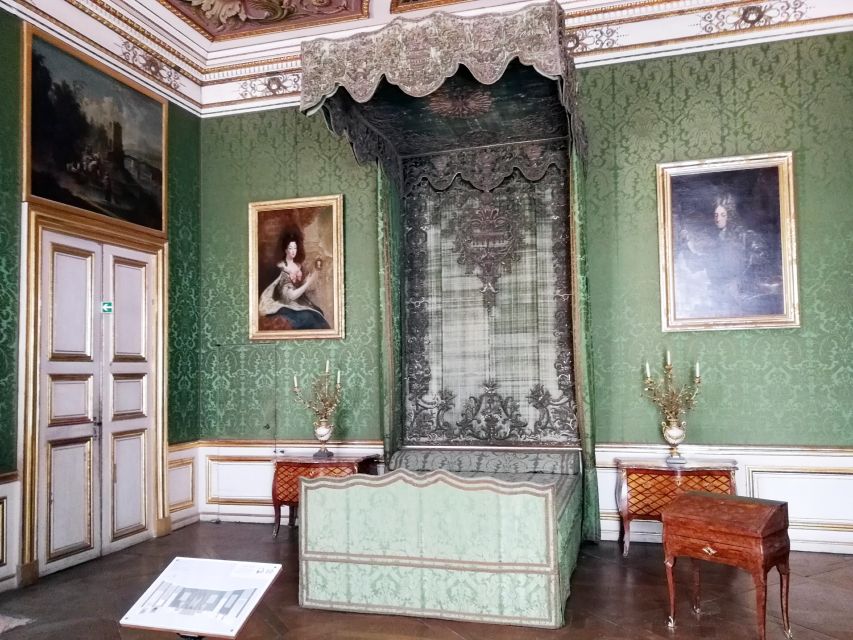
The route continues through the rooms of the elector and the electress, along with galleries and the apartment of the queen. This is where the tour becomes especially useful for understanding the palace as a working residence.
Royal apartments were not all identical, and they did not all serve the same purpose. The separation of the elector’s and electress’s rooms gives you a glimpse of court organization and family roles. The queen’s apartment adds another point of comparison, allowing you to see how private royal life fit within the larger ceremonial machine.
The galleries help link the rooms together. They are not just passageways to hurry through. In a palace, a gallery can guide movement, frame views, display art, and create a sense of progression from one part of the building to another.
Wolfgang Brehm’s style is well suited to this section. He is described as friendly, humorous, and clear, with the ability to answer questions and explain connections to Munich streets and buildings. That kind of local knowledge can make a difference. You are not only hearing about a remote dynasty. You are learning how its presence still relates to the city around you.
The tour also brings important Wittelsbach rulers into the story. Their personal accounts and life events help prevent the family tree from becoming a list of unfamiliar names. You can expect anecdotes about the rulers and the palace, with links to other Munich sights and castles you may have seen.
Same city, a completely different sort of afternoon:
- Dachau Concentration Camp Memorial Site Tour from Munich by Train
★ 4.5 · 5,637 reviews - Neuschwanstein Castle Tour from Munich
★ 4.5 · 5,117 reviews - Third Reich Walking Tour Munich
★ 4.5 · 4,291 reviews - Munich Hop-On Hop-Off Tour: 1-Day or 2-Day Ticket
★ 4.3 · 4,161 reviews
Ludwig I’s Gallery of Beauties
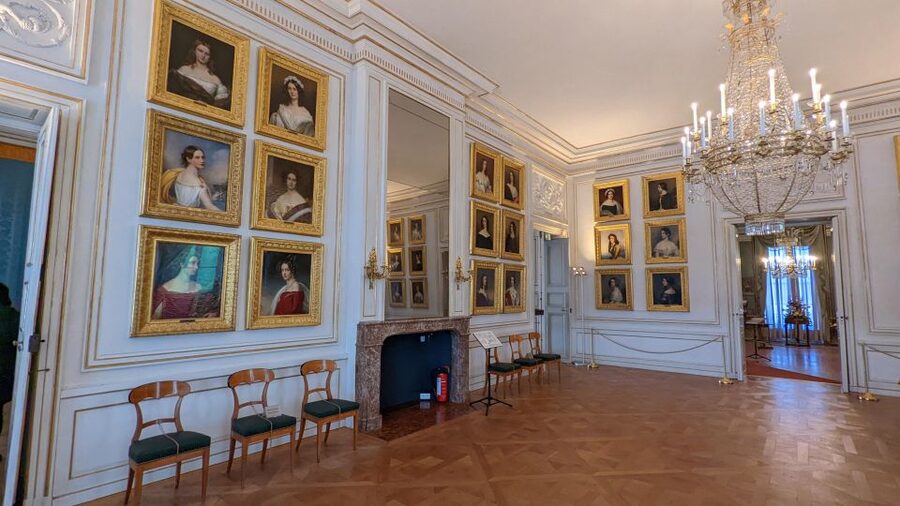
One of the most distinctive stops is the Gallery of Beauties commissioned by King Ludwig I. The gallery is a useful window into royal taste, personal preference, and the way a ruler chose to present the people around him.
You do not need to know the full background before arriving. The guide explains the gallery in relation to Ludwig I and the wider palace story. That makes it more than a portrait display. It becomes evidence of how the king saw his court and society.
This is also a good stop for questions. If you want to understand the people shown, the choices behind the portraits, or how the gallery connects to Ludwig I’s life, a private tour gives you room to ask. The guide’s ability to connect the palace with other Munich buildings adds useful local context.
The gallery is likely to appeal most to visitors who enjoy royal personalities and social history rather than architecture alone. If your main interest is the building’s design, the Stone Hall and Baroque additions may be your highlights. If you like the human side of monarchy, Ludwig I’s gallery should stay with you.
The room where King Ludwig II was born
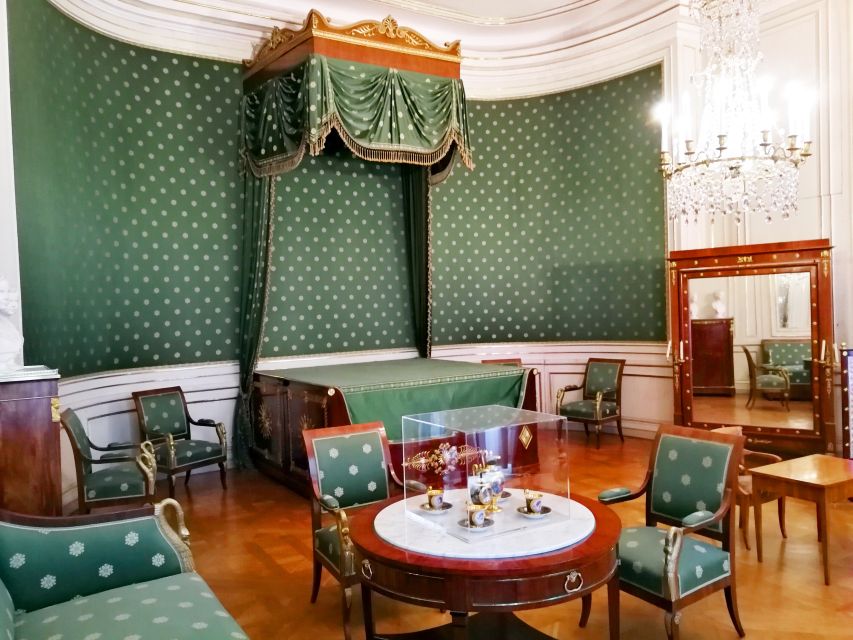
The tour also includes the birth room of King Ludwig II. That stop shifts the focus from public ceremony to a personal event tied to one of Bavaria’s best-known kings.
Ludwig II is closely linked with Bavarian castles, so this room can help you place his story at the beginning of his life. You see him not only as the later royal figure associated with famous residences, but as a child born into the Wittelsbach family and its demanding world.
This is where the tour’s links to other castles become particularly helpful. If you have visited other royal sites in Bavaria, the guide can help connect them to the people and family stories introduced at Nymphenburg. You may come away with a clearer sense of how the residences relate to one another.
The room itself may be more intimate than the ceremonial spaces, which makes the contrast valuable. Nymphenburg is huge, but the birth room reminds you that dynastic history is also made up of small, personal moments.
What the guide adds to the experience
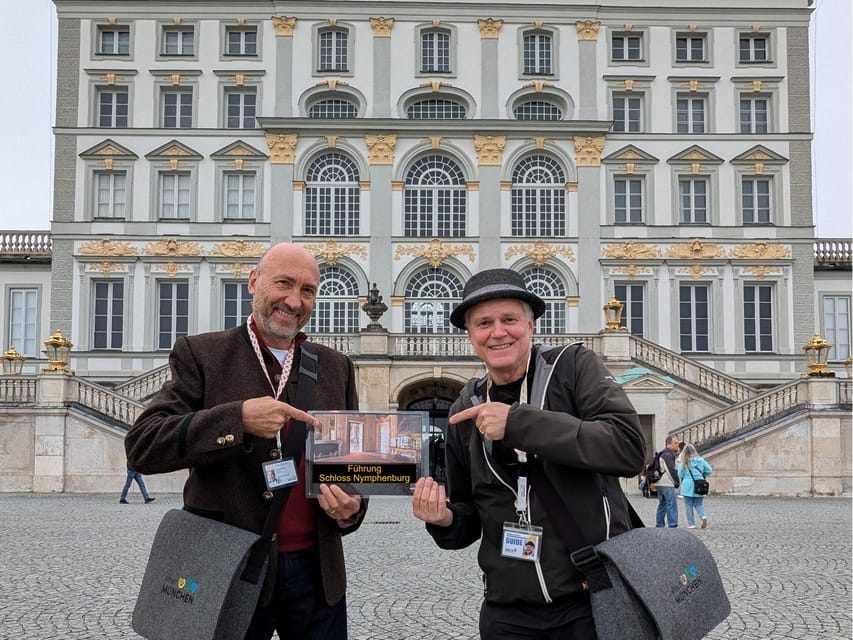
The strongest reason to book this experience is the guide. Wolfgang Brehm leads in English and German and has been praised for a friendly, humorous manner, strong English, organized explanations, and the ability to answer questions.
That combination matters in a palace. Too much detail can bury the visitor, while too little turns the tour into a walk from room to room. The available feedback points to a guide who keeps the story understandable while adding colorful background and less obvious connections.
You should also expect a human touch. Wolfgang is known to offer to take photos for groups, which is a small but useful service when everyone wants to appear in the picture. It does not replace the palace experience, but it can make the visit easier for families and groups of friends.
The tour is not limited to a memorized script. You can ask questions, and the guide can explain links between Nymphenburg, Munich streets, local buildings, and other castles. That makes the private format more worthwhile than a standard audio guide if you enjoy conversation and follow-up questions.
Price, tickets, and practical value
The price is $259 per group of up to 15 people, with a 90-minute guided visit. Palace entry is extra, and you must purchase those tickets in advance through the official palace ticket shop.
At first glance, $259 may seem high for an hour and a half. The calculation changes if you have a full group. Split among 10 people, the guide fee is about $26 per person. With 15 people, it is about $17 per person, before palace admission.
For one or two people, the price is harder to justify unless you place a high value on a private guide and personal questions. For a family, a reunion group, or friends traveling together, it can be a practical way to receive a focused visit without paying separate private-tour rates per person.
The tour lasts 90 minutes, so it is easy to fit into a Munich day. You receive the guided palace visit, but not transportation, admission, food, or other extras. Plan those separately.
You will need to leave pets, large bags, backpacks, luggage, drinks, and smoking or vaping materials out of the tour area. Lockers are available for bags. Flash photography and video recording are not allowed, and restrooms are available.
The activity is wheelchair accessible. It runs in all weather, and the meeting point is in front of the palace entrance. Both the starting and ending locations are at Nymphenburg Palace.
Who should book this private visit?
I would recommend this tour to anyone who wants the palace explained rather than simply photographed. It is especially suitable for:
- Families who want a guide to keep children or mixed-age groups engaged
- Groups of friends who can share the fixed price
- Visitors interested in Bavarian rulers, royal family life, and palace customs
- People who prefer English or German conversation over reading room labels
- Anyone visiting several Munich castles and wanting help connecting the stories
- Visitors who enjoy asking questions during a tour
It may not be the right pick if you want to wander alone at your own speed or if you are traveling solo and watching every euro. A 90-minute private tour gives you a clear route and plenty of explanation, but less freedom to linger silently in one room or skip another.
Also remember that the palace ticket must be arranged in advance. That extra step is easy to overlook, and arriving without admission could disrupt the tour.
Should you book the Nymphenburg Palace tour?
Book it if you want a personal, story-led visit and can share the cost with a group. The best parts are the opening love story, the Stone Hall, the contrast between ceremonial and private rooms, Ludwig I’s Gallery of Beauties, and Ludwig II’s birth room.
Wolfgang Brehm appears to be the key advantage. His clear English, humor, local connections, and willingness to answer questions give the palace a stronger sense of place. If you value context and conversation, this is a good use of 90 minutes.
Skip it if you prefer independent sightseeing, dislike fixed routes, or are visiting alone on a tight budget. In that case, buy your palace admission and explore at your own pace. For a group that wants the Wittelsbach story made clear, this private tour offers solid value, provided you buy the separate entry tickets before arriving.
FAQ
How long is the Nymphenburg Palace tour?
The guided tour lasts 90 minutes.
How much does the private tour cost?
The price is $259 per group of up to 15 people.
Are palace admission tickets included?
No. You must buy the Nymphenburg Palace entry tickets separately before the tour starts.
Who is the guide?
The experience is provided by Wolfgang Brehm of schwarzgold.info. He is an official city guide of Munich.
Is the tour available in English?
Yes. The tour is offered in English and German.
Where do I meet the guide?
Meet in front of the entrance to Nymphenburg Palace.
How early should I arrive?
Arrive 10 minutes before the activity begins.
Is the tour private?
Yes. It is a private group experience for up to 15 people.
Is the tour wheelchair accessible?
Yes, the activity is wheelchair accessible.
What happens if it rains?
The tour takes place rain or shine. Dress for the weather, especially for the opening portion outside the palace.
Can I bring luggage or a backpack?
No. Luggage, large bags, and backpacks are not allowed. Lockers are available for bags and similar items.
Can I cancel the tour?
Yes. You can cancel up to 24 hours in advance for a full refund. You can also reserve now and pay later.
Just added around Munich
- Pub crawl incl. Oktoberfest museum guided tour with beer tasting (private)★ 5.0 · 5 reviews
- South Tyrolean specialties and wine tasting★ 5.0 · 5 reviews
- Size Matters Beer Tour Munich★ 4.6 · 105 reviews
- Secret Food Tours Munich★ 4.8 · 5 reviews
- Short & sweet: Tasting the Viktualienmarkt★ 4.8 · 37 reviews
- Residence of Munich private tour with skip the line ticket★ 5.0 · 4 reviews
- Munich: Romantic Wine Experience for Two at Viktualienmarkt★ 4.2 · 14 reviews
- Munich: Resistance against Hitler – Historical Walking Tour★ 5.0 · 5 reviews
Munich Tours, compared.


Neuschwanstein & Linderhof Castle-Fairytale Day Tour from Munich
Read our review →
Dachau Concentration Camp Memorial Site Tour from Munich by Train
Read our review →
Munich Hop-On Hop-Off Tour: 1-Day or 2-Day Ticket
Read our review →Browse the lists this tour appears in