
Review · MUNICH TOURS
Munich: Food Tour Beer- 3 small beers & “Brotzeit” in GERMAN
Munich’s beer story comes alive through three small tastings, the Hofbräuhaus, and the Beer and Oktoberfest Museum. You move from medieval brewing rules to Carl von Linde’s cooling machine, then finish with a Bavarian Brotzeit at Weisses Bräuhaus.
I like the mix of beer history and real drinking stops, and I like that the guide leads you into corners of the Hofbräuhaus you could easily miss alone. Guides Eva and Hans Jürgen Beumer have both been praised for warm, funny storytelling.
The main point to weigh is the balance: this is as much a walking history tour as a food tour. If you want a meal-centered pub crawl, the 150-minute route may feel light on food and beer.
Key points at a glance
- Start with a Schnitt at Marienplatz: Meet beside the Mariensäule and begin with a small beer to set the tone.
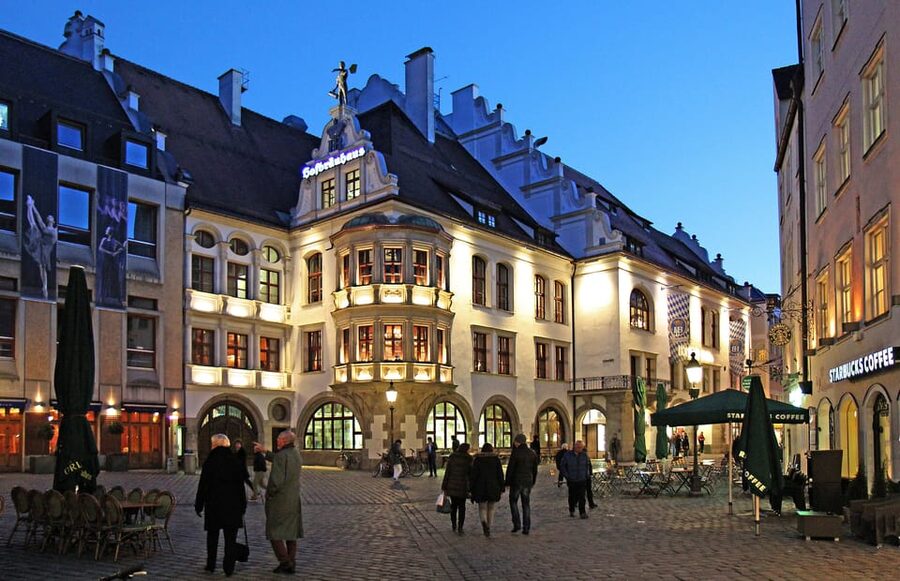
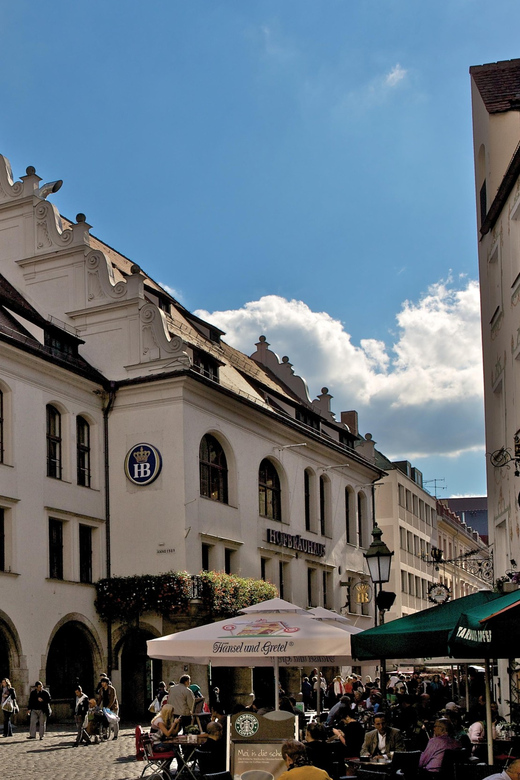
- Look beyond the main hall at Hofbräuhaus: Your guide explains the building’s secrets and lesser-seen corners.
- Taste three different small beers: The tasting includes three 0.1-liter pours, with pretzels.
- Visit the Beer and Oktoberfest Museum: See brewing history, the 1810 Oktoberfest, and a model of Carl von Linde’s cooling machine.
- End with a Bavarian Brotzeit: Food and a drink arrive at Weisses Bräuhaus, where you can remain after the guide leaves.
- German only: The tour suits you best if you understand spoken German.
Munich beer history starts at the Mariensäule
The meeting point is easy to locate. Go to the big column in Marienplatz, the Mariensäule, and look for a guide carrying a large blue bag marked Weis(s)er Stadtvogel in white letters.
Your guide wears traditional Bavarian clothing, either a Dirndl or a Janker with Lederhosen. That makes the meeting simple in a crowded square, and it gives the tour a clear local character from the first minute.
The route begins with a small beer called a Schnitt. The information describes it as a way to get into the mood, rather than one of the three main tasting pours. It is a modest start, but a useful one: you begin with a taste in hand while the guide introduces Munich as a beer town.
You will hear how beer arrived in Munich and how brewing developed under the Bavarian dukes. The focus is not only on drinking customs. It is also on inventions, rules, trade, and the practical problems that brewers faced before modern equipment.
More drinks-led nights in Munich:
- Bavarian Beer and Food Evening Tour in Munich
★ 4.5 · 1,575 reviews - Classic Mike’s Bike Tour daily @ 11.30 incl Beer Garden & Surfers
★ 5.0 · 1,246 reviews - Munich: Beer and Food Tour with Dinner & Oktoberfest Museum
★ 4.7 · 1,086 reviews
Hofbräuhaus, beyond the famous beer hall
Hofbräuhaus is one of Munich’s most familiar names. You can enter it on your own, order a beer, and take in the large beer hall. The value of this tour is that you do not simply walk through the front door and stop there.
The guide points out less obvious corners and stories connected with the building. Hofbräuhaus was founded by William V of Wittelsbach, the former Duke of Bavaria, and its history fits neatly into the larger story of court brewing and Munich’s beer culture.
That guided context matters because a famous beer hall can otherwise become a quick photo stop. Here, you learn why the place exists, what made it important, and which details might pass unnoticed if you were exploring alone.
I would keep your expectations realistic. The experience is not described as a long seated session at Hofbräuhaus with a full meal. It is a historical visit with stories and a small opening beer, followed later by proper tasting and food at other stops.
From Hofbräuhaus, the group passes former brewing houses and follows crooked lanes through Munich’s old town. These walks connect the major stops and give the guide room to explain how beer shaped the city. You are not only being taken from one bar to another. You are following a route through places linked to brewing and beer traditions.
Three small beers and Bavarian tasting customs
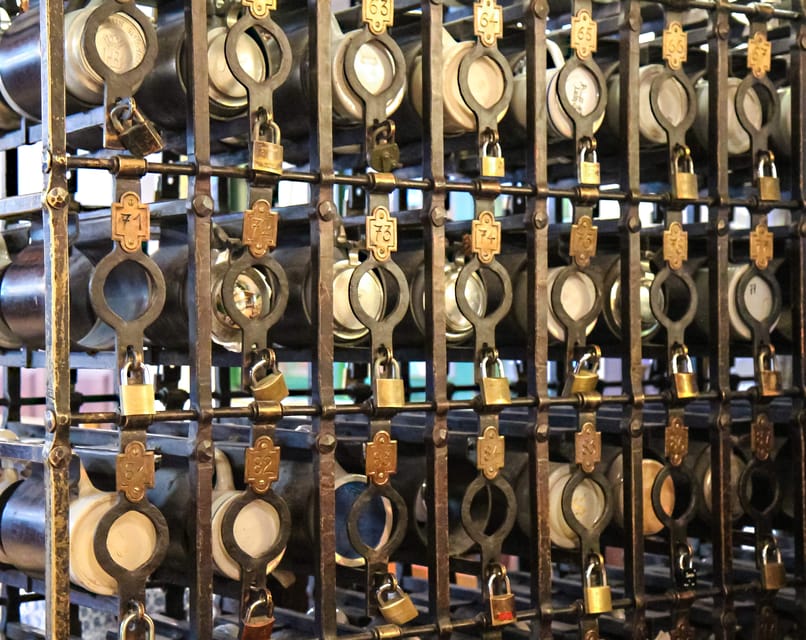
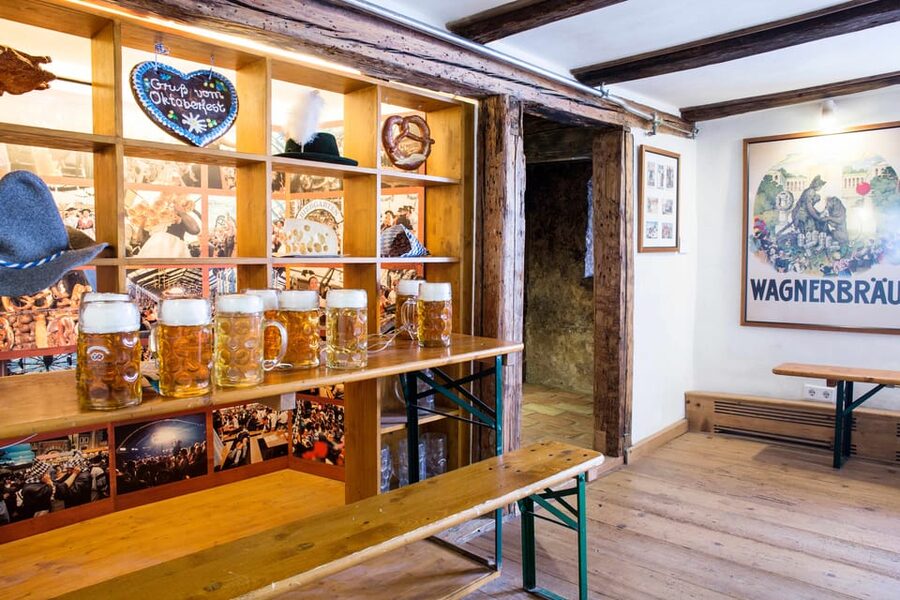
The main tasting takes place at the Beer and Oktoberfest Museum. You receive three different small beers, each measuring 0.1 liter, along with pretzels.
The portions are deliberately small. That is useful if you want to compare beers without committing to several full glasses, especially during a walking tour. It also leaves room for the drink served with the final Brotzeit.
Do not book this expecting a large-scale tasting flight. Three 0.1-liter pours add up to only 0.3 liters, and the tour’s emphasis is on explanation as much as consumption. You will learn about beer traditions made in Bavaria while tasting examples from different breweries.
The pretzels provide a simple food pairing and help make the museum stop more than a lecture. Still, the main meal comes later, so you may want to eat something beforehand if you arrive hungry.
The supplied details contain a confusing overlap about what is included. They list the three small beers, pretzels, museum entrance, and Bavarian light dinner as included, but the not-included section repeats beer tasting with pretzels, the Schnitt, and the Brotzeit with a drink. Because of this contradiction, confirm the exact inclusions before paying, particularly at the advertised price of $87 per person.
The Beer and Oktoberfest Museum in a historic building
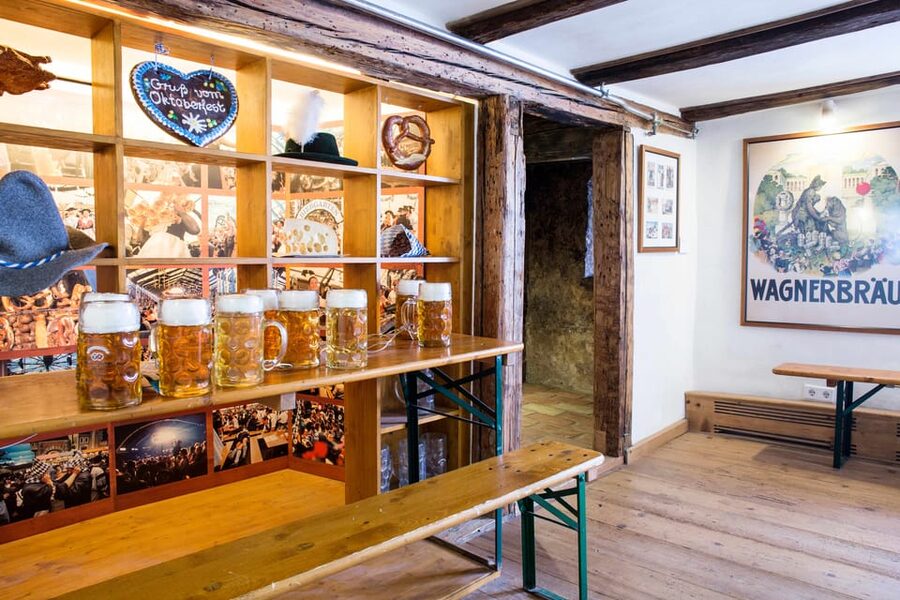
The museum occupies a beautiful old building with rough brick walls and a distinctive atmosphere. You sit down for the main beer tasting before moving upstairs to see the collection.
This stop gives the tour its strongest educational section. You learn how brewing worked in the Middle Ages, when temperature control and storage were far more difficult than they are today. You also hear why the Bavarian dukes introduced a purity law, a subject that helps explain the long-standing pride attached to Bavarian beer.
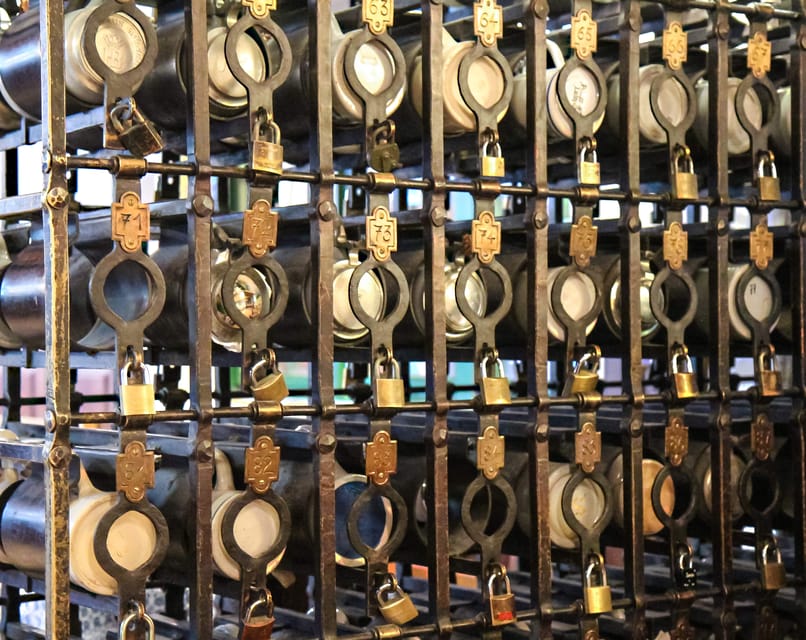
The museum’s collection includes items that connect old brewing methods with technical change. One notable display is a model of Carl von Linde’s machine, which modernized beer cooling. That detail gives you a clear sense of why machinery mattered. Brewing was not only about ingredients and tradition. Cooling changed what brewers could produce, store, and serve.
You also see a picture of the first Oktoberfest in 1810. It is a useful reminder that Oktoberfest began as a historical event before becoming the enormous beer celebration associated with Munich today.
I like this stop because it adds substance to the drinking. The museum explains the systems behind the glass in front of you. If you already know a great deal about Bavarian brewing, some of the material may feel familiar, but the combination of museum access and guided storytelling makes it more useful than a casual visit alone.
More food tours in Munich:
- Munich: Viktualienmarkt Food Tour
★ 4.5 · 1,127 reviews - Munich’s Beer Halls and Breweries: 3-Hour Guided Tour
★ 4.6 · 928 reviews - Lunch Like a Local: Munich’s ORIGINAL Viktualienmarkt Food Tour
★ 5.0 · 416 reviews - Munich: Viktualienmarkt Food Tasting Tour in German
★ 4.7 · 394 reviews
Weisses Bräuhaus and the final Brotzeit
After the museum, you cross the street to Weisses Bräuhaus, another historic beer house. This is where the tour changes pace.
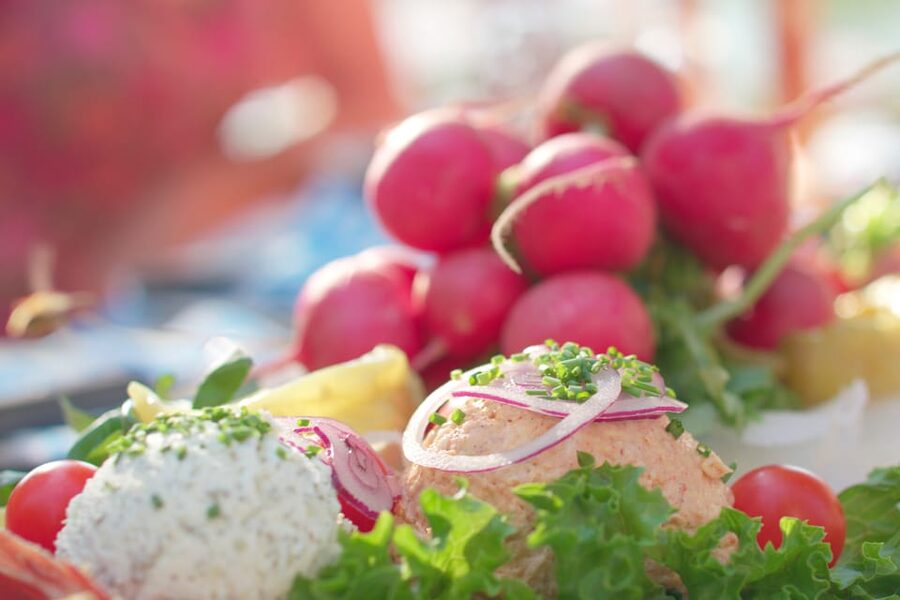
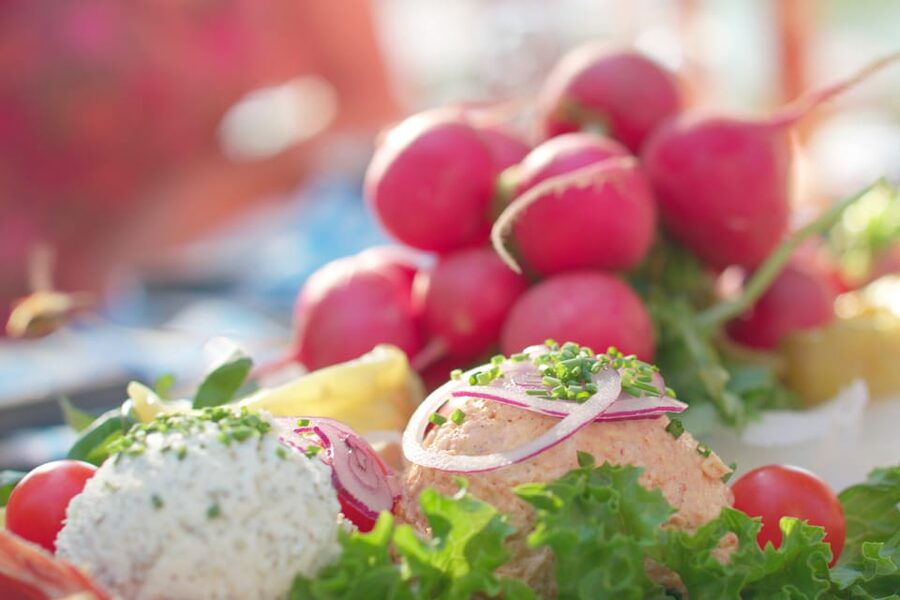
You receive a Bavarian Brotzeit and a drink. The supplied information calls it a complete Bavarian Brotzeit and a Bavarian light dinner, but it does not give a detailed list of dishes. You should therefore expect a traditional Bavarian-style meal rather than choose from a fully described menu.
The food arrives at the end, and then the guide says goodbye. You can stay as long as you wish after the guided portion ends. That is a useful arrangement if you want to continue talking with your companions, order another drink, or take your time with the meal instead of being hurried onto the next stop.
It also means you should understand the timing. The stated duration is 150 minutes, but the guide’s formal involvement ends when the food arrives. Your meal may continue beyond the two-and-a-half-hour tour window.
The final stop gives the experience a practical finish. You have walked through beer history, visited the museum, sampled three beers, and then sat down for food. But if your idea of a food tour means several substantial dishes at several different places, this itinerary is more limited.
What the $87 price really covers
At $87 per person, the price is not simply paying for beer and pretzels. You are paying for a German-speaking guide, a guided route through central Munich, Hofbräuhaus context, entrance to the Beer and Oktoberfest Museum, three small beers, pretzels, and the final Brotzeit with a drink, assuming the advertised inclusions are confirmed at booking.
The value depends on how much you want the history. A person interested only in drinking can spend less by visiting beer halls independently. You could also enter Hofbräuhaus without a tour and order a beer on your own.
The tour makes more sense if you want the connections explained. The guide links court brewing, old brewing houses, Bavarian brewing law, beer cooling, Oktoberfest, and modern drinking customs. That structure saves you from piecing the story together yourself.
The small pours keep the alcohol level more manageable than a route built around full beers. You also get a proper meal at the end, not just a snack. On the other hand, the total beer volume is modest, and the tour’s food component is concentrated in one final stop.
Because the inclusion wording is inconsistent, I would treat confirmation as part of the value calculation. Ask specifically if the opening Schnitt, three tasting beers, pretzels, Brotzeit, and final drink are all covered by the $87 price.
German-only guiding changes the experience
The live guide language is German. That is not a minor detail. The tour depends on stories, humor, and explanations inside the museum, so you should be comfortable following spoken German for two and a half hours.
The named guides connected with this experience include Eva and Hans Jürgen Beumer. Eva has been described as funny and skilled at explaining the history of Munich and beer. Hans Jürgen Beumer has also been praised for bringing the information across with energy and warmth.
Guides can change, of course, so do not assume you will have one particular person on your date. The useful point is that the tour seems built around personality and storytelling, not just a list of facts.
If your German is basic, you may still recognize familiar beer terms and enjoy the stops, but you could miss the best part of the experience: the stories behind the places. For English-language guiding, this is not the right choice based on the information provided.
Group or private tour, and the walking demands
You can choose between a shared group tour and a private tour. A private option may suit you if you want the guide’s attention focused on your questions or your own pace. A shared group usually makes more sense if you want the standard route at a lower overall cost, though the exact group size is not provided.
The route moves through Munich’s old town, with stops at Marienplatz, Hofbräuhaus, the Beer and Oktoberfest Museum, and Weisses Bräuhaus. Wear comfortable shoes and clothes. You will be walking on city streets and moving between buildings.
The tour operates rain or shine. Munich weather can change quickly, so bring suitable outerwear rather than assuming every part of the route will be indoors. Large bags and luggage are not allowed, so leave suitcases elsewhere and avoid arriving with bulky shopping bags.
The meeting point at Marienplatz is central, but the information does not specify transport arrangements. Plan to arrive at the square with enough time to locate the Mariensäule and the blue guide bag.
Who will enjoy this beer tour most
I would recommend this experience to you if you want Munich’s beer culture explained, not just sampled. It suits adults who enjoy history, old buildings, museum displays, and traditional food along with their beer.
It is also a good fit for German speakers who want a local-language tour. The traditional clothing, old-town route, Hofbräuhaus stories, and museum visit create a distinctly Bavarian setting without requiring you to spend an entire evening in one beer hall.
The tour may work well early in a Munich stay. It gives you useful background before you visit other beer halls or consider Oktoberfest-related activities. The three small pours also let you sample different beers without turning the afternoon into a heavy drinking session.
I would think twice if you want a lively pub crawl, large beer servings, or a detailed tasting led by a brewing specialist. The route includes beer, but its strongest feature is the historical walk. One recent low rating described it as more of a city tour than a food and beer tour, which is a fair caution for anyone expecting a feast.
The score is 4.5 from 14 ratings, with especially strong praise for humorous, engaging guides and the information about different beers and breweries. That pattern points to the guide making a major difference. Go for the stories and setting first, then treat the food and beer as the reward along the way.
Should you book the Munich beer tour?
Book it if you want a German-language history walk with beer built into it. Hofbräuhaus, the Beer and Oktoberfest Museum, three small beers, pretzels, and a Brotzeit make a well-shaped introduction to Munich’s brewing traditions.
Skip it if your priority is quantity, a long meal, or an English-speaking guide. Before booking, confirm the contradictory inclusion details, especially the opening Schnitt and the final Brotzeit with drink. If those items are covered as described, the $87 price can be reasonable for a guided old-town route with museum admission and dinner.
FAQ
Where does the tour meet?
Meet at the Mariensäule, the large column in Marienplatz. Look for a guide carrying a big blue bag with Weis(s)er Stadtvogel written in white.
How long does the tour last?
The tour lasts 150 minutes, or two and a half hours.
What language is the tour conducted in?
The live tour guide speaks German. The provided information does not list another guiding language.
How much beer is included in the tasting?
The tasting includes three small beers, each measuring 0.1 liter, for a total of 0.3 liters.
What is a Schnitt?
A Schnitt is the small beer served at the beginning of the tour. The supplied information lists it separately from the three tasting beers.
Does the tour visit Hofbräuhaus?
Yes. The route visits Hofbräuhaus and explains its history, secrets, and less obvious corners.
Is museum admission included?
The provided inclusions list entrance to the Beer and Oktoberfest Museum. The museum visit includes displays about medieval brewing, Bavarian purity law, Carl von Linde’s cooling machine, and the first Oktoberfest in 1810.
Is food included?
The advertised inclusions list pretzels and a Bavarian Brotzeit with a drink. However, the supplied details also repeat these items under not included, so confirm the final food and drink arrangements before booking.
Can I stay after the tour ends?
Yes. At Weisses Bräuhaus, the guide says goodbye once the food arrives, and you can stay as long as you wish.
Just added around Munich
- Pub crawl incl. Oktoberfest museum guided tour with beer tasting (private)★ 5.0 · 5 reviews
- South Tyrolean specialties and wine tasting★ 5.0 · 5 reviews
- Size Matters Beer Tour Munich★ 4.6 · 105 reviews
- Secret Food Tours Munich★ 4.8 · 5 reviews
- Short & sweet: Tasting the Viktualienmarkt★ 4.8 · 37 reviews
- Residence of Munich private tour with skip the line ticket★ 5.0 · 4 reviews
- Munich: Romantic Wine Experience for Two at Viktualienmarkt★ 4.2 · 14 reviews
- Munich: Resistance against Hitler – Historical Walking Tour★ 5.0 · 5 reviews
Munich Tours, compared.
Neuschwanstein & Linderhof Castle-Fairytale Day Tour from Munich
Read our review →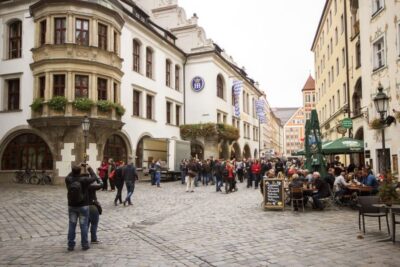
Dachau Concentration Camp Memorial Site Tour from Munich by Train
Read our review →
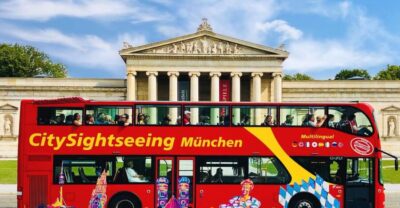
Munich Hop-On Hop-Off Tour: 1-Day or 2-Day Ticket
Read our review →Browse the lists this tour appears in