
Review · MUNICH TOURS
Mozart and German Composers Private Tour in Munich
Munich’s Old Town is more than handsome squares and church towers. It is a stage where Mozart, Wagner, and Richard Strauss worked, performed, and left their mark. This private walk links those names to real places, from St. Peter’s Church to the National Theater and the Residenz.
I like the personal format and the clear focus on music rather than a general city overview. I also like the mix of famous sights and lesser-known musical stories, including Mozart’s connection to the Cuvilliés Theater. The main consideration is pace: two hours goes quickly, and one guest found the guide continued a little beyond the scheduled time.
Key points to know before booking
- Mozart’s Munich connection: Hear about his concert at the Residenz and the 1781 premiere of Idomeneo at the Cuvilliés Theater.
- A private guide for your group: Ask questions, adjust the focus, and spend more time on the composers who interest you most.
- Four major Old Town sights: The route includes St. Peter’s Church, Marienplatz, Frauenkirche, the National Theater, and the Residenz.
- A story that reaches back to medieval Munich: Learn how church music, court performances, and civic music shaped the city.
- Several language choices: Tours are offered in English, French, German, Italian, Spanish, and Polish.
- A short, focused walk: The two-hour length works well for a first look at Munich’s music scene, but it cannot cover every composer or venue.
Starting opposite St. Peter’s Church

Your meeting point is in front of hotel BEYOND by Geisel at Marienplatz 22, directly opposite St. Peter’s Church. Do not go inside the hotel. Its staff is not involved with the tour, so you should wait outside for your guide.
This is a useful place to begin. You are already in Munich’s central Old Town, with Marienplatz close at hand and several major sights within a short walk. It also gives the tour a fitting opening point, since St. Peter’s musical story reaches back to the early 13th century.
The route is entirely on foot, so wear shoes that can handle old city streets. The supplied information does not give an exact walking distance or list of indoor admissions. I would treat this primarily as an outdoor history walk, with the guide explaining the musical importance of buildings and venues as you pass them.
Your guide is a licensed private guide who speaks the language selected at booking. Since the group is private, you can ask for more detail about Mozart, Wagner, Strauss, church music, opera, or Munich’s court culture instead of following a fixed lecture.
A few more Munich half-days to weigh up
- From Munich: Neuschwanstein & Linderhof Castle Full-Day Trip
★ 4.5 · 12,494 reviews - Neuschwanstein & Linderhof Castle-Fairytale Day Tour from Munich
★ 4.5 · 7,275 reviews - Munich: Third Reich & WWII Walking Tour
★ 4.6 · 6,181 reviews
St. Peter’s Church and Munich’s early music
St. Peter’s Church gives the tour a useful sense of time. Its choir dates to the early 13th century, placing Munich’s music tradition long before the famous operas and orchestras associated with later centuries.
That early church connection matters because music in medieval Europe was closely tied to religious life. Church choirs trained singers, preserved musical practices, and gave communities regular performances as part of worship. Your guide uses St. Peter’s to explain how Munich became an important music center in medieval Europe.
You may find this part especially useful if your knowledge begins with Mozart or Beethoven. It shows that Munich’s music story did not start with court opera. It developed through church tradition, court patronage, and the growth of music in civic life.
The stop is also a good reminder that musical history is often tied to buildings that look ordinary at first glance. A church is not simply a sightseeing stop here. It is evidence of who supported music, who performed it, and how people heard it centuries ago.
Marienplatz and the training of young musicians
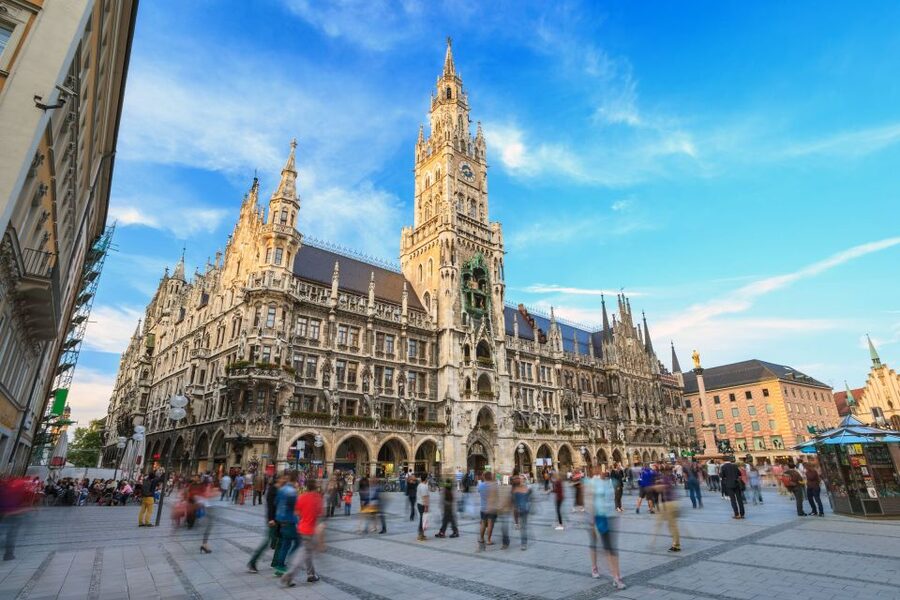
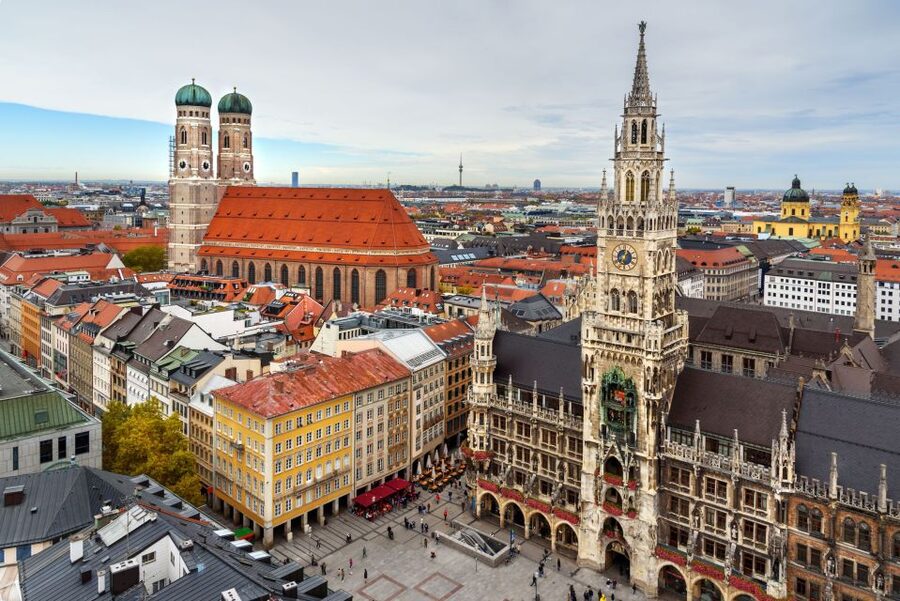
From St. Peter’s, the walk moves through Marienplatz, Munich’s main central square. You will see the square in the context of the city’s musical past, rather than simply stopping for the usual photographs.
Marienplatz is close to Frauenkirche, one of Munich’s most recognizable landmarks. The church is linked to the training of young musical talents under figures such as Orlande de Lassus, a major musician of the 16th century.
That detail gives Frauenkirche a different role in your visit. You are not only looking at a landmark. You are hearing about the people who learned, practiced, and built careers within Munich’s church music tradition.
I like this part of the walk because it connects famous architecture with human work. Great music requires teachers, choirs, pupils, and institutions. The guide helps you see those links in the same streets you might otherwise cross only on the way to a café or shop.
The tour is not designed as a full interior visit to every church. The supplied details promise the Old Town sights and their musical connections, but they do not specify entry arrangements. If seeing a particular interior is essential to you, ask the guide at the start what can be included during your time.
The National Theater and Wagner’s opera Munich
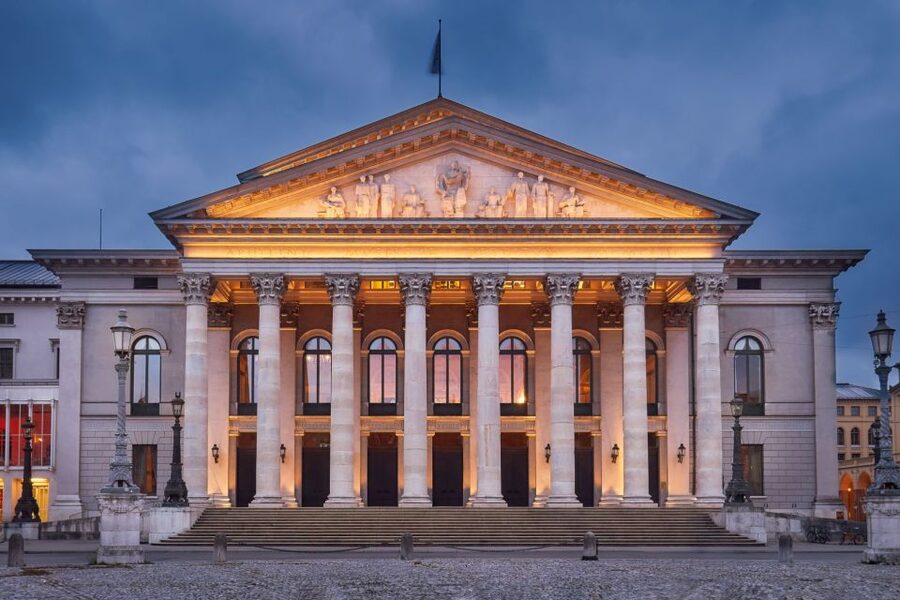
The National Theater is one of the most important stops for anyone interested in German opera. It is home to the Bavarian State Opera, or Bayerische Staatsoper, and it is linked to many of Richard Wagner’s works.
Several of Wagner’s pieces were premiered here. The theater also connects to Richard Strauss, who worked there as a third conductor. These details show two different sides of a major opera institution: it was a place where new works reached the stage, and it was also a workplace where composers and conductors built their careers.
Your guide can help put those names in order. Wagner is often associated with large-scale opera and dramatic theater, while Strauss is known for his own major body of work and later career. At the National Theater, those names become part of Munich’s working musical life, not just a list from a concert program.
The building is also a useful stop for understanding the role of royal and civic institutions. Opera needs money, a stage, performers, and an audience. A theater such as this one reflects the support that allowed music to grow in Munich.
The tour information does not state that you attend a performance or enter the opera house. You should book this as a guided look at the theater and its connections, not as an opera ticket or backstage visit.
Same city, a completely different sort of afternoon:
- Dachau Concentration Camp Memorial Site Tour from Munich by Train
★ 4.5 · 5,637 reviews - Neuschwanstein Castle Tour from Munich
★ 4.5 · 5,117 reviews - Third Reich Walking Tour Munich
★ 4.5 · 4,291 reviews - Munich Hop-On Hop-Off Tour: 1-Day or 2-Day Ticket
★ 4.3 · 4,161 reviews
The Residenz, Mozart, and the Cuvilliés Theater
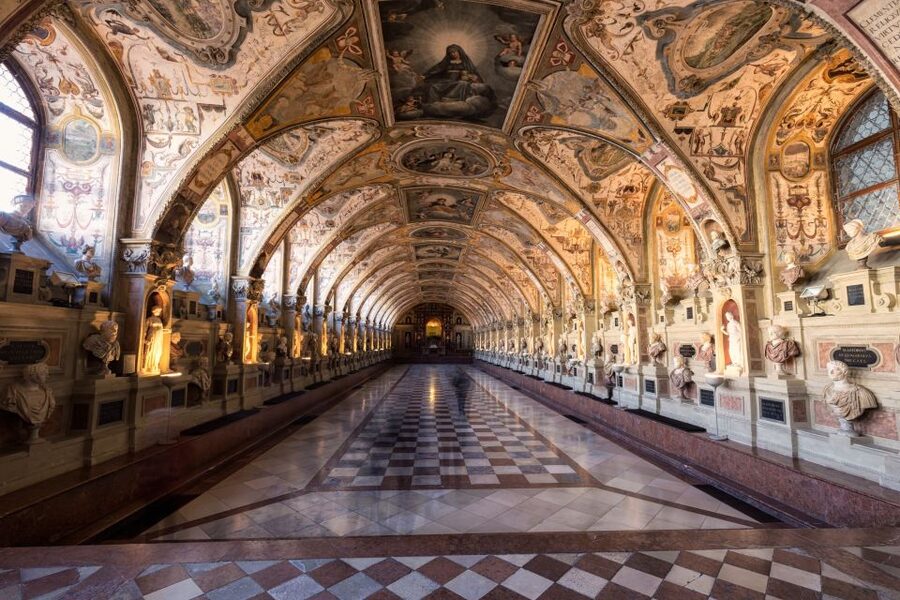
The Munich Residenz brings the tour into the world of court music. This large former royal complex is connected with Wolfgang Amadeus Mozart, who played a concert there for Elector Karl Theodor and Ferdinand IV, King of Naples.
That story makes the Residenz more than a grand palace on your sightseeing list. It shows how musicians moved through European courts and how rulers used concerts, opera, and ceremony to display status and culture.
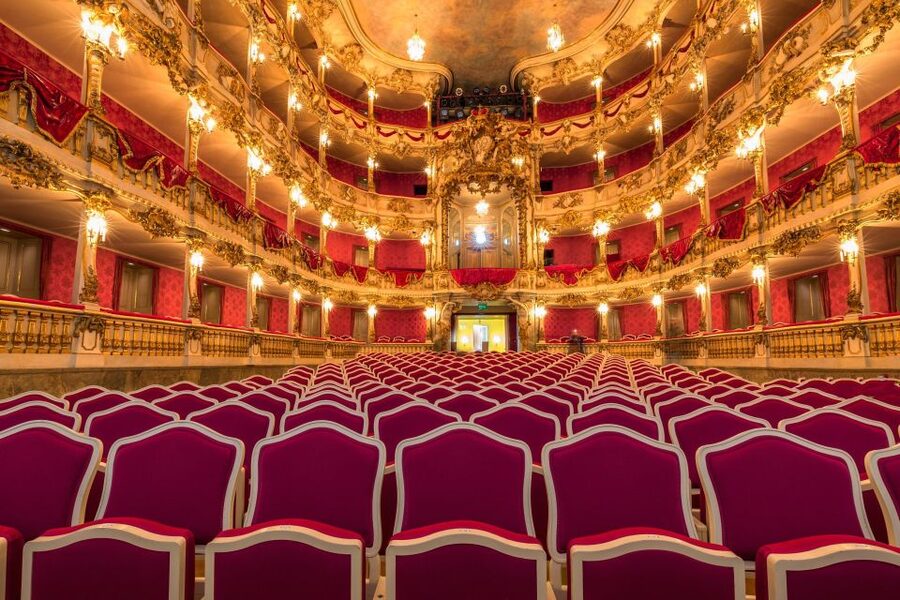
Inside the Residenz is the Cuvilliés Theater, where Mozart premiered his opera Idomeneo in 1781. For many people, this is likely to be the most striking Mozart detail on the route. It places one of his operas in a specific Munich venue and links the composer to the city in a way that a general walking tour might miss.
The spelling of Residenz is worth noting when you search for the sight independently. You may also see Cuvilliés Theater written with its accent. These are small details, but they make it easier to follow up with your own visit.
The information provided does not confirm admission to the Residenz or the Cuvilliés Theater during this two-hour walk. Your guide will discuss the sites and their musical importance, but you should not assume that an interior tour or ticket is included. If you want to see the theater inside, ask about arranging a separate visit.
Mozart, Wagner, Strauss, and the wider musical story
The tour’s appeal is not only the number of famous names. It is the way those names fit into different parts of Munich’s past.
Mozart represents the city’s links to court performance and opera. Wagner represents the National Theater’s role in presenting major new works. Strauss connects to the professional life of the Bavarian State Opera. Orlande de Lassus brings the story back to 16th-century musical training and church culture.
The route also includes legendary performances, court music, bourgeois music culture, and church music tradition. That wider frame keeps the experience from becoming a simple list of composer birthdays and famous titles.
I would especially recommend this tour if you enjoy learning how culture works in a city. Music does not exist in isolation. It depends on schools, churches, theaters, royal patrons, professional companies, and paying audiences. Munich’s Old Town gives your guide a compact setting for explaining all of that.
The focus is classical music, so this is not the right choice if you want Munich’s modern popular music scene, nightlife, or a general food-and-culture walk. The subject is specific, and that is part of its value.
What the private format adds
At $215 per person, this is not a budget walking tour. The price makes more sense for people who want a private experience rather than a basic orientation walk.
You are paying for a licensed guide, a private group, a chosen language, and a tour shaped around your interests. If your group includes serious music fans, that personal attention can make the difference between a pleasant stroll and a useful lesson. You can ask why a certain composer mattered, request more detail about opera, or connect the musical story to a sight you have already seen.
The private format also helps families and mixed-interest groups. Someone who knows Wagner well can ask technical questions, while another person can focus on Munich’s churches and palace history. A fixed group tour may not give you that flexibility.
Still, the value depends on how much you use the guide. If you want only a quick look at Marienplatz, Frauenkirche, and the National Theater, $215 per person may feel high for two hours. You will get more from the price if you arrive with questions and tell the guide what you want to hear.
The tour has a rating of 4.8 from four reviews, which is a positive signal but a small sample. The strongest praise centers on the guide’s musical knowledge, clear stories about composers and performers, and pleasant manner. One guest also found the tour ran a little longer than planned. That may be welcome if you want more discussion, but it is worth remembering if you have a dinner booking or another timed activity.
Who will enjoy this Munich music walk
I would choose this experience for:
- Music lovers who want places connected to real composers and performances
- First-time Munich visitors who want an Old Town walk with a clear theme
- Couples or families who prefer a private guide
- Visitors who want to ask questions in English, French, German, Italian, Spanish, or Polish
- People interested in the links between churches, royal courts, opera houses, and public music
- Anyone planning to attend the Bavarian State Opera and wanting context first
You do not need to be a classical music expert. The route includes major Munich sights, so even a beginner can follow the story. The guide’s job is to explain why each place matters, not to assume you already know every opera or composer.
I would be less likely to choose it if you have only a short time in Munich and need a broad introduction to food, shopping, museums, and daily life. Two hours is enough for a focused music walk, not a full city tour.
Timing, languages, and practical planning
The walk lasts two hours, with starting times available according to the date you select. Check the schedule before booking, especially if you are fitting it between a museum visit and an evening concert.
The experience ends back at the same meeting point in front of the hotel. That makes planning simple, since you return to Marienplatz rather than needing to find a separate endpoint.
The guide can lead the tour in English, French, German, Italian, Spanish, or Polish. Choose carefully when booking, since the language shapes how comfortable you will be asking questions and following the historical details.
Check your email the day before the tour for important information. You can cancel up to 24 hours in advance for a full refund, and the reserve-now, pay-later option lets you keep plans flexible. Those terms are helpful in a city where weather, train delays, and changing museum plans can affect your schedule.
Try to arrive at the meeting point a few minutes early. Since the hotel staff is not informed about the activity, asking inside will not help you find the guide.
Is this Mozart and German Composers tour worth booking?
Book it if you want Munich’s Old Town explained through music, especially Mozart’s Idomeneo, Wagner’s premieres, Strauss’s work at the opera, and the older church tradition behind them.
I like the route because it uses major sights you already want to see, then gives them a sharper purpose. The private format is the main reason to pay the premium. If you prepare a few questions and care about classical music, you should get strong value from the two hours.
Skip it if you want interior access to every site, an opera performance, or a broad city tour. For a music-minded visitor, though, this is a thoughtful way to connect Munich’s streets, churches, theater, and royal palace with the composers who made the city part of Europe’s musical story.
FAQ
How long is the Mozart and German Composers Private Tour?
The walking tour lasts two hours. Starting times depend on availability when you book.
Where does the tour meet?
Meet your guide in front of hotel BEYOND by Geisel at Marienplatz 22, 80331 Munich, opposite St. Peter’s Church. Do not enter the hotel, since its staff is not informed about the tour.
Where does the tour end?
The activity ends back at the same meeting point in front of hotel BEYOND by Geisel.
Which languages are available?
The live guide can lead the private tour in English, French, German, Italian, Spanish, or Polish.
Is this a private group tour?
Yes. The experience is arranged for a private group, allowing you to ask questions and focus on your interests.
Can I cancel the tour for a refund?
You can cancel up to 24 hours in advance for a full refund. A reserve-now, pay-later option is also available.
Just added around Munich
- Pub crawl incl. Oktoberfest museum guided tour with beer tasting (private)★ 5.0 · 5 reviews
- South Tyrolean specialties and wine tasting★ 5.0 · 5 reviews
- Size Matters Beer Tour Munich★ 4.6 · 105 reviews
- Secret Food Tours Munich★ 4.8 · 5 reviews
- Short & sweet: Tasting the Viktualienmarkt★ 4.8 · 37 reviews
- Residence of Munich private tour with skip the line ticket★ 5.0 · 4 reviews
- Munich: Romantic Wine Experience for Two at Viktualienmarkt★ 4.2 · 14 reviews
- Munich: Resistance against Hitler – Historical Walking Tour★ 5.0 · 5 reviews
Munich Tours, compared.


Neuschwanstein & Linderhof Castle-Fairytale Day Tour from Munich
Read our review →
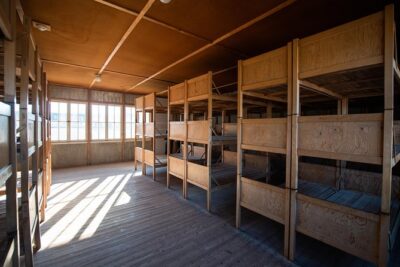
Dachau Concentration Camp Memorial Site Tour from Munich by Train
Read our review →
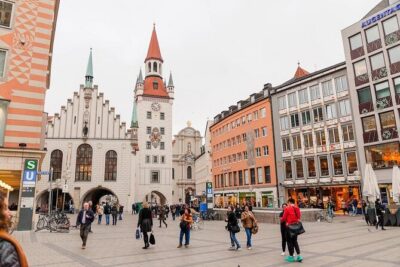
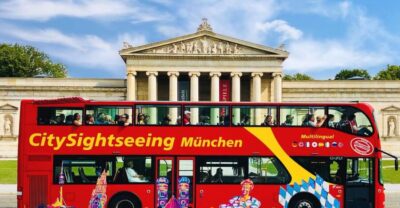
Munich Hop-On Hop-Off Tour: 1-Day or 2-Day Ticket
Read our review →Browse the lists this tour appears in