
Review · DUISBURG TOURS
Duisburg: Guided Walking Tour through the inner harbour
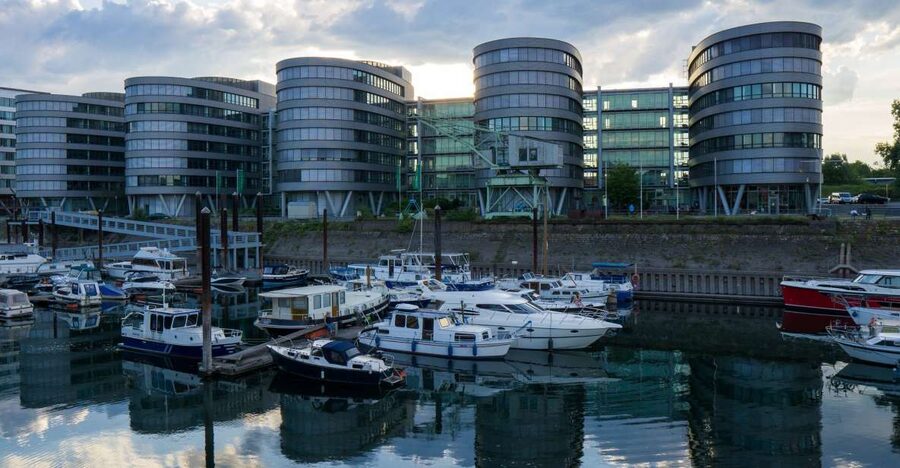
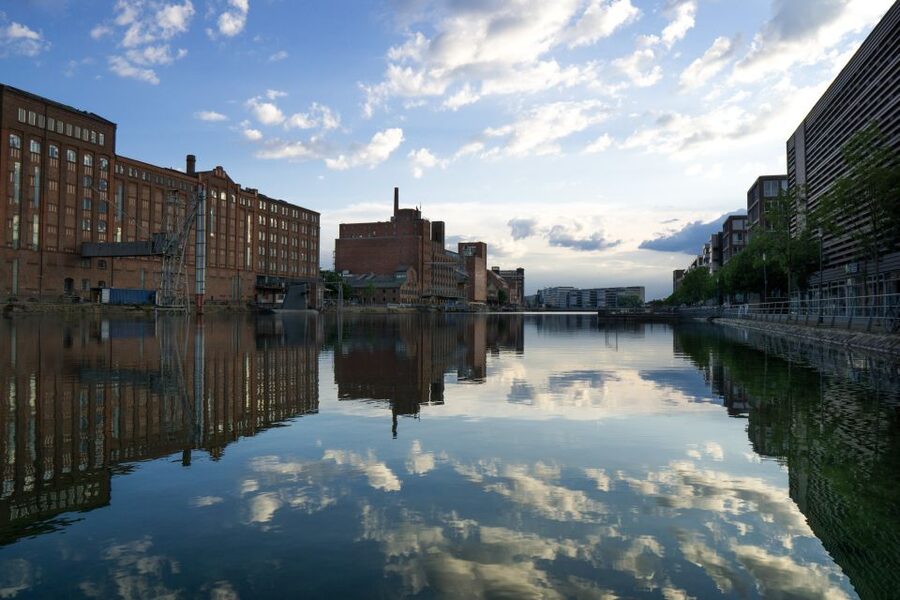
Duisburg’s inner harbour tells a sharp story of change. Once the Ruhr area’s bread basket, it handled huge amounts of grain. Today, yachts sit where freighters once loaded cargo, while modern offices, museums, restaurants, and old warehouses share the waterfront. I like the clear link between architecture and industrial history, and I like that the tour shows this change on foot rather than from behind a bus window. The main consideration is language: the live tour is in German.
I also like the price. At $16 per person, this is an affordable way to understand one of Duisburg’s most altered districts. The tour runs in rain, so poor weather will not automatically cancel the plan, though you should dress for an exposed waterfront. Recent feedback also points to a friendly, humorous tone, with one participant praising the guide’s informative approach even in bad weather.
Key Points
- A former grain port reborn: See how Duisburg’s inner harbour changed after the grain mills declined in the late 1960s.
- Norman Foster’s urban plan: Learn how the British architect’s plan from the mid-1990s shaped the district’s new identity.
- Five Boats and modern architecture: Pass one of the area’s best-known modern building groups, along with office complexes and museums.
- Maritime atmosphere in the city center: Yachts, restaurants, and a marina now occupy spaces once used for cargo handling.
- A compact 90-minute walk: The length suits a first visit or a useful introduction before exploring the museums and restaurants.
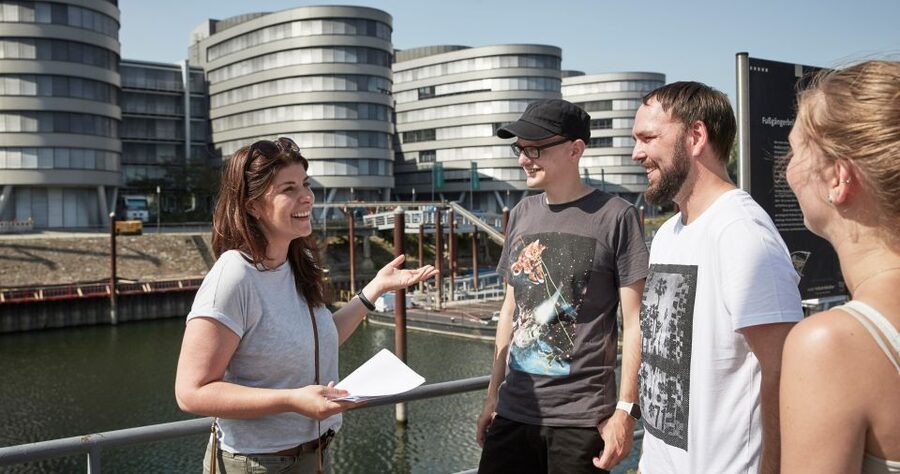
- German-language guiding: The tour is conducted in German and begins at the Mercator fountain by Duisburg Town Hall.
From Grain Port to Waterfront District
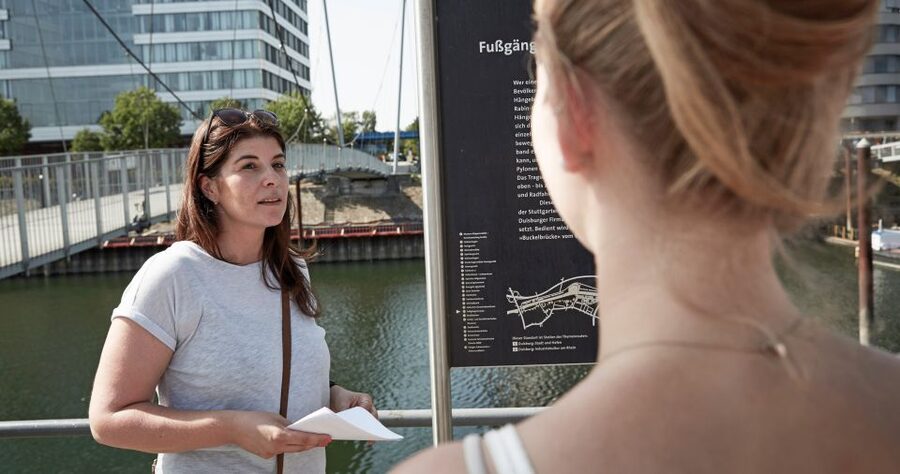
The best reason to take this walk is the contrast. Duisburg’s inner harbour was not always a pleasant place to sit by the water. Its working purpose was the movement and storage of grain, earning it the nickname bread basket of the Ruhr area.
That role faded as the grain mills declined at the end of the 1960s. Once the industrial activity disappeared, the old harbour faced a simple problem: what should happen to a large, central area built for work that no longer existed?
The answer was a major urban change beginning in the mid-1990s. Sir Norman Foster, the British architect, helped shape a plan for turning the inner harbour into a mixed district with offices, culture, dining, and public waterfront space.
You will not just hear a list of dates on this tour. The buildings around you make the story visible. The old warehouse rows preserve the area’s working character, while new offices and cultural buildings show the city’s attempt to give the harbour a second life.
I find this useful because Duisburg is a city where industrial change is not tucked away in a museum. It is part of the daily setting. You can see the old and new beside one another, often within the same view.
More walking tours in Germany:
- Discover Berlin Half-Day Walking Tour
★ 5.0 · 9,624 reviews - Berlin: Third Reich and Cold War 2 Hour Walking Tour
★ 4.9 · 6,830 reviews - Munich: Third Reich & WWII Walking Tour
★ 4.6 · 6,181 reviews
Meeting at the Mercator Fountain
The tour begins in front of the Mercator fountain by Duisburg Town Hall. This is a practical starting point because it places you near the center of the city before the walk heads toward the waterfront.
You should arrive with enough time to locate the fountain and settle in. The supplied details do not name the guide or specify group size, so do not plan around a particular guide or expect a small private walk. The live guide speaks German, which matters if you want to follow the explanations rather than simply admire the buildings.
The opening section should help set the scene for the harbour. The important question is not only what the buildings look like, but why the district needed such a major rethink. That context gives the later architecture more meaning.
A walking tour also lets you notice the shift in atmosphere. The route moves from the civic center toward a former industrial waterfront, where the tone changes from city administration to boats, water, warehouses, restaurants, and modern construction.
The Five Boats and New Duisburg
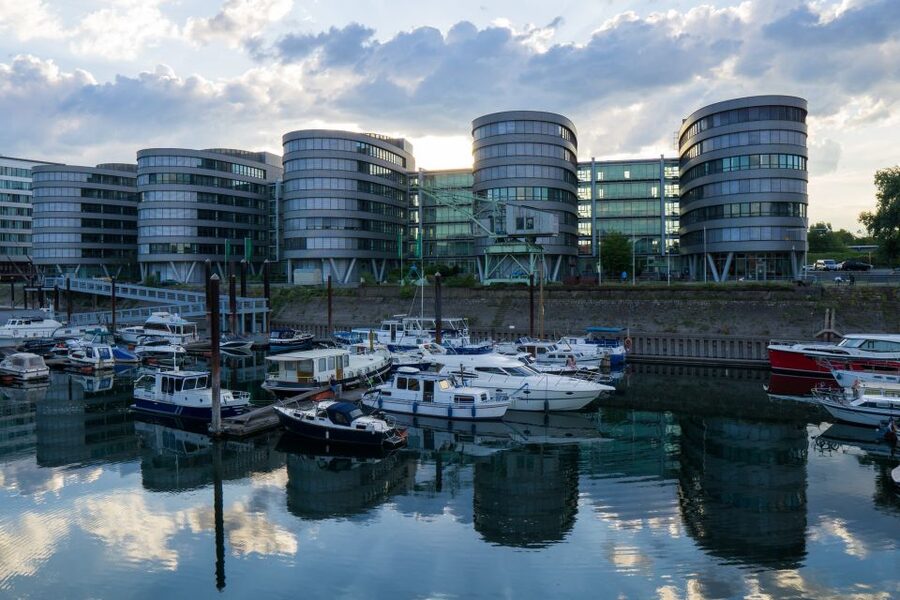
One of the main architectural sights is the Five Boats. The name refers to a group of modern building forms that add a strong visual marker to the inner harbour.
You will also pass modern office complexes, museums, and other new structures. Their purpose is not simply to make the waterfront look fresh. They represent the effort to bring work, culture, and leisure back to an area once dominated by cargo.
This is where the guide’s explanation can add real value. Without context, the district may look like a collection of attractive buildings. With the industrial story in place, the different styles begin to make sense. Nostalgic warehouse rows point backward, while the Five Boats and newer offices point toward Duisburg’s planned future.
The mix may not appeal to everyone. If you prefer untouched industrial sites, the renovated waterfront can feel too polished in places. The value here is the comparison. You see a working harbour, a decline, and a redevelopment plan within one compact walk.
Yachts Where Freighters Once Worked
The marina gives the inner harbour its most obvious change in mood. Yachts now rest where freighters once loaded and unloaded goods, creating a more relaxed, almost Mediterranean feel beside the old industrial buildings.
That contrast is the heart of the experience. The water remains, but its purpose has changed. Cargo movement has given way to leisure, dining, events, and office life.
Restaurants sit close to the waterfront, and the area is designed for people to pause rather than hurry through. You can expect the guide to point out how these new uses fit into the wider redevelopment plan.
I like this part because it makes urban change easy to understand. You do not need specialist knowledge of architecture or planning. The boats, old warehouses, and new buildings give you a clear before-and-after picture.
Still, keep your expectations in check. This is a 1.5-hour walking tour, not a full industrial history of Duisburg. The focus is the inner harbour and its transformation, rather than a complete survey of the city’s port or Ruhr industry.
A few more Germany half-days to weigh up
- Bottrop: Movie Park Full-Day Admission Ticket
★ 4.4 · 511 reviews - Oberhausen: HOUSE OF MAGIC – powered by Ehrlich Brothers
★ 4.3 · 252 reviews - Oberhausen: LEGOLAND Discovery Centre and SEA LIFE Ticket
★ 4.1 · 171 reviews - Torchlight tour of the old ironworks
★ 4.7 · 164 reviews
Museums and the Best Way to Extend the Visit
Two museums are specifically worth adding before or after the tour. The Küppersmühle Museum of Modern Art suits anyone interested in contemporary art and modern design. Its location in the inner harbour makes it an easy cultural follow-up to the architecture you see outside.
The Cultural and Urban History Museum offers a different angle. It can help place Duisburg’s development into a wider civic and historical setting.
The tour itself does not include museum admission. That is useful to know when planning your budget and timing. At $16, the walk remains reasonably priced as a stand-alone activity, but a museum visit will add to both the cost and the time.
You can also finish with a meal or drink at one of the harbour restaurants. The water-side setting is part of the district’s appeal, and sitting down afterward lets you enjoy the new atmosphere without rushing to the next sight.
For a short visit to Duisburg, I would use the tour as an orientation. Take the walk first, note which buildings and museums interest you, then choose where to spend the rest of your time.
What the 90 Minutes Feel Like
Ninety minutes is a sensible length for this subject. It gives the guide time to explain the harbour’s decline and rebirth without turning the outing into a half-day commitment.
You should expect a steady walking tour through the inner harbour, with stops or pauses around the major buildings, the marina, the museums, and the former warehouse areas. The exact sequence and pace can vary, since starting times depend on availability and the guide leads the group in German.
The short format works well if you are fitting Duisburg into a wider Ruhr itinerary. It also suits anyone who wants more than a quick photograph of the waterfront but does not want a long specialist tour.
The main practical issue is weather. The tour runs in rain, and one recent booking took place in poor weather while the group still enjoyed the outing and the guide’s good humor. Bring suitable clothing and shoes, since a wet harbour walk is less comfortable than a dry one.
The tour is wheelchair accessible, an important advantage for anyone who needs a route without barriers. The supplied information does not give further detail about surfaces, slopes, or restroom access, so it is sensible to confirm any specific mobility needs when booking.
Guide Style and Language
The tour is led in German. If you understand German well, this should give you a direct explanation of the city’s redevelopment, with room for the guide to add humor and local color.
Recent feedback gives useful clues about the tone. One booking described the walk as informative and humorous, while another praised the guide’s good mood despite bad weather. That combination matters. A dry subject such as urban planning becomes easier to follow when the presentation feels relaxed.
If you do not speak German, the tour may still provide visual value, but you should not book it expecting an English commentary or printed translation. The live tour language is clearly stated as German, and no other language is listed.
The guide’s name is not provided, so I cannot recommend a particular person. I would judge this experience mainly by its subject, location, and language fit rather than by expecting a named host.
Is $16 a Fair Price?
At $16 per person, the tour offers good value if you want context. You are paying for a 90-minute guided walk in a district whose appeal depends heavily on understanding its past.
You could walk around the harbour on your own for free. That option lets you see the marina, restaurants, museums, Five Boats, and warehouses, but it may leave you with only the visual story. The paid tour explains why the area looks the way it does and how the redevelopment plan changed its role.
The price is especially reasonable if this is your first time in Duisburg. It can prevent you from treating the inner harbour as just a pleasant waterfront and missing the larger story of industrial decline and urban planning.
The value is lower if you already know the district well or only want an unstructured stroll. It is also less suitable if you need an English-language guide.
Flexible booking improves the practical value. You can reserve now and pay later, and cancellation is free up to 24 hours before the tour for a full refund. Those terms help if your Ruhr itinerary may change.
Who Should Book This Walk?
I would recommend it to you if you enjoy architecture, industrial history, urban renewal, or waterfront districts with a visible past. It is also a good choice if you want a manageable introduction to Duisburg before choosing a museum or restaurant.
Families and mixed-age groups may appreciate the short duration and the variety of sights. There are boats, water, modern buildings, old warehouses, museums, and places to eat, so the walk is not built around one narrow subject.
The tour suits a city break more than a full-day excursion. You can place it before a museum visit, after time at Town Hall, or ahead of an evening meal beside the water.
I would hesitate if you need English commentary, dislike walking in wet weather, or want a detailed tour of Duisburg’s entire industrial past. The route is focused on the inner harbour and its transformation, not every part of the city.
Final Verdict: A Useful First Look at Duisburg
Book this tour if you want the inner harbour to make sense, not just look attractive. For $16, you get a compact explanation of how a declining grain port became a district of offices, museums, restaurants, yachts, and modern architecture.
The strongest features are the clear industrial-to-cultural story, the chance to see Norman Foster’s influence in context, and the friendly, humorous guiding style noted in recent feedback. The German-only format is the main limitation.
If you understand German and have 90 minutes, I think this is a smart addition to a Duisburg visit. Take the walk, then choose between the Küppersmühle Museum of Modern Art, the Cultural and Urban History Museum, or a meal beside the marina.
FAQ
How long does the Duisburg inner harbour tour last?
The guided walking tour lasts 1.5 hours.
Where does the tour begin?
Your guide waits in front of the Mercator fountain in front of Duisburg Town Hall.
What language is the tour in?
The live tour guide speaks German. No other tour language is listed.
Is the tour wheelchair accessible?
Yes, the activity is listed as wheelchair accessible.
Does the tour operate in rainy weather?
Yes, the tour also takes place when it is raining. Dress appropriately for an outdoor walk.
Can I cancel the booking or pay later?
You can cancel up to 24 hours in advance for a full refund. You can also reserve now and pay later.
Just added around Germany
- From Berlin: Gardens & Palaces of Potsdam Bike Tour★ 5.0 · 61 reviews
- Berlin: Battle for Seelow Heights WW2 tour -Clash of Titans★ 5.0 · 27 reviews
- From Amsterdam: Cologne Private Sightseeing Tour★ 5.0 · 4 reviews
- From Berlin: Historical Gems of Potsdam Private Day Trip★ 4.4 · 4 reviews
- Freiburg: Veni, vidi, vino – wine hike and tasting★ 4.5 · 144 reviews
- From Alken: Return Day Trip by Boat to Cochem★ 4.6 · 141 reviews
- Fritz Haarmann – Die Mördertour★ 4.6 · 41 reviews
- Freiburg: Tour of the city with cathedral visit★ 4.7 · 167 reviews
Duisburg Tours, compared.

Oberhausen: HOUSE OF MAGIC – powered by Ehrlich Brothers
Read our review →
Oberhausen: LEGOLAND Discovery Centre and SEA LIFE Ticket
Read our review →


Airbus Flightsimulator | Flying Experience | adults&children
Read our review →
Browse the lists this tour appears in