
Review · DUISBURG TOURS
Adventure Darkness – Guided tour in the dark
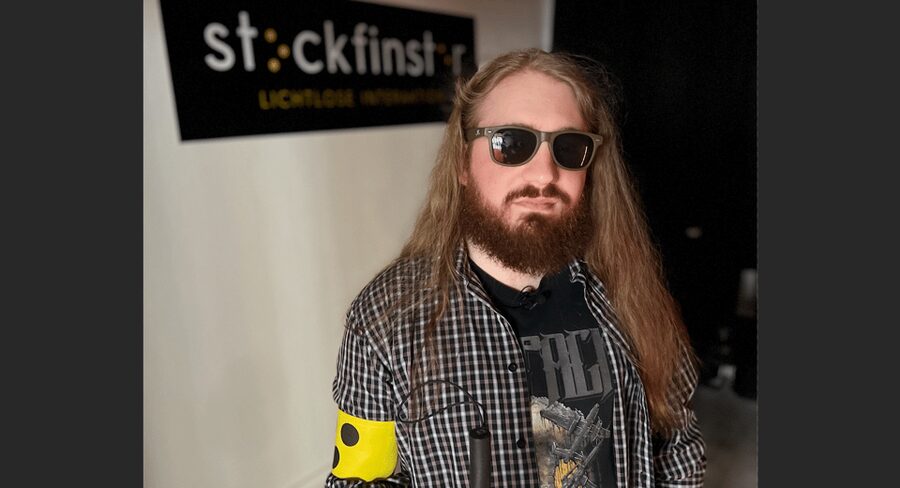
The striking part of Adventure Darkness is simple: you cannot see anything. A blind or severely visually impaired guide leads you through rooms built around sound, smell, touch, and taste, while you use a long cane to find your way. It turns familiar moments, such as crossing a road, into a fresh test of trust and attention.
I like the small group limit of eight, which keeps the experience personal, and I like that the tour moves beyond a gimmick toward a clearer understanding of daily life without sight. Guide Florian has earned special praise for his warm, adaptable manner. The main caution is that the tour is in German, and one sound effect in the street scene was reported as not working properly.
Key points to know
- Complete darkness from start to finish: Your eyes provide no help, so sound, touch, smell, and taste guide you instead.
- A blind guide leads the way: You receive practical direction from someone who understands the setting from personal experience.
- Everyday scenes become difficult: A recreated road crossing and other familiar situations show how much you normally depend on sight.
- A sporting challenge adds variety: The rooms are not limited to quiet sensory exercises.
- The dark bar closes the experience: After about 60 minutes, you can talk with your guide over fritz-kola, coffee, or beer.
- The group is capped at eight: That is a useful size for questions and personal guidance, but German is the only listed language.
A Ruhr Area experience that removes your main sense
Adventure Darkness, operated by Stockfinster, is not a sightseeing tour in the usual sense. You will not be admiring buildings, taking photographs, or following a guide through a historic quarter. Instead, you enter a set of rooms where ordinary visual cues disappear completely.
That change is the whole point. You normally use your eyes to judge distance, find a doorway, read a situation, and decide where to place your feet. Here, the brain has to work with the information that remains. A voice, a texture under your hand, a smell in the air, or a sound from across the room may suddenly matter far more than it did a minute earlier.
I like this approach because it gives the subject practical weight. The tour is designed to build understanding of inclusion and the daily challenges faced by people with severe visual impairment. It does that by asking you to adjust your behavior, not by giving you a lecture.
The experience lasts 90 minutes and costs $21 per person. That is a fair price for a guided activity with a small group and a drink at the end. It is also a better value for people who want an experience with a clear social purpose, rather than a standard entertainment attraction that you simply watch and leave.
A few more Duisburg half-days to weigh up
- Bottrop: Movie Park Full-Day Admission Ticket
★ 4.4 · 511 reviews - Oberhausen: HOUSE OF MAGIC – powered by Ehrlich Brothers
★ 4.3 · 252 reviews - Oberhausen: LEGOLAND Discovery Centre and SEA LIFE Ticket
★ 4.1 · 171 reviews
Getting ready for a room with no light
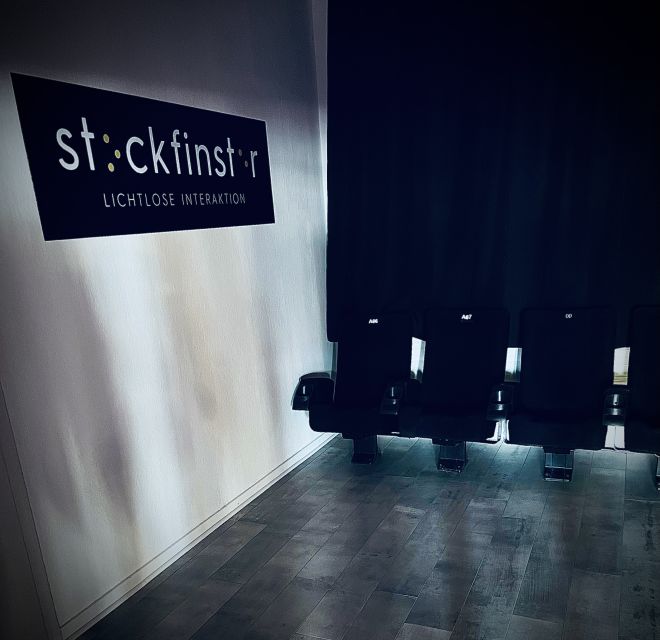
Before entering the dark rooms, you will need to put away items that can create light, distraction, or discomfort. Cameras, flashlights, cellphones, and jewelry are not allowed. This is practical rather than fussy: a glowing phone screen would change the activity for everyone, and jewelry can catch or snag as you move by touch.
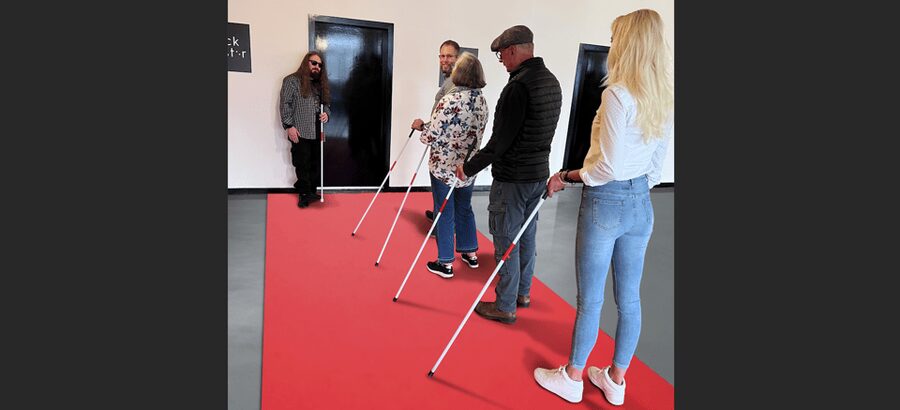
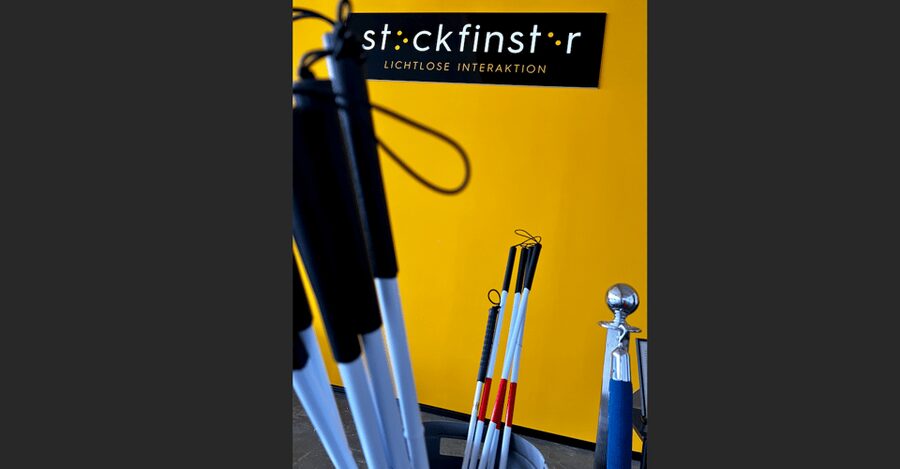
You will be equipped with a long cane. The cane gives you a way to probe the space ahead, locate surfaces, and build a basic sense of direction. Do not expect it to make the rooms easy. Its purpose is to give you a tool, while your guide provides the instructions and reassurance.
The small group limit matters here. With no visual way to identify the other people around you, a group of eight or fewer should feel easier to manage than a crowded attraction. You can listen closely to the guide and ask questions without competing with a large audience.
The tour is conducted in German. If you do not understand German well enough to follow spoken instructions, this is a serious consideration. The activity depends on verbal guidance, especially during movement-based scenes, so language is not a minor detail.
The first minutes: learning to trust sound and touch
The opening part of the tour helps reset your expectations. You enter a completely dark setting and begin to use your other senses in a more deliberate way. The guide leads you, but you also have to notice what is happening around you.
The human brain reacts strongly when visual information is removed. Sounds can seem closer or farther away than expected. A surface you cannot see may feel more important when your hand or cane finds it. Smells may become easier to notice because your attention is no longer pulled toward color, movement, and faces.
You may find the first minutes slightly awkward. That is useful. Most of us are accustomed to moving quickly and looking for confirmation at every step. In this setting, you must slow down and listen for direction. The experience asks you to accept that the guide knows the space better than you do.
This is also where the role of the guide becomes central. Your guide is blind or severely visually impaired and leads the group through the rooms with a long cane. The tour is not simply a dark room with recorded effects. Human instructions, timing, and conversation shape the experience.
Guide Florian has been singled out for his sympathetic manner and his ability to adapt to the group. That matters because people respond differently to darkness. Some will be curious, some uneasy, and some eager to test themselves. A guide who can adjust to the group makes the activity more useful and comfortable.
Everyday situations without the visual shortcut
The rooms recreate typical daily situations as well as less usual challenges. The exact details of every room are not specified, but the purpose is clear: you encounter settings where sight normally tells you what to do.
One example is a fictional road-crossing scene. On a normal street, you use traffic lights, vehicle positions, road markings, and the movement of other people to make decisions. In darkness, you need to depend on sound and the guide’s instructions instead.
This scene can be especially revealing because crossing a road is an ordinary task. You may not think about all the visual information involved until it disappears. A sound cue that seems obvious in a bright room can be hard to judge when you cannot see its source.
There has been one practical flaw with this section. A sound effect in the simulated street situation did not work properly during one visit. That does not erase the purpose of the exercise, but it may reduce the impact of that particular scene. You should go in expecting a thoughtful activity, not a perfectly polished theatrical production.
Other rooms focus on touch, smell, and hearing. The tour also includes taste, which is one reason the final dark bar fits the theme rather than feeling like an unrelated refreshment stop. With vision removed, a drink becomes part of the sensory experience as well as a chance to relax.
Same city, a completely different sort of afternoon:
- Torchlight tour of the old ironworks
★ 4.7 · 164 reviews - Oberhausen: SEA LIFE Oberhausen Entry Ticket
★ 4.2 · 150 reviews - Oberhausen: Legoland Discovery Center Ticket
★ 4.1 · 110 reviews - Hut tour Duisburg-Nord Landscape Park
★ 4.8 · 41 reviews
A sporting challenge in the dark
The tour is not limited to gentle listening exercises. A sporting challenge is included among the recreated situations, giving the activity a more active turn.
This section helps show how much visual information is built into physical movement. In normal conditions, you track an object, judge space, watch other people, and prepare for what comes next. In darkness, those habits no longer work in the same way.
You should not expect a full sports class or a competitive match. The point is to experience how a familiar physical task changes when you cannot see. It adds variety to the 90-minute route and prevents the tour from becoming a series of quiet descriptions.
The sporting element may also make the activity a good choice for families with older children, couples, and small groups of friends who want to discuss the experience afterward. Children under five are not allowed, and the lack of light may make the activity unsuitable for very young children even beyond that rule.
The dark bar after about 60 minutes
After roughly one hour, you arrive at the dark bar. The remaining time gives you a chance to sit, talk with your guide, and reflect on what just happened. You can have a glass of fritz-kola, a cup of coffee, or a cold beer.
This ending is one of the strongest parts of the format. The guide is no longer only directing you through an exercise. You can ask about the rooms, discuss moments that surprised you, and think about how your own assumptions affected the way you moved.
The conversation also keeps the experience from ending with a sudden return to ordinary life. You have time to process the difference between receiving directions and making independent choices. For an activity centered on inclusion, that discussion is important.
The bar is still in the dark, so do not expect a bright café break. That is part of the design. Your attention remains on voices, taste, and conversation rather than on the appearance of the room or the people around you.
What the $21 price really buys you
At $21 per person, this is priced below many guided city activities and well below a full-day attraction. The value comes from the combination of a 90-minute guided route, a small group, a specialized setting, and a conversation with a visually impaired guide.
You are not paying for a long list of sights. You are paying for a carefully controlled change in how you experience space. That makes the price worthwhile if you enjoy participatory activities or want a more meaningful way to think about accessibility.
The value is less clear if you prefer visual entertainment or want an activity you can document with photographs. Cameras and cellphones are not allowed, and the experience offers no visual souvenir. Its reward is what you notice during the tour and what you continue thinking about afterward.
The inclusion goal also gives the ticket a purpose beyond amusement. The activity places you in a position where you must ask for direction, depend on sound, and accept a different pace. That can make the cost feel justified for school groups, workplace teams, families, or anyone interested in accessibility.
Who should book, and who should think twice
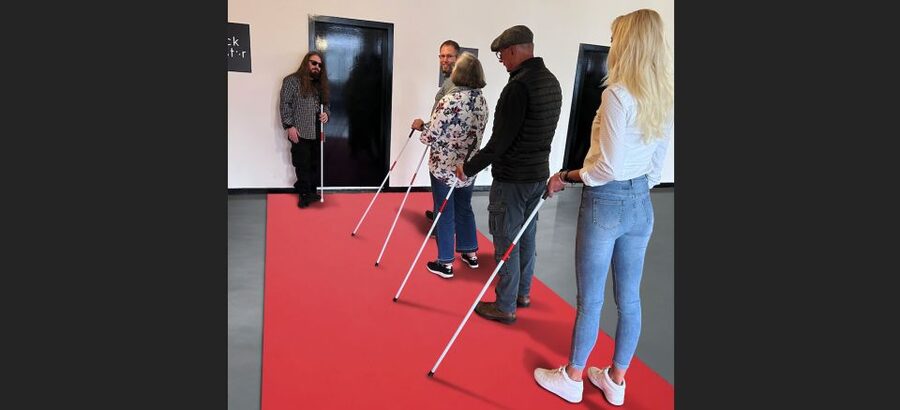
I would recommend Adventure Darkness to you if you want an unusual Ruhr Area activity that asks for active participation. It suits people who are comfortable following spoken instructions and who are willing to leave phones and cameras behind.
It is particularly fitting for:
- Couples looking for something more memorable than a standard meal
- Families with children aged five and older
- Small groups interested in inclusion and accessibility
- People who enjoy sensory activities rather than conventional sightseeing
- German-speaking visitors who want a guided experience with discussion
I would think twice if you dislike enclosed or completely dark environments. The darkness is not a brief feature. It is the basis of the entire tour, and you cannot rely on a quick look at your phone or flashlight.
The German-only format is another clear limitation. The guide needs to explain movement and situations as they happen, so basic conversational German may not be enough if you struggle with spoken instructions.
There is also conflicting information about wheelchair access. The activity details describe the tour as wheelchair accessible, but the suitability information says wheelchair users are not suitable for it. Because those statements do not agree, you should confirm the current arrangement directly with Stockfinster before booking if you use a wheelchair.
Booking details that can affect your plans
You must show the voucher on arrival, either in the booking app or as a printout. Appointments are required by phone with the voucher code, so buying a ticket does not appear to replace the need to arrange a time.
The voucher is valid for six months from purchase and applies only to the option purchased, with one voucher redeemed per person. This is useful if you want to plan ahead, but you should not leave the appointment until the last minute.
You can cancel up to 24 hours in advance for a full refund. If you cancel later or do not attend, no replacement date is guaranteed. The reserve-now-and-pay-later option can help if your Ruhr Area schedule is still changing, but you still need to keep track of the appointment once it is arranged.
Starting times vary, so check availability before building the activity into your day. The advertised duration is 1.5 hours, which makes it easy to pair with another Ruhr Area plan, but allow enough time to arrive calmly. Rushing into a no-light experience is not the best way to begin.
My practical verdict on Adventure Darkness
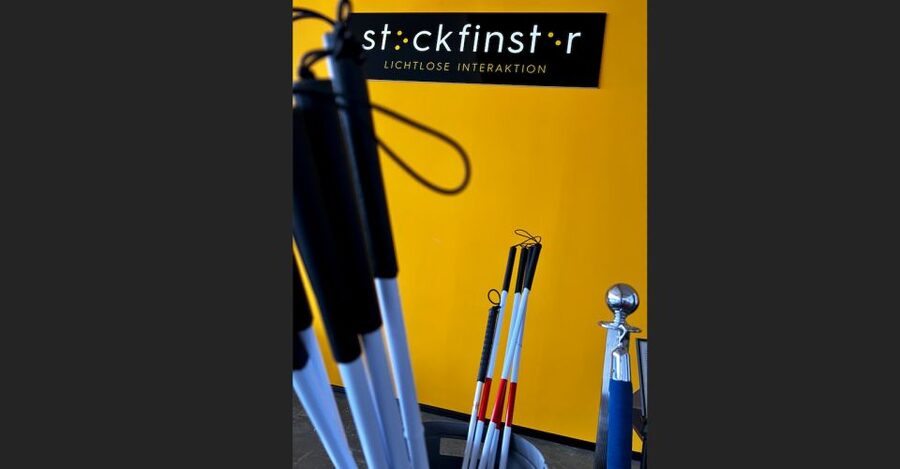
The strongest part of this tour is its directness. You are not merely told that people with severe visual impairment use different methods to move through the world. You are given a cane, placed in darkness, guided through familiar situations, and asked to rely on senses you often overlook.
The guide is the difference between a clever attraction and a worthwhile experience. Florian has been praised for being friendly and responsive, and that personal connection gives the tour warmth. The imperfect street sound effect is worth noting, but it is a small weakness in a format that depends more on human guidance than on technical spectacle.
Book it if you want a small-group activity with a clear purpose, you understand German, and you are comfortable surrendering visual control for 90 minutes. Skip it if you need a photo-friendly attraction, dislike darkness, or cannot follow spoken directions. For the right audience, $21 buys more than a novelty: it gives you a practical reason to reconsider how much of daily life is designed around sight.
FAQ
How long does Adventure Darkness last?
The tour lasts 90 minutes, or 1.5 hours.
Where does the tour take place?
Adventure Darkness takes place in Germany’s Ruhr Area.
How much does the activity cost?
The listed price is $21 per person.
Is the tour conducted in English?
No. The listed tour language is German.
Who leads the tour?
A blind or severely visually impaired guide leads the group using a long cane. One guide named in the available information is Florian.
What happens during the tour?
You move through completely dark adventure rooms that recreate everyday situations and special challenges. The activities use sound, touch, smell, and taste, and include a fictional road-crossing situation and a sporting challenge.
Is a drink included?
After about 60 minutes, you reach the dark bar, where you can chat with the guide over fritz-kola, coffee, or beer. The activity information includes the 90-minute tour, but it does not separately specify drink pricing.
Can I bring my cellphone or camera?
No. Cameras, cellphones, flashlights, and jewelry are not allowed.
Is the tour suitable for young children?
Children under five are not allowed to participate.
Is the tour wheelchair accessible?
The information is inconsistent. One section says the activity is wheelchair accessible, while another says it is not suitable for wheelchair users. If you use a wheelchair, confirm access with Stockfinster before booking.
Just added around Duisburg
- Schimmi tour pure (without catering)★ 4.9 · 19 reviews
- Oberhausen: Legoland Discovery Center Ticket★ 4.1 · 110 reviews
- Oberhausen: SEA LIFE Ticket and Behind the Scenes Tour★ 4.3 · 29 reviews
- Duisburg Landscape Park GPS treasure hunt in old ironworks★ 3.9 · 23 reviews
- Hut tour Duisburg-Nord Landscape Park★ 4.8 · 41 reviews
- Essen: Segway Tour Along the Baldeneysee★ 4.8 · 6 reviews
- Duisburg-Ruhrot: Historic Harbor Pub Tour★ 4.8 · 15 reviews
- Duisburg: Schimmi Tour goes City★ 4.8 · 11 reviews
Duisburg Tours, compared.
Oberhausen: HOUSE OF MAGIC – powered by Ehrlich Brothers
Read our review →
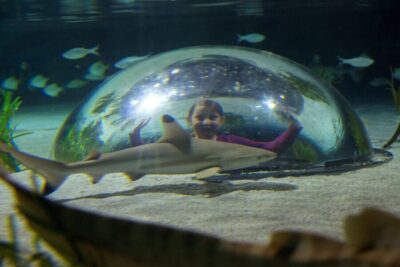
Oberhausen: LEGOLAND Discovery Centre and SEA LIFE Ticket
Read our review →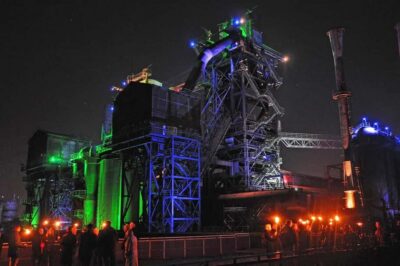


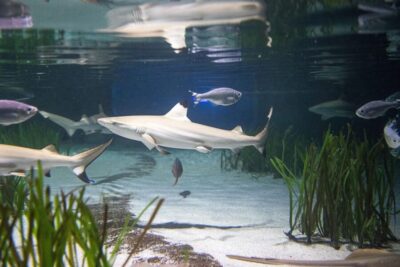
Oberhausen: SEA LIFE Ticket and Behind the Scenes Tour
Read our review →Browse the lists this tour appears in