
Review · DRESDEN TOURS
Dresden Small Group Walking Tour
Dresden’s old town is compact, but its story is anything but small. This 2-hour-15-minute walk links royal palaces, Baroque churches, a vast porcelain mural, and the reminders of the city’s destruction in February 1945. You get a useful first look at Dresden without spending the day inside museums.
I like the clear route from the Martin Luther Statue to the Zwinger, which helps you get your bearings quickly. I also like that the guide fills in the human story behind the rebuilt monuments, especially Dresden’s connection to Saxony and World War II. The main consideration is price: at $35.89, you should understand that this is connected to a pay-as-you-wish walking-tour model, and tipping may still be discussed.
Key points to know before you book
- A compact historic-center route: The tour covers ten major sights, and Dresden’s central landmarks sit close together.
- Strong focus on context: Guides including Nicola, Nicholas, James, and Dominique explain architecture, Saxon rulers, religion, and the 1945 bombing.
- No paid entries: You see the exterior and public areas of each stop, but the tour does not enter paid attractions.
- The meeting point is easy to spot: Look for the Martin Luther Statue at Neumarkt, with a yellow umbrella used as a group marker.
- A moderate walking level: The route lasts about 2 hours and 15 minutes and operates in all weather.
- A booking-fee question: The advertised price covers reservation and guide payment, but the experience follows a general pay-as-you-wish format.
Why this walk works well as a Dresden introduction
Dresden can feel confusing at first because its historic center is both old and new. Many buildings were rebuilt after the Second World War, sometimes using original plans, surviving pieces, and painstaking reconstruction. If you walk alone, you may see beautiful facades without grasping how much of the city was lost and rebuilt.
This tour gives you that missing frame. You begin among the religious and civic landmarks of Neumarkt, move through the royal quarter, reach the Elbe promenade, and finish at the Zwinger. The route is not a long-distance hike. The stops are close enough that the guide can spend time explaining what you are seeing rather than rushing you from one end of town to another.
I would treat it as an orientation walk, not a substitute for Dresden’s museums. You will not enter the Frauenkirche, the Royal Palace collections, the Semperoper, or the Zwinger museums as part of the experience. That limitation is also useful: you can decide which interiors deserve your time later.
The tour starts at 11:00 a.m. and is offered in English. The group can reach a maximum of 35 people, so this is small enough to remain manageable but not necessarily intimate. If you prefer a quieter, private walk, the operator can arrange a smaller private tour on request.
More walking tours in Dresden:
- Dresden: City & Semperoper Guided Walking Tour
★ 4.8 · 2,293 reviews - Dresden: Guided City Walk with a Cup of Coffee
★ 4.7 · 1,568 reviews - Görlitz: Old Town Guided Walking Tour
★ 4.7 · 723 reviews
Meeting Martin Luther at Neumarkt
The starting point is the Martin Luther Statue in Neumarkt, at the heart of Dresden’s rebuilt old town. This is a practical meeting place, but it also sets the tone for the walk. Luther’s role in the Protestant Reformation connects Dresden to the religious changes that reshaped Saxony and much of Germany.
Your guide uses the statue as a way into the city’s religious past, rather than treating it as a quick photo stop. The tour spends about ten minutes here, enough to establish who Luther was and why his legacy matters in a city with both Protestant and Catholic landmarks.
Finding the group can be the first challenge at any busy city square. A yellow umbrella is used to identify the guide, which is a simple but helpful touch. I would arrive a few minutes early, especially if you are unfamiliar with Neumarkt or are coming by public transport.
Frauenkirche and the rebuilt heart of Dresden
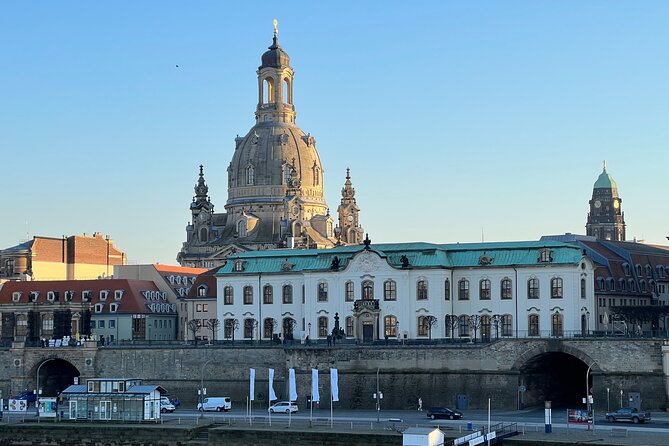
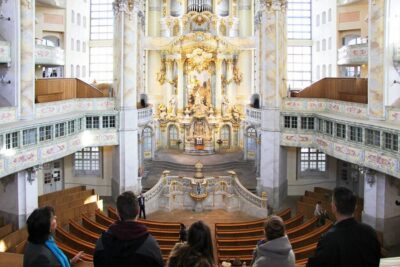
The Frauenkirche is likely to be one of the most memorable sights on the route. Its broad Baroque dome dominates Neumarkt, and the church’s story carries far more weight than its elegant exterior suggests.
The original church was built in the 18th century and destroyed during the Second World War. For decades, its ruins remained part of Dresden’s scarred center. The church was later reconstructed, with surviving stones incorporated into the new building. Your guide explains how the rebuilding became linked with reconciliation and the city’s attempt to face its past.
You spend about ten minutes here, with free admission to the stop. That means you should not expect a guided interior visit. Still, the outside story is important, especially if Dresden is your first stop in Germany and you want to understand why the city looks so carefully restored.
The strongest guides handle the 1945 bombing with care. Nicola has been praised for explaining the destruction in a clear and sensitive way, while other guides have been noted for keeping the presentation concise and easy to follow. This subject can become either too dry or too political, so the guide’s tone matters.
Neumarkt, where old and new Dresden meet
Neumarkt gives you a chance to look beyond the church. The square was heavily damaged during the war and has been rebuilt with Baroque-style buildings, shops, and cafes. Some visitors love the restored appearance; others may find the area more polished than genuinely old.
That tension is worth noticing. Dresden’s center is not simply a preserved medieval quarter. It is a modern reconstruction shaped by historical plans, changing needs, and debates about how much of the past a city should recreate. The guide can help you read those choices instead of accepting the square as an untouched old town.
The tour allows about ten minutes here. I like this pause because it gives you a sense of scale before the route moves into the royal district. You can also note cafes and shops for later, though food and drinks are not included.
A few more Dresden half-days to weigh up
- Dresden: Semperoper Tickets and Guided Tour
★ 4.7 · 12,102 reviews - Dresden: The Original Night Watchman Tour in Lantern Light
★ 4.6 · 6,653 reviews - Dresden: Semperoper and Old Town Tour
★ 4.8 · 5,735 reviews - Dresden: River Sightseeing Boat Cruise
★ 4.3 · 5,323 reviews
The Fürstenzug and Saxony’s royal procession
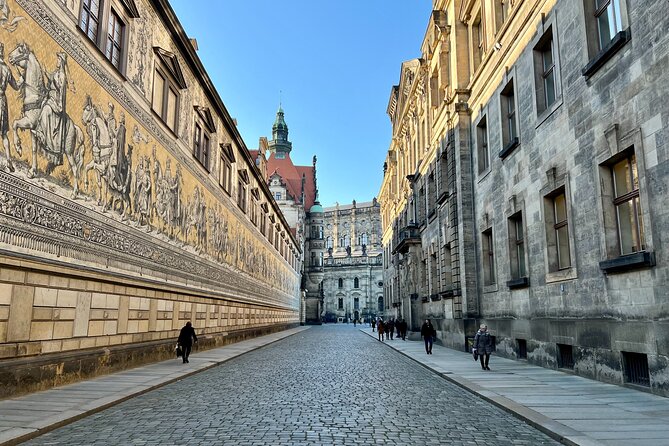
The Fürstenzug is one of Dresden’s most unusual public artworks. This porcelain mural stretches for more than 100 meters along the exterior of the former royal complex and shows rulers from the House of Wettin.
You spend about 15 minutes here, which is enough time to understand the basic sequence and admire the sheer length of the work. The mural is made from Meissen porcelain tiles, a material closely linked with Saxony. Its location makes it especially easy to appreciate because you can see a major piece of art without buying an entrance ticket or waiting in a museum queue.
This is also where the tour’s Saxon focus becomes clearer. The procession is not just a line of historical figures. It reflects the power, ambition, and ceremonial style of the rulers who shaped Dresden. A good guide points out how the mural connects to the castles, churches, and public spaces around it.
If you enjoy art, architecture, or dynastic stories, give this stop your attention. It is easy to walk past while looking for the next grand building, but the detail rewards a slower look.
Dresden Castle and the royal quarter
Dresden Castle, also called the Royal Palace, was home to Saxony’s electors and kings for centuries. From the outside, it presents a mix of architectural styles created by repeated changes over time. The building is not a single clean Baroque design. It is a record of the city’s royal development.
The tour spends around 15 minutes at the castle. You will learn about its role in Saxon government and court life, but you will not enter the paid collections. That is an important distinction because the interior museums hold some of Dresden’s major treasures.
I see this stop as a preview. If the royal story interests you, return later for a longer visit. The walk gives you the historical reason to go inside, while avoiding the time commitment of a full museum visit during your first hours in town.
The castle also helps connect the Fürstenzug with the rest of the center. The mural is not an isolated artwork. It sits beside the buildings associated with the dynasty it presents.
Altmarkt and the city’s civic center
Altmarkt is one of Dresden’s oldest squares and remains a place for markets, festivals, and public events. Its role is more civic than theatrical, which makes it a useful contrast to the royal buildings nearby.
You spend 15 minutes here. The guide explains how the square fits into Dresden’s growth and how public spaces served ordinary city life alongside court ceremony. Depending on the day, the square may feel quiet or active, but the tour does not depend on a specific market or event being present.
This is also a good point to notice how Dresden’s rebuilt center functions today. The city is not a museum piece. Residents use these squares for daily errands, gatherings, and seasonal activities. That balance between reconstruction and modern life is part of what makes the walk worthwhile.
Brühlsche Terrasse and the Elbe view
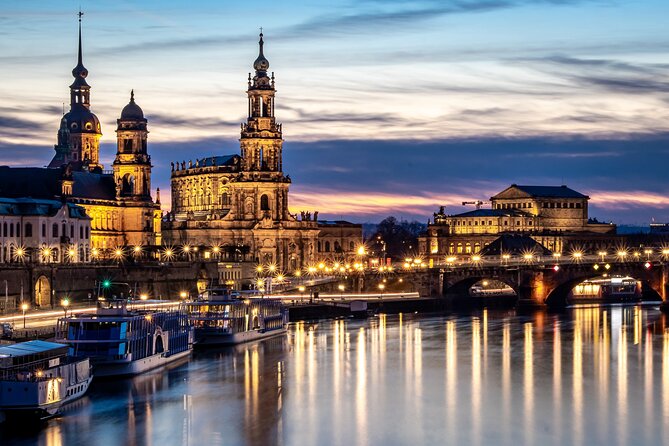
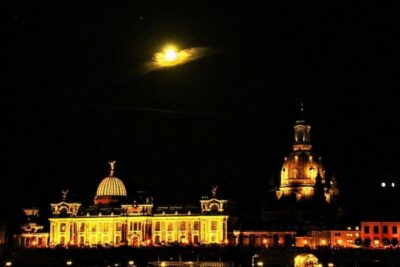
Brühlsche Terrasse is often called the Balcony of Europe, and the nickname makes sense once you reach the promenade. From here, you look toward the Elbe and across Dresden’s historic skyline.
The tour allocates about 15 minutes to this section. After several stops focused on buildings and rulers, the open view gives your eyes a break. It also shows why Dresden’s location mattered. The river, bridges, palaces, churches, and public promenades form a connected urban setting rather than a collection of separate attractions.
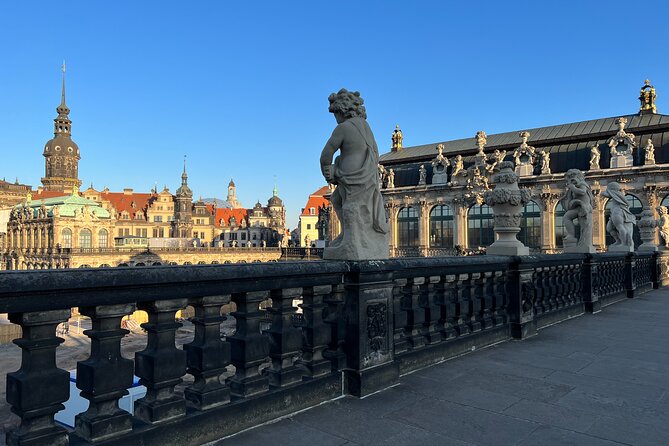
Statues and gardens line the terrace, adding another layer to the route. I would use this stop to take photographs, but also to listen to the guide’s explanation of how the promenade fits into Dresden’s history.
The terrace can be exposed to wind and rain. Since the tour runs in all weather, dress for conditions rather than relying on a sunny forecast. Comfortable shoes matter more than speed because the route includes repeated stops and time spent standing.
Hofkirche and the Catholic side of Saxony
The Katholische Hofkirche, or Dresden Cathedral, is a striking Baroque church near the river and royal quarter. Its presence may surprise you in a city strongly associated with Protestant Saxony.
That contrast gives the guide a chance to explain the political and religious pressures behind the church’s construction. The Catholic cathedral was tied to the ruling family and court, even though the surrounding region had strong Protestant roots. This is one of the most interesting historical turns in the walk because it links architecture with power.
You spend about 15 minutes here. The church is known for its ornate interior and Silbermann organ, but the tour does not include entry into paid attractions. Ask your guide what you should look for if you plan to return inside later.
The Hofkirche is also a good example of why a guide helps in Dresden. Without context, you see a beautiful church. With context, you see a statement about dynasty, faith, and political authority.
Semperoper, Dresden’s grand performance hall
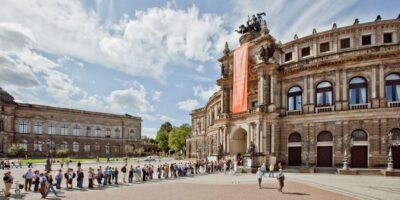
The Semperoper is one of Europe’s best-known opera houses, named for its architect Gottfried Semper. Its exterior is formal and impressive, but the building’s importance comes from more than its appearance. It represents Dresden’s long connection with music, court culture, and public performance.
The stop lasts about 15 minutes. You receive an exterior explanation rather than a performance or interior tour. If you want to attend an opera or see the inside, you will need to arrange that separately.
I like having the Semperoper included because it broadens the tour beyond war memorials and royal buildings. Dresden’s identity also rests on art and performance, and the opera house makes that clear.
Guides such as James have been praised for keeping the walk personal and engaging, while Nicola and Nicholas have been singled out for humor, clear explanations, and strong storytelling. Those qualities are especially useful at a stop like the Semperoper, where a list of dates would quickly become dull.
Finishing at the Zwinger
The final stop is the Dresden Zwinger, a Baroque palace complex known for its gardens, courtyards, art collections, and grand architecture. The tour ends near Sophienstraße, close to the Zwinger, which is a convenient place to continue exploring.
You spend about 15 minutes here. The guide gives you the setting and explains why the complex matters, but the walk does not include paid museum entry. Plan extra time if you want to visit the collections or inspect the gardens at a slower pace.
Ending here makes practical sense. The Zwinger is one of Dresden’s major sights, and you finish with a clear idea of what you may want to see next. The route also progresses logically from religious monuments to royal buildings, civic spaces, the river promenade, and the cultural quarter.
What the $35.89 price really means
The listed price is $35.89 per person. For a 2-hour-15-minute English walk with a local guide and ten central stops, that can be fair value if you want structure and historical explanation. You are paying for the reserved place, the guide’s time, and the convenience of joining a scheduled group.
There is an important wrinkle. This experience follows a general pay-as-you-wish walking-tour model. Some participants have been told that booking through a third-party platform adds a fee and that the guide or local operator receives only part of the payment. The advertised terms say the amount covers the reservation fee and guide payment, but the pay-as-you-wish format can still create confusion about tipping.
I would clarify the payment arrangement before booking if this matters to you. Ask whether the listed price is the complete expected cost and whether an additional tip is customary. You should not feel pressured into paying twice, and clear information makes for a better experience on both sides.
Because no food, drinks, or attraction admissions are included, bring water and budget separately for any museum visit. The value is strongest when you want an introduction and plan to choose your own paid sights afterward.
Group size, pace, and guide quality
The maximum group size is 35 people. That is not a private experience, and you may need to stay close to the guide in busy areas. The yellow umbrella helps, but it is still wise to keep an eye on the group when crossing squares or moving between stops.
The route requires moderate physical fitness. You will walk and stand for more than two hours, and the tour operates in all weather. Children must be accompanied by an adult, and service animals are allowed.
The guide makes the largest difference. Nicola, also referred to in some feedback as Nicholas or Nicolo, has received especially strong praise for humor, personal storytelling, and sensitive treatment of the bombing of Dresden. James has been described as engaging and personal, while Dominique has been praised for enthusiasm and detailed explanations.
There is also a useful caution. One account found the guide argumentative when political opinions differed, and another found political comments outside the main subject inappropriate. That does not define every guide or every departure, but it reminds you that a walking tour is a live conversation. If you want strictly neutral commentary, keep questions focused on the city’s documented history.
Who should book this Dresden walking tour?
I would recommend it to first-time visitors who want a fast, organized introduction before choosing museums and churches. It works particularly well if you have only a few hours in Dresden or are using the city as part of a larger Germany trip.
History and architecture fans will get the most from it because the route connects religious change, Saxon rulers, Baroque design, wartime destruction, and postwar rebuilding. You also get practical orientation for the old town, river promenade, and Zwinger area.
You may want something else if you expect interior access, a very small group, or a tour focused only on art. The walk stays outside paid attractions, and a group of up to 35 people will not feel as personal as a private guide.
Should you book it?
Book this tour if you want a clear first chapter to Dresden. The route covers the city’s essential central sights, and the best guides turn familiar monuments into a connected story about religion, royal power, war, rebuilding, and culture.
Before paying, make sure you understand the pay-as-you-wish arrangement and any expected tip. If that point is clear and the $35.89 price fits your budget, this is a solid way to get your bearings, identify the museums worth returning to, and see why Dresden’s rebuilt center deserves more than a quick photo stop.
FAQ
Where does the Dresden walking tour start?
The tour starts at the Martin Luther Statue in Neumarkt, Dresden, Germany.
What time does the tour begin?
The scheduled start time is 11:00 a.m.
How long does the tour last?
The tour lasts approximately 2 hours and 15 minutes.
Does the tour enter Dresden’s paid attractions?
No. The tour visits the sights from public areas and does not enter paid attractions.
Is the tour offered in English?
Yes. The tour is offered in English and includes a local expert guide.
Can I cancel for a full refund?
Yes. You can cancel at least 24 hours before the local start time for a full refund. Changes or cancellations made less than 24 hours before the start time are not accepted for a refund.
Just added around Dresden
- Walking Tour of Historic Dresden with a Christmas Touch. Small group tour.★ 4.5 · 9 reviews
- Tickets Dresden Transport Museum★ 4.0 · 23 reviews
- Top Full-Day Adventure: Bohemian & Saxon Switzerland from Dresden★ 5.0 · 68 reviews
- Winterland Tour to Bohemian and Saxon Switzerland from Dresden★ 5.0 · 22 reviews
- The Best of Bohemian and Saxon Switzerland Day Trip from Dresden★ 5.0 · 68 reviews
- Historic Dresden Small-Group Walking Tour in English★ 5.0 · 160 reviews
- 1.5 hours Segway Elbe Mini Tour★ 5.0 · 66 reviews
- Sightseeing tour by ConferenceBike★ 5.0 · 14 reviews
Dresden Tours, compared.
The Original Night Watchman Tour in Lantern Light
Read our review →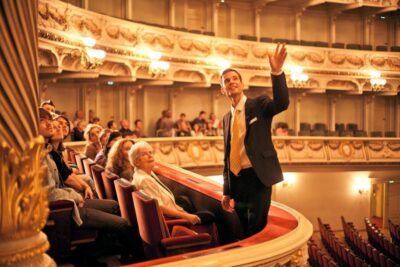


Browse the lists this tour appears in