
Review · DRESDEN TOURS
Dresden: Guided City Walk with a Cup of Coffee
Dresden’s old town is a compact lesson in power, destruction, rebuilding, and change. In 90 minutes, this walk takes you from the medieval Stallhof to the grand Baroque Zwinger, past the Frauenkirche and Semperoper, and into the political story of the 1989 Peaceful Revolution. The city’s dramatic mix of old and new gives this tour more substance than a simple photo stop.
I like the low $15 price, especially because you see Dresden’s main landmarks without spending time arranging separate visits. I also like the practical touch of local restaurant and leisure tips from the guide. The main catch is simple: the tour is in German only, and the coffee coupon should be confirmed before you leave, since it has not always been handed out.
Key points to know before you book
- A fast route through Dresden’s core sights: See the Frauenkirche, Semperoper, Zwinger, Dresden Castle, Fürstenzug, and Brühl’s Terrace in one walk.
- A tour with real historical range: The guide covers the Middle Ages, Renaissance, Baroque Dresden, East and West Germany, and the events of 1989.
- German-language guiding only: You need a good command of German to follow the stories and anecdotes.
- Digital audio support included: The audio system should make the guide easier to hear while the group moves through the old town.
- Coffee is part of the package: A free coffee coupon is included, though you should make sure it reaches you.
- Wheelchair accessible and flexible to book: You can cancel up to 24 hours ahead for a full refund and reserve without paying at once.
Why Dresden works so well on foot
Dresden’s historic center rewards a walking tour because many of its signature buildings sit close together. You are not spending half the time on a bus or moving between distant neighborhoods. Instead, the route links royal courtyards, monumental churches, opera architecture, a riverside terrace, and a famous porcelain mural.
That compact layout also helps you understand how Dresden was shaped. The old town is not just a collection of handsome facades. It shows how Saxony’s rulers used architecture to signal wealth, how war changed the city, and how reconstruction created fresh arguments about what an old center should look like.
The tour starts near Neumarkt, one of the city’s best-known squares. That is a useful place to begin because the Frauenkirche gives you an immediate sense of Dresden’s Baroque ambition. From there, the route moves through the royal complex and toward the Elbe, before circling back toward the church.
The walk lasts about 90 minutes. I would treat it as a strong orientation tour rather than a full visit to every building. You will see the major exteriors and hear their stories, but the schedule is not designed for long interior visits.
A few more Dresden half-days to weigh up
- Hamburg: Speicherstadt Walking Tour with Coffee Tasting
★ 4.6 · 360 reviews
Starting at Dresden Information in QF Passage
Meet your guide in front of Dresden Information, located in the basement of the QF Passage. This is near the Frauenkirche and Neumarkt, so it places you right in the heart of the old town from the first minute.
The precise meeting instructions matter here. Dresden’s center has several squares, arcades, and entrances close together, and a basement information office can be easier to miss than a large monument. Give yourself a little time to find the QF Passage rather than arriving at the last second.
The guide is a licensed, live German-speaking guide. No guide name is provided, so you should not book expecting a particular individual. What you can expect is a guide-led walk with historical explanation, small anecdotes, and practical suggestions for places to eat or spend time afterward.
A digital audio guide system is included. That is useful in a busy public square or when the group spreads out between stops. It does not change the fact that the tour is German only, but it should help you catch the commentary more clearly.
Stallhof and Fürstenzug: Dresden’s royal beginning
The first part of the route leads to Stallhof, the former stable yard connected with Dresden Castle. The setting helps you picture the courtly side of Saxony, where horses, ceremonies, and royal display were part of daily life around the palace.
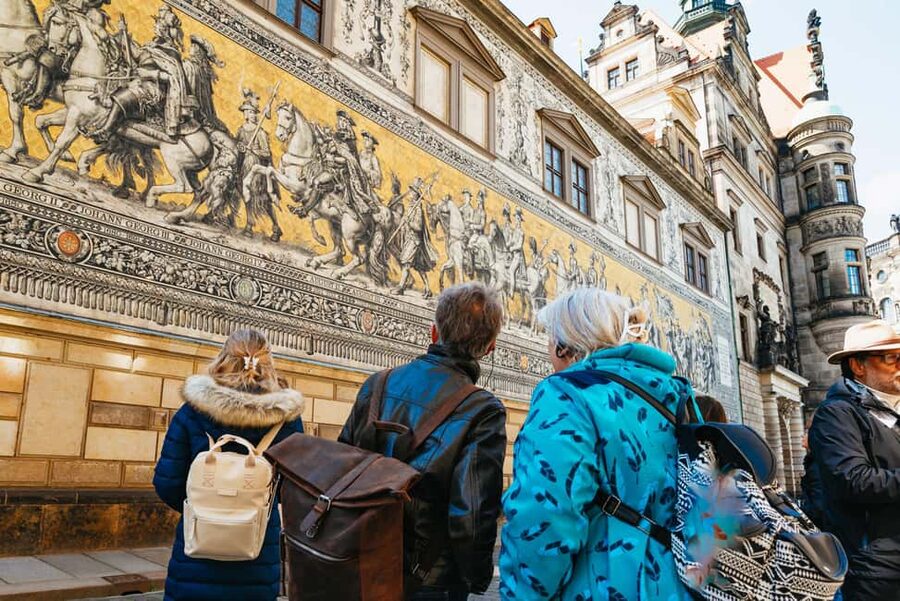
From Stallhof, the guide takes you to the Fürstenzug, or Procession of Princes. This long outdoor mural is one of Dresden’s most distinctive sights. It presents a procession of Saxon rulers and gives the tour a chance to explain the succession of princes, the role of the Wettin dynasty, and the way public art can turn a wall into a statement of power.
This stop is especially useful if you like history presented through objects and places rather than dates alone. The mural is easy to view from the street, and its scale makes it a memorable early stop. You can expect the guide to connect the rulers shown there with the growth of Dresden as a political and cultural center.
The drawback is that the tour cannot linger everywhere. The Fürstenzug rewards a closer look, so note details that catch your eye and return later if you want time for photographs or a slower inspection.
Brühl’s Terrace and the Elbe viewpoint
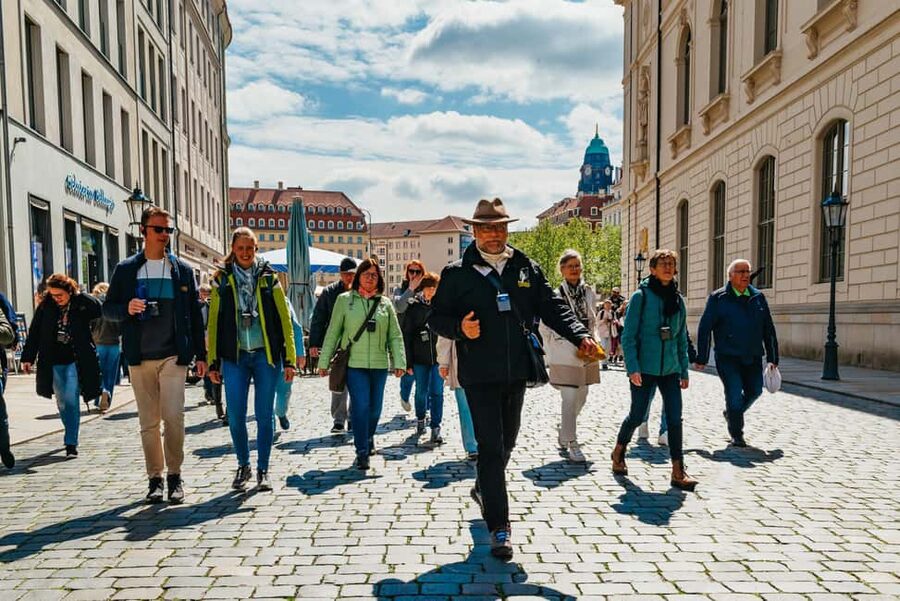
The route continues to Brühl’s Terrace, the broad riverside promenade often associated with Dresden’s grand civic image. The terrace gives you a change of pace after the enclosed courtyards and castle buildings. You can look out toward the Elbe and see how the river helped shape Dresden’s position and appearance.
This is one of the tour’s best places to pause and connect the architecture with the wider city. From the terrace, Dresden feels less like a group of monuments and more like a city arranged around water, bridges, and open space.
The guide also uses the walk to explain Dresden’s changing political story. The commentary reaches beyond medieval and Baroque subjects to include the division of Germany and the Peaceful Revolution of 1989. That wider frame matters. Dresden’s old town is often presented as a royal showpiece, but the city also carries the memory of life in former East Germany and the public pressure that helped bring political change.
You will not get a full modern German history course in 90 minutes. You will, however, hear enough to place the buildings in a story that runs from princely rule to the 20th century and reunified Germany.
More walking tours in Dresden:
- Dresden: City & Semperoper Guided Walking Tour
★ 4.8 · 2,293 reviews - Görlitz: Old Town Guided Walking Tour
★ 4.7 · 723 reviews - Dresden: Complete Walking Tour with Frauenkirche Visit
★ 4.8 · 700 reviews - Dresden: Walking Tour with a Night Watchman and Meal
★ 4.4 · 487 reviews
Semperoper: Dresden’s grand stage
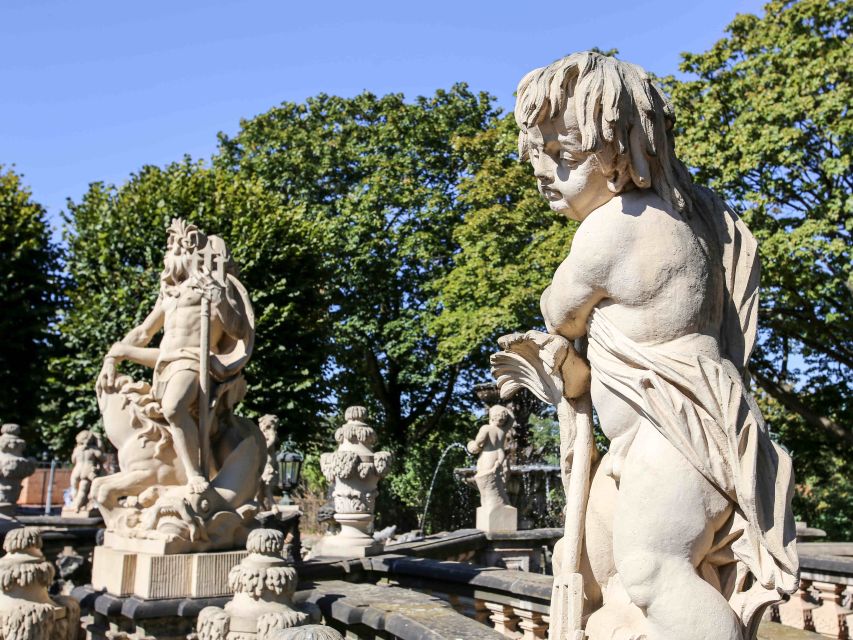
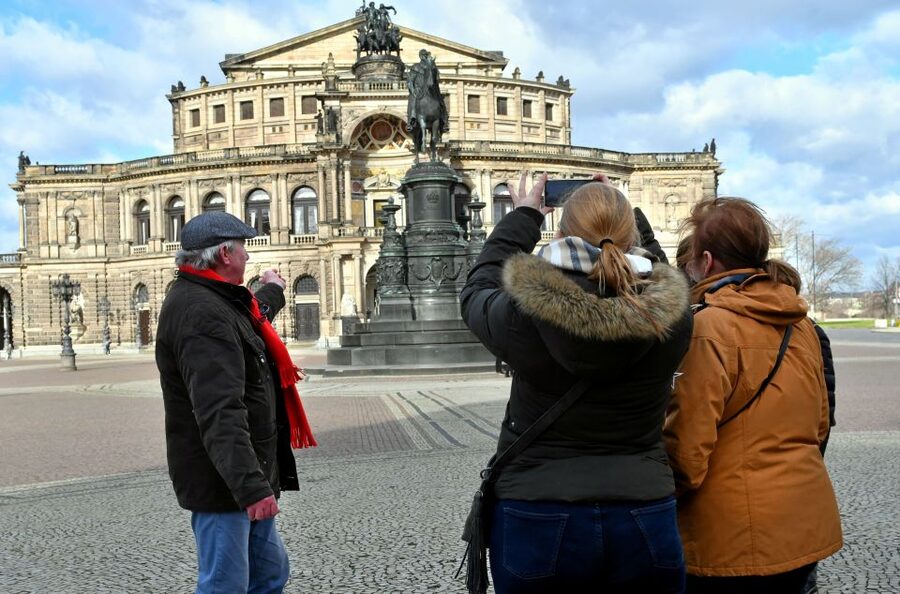
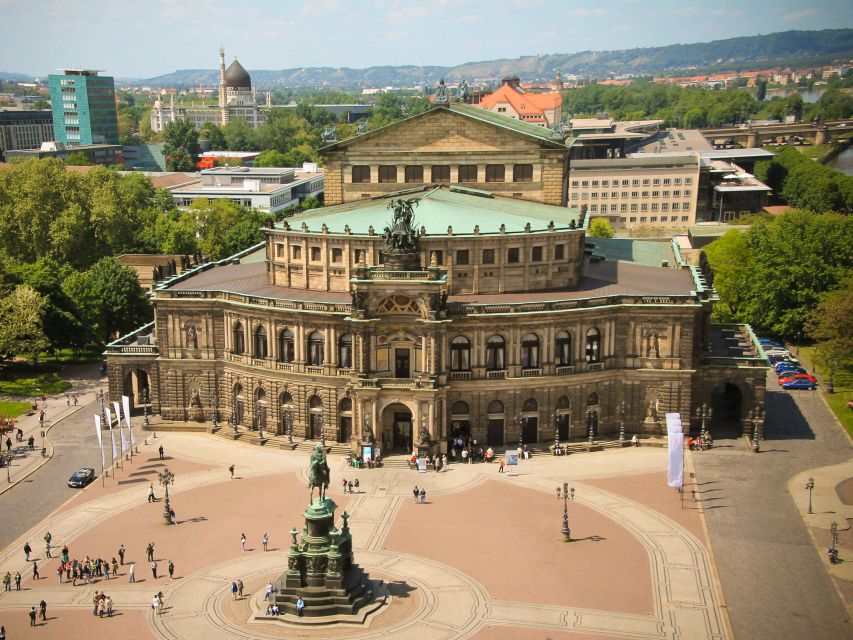
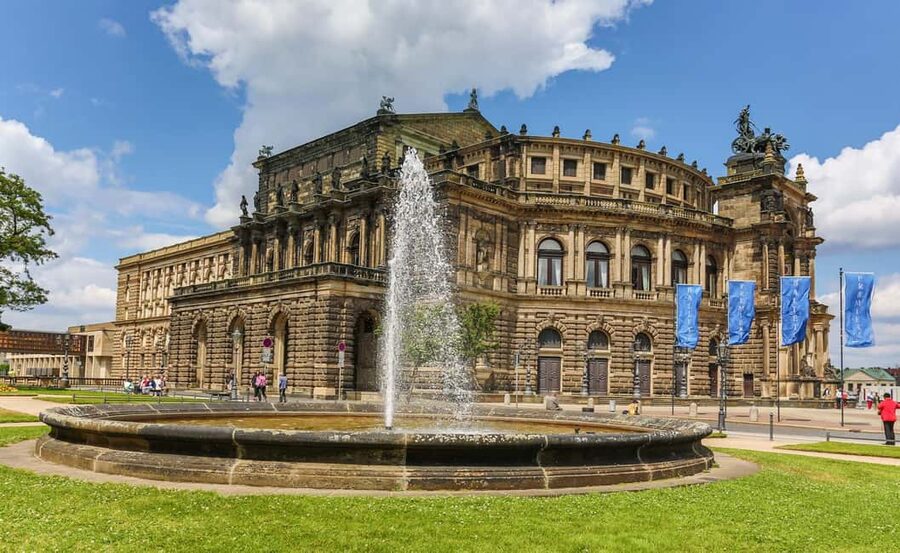
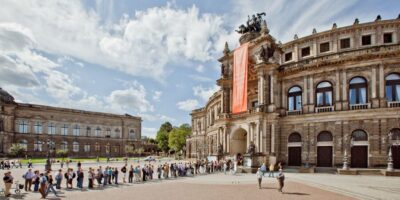
Next comes the Semperoper, Dresden’s famous opera house. Its scale and formal design fit the city’s Baroque and courtly image, but the building also represents Dresden’s long interest in music, theater, and public culture.
The outside view is the main focus on this walk. If you want an opera-house interior visit, you will need to make a separate plan. This tour provides orientation and background, not a performance or an extended building tour.
I find this stop valuable because it shows that Dresden’s grandeur was not limited to churches and royal residences. The city’s rulers wanted a cultural capital as well as a political one. The opera house gives the guide a natural opening to discuss the city’s artistic reputation and the continuing role of major cultural buildings.
Keep your expectations practical. You will have time to take in the facade and hear the explanation, but not to explore every architectural detail before the group moves on.
Zwinger: Baroque theater in stone
The Zwinger is likely to be one of the visual high points. This Baroque complex is full of curves, ornament, pavilions, courtyards, and carefully staged views. It was designed to impress, and it still does the job.
A guide adds useful context here because the Zwinger can otherwise seem like a beautiful maze of decorative stone. You can learn how Dresden developed during the Baroque period and how royal architecture was used to project status, confidence, and taste.
The word Baroque makes more sense when you see the Zwinger in person. The style is not shy. It favors movement, decoration, symmetry, and theatrical effect. Compared with the darker medieval subjects discussed earlier, this part of the walk shows Dresden at its most confident and extravagant.
The tour visits the complex as part of the city route, so plan on an exterior introduction rather than a museum visit. The Zwinger contains collections that deserve separate time, but this activity is designed to give you the setting and the story before you decide what else to see.
Dresden Castle and the Residenzschloss

Dresden Castle, also known as the Residenzschloss, brings the route back to the center of royal power. The building connects several periods of the city’s development, making it a good place for the guide to tie together the medieval court, Renaissance influence, and later Baroque expansion.
The castle area also helps explain why Dresden’s old town feels so concentrated. The royal residence, religious buildings, ceremonial yards, and cultural institutions were placed within a small area. A short walk can take you from a stable yard to a processional mural, then to a palace, a cathedral, and an opera house.
You should separate the walking tour from a museum visit. Dresden Castle is home to important collections, but the 90-minute experience does not promise entry into those displays. If you want to see the Green Vault or other castle interiors, reserve additional time and check admission arrangements separately.
The benefit of seeing the castle with a guide is the sense of connection. Instead of viewing it as one more grand facade, you begin to see it as the center of the city’s political and ceremonial life.
Taschenbergpalais, the cathedral, and Augustus Bridge
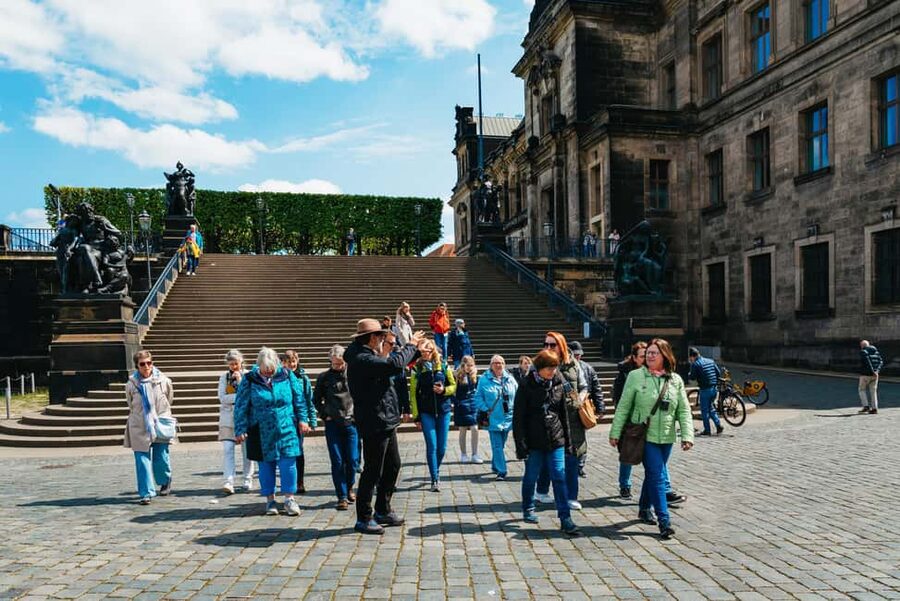
After the castle area, the route passes Taschenbergpalais and continues toward Dresden Cathedral. These stops add another layer to the royal quarter, showing how palaces and religious buildings were woven into the same urban stage.
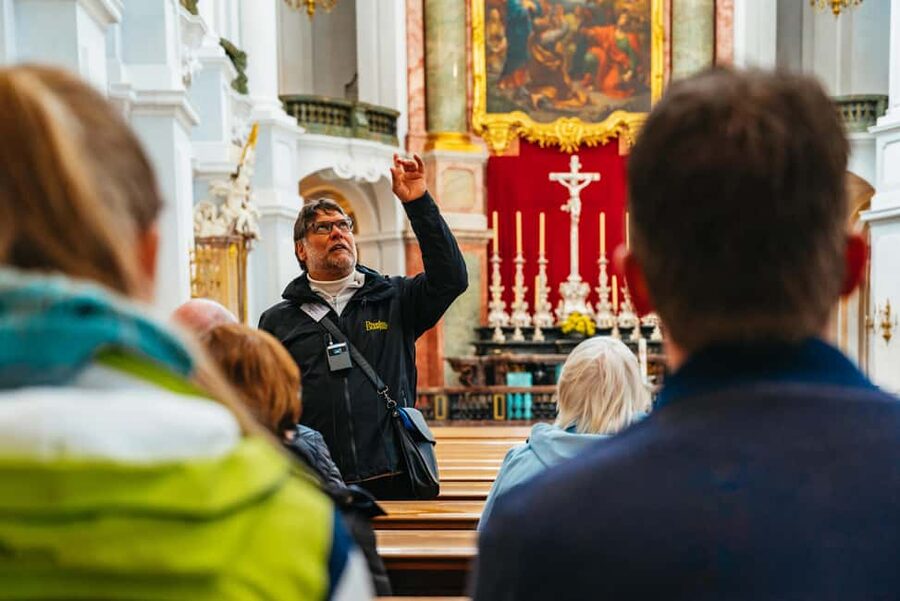
Dresden Cathedral is particularly useful for understanding the close relationship between court and church. The building’s position near the castle and other major landmarks makes the old town feel carefully composed, with each institution given a prominent place.
The walk then takes you toward Augustus Bridge. The bridge provides a visual link between the old town and the Elbe, and it helps you understand Dresden’s position on both sides of the river. Even without a long bridge stop, the route gives you a broader sense of how the center fits together.
The exact order and amount of time at each point can vary with the guide and group. That is normal for a city walk. You should expect a moving explanation with short stops, not a fixed museum-style presentation.
Frauenkirche and the closing view
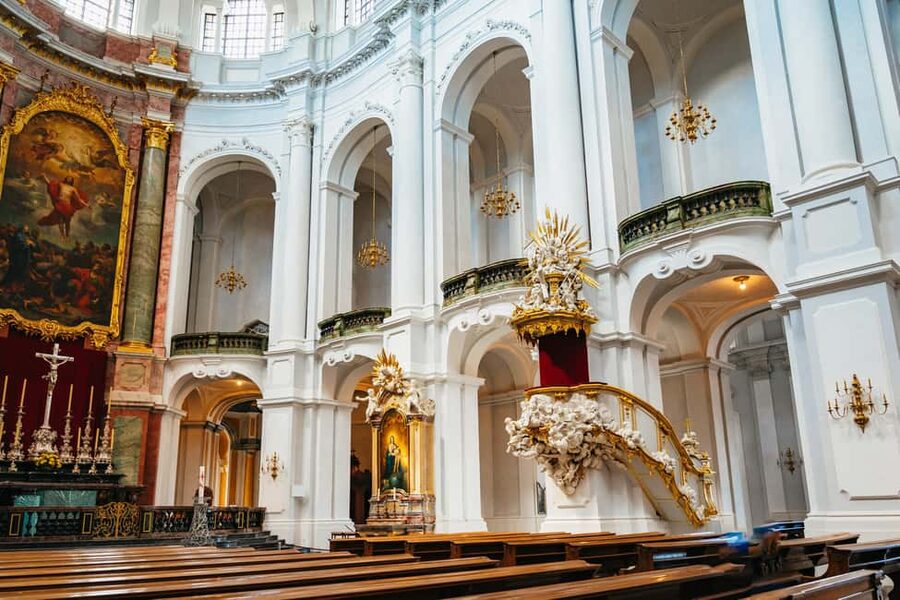
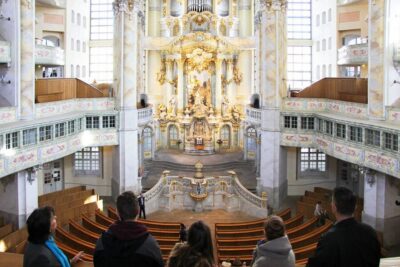
The route finishes near the Frauenkirche at An der Frauenkirche. The church is Dresden’s defining landmark, with its large stone dome and prominent place on Neumarkt. Seeing it at the end gives the walk a strong visual return to where the city experience began.
The Frauenkirche also carries the weight of Dresden’s wartime destruction and postwar rebuilding. Its story fits the tour’s wider theme: Dresden is both an old royal city and a modern city that has had to decide how much of the past to restore, how much to leave visible, and how new buildings should fit beside historic ones.
The supplied meeting information also says the activity ends back at the meeting point, while the route description places the finish near Frauenkirche. Since the starting point is in the same general Neumarkt area, this is unlikely to create a major problem, but you should confirm the exact end point with the guide if you have a tight next appointment.
What the $15 price really gives you
At $15 per person, this is an inexpensive way to get your bearings in Dresden’s old town. You are paying for a live guide, a structured route, an audio system, and a coffee coupon. For a first morning or first afternoon in the city, that is solid value.
The value comes less from admission savings than from interpretation. Most of the major sights on the route are visible from public spaces, so you are not buying a bundle of museum tickets. You are paying to understand what you are looking at and how the buildings fit together.
The coffee is a pleasant extra, but I would not make it the reason to book. The coupon has occasionally failed to reach the person who booked, so check for it before the tour ends. If it is important to you, ask the guide directly.
The tour also includes skip-the-ticket-line wording, but the supplied details do not identify a specific paid attraction or guaranteed interior entry. Read that benefit as a convenience connected with the activity, not as a promise of fast access to every Dresden monument.
Who should book this Dresden walk
I would choose this tour if you have limited time and want the central sights explained in German. It suits people who enjoy architecture, city history, royal stories, and the political changes that shaped modern Germany.
It is also a good choice if you are arriving in Dresden without a plan. The route introduces the main old-town landmarks, and the guide’s restaurant and leisure tips can help you decide what to do afterward.
Families can book up to four children’s tickets per adult. The route is wheelchair accessible, which makes it more broadly usable than many old-town walks, though historic paving and public streets can still affect the pace.
I would look elsewhere if you need English guiding, long interior visits, or a specialized art-history tour. The German-only format is the key limitation. You should also avoid expecting a slow photographic walk, since the route covers many important sights in a short time.
Booking, timing, and simple preparation
The duration is 1.5 hours, with starting times shown when you check availability. A morning departure can work well as an introduction before museums open or before you choose a longer afternoon activity. An afternoon walk can help you make sense of the city after arriving by train or settling into your hotel.
Wear comfortable shoes. The tour is on foot through the historic center, with several stops and transitions between squares, courtyards, terraces, and streets. The digital audio system should help with hearing, but it does not remove the need to stay with the group.
You can reserve now and pay later, which is useful if your Dresden plans are still shifting. Cancellation is free up to 24 hours before the start for a full refund. Those terms are practical, but I would still check the selected time carefully because availability and departure times can change.
Should you book it?
Book this Dresden walking tour if you want a short, affordable introduction to the old town and can follow German comfortably. It covers an impressive list of sights, but its real strength is the way it links medieval court life, Baroque display, wartime destruction, East German experience, and the events of 1989.
The $15 cost makes it an easy choice for many first-time visitors. Just treat the coffee as a bonus, confirm the coupon, and plan separate visits if you want to enter the castle, opera house, cathedral, or museum collections. For English speakers, the language barrier is decisive. For German speakers seeking a focused introduction with useful local advice, this is a practical way to begin Dresden.
FAQ
Where does the Dresden walking tour start?
Meet the guide in front of Dresden Information in the basement of the QF Passage.
Where does the tour finish?
The route description places the finish near Frauenkirche at An der Frauenkirche, 01067 Dresden. The meeting information also says the activity ends back at the meeting point, so confirm the exact final point with the guide.
How long does the activity last?
The guided walk lasts 1.5 hours.
What language is the tour in?
The live tour is available in German only.
What sights are included in the route?
The route includes Stallhof, Fürstenzug, Brühl’s Terrace, Semperoper, Zwinger, Dresden Castle, the Residenzschloss, Dresden Cathedral, Taschenbergpalais, Augustus Bridge, and Frauenkirche.
Is a guide included?
Yes. A live licensed tour guide leads the walking tour.
Is an audio system provided?
Yes. A digital audio guide system is included.
Is coffee included?
Yes. A free coffee coupon is included. Check with the guide before the tour ends, since the coupon has not always been handed out.
Is the tour wheelchair accessible?
Yes. The activity is listed as wheelchair accessible.
Can I cancel for a refund?
Yes. You can cancel up to 24 hours in advance for a full refund.
Can I pay later?
Yes. The activity offers reserve now and pay later booking.
How many children’s tickets can be booked per adult?
A maximum of four children’s tickets can be booked per adult.
Just added around Dresden
- Freiberg: Scavenger Hunt Self-Guided Walking Tour★ 4.6 · 7 reviews
- Radebeul: Scavenger Hunt Self Guided Tour★ 4.6 · 9 reviews
- Discover Germany’s most exciting photo illusion world!★ 4.7 · 26 reviews
- Dresden: New Year’s Eve Concert at the Zwinger★ 4.8 · 20 reviews
- Dresden: Zwinger Skip-the-Line & 2-Day Hop-On Hop-Off Bus★ 4.5 · 160 reviews
- Dresden: Guided City Walk and Panometer Entrance Ticket★ 4.5 · 176 reviews
- Dresden: Shared Small Group Walking Tour in English★ 4.8 · 172 reviews
- Dresden with a touch of Xmas: English small group tour★ 4.7 · 41 reviews
Dresden Tours, compared.
The Original Night Watchman Tour in Lantern Light
Read our review →



Browse the lists this tour appears in