
Review · DRESDEN TOURS
Dresden: Sightseeing Walking Tour in English
Dresden’s old town is a remarkable lesson in how a city can be destroyed, rebuilt, and still feel rooted in its past. In 90 minutes, this English-language walk links the Frauenkirche, Zwinger Palace, Semper Opera House, Royal Castle, and the riverfront into one clear story.
I like the small-group format, which makes it easier to ask questions, and I like the local angle: guides such as Franziska add personal memories of Dresden after World War II. The main drawback is simple: 1.5 hours gives you a brisk introduction, not enough time to visit every major building inside.
Key points at a glance
- A compact old-town route: See Newmarket Square, the Frauenkirche, Palace Stables, Procession of Princes, Brühl Terrace, and Augustus Bridge.
- History beyond Baroque splendor: The guide covers medieval Dresden, the Reformation, wartime destruction, and the peaceful revolution of 1989.
- A local guide’s point of view: Franziska has been praised for her warm manner, patience, and detailed explanations.
- A rare Zwinger detail: The tour includes a visit to the mysterious Nymphenbad in the Zwinger Palace.
- Useful after-tour advice: Ask for suggestions on restaurants, bars, shopping, nightlife, and local events.
- Good value for a short orientation: At $15 per person, this is an inexpensive way to get your bearings before exploring alone.
Why this 90-minute walk works well in Dresden
Dresden can feel confusing at first because its best-known buildings sit close together, yet each belongs to a different chapter of the city’s story. A good guide helps you see the links. This walk is built around that idea.
You begin with medieval Dresden, move through the turbulence of the Reformation, then reach the grand Baroque court of Augustus the Strong. From there, the story turns darker, covering the destruction of Dresden and the city’s later rebuilding. The final historical thread reaches 1989, when peaceful demonstrations helped change East Germany.
I like this range. Many city walks linger on royal architecture and leave the harder parts vague. This one gives the destruction of Dresden and the events of 1989 a clear place in the route. You are not just looking at ornate façades. You are learning why the city looks the way it does today.
The tour is also short enough to fit neatly into a first afternoon. At $15, it costs less than many longer sightseeing activities, while giving you a useful map of the central old town. You should think of it as an orientation walk, not a full museum tour.
More walking tours in Dresden:
- Dresden: City & Semperoper Guided Walking Tour
★ 4.8 · 2,293 reviews - Dresden: Guided City Walk with a Cup of Coffee
★ 4.7 · 1,568 reviews - Görlitz: Old Town Guided Walking Tour
★ 4.7 · 723 reviews
Meeting your guide at QF Passage
The meeting point is the seating area of the Tourist Information in the basement of QF Passage. This is worth noting because Dresden’s central squares can be busy, and a clear indoor meeting point is easier than waiting beside a famous statue or church.
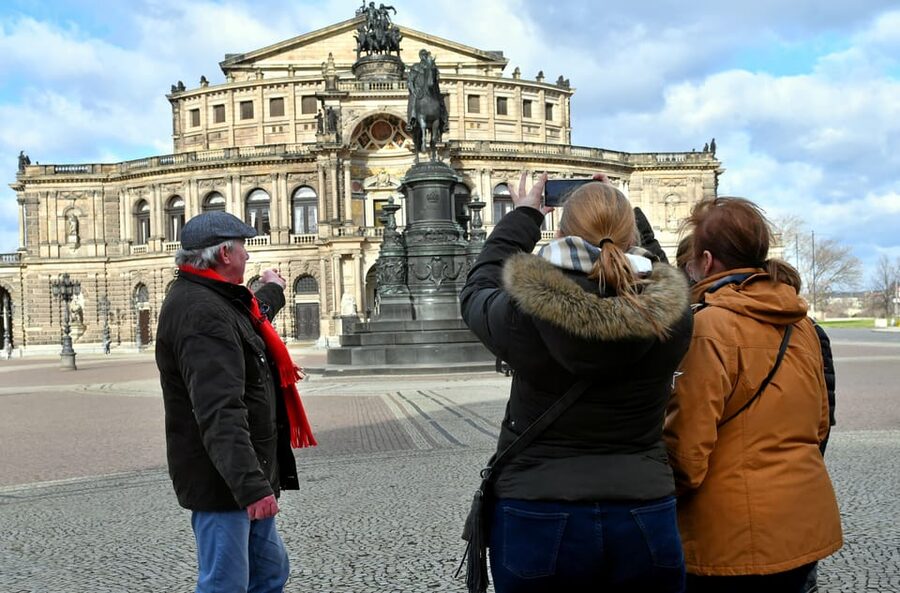
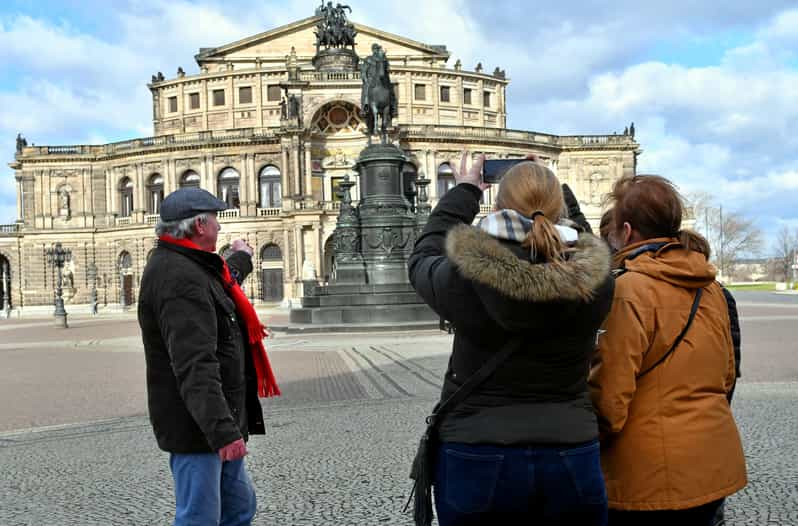
The guide leads in English, and the activity is wheelchair accessible. The group is described as small, though no exact maximum is given. That matters here. Dresden’s historic center has many details packed into a small area, and a smaller group lets you stay close to the guide and ask questions without shouting across a crowd.
Recent guide names include Franziska, with one reference spelling the name Franceska. The strongest praise centers on her calm, friendly approach and ability to explain Dresden in detail. A guide who welcomes questions is especially useful on this route, since the city’s history includes complicated subjects such as war, rebuilding, religion, and life under East Germany.
Newmarket Square and the Frauenkirche
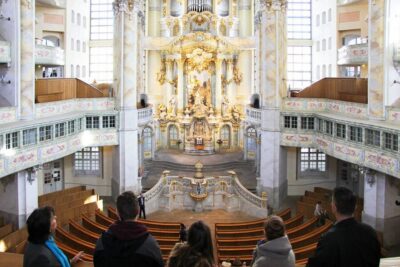
Newmarket Square, or Neumarkt, is the natural opening point for Dresden’s old town. The square is dominated by the Frauenkirche, or Church of Our Lady, whose pale stone dome gives the area its familiar shape.
Here, you get the first clear look at Dresden’s Baroque character. The church and surrounding buildings create a carefully composed scene, but the square also carries the memory of the city’s destruction. The guide’s explanation helps you understand that the old-looking setting is tied to both historic design and later reconstruction.
The Frauenkirche is not simply a grand church to photograph. It is one of the places where Dresden’s past and present meet most directly. The tour does not promise an interior visit, so plan to return on your own if you want more time inside.
Newmarket Square is also a practical place to listen. You can take in the main buildings without walking far, while the guide sets up the larger story of Dresden’s growth and changing fortunes. You will likely want photos here, but keep your attention on the explanation as well.
Palace Stables and the Procession of Princes
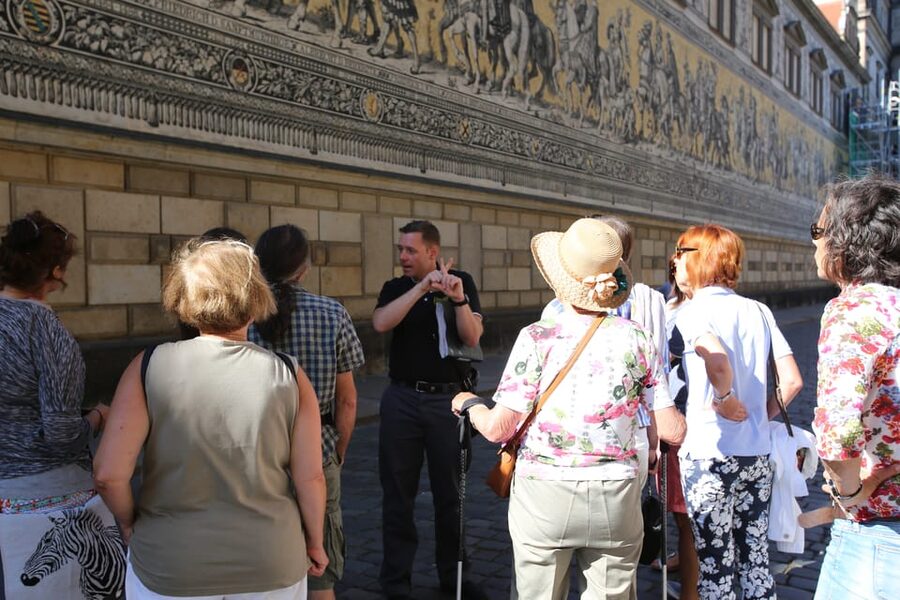
From the square, the route continues toward the Palace Stables and the Procession of Princes. These stops reveal the power and ceremony of Saxony’s rulers.
The Procession of Princes is especially useful for understanding how Dresden presented its ruling dynasty. The long mural shows members of the House of Wettin in a formal procession, turning a city wall into a visual record of Saxon rule. Your guide can point out why the work matters rather than leaving you to view it as a decorative backdrop.
The Palace Stables add another reminder that this was a court city. Dresden’s grand buildings were designed for royal display, movement, and ceremony. The walk makes those connections easier to see because you move between them on foot instead of viewing each attraction in isolation.
This section may appeal most to you if you enjoy architecture and political history. It is less about entering a single sight and more about reading the public face of the old royal center.
A few more Dresden half-days to weigh up
- Dresden: Semperoper Tickets and Guided Tour
★ 4.7 · 12,102 reviews - Dresden: The Original Night Watchman Tour in Lantern Light
★ 4.6 · 6,653 reviews - Dresden: Semperoper and Old Town Tour
★ 4.8 · 5,735 reviews - Dresden: River Sightseeing Boat Cruise
★ 4.3 · 5,323 reviews
The Zwinger Palace and its Nymphenbad
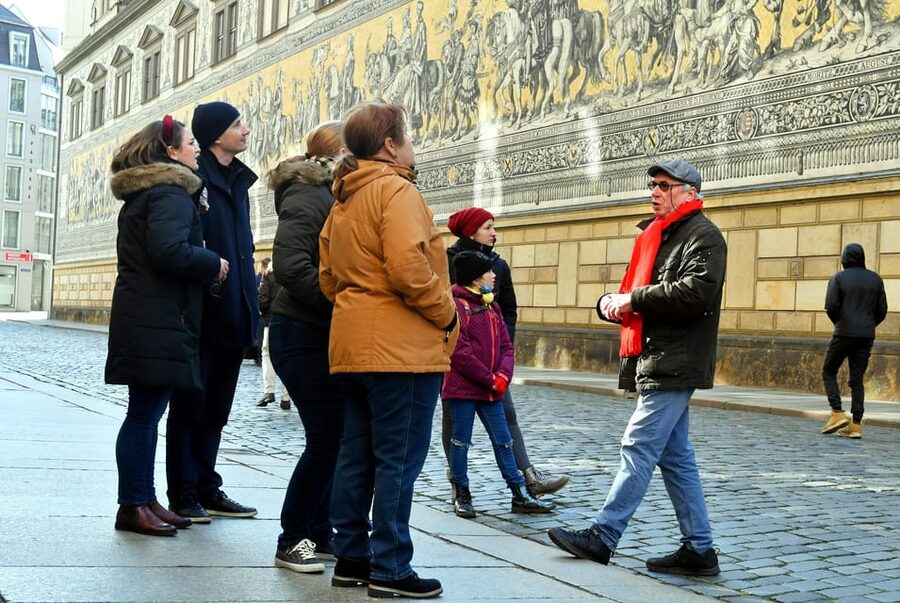
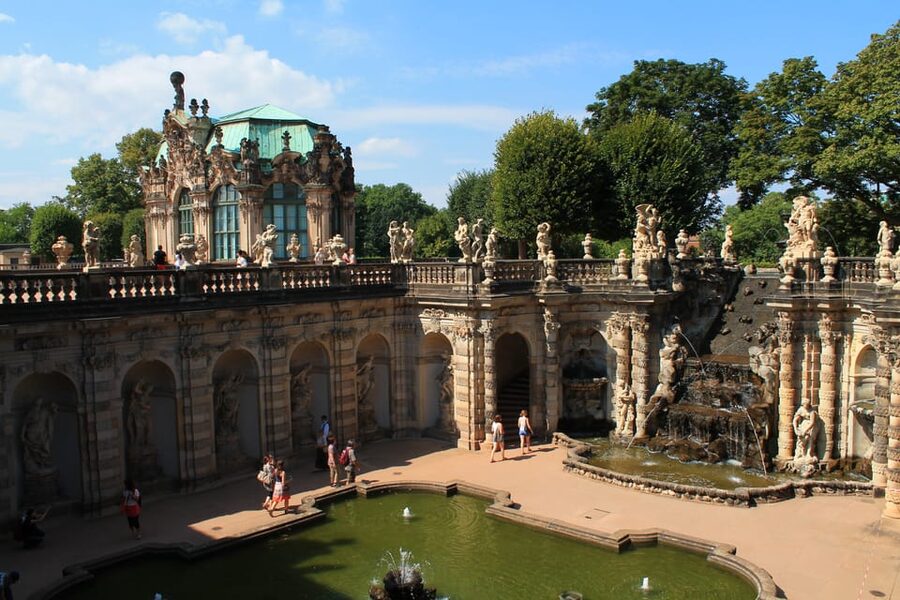
The Zwinger Palace is one of Dresden’s most elaborate Baroque spaces. Its courtyards, galleries, sculpture, and decorative details show the court’s taste for spectacle. The tour includes a visit to the Nymphenbad, a lesser-known feature that adds something different from the usual quick look at the main courtyard.
The Nymphenbad is a decorative fountain area associated with mythological figures and water. Calling it mysterious is fair, since it is not the first detail most people notice at the Zwinger. A guide can help you find the feature and explain its place within the palace design.
I like this inclusion because it gives the walk a small discovery of its own. You are not only ticking off the Zwinger as one of Dresden’s big sights. You are also seeing a specific detail that you might miss while hurrying between the palace’s better-known views.
Do not expect a full museum visit here. The Zwinger houses major collections, but this activity is a walking tour of the city, not a ticketed tour of every interior. If you want the Old Masters Gallery or other museums, set aside separate time.
Semper Opera House and the Catholic Cathedral
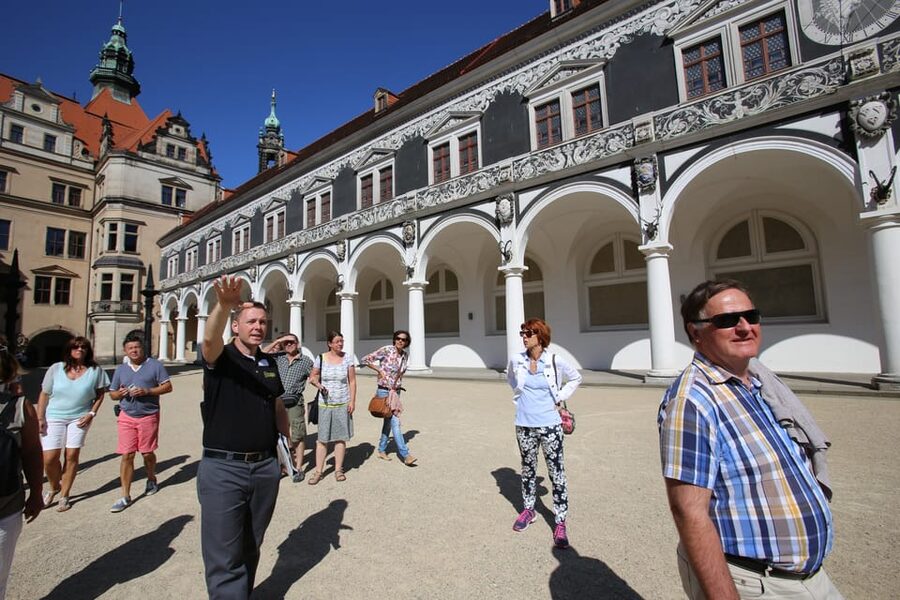
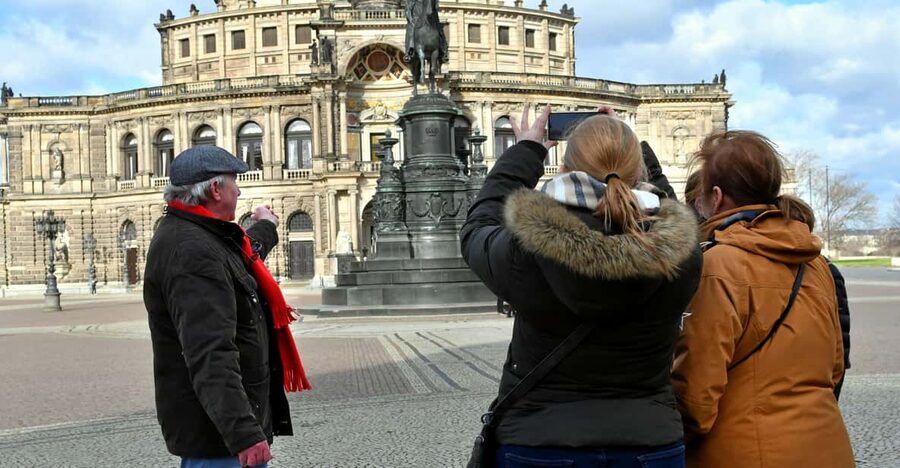
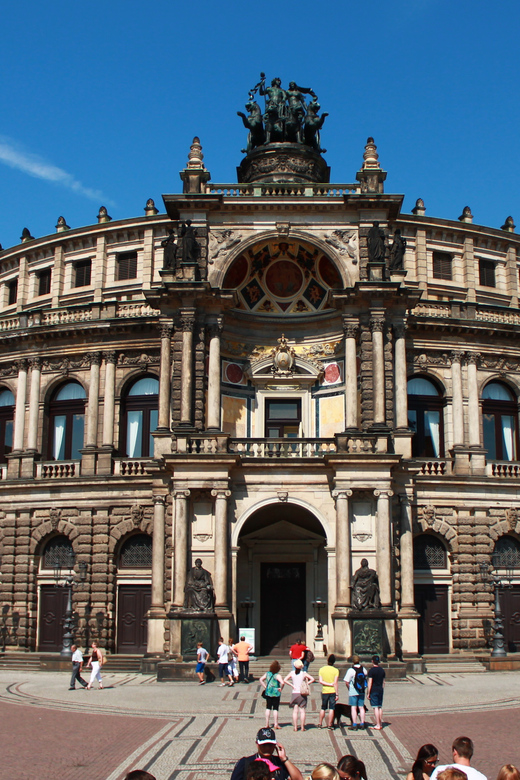
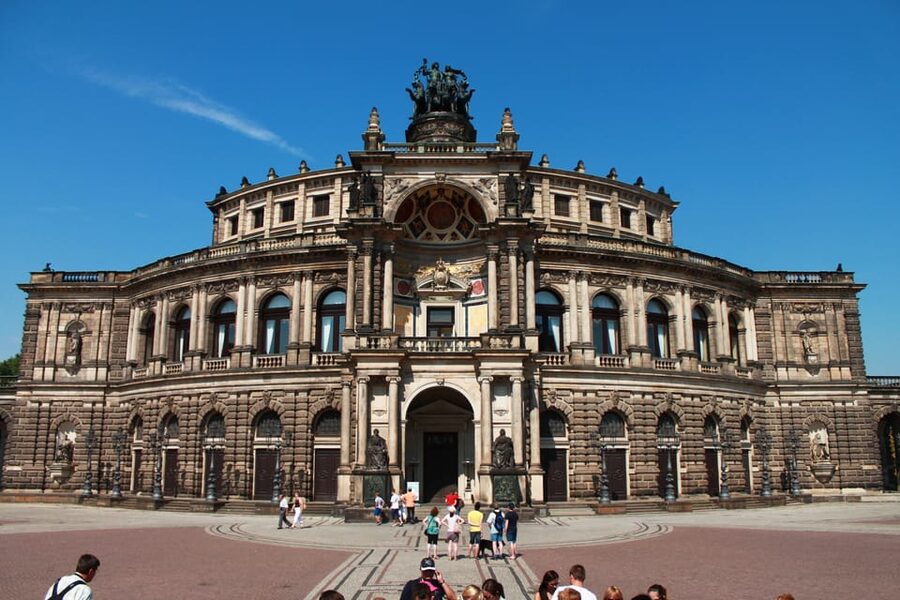
The Semper Opera House brings the route back to Dresden’s theatrical side. Its formal exterior fits the city’s Baroque and royal setting, while its name connects the building to architect Gottfried Semper.
Nearby, the Catholic Cathedral offers a useful contrast in both appearance and religious history. The cathedral’s presence reflects the complicated religious and political world of Saxony, especially when placed beside the Protestant Frauenkirche and the era of the Reformation.
This is one reason a guided walk beats a solo checklist. You can see both buildings in minutes, but the connections between religion, court power, and architecture are harder to spot without context. The guide’s job is to make those links plain.
Again, the itinerary focuses on exterior sightseeing. You should not book this expecting an opera performance or a cathedral service. You are getting an informed walk past major landmarks, with time to understand what you are seeing.
Royal Castle and the Taschenbergpalais
The Royal Castle adds another layer to Dresden’s story. It represents the long reach of the Saxon court and the city’s role as a political center. The Taschenbergpalais, close to the castle complex, continues that sense of courtly scale.
These buildings are valuable stops even if you are not an architecture specialist. Their size and position help you picture how Dresden functioned when royal life shaped the center of town. A guide can also help you separate the different buildings, since the cluster of palaces and museums can look like one large complex when you first arrive.
The route is especially helpful for first-time visitors who want to return later. Once you know where the castle, Zwinger, opera house, and cathedral sit in relation to each other, independent sightseeing becomes much easier.
You may find the pace brisk around this part of the walk. There are many names and buildings in a short span. Take notes or mark places you want to revisit, rather than trying to remember every detail.
Brühl Terrace and Augustus Bridge

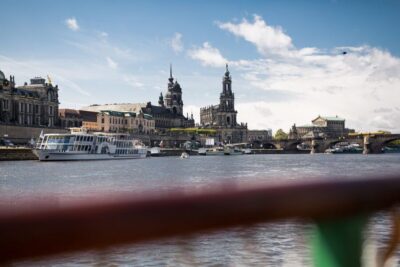
Brühl Terrace offers one of the route’s best changes of mood. Known as the Balcony of Europe, it runs along the Elbe and gives you a broader view after the dense streets and courtyards of the old town.
The walk then includes the majestic Augustus Bridge. Together, these riverfront stops show Dresden from a less enclosed angle. The old town’s domes, palace roofs, and church towers make more sense when you can see their overall arrangement from beside the river.
You should allow yourself a moment to look around here. A short tour can tempt you to focus only on the next explanation, but the river setting is part of what makes Dresden memorable. The route does not promise a long pause, so anyone who wants extended photographs or a leisurely stroll should return later.
These stops also help balance the heavy history of the tour. After hearing about war and political change, the riverfront gives you space to consider the city as it exists now.
Dresden from the Middle Ages to 1989
The historical range is the tour’s strongest feature. You begin with more than a thousand years of Dresden’s development, then move through the Middle Ages, the Reformation, and the Baroque age.
The Reformation section matters because Dresden’s religious buildings are not random decoration. The city’s Catholic and Protestant landmarks reflect wider conflicts that shaped Central Europe. Even a short explanation can change how you look at the Frauenkirche and Catholic Cathedral.
The Baroque period is easier to appreciate once you understand the ambitions of Saxony’s court. The Zwinger, opera house, royal buildings, and ceremonial spaces were designed to project wealth and influence. Your guide helps you see the city as a planned stage for power, not simply a collection of pretty façades.
The tour also addresses the destruction of Dresden. That subject can be handled poorly, either reduced to a quick dramatic line or left out altogether. Here, the destruction is presented as part of the city’s wider story, including the rebuilding that followed.
The final stop in the historical arc is 1989 and the peaceful revolution. This gives you a more recent connection to Dresden and helps explain how people in East Germany challenged the political order. For me, including this chapter makes the tour feel more complete. It connects medieval beginnings and royal splendor with events still within living memory.
A local guide can add value here. One guide spoke about growing up in Dresden after World War II, offering a personal link to the city’s later decades. That kind of perspective cannot replace formal historical study, but it can make an abstract timeline easier to understand.
What the local tips are really worth
The tour includes advice on restaurants, bars, shopping, nightlife, and events. This is not just a bonus if you are staying in Dresden for more than one day. It can help you decide what to do after the walk while the city is still fresh in your mind.
Ask specific questions. Instead of simply requesting the best restaurant, tell the guide what sort of food, atmosphere, or price range you want. The same goes for nightlife and shopping. Local suggestions are most useful when they match your plans.
The advice may be particularly helpful because the walk ends in the center, close to many of the places you have just seen. You can use the guide’s suggestions to plan dinner, return to a favorite square, or set up the next day’s sightseeing.
Keep your expectations sensible. The activity includes insider tips, not a private food tour or a guaranteed reservation. The main value is knowing whom to ask and what areas or activities may suit you.
Is $15 a fair price for this Dresden tour?
At $15 per person, the walk offers good value if you want a quick, guided introduction to the old town. You see a large number of major sights, hear a broad historical account, and receive practical local advice.
The price is especially reasonable for a first visit. A solo walk can cover the same streets, but you may miss the links between the buildings and spend time sorting out names and dates. Here, the guide handles that work while you concentrate on the city.
The limits are clear. The tour lasts only 1.5 hours, so you will not have time for lengthy interior visits, extended museum stops, or a slow meal. You are paying for orientation and explanation, not an all-day cultural program.
I would book it early in a Dresden stay, then use the rest of the day to revisit the Frauenkirche, Zwinger, Royal Castle, or another place that caught your attention. The walk gives you a framework. Your independent sightseeing fills in the detail.
Who should book this walk?
This tour suits first-time visitors who want to understand Dresden before exploring on their own. It also works well for couples and families who prefer a short activity rather than a long day of sightseeing.
You will get the most from it if you enjoy architecture, political history, and stories about how cities change. The coverage of 1989 also makes it a good choice for anyone interested in recent German history, not only royal Dresden.
Families should note that no more than four children’s tickets can be booked per adult. The activity is wheelchair accessible, which makes it practical for many visitors, though the supplied details do not describe every surface or possible access point along the route.
You might choose something else if you want a museum-heavy experience, a long food stop, or a private tour. This is a brisk small-group walk through the public historic center.
Should you book it?
I would book this tour if you want a low-cost way to get oriented and prefer a guide who can explain both Dresden’s beauty and its difficult past. The strongest reasons are the small group, the wide historical range, and the chance to hear local perspective from guides such as Franziska.
Skip it only if you already know Dresden well or want extended time inside the city’s museums and churches. For most first visits, $15 is a modest price for a useful introduction, especially if you follow it with your own return visits to the buildings that interest you most.
FAQ
How long is the Dresden walking tour?
The tour lasts 1.5 hours.
What language is the tour conducted in?
The live tour guide speaks English.
How much does the tour cost?
The listed price is $15 per person.
Where do I meet the guide?
Meet at the seating area of the Tourist Information in the basement of QF Passage.
Which major Dresden sights are included?
The route includes the Frauenkirche, Palace Stables, Procession of Princes, Brühl Terrace, Catholic Cathedral, Royal Palace, Semper Opera House, Taschenbergpalais, Zwinger Palace, and Augustus Bridge.
Does the tour visit the Zwinger Palace?
Yes. The activity includes a visit to the Nymphenbad in the Zwinger Palace.
Does the tour cover Dresden’s wartime destruction?
Yes. The guide discusses the destruction of Dresden as part of the city’s history.
Does the tour discuss the events of 1989?
Yes. The walk covers the peaceful revolution of 1989 and its importance in Dresden’s modern history.
Is the walking tour wheelchair accessible?
Yes, the activity is listed as wheelchair accessible.
Can I cancel the booking for a refund?
You can cancel up to 24 hours in advance for a full refund. You can also reserve now and pay later, according to the activity information.
Just added around Dresden
- Freiberg: Scavenger Hunt Self-Guided Walking Tour★ 4.6 · 7 reviews
- Radebeul: Scavenger Hunt Self Guided Tour★ 4.6 · 9 reviews
- Discover Germany’s most exciting photo illusion world!★ 4.7 · 26 reviews
- Dresden: New Year’s Eve Concert at the Zwinger★ 4.8 · 20 reviews
- Dresden: Zwinger Skip-the-Line & 2-Day Hop-On Hop-Off Bus★ 4.5 · 160 reviews
- Dresden: Guided City Walk and Panometer Entrance Ticket★ 4.5 · 176 reviews
- Dresden: Shared Small Group Walking Tour in English★ 4.8 · 172 reviews
- Dresden with a touch of Xmas: English small group tour★ 4.7 · 41 reviews
Dresden Tours, compared.
The Original Night Watchman Tour in Lantern Light
Read our review →


Browse the lists this tour appears in