
Review · FRANKFURT TOURS
7-Day Taste of Central Europe Tour to Paris, Amsterdam, Brussels and more!
The most interesting thing about this tour is its reach. In seven days, you cross several borders, see Gothic cathedrals, Roman ruins, Dutch windmills, Champagne country, Parisian boulevards, and the Rhine Valley, all without planning a single hotel or long-distance transfer. I especially like the small maximum group size of 15 and the way the route mixes famous cities with smaller places such as Trier and Rüdesheim.
I also like that six breakfasts and coach transport are included, and that you usually get one to three hours of free time in each stop. The tradeoff is a serious one: this is a fast sampler, not a slow cultural trip. Paris accommodation may be outside the city and less comfortable than the other hotels, and the English guiding can vary when English and Chinese groups share a coach.
Key points at a glance
- Seven days, nine European destinations: Frankfurt, Bonn, Cologne, Amsterdam, Brussels, Paris, Reims, Luxembourg, Trier, Koblenz, and Rüdesheim all fit into one tightly packed route.
- A maximum of 15 people: The smaller group can make boarding, sightseeing, and group communication easier than on a large coach tour.
- Six breakfasts and six hotel nights included: You pay one main tour price, but not most attraction tickets, lunches, dinners, or drinks.
- Paris gets two sightseeing days: The route includes the Louvre, Seine, Champs-Élysées, Arc de Triomphe, Eiffel Tower area, Versailles, and Palais Garnier.
- The schedule favors first-time visitors: You see famous landmarks quickly, with free periods for shopping, lunch, and independent wandering.
- English service needs checking: The operator may combine English and Chinese groups, and guide quality and language clarity can vary.
What $968.14 buys you on this route
At $968.14 per person, the tour works out to roughly $138 per day before gratuities and optional admissions. That price covers six nights in at least three-star hotels, six breakfasts, daily air-conditioned coach travel, a professional driver, and an experienced tour manager.
That is a useful package if you value time. You do not need to arrange separate trains from Frankfurt to Amsterdam, Amsterdam to Brussels, Brussels to Paris, or Paris back through Luxembourg and western Germany. You also avoid the work of finding hotels in several countries for a single night at a time.
The price does not cover the full cost of sightseeing. You should budget for attraction tickets, lunches, dinners, drinks, optional excursions, and the listed €70 gratuity per person. Cologne Cathedral entry, Zaanse Schans attractions, the Atomium, Versailles, the Louvre, the Paris Seine cruise, Reims Cathedral visits, and other admissions may add up quickly.
The tour also does not provide accommodation before the start or on the final night. It begins at 8:30 a.m. at Frankfurt Hauptbahnhof and finishes back at that meeting point on day seven, so you need to arrange your own Frankfurt hotel before departure and after the return if your travel plans require it.
A few more Frankfurt half-days to weigh up
- Central and Eastern Europe Highlights 7-Day Tour from Frankfurt
★ 4.5 · 54 reviews
Frankfurt to Cologne: Bonn and Germany’s Gothic centerpiece
The first morning begins at Frankfurt Main Station, a practical meeting point near public transport. The coach heads northwest to Bonn, former capital of West Germany, where an orientation walk introduces the Rococo town hall and Beethoven-Haus, the birthplace museum of Ludwig van Beethoven.
You get about an hour here. That is enough to see the central sights and understand Bonn’s place in modern German history, but not enough for a detailed museum visit if the schedule is tight. The Beethoven stop will appeal most if you already have an interest in music, while the town hall gives you a quick taste of Bonn’s elegant civic center.
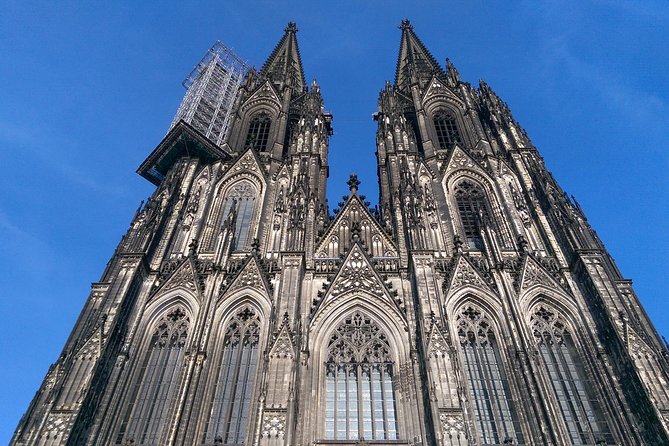
Cologne follows, with a visit to its enormous Gothic cathedral, a UNESCO World Heritage Site. The cathedral is the day’s major visual reward. Its scale is hard to grasp from photographs, and the location beside the station makes it an efficient stop.
Afterward, you have time for lunch, shopping, or a local beer before the coach continues into the Netherlands. This is a good opening day because it combines guided orientation with a little personal time, though the long road segment means you should not expect a full day in either Bonn or Cologne.
Amsterdam’s canals, windmills, and flower season
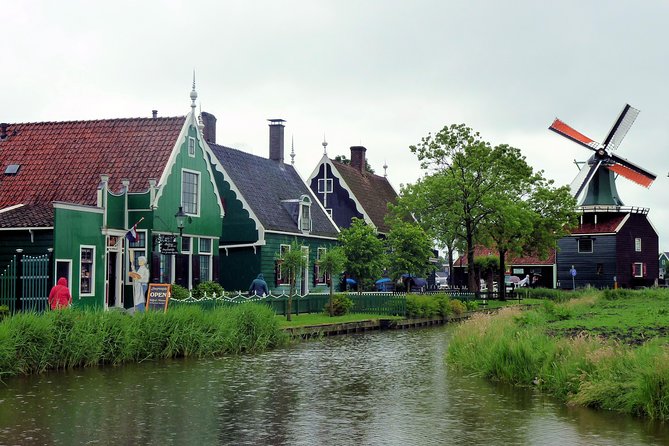
Day two begins with the Dutch countryside and Zaanse Schans, a popular open-air stop associated with windmills, clogs, and cheese. You get roughly an hour, enough to walk around and take photographs, but not enough to explore every feature at a relaxed pace.
The route then returns to Amsterdam. A visit to a diamond factory introduces the city’s long association with diamond cutting, including techniques practiced there since the sixteenth century. Some people will find this interesting, while others may prefer more time along the canals or in a museum.
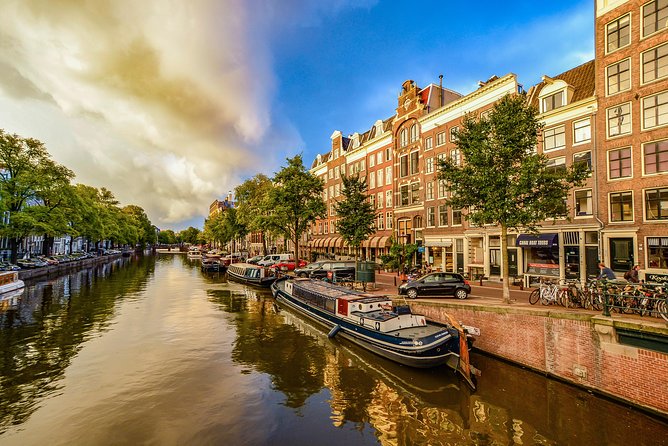
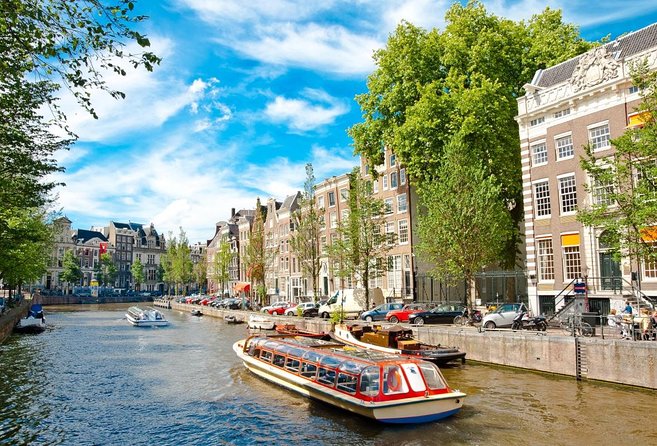
An optional one-hour canal cruise is one of the better add-ons on the trip. From the water, Amsterdam’s narrow canal houses and bridges make sense as part of one connected city rather than a string of separate sights. The cruise costs extra, so decide in advance if it fits your budget.
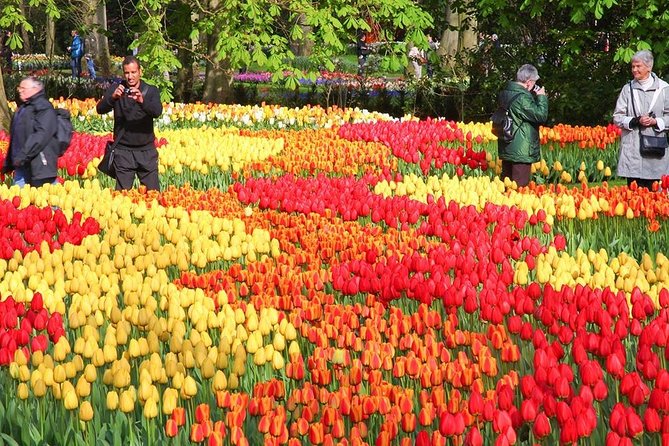
The day also includes Dam Square, home to the Royal Palace and a natural place for photographs, shopping, and a meal. If you travel from mid-March to mid-May on the Red Line tour, Keukenhof Gardens is added to the route. More than seven million spring bulbs fill the park, making this a seasonal highlight, but it is not available year-round and admission is not included.
Amsterdam is one of the places where the schedule may feel especially short. You see the city’s main postcard scenes, but you will not have enough time to build a deep sense of its neighborhoods.
Brussels: the Atomium, Grand Place, and Belgian food
The coach crosses into Belgium on day three, stopping first at the Atomium. Built for the 1958 World’s Fair, the stainless-steel structure represents an enlarged iron crystal. The exterior stop gives you a memorable photograph, while a full interior visit requires extra admission and time.
Central Brussels gets an orientation walk around Grand Place and Manneken Pis. Grand Place is the stronger sight, with ornate historic buildings enclosing one of Europe’s most impressive squares. Manneken Pis is much smaller than many first-time visitors expect, but its fame and playful character make it a worthwhile quick stop.
Free time lets you sample Belgian specialties, shop, or simply sit in the square. I would use this pause for food rather than trying to force in another museum. The tour then continues across the French border toward Paris, so this is a day of highlights rather than a full Brussels visit.
Same city, a completely different sort of afternoon:
- Frankfurt: River Main Sightseeing Cruise with Commentary
★ 4.3 · 5,127 reviews - Frankfurt: Hop-On, Hop-Off Grand or Express Bus Ticket
★ 3.9 · 2,088 reviews - Frankfurt: 1-Hour Panorama Boat Cruise on the river Main
★ 4.4 · 1,822 reviews - From Frankfurt: Rhine Valley Day Trip
★ 4.4 · 1,317 reviews
Paris day one: grand avenues, Napoleon, and Versailles
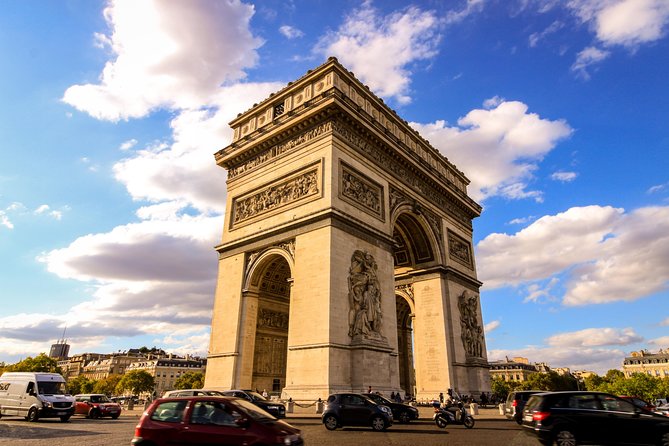
Paris receives two days, which is helpful, though the schedule remains packed. The first day begins with a drive along the Champs-Élysées to Place de la Concorde, a major setting during the French Revolution. You then see the Arc de Triomphe, which commemorates those who died in the Revolution and Napoleonic Wars.
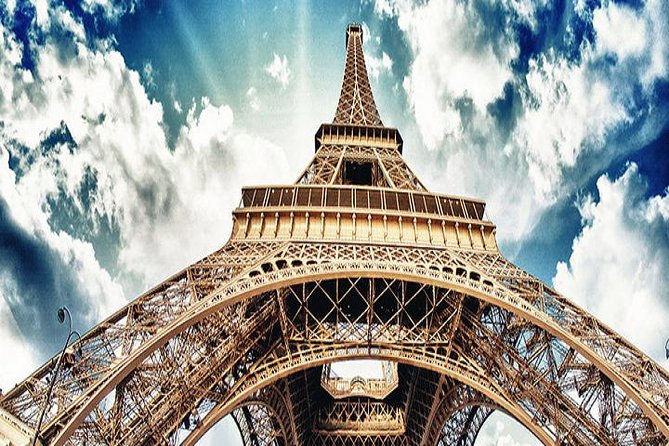
The route continues to Les Invalides, where Napoleon’s tomb is located. This stop gives the day more historical weight than a simple monument tour. You also get time near the Eiffel Tower, but climbing the tower is not part of the included plan.
The schedule then gives you a choice: spend time in the surrounding area and eat lunch, or climb the Eiffel Tower if tickets and timing allow. This choice matters. The tower can consume a large part of a Paris morning, while staying at ground level gives you more room for lunch and independent wandering.
Versailles comes later. The former royal residence is a major attraction, with lavish rooms and formal gardens, but an hour is a very short visit for a place of this size. Check exactly what admission is arranged before you go, and do not expect to see every major room and garden area.
An optional evening show is offered after returning to Paris. It can add classic nightlife, but I would keep the cost and your energy level in mind. This is already a long day of coach travel and sightseeing.
The main practical issue is the hotel. Accommodation in Paris has been a weak point for some departures, with rooms described as small and locations outside central Paris. One property was also reported to have limited nearby dining, leaving the hotel restaurant as the easy option. Paris hotels are costly, so the lower tour price may partly reflect this compromise.
Paris day two: the Louvre, Seine, and grand department stores
The second Paris day starts with the Louvre. The museum contains famous works including the Mona Lisa, Venus de Milo, and Winged Victory of Samothrace. A guided gallery visit is available and makes sense here because the Louvre is too large to tackle casually in a short window.
You can have lunch in the museum before moving toward the Palais Garnier, Paris’s celebrated opera house. The area around the opera house also puts you near Galeries Lafayette Paris Haussmann, where you can shop or enjoy the building itself.
A Seine cruise is another optional or separately charged activity to consider. It gives you views of Notre-Dame, Pont Alexandre III, and other landmarks without requiring more walking. If your feet are tired, this may be a better use of an hour than adding another indoor attraction.
The day can finish with a French four-course dinner and show, or with shopping near Galeries Lafayette. The itinerary allows some choice, which helps, but the many optional extras mean you need to read the final price carefully. The tour cost is attractive partly because so many Paris experiences are left for you to purchase separately.
Reims and Luxembourg: a quieter change of pace
Day six leaves Paris for the Champagne region and Reims. The countryside route offers a welcome change after two dense Paris days, and Reims Cathedral connects French religious history with national ceremony. French kings were crowned here from the eleventh century onward.
The stop is especially worthwhile for anyone interested in architecture and royal history. The tour points you toward the cathedral, but major interior visits and other Champagne activities are not included automatically. This is not a champagne tasting tour, so do not book it expecting cellar visits or extensive vineyard time.
Luxembourg City follows. The walking introduction includes Place de la Constitution and Pont Adolphe, two useful viewpoints for understanding the city’s old and modern sides. You then have free time to explore independently.
Luxembourg is a good counterpoint to Paris. The pace here is calmer, and the compact center is easier to handle during a short stop. Still, you are covering a lot of road, so the time available remains limited.
Trier, Koblenz, Rüdesheim, and the return to Frankfurt
The final day crosses back into Germany and reaches Trier, often described as Germany’s oldest city. You see the exterior of Karl Marx’s birthplace, now the Karl Marx Haus museum, then continue through the center toward the cathedral and Porta Nigra.
Porta Nigra is the star of Trier. This massive Roman gate is regarded as the best-preserved Roman city gate north of the Alps. Trier’s cathedral adds another layer, with the Holy Robe said to be the tunic of Christ preserved there and only occasionally displayed.
The route then reaches Koblenz at the meeting point of the Rhine and Mosel rivers. You can eat lunch beside the water and add a Rhine boat cruise for broader river views. The cruise costs extra, and the choice depends on how much time remains before the final drive.
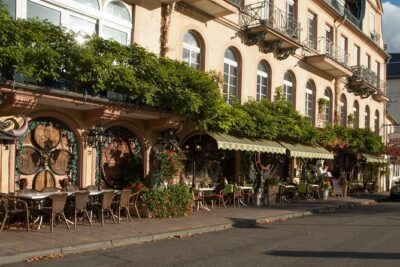
The coach continues through Rüdesheim, a wine-making town, before returning to Frankfurt and Römerberg. The medieval town hall and square provide a fitting last stop, though you should remember that no final hotel night is supplied.
This final day is rewarding for history fans, but it is also one of the longest and most tiring. Pack your luggage so you can reach essentials without unpacking everything at each hotel.
Coaches, hotels, guides, and group rhythm
The coach is one of the tour’s strongest practical features. It is described as modern, clean, comfortable, and air-conditioned, with a professional driver. A coach also takes the strain out of several international border crossings and lets you watch the scenery rather than study train connections.
The group limit of 15 is unusually manageable for a multi-country coach route. You still need to be ready at departure times, but a small group usually makes counting heads and gathering at landmarks simpler.
Hotel quality is mixed. The included properties are at least three-star, with private facilities and twin, double, or single rooms. Several stays were considered clean and better than expected, while the Paris hotel drew the most criticism. Hotel names arrive only 24 to 48 hours before check-in, so you cannot assess each location far in advance.
The guide can shape the whole experience. Strong tour managers such as Amanda, Lex Tang, and Florian were praised for punctuality, helpfulness, and clear explanations. Uncle Ho was also singled out for being friendly and helpful.
There is an important language note. The operator may combine English and Chinese groups on one bus, with one tour leader speaking both languages. Some English-speaking customers found the delivery difficult to understand and felt attention favored the Chinese-speaking group. Others had excellent guides, so this appears to depend heavily on the assigned leader. If clear English commentary is essential, confirm the language arrangement before paying.
Who should book this Central Europe tour?
I would book this tour if you are a first-time visitor who wants a broad introduction, prefers organized transport, and likes having hotels and breakfasts handled for you. It also suits solo visitors who want a ready-made group, and families who can keep up with early starts and fixed departure times.
I would not choose it for a slow trip, serious museum visits, or extended time in Paris and Amsterdam. You get a strong list of sights, but many stops last about an hour. Restroom breaks can also be several hours apart, so this pace may not suit everyone.
The tour is a good value when you count the included transport, six nights, and breakfasts. Add the €70 gratuity, attraction tickets, meals, and optional cruises or shows before deciding. If the final total still fits your budget, this is an efficient way to sample Central Europe and decide where you want to return for a longer stay.
FAQ
Where does the tour start and finish?
It starts at Frankfurt Main Hauptbahnhof at 8:30 a.m. and ends back at the same meeting point in Frankfurt.
How many nights of accommodation are included?
Six hotel nights are included in comfortable three-star minimum hotels with private facilities. Accommodation before the tour and on the final day is not included.
Are meals included?
Six breakfasts are included. Lunch, dinner, drinks, and meal tips are not included.
Are attraction tickets included?
Many attraction admissions are not included. This applies to several sites in Cologne, Amsterdam, Brussels, Paris, Reims, Luxembourg, and Trier, as well as optional cruises, shows, and other activities.
Is the tour conducted in English?
English is offered, but English and Chinese groups may be combined on one coach if numbers are low. One bilingual tour leader may serve both groups.
How much luggage can I bring?
Each person may bring one piece of luggage weighing no more than 30 kilograms and one small carry-on such as a purse, backpack, or camera bag.
Can children join the tour?
Children under 18 must travel with an adult. One twin room can hold two adults and one child aged 2 to 11 without a separate bed. Triple rooms are not arranged for groups of three.
Just added around Frankfurt
- magnificent historic Heidelberg, private Tour, from Frankfurt★ 4.5 · 15 reviews
- from Frankfurt: Heidelberg, Mercedes Museum / Schwetzinger Schloß★ 5.0 · 35 reviews
- from Frankfurt: historic treasure Rothenburg, private 1 day Tour★ 5.0 · 9 reviews
- Trier Small-Group Day Trip from Frankfurt★ 4.0 · 5 reviews
- The Tales of Frankfurt’s New Old Town: A Self-Guided Audio Tour★ 5.0 · 7 reviews
- Frankfurt : Private Walking Tour With A Guide ( Private Tour )★ 4.5 · 27 reviews
- Fairytale Rüdesheim and Monastery Eberbach Tour★ 5.0 · 9 reviews
- from Frankfurt – romantic Black Forest & brewery, private tour★ 5.0 · 13 reviews
Frankfurt Tours, compared.
River Main Sightseeing Cruise with Commentary
Read our review →
1-Hour Panorama Boat Cruise on the river Main
Read our review →
New Old Town and Highlights German-Language Tour
Read our review →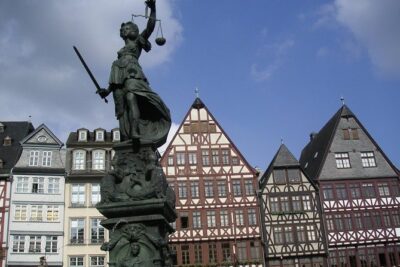
Rhine Valley Trip from Frankfurt including Rhine River Cruise
Read our review →
Browse the lists this tour appears in