
Review · MUNICH TOURS
Munich: Night Watchman Tour in English
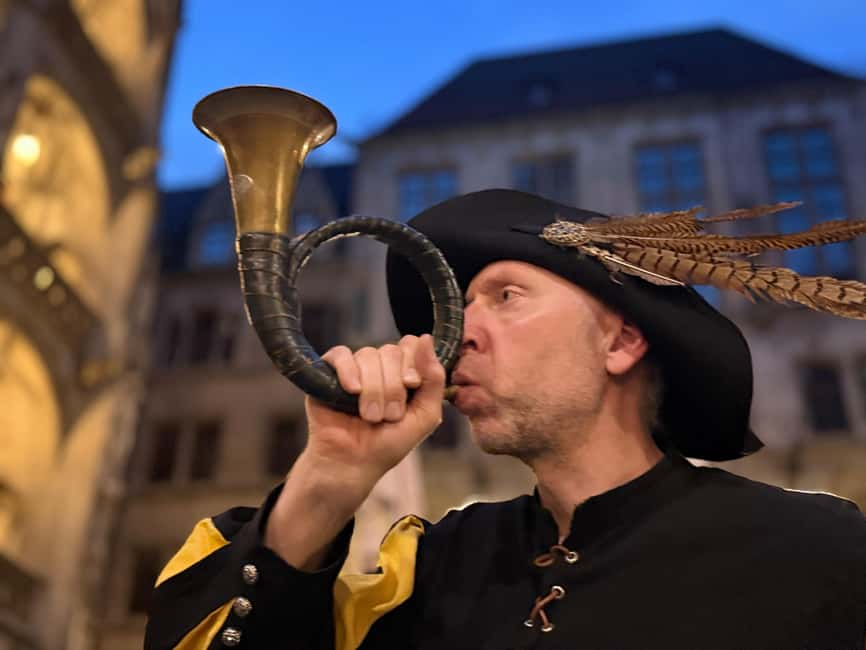
Munich’s night watchman tour turns the city center into a small medieval town after dark. Your guide, dressed in period clothing and carrying a lantern, leads you from Mary’s Column through old lanes and squares while explaining how the City of the Monks worked 800 years ago. I like the theatrical touch, and I like that the walk points out details you could easily miss on your own.
The tour also does a fine job mixing solid history with folklore, saints, kings, beer, and everyday life. Guides including Hans, Heinz Taubmann, Hannes, and Monique have each been praised for clear storytelling and humor. The main drawback is simple: a 1.5-hour outdoor walk can feel very cold at night, especially in winter, so dress for standing and slow walking rather than a quick stroll between warm cafés.
Key points to know before you book
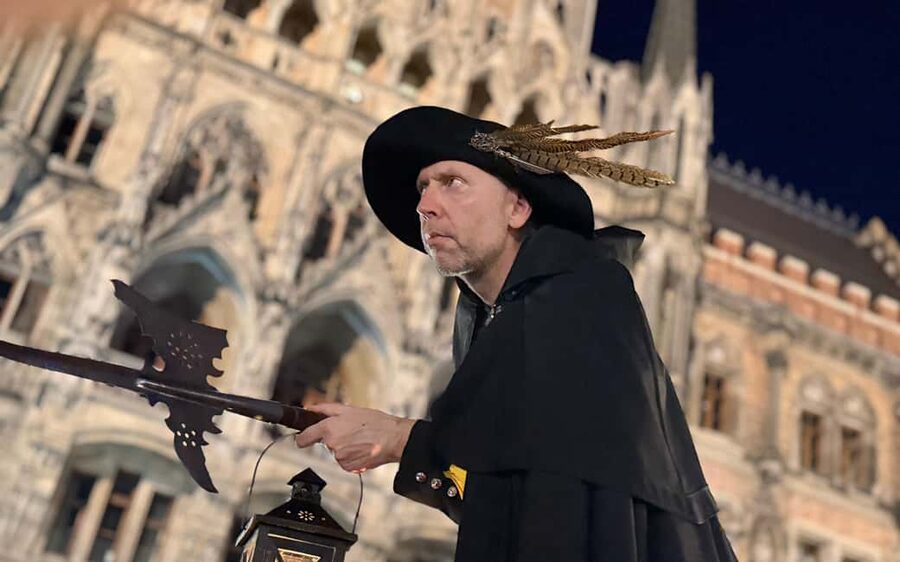
- The lantern and costume set the mood: Your guide plays the night watchman, giving the walk a theatrical feel without turning it into a stage show.
- Medieval Munich comes first: Expect stories about gates, walls, religion, superstition, work, family life, and death.
- The route stays in the historic center: The walk connects Marienplatz with areas around Viktualienmarkt and Frauenkirche.
- Guides shape the experience: Hans, Heinz Taubmann, Hannes, and Monique are among the guides praised for humor, detail, and a relaxed pace.
- Night adds atmosphere: Dark lanes and illuminated buildings give the old center a different energy than a daytime sightseeing walk.
- The price is modest: At $22 per person, it offers a useful history lesson and a distinct evening activity, provided you enjoy walking outdoors.
Starting at Mary’s Column in Marienplatz
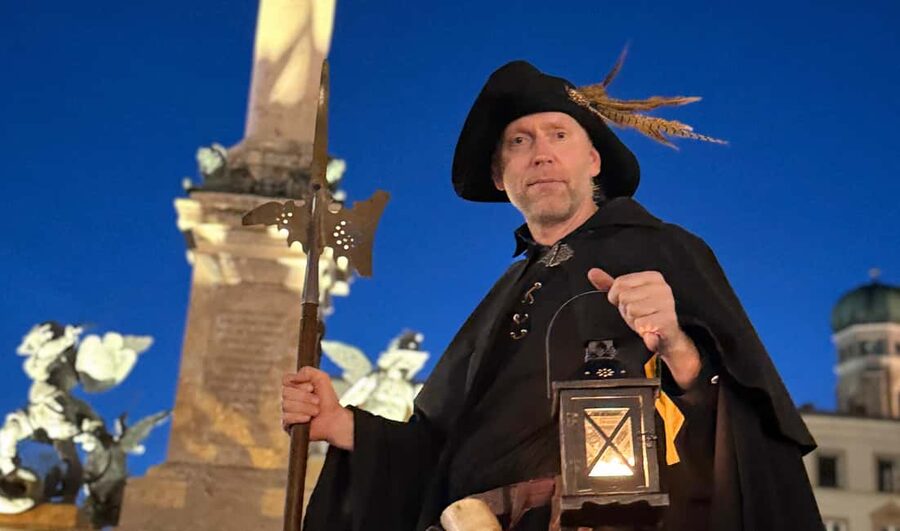
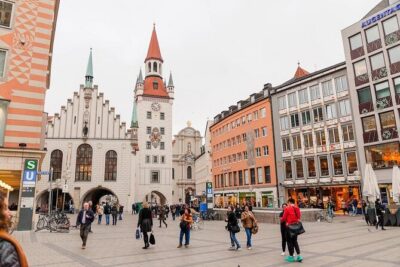
Your meeting point is Mary’s Column in the center of Marienplatz. That is an easy place to find, but Marienplatz can be crowded and noisy, especially around the New Town Hall, so give yourself a few minutes to locate the group.
The night watchman’s costume and lantern should make the guide easy to spot. This small bit of theater matters. A standard guide standing beside a busy square can be hard to distinguish from the crowd. A lantern-carrying figure from medieval Munich gives the meeting a clear focus from the start.
Marienplatz is also the right place to begin the story. The old center was once a compact walled town, described during the tour as no more than about 400 meters across. At dusk, the gates closed. People stayed inside, and the watchman became the town’s eyes and ears after dark.
That scale helps you picture medieval Munich as a close, enclosed community rather than the larger modern city you see today. Streets were dark, movement was limited, and news traveled through word of mouth. Much of the tour’s appeal comes from seeing familiar central Munich through that older frame.
More Night Watchman Tours in Munich
- Munich: Night Watchman Walking Tour
★ 4.7 · 2,092 reviews - Munich: Night Watchman Torch Tour in German
★ 4.8 · 1,280 reviews - Munich: Middle Ages Tour with Night Watchman
★ 4.9 · 652 reviews
Walking from the old town toward Viktualienmarkt
The route is short in distance, but it is full of small pauses. The walk generally moves from Marienplatz toward Viktualienmarkt and then to the area around Frauenkirche, with the guide using buildings, lanes, and public spaces as prompts for stories.
I like this format because you are not simply standing in front of a famous façade while someone recites dates. You keep moving, then stop when a corner or building helps explain a piece of medieval life. The guide draws your attention to details that can disappear in the daytime crowds.
Viktualienmarkt gives the route another useful connection with daily life. The tour is not only about rulers and grand religious buildings. It also looks at ordinary people, local customs, work, food, beer, and the rules that shaped life inside the walls.
Do not expect a food tour, though. One unrelated comment in the supplied material refers to food, dessert, a concert, and fortress views, but that clearly belongs to a different experience. This night watchman walk includes the guide and the walking tour, not a meal or concert.
The pace is generally relaxed. One account describes a walk lasting almost two hours, but the advertised duration is 1.5 hours, so you should plan for 90 minutes. A calm pace is helpful when the guide is telling stories, though it means this is not the activity for someone hoping to cover every major sight in Munich in one evening.
What medieval Munich felt like after sunset
The central idea is the night watchman’s job. He watched for danger while the town slept, carrying the only visible light in dark streets. Fire, theft, illness, outsiders, and disorder were all concerns in a place where people had limited information and little control over events after the gates closed.
The tour uses this setting to explain a world shaped by the divine order. Most people could not read or write. Religion helped explain nature, illness, luck, punishment, and death, while superstition filled in the gaps.
That does not mean the walk treats medieval people as foolish. The better point is that they lived with very different tools for understanding life. Stories about saints and signs made sense within that world. The night watchman’s voice gives these ideas a human scale.
You hear about life from the cradle to the grave. That broad span is one of the tour’s strengths. Instead of giving you only a political timeline, the guide connects the city’s past with birth, family, work, belief, illness, death, and burial.
The stories also reach kings, monks, saints, local customs, and famous beer. This gives the tour variety. If every stop focused on dates and architecture, a nighttime walk could become dry. Folktales and humor keep the subject moving.
At its best, the tour asks you to picture people trying to get through an ordinary night in a town with no electric lights and closed gates. That is a more memorable lesson than simply learning when Munich received a particular privilege or when a building was completed.
Finding small lanes and overlooked details
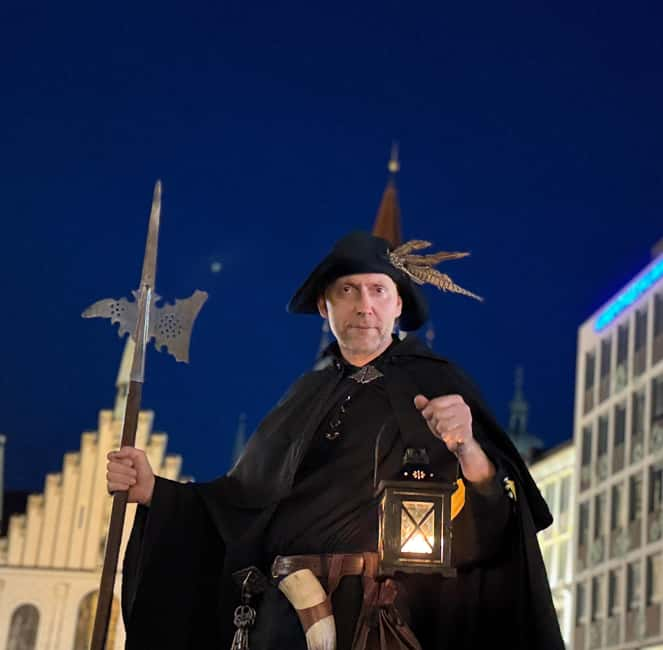
The route’s main value is not access to a restricted monument. You are walking through public parts of the historic center. The benefit comes from knowing where to look and what a place means.
A daytime visit to Marienplatz, Viktualienmarkt, or Frauenkirche can easily become a checklist. You take a photograph, move on, and miss the smaller clues. A guide in character slows you down and gives the streets a role in the story.
The walk can also help if you have just arrived in Munich. It gives you a basic map of the old center while introducing places to return to later. One guide has pointed out beer cellars favored by locals, and another has offered food recommendations after the tour. These suggestions are not a formal part of the advertised program, but they can be a useful bonus when the guide has time for questions.
You should keep your expectations sensible. The tour does not turn every lane into an untouched medieval scene. Modern Munich is all around you, and some historic details may be difficult to see in the dark. The reward is the combination of place, timing, and storytelling, not a perfectly preserved medieval town.
More night watchman walks:
- München: Der Nachtwächter für Kinder – Führung auf Deutsch
★ 5.0 · 322 reviews - Munich: Night Watchman Tour for Kids (6 – 12 years) – 75 min
★ 4.9 · 140 reviews - Dresden: The Original Night Watchman Tour in Lantern Light
★ 4.6 · 6,653 reviews - Hamburg: Night Watchman’s Tour of St. Pauli in German
★ 4.7 · 4,818 reviews
Hans, Heinz Taubmann, Hannes, and Monique
The guide makes a large difference here. This is a live storytelling walk, not an audio recording, and the strongest accounts describe guides who use humor, clear explanations, and good timing.
Hans is repeatedly singled out for his history of Munich, folktales, and willingness to answer questions. He has been described as relaxed, funny, sincere, and careful with detail. He also explains how the city changed from its early medieval beginnings to the present day.
Heinz Taubmann is another named guide associated with the tour. His storytelling has been praised for attention to detail and an engaging account of the city. Hannes has also been described as kind, entertaining, and well informed.
Monique brings a slightly different style, acting out the role of the night watchman while keeping the material light. On a cold evening, she shortened the final part of the walk so the group would not remain outside longer than necessary. That is a small but welcome sign of practical judgment.
Because several guides lead this experience, the tone will not be identical every night. One may lean harder into comedy, another into history, and another into local tales. The shared structure is the costume, lantern, medieval setting, and English-language storytelling.
If you enjoy asking questions, this is a good format. The walk is not so large or formal that you must simply listen in silence. The exact amount of conversation depends on the group and the guide, but questions about Munich’s past can fit naturally into the route.
Why the $22 price makes sense
At $22 per person, this is a reasonably priced evening activity in central Munich. You are paying for a live guide, a 1.5-hour walk, and a focused presentation of the old town. There are no added meals, drinks, monument admissions, or transportation costs included.
I would compare it with the price of a standard city walk, but the night setting gives it a clear difference. You get a history introduction and an atmospheric evening outing in one booking. That is particularly useful if you have already seen Marienplatz in daylight and want a second look at the center.
The value depends on your interests. If you prefer museums, long architectural lectures, or private transportation, this may feel too simple. If you want an affordable way to spend an evening and enjoy stories about local life, the cost is fair.
The tour is also a good choice for repeat visitors. One person who had lived in Munich for two years still learned new details about the city. That is a useful reminder that familiarity with the streets does not mean you know their older stories.
Free cancellation is available up to 24 hours before the start time, and you can reserve now while paying later. Those policies help if your schedule is still changing, though you should still check the available start times before booking.
Cold nights, walking pace, and accessibility
Weather is the main practical concern. The walk takes place outdoors after dark, and winter evenings in Munich can be sharply cold. Wear a warm coat, shoes suited to city pavement, and layers that let you remain comfortable while standing still.
A cold night can affect the pace. One guide sped up near the end because the group was chilled. That was sensible, but it also shows why you should not treat the 1.5-hour duration as a minor detail. Ninety minutes outside feels very different in August and December.
Summer brings a different mood. The dark streets have less bite, and you can focus more easily on the stories. Still, the lantern and evening setting remain central to the experience, so the tour keeps its character throughout the year.
The activity is listed as wheelchair accessible. Since the walk uses central city streets and small lanes, you should still consider your own comfort with the route and ask the provider if you need precise information about surfaces or stopping points.
The route is relatively short. That makes it manageable for many people, but the guide may stop often, and the total time is longer than the distance might suggest. Comfortable footwear is still a good idea.
Who will enjoy this night walk
I would recommend this tour to you if you like history presented through people and stories rather than a list of dates. Families with older children may enjoy the lantern, costume, and talk of medieval beliefs, although the material covers death and hardship as well as beer and legends.
It also suits first-time visitors who want to get their bearings in the central old town. Starting at Marienplatz and continuing toward Viktualienmarkt and Frauenkirche gives you a useful sense of how the main historic areas fit together.
Repeat visitors can gain something different from it. You already know the major sights, so the guide’s smaller details and local tales become the main attraction. The walk may also work well after dinner, when you want an organized activity without committing to a long evening program.
You may want to skip it if you dislike theatrical guiding or have little patience for folklore. The night watchman role is part of the point. This is not a silent architectural walk, and it does not treat every story as a strictly academic lecture.
You should also think twice if you want a major sightseeing tour with interior visits. The advertised inclusion is the costumed guide for 1.5 hours, so the experience centers on walking and narration rather than entering paid attractions.
Should you book the Munich night watchman tour?
Book it if you want a reasonably priced way to see central Munich after dark and hear how medieval people understood their city. The strongest reasons are the lantern-carrying guide, the short route through the historic center, and the mix of documented history, local folklore, humor, and everyday life.
I especially like it for a first evening in Munich or for a return visit when the big sights no longer feel new. You will not get a full survey of every Munich monument, but you will get a memorable way to connect Marienplatz, Viktualienmarkt, Frauenkirche, and the surrounding lanes.
Bring warm clothes in cold weather and expect the quality to depend partly on the guide leading your group. At $22, the risk is low, and the format offers more personality than a basic orientation walk. For most people who enjoy history told with a bit of theater, this is a good use of 90 minutes.
FAQ
Where does the Munich night watchman tour begin?
The meeting point is Mary’s Column in the center of Marienplatz.
How long does the tour last?
The advertised duration is 1.5 hours.
What language is the tour in?
The live tour guide speaks English.
Is the tour wheelchair accessible?
Yes, the activity is listed as wheelchair accessible.
What is included in the price?
The price includes a tour guide dressed in medieval clothing for 1.5 hours. Food, drinks, transportation, and concert admission are not listed as inclusions.
Can I cancel the booking?
Yes. You can cancel up to 24 hours in advance for a full refund. You can also reserve now and pay later.
More Evenings Out in Munich
- Munich Ghosts and Spirits Evening Walking Tour
★ 5.0 · 1,900 reviews - Bavarian Beer and Food Evening Tour in Munich
★ 4.5 · 1,575 reviews - Munich: Oktoberfest Big Beer Tent Evening Table Reservation
★ 4.2 · 30 reviews - Munich: Oktoberfest Big Beer Tent Evening including table reservation
★ 4.8 · 12 reviews
Just added around Munich
- Pub crawl incl. Oktoberfest museum guided tour with beer tasting (private)★ 5.0 · 5 reviews
- South Tyrolean specialties and wine tasting★ 5.0 · 5 reviews
- Size Matters Beer Tour Munich★ 4.6 · 105 reviews
- Secret Food Tours Munich★ 4.8 · 5 reviews
- Short & sweet: Tasting the Viktualienmarkt★ 4.8 · 37 reviews
- Residence of Munich private tour with skip the line ticket★ 5.0 · 4 reviews
- Munich: Romantic Wine Experience for Two at Viktualienmarkt★ 4.2 · 14 reviews
- Munich: Resistance against Hitler – Historical Walking Tour★ 5.0 · 5 reviews
Munich Tours, compared.


Neuschwanstein & Linderhof Castle-Fairytale Day Tour from Munich
Read our review →
Dachau Concentration Camp Memorial Site Tour from Munich by Train
Read our review →
Munich Hop-On Hop-Off Tour: 1-Day or 2-Day Ticket
Read our review →Browse the lists this tour appears in