
Review · MUNICH TOURS
Munich: Highlights Walking Tour with a Guide
Munich’s center unfolds like a history book you can walk through: royal squares, church towers, beer halls, Nazi-era sites, and a food market all sit within a compact route. This three-hour private walking tour gives you a local guide to connect those places instead of leaving you to guess what matters.
I like the flexible format, especially if you want to focus on architecture, royal Bavaria, wartime history, food, or beer. I also like the chance to ask for practical advice for the rest of your stay, and guides such as Elettra and Roberto have been singled out for their warm, engaging approach. The main concern is that the route can lose its balance if too much time goes to churches, and one reported tour finished at Odeonsplatz rather than back at Marienplatz.
Key points to know before booking
- See Munich’s central sights on foot: Marienplatz, Frauenkirche, Hofbräuhaus, Odeonsplatz, the Residenz area, and Viktualienmarkt fit into one guided outing.
- Ask for a tour built around you: The private format lets you raise your interests before or during the walk.
- Time the Glockenspiel carefully: Performances take place at 11:00 am, 12:00 pm, and 5:00 pm from March through October.
- Expect a history-heavy walk: The route includes royal Bavaria, wartime damage, Nazi rallies, beer culture, and the city’s food traditions.
- Use the guide for the rest of your visit: Help with planning and booking tickets for desired visits is included.
- Watch the route timing: If seeing the noon Glockenspiel matters, confirm that the tour will return to Marienplatz in time.
Starting at Marienplatz, Munich’s great front room
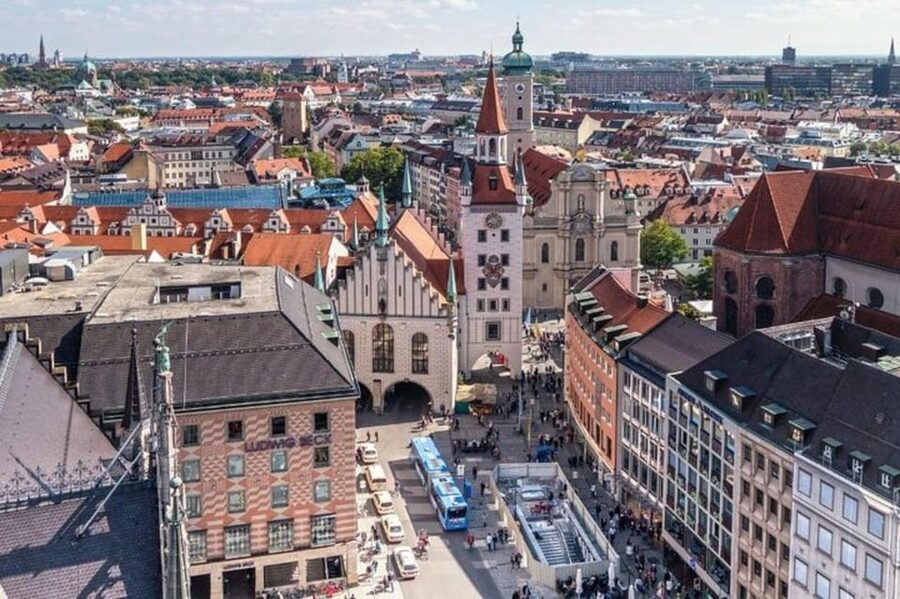
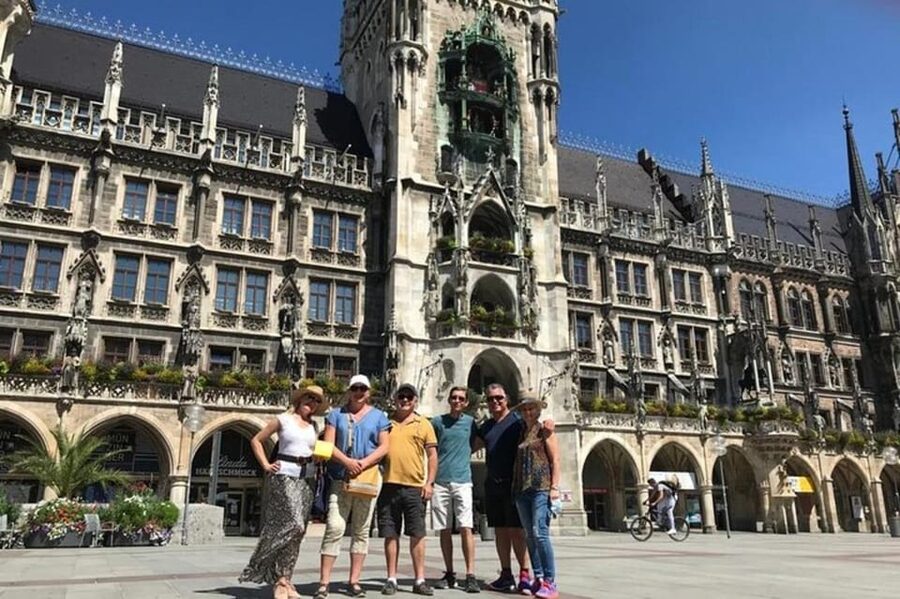
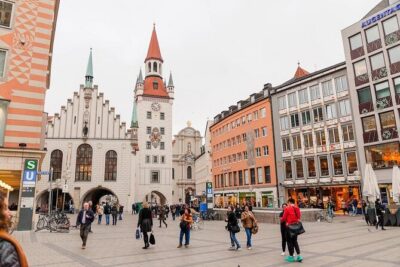
The meeting point is in front of the Julia-Capulet-Statue at Marienplatz 15. That puts you right in the middle of Munich’s Old Town, with the square’s grand buildings and the Rathaus-Glockenspiel close at hand.
Marienplatz is the natural place to begin. It has long served as Munich’s central public square, and today it is the city’s clearest introduction to the old center. Your guide can help you read the façades, explain how the square functions, and point out details you could easily miss while taking photographs.
The square is also where timing matters most. The Rathaus-Glockenspiel performs at 11:00 am, 12:00 pm, and 5:00 pm from March through October. If the tour begins before noon, ask at once if the route is planned around the performance. One account describes a tour that was supposed to finish at Marienplatz for the noon show but ended at Odeonsplatz instead, making the performance impossible to reach in time.
That is a small planning point with a big effect. The Glockenspiel is one of Munich’s most visited sights, and if you have built your day around it, the guide needs to know before the walk begins.
More walking tours in Munich:
- Munich: Third Reich & WWII Walking Tour
★ 4.6 · 6,181 reviews - Third Reich Walking Tour Munich
★ 4.5 · 4,291 reviews - Munich: Old Town & Viktualienmarkt City Walk in German
★ 4.7 · 2,304 reviews
Frauenkirche and the church-filled part of the route
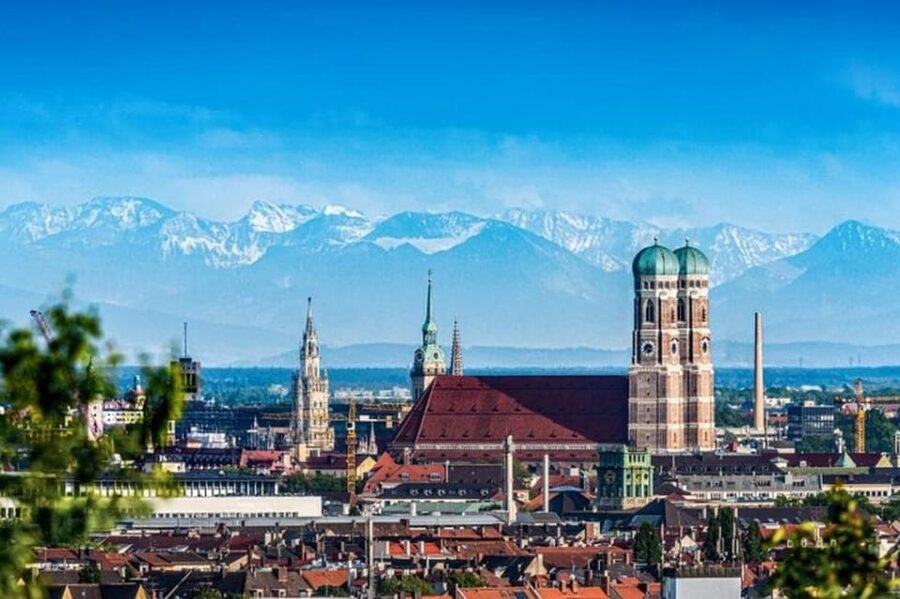
From Marienplatz, the walk includes Frauenkirche, Munich’s largest church and one of its most recognizable buildings. Its twin towers shape the city skyline, and its role as a major cathedral makes it an important stop even if you are not especially interested in religious art.
The guide can explain the building’s place in Munich and discuss the damage the city suffered during the Second World War. That subject comes up again at other churches, where the focus is not only on design but also on how badly the buildings were damaged and later restored.
Here is where the private format can help. If church architecture and wartime rebuilding interest you, you can ask for more detail. If they do not, say so clearly at the start. One disappointing experience spent most of the three hours moving from one church to another, despite the group explaining that religion was not a priority. The route includes several major sights, so you should not hesitate to protect time for the Residenz, Hofbräuhaus, and the Glockenspiel.
The lesson is simple: private does not automatically mean perfectly tailored. You still need to state your priorities.
The Rathaus-Glockenspiel and a bit of Munich theater
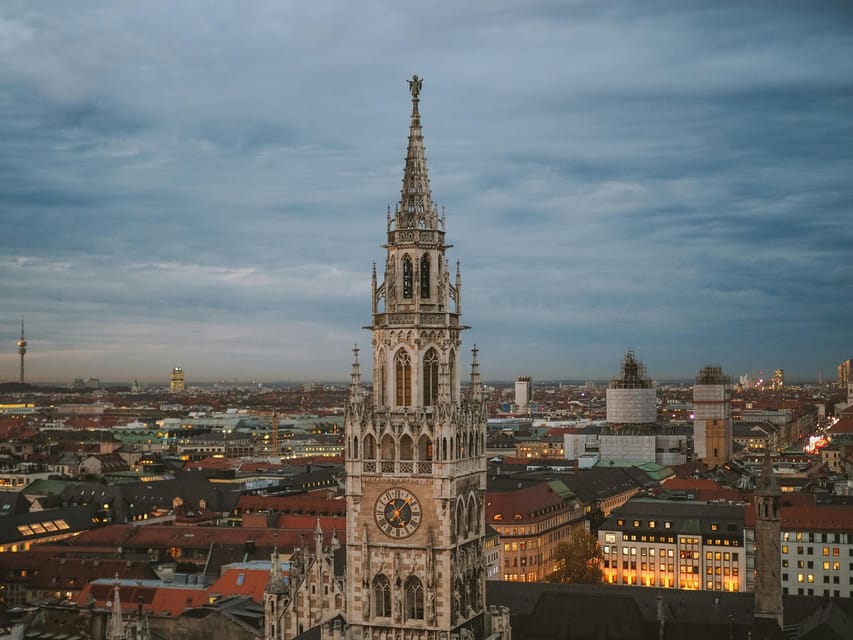
The Glockenspiel is more than a clock on a pretty town hall. Its figures perform scenes connected with Bavarian history, making it one of the city’s most popular public spectacles.
Your guide can give the performance a setting before you watch it. That makes the show easier to understand than a quick stop for photographs. If you are visiting between March and October, plan around 11:00 am, noon, or 5:00 pm. Outside those months, the listed performance schedule does not apply, so ask your guide what you can expect.
The Rathaus itself gives the square much of its character. Even if you do not enter the building, the exterior and the mechanical show offer a strong sense of Munich’s civic pride. This is a good place to keep your camera ready, but listen first. The useful part of a walking tour is not only seeing the famous object. It is learning why the city has made such a fuss over it.
Hofbräuhaus and Munich’s beer story
The next major stop is Staatliches Hofbräuhaus in München, the famous beer hall. The tour does not include food or drinks, so treat this as a guided look at Munich’s beer culture rather than a meal reservation.
Hofbräuhaus is useful because it connects everyday Munich with larger Bavarian traditions. Your guide can explain the beer purity law and the role of Oktoberfest, two subjects that help place the beer hall in its wider setting.
You should also be clear about what you want here. If you hope to sit down for a beer or lunch, ask how much time the walking tour allows and plan a separate visit if needed. The activity price covers the guide and walk, not food or drinks.
I like this stop because it keeps the tour from becoming a parade of churches and palaces. It also gives you a practical idea for later in the day. Your guide can suggest other things to do in Munich, and Hofbräuhaus may help you decide if you want to return for the full beer-hall experience.
A few more Munich half-days to weigh up
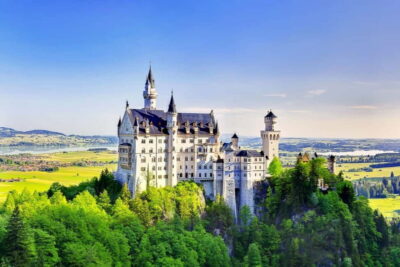
- From Munich: Neuschwanstein & Linderhof Castle Full-Day Trip
★ 4.5 · 12,494 reviews - Neuschwanstein & Linderhof Castle-Fairytale Day Tour from Munich
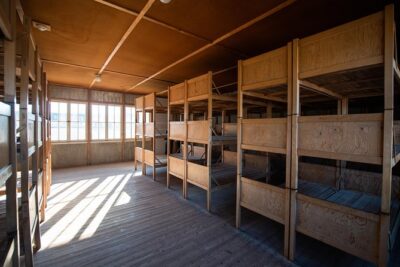
★ 4.5 · 7,275 reviews - Dachau Concentration Camp Memorial Site Tour from Munich by Train
★ 4.5 · 5,637 reviews - Neuschwanstein Castle Tour from Munich
★ 4.5 · 5,117 reviews
Odeonsplatz, with Munich’s darker past in view
Odeonsplatz is one of Munich’s most attractive squares, but its beauty is only part of the story. The guide explains how the square was used for Nazi rallies during the 1930s and 1940s.
That context matters. Munich can look polished and pleasant at street level, and it is easy to admire the architecture without asking what happened in the same spaces during the twentieth century. A good guide helps you hold both ideas at once: the square is handsome, and its past is serious.
This portion of the walk may suit you if you want more than postcard Munich. The tour links royal power, civic display, and political history in a way that makes the Old Town feel like a real place rather than a collection of pretty buildings.
Odeonsplatz is also the point where route management becomes important. The planned walk is meant to return to Marienplatz 15, but one reported experience ended here. If you need to catch a Glockenspiel performance, meet someone, or continue from Marienplatz, confirm the final route before setting off.
The Residenz and the missing palace problem
The Residenz is the largest inner-city palace in Germany and the former home of Bavaria’s Wittelsbach royal family. It is one of the most important sights named for this tour, yet the standard route description gives more detail about the surrounding landmarks than about an interior visit.
That distinction matters. Passing near the Residenz is not the same as touring its rooms, collections, or ceremonial spaces. The tour includes help from the team with booking tickets for desired visits, but admission is not listed among the included items. Ask specifically if you want to enter, how much time is available, and whether a separate ticket is needed.
The palace is a natural priority for anyone interested in royal history, interiors, or Bavarian government. If you are choosing between extra church detail and the Residenz, say so plainly. One account specifically noted that there was no time to visit the palace or even get a look at its exterior, which is a warning for anyone booking this tour mainly for the Residenz.
This is also why the private option can be worth considering. A private guide may be able to shape the pace around your interests, but only if those interests are made clear.
Viktualienmarkt and the everyday side of Munich
The route also passes Viktualienmarkt, Munich’s largest inner-city fresh food market. This gives the walk a welcome change of pace after grand squares, churches, royal buildings, and political history.
A market tells you something different about a city. Instead of focusing on rulers and monuments, it points toward food, local habits, and daily shopping. You should not assume that a market stop includes tastings or a meal, since food and drinks are not included. Think of it as an orientation stop, then return later if you want to browse at your own pace.
For a first visit, this is one of the most useful suggestions a guide can give you. You can learn where to come back for a snack or a look at Munich’s food stalls, even if the walking tour itself keeps moving.
What the three-hour format really gives you
Three hours is enough to get your bearings in central Munich, but it is not enough for a full interior visit at every major stop. The route covers a lot: Marienplatz, Frauenkirche, the Rathaus-Glockenspiel, Hofbräuhaus, Odeonsplatz, the Residenz area, and Viktualienmarkt.
That makes the tour best for orientation and context. You see the city’s main sights, learn how they connect, and collect ideas for the rest of your stay. It is less suitable if you want long visits inside several buildings.
The guide speaks English, French, Spanish, Italian, or German. The language choice is important because the tour depends on conversation. You can ask questions, request a different emphasis, and seek help planning later visits.
The experience is wheelchair accessible, according to the activity details. Still, the route is a walking tour through the Old Town, so it is sensible to discuss your needs with the provider before arrival. The listed meeting point and return point are both central, but the reported early finish at Odeonsplatz makes it worth confirming the ending.
Private value at $53 per person
At $53 per person, the value depends heavily on group size and how much you use the guide. The price is easier to justify for a private group because you are paying for personal attention, route changes, and the chance to ask for specific advice rather than simply following a fixed script.
For a larger group, the cost can feel reasonable if you want a quick introduction to Munich and plan to visit interiors on your own. A guide can save you from wandering between sights without context and can help you decide what deserves more of your limited time.
The value drops if the tour spends most of its time on subjects you have already ruled out. That is the clearest weakness in the available feedback. Tell the guide at the beginning that you want the Residenz, Hofbräuhaus, political history, food, or the Glockenspiel included in the right balance.
The tour includes the guide, the walking route, and private exclusivity if you select that option. It does not include food or drinks. The team can also help book tickets for visits you want, though admission itself is not listed as included.
Free cancellation is available up to 24 hours before the activity for a full refund, and you can reserve now and pay later. Those terms are useful if your Munich schedule is still shifting.
Guides, style, and how to get the best walk
The strongest personal comments point to guides who explain clearly and adjust to the group. Elettra is described as prepared and engaging, Roberto as friendly and full of information, and another guide is praised for shaping the walk around specific requirements.
That gives you a useful approach. Do not wait until the final hour to mention your interests. At the meeting point, say which three or four sights matter most and which topics you would rather limit.
You can ask for a balance such as:
- Marienplatz and the Glockenspiel for Munich’s civic center
- Frauenkirche for architecture and wartime rebuilding
- Hofbräuhaus for beer culture
- Odeonsplatz for twentieth-century history
- The Residenz for Bavarian royalty
- Viktualienmarkt for food and local life
The guide may not be able to provide an extended visit at every stop, but this list makes your priorities plain. It also protects the tour from becoming too narrow.
Who should book this Munich walk?
I would choose this tour for a first visit, a short stay, or a day when you want a human introduction before exploring alone. It fits you best if you like asking questions and want advice for the rest of your time in Munich.
It also suits families or private groups with mixed interests, provided you select the private option and explain what the group wants. The multiple language choices make it practical for many visitors.
I would think twice if your main aim is a detailed interior tour of the Residenz, a long meal at Hofbräuhaus, or a slow church-art study. Those goals may require separate visits. I would also confirm the ending point if you have a firm appointment or want to see the noon Glockenspiel.
Should you book it?
Book this walking tour if you want a flexible introduction to Munich’s center, a guide who can connect royal, religious, political, and beer history, and practical suggestions for the rest of your visit. The strongest value comes from the private format and from using the guide as a local planner, not just as a person who points at buildings.
Before you start, confirm three things: your top sights, how much time you want at the Residenz, and whether the route will return to Marienplatz in time for the Glockenspiel. Do that, and the tour should give you a useful first map of Munich without wasting your limited hours.
FAQ
Where does the Munich walking tour begin?
Meet your guide in front of the Julia-Capulet-Statue at Marienplatz 15.
How long does the tour last?
The walking tour lasts three hours.
What sights are included on the route?
The route includes Marienplatz, Frauenkirche, the Rathaus-Glockenspiel, Staatliches Hofbräuhaus, Odeonsplatz, the Residenz area, and Viktualienmarkt.
Can I see the Rathaus-Glockenspiel during the tour?
The Glockenspiel performs at 11:00 am, 12:00 pm, and 5:00 pm from March through October. Confirm the start and end timing with your guide if seeing a performance is important.
Is the tour private?
A private group option is available. Private and exclusive touring applies when that option is selected.
Are food and drinks included?
No. Food and drinks are not included in the activity price.
Which languages are available?
The live guide service is available in English, French, Spanish, Italian, and German.
Just added around Munich
- Pub crawl incl. Oktoberfest museum guided tour with beer tasting (private)★ 5.0 · 5 reviews
- South Tyrolean specialties and wine tasting★ 5.0 · 5 reviews
- Size Matters Beer Tour Munich★ 4.6 · 105 reviews
- Secret Food Tours Munich★ 4.8 · 5 reviews
- Short & sweet: Tasting the Viktualienmarkt★ 4.8 · 37 reviews
- Residence of Munich private tour with skip the line ticket★ 5.0 · 4 reviews
- Munich: Romantic Wine Experience for Two at Viktualienmarkt★ 4.2 · 14 reviews
- Munich: Resistance against Hitler – Historical Walking Tour★ 5.0 · 5 reviews
Munich Tours, compared.

Neuschwanstein & Linderhof Castle-Fairytale Day Tour from Munich
Read our review →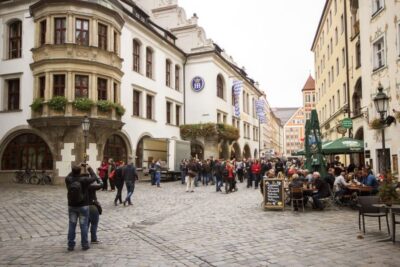
Dachau Concentration Camp Memorial Site Tour from Munich by Train
Read our review →
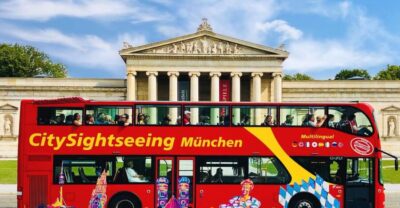
Munich Hop-On Hop-Off Tour: 1-Day or 2-Day Ticket
Read our review →Browse the lists this tour appears in