
Review · MUNICH TOURS
München: Stadtführung Henker, Huren, Hexen in GERMAN
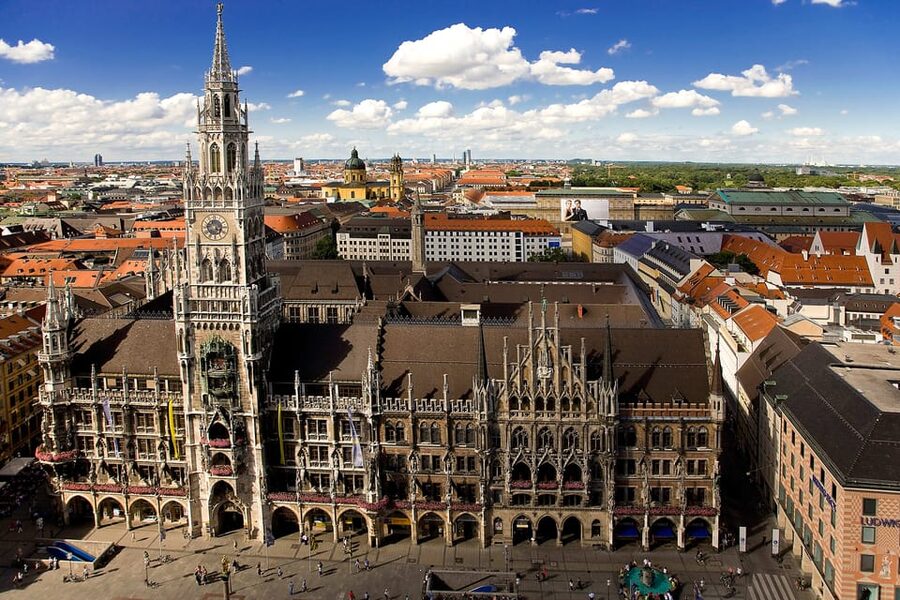
Munich’s grand churches and royal squares have a darker side. On this two-hour German-language walk, you follow the city’s old routes while hearing how executioners, prostitutes, and alleged witches fit into Munich’s system of law and punishment. It is less about pretty façades and more about what happened behind them.
I like the route’s mix of famous sights and unsettling stories, especially the start at Neuhauser Tor, where people condemned to death were led out of the city. I also like the guide-led storytelling: Julia, one guide named in the feedback, was praised for her warmth and clear command of the subject.
The main concern is sound and timing. A crowded city center, church music, and bells can make a long explanation hard to follow, so this tour works best when you can stay close to the guide and listen carefully in German.
Key points to know before booking
- Neuhauser Tor begins the story: The former city gate was the route out for people taken to execution.
- The salt road links the stops: You walk along a historic route toward the former Jesuit college and the city center.
- Executioners had several jobs: The tour explains their connection with policing, prostitution, and pimping.
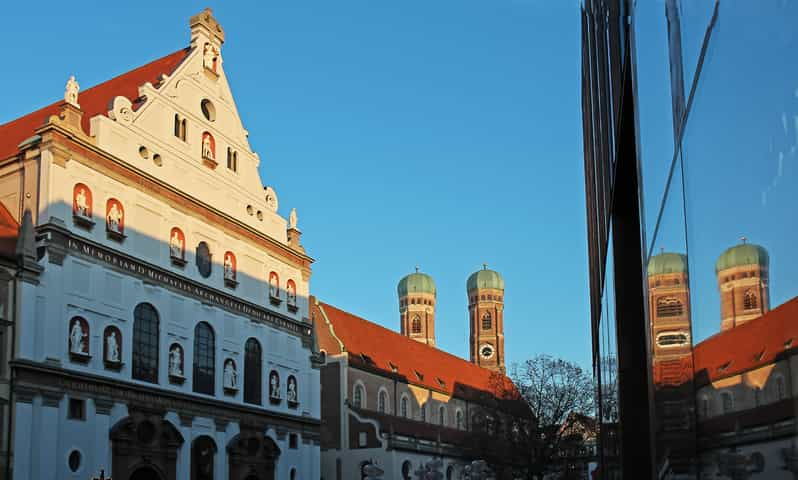
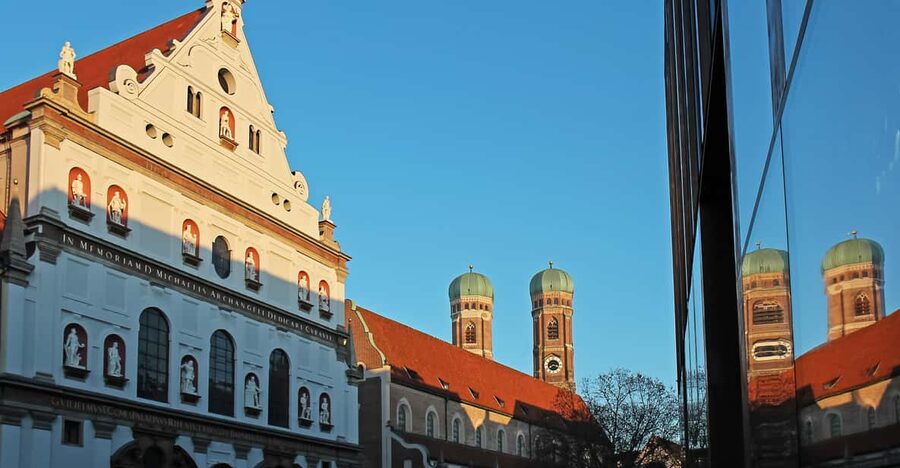
- The churches are part of the setting: St. Michael’s and the Frauenkirche provide landmarks and context, though some connections may be interpretive.
- German is the only tour language: You need good enough German to follow spoken explanations in busy streets.
- Rain or shine means practical shoes: The walk lasts two hours, and there is no food, drink, or hotel pickup included.
Munich’s dark story starts at Neuhauser Tor
Meet your guide under the Neuhauser archway. Look for the large blue bag marked with the white words Weis(s)er Stadtvogel. This detail matters because the meeting point is in a busy central area, and a clear visual marker is easier to spot than a vague street address.
Neuhauser Tor was once one of Munich’s city gates. It was also the point where people sentenced to death were led outside the walls for execution. You will not see the historical execution sites exactly as they once were, and that is important to understand before booking. The tour uses today’s streets to explain a vanished system.
That contrast gives the walk its tone. You are not visiting a preserved medieval prison or watching a staged punishment. You are standing in modern Munich while the guide reconstructs how the city controlled crime, sex work, and suspected witchcraft.
The experience contains no actors and no reenactments. That makes it suitable for you if you prefer spoken history and local anecdotes over theatrical effects. If you want costumes, props, or dramatic scenes, this is not that kind of tour.
A few more Munich half-days to weigh up
- From Munich: Neuschwanstein & Linderhof Castle Full-Day Trip
★ 4.5 · 12,494 reviews - Neuschwanstein & Linderhof Castle-Fairytale Day Tour from Munich
★ 4.5 · 7,275 reviews - Munich: Third Reich & WWII Walking Tour
★ 4.6 · 6,181 reviews
Following the old salt road through central Munich
From the gate, the walk follows the historic salt road. Salt was a valuable trade product, and routes like this helped shape the city’s growth and connections. Here, the road becomes more than a way from one sight to the next. It gives the tour a physical line to follow as the guide explains how people, goods, and official power moved through Munich.
I like this approach because the darker subjects do not float free from the city itself. The stories are tied to gates, churches, courts, and streets. You get a sense of how punishment worked as a public part of urban life, not just as an event hidden inside a modern courthouse.
The tour also explores why the headquarters connected with these activities were outside the city. The reason is one of the questions the guide addresses, and it helps explain the practical separation between respectable civic life and institutions linked to punishment or prostitution.
The route is not built around long indoor visits. You should expect to remain outside for much of the two hours, with stops at or near important buildings. Food, drinks, entrance fees, and transport are not included, so plan this as a walking history lesson rather than a museum visit.
St. Michael’s Church and the power of public religion
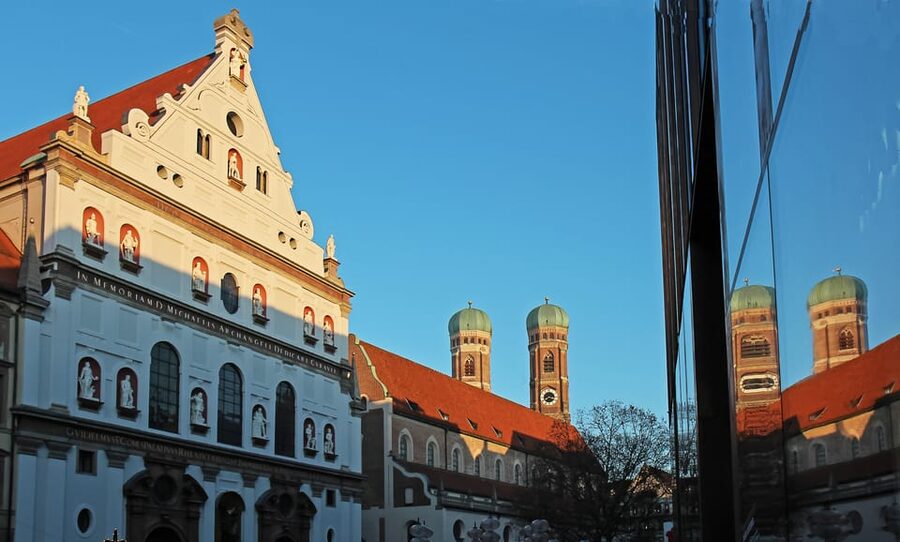
St. Michael’s Church is one of the named stops. Its large presence gives the guide a useful setting for discussing religion, authority, and social control in historic Munich.
The church itself is a famous sight, but the value of this stop depends on how much you enjoy context around architecture. You may hear connections between the religious institutions of the city and the treatment of suspected witches, criminals, and social outsiders. The tour’s focus is not a standard church-history visit, so do not book it expecting a detailed architectural lecture.
A practical point: the itinerary refers to visiting or stopping at the church, but entrance fees are not included. The supplied information does not promise a full interior visit. I would treat St. Michael’s primarily as a landmark on the route unless your guide says otherwise.
This is also one place where you need to listen with a little care. One low rating described church stops as being linked to the central theme with too much guesswork and too few firm records. That criticism is worth keeping in mind. The strongest parts of a dark-history tour are the details the guide can support clearly, while broader connections may be more open to interpretation.
The former Jesuit college and Munich’s witch hunts
The walk continues toward the former Jesuit college. This stop brings the subject of witch hunts into focus.
The word witch can make a tour sound sensational, but the useful question is how accusations became part of civic and religious life. The guide explains the local setting and the way authorities handled suspected offenses. You should expect stories about investigations, fear, and punishment rather than a full academic history of witch trials across Bavaria.
This is a good point to decide how much historical nuance you want. A lively guide can make the subject memorable, but a two-hour city walk cannot cover every case, source, or debate. The tour is designed to give you a readable route through Munich’s darker past, with anecdotes that help the city feel less polished and more human.
The German language also matters here. Terms connected with law, religion, and historical accusations can be harder to follow than simple sightseeing commentary. If your German is limited, you may catch the general mood but miss the sharper details and jokes.
Same city, a completely different sort of afternoon:
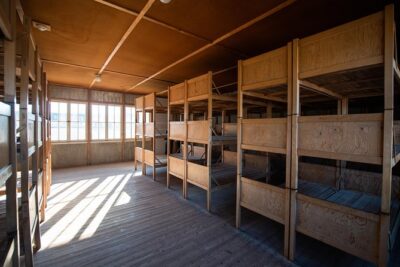
- Dachau Concentration Camp Memorial Site Tour from Munich by Train
★ 4.5 · 5,637 reviews - Neuschwanstein Castle Tour from Munich
★ 4.5 · 5,117 reviews - Third Reich Walking Tour Munich
★ 4.5 · 4,291 reviews - Munich Hop-On Hop-Off Tour: 1-Day or 2-Day Ticket
★ 4.3 · 4,161 reviews
Frauenkirche, city crowds, and the sound problem
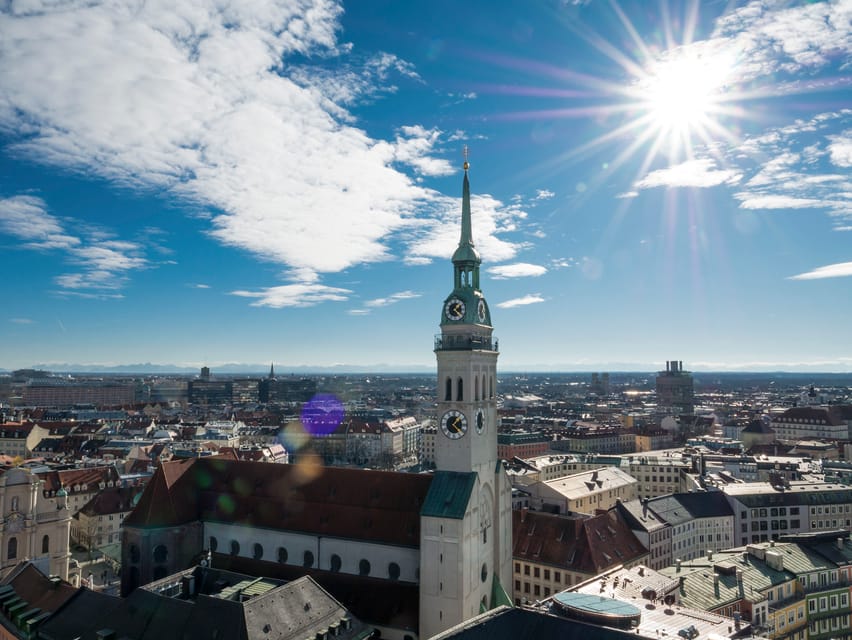
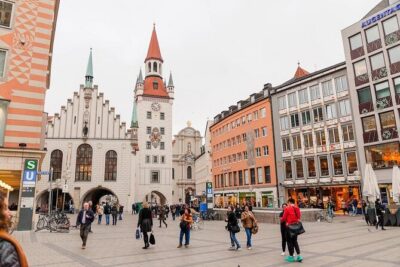
The Frauenkirche is another major landmark on the route. Its familiar twin towers make it an easy meeting point within the story, but they also bring one of the tour’s practical weaknesses: this is a popular part of central Munich.
One person had trouble hearing the guide during a large choir rehearsal and the 3 p.m. ringing of the church bells. The guide continued speaking in front of the church, and much of the explanation was lost. This is not a small issue on a storytelling tour. If you cannot hear the links between the places, the walk becomes a series of attractive buildings with disconnected facts.
You can reduce the risk by checking the starting time carefully and staying close to the guide. If the tour is scheduled near a known church service, rehearsal, or bell ringing, a private option may give you more flexibility, though the provided information does not promise that private tours can change the route or timing.
The criticism also suggests a broader lesson: this experience is better in quieter corners than directly beside a famous church. The route may take longer than expected because the guide stops to explain the setting. That pace suits you if you want stories, but it may feel drawn out if you mainly want quick exterior views.
The Alter Hof and the city’s official face
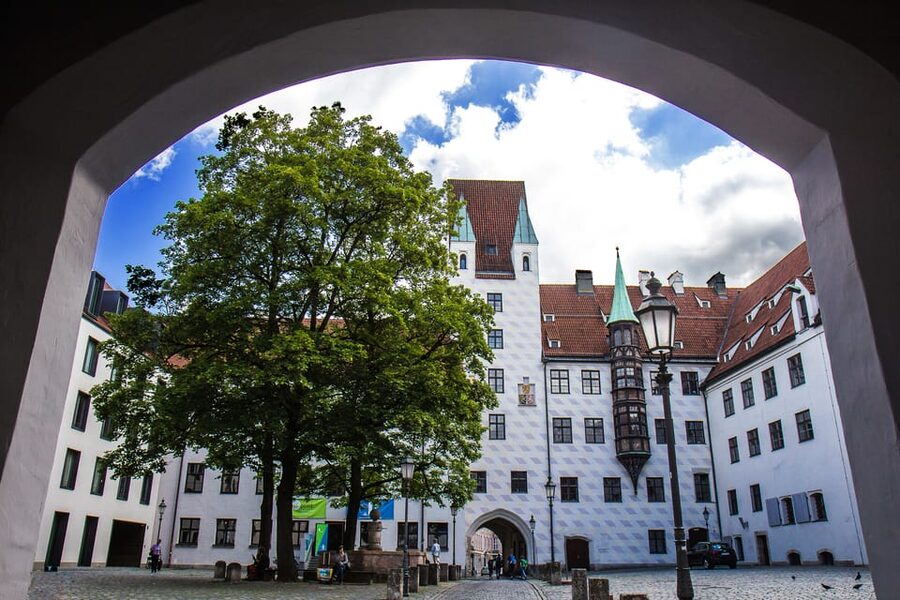
The Alter Hof, or Old Court of Munich, adds another layer to the route. It represents the official, powerful side of the city, a useful contrast to the people who lived and worked at its margins.
The tour asks you to think about who had the right to police the streets and who was forced to operate outside accepted society. That is where the themes of executioners, prostitution, and witch hunts meet. These were not isolated subjects. They touched the city’s courts, religious institutions, public order, and ideas about respectability.
The guide also explains that executioners could act as pimps. That unusual detail is one of the reasons this tour has a stronger hook than a standard old-town walk. You are not only hearing about punishments. You are hearing about the awkward jobs and social roles that kept the system running.
The subject can be grim, but the tour is also described as including fun stories and anecdotes. That balance matters. A walk focused only on torture and executions could become heavy after two hours. A guide who adds humor and human detail can keep the subject listenable without turning suffering into a joke.
Prostitution and the end of an old system
Prostitution is one of the tour’s three central subjects, yet the supplied route details give fewer specific stops for it than for churches, gates, and historic roads. The guide is expected to explain how executioners became connected with pimping and why prostitution ended in the 1970s.
That final point gives the tour a link to modern Munich. It reminds you that prostitution was not simply a medieval problem that disappeared with the city walls. Rules and public attitudes changed over time, and the guide places that change in a much later period.
Still, you should set your expectations correctly. This is not advertised as a specialized social-history seminar or a visit to former red-light districts. It is a broad city walk built around several connected subjects. Some sections may be fuller than others, depending on the guide, group questions, and the exact route used that day.
The mix works best for you if you enjoy making connections between places and themes. If you want a tour devoted almost entirely to prostitution, you may find the church and witch-hunt sections take up more time than expected.
A two-hour walk that depends on the guide
The experience lasts two hours and is offered as a shared group or private tour. The format makes a real difference here because the product is built around spoken delivery, not objects you can inspect at your own pace.
A strong guide can turn a gate, church, or courtyard into a clear scene. The high praise given to Julia points to the qualities that matter: warmth, organization, and the ability to tell the story in an engaging way. Other feedback also described the guide as friendly and very well versed in history.
There is a tradeoff. A shared group can be good value at $25 per person, but you have less control over the pace and where the guide stops. A private tour should give you more room to ask questions, although the available details do not specify the private price or promise a custom itinerary.
The rating is 4.6 from six ratings, which suggests a generally positive experience but is still a small sample. I would put more weight on the consistent praise for interesting storytelling and smooth organization, while also taking the complaint about audibility seriously.
Price, value, and the right kind of visitor
At $25 per person, the tour is reasonably priced for a two-hour guided walk in central Munich. You are paying for the guide’s interpretation and route design, not for admissions, meals, transportation, or a show.
I think the price works well if you have already seen the main old-town sights and want a new angle on them. St. Michael’s, the Frauenkirche, and the Alter Hof are familiar landmarks, but the stories about punishment and social control can make them feel less predictable.
The value is weaker if you need a tour in English or if you mainly want interiors. The language is German only, and entrance fees are not included. You also need to bring comfortable shoes because the experience takes place on foot and continues in rain or sunshine.
The tour is described as wheelchair accessible, but it is also marked as not suitable for people with mobility impairments. Those statements do not fully match. If you have mobility concerns, contact Weis(s)er Stadtvogel GmbH before booking and ask about the exact route, walking surface, stops, and available assistance.
Free cancellation up to 24 hours before the start and the option to reserve now and pay later make the booking less risky. Those policies are useful if your Munich schedule is still moving around, but they do not solve the central issue of whether spoken German in a busy street will work for you.
Who should book this Munich history walk
I would choose this tour if you like city history with a darker edge, enjoy local anecdotes, and can follow German comfortably. It is especially useful after a first look at Munich’s center, when you recognize the big landmarks and are ready to ask what happened there beyond royal ceremonies and polished façades.
It also suits you if you prefer a guide to connect the dots. The route brings together the old gate, salt road, churches, former Jesuit college, and Alter Hof. You are not simply ticking off attractions. You are following a story about how Munich defined crime, sin, authority, and public order.
I would hesitate if you dislike grim subjects such as torture, executions, witch hunts, and prostitution. I would also think twice if you need quiet conditions to understand every word. The tour’s most serious weakness is not the subject matter. It is the chance that bells, rehearsals, crowds, or distance from the guide will swallow the explanation.
Should you book it?
Book Henker, Huren, Hexen if you want a German-language walking tour with a distinctive theme and you are happy to hear history through stories rather than reenactments. At $25, it offers a fair way to see central Munich’s best-known landmarks from an unsettling angle.
Choose a private departure if asking questions and controlling the pace matter to you. For a shared tour, arrive ready to identify the blue bag, wear comfortable shoes, stay close, and pay attention to the start time. If you can handle the language and the occasionally grim subject, this is a lively, unusual addition to a Munich visit.
FAQ
What is the Munich Henker, Huren, Hexen tour about?
The tour explores Munich’s dark history, including executioners, prostitution, pimping, witch hunts, torture, and executions.
How long does the tour last?
The walking tour lasts two hours.
What language is the tour offered in?
The tour is conducted in German, and German is the only listed tour language.
Where is the meeting point?
Meet your guide under the Neuhauser archway.
How do I recognize the guide?
The guide will carry a large blue bag with the white words Weis(s)er Stadtvogel on it.
Which Munich sights are included on the route?
The route includes stops or passages by St. Michael’s Church, the Frauenkirche, the Alter Hof, Neuhauser Tor, the historic salt road, and the former Jesuit college.
Is the tour available as a private experience?
Yes. You can choose between a shared group tour and a private tour.
Are food and drinks included?
No. Food and drinks are not included.
Are entrance fees included?
No. Entrance fees are not included in the tour price.
Can I cancel the booking for a refund?
You can cancel up to 24 hours in advance for a full refund. The reserve-now-and-pay-later option is also available.
Just added around Munich
- Pub crawl incl. Oktoberfest museum guided tour with beer tasting (private)★ 5.0 · 5 reviews
- South Tyrolean specialties and wine tasting★ 5.0 · 5 reviews
- Size Matters Beer Tour Munich★ 4.6 · 105 reviews
- Secret Food Tours Munich★ 4.8 · 5 reviews
- Short & sweet: Tasting the Viktualienmarkt★ 4.8 · 37 reviews
- Residence of Munich private tour with skip the line ticket★ 5.0 · 4 reviews
- Munich: Romantic Wine Experience for Two at Viktualienmarkt★ 4.2 · 14 reviews
- Munich: Resistance against Hitler – Historical Walking Tour★ 5.0 · 5 reviews
Munich Tours, compared.


Neuschwanstein & Linderhof Castle-Fairytale Day Tour from Munich
Read our review →
Dachau Concentration Camp Memorial Site Tour from Munich by Train
Read our review →
Munich Hop-On Hop-Off Tour: 1-Day or 2-Day Ticket
Read our review →Browse the lists this tour appears in