

Review · HANOVER TOURS
Hanover: Guided Walking Tour of the Linden-Limmer District
Linden-Limmer tells Hanover’s story in a compact, very walkable way. In two hours, you move from a royal kitchen garden and old weavers’ houses to factories, brutalist concrete, street art, and the famous Limmern scene on Limmerstraße. I especially like the contrast between courtly Linden and its later workers’ identity, plus the chance to see parts of Hanover that a central old-town tour skips.
I also like the tour’s modest $17 price and small-scale, local focus. The main consideration is language: the live guide speaks German only, and the tour covers a lot of social and industrial history in two hours, so it suits you best if you enjoy walking and listening closely.
Key points at a glance

- A royal garden becomes a city district: See the former kitchen garden, its 1749 pavilion, and the shift from court supply ground to urban neighborhood.
- Old Linden meets modern concrete: Hear why the Ihme center is disliked by some locals but admired by young people for its brutalist design.
- Factory history has a personal name: Learn how Johann Egestorff helped start Linden’s industrial growth.
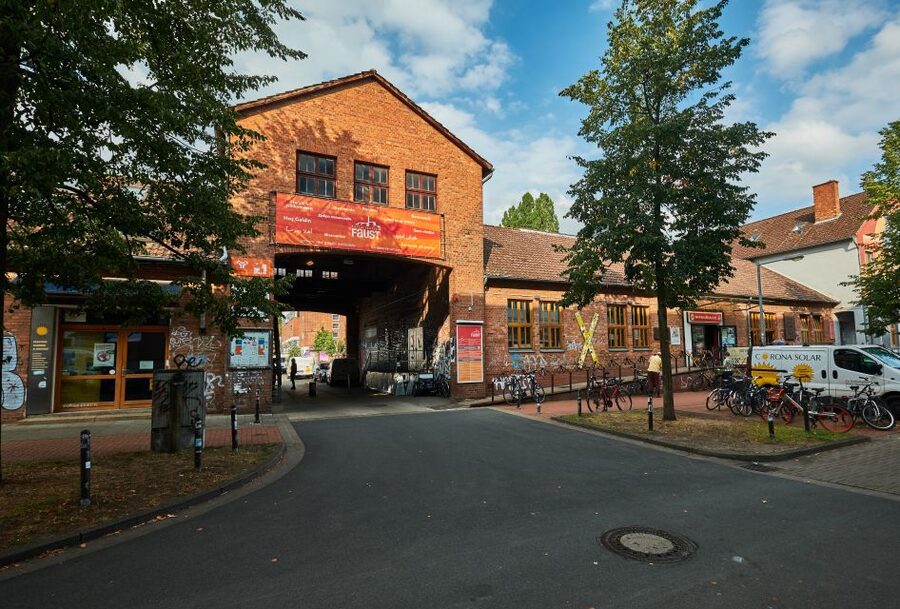
- Culture fills old industrial buildings: Visit Faust, a former Werner & Ehlers bed factory now used for concerts, exhibitions, and readings.
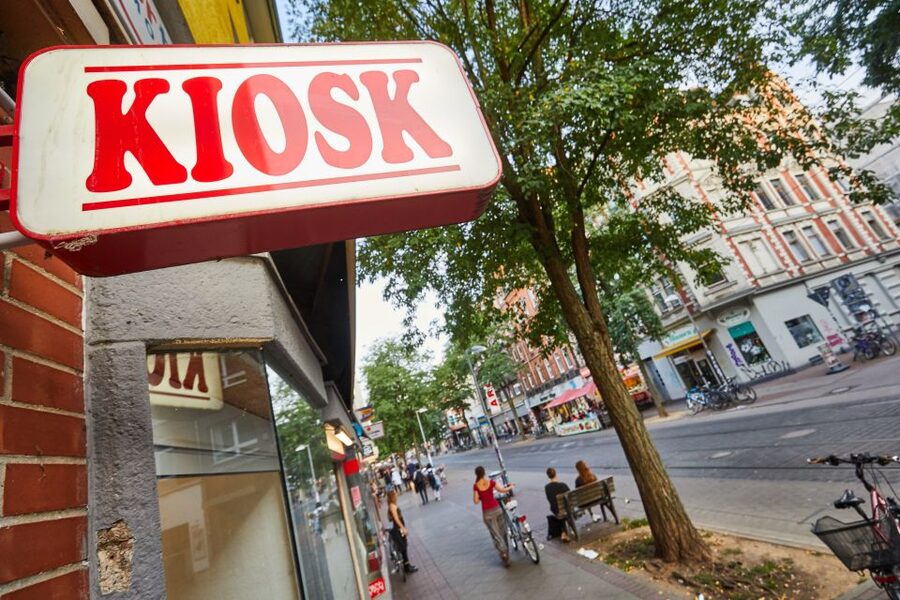
- Street life arrives on Limmerstraße: Finish near kiosks, restaurants, cafés, and the local habit known as Limmern.
- A practical two-hour outing: The tour costs $17, is wheelchair accessible, and allows free cancellation up to 24 hours before departure.
Why Linden-Limmer is worth your time
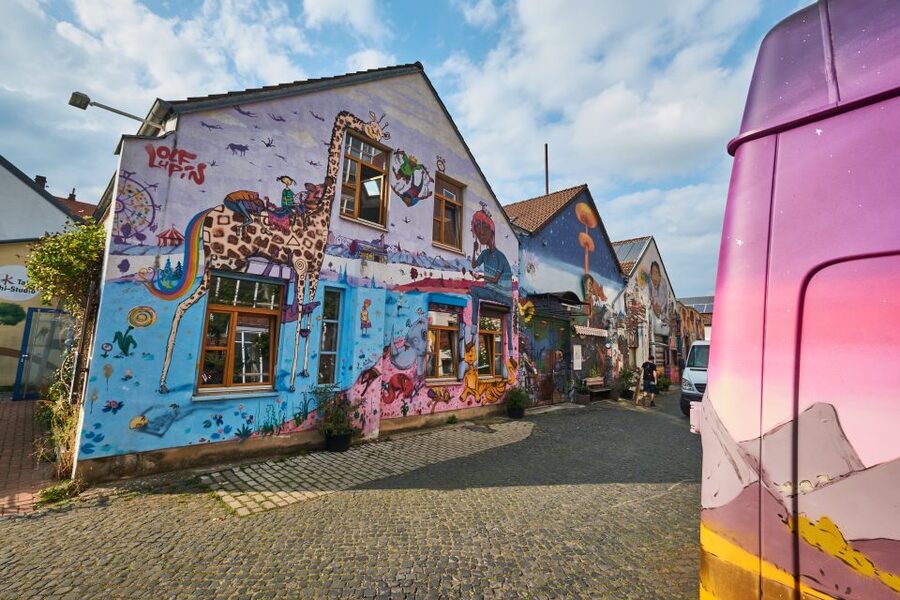
If you know Hanover mainly for its central railway station, grand gardens, and royal connections, Linden-Limmer adds a different layer. This district shows what happened when courtly land, factories, railways, and working families reshaped the edge of the old kingdom.
The tour is not just a parade of buildings. It explains how a place described as the most beautiful village in the Kingdom of Hanover changed into a workers’ quarter. That change gives the walk its backbone. You see the remnants of privilege, then the industrial push, then the arts and café culture that define much of the district today.
I like this kind of tour because the sights are not isolated monuments. A garden pavilion makes more sense when you learn why it was built. A factory district makes more sense when you see how rail connections and industrial work changed housing. Even the controversial Ihme center becomes more interesting once you understand that city architecture can be disliked and admired at the same time.
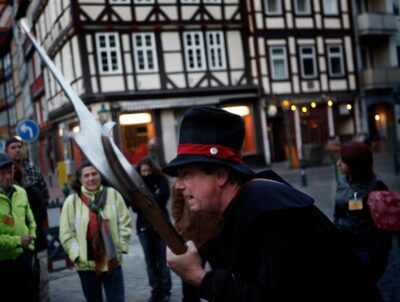
The tour is led in German by a guide wearing a Hannover Marketing & Tourismus GmbH card around the neck. Six recorded ratings give the experience a five-star average, and the available feedback describes a small, relaxed outing with lively explanations. One German participant called it a pleasant experience in a small group, which is useful to know if you prefer a personal walk over a large city group.
More walking tours in Hanover:
- Hannover: Guided Old Town Walking Tour
★ 4.5 · 338 reviews - Hanover: Crime Walking Tour
★ 4.5 · 243 reviews - Hanover: Flashlight Guided Walking Tour at Night
★ 4.7 · 52 reviews
Küchengarten and the last traces of courtly Linden
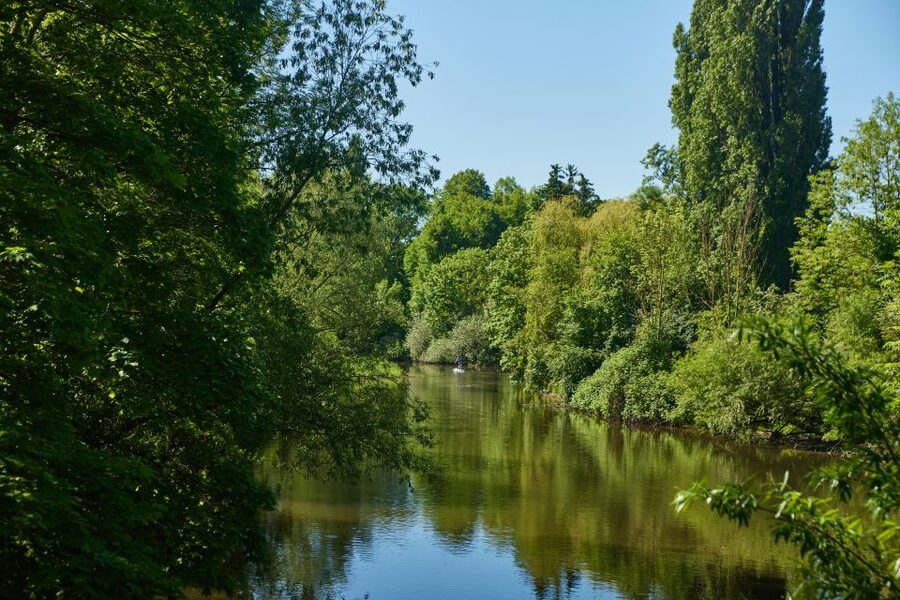
The route includes Küchengarten, the former garden used to supply the royal family. This is an excellent opening subject because it places Linden in its earlier role, before factories and railways changed the district.
You can also see the kitchen garden pavilion from 1749. It was moved to Lindener Berg in 1913, an unusual detail that gives the building a second chapter. The pavilion is not simply an old leftover from the royal period. Its relocation shows how the city preserved and repositioned an object from an earlier Linden.
At Weberstraße 20 and 21, the old weavers’ houses offer another surviving link to the courtly period. These buildings help you picture a smaller settlement before industrial expansion filled the area with workers, factories, and new housing.
Do not expect a palace tour. The value here is the explanation of how ordinary houses and a garden building connect to Hanover’s royal past. You get a more grounded view of history, one that includes working buildings as well as official ones.
From Johann Egestorff to a workers’ quarter
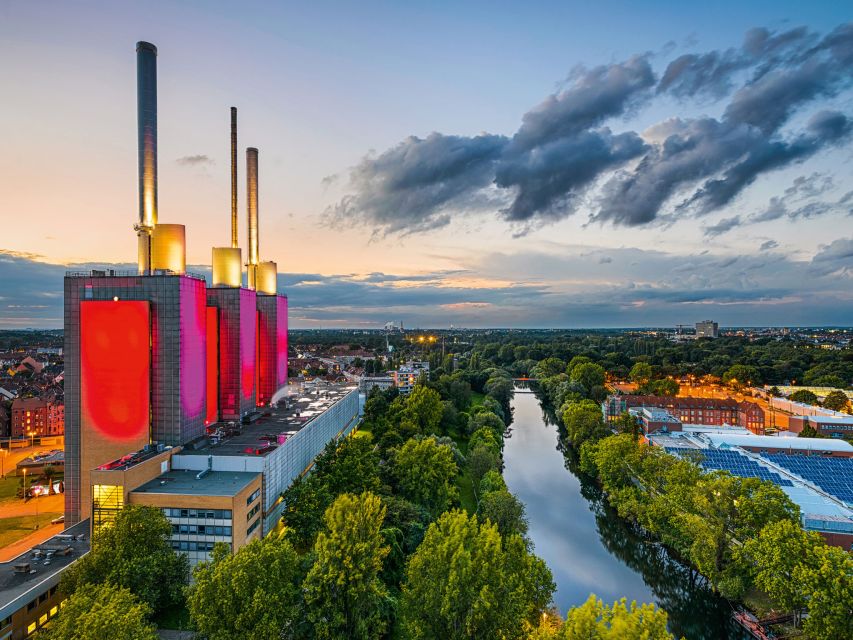
The industrial story begins with Johann Egestorff, whose factories helped set Linden on a new course. The information available for the tour points to lime production and then to the machine and textile industries. Those industries changed the district’s purpose and its population.
This is where the walk becomes especially useful for understanding urban growth. Linden did not remain a pretty village on the edge of Hanover. Industrial work brought a different building pattern and a new social identity. The area became a quarter for workers rather than a place tied mainly to royal supply and rural life.
I appreciate that the story does not treat industrialization as a simple success story. Factories created jobs and helped the district grow, but they also produced a denser, more practical urban environment. The contrast between the old kitchen garden and the industrial Linden is the point.
The tour also explains a later political change. After Hanover was annexed by Prussia in 1866, the royal kitchen garden became available for new uses. The freight station was built there, and a middle-class residential area developed around Lichtenbergplatz. In a short walk, you get a clear example of political change opening land for transport, housing, and city expansion.
Lichtenbergplatz and the city after 1866
Lichtenbergplatz represents a different side of Linden from the industrial core. Once the royal garden land was freed, urban development could spread into it. A residential area for the middle class grew around the square, while the freight station added a practical link to the wider economy.
This part of the story matters because it prevents an overly simple picture of Linden as only a workers’ district. The neighborhood contained different social groups and changed again as old boundaries disappeared.
The guide’s job here is to connect the physical setting to those changes. You are not only looking at a square or a former rail site. You are seeing how the end of royal control altered land use and allowed new residents and new forms of commerce to arrive.
For you, the main benefit is context. Hanover’s districts can look settled and permanent, but this walk shows how quickly ownership, transport, and industry can redraw a city.
A few more Hanover half-days to weigh up
- Hannover: 24-Hour Hop-On Hop-Off Sightseeing Bus Ticket
★ 4.2 · 298 reviews - Hanover: SEA LIFE Entry Ticket
★ 4.1 · 160 reviews - SEA LIFE Hannover Ticket
★ 4.0 · 96 reviews - Hanover: Royal Gardens of Herrenhausen Guided Tour
★ 4.6 · 78 reviews
The Ihme center and the argument over brutalist design
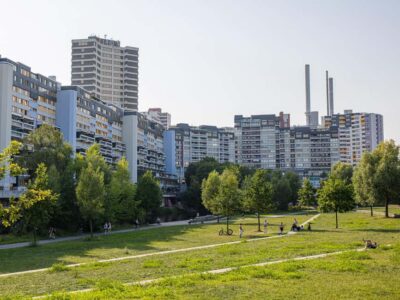
The Ihme center is one of the tour’s most modern and divisive stops. Many Hanover residents consider it an eyesore, while many young people take a strong interest in its brutalist construction. That split makes the building more rewarding than a universally admired landmark.
Brutalist architecture often asks you to look at structure, mass, and concrete rather than decoration. You may not like the Ihme center, but the tour gives you a reason to look twice. Its presence raises practical and artistic questions about how cities preserve, reject, or reinterpret large postwar buildings.
I like that the tour does not force a single verdict. You can hear why the complex has a poor reputation and why its design still attracts attention. That balance is more helpful than being told that every old or unusual building deserves automatic praise.
This is also a good stop for travelers who enjoy architecture but do not want a specialist lecture. The tour places the building within Linden’s wider story, showing how the district kept changing long after the royal garden and factory eras.
Faust: an old bed factory with a new purpose
Faust cultural center occupies the former Werner & Ehlers bed factory. The building’s present use gives the industrial past a practical afterlife. Instead of being treated only as a relic, the site now hosts concerts, exhibitions, readings, and other cultural events.
For me, this is one of the strongest examples of adaptive reuse on the walk. A factory once associated with production now supports music, art, and public gatherings. The change reflects Linden’s current cultural identity without erasing the building’s earlier purpose.
You should think of Faust as a place to understand rather than a guaranteed event stop. The tour covers the cultural center and its background, but the supplied details do not promise entry to a concert, exhibition, or reading. If you are curious about the program, check separately before your visit.
The stop also gives the walk a welcome change of mood. After royal gardens, industry, and controversial concrete, Faust shows how an older work site can become part of everyday cultural life.
Nedderfeldstraße, graffiti, and the Apollo cinema
On Nedderfeldstraße, the atmosphere shifts again. You can see graffiti art and find numerous pubs, giving the route a more informal, contemporary feel. This is a useful section if you want to understand Linden through its public life rather than only through dates and buildings.
Nearby, the guide points out the Apollo cinema, described as one of the first arthouse cinemas in Germany. That detail gives the area a place in film culture as well as nightlife and street art.
The appeal here is the mix. Graffiti, pubs, and an arthouse cinema do not tell the same story, but together they show a district with room for alternative culture and casual social life. You might find the street more interesting if you enjoy seeing how local identity appears in signs, walls, cafés, and entertainment spaces.
The tradeoff is that this is not a polished sightseeing zone. The charm comes from the ordinary, slightly rough edges. If you prefer grand squares and spotless historic façades, this section may feel less rewarding. If you like city neighborhoods with visible personality, it is likely to be one of the best parts.
Limmerstraße and the art of Limmern

The walk finishes with Limmerstraße, famous for Limmern. The street has a high density of kiosks, restaurants, and cafés, making it a natural place to end a neighborhood tour.
Limmern is not presented as a formal attraction. It is a local social habit tied to the street’s food, drink, and easy meeting places. The guide helps you understand why this stretch matters to Hanover’s everyday culture.
I like ending here because the route moves from history into a place you can use immediately. After the tour, you can choose a café or restaurant, continue exploring, or simply watch the local rhythm for a while. The tour fee does not include food or drinks, so plan to pay separately if you want to stay for a meal.
Limmerstraße also makes the experience feel current. The kitchen garden and weavers’ houses connect you to the past, while Limmerstraße shows how Linden functions now.
What $17 gets you
At $17 per person, this is a good-value city walk if you want interpretation rather than a quick list of landmarks. The price covers the two-hour guided tour, and the route includes several distinct subjects: royal land, early industry, rail development, architecture, cultural reuse, cinema, graffiti, pubs, and café life.
You are paying for the connections between those places. Without a guide, you could see the pavilion, Ihme center, Faust, and Limmerstraße, but you would miss much of the reason they belong in one story.
The value is strongest for first-time visitors to Linden-Limmer or anyone who wants a better sense of Hanover beyond its best-known central sights. It is less useful if you already know the district well or want a museum-style presentation with lots of indoor time.
A five-star average from six ratings is encouraging, and the available comments point to a friendly, relaxed tone. Still, six ratings is a small sample. I would treat it as a positive signal, not a guarantee that every guide or group will match the same mood.
Timing, language, and practical fit
The experience lasts two hours. That is long enough to cover the district’s main story without taking an entire day, but short enough to fit beside other Hanover plans. Check the available starting times when booking because the exact departure time is not fixed in the supplied details.
The guide speaks German. You should book only if you can follow a live German explanation, since the value depends heavily on the guide’s stories and connections.
The meeting point is TAK, Die Kabarett Bühne. Your guide will wear a Hannover Marketing & Tourismus GmbH card around the neck, so you have a clear way to identify the correct person.
The tour is wheelchair accessible, which makes it a practical choice for many people who need an accessible route. The provided information does not detail the exact surfaces, slopes, or restroom arrangements, so ask the provider directly if you need those specifics.
You can cancel up to 24 hours ahead for a full refund, and the reserve-now, pay-later option lets you hold a place without paying immediately. Those policies are useful if your Hanover schedule is still moving.
Who should book this Linden-Limmer walk?
I would choose this tour if you want local history with modern city life mixed in. It suits you especially well if you enjoy:
- Industrial and social history rather than only royal monuments
- Architecture that sparks disagreement
- Former factories reused as cultural spaces
- Street art, cinemas, cafés, and neighborhood character
- A short walking experience at a low price
- German-language guiding
Families with older children may find the changing identity of the district more engaging than a formal monument tour. Architecture fans should pay close attention at the Ihme center. People interested in food and nightlife will appreciate ending near Limmerstraße, even though meals are not included.
I would skip it if you need an English tour, dislike neighborhood walks, or want guaranteed access inside every stop. Several locations are viewed from the route, and the available details do not promise performances, screenings, or meals as part of the outing.
Should you book it?
Book this tour if you want to understand how Linden changed from royal supply ground to industrial quarter and then to a cultural, café-filled part of Hanover. For $17, the two-hour format gives you a strong introduction to places that are easy to overlook when you stay in the historic center.
The best reason to go is the range. Küchengarten, Weberstraße, the Ihme center, Faust, Nedderfeldstraße, Apollo, and Limmerstraße belong to very different chapters of the district. Put together, they make Linden-Limmer feel like a living city story rather than a collection of sights.
Skip it only if German is a barrier or if your idea of sightseeing requires grand monuments and indoor attractions. For a relaxed, locally focused walk with a clear sense of place, this is an easy recommendation.
FAQ
How much does the Hanover Linden-Limmer walking tour cost?
The tour costs $17 per person.
How long does the tour last?
The guided walk lasts two hours.
What language is the tour conducted in?
The live guide speaks German.
Where does the tour meet?
The meeting point is TAK, Die Kabarett Bühne.
How will I identify the guide?
The guide will wear a Hannover Marketing & Tourismus GmbH card around the neck.
Is the walking tour wheelchair accessible?
Yes, the experience is listed as wheelchair accessible.
What places are included in the route?
The route includes Küchengarten, the Ihme center, Hanover’s combined heat and power plant, Faust cultural center, Nedderfeldstraße, the Apollo cinema, and Limmerstraße.
Can I cancel for a refund?
Yes. You can cancel up to 24 hours before the tour for a full refund.
Do I have to pay when I book?
No. The reserve-now, pay-later option lets you reserve a place and pay nothing at the time of booking.
Just added around Hanover
- Taste and Travel Odyssey in Hanover★ 5.0 · 5 reviews
- Goslar City guided tour★ 4.5 · 11 reviews
- Fritz Haarmann murder tour through Hanover’s old town★ 4.5 · 7 reviews
- Hanover Private Walking Tour With A Professional Guide★ 5.0 · 7 reviews
- Guided tour of the New Town Hall in Hanover★ 5.0 · 4 reviews
- City walk through Hanover★ 4.0 · 20 reviews
- SEA LIFE Hannover Ticket★ 4.0 · 96 reviews
- Hanover: Royal Gardens of Herrenhausen Guided Tour★ 4.6 · 78 reviews
Hanover Tours, compared.



Browse the lists this tour appears in