
Review · DRESDEN TOURS
Dresden: Private Guided Walking Tour
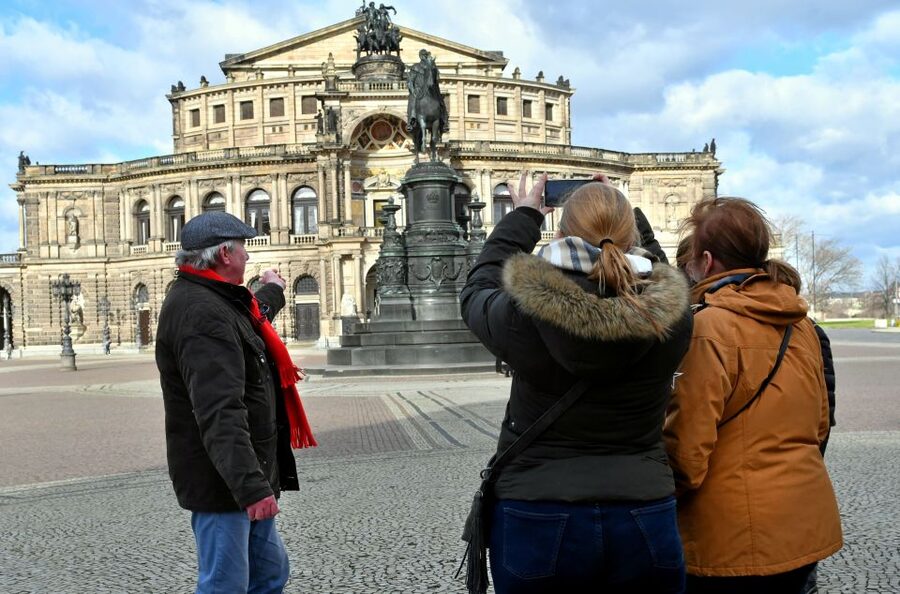
Dresden’s old town is a grand stage of Baroque buildings, river views, royal courtyards, and difficult memories. This two-hour private walk takes you from Neumarkt past the Frauenkirche, Semperoper, Zwinger, Dresden Castle, and the monuments tied to the city’s long story.
I like the clear route through the historic center and the chance to ask your own questions in a private group. I also like the human side of the tour: guides such as Idiko and Frau Schulz have been praised for adapting to mixed-age groups, adding humor, and sharing useful restaurant and event tips.
The main consideration is the group limit of 25 people. That is private in the sense that your booking is not mixed with strangers, but a full group will not feel intimate. The tour also lasts only two hours, so you will see the outside of many sights rather than visit every interior.
Key points at a glance
- Neumarkt starting point: Meet at Dresden Information in the basement of the QF Passage, beside the Frauenkirche.
- A strong old-town circuit: See the Frauenkirche, Semperoper, Zwinger, Dresden Castle, Brühl’s Terrace, Procession of Princes, Stallhof, Dresden Cathedral, Taschenbergpalais, and Augustus Bridge.
- More than Baroque architecture: The guide covers Dresden from the Middle Ages and Renaissance through the 1989 Peaceful Revolution.
- Private booking: Your group stays together, with no strangers added, and the maximum size is 25 people.
- English or German guiding: The tour is offered only in these two languages unless another arrangement is requested.
- Useful local advice: Time is set aside for tips on restaurants and events, which can help you plan the rest of your stay.
Why this Dresden walk works well
Dresden can feel confusing at first. Its old town has grand buildings gathered close together, but each one belongs to a different chapter: royal Saxony, wartime destruction, East German rule, reconstruction, and modern city life.
A guided walk gives you the thread connecting those chapters. Instead of seeing the Frauenkirche as just a pretty church or the Zwinger as just another palace complex, you learn why Dresden looks the way it does today.
The route is also efficient. In two hours, you cover many of the city’s most important sights without spending time arranging public transport between them. That matters if Dresden is one stop on a larger German trip or if you have only a day in the city.
I would think of this as an orientation walk rather than a full museum tour. You get the setting, the major landmarks, the main historical outline, and advice for choosing what to explore next.
More walking tours in Dresden:
- Dresden: City & Semperoper Guided Walking Tour
★ 4.8 · 2,293 reviews - Dresden: Guided City Walk with a Cup of Coffee
★ 4.7 · 1,568 reviews - Görlitz: Old Town Guided Walking Tour
★ 4.7 · 723 reviews
Starting at Neumarkt and the Frauenkirche
The meeting point is Dresden Information at Neumarkt 2, in the basement level of the QF Passage. This is a practical place to begin because Neumarkt puts you right beside the Frauenkirche and in the middle of Dresden’s reconstructed historic center.
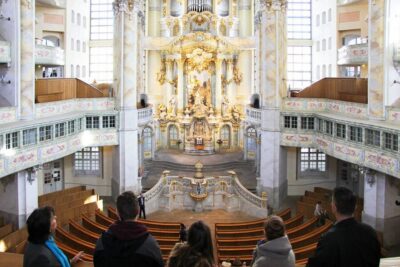
The Frauenkirche is one of Dresden’s defining sights. Its large stone dome dominates the square, and the building gives the tour an immediate lesson in Dresden’s past and present. The church was destroyed during the Second World War and later rebuilt, making it a powerful example of how the city has dealt with loss and restoration.
The tour description does not include admission to the church or a guaranteed interior visit. You should expect the guide to explain the building and its place in the square, while the walking route continues through the surrounding old town.
Neumarkt is also a useful place to listen for the city’s layers. Around you are carefully restored historic forms, newer construction, shops, cafés, and spaces shaped by decades of debate about how Dresden should rebuild. A guide can point out details you might otherwise pass without noticing.
From medieval Dresden to the Baroque court
The central theme is Dresden’s long development, covering more than 1,000 years from the Middle Ages to the present. That broad time span gives the walk a useful balance. You are not hearing only about palaces and royal ceremony.
The medieval period introduces a tougher version of Dresden, with the guide discussing the city’s early growth and difficult conditions. The Renaissance brought fresh energy and new ideas, while the Baroque period gave Dresden much of the theatrical architecture that draws people today.
This is where the guide’s stories matter. The experience promises small anecdotes alongside major events, so the walk is not just a list of dates. Humor is part of the approach too. One recent group singled out its guide for combining historical and funny information, a good sign if you prefer a lively talk over a formal lecture.
The guide’s style may vary by person. Idiko and Frau Schulz were specifically praised for engaging their groups, and Frau Schulz was noted for holding the attention of both younger and older participants. Those details suggest that the tour can work well for families or mixed groups, though the exact guide depends on availability.
Semperoper and the grand Baroque show
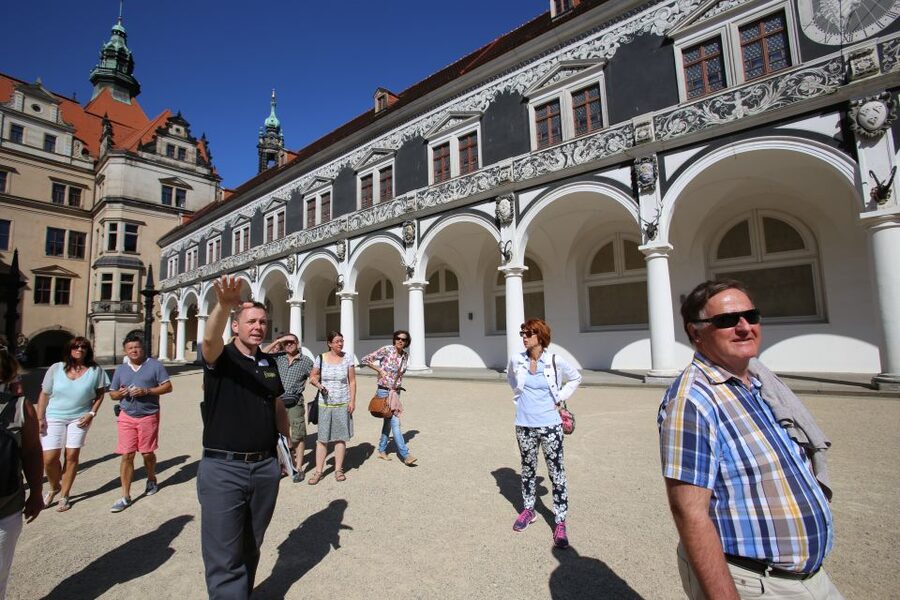
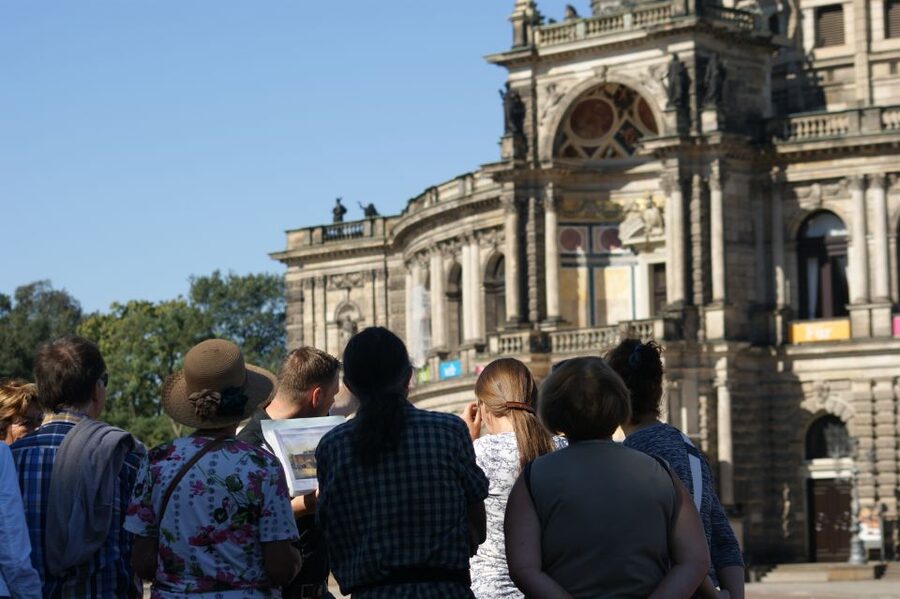
The Semperoper is one of the route’s major stops. Its name is tied to architect Gottfried Semper, and its setting beside Dresden’s grand central buildings makes it an important part of the city’s cultural image.
Here, you get a sense of Dresden as a court city that used architecture, music, and ceremony to display power. The building is not simply a theater. It helps explain why Dresden became known for artistic ambition and royal spectacle.
The tour focuses on the historic center from the outside. No opera performance or interior admission is listed, so you should not book this walk expecting a backstage visit or a full theater tour.
Still, an exterior explanation can be worthwhile. You can look closely at the building, understand its place beside the Zwinger and palace complex, and decide later if you want to return for an event or a separate visit. The guide’s local advice about events may be especially useful here.
A few more Dresden half-days to weigh up
- Dresden: Semperoper Tickets and Guided Tour
★ 4.7 · 12,102 reviews - Dresden: The Original Night Watchman Tour in Lantern Light
★ 4.6 · 6,653 reviews - Dresden: Semperoper and Old Town Tour
★ 4.8 · 5,735 reviews - Dresden: River Sightseeing Boat Cruise
★ 4.3 · 5,323 reviews
The Zwinger and Dresden’s Baroque character
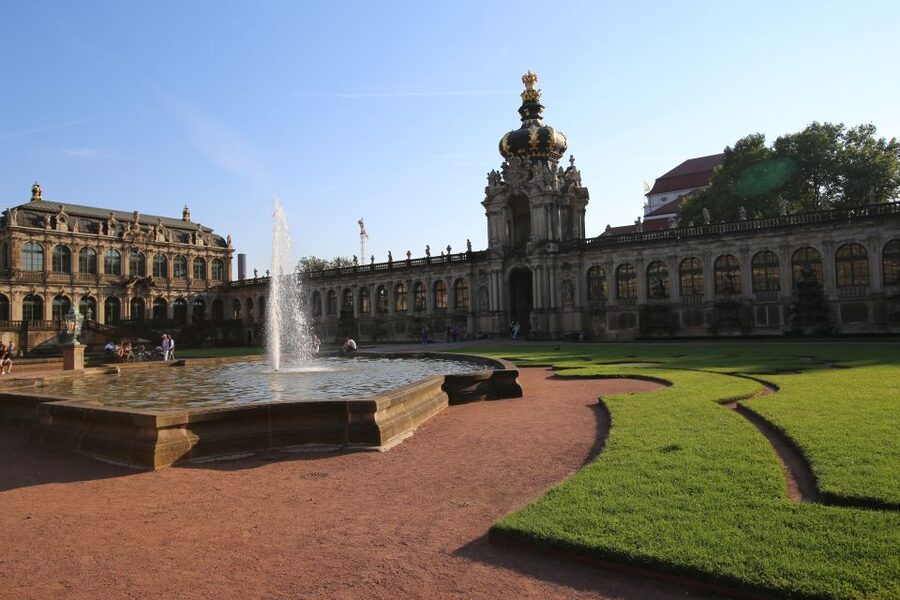
The Baroque Zwinger is likely the visual high point of the route. Its grand facades, ornamental details, and formal layout show Dresden at its most dramatic.
The Zwinger helps explain what the word Baroque means in practical terms. This was architecture designed to impress. Curves, decoration, symmetry, and carefully framed space all turn a public area into a statement of wealth and power.
The guide can give the building a human setting by explaining the court culture behind it. Without that context, you may simply photograph the arches and courtyards. With it, the Zwinger becomes evidence of how rulers wanted to be seen.
Again, the advertised experience is a walking tour, not a museum ticket. If you want to visit the collections inside the Zwinger, you will need to plan that separately. The advantage of seeing it on the walk is that you learn what makes the complex important before deciding how much time to spend inside.
Dresden Castle, royal spaces, and the Procession of Princes
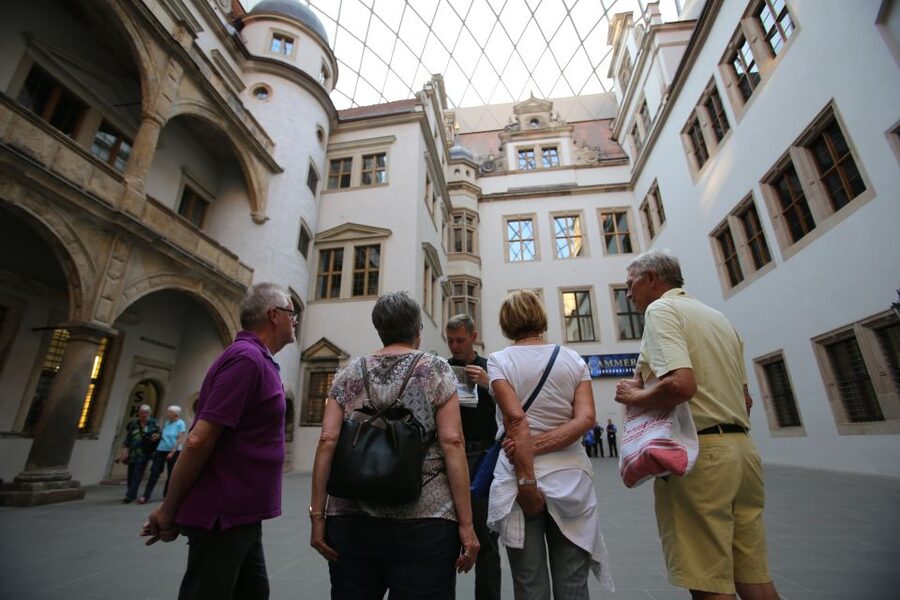
From the Zwinger, the route continues toward Dresden Castle. This gives you another view of the city’s royal past and connects the Baroque center with the older seat of Saxon power.
Dresden Castle is especially useful for understanding that the old town was not built as a collection of unrelated monuments. The castle, cathedral, palace buildings, courtyards, and public squares formed a working center of government and ceremony.
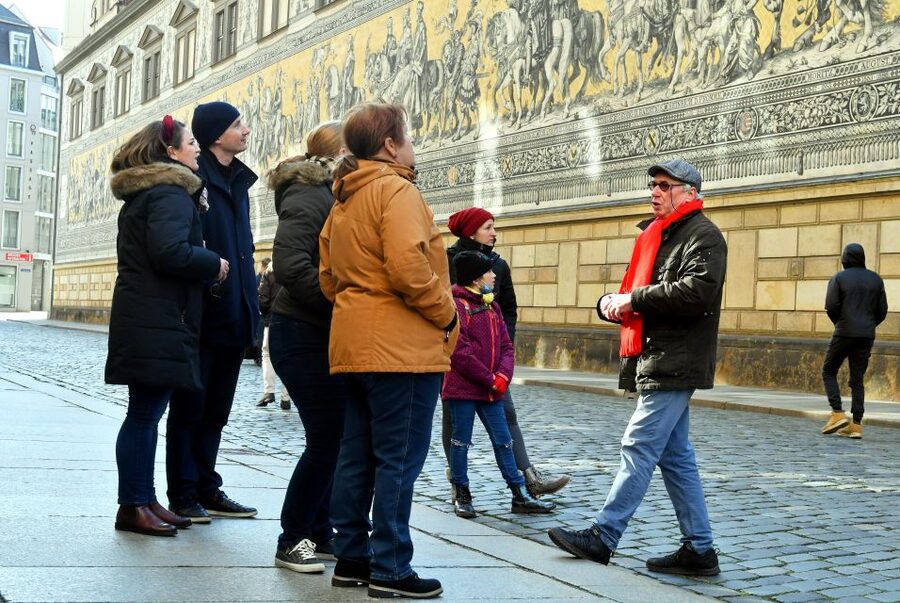
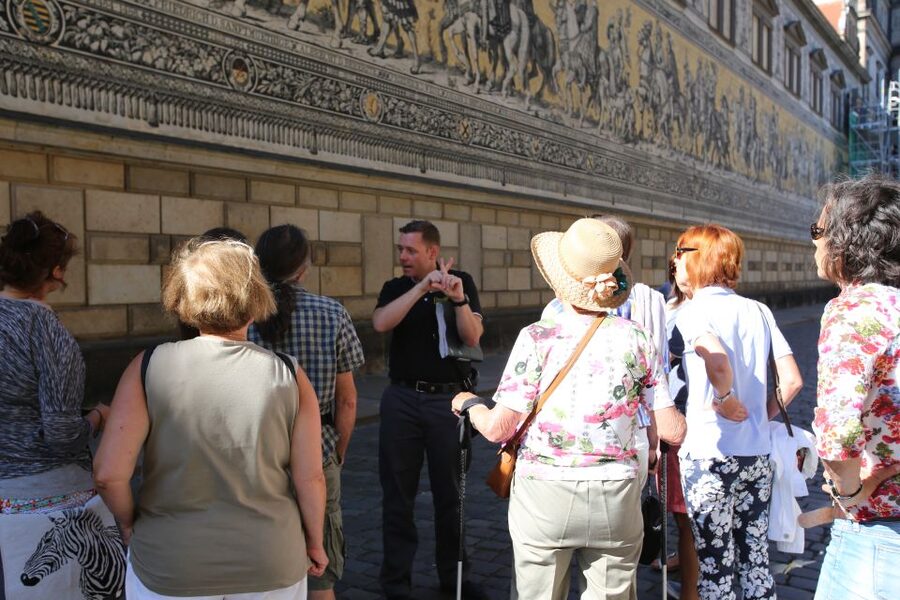
The Procession of Princes adds a memorable visual stop. This long wall image presents rulers of the House of Wettin in a continuous procession, allowing the guide to talk about Saxon dynasties and the way political history was placed directly into the city streets.
It is the kind of stop where a guide can make the difference. On your own, you may see a long decorated wall and move on. With explanation, you can understand why the figures matter and how the artwork turns a passageway into a history lesson.
The nearby Stallhof adds another layer. Its name means stable courtyard, and the space reflects the practical side of court life behind all the ceremony. The route lets you see both the grand public image and the working spaces that supported it.
Dresden Cathedral and Taschenbergpalais
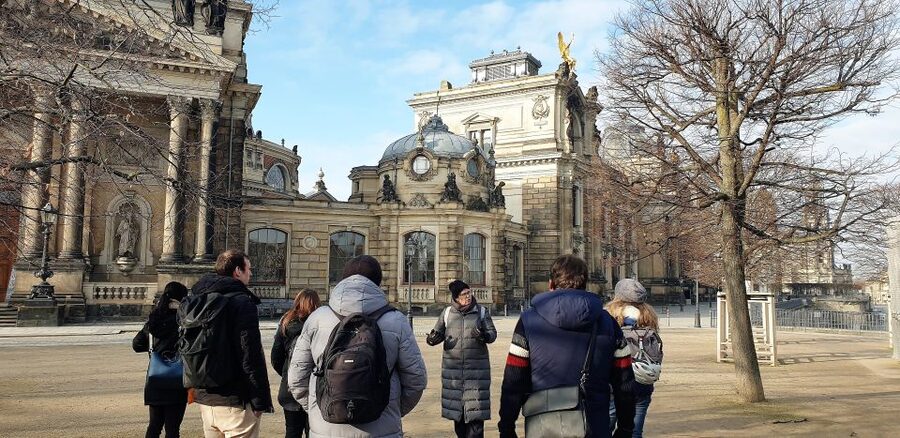
The walk next reaches Dresden Cathedral, another key building in the old town. Its presence helps show how closely religion, monarchy, and public life were linked in the historic center.
The cathedral is also part of the visual sequence that makes this walk effective. You move between church, palace, theater, courtyard, and riverfront spaces, with each stop changing the mood and subject.
Taschenbergpalais follows as the route continues through the central district. The building is part of Dresden’s courtly architectural group, and the guide can place it in relation to the castle and other royal buildings.
These stops are not isolated photo opportunities. Taken together, they show how the city center was designed to express authority. You see religious authority at the cathedral, royal authority around the castle, and cultural authority at the opera and Baroque complexes.
Brühl’s Terrace and Augustus Bridge
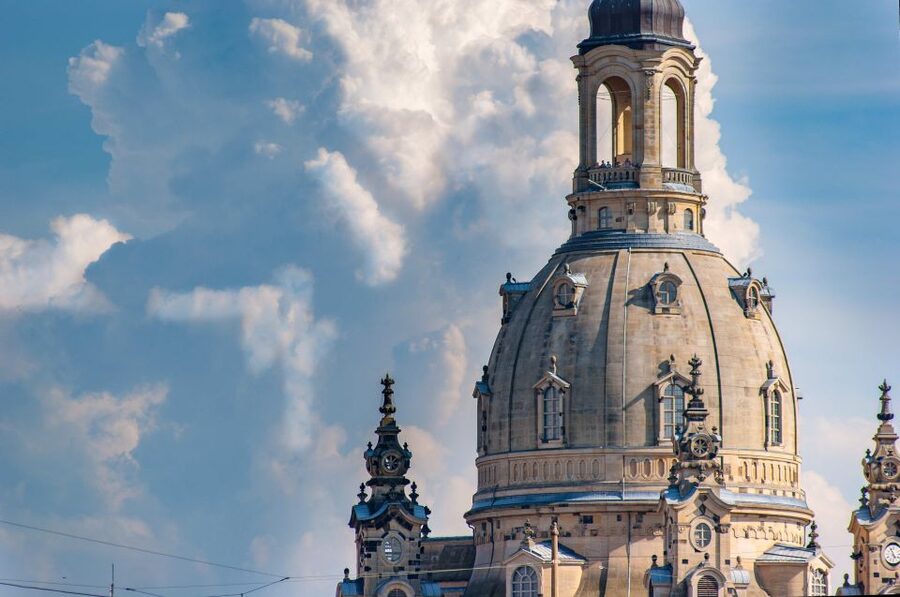
Brühl’s Terrace brings the walk toward the Elbe. It is known for its elevated riverfront setting and is often called the Balcony of Europe. The tour uses this section to shift from tightly packed historic buildings to a broader view of Dresden.
That change of pace is welcome after the palace and church stops. You get space to look across the river and understand the city’s position along the Elbe, while the guide continues the story of Dresden’s public life and changing identity.
The route then leads toward Augustus Bridge before concluding near the Frauenkirche. The bridge connection gives you another strong view of the old town and creates a satisfying loop rather than leaving you at an unfamiliar edge of the city.
Because the tour ends near the Frauenkirche, you finish close to the same area where you began. That is convenient for lunch, further sightseeing, shopping, or a separate church and museum visit.
The Peaceful Revolution and divided Germany
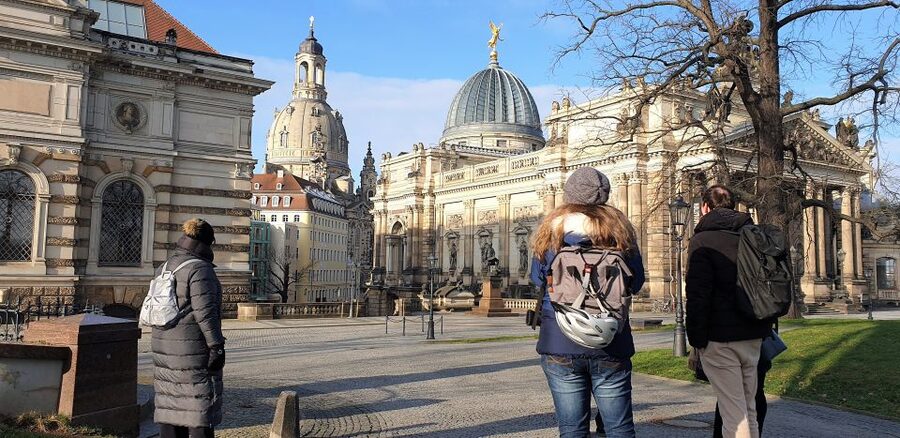
The most valuable part of the tour may be the move beyond royal Dresden. The guide also covers the Peaceful Revolution of 1989 and what life felt like for people in East and West Germany.
This recent history keeps the tour from becoming a parade of old buildings. Dresden’s story did not stop with the Baroque court. The city was shaped by the Second World War, East German rule, division, protest, reunification, and the choices made during reconstruction.
The reference to ordinary people in former East and West Germany is important. Political history can feel remote when it is reduced to dates and leaders. A guide who explains how the period affected daily life gives you a more useful way to understand modern Dresden.
The tour does not promise a dedicated museum visit or a long political history seminar. Instead, these events are woven into the walk. That makes the subject accessible, though anyone wanting a detailed study of 1989 should plan extra time at a museum or memorial.
What private really means here
Your reservation is for a private group, and the maximum is 25 people. That arrangement gives you control over who joins the walk, which is helpful for families, office groups, school groups, and friends traveling together.
You can also ask questions that suit your party. A group interested in architecture can focus on Baroque design. A family may prefer stories and visual details. A business group might want restaurant or event suggestions for later.
There is one important distinction. A maximum of 25 is not the same as a two-person private walk. At full size, you may need to stay close to the guide and speak up if you want to ask something. If you want the most personal feel, a smaller booking is better.
The private format makes the $212 group price easier to assess. For two people, it works out to $106 each. For ten people, it is $21.20 each, and for 25 people, it is about $8.48 each. Larger parties get much stronger value, while solo visitors and couples may find the cost harder to justify.
Guide style, language, and accessibility
The tour is available in English or German. If you need another language or a different meeting point, you must send a request rather than assume it is included.
The guides are described as licensed, professional, enthusiastic, and able to share local suggestions. The strongest praise has focused on warmth, humor, experience, and the ability to adjust the walk to the group. Idiko was singled out for an especially strong presentation, while Frau Schulz was praised for engaging both young and older people.
That does not guarantee a particular guide. It does tell you what to look for: a guide who can connect the buildings with stories and respond to your interests, not just recite facts.
The walk is listed as wheelchair accessible. The route takes place in the historic center, and exact surface conditions or any temporary access limits are not specified, so it is sensible to confirm details if your mobility needs are particular.
Timing, cancellation, and what to plan next
The walk lasts two hours, with starting times available according to the date you choose. That is long enough for a solid introduction, but short enough to fit before a museum visit, meal, or evening event.
Since the tour covers many landmarks, keep your expectations realistic. You will see the major sights and hear their stories, but the schedule does not allow a long stop inside every building. Think of the walk as a framework for the rest of your Dresden visit.
You can cancel up to 24 hours in advance for a full refund, and the reserve-now, pay-later option keeps your plans flexible. Those terms are useful if your German itinerary is still changing.
One serious caution deserves attention. One booking reported that no guide appeared and that a refund had not yet been received. The overall score is 4.5 out of 5 from 81 ratings, and several recent groups gave strong praise, but this isolated problem means you should keep your booking confirmation and provider contact details handy on the day.
Who should book this Dresden tour?
I would choose this walk if you want a fast, well-organized introduction to Dresden’s old town and prefer learning through stories rather than reading plaques. It suits first-time visitors, families, private groups, and anyone who wants local suggestions for restaurants or events.
It is also a good match if Dresden’s modern history matters to you. The coverage of the 1989 Peaceful Revolution and divided Germany gives the tour more substance than a purely architectural stroll.
I would hesitate if you want extensive interior visits, a small two-person group at the same price, or a specialist tour focused only on art, music, or wartime history. The two-hour route gives you breadth, not exhaustive detail.
For a group of friends, relatives, or colleagues, the flat price can be excellent value. For one or two people, compare the cost with a regular small-group walk before booking. If you do choose it, arrive ready to listen, ask questions, and use the final restaurant and event tips to shape the rest of your time in Dresden.
FAQ
How long is the Dresden private walking tour?
The tour lasts two hours.
How much does the tour cost?
The listed price is $212 per private group of up to 25 people.
Where is the meeting point?
Meet at Dresden Information, Neumarkt 2, 01067 Dresden, in the basement floor of the QF Passage.
Which languages are available?
The tour is offered in English and German.
Can I request another language?
Yes. You can send a request for another language or a different meeting point, but it is not part of the standard arrangement.
What sights are included on the route?
The route includes Neumarkt, Frauenkirche, Semperoper, the Zwinger, Dresden Castle, Brühl’s Terrace, the Procession of Princes, Stallhof, Dresden Cathedral, Taschenbergpalais, and Augustus Bridge.
Is the tour private?
Yes. It is a private group tour, with a maximum group size of 25 people.
Is the tour wheelchair accessible?
Yes. The activity is listed as wheelchair accessible.
Can I cancel for a refund?
You can cancel up to 24 hours in advance for a full refund.
Do I have to pay when I book?
No. The reserve-now, pay-later option lets you book without paying immediately.
Just added around Dresden
- Freiberg: Scavenger Hunt Self-Guided Walking Tour★ 4.6 · 7 reviews
- Radebeul: Scavenger Hunt Self Guided Tour★ 4.6 · 9 reviews
- Discover Germany’s most exciting photo illusion world!★ 4.7 · 26 reviews
- Dresden: New Year’s Eve Concert at the Zwinger★ 4.8 · 20 reviews
- Dresden: Zwinger Skip-the-Line & 2-Day Hop-On Hop-Off Bus★ 4.5 · 160 reviews
- Dresden: Guided City Walk and Panometer Entrance Ticket★ 4.5 · 176 reviews
- Dresden: Shared Small Group Walking Tour in English★ 4.8 · 172 reviews
- Dresden with a touch of Xmas: English small group tour★ 4.7 · 41 reviews
Dresden Tours, compared.
The Original Night Watchman Tour in Lantern Light
Read our review →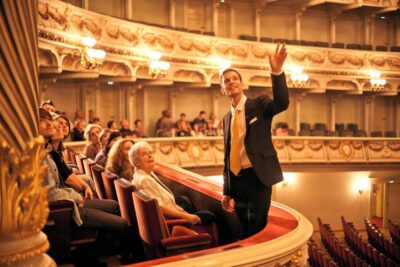



Browse the lists this tour appears in