Review · ULM TOURS
Ulm: Evening stroll through the old town
Ulm’s old town looks especially appealing after sunset, when the illuminated minster, narrow lanes, bridges, and half-timbered houses give the city a softer mood. This 90-minute walk begins at the minster and links medieval Ulm with the modern buildings that have reshaped the city center.
I like the clear contrast between old and new, and I like that the route reaches the fishermen’s and tanners’ quarter rather than stopping at the obvious sights. Guides such as Anne bring plenty of humor and answer questions well. The main drawback is language: the tour is listed in German, and at least one English-booking customer found the German presentation difficult to follow.
Key points to know before booking
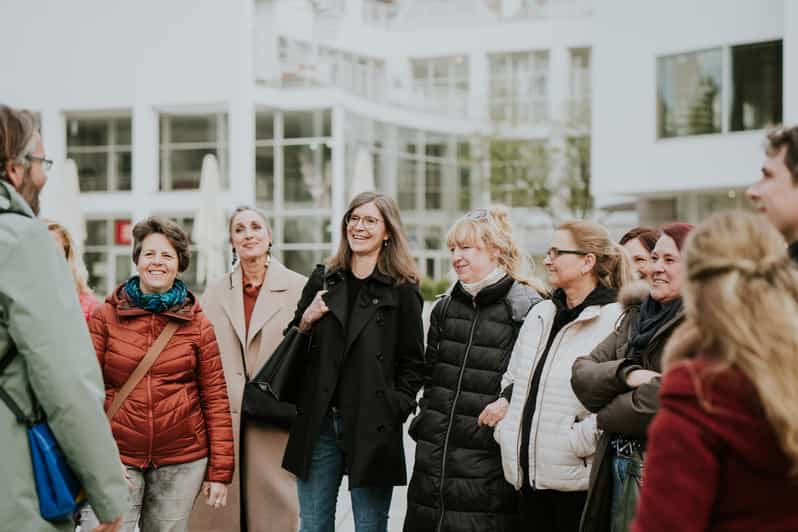
- See Ulm Minster from the outside: Learn how the church and its world-record church tower were built without spending tour time inside.
- Follow a medieval meets modern route: The walk connects recent city-center buildings with older landmarks.
- Read Ulm’s Town Hall from the outside: Look for the large Renaissance fresco cycle and the astronomical clock with zodiac signs and moon phases.
- Walk beside the city wall: The leaning Butcher Tower leads toward one of Ulm’s most atmospheric districts.
- Finish in the fishermen’s and tanners’ quarter: Small alleys, bridges, and footbridges create the most romantic part of the walk.
- Expect German guiding: The activity lists German as its language, so check carefully before booking if you need English.
Starting beneath Ulm’s tallest tower
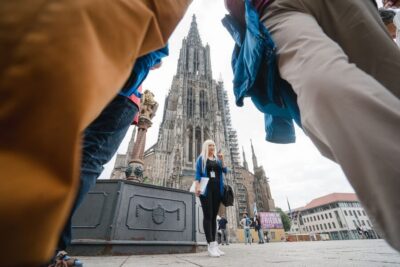
The tour starts at Münsterplatz, the broad square in front of Ulm Minster. This is the right place to begin because the church dominates the city and gives your guide an easy way to explain Ulm’s scale, ambition, and building methods.
The minster has the highest church tower in the world. You do not go inside or climb the tower on this tour, but the exterior alone gives you plenty to look at. The guide focuses on the construction of the church and provides background that helps you read the stonework and towering facade with more interest.
That exterior-only format is worth noting. If your main goal is to see the interior or reach the viewing platform, you will need separate time for that. This walk is instead about placing the minster within Ulm’s old town and showing how the surrounding districts fit together.
An evening start changes the experience. The square and facade take on a different character under artificial light, and the route feels less like a checklist of daytime sights. At $14 per person, the minster introduction alone is not the whole reason to book. Its value comes from the way the guide connects the church to the rest of the city.
More old town walks in Germany:
- Dresden: Semperoper and Old Town Tour
★ 4.8 · 5,735 reviews - Nuremberg: Old Town Guided Walking Tour
★ 4.6 · 2,416 reviews - Munich: Old Town & Viktualienmarkt City Walk in German
★ 4.7 · 2,304 reviews
Medieval meets modern in central Ulm
From the minster, the route moves into the neighborhood north of the church and then toward the newer city center. This section gives the walk its most useful idea: Ulm is not simply an old German town preserved behind a historic facade.
The guide points out newer buildings constructed in the heart of Ulm during recent decades. Their modern architecture creates a sharp visual contrast with the older church, town hall, and traditional houses. You may not agree with every design, but the change in style gives you something real to discuss and compare.
I like this part because it prevents the tour from becoming a parade of old buildings with dates attached. You see how a city makes room for new architecture while keeping its central landmarks in view. The phrase medieval meets modern is not just a slogan here. It describes the route’s main organizing idea.
The newer buildings also help you understand Ulm as a living city. They are not treated as distractions from the historic center. Instead, they become part of the story, showing how the city has continued to change around its older core.
This section may appeal most to you if you enjoy urban design as much as medieval architecture. If you want only old streets and traditional houses, the modern-center portion may feel less atmospheric than the later part of the walk. It is still useful, but it has a more open, contemporary feel.
Ulm Town Hall and its remarkable clock
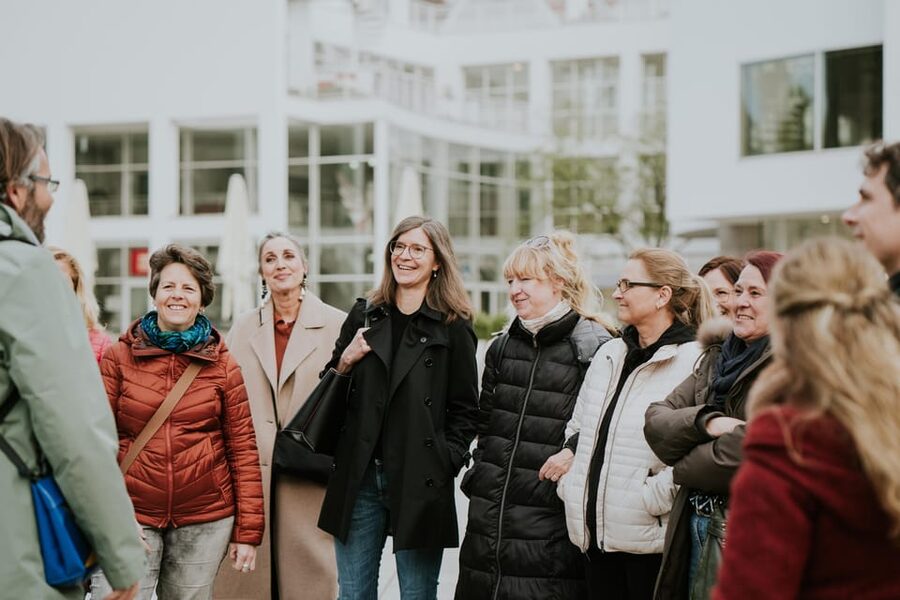
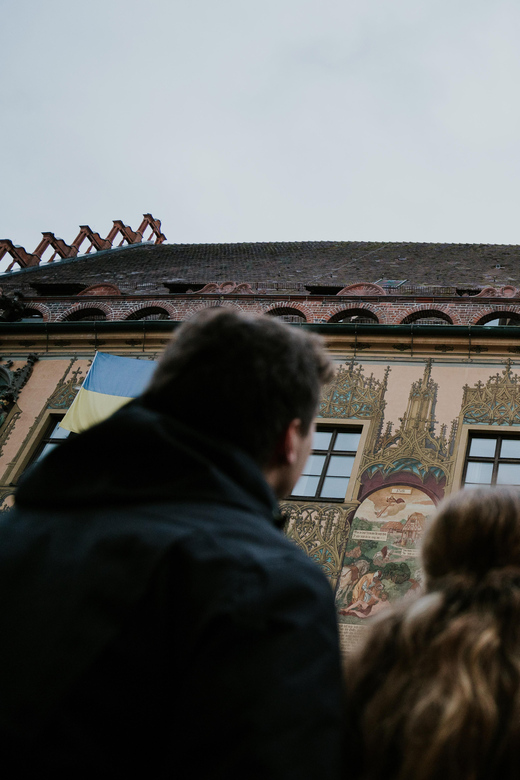
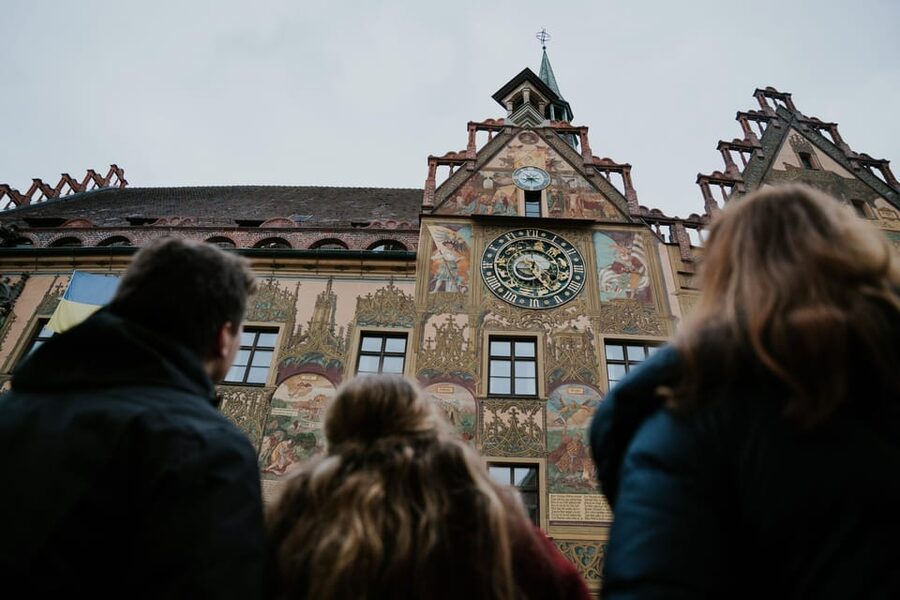
The route reaches Ulm Town Hall near the minster. This early Renaissance building is one of the walk’s most detailed stops, especially if you take a moment to study its painted exterior.
The facade includes what is described as probably Germany’s largest fresco cycle from the 16th century. You do not need to be an art specialist to appreciate the effect. The paintings turn the building into a broad visual record, and your guide can give you a reason to look beyond the basic shape of the structure.
The astronomical clock adds another layer. Its display includes zodiac signs and moon phases, so it is more than a simple clock face. These details reward a slower look, particularly in the evening when the building is lit and the guide’s explanation helps you notice features you could easily miss alone.
This is one of the tour’s stronger stops because it combines architecture, painting, and practical medieval science in a single building. You get a useful sense of how public buildings once displayed civic pride and learning at the same time.
The visit is an exterior stop, so keep your expectations realistic. The tour explains what you are seeing from the outside rather than offering an interior visit or a long art-history lecture. That keeps the pace moving and allows the walk to reach the older neighborhoods farther along the route.
From the leaning Butcher Tower to the city wall
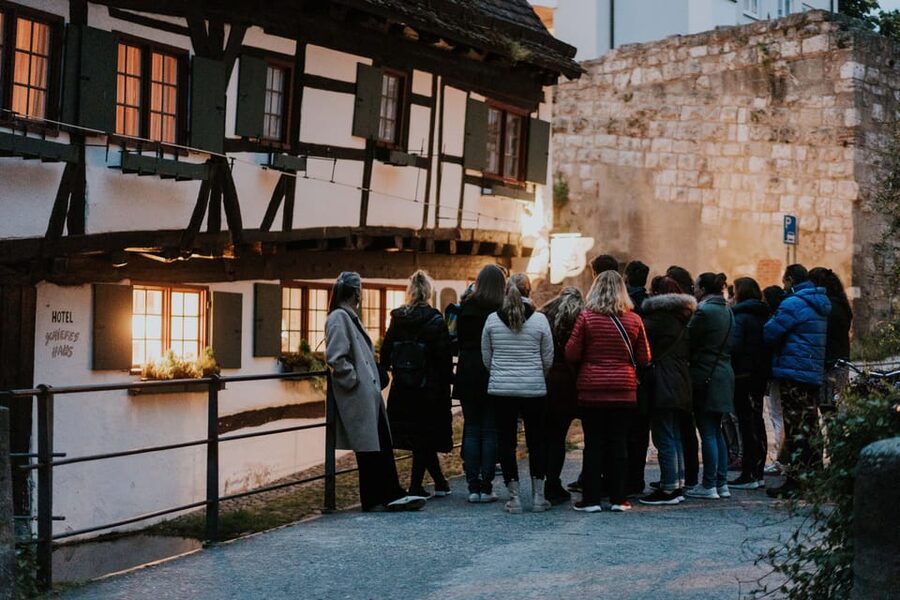
After the Town Hall, the walk continues past the leaning Butcher Tower and toward the city wall. The tower is an easy landmark to remember, partly because its tilt gives it an almost storybook quality.
The route does not treat the tower as an isolated photo stop. Moving from it to the wall gives you a better sense of how Ulm’s defenses shaped the old town. The sequence also changes the mood of the walk. The central square and modern buildings give way to tighter, older spaces connected with the city’s former edge.
I find this kind of transition more helpful than seeing the city’s landmarks in random order. You are not just collecting monuments. You are following a line through Ulm, from its great church to its civic center and then toward its fortified boundary.
The city wall section leads naturally to the fishermen’s and tanners’ quarter. It also prepares you for the route’s most atmospheric stretch. If you are taking photographs, the evening light and illuminated buildings should make this part appealing, though the provided details do not specify how much time the group spends at each stop.
More evenings out in Germany:
- Hamburg: 90-Minute Evening Lights Harbor Cruise
★ 4.5 · 7,728 reviews - Dresden: The Original Night Watchman Tour in Lantern Light
★ 4.6 · 6,653 reviews - Hamburg: 1-Hour Harbor Evening Lights Cruise
★ 4.4 · 4,861 reviews - Hamburg: Night Watchman’s Tour of St. Pauli in German
★ 4.7 · 4,818 reviews
The fishermen’s and tanners’ quarter after dark
The final part of the walk reaches Ulm’s fishermen’s and tanners’ quarter, the old town ensemble most likely to stay with you after the tour ends. Here, small alleyways, bridges, and footbridges create a compact medieval setting.
This district once belonged to craftsmen and was once shabby. Today, its buildings have been carefully restored, giving the area a much more polished appearance while keeping its narrow, irregular character. The restoration is part of what makes the quarter so attractive: you can see an old working neighborhood presented as a place to explore rather than a museum display.
The bridges and waterways give this area a different feel from the open spaces around the minster. You move through a sequence of close views instead of standing before one giant landmark. That makes the quarter a good place to slow down and listen to the guide’s stories.
The Crooked House is the district’s most famous address. It is recognized by the Guinness Book of World Records as the world’s most leaning hotel. The name tells you what to expect, but the building is best appreciated as part of the surrounding quarter, where the crooked structure fits into a wider pattern of old houses, lanes, and bridges.
This is where the evening timing matters most. The district is described as romantic, and the combination of lighting, water, footbridges, and restored buildings gives the final section a strong sense of place. If you have limited time in Ulm, this quarter is one of the best reasons to choose a guided walk instead of simply crossing the old town on your own.
How the guide shapes the evening
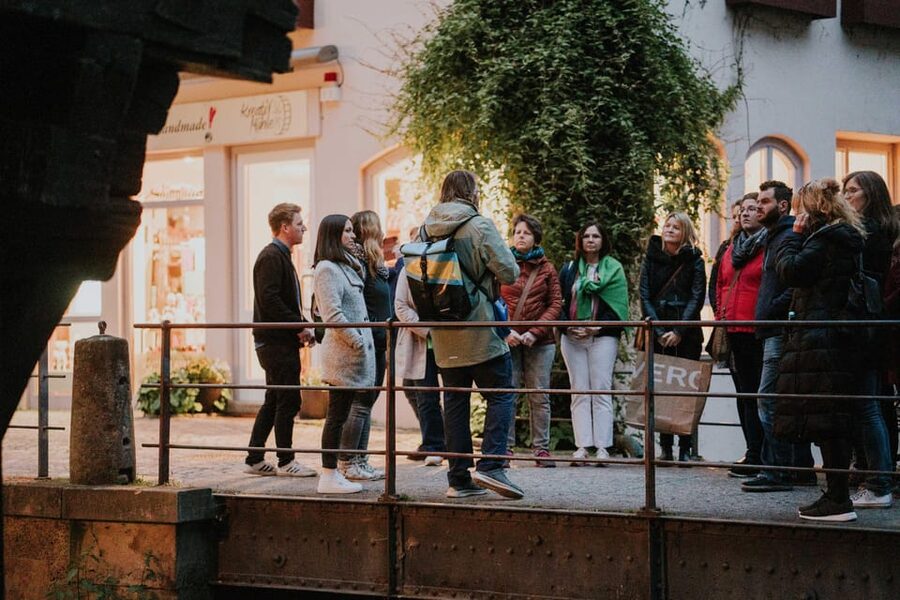
A walking tour depends heavily on the guide, and the strongest available feedback points to lively delivery, humor, and good answers to questions. Anne is singled out as a guide who presents a lot of information in a funny, approachable way.
That matters because this route includes several layers of information: construction history at the minster, modern architecture, Renaissance art, astronomical details, fortifications, and restored craftsmen’s houses. A dry presentation could make that feel like too much. A guide who keeps the stories moving can make the same material easier to follow.
The walk also seems suited to questions. You can ask about the buildings and receive more than a memorized list of dates. One particularly useful quality is the inclusion of anecdotes, which adds local character to the basic sightseeing.
The activity is conducted in German. This is not a minor detail if you are relying on the spoken explanation, since much of the tour’s value comes from the stories and context rather than the views alone. One booking record indicates that English was requested but the tour still took place in German, creating a serious problem for part of that group.
I would book this confidently if you understand German. If you do not, confirm the language directly before paying. Do not assume an English option simply because a booking screen allows you to indicate English.
Is 90 minutes the right length?
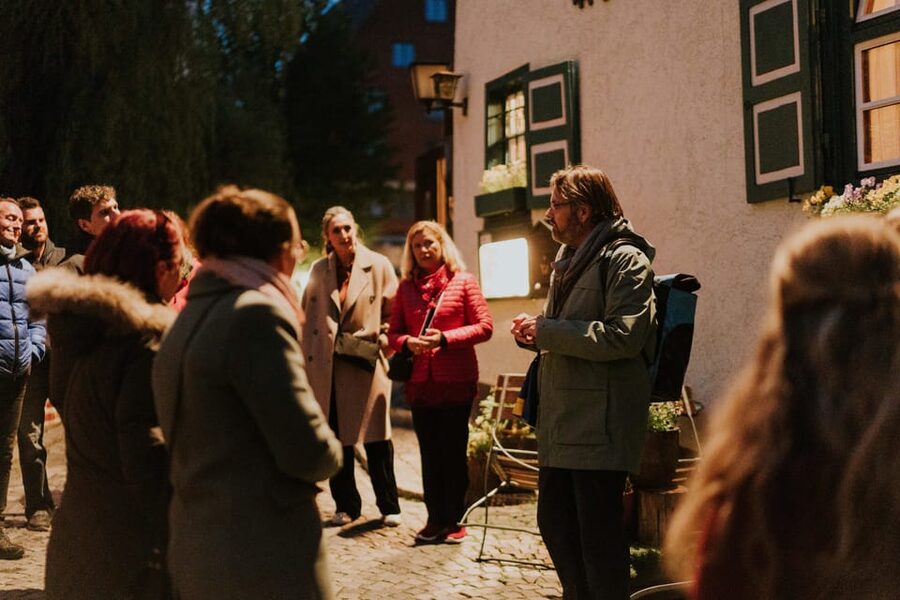
The duration is 1.5 hours, which is a sensible length for an evening orientation walk. You cover several districts without giving up an entire night, and you finish with enough time to choose your own dinner plans or return to a favorite spot.
The route is full enough to provide a real overview, but it is not designed for long interior visits. You see the minster from outside, examine the Town Hall from the surrounding area, pass the Butcher Tower, follow the city wall, and spend time in the old craftsmen’s quarter.
That makes the tour a good first activity in Ulm. You can use the walk to decide where you want to return in daylight. The minster, Town Hall, city wall, and Crooked House each deserve a closer look if one catches your attention.
The evening schedule also helps you see the city in two ways. You get the broad civic spaces near the center and the more intimate lanes of the old quarter, all under evening illumination. The tradeoff is that you may not see every architectural detail as clearly as you would in full daylight.
What the $14 price really buys you
At $14 per person, the cost is modest for a professional 90-minute guided walk. You are paying for a live guide and a route that links major landmarks with smaller streets you might otherwise pass through without understanding.
The price is especially fair if you value context. You can walk past Ulm Minster, the Town Hall, or the Crooked House alone, but the guide gives you reasons to look at specific features: construction details, frescoes, zodiac signs, moon phases, the city wall, and the history of the restored quarter.
The price does not include a minster climb, an interior museum visit, transportation, or a meal. Since those items are not part of the activity, budget separate time and money if they matter to your plans.
The flexibility also helps. You can cancel up to 24 hours in advance for a full refund, and you can reserve now and pay later. Those terms are useful if your Ulm schedule is still changing, but they do not change the central question: the tour is good value only if German is suitable for you.
Who should book this Ulm walk?
I would recommend it to you if this is your first visit to Ulm and you want a compact orientation with some local color. It also suits anyone who likes to compare historic buildings with newer architecture instead of treating the past as the only subject worth seeing.
The route should appeal to architecture fans, people interested in old city planning, and photographers looking for illuminated streets and bridges. The fishermen’s and tanners’ quarter gives the walk a strong visual finish, while the minster and Town Hall provide the grander landmarks at the beginning.
It is less suitable if you need a tour in English, want extensive interior access, or prefer a slow specialist visit focused on one monument. It may also feel too brief if you want long stops at every sight, since the route covers a fair amount of Ulm in 90 minutes.
The overall rating is 4.7 out of 5 from 41 ratings, and the most praised qualities are clear information, humor, good storytelling, and guides who respond to questions. Those strengths fit the route well, since the experience depends on explanation as much as sightseeing.
Should you book it?
Book this tour if you understand German and want an efficient introduction to Ulm after dark. The best reason to go is the route itself: it moves from the world’s highest church tower to modern central architecture, the Renaissance Town Hall, the city wall, and the atmospheric fishermen’s and tanners’ quarter.
At $14, it is an easy value choice for a first evening in the city. Just confirm the language before booking, and remember that the minster and Town Hall are exterior stops. If those conditions suit you, the walk gives you both Ulm’s grand public face and its crooked, narrow, wonderfully old-fashioned corners.
FAQ
Where does the tour begin?
The tour begins at Ulm Minster square, also known as Münsterplatz.
How long does the evening walk last?
The walk lasts 1.5 hours.
What language is the tour conducted in?
The live tour guide speaks German. The activity information lists German as the available language.
Does the tour enter Ulm Minster?
No. The minster is covered from the exterior, including information about its construction and its world-record church tower.
Does the route include Ulm Town Hall?
Yes. The walk visits the area around the early Renaissance Town Hall, including its large fresco cycle and astronomical clock with zodiac signs and moon phases.
Which historic neighborhood does the tour visit?
The route includes Ulm’s fishermen’s and tanners’ quarter, with its small alleys, bridges, and footbridges.
Will I see the Crooked House?
Yes. The Crooked House is included in the fishermen’s and tanners’ quarter section. It is identified as the world’s most leaning hotel by the Guinness Book of World Records.
Can I cancel for a full refund?
Yes. You can cancel up to 24 hours before the activity for a full refund. You can also reserve now and pay later.
Just added around Germany
- From Berlin: Gardens & Palaces of Potsdam Bike Tour★ 5.0 · 61 reviews
- Berlin: Battle for Seelow Heights WW2 tour -Clash of Titans★ 5.0 · 27 reviews
- From Amsterdam: Cologne Private Sightseeing Tour★ 5.0 · 4 reviews
- From Berlin: Historical Gems of Potsdam Private Day Trip★ 4.4 · 4 reviews
- Freiburg: Veni, vidi, vino – wine hike and tasting★ 4.5 · 144 reviews
- From Alken: Return Day Trip by Boat to Cochem★ 4.6 · 141 reviews
- Fritz Haarmann – Die Mördertour★ 4.6 · 41 reviews
- Freiburg: Tour of the city with cathedral visit★ 4.7 · 167 reviews