
Review · LEIPZIG TOURS
Federal Administrative Court Leipzig: A journey into the heart of German justice
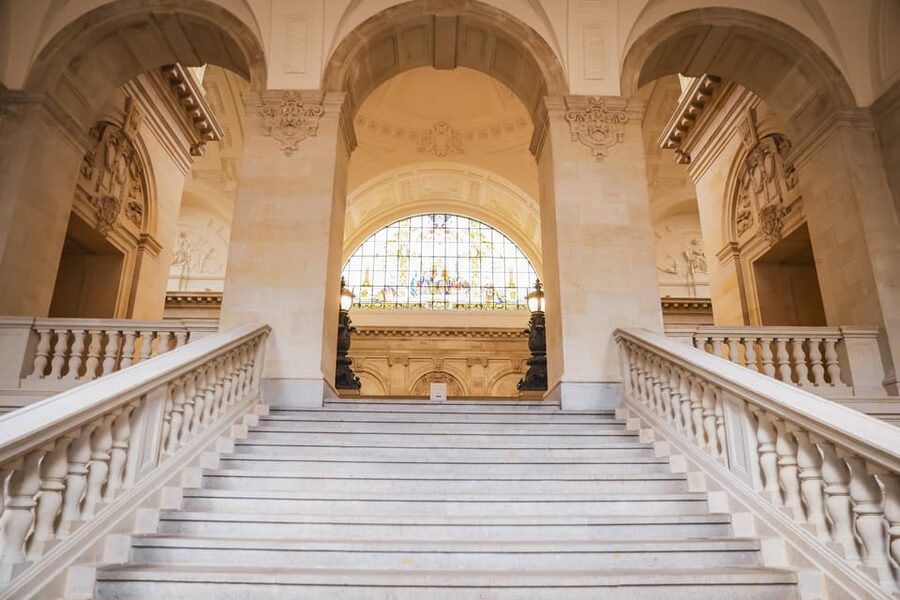
The most striking part of this Leipzig tour is the building itself. The former Imperial Court of Justice, completed in 1879, surrounds you with imperial paintings, national coats of arms, and grand rooms built to project authority. You are not just looking at a courthouse from the pavement. You are stepping into the rooms where German legal history took shape.
I like the way the tour joins architecture with major court cases, rather than treating the building as a pretty shell. I also like the visit to the former presidential apartment, a detail that gives the institution a more human and personal side. The main drawback is clear: the tour is in German, with English available on request, and children under 14 cannot join.
Key points
- 1879 Imperial Court building: See Wilhelmine-era architecture designed for Germany’s highest court.
- Historic courtrooms: Look for national coats of arms, imperial paintings, and formal judicial details.
- Important trials: Learn about the 1933 Reichstag fire trial and Karl Liebknecht’s 1907 case.
- Former presidential apartment: Visit private rooms connected with the court’s former leadership.
- Changing identity: Hear how the building served as an art museum during the GDR era before returning to judicial use in 2002.
- German-led, 1.5-hour visit: English tours can be requested, and the building is wheelchair accessible.
Entering Leipzig’s former Imperial Court of Justice
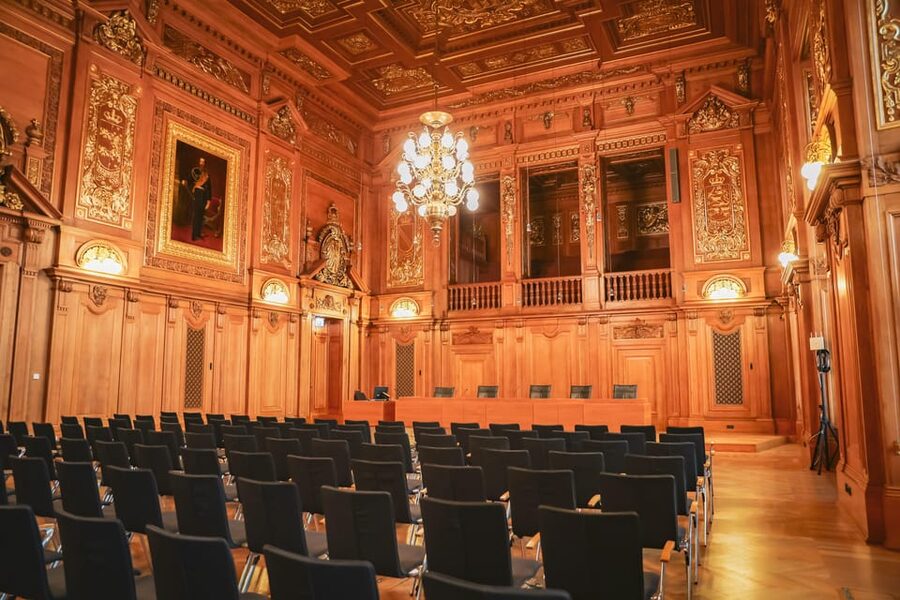
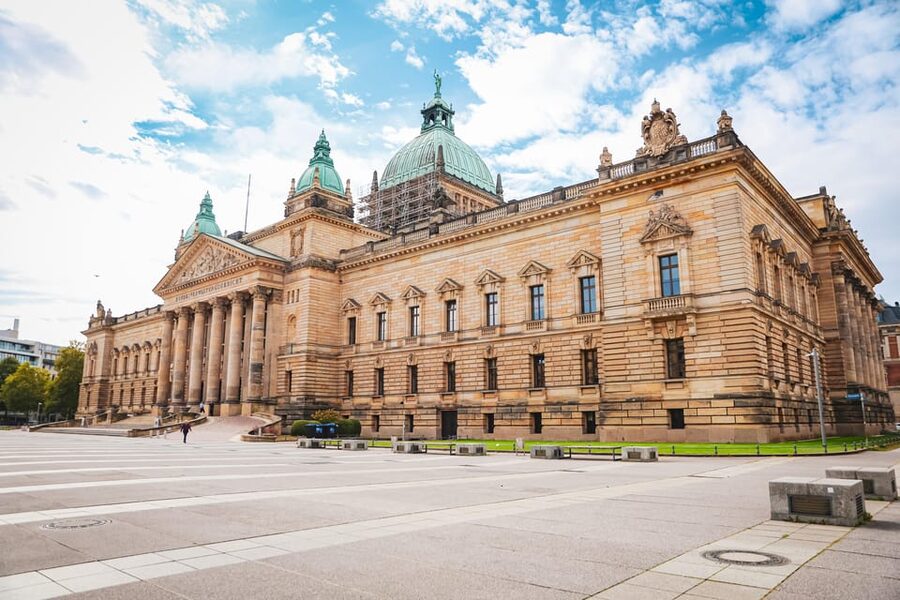
Meet at Simsonplatz 1, in front of the Federal Administrative Court. Arrive 10 to 15 minutes early. That matters here because this is a working court, not simply a museum with a loose opening schedule.
The tour takes you into a building created in 1879 during the Wilhelmine era. Its original purpose was to house the Imperial Court of Justice, and the architecture makes that role plain. The scale, decoration, and formal rooms were meant to express the power of law and the German state.
I find this setting more rewarding than a standard city history walk because the building supplies the backdrop for every story. A case about political speech sounds different when you hear it in a room built for the highest level of imperial justice. The walls do part of the teaching.
The tour is described as a certified exclusive visit. You will be guided rather than left to wander, which is useful in a building where the important details are easy to miss. The court’s current role also gives the visit a present-day connection: the Federal Administrative Court is Germany’s highest administrative court, with judges working in 14 senates on disputes in administrative law and on the further development of that law.
A few more Leipzig half-days to weigh up
- Leipzig: City History Canal Sightseeing Tour on a Motorboat
★ 4.7 · 6,232 reviews - Leipzig: 1.5-Hour Public Tour with Night Watchman Bremme
★ 4.6 · 3,116 reviews - Combo Tour in Leipzig: Guided City Tour & City Sightseeing
★ 4.7 · 2,317 reviews
The grand courtroom and its imperial details
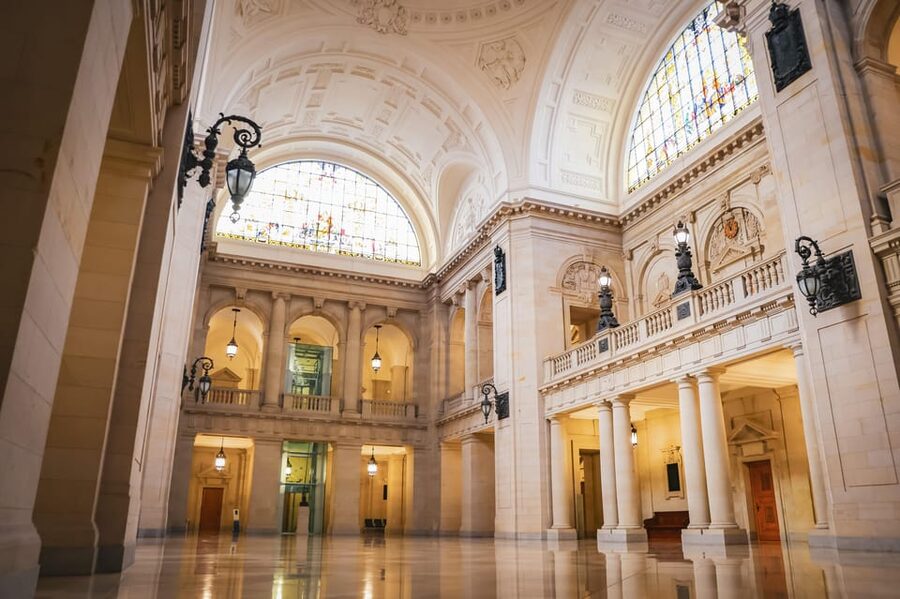
The historic courtrooms are the visual heart of the visit. Look up and around rather than focusing only on the guide. National coats of arms and imperial paintings form part of the room’s decoration, and the setting shows how strongly law, monarchy, and national identity were once linked.
You will also hear about the official clothing worn by federal judges. The crimson robe and beret make them easy to recognize, but the clothing is more than a costume detail. Formal dress creates a visible sense of office and ceremony, which fits the building’s grand design.
This part works best if you enjoy architecture with a political edge. The decorations are not neutral. They tell you how the court wanted to be seen when the building opened, and they help explain the authority such institutions were designed to project.
The possible weakness is that a 1.5-hour tour cannot cover every room or every legal era in detail. One recent visitor specifically wished the tour had lasted longer because there was so much more to hear and see. I would treat that as a useful warning: you get a focused introduction, not a complete survey of German legal history.
Court cases that connect the rooms to real events
The tour puts special attention on major trials and decisions. Two cases named for the visit are especially useful for understanding the court’s political setting.
The 1933 Reichstag fire trial opens a difficult chapter in German history. It took place during the early Nazi period, when law and political power were under extreme pressure. Hearing about such a case inside the former Imperial Court of Justice gives the subject a physical setting and reminds you that courts do not operate apart from the government and society around them.
The tour also covers the October 1907 trial in which Karl Liebknecht defended himself over the publication of his writings. Liebknecht was a socialist politician and opponent of militarism, so this case connects the court to questions of political expression and state authority.
You should not expect a full legal seminar on either case. The value is in seeing how individual trials fit into the building’s long use. The guide links judicial procedure, political conflict, and the changing meaning of justice, giving you a clearer sense of why the rooms matter.
The supplied feedback is especially strong on this point. Visitors describe the historical and architectural material as varied, lively, and easy to follow. The guide is also praised for making the subject interesting without letting it become slow or dry. That is important for a court tour, since legal history can quickly turn into a list of dates and names if it is not told well.
The former presidential apartment
The former presidential apartment adds a surprising change of mood. After seeing official courtrooms, you move toward rooms associated with the personal life of the court’s former president.
This is one of the tour’s more unusual features. Many courthouse visits stop at public spaces, but the apartment lets you think about the people who worked within the institution. It gives the building a domestic side and helps you picture how senior court officials lived and worked around this imposing setting.
The information supplied does not specify exactly which rooms are open or how they are furnished, so you should not book this expecting a fully preserved private home. Instead, think of it as a historical section of the visit that broadens the story beyond trials and courtroom ceremony.
For me, this is also where the building’s changing role becomes easier to grasp. A courthouse can feel remote when you only see its public face. The former apartment shows that it was also a workplace and residence tied to the people who shaped the court.
Same city, a completely different sort of afternoon:
- Leipzig: 1.5-Hour Historical Walking Tour in German
★ 4.7 · 2,217 reviews - Leipzig: 2-Hour Guided Walking Tour in German
★ 4.8 · 1,612 reviews - Leipzig: 13-Stop Hop-on/Hop-off Bus Ticket
★ 4.6 · 1,468 reviews - Gruseltour Leipzig: A Haunted Guided Tour
★ 4.5 · 1,385 reviews
From art museum to court again in 2002
The building’s history did not move in a straight line from imperial courthouse to modern court. During the GDR era, it was used as an art museum. The tour explains this change and the building’s return to judicial use in 2002.
That shift is one of the strongest reasons to book the visit if you already know Leipzig’s more familiar museums and churches. You get a look at how political systems change the purpose of important buildings. The same halls can serve justice under one government, display art under another, and later return to legal work.
The tour also brings the story up to the present status of the court. This keeps the experience from becoming a nostalgia trip about imperial architecture. You are shown a functioning institution with a long past, not a frozen monument.
I appreciate that balance. Grand buildings can tempt guides to focus only on decoration, while legal tours can become too technical. Here, the architecture, the court’s institutional role, and Germany’s political changes are treated as connected subjects.
What the 1.5-hour schedule feels like
Ninety minutes is a sensible length for this kind of visit. It gives you enough time to see the key historic areas and follow the main stories without turning the tour into an all-day commitment.
You should expect a steady guided visit rather than free time for extensive independent exploration. The historic courtrooms, former presidential apartment, and important architectural features provide the main structure. The guide fills in the legal and political context as you move through the building.
The pace appears to be one of the tour’s strengths. The feedback describes the organization as very good and the explanations as informative, friendly, and entertaining. One visitor called the guide highly informed, while another praised the way history, architecture, and current legal affairs were made lively rather than boring.
No individual guide names are provided, so I cannot tell you who will lead your departure. What I can tell you is that the guide is live and the standard language is German. English is available on request, but you should arrange that before booking rather than assume every departure will be bilingual.
Some material is shown in its original language. If you enjoy seeing historical documents and inscriptions as they actually appear, that adds interest. If you do not speak German, ask about English support in advance so the visit does not become a mostly visual experience.
Is $14 a fair price?
At $14 per person, I consider this good value, especially if you care about history, architecture, or the workings of government. The price includes a guided visit to a building that is not part of an ordinary sightseeing route, along with historic courtrooms and the former presidential apartment.
The value comes from access and interpretation. You could walk around Simsonplatz and admire the exterior without paying, but you would miss the stories behind the courtrooms, the trial references, the presidential rooms, and the building’s period as an art museum. A guide turns architectural details into evidence of how justice was presented and practiced.
It is also a modest cost for a 1.5-hour activity. You are not paying for transport, food, or a full-day package, so you can fit it neatly between other Leipzig plans. The main question is not the price. It is whether the subject appeals to you.
If your idea of a holiday is outdoor scenery, shopping, or casual photo stops, this may feel formal. If you enjoy places that explain how a country works, the cost is easy to justify.
You can reserve now and pay later, and cancellation is free up to 24 hours before the start for a full refund. Those terms are useful if your Leipzig schedule is still shifting.
Who should book this court tour?
I would recommend it most strongly to adults and older teenagers interested in German history, law, architecture, or politics. The minimum age is 14, so it is not designed as a family activity for younger children.
It suits you especially well if you have already seen Leipzig’s better-known cultural sights and want a less predictable stop. The former Imperial Court building offers a different view of the city, one based on institutions and public life rather than music, art, or trade.
You do not need legal training. The strongest feedback focuses on clear explanations and an enjoyable style, not on technical legal detail. Still, you should be ready to listen closely, since the tour deals with historical trials, changes in government, and the role of Germany’s highest administrative court.
I would be cautious about booking if you need a fully English experience and have not confirmed language arrangements. German is the normal tour language, and English is offered on request. I would also avoid bringing a pet, since animals are not allowed apart from assistance dogs.
The building is wheelchair accessible, which makes the tour possible for many visitors with mobility needs. Since this is an active court, follow the guide’s instructions and remember that it is a formal place, not a party stop. Alcohol, drugs, party groups, and bachelor or bachelorette groups are not allowed.
Practical advice before you arrive
Plan to reach Simsonplatz 1 at least 10 to 15 minutes before the start. Meet outside the Federal Administrative Court, not at a nearby general attraction or city information office.
Wear something comfortable for a guided walk through a large historic building. The supplied information does not specify security procedures, photography rules, or cloakroom arrangements, so ask the guide about those on arrival instead of assuming.
Give yourself enough time to appreciate the exterior before entering. The building’s scale and imperial decoration are part of the experience, and a quick arrival followed by a rushed entry would undercut one of the tour’s best features.
If architecture interests you, look for the details the guide points out, including coats of arms, imperial paintings, and the formal design of the courtrooms. If legal history is your main interest, listen for the connections between the 1907 Liebknecht trial, the 1933 Reichstag fire trial, and the court’s later use.
The tour is listed as lasting 1.5 hours, but leave a little space afterward if you want time to reflect or see more of Leipzig. One visitor felt the scheduled time was too short for everything the guide could have covered, which suggests the subject has more depth than the timetable allows.
Should you book the Federal Administrative Court tour?
Book it if you want a focused, affordable look at German justice inside an extraordinary historic building. The courtrooms, former presidential apartment, political trials, and changing use during the GDR era give the visit more substance than a simple architecture tour.
I would especially choose it for a rainy Leipzig afternoon or for a second day in the city, when you want something beyond the usual museums. The 1.5-hour length, $14 price, wheelchair access, and flexible booking terms make it easy to add to your plans.
Skip it if you need an English tour without prior arrangements, are traveling with children under 14, or prefer informal entertainment to institutional history. For everyone else, this is a well-priced, serious but lively introduction to a building where architecture and German justice meet.
FAQ
Where does the tour meet?
Meet in front of the Federal Administrative Court at Simsonplatz 1 in Leipzig.
How long does the tour last?
The guided visit lasts 1.5 hours.
What language is the tour in?
Tours are held in German. English is available on request.
What does the tour include?
It includes a guided tour of the Federal Administrative Court, visits to historic courtrooms, and a visit to the former presidential apartment.
Is the Federal Administrative Court wheelchair accessible?
Yes, the activity is listed as wheelchair accessible.
Can children join the tour?
Children under 14 are not permitted to take part.
Are pets allowed?
Pets are not allowed. Assistance dogs are permitted.
How late can I cancel for a full refund?
You can cancel up to 24 hours before the tour for a full refund.
Just added around Leipzig
- Leipzig: City Highlights Express Guided Tour★ 4.8 · 5 reviews
- Der Leipziger Passagen-Rundgang in der Altstadt★ 4.8 · 124 reviews
- Music in Leipzig – Bach, Wagner and the Thomanerchor★ 4.8 · 26 reviews
- 1.5-Hour Historical Tour of Leipzig with Costumed Guide★ 4.5 · 128 reviews
- Leipzig: Floodplain Forest & City River Cruise★ 4.9 · 334 reviews
- Leipzig: Riverside Forest Tour on the Pleiße★ 4.6 · 347 reviews
- Leipzig: 360° Panorama THE CATHEDRALE OF MONET ticket★ 4.7 · 410 reviews
- Leipzig: 2-hour Auwald Motorboat Tour★ 4.5 · 439 reviews
Leipzig Tours, compared.
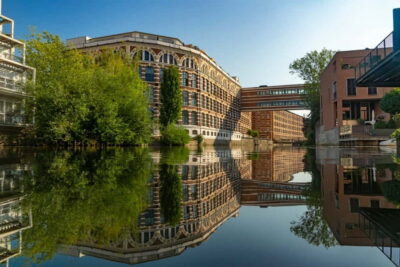
City History Canal Sightseeing Tour on a Motorboat
Read our review →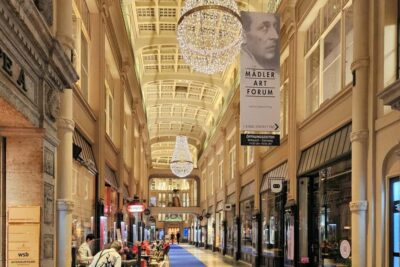
1.5-Hour Public Tour with Night Watchman Bremme
Read our review →
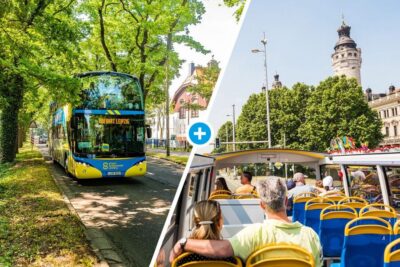
Combo Tour in Leipzig: Guided City Tour & City Sightseeing
Read our review →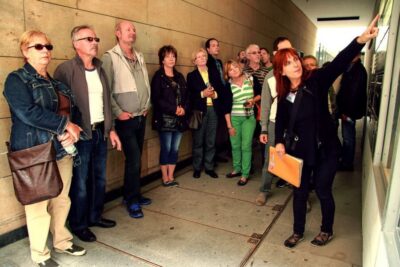


Browse the lists this tour appears in