
Review · LEIPZIG TOURS
Combo Tour in Leipzig: Guided City Tour & City Sightseeing
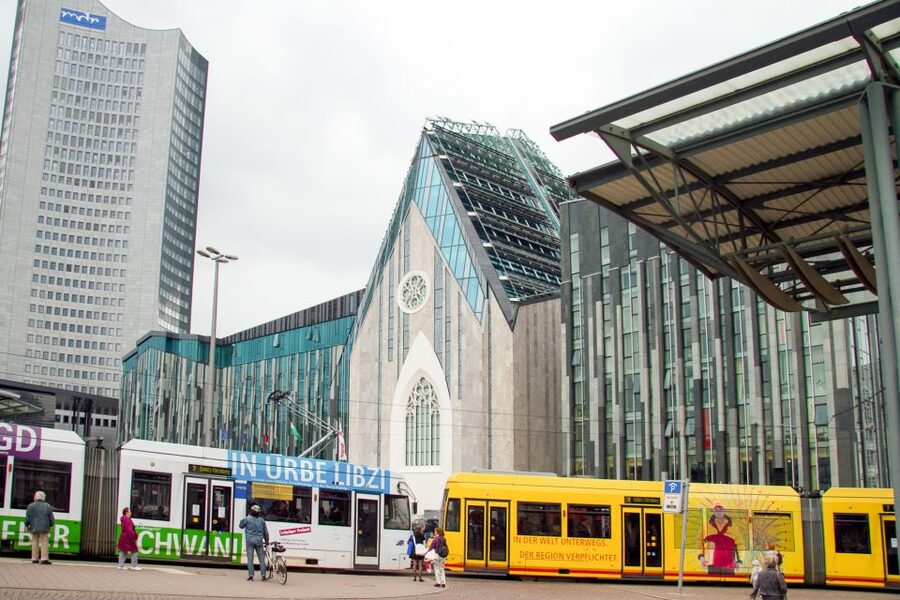
Leipzig’s best introduction comes in two parts: a guided walk through the compact Old Town, followed by a bus ride into districts you would probably miss on foot. In a couple of hours, you move from Gothic churches and trading arcades to canals, villas, music buildings, and the huge Battle of Nations Monument.
I especially like the contrast between the Old Rathaus, Auerbachs Keller, and St. Thomas Church on foot, then the wider city view from the coach. I also like the value: at $25, you get a certified guide and transport across much of Leipzig. The main drawback is the language setup. The tour is officially in German, and a bilingual guide may need to give the German explanation first, leaving less time for English and photos.
Key points to know before booking
- Two tours in one: Walk through the Old Town, then ride an air-conditioned bus beyond the city ring.
- A strong first-day orientation: The route links major central sights with districts you may not reach on your own.
- German is the official language: Some guides have given clear English explanations, but English is not guaranteed.
- The bus adds real value: You pass Gohlis, Plagwitz, the music district, the former Reich Court, and the Battle of Nations Monument.
- Expect a full 2.5 hours: You will see many places, but most stops are viewed from the route rather than explored at length.
- Easy central meeting point: Meet at the city tourist information office in the Katharinum, arriving 15 minutes early.
Why this Leipzig tour works as a first look
Leipzig can feel confusing at first because its most interesting sights are split between a tight historic center and widely scattered districts. This tour solves that problem neatly. You start in the center, learn the basic story of the city on foot, then sit back while the bus carries you to places that would take much longer to reach independently.
The format is also practical for a short stay. If you have only a day or a long stopover, you can see the main Old Town sights and get a useful sense of Leipzig beyond the center. One past guest used the tour during a seven-hour stopover and found it a good way to understand the city before moving on.
At $25 per person, the price is modest for a 2.5-hour guided experience with transport. You are not paying for long interior visits or special museum admission. You are paying for orientation, local explanation, and a route that ties together central Leipzig and its outer districts.
A few more Leipzig half-days to weigh up
- Leipzig: City History Canal Sightseeing Tour on a Motorboat
★ 4.7 · 6,232 reviews - Leipzig: 1.5-Hour Public Tour with Night Watchman Bremme
★ 4.6 · 3,116 reviews - Leipzig: 1.5-Hour Historical Walking Tour in German
★ 4.7 · 2,217 reviews
Starting at the Katharinum in central Leipzig
Your meeting point is the Tourist Information office at Katharinenstraße 8, 04109 Leipzig. Go to the counter for city tours and arrive at least 15 minutes before departure. This is a useful location because you begin right in the center, close to Leipzig’s main pedestrian streets and historic buildings.
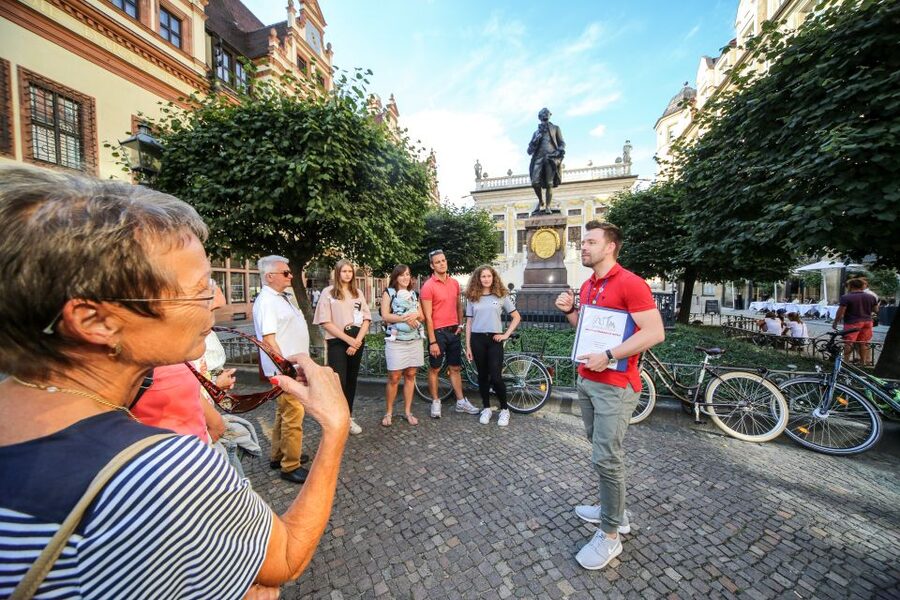
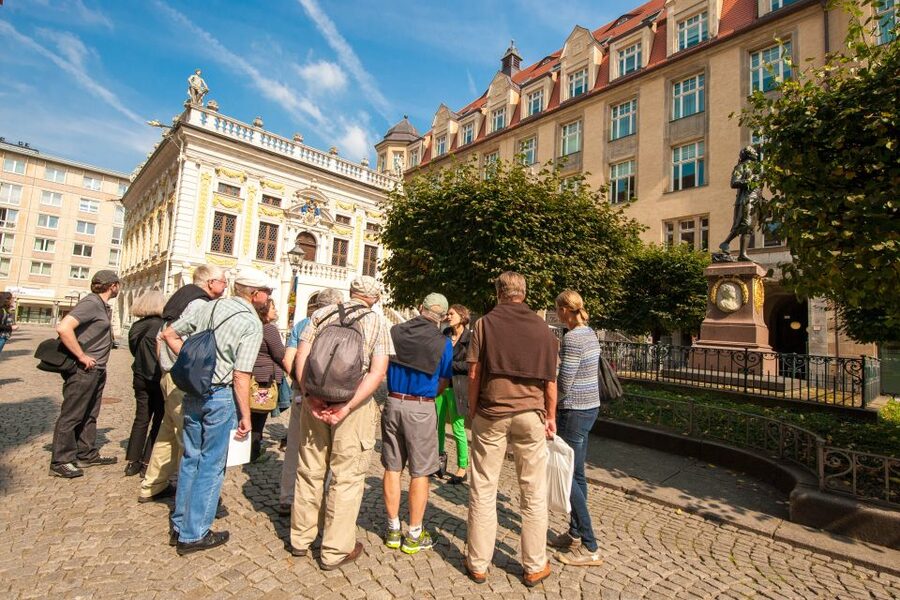
The first section is a walking tour. Wear comfortable shoes, though this is not an all-day hike. The route moves through the Old Town’s streets, passages, squares, and church precincts, with the guide explaining how Leipzig developed as a trading and cultural center.
The walk is also where you get the most direct contact with the city. You can see details on building fronts, pass through shopping arcades, and pause near the markets. The bus section is broader and more panoramic, while the walking section gives you a closer feel for central Leipzig.
Nikolai Church, Specks Hof, and the Old Market
The route takes you past Nikolai Church, one of Leipzig’s best-known landmarks. Its importance is not only architectural. It is closely tied to Leipzig’s civic and political story, making it a useful place to hear how religious spaces could also become centers of public life.
From there, you pass Specks Hof, one of the city’s historic passage malls. Leipzig’s covered passages are part of what makes its center different from a standard German market square. They reflect the city’s long trading tradition, when merchants and shoppers moved through linked courtyards and arcades rather than only along open streets.
The small Snack Market adds a more everyday note. You may catch the smell of fresh food as the tour moves through the area. This is a brief part of the route, but it helps keep the walk from becoming a parade of monuments. Leipzig’s center is still a place where people shop, eat, meet, and work.
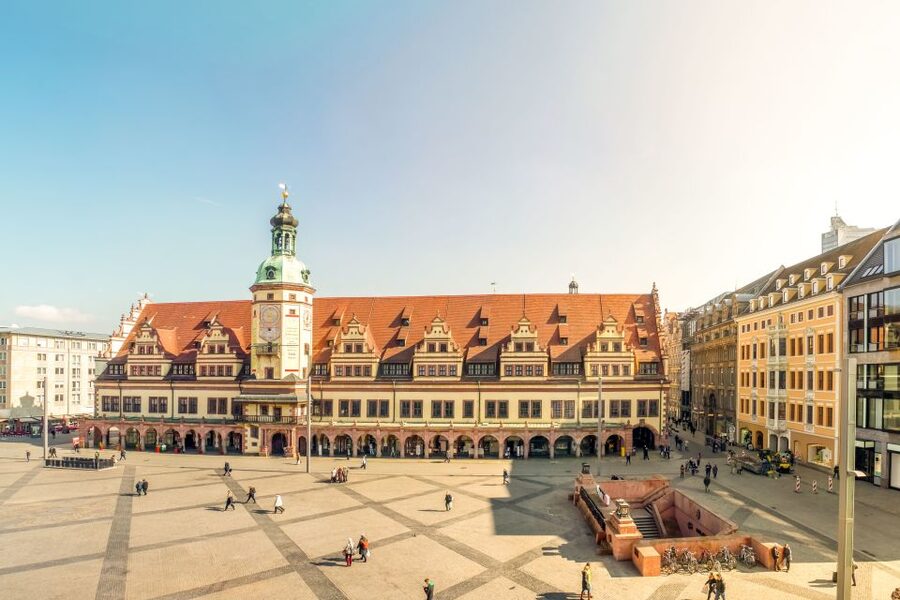
At the Old Rathaus, you get one of the clearest views of Leipzig’s civic heart. The building and market square bring together several periods of architecture, and the guide can help you read the colors, proportions, and changes around the square. You will likely want photographs here, so listen for the guide’s explanation, then use any natural pause to take pictures.
Mädler Passage and Auerbachs Keller
Mädler Passage is one of the walk’s most attractive stops. Its elegant interior links the commercial history of Leipzig with one of the city’s most famous literary associations. The passage is polished and atmospheric, but it is still a working shopping arcade rather than a preserved museum corridor.
Nearby, you pass Auerbachs Keller, the traditional restaurant made famous by its connection with Goethe’s Faust. You do not get a meal as part of this tour, and the visit is not described as a seated stop. Still, seeing the entrance gives you a quick link between Leipzig’s food culture, literary life, and old merchant center.
Barthels Hof adds another historic restaurant setting to the route. These places matter because they show how Leipzig’s old commercial buildings continue to serve a practical purpose. You are not just looking at empty façades. You are seeing restaurants, shops, and public spaces fitted into old structures.
Same city, a completely different sort of afternoon:
- Leipzig: 2-Hour Guided Walking Tour in German
★ 4.8 · 1,612 reviews - Leipzig: 13-Stop Hop-on/Hop-off Bus Ticket
★ 4.6 · 1,468 reviews - Gruseltour Leipzig: A Haunted Guided Tour
★ 4.5 · 1,385 reviews - Leipzig: Bus Tour with Walking Tour
★ 4.5 · 1,384 reviews
St. Thomas Church and Leipzig’s music story
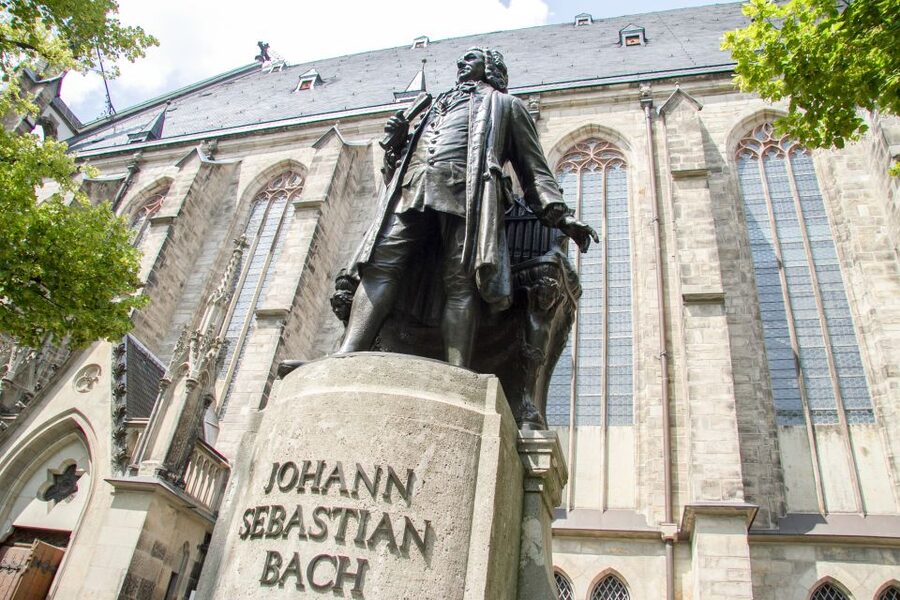
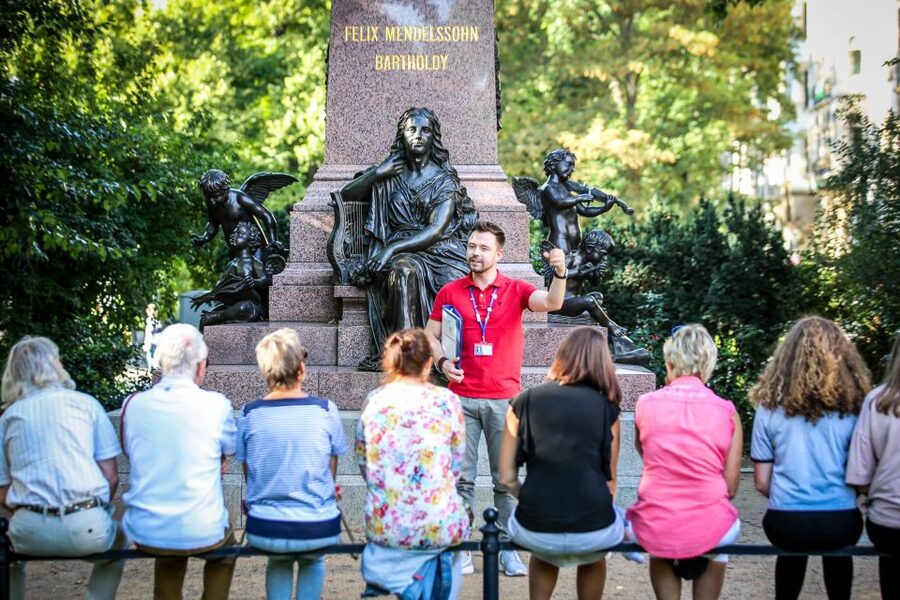
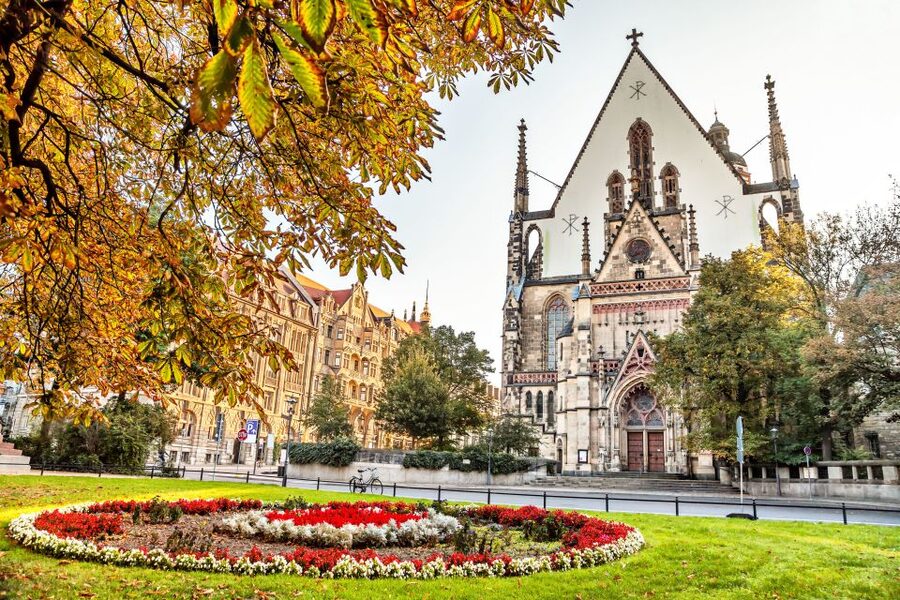
St. Thomas Church gives the walking section a different mood. Its Gothic and Romanesque elements show the layers of Leipzig’s religious architecture, while its connection to Johann Sebastian Bach places the city’s musical tradition close at hand.
The tour does not promise a concert or a long interior visit, so think of this as an orientation stop. The guide’s explanation is the main feature. If music is a priority for you, note the church’s location and consider returning later with more time.
This is one reason I recommend taking notes during the walk. The route moves quickly, and you will hear several names, buildings, and historical references. A quick list in your phone can help you decide where to return after the tour.
Boarding the bus for Gohlis and Schiller House

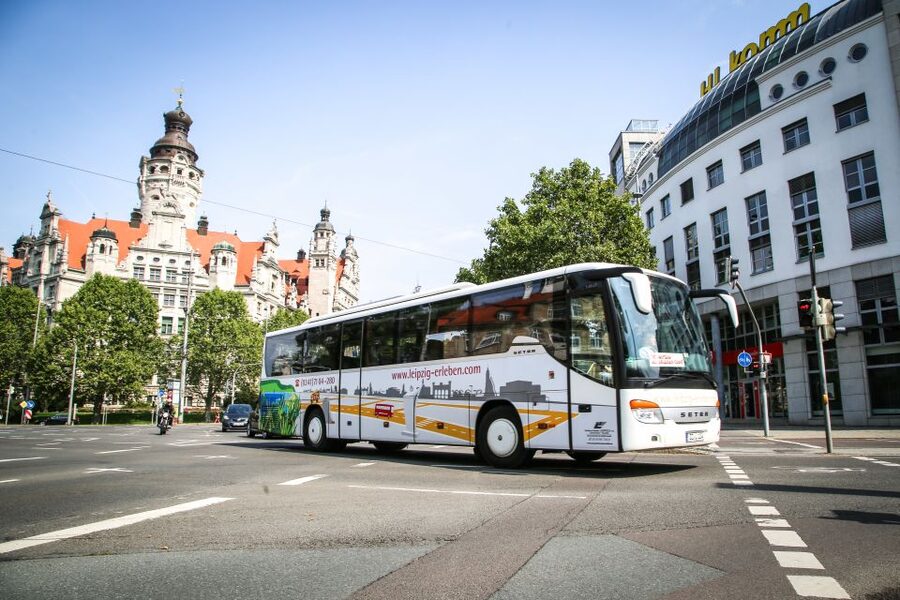
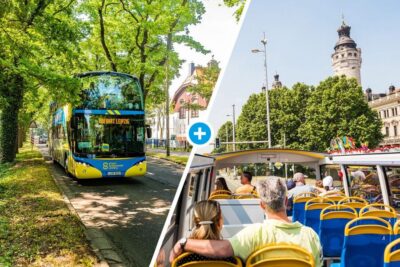
After the central walk, you board a spacious, air-conditioned coach for the second half. This change matters. Leipzig’s outer districts are spread out, and walking between them would use up most of a day.
The bus heads toward the Gohlis quarter, where you see Gohlis Castle, an 18th-century building with a more suburban setting than the monuments in the Old Town. From the coach, you get a sense of how Leipzig changes as the dense center gives way to residential quarters and villas.
You also pass the Schiller House, a modest former farm house where Friedrich Schiller lived for several months in 1785. During that period, he worked on Ode to Joy. The stop is especially interesting because the building is modest. It helps you picture the working and domestic side of a famous writer rather than only the grand memorial version.
The tour does not include a detailed house visit, so keep your expectations realistic. You will learn where it is and why it matters, but you may need a separate visit if you want to go inside.
Waldstraßen Quarter and Red Bull Arena
The route continues through the Waldstraßen Quarter and past Red Bull Arena. This section gives you a look at Leipzig’s modern sporting identity and its leafy residential side in the same sweep.
From the bus, the point is not to stop at every sight. The guide is building a picture of how the city fits together. You see where major sporting events take place, how the residential districts spread outward, and how Leipzig’s newer public life sits alongside older neighborhoods.
This is also where the bus becomes more than a shortcut. You can watch the city change through the windows without worrying about directions, tram connections, or the distance back to the center.
Plagwitz, canals, galleries, and lofts
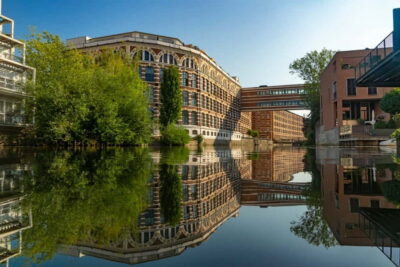
Plagwitz is one of the most useful parts of the coach route for anyone deciding where to spend extra time. The district is described through its canals, galleries, and lofts, giving you a look at a changing part of Leipzig with a very different feel from the Old Town.
You pass through the area rather than taking a long walking break, so you will not explore its galleries or waterways in depth. Still, the view helps you understand why Plagwitz is often included in discussions of Leipzig’s modern creative culture.
I like this section because it keeps the tour from becoming a standard list of old churches and royal buildings. Leipzig is not only its historic center. The bus shows you a city of converted spaces, water channels, art venues, and newer uses for older industrial areas.
Music district and the former Reich Court
The coach then travels through the music district, with its greenery and villas. This provides another shift in atmosphere. After the commercial center and the changing industrial quarters, you see a more spacious part of Leipzig associated with music and grand residential buildings.
You also pass the Federal Administrative Court, housed in the former Reich Court building. This is a strong architectural and historical sight, even from the road. The building connects present-day German government with the country’s earlier legal institutions.
The guide’s narration matters most here because the bus cannot stop at every building. A clear speaker can turn a passing façade into a meaningful part of the city story. Past guides, including Anna and Pikavski, were praised for explaining history clearly, sometimes switching between German and English while keeping the group moving.
The Panometer and Battle of Nations Monument
The route continues through the southern suburb and passes the Panometer, a former gas holder used for large panoramic art displays. The tour does not include entry, but the unusual building is worth noting if you like converted industrial spaces or large-scale visual exhibitions.
The major sight in this section is the Battle of Nations Monument. Its size makes it one of Leipzig’s most memorable landmarks, even when seen from the bus. It commemorates the 1813 Battle of Leipzig, a major defeat for Napoleon’s forces.
You should think of this as a viewing and orientation stop, not a full monument visit. The schedule includes many districts, so there is not enough time to explore every interior or climb every landmark. If the monument catches your attention, mark it for a later return.
German Square, Bavarian Train Station, and Augustusplatz
On the way back, the bus passes the Old Market, German Square, and Bavarian Train Station. These final sights help connect the southern districts with the central city.
Bavarian Train Station is especially useful to note because it is an important part of Leipzig’s transport story and a distinctive stop outside the usual Old Town route. Again, the guide supplies the context while you see it from the coach.
The tour ends at Augustusplatz. This is a sensible finish because you are surrounded by several major modern institutions: the New Concert Hall, the University, and the Opera House. You can continue exploring from here, arrange a meal, or return to the Old Town on foot.
Ending at Augustusplatz also leaves you in a good position to revisit the places you found most interesting. If you enjoyed the music theme, focus on the concert hall, Opera House, and St. Thomas Church. If architecture caught your eye, walk back through the passages and market area.
The German-language issue
The official language is German. This is the single point I would take most seriously before booking.
Some past guides have handled English well. One guide spoke German first and then English for nearly four hours on a crowded bilingual tour. Another made equal time for two English-speaking guests, and several guides were praised for clear speech and useful explanations. Even a guest with only school-level German found one guide easy to follow.
But that does not make the experience an English tour. On bilingual departures, the German explanation may be longer, and the English portion may feel compressed. One past guest specifically wished for separate German and English tours because the second half left little time for photographs.
If you understand basic German, this could be a pleasant chance to practice. If you need full English commentary, confirm the language before paying. Do not assume that a clear bilingual guide will be available on every departure.
Timing, comfort, and group size
The tour lasts 2.5 hours, though one older account describes a much longer bilingual outing because the guide had to speak continuously for a larger-than-expected group. Treat the stated 2.5 hours as the current planning figure, but allow a little flexibility if the departure is crowded or the guide gives extended commentary.
The bus is described as clean, spacious, and air-conditioned. That makes a difference in bad weather and gives you a break after the walking portion. During one rainy outing, the guide made a real effort to keep the group under cover where possible.
There is no hotel pickup or drop-off, and meals and drinks are not included. You meet in the center and make your own way there. Bring water if you need it, and consider eating before or after the tour rather than expecting a food stop.
Free cancellation is available up to 24 hours before the start for a full refund. You can also reserve and pay later, which is useful if your Leipzig plans may change.
Who should book this tour?
I would choose this tour if you are visiting Leipzig for the first time, have limited time, or want help deciding which districts deserve a longer visit. It is also a good fit if you like a mix of architecture, music, literature, urban development, and transport history.
The tour suits independent visitors who want an introduction without committing to a full-day excursion. You get enough information to return to St. Thomas Church, Plagwitz, the Battle of Nations Monument, or the passages on your own.
I would be more cautious if you dislike group tours, need long photo stops, or want detailed interior visits. The itinerary covers a lot of ground, so the benefit is range rather than depth. You see many sights, but you will not spend an hour at each one.
Should you book the Leipzig combination tour?
For $25, this is a strong-value way to get your bearings. The Old Town walk covers Leipzig’s essential central sights, while the coach adds Gohlis, Plagwitz, the music district, the former Reich Court, the Panometer, and the Battle of Nations Monument.
Book it if you can follow German or if you have confirmed a bilingual departure. Arrive early, keep your camera ready, and make a note of the places you want to revisit. Skip it only if English commentary is essential and cannot be confirmed, or if you prefer to explore at your own slow pace.
FAQ
Where does the Leipzig combination tour begin?
It begins at the Tourist Information office in the Katharinum, Katharinenstraße 8, 04109 Leipzig. Go to the counter for city tours.
How early should I arrive?
You should be at the meeting point 15 minutes before the scheduled start.
How long does the tour last?
The stated duration is 2.5 hours.
What language is the tour in?
The official tour language is German. Some guides have also provided English explanations on bilingual departures, but English is not guaranteed.
Is transportation included?
Yes. The experience combines a guided walking tour with a sightseeing ride on an air-conditioned bus.
Does the tour include hotel pickup?
No. Hotel pickup and drop-off are not included.
Are meals and drinks included?
No. You need to arrange your own meals and drinks.
What central sights are included?
The route includes Nikolai Church, Specks Hof, the Snack Market, the Old Rathaus, Mädler Passage, Auerbachs Keller, Barthels Hof, and St. Thomas Church.
What can I see outside Leipzig’s city ring?
The bus route includes Gohlis Castle, Schiller House, the Waldstraßen Quarter, Red Bull Arena, Plagwitz, the music district, the Federal Administrative Court in the former Reich Court, the Panometer, the Battle of Nations Monument, German Square, and Bavarian Train Station.
Can I cancel for a full refund?
Yes. You can cancel up to 24 hours before the tour for a full refund. You can also reserve now and pay later.
Just added around Leipzig
- Federal Administrative Court Leipzig: A journey into the heart of German justice★ 4.8 · 189 reviews
- Leipzig: City Highlights Express Guided Tour★ 4.8 · 5 reviews
- Der Leipziger Passagen-Rundgang in der Altstadt★ 4.8 · 124 reviews
- Music in Leipzig – Bach, Wagner and the Thomanerchor★ 4.8 · 26 reviews
- 1.5-Hour Historical Tour of Leipzig with Costumed Guide★ 4.5 · 128 reviews
- Leipzig: Floodplain Forest & City River Cruise★ 4.9 · 334 reviews
- Leipzig: Riverside Forest Tour on the Pleiße★ 4.6 · 347 reviews
- Leipzig: 360° Panorama THE CATHEDRALE OF MONET ticket★ 4.7 · 410 reviews
Leipzig Tours, compared.
City History Canal Sightseeing Tour on a Motorboat
Read our review →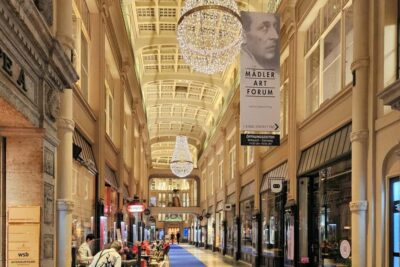
1.5-Hour Public Tour with Night Watchman Bremme
Read our review →



Browse the lists this tour appears in