
Review · DUSSELDORF TOURS
Düsseldorf: The Wehrhahn Line Metro Guided Tour
Düsseldorf’s Wehrhahn Line is more than a way to get around. Its stations turn an ordinary subway ride into a sequence of art and architecture, with each stop given its own visual, sculptural, acoustic, interactive, or geometric character. This 90-minute walking tour connects the stations and explains how artists worked with subway engineers to bring the designs to life.
I like two things right away: the route gives you a fresh reason to visit places you might otherwise pass without a thought, and the short duration fits neatly into a day of sightseeing. The main catch is that the tour is conducted in German, and your A3 metro ticket costs extra.
Key points to know before you book
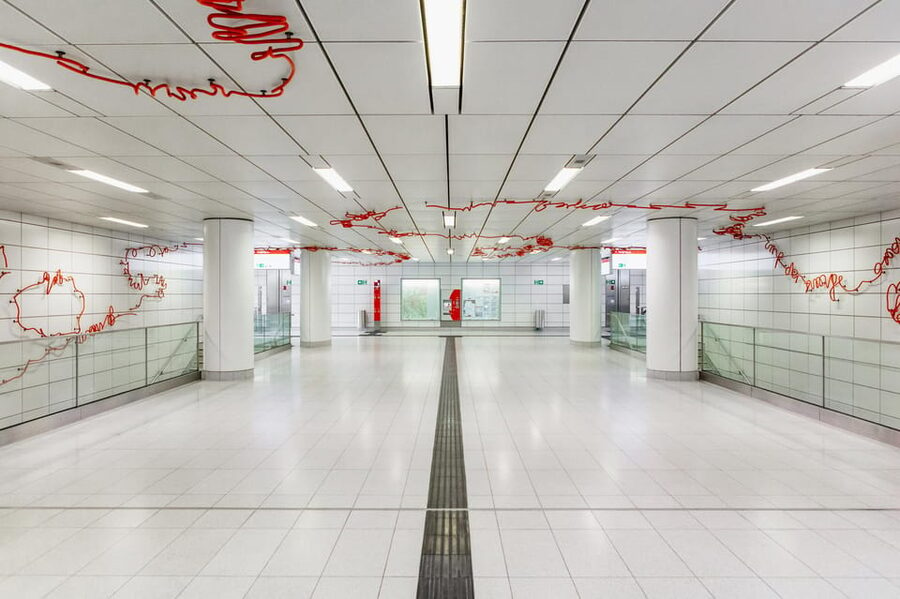
- Six stations, six different ideas: The Wehrhahn Line was planned as a series of individual artistic spaces rather than a row of identical platforms.
- Stops with real variety: The route includes Pempelforter Straße, Schadowstraße, Heinrich-Heine-Allee, Benrather Straße, and Kirchplatz.
- A guided look below street level: You will learn how artists and subway engineers developed and built the station designs together.
- Short but focused: The tour lasts about 1.5 hours, making it easy to pair with other Düsseldorf plans.
- German-language guiding: You need to be comfortable following a live tour in German.
- Budget for the metro fare: The $20 tour price does not include the required price-level A3 ticket.
Why Düsseldorf’s metro deserves a closer look
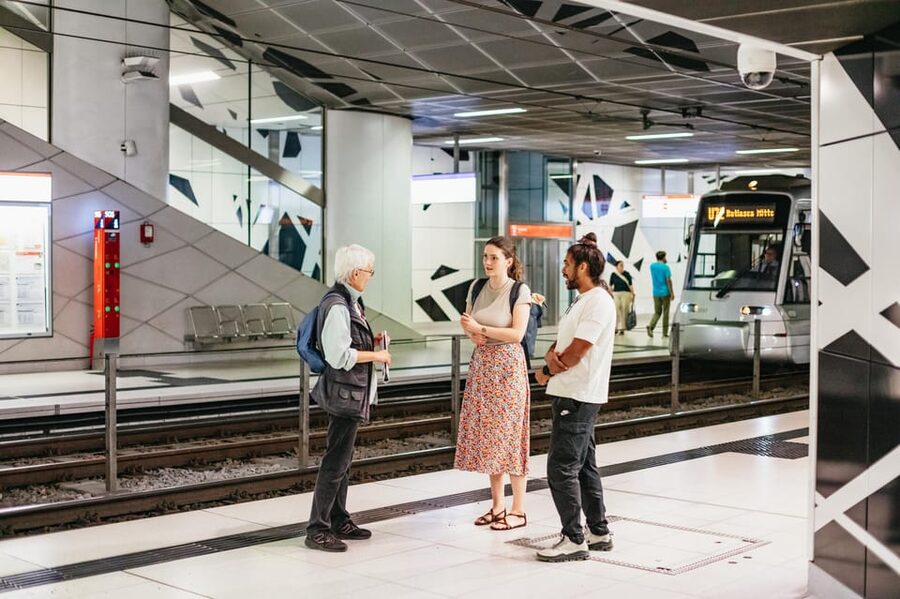
Most people use an underground station with one goal: get in, get out, and reach the next sight. The Wehrhahn Line asks you to slow down. Its six stations were developed with individual artistic concepts, so the trip feels less like a standard transport connection and more like a walk through a set of public installations.
That idea is especially useful in Düsseldorf, a city known for linking design, commerce, and contemporary culture. You do not need to enter a museum or set aside half a day. Instead, the art appears along a working transit line, in places people use every day.
The tour focuses on how the stations were designed and executed. That engineering connection matters. These are not simply decorated underground halls where art was added at the end. The concept involved artists working alongside subway engineers, which gives the guide a practical story to tell: how a visual idea can fit around platforms, tracks, entrances, lighting, movement, and daily use.
You will see painted, sculptural, interactive, acoustic, and geometric features. The supplied details do not identify every installation or explain exactly which artistic technique appears at each stop, so you should not expect a room-by-room museum catalogue. What you can expect is a guided explanation of the overall design plan and a closer look at the stations that make the line distinctive.
A few more Dusseldorf half-days to weigh up
- Düsseldorf: City Sightseeing Cruise on the Rhine
★ 4.1 · 2,954 reviews - Düsseldorf: 24-Hour Hop-On Hop-Off Ticket
★ 4.2 · 1,685 reviews - Düsseldorf: Brewery Tour with Alt Beer Tastings
★ 4.7 · 1,523 reviews
Starting at Pempelforter Straße on Oststraße
The meeting point is at the street-level station access on Pempelforter Straße, on Oststraße at the corner of Am Wehrhahn. This is an important detail because a large underground station can have several entrances, and arriving at the wrong one can cost you time.
The listed starting information also refers to Oststraße and Ferienwohnung Nordwind as location options. For the clearest plan, use the specific street-level access at Pempelforter Straße and Oststraße, near Am Wehrhahn, and arrive with enough time to locate the entrance before the group sets off.
From here, the tour begins its walk through the Wehrhahn Line. You are not simply riding from one platform to another while the guide talks over the train noise. The experience is built around stopping, looking, and understanding how each station has a separate identity.
A shared group is the standard social option. If you choose the private version, the guide can focus on your party, though the supplied information does not promise a different route or added stops. The private option makes the most sense if your schedule or language needs call for a more personal format.
Pempelforter Straße and the first look at the design plan
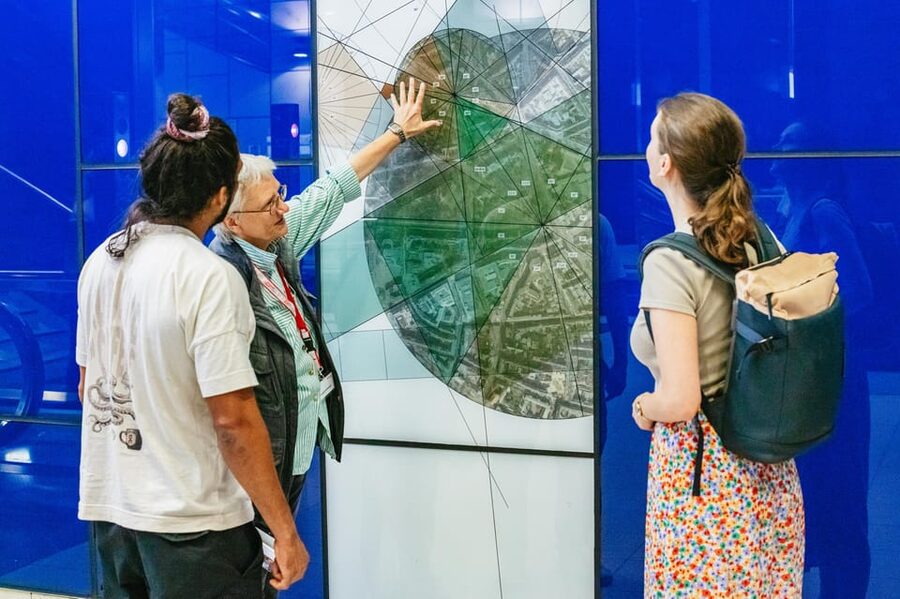
Pempelforter Straße is a natural opening stop because it introduces the line’s central idea: the stations were treated as connected pieces of art and architecture. The guide can set out how the six-station concept was developed before you continue to the other stops.
This first explanation gives the rest of the tour some structure. Instead of seeing random colors, patterns, or forms, you can look for the relationship between the station’s intended character and the practical demands of a metro system.
You may find this stop most useful if you like design but do not usually know how to read it. A good guide can point out what to notice, explain why an element matters, and connect the artistic plan to the station’s built form. The information provided does not identify the guide by name, so I would not book this expecting a particular personality or specialist.
Schadowstraße, where public art meets city movement

Schadowstraße is one of the best-known stops included in the route. Its location makes the contrast between underground design and ordinary city movement especially interesting. Above ground, the area is part of Düsseldorf’s active urban life. Below ground, the station becomes a planned visual environment.
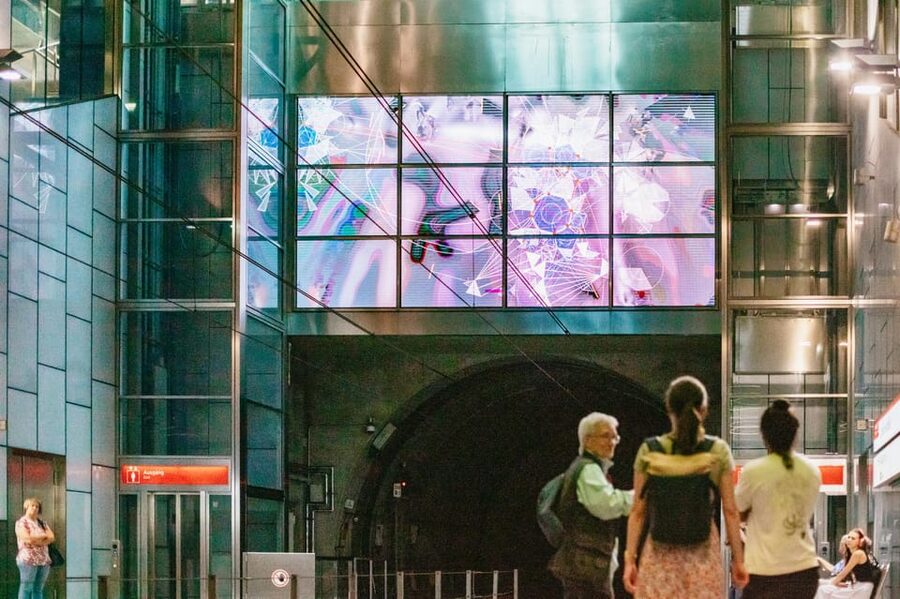
The value here is not just taking a quick photograph. The guide helps you see how a station can shape the mood of a journey. Painted surfaces, geometric forms, sculpture, sound, or interactive elements can change the way you experience a place that is usually treated as a passageway.
Do keep your expectations practical. This is still a functioning metro station, not a gallery reserved for a tour group. Other passengers may be moving through the space, and the tour must work around normal station use. That is part of the appeal, but it also means the experience may feel less quiet and controlled than a museum visit.
Same city, a completely different sort of afternoon:
- Düsseldorf: Altbier-Safari Beer Walking Tour
★ 4.4 · 1,150 reviews - Düsseldorf: Guided Tour with a Night Watchman
★ 4.7 · 986 reviews - Düsseldorf: Rhine Tower Adult Entry
★ 4.5 · 638 reviews - Dusseldorf: Old Town & Altbier Tour
★ 4.7 · 585 reviews
Heinrich-Heine-Allee and Benrather Straße

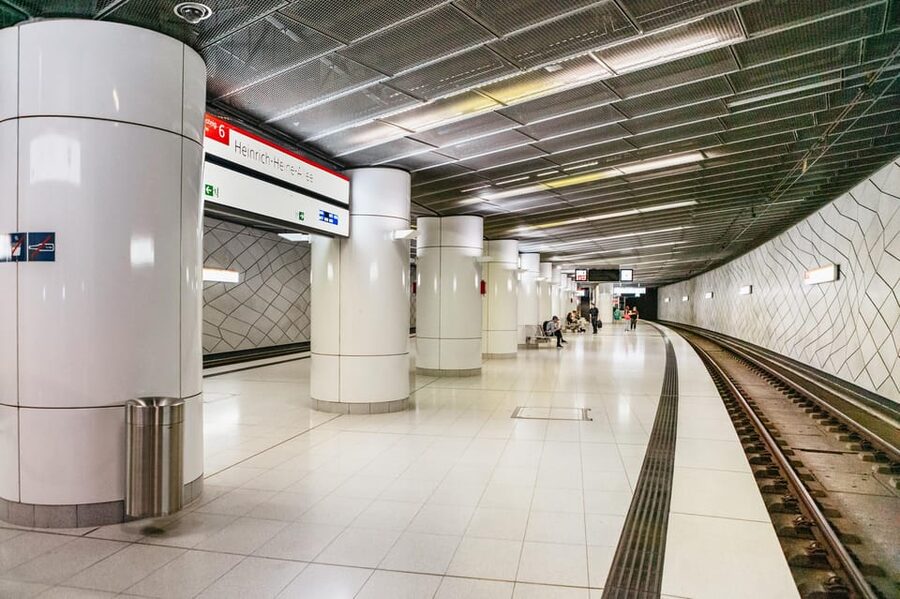
Heinrich-Heine-Allee and Benrather Straße add more variety to the route. Because each station has its own character, the interest comes from comparing them rather than judging one stop on its own.
I like this kind of city tour because it trains your eye. After the guide explains one station’s concept, you begin to notice how another stop handles space, color, shape, or sound differently. The line becomes a sequence of choices made by different artists in cooperation with the same basic transport system.
The supplied description specifically points to painted, sculptural, interactive, acoustic, and geometric features across the stations. That range suggests the tour is not aimed only at people who follow contemporary painting. You can come for architecture, public infrastructure, visual design, or the simple pleasure of seeing a familiar city from a different angle.
Benrather Straße is also useful as part of the wider comparison. The tour does not present the Wehrhahn Line as one single style. Instead, you see how a shared construction project can accommodate distinct artistic approaches.
The guide’s explanation is likely to matter more than a quick independent visit. Without context, an underground station can look attractive but puzzling. With the design story, you have a reason to connect the details to the wider plan.
Kirchplatz and the end of the route
Kirchplatz is another notable stop and one of the listed end points. The tour itinerary also lists Oststraße as a possible drop-off location, while the meeting information says the activity ends back at the meeting point. Because the supplied details present both options, check the exact arrangement when you book and follow the guide’s instructions on the day.
Kirchplatz gives the tour a clear sense of completion. By this point, you have seen several stations and can compare their individual characters. The most rewarding part is not any single photo stop. It is the growing understanding that the line was planned as a connected public art project with separate identities.
The route lasts about 1.5 hours. That is long enough for a proper introduction to the stations but short enough to leave room for Düsseldorf’s other sights. You can place it between central city activities without sacrificing an entire morning or afternoon.
What the $20 price really includes
At $20 per person, the tour is reasonably priced for a guided experience lasting 90 minutes. Your fee covers the live guided tour, and it covers a private tour only if you select that option. The metro ticket is not included.
The extra fare is not a surprise expense if you plan for it. You must purchase a price-level A3 metro ticket to take part. Since the experience uses the transit system itself, paying separately for the ride is understandable, but you should add that cost to the advertised price when comparing options.
The strongest value comes from the interpretation. You could ride the Wehrhahn Line on your own, but you would miss the design story connecting the six stations. If you are already interested in architecture, public art, or urban planning, the guide adds useful structure to what might otherwise be a brief look around.
For a private group, the calculation changes. A private tour costs more in total depending on the booking choice, but it may be worthwhile if you want a dedicated guide and do not want to join a shared group. The available information does not state the private supplement, so check the current price before committing.
The guide, group size, and language question
The tour has a live guide and is offered in German. That is the single biggest booking consideration for many people. If your German is limited, the visual elements will still be apparent, but the detailed explanations about design and construction may be difficult to follow.
You do not need specialist art vocabulary to appreciate the stations, but you do need enough German to follow a spoken walking tour. If you are choosing between this and a general city tour, the language issue matters more here because the explanation is the main reason to book rather than simply ride the metro.
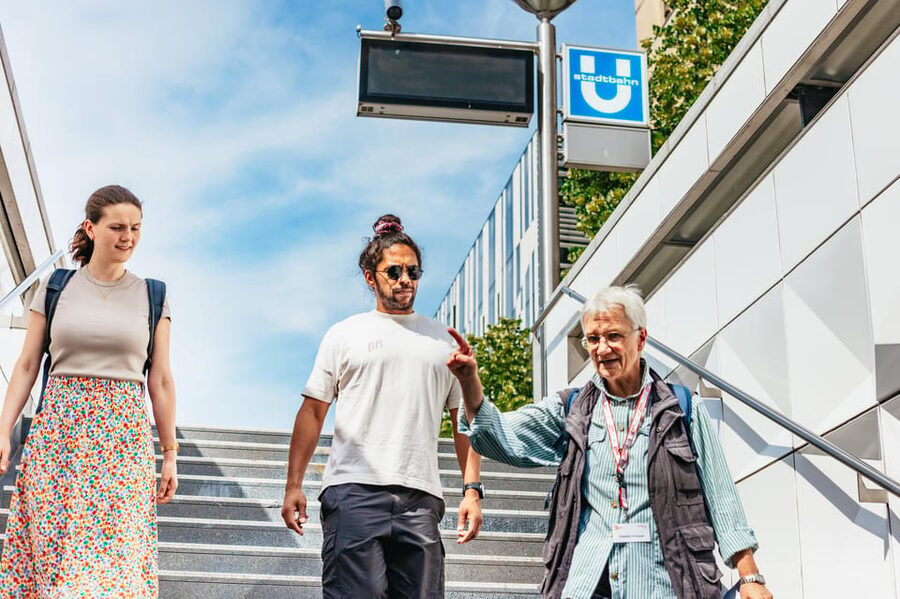
The group format can be pleasantly small. One reported outing had only three people, which allowed the older guide to explain everything clearly and made the morning feel relaxed. That is not a guaranteed group size, but it suggests the tour can offer a personal feel rather than a large crowd.
The guide was praised for being friendly, competent, and full of useful information. One account also noted a large amount of detail and an especially enjoyable sunny February morning. Weather will not change the underground stations, but it can make the walk between entrances more pleasant.
The supplied information does not provide a guide’s name. If a particular guide is important to you, ask the provider at booking rather than assuming the same person leads every departure.
Who will enjoy this metro tour most

I would recommend the Wehrhahn Line tour to:
- People who like architecture, design, public art, or urban planning
- Visitors who want a short activity that fits around a full Düsseldorf itinerary
- Repeat visitors looking for a different side of the city
- German speakers who enjoy detailed local explanations
- Small groups that prefer a private format
- Curious visitors who normally rush through metro stations and want to look more carefully
It is less suitable if you want a broad introduction to Düsseldorf’s major sights. The tour does not focus on the city’s main landmarks, food, shopping, or general history. Its subject is narrow by design: the artistic and architectural treatment of the Wehrhahn Line.
It may also disappoint if you expect an English-language option. The stated tour language is German, and no translation service is listed. Do not count on English explanations unless the provider confirms them directly.
Practical tips for a smoother visit
Buy the required A3 metro ticket before the tour begins. The tour cannot proceed without it, and handling the ticket at the last moment could make you late.
Use the precise meeting details: the street-level access on Pempelforter Straße at Oststraße, near the corner of Am Wehrhahn. Metro stations can have several entrances, so allow time to get oriented.
Wear shoes suitable for a 1.5-hour guided walk. The route includes station visits and walking, not just a stationary talk. The supplied information does not describe accessibility, seating, or the amount of stair use, so ask the provider if those details affect your plans.
Bring a charged phone if you want photographs, but keep the focus on the guide. The point is to understand how the stations work as designed spaces, not only to collect pictures.
The tour offers free cancellation up to 24 hours before the start time, and you can reserve now while paying later. Those terms help if your Düsseldorf schedule is still moving, but confirm the exact conditions at booking.
Should you book the Wehrhahn Line tour?
Book it if you enjoy seeing ordinary city infrastructure in an unusual way and can follow a German-speaking guide. The combination of six distinct stations, practical engineering, and several forms of public art makes this a smart short tour for curious visitors.
Skip it if you need English guiding, want a broad city overview, or would rather spend your underground time simply getting from one sight to the next. The additional A3 metro fare is minor, but the real cost is your attention: this tour rewards you for looking closely and listening.
For most German-speaking visitors with an interest in design, the $20 price is fair. You leave with a better understanding of why Düsseldorf’s Wehrhahn Line feels different from a standard metro route, and you can continue noticing its details long after the tour ends.
FAQ
How long does the Wehrhahn Line metro tour last?
The guided tour lasts 1.5 hours. Check availability for the current starting times.
Where does the tour meet?
Meet at the street-level station access on Pempelforter Straße on Oststraße, at the corner of Am Wehrhahn.
Which stations are included?
The tour includes notable stops such as Pempelforter Straße, Schadowstraße, Heinrich-Heine-Allee, Benrather Straße, and Kirchplatz.
Is the metro ticket included?
No. You must purchase a price-level A3 metro ticket separately to take part.
What language is the tour in?
The live guided tour is conducted in German.
Can I book a private tour?
Yes. You can choose between a shared group tour and a private guided tour.
Just added around Dusseldorf
- Filmtour Düsseldorf: From Hollywood to Netflix★ 4.9 · 4 reviews
- Explore Düsseldorf with Passionate tour guides!★ 4.0 · 69 reviews
- DüsseldorfCard Plus★ 4.1 · 14 reviews
- Düsseldorf: The Ultimate Team event (3 rooms – 9 games)★ 3.4 · 5 reviews
- Düsseldorf: Old Town Interactive Crime Tour with actor★ 4.9 · 22 reviews
- Düsseldorf: Scavenger Hunt Self-Guided Tour★ 4.6 · 127 reviews
- Düsseldorf: Culinary Soul Guided Tour★ 4.7 · 110 reviews
- Düsseldorf: Private pub crawl with insider-guide & shots★ 4.1 · 18 reviews
Dusseldorf Tours, compared.



Browse the lists this tour appears in