
Review · DUSSELDORF TOURS
Düsseldorf: Sushi, Sake & Japanese Lifestyle Tour
Düsseldorf’s Little Tokyo is more than a row of sushi restaurants. Along Immermannstraße, Japanese bookshops, bakeries, manga shops, ramen counters, matcha cafés, and everyday services create one of Europe’s most concentrated Japanese communities. This two-hour walk gives you a quick, tasty way to understand how that district works.
I like the four food samples, which turn a neighborhood walk into a practical introduction to Japanese eating. I also like the small group, capped at 10 people, and the chance to hear useful tips about where locals shop and eat. The main catch is that the tour is in German, and the food is vegetarian-friendly but neither vegan nor gluten-free.
Key points at a glance
- Immermannstraße focus: Explore the heart of Düsseldorf’s Japanese community rather than seeing isolated attractions.
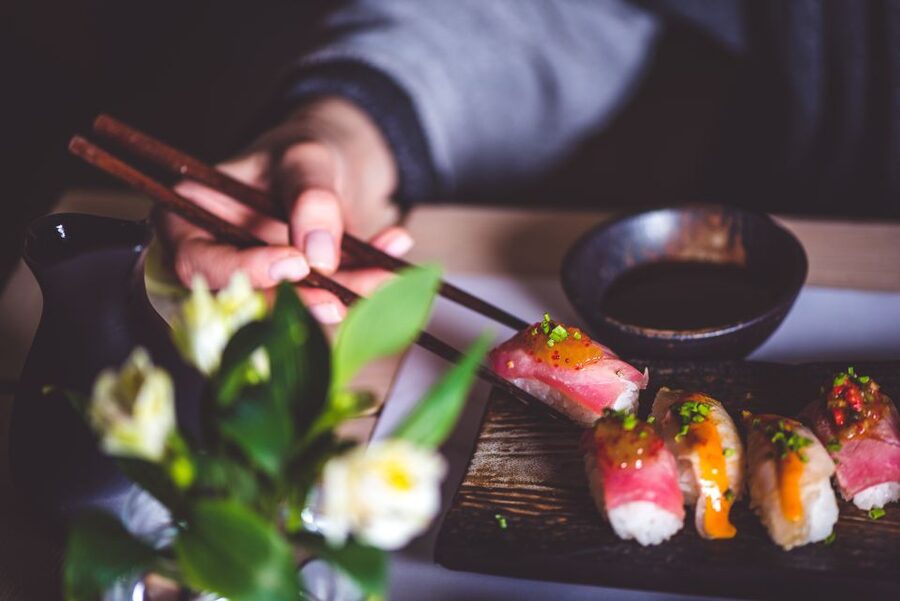
- Four included samples: Try Japanese specialties during the walk, with food included in the $41 price.
- Bookshops, bakeries, and manga: The route looks at daily culture as well as restaurants.
- Small group of up to 10: A compact group suits questions and close street walking.
- German-speaking guides: Guides including Julia and Patrizia have led the tour, though the language may limit access for non-German speakers.
- Extra museum value: The voucher can also be used for a visit to the city museum.
Why Düsseldorf has a Little Tokyo on Immermannstraße
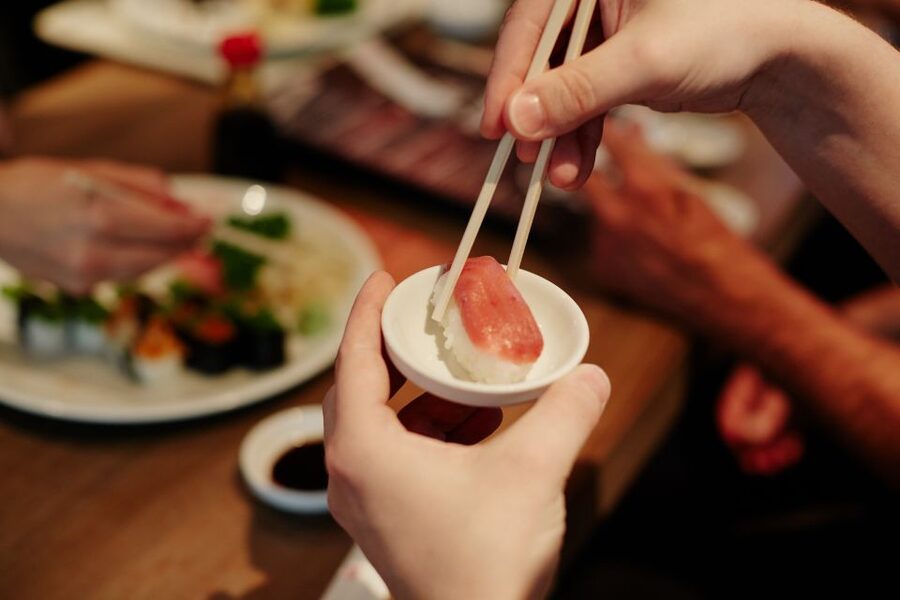
The first thing to understand is that this is not simply a themed shopping street. Düsseldorf’s Japanese district grew into a place where Japanese residents could buy familiar foods, find books and comics, eat dishes from home, and handle ordinary parts of life.
That is why the tour’s best moments are likely to come from the everyday details. A ramen or soba restaurant tells you about dining. A Japanese bakery shows you how tastes and baking styles travel. A bookshop or manga store gives you another view of what the community reads and buys.
The activity centers on Immermannstraße, with the Clayton Hotel Düsseldorf, formerly Hotel Nikko Düsseldorf, used as the meeting point at number 41. This is convenient if you are staying near Düsseldorf’s main station or exploring the city center. You begin in a district that is easy to reach and spend the next two hours on foot.
I appreciate this focus because you are not being rushed across the city. The neighborhood itself is the subject. You get a short introduction to its development, then see the businesses that make Japanese life here feel practical rather than decorative.
More drinks-led nights in Dusseldorf:
- Düsseldorf: Brewery Tour with Alt Beer Tastings
★ 4.7 · 1,523 reviews - Düsseldorf: Altbier-Safari Beer Walking Tour
★ 4.4 · 1,150 reviews - Düsseldorf Pub Crawl – 4 Locations, Shots & Club Entry
★ 4.3 · 140 reviews
What the two-hour route gives you
The tour is designed as a compact overview rather than a full Japanese culture course. Your guide leads you through the district, explains its food and shopping traditions, and adds local anecdotes and practical suggestions.
The exact order of stops can vary, but you can expect several kinds of places:
- Japanese restaurants serving food such as sushi, ramen, and soba
- Japanese bakeries
- Bookshops with Japanese titles
- Manga stores
- Shops connected with Japanese arts, crafts, and daily life
- Places associated with sushi, sake, and matcha
This mix matters. If the tour only visited restaurants, you would learn what to eat but not much about the community. If it only focused on shops, you would miss the tastes that draw people to the area. The balance gives you a broader first look.
The two-hour length is sensible for a first visit. You have enough time to build a picture of the district without giving up half a day. At the same time, do not expect detailed time inside every business. The value comes from the connections your guide makes between the stops.
A recent tour led by Julia was described as lively, interesting, and full of humor. Patrizia has also led the walk, with a friendly approach. The experience can depend on the guide, and the difference matters here because much of the tour’s value comes from explanation rather than sightseeing alone.
The food stops: four small tastes, not a full meal
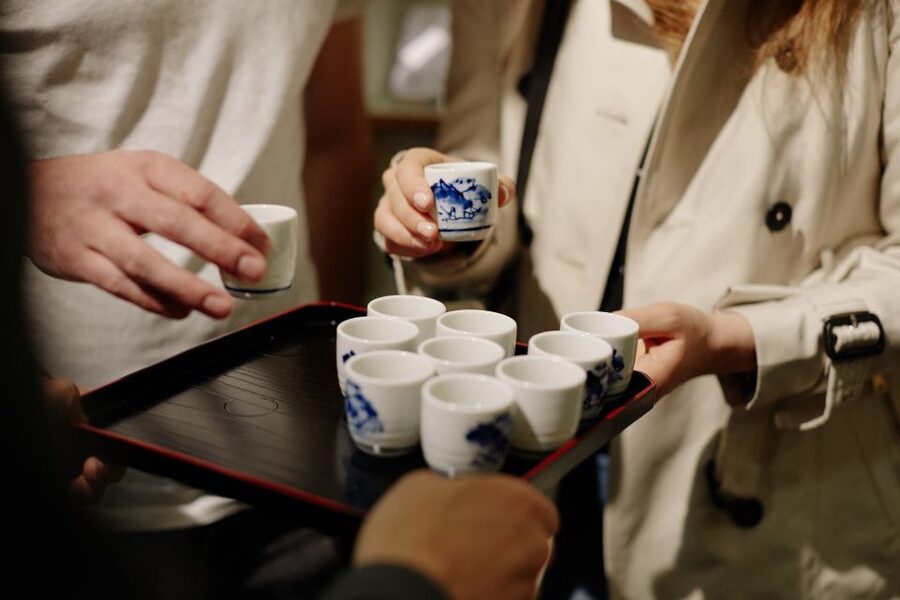
Four food samples are included. That is an important part of the price, but you should think of them as tastings, not lunch or dinner.
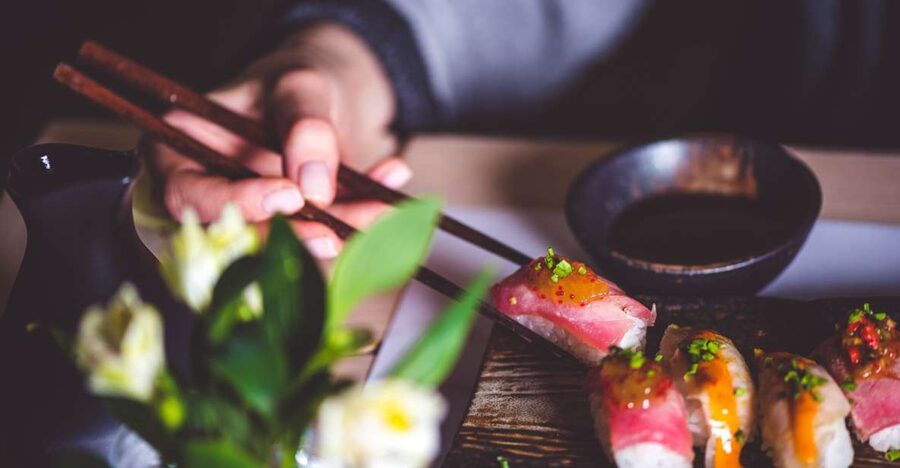
You may try Japanese specialties connected with the district’s restaurants, bakeries, or cafés. Sushi is a central theme, and the tour also introduces Japanese cuisine more broadly. The stated focus includes sake and matcha, along with ramen and soba, though the information does not promise a particular drink or menu item at every departure.
This tasting format works well if you want guidance before choosing your own restaurant later. Your guide can explain what you are eating and point you toward places for a larger meal. It also lets you sample something unfamiliar without committing to a full plate.
The food is suitable for vegetarians, which makes the tour easier to book for people who avoid meat. It is not suitable for vegans, and the samples are not gluten-free. If you have serious allergies or strict dietary needs, this is not a flexible food tour.
I would also plan to eat a normal meal outside the tour. Four samples can be satisfying for some people, but the activity is built around tasting and learning, not filling up. Think of it as an edible neighborhood introduction.
Japanese bakeries and the daily side of the district
The bakeries are one of the more useful stops for anyone who wants to understand Japanese food beyond sushi. Japanese baking often combines familiar European forms with fillings, textures, and flavors that are less common in a standard German bakery.
The tour does not promise a specific bakery or pastry, so you should avoid booking it for one exact item. Instead, treat the bakery visit as a chance to see how Japanese food culture has adapted to Düsseldorf.
This is also where the walk feels most connected to ordinary life. A bakery is not an exhibit. It is a place where people buy food for the day. That gives you a better sense of the district than a string of postcard sights would.
More food tours in Dusseldorf:
- Düsseldorf: Guided Beer Tour with 4 Beers & a Flexible Route
★ 4.8 · 74 reviews - Düsseldorf: Guided Old Town Tour with Beer Break
★ 4.9 · 31 reviews - Cologne: Brewery Tour with 3 Kölsch Beer Tastings
★ 4.7 · 3,108 reviews - Hamburg: St. Pauli Highlights Guided Tour with Beer for 18+
★ 4.7 · 2,353 reviews
Manga, bookshops, and Japanese popular culture
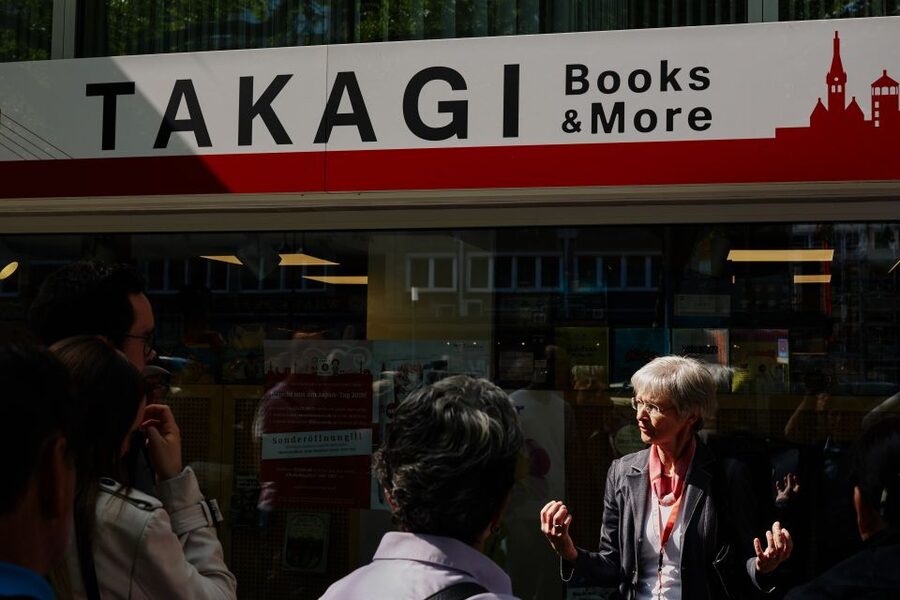
Manga is another central theme. You visit traditional Japanese bookshops and manga stores, with the guide explaining why comics are such a visible part of Japanese popular culture.
For a manga fan, this may be the most appealing section of the walk. You get a chance to browse places that serve a specialist audience, and you may receive suggestions about where to shop after the tour.
For everyone else, the stop adds needed context. Japanese culture is not only tea, temples, and formal traditions. Manga is part of modern reading, entertainment, and visual storytelling. Seeing the stores in the middle of Düsseldorf’s Japanese district helps connect that culture to daily commerce.
The tour’s strength is that it places manga alongside food, books, and bakeries. You are not asked to treat it as a separate curiosity. It is one piece of a modern community.
Matcha, sake, ramen, and soba
The food advice extends beyond sushi. The tour introduces places associated with ramen, soba, sake, and matcha lattes. That gives you a useful list for a later meal or café stop.
One named place that can come up in the area is Matcha Café Wakaba. The available information points to its importance as Düsseldorf’s first dedicated matcha café, established around 2017 or 2018. A visit or explanation connected with the café can be valuable because it places matcha in the context of a newer Japanese café culture in the city.
You may receive a sample such as a matcha brownie, but do not assume the tour includes a full matcha presentation or a traditional tea ceremony. Tea ceremonies can also be attended on Immermannstraße, yet this tour does not promise that activity as part of the route.
That distinction is important. This is a street-level introduction to Japanese food and lifestyle. It is not a formal tea workshop, a sake class, or a cooking lesson.
The same caution applies to restaurant prices. One account of the tour included an inaccurate claim about a very high per-person cost at Nagaya. You should not use the tour as your only source for current restaurant prices. Ask for up-to-date menus and check directly before booking an expensive meal.
The tour’s strongest feature: practical local advice
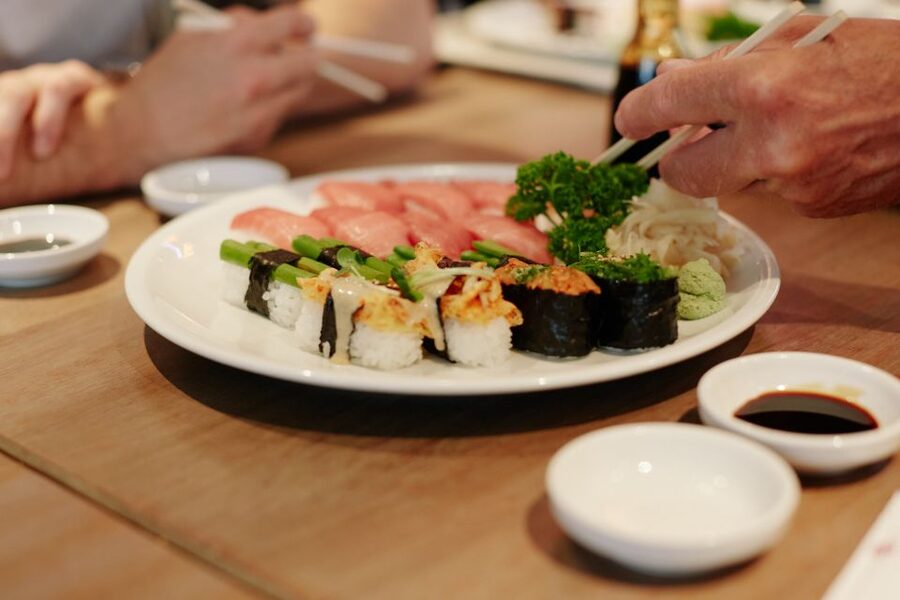
The best reason to book this experience is the advice you can use afterward. Your guide explains where the Japanese community shops and dines, and which places are worth remembering for sushi, sake, matcha, and other specialties.
That information is more useful than a simple list of addresses. You can learn which part of the district suits a quick snack, where to browse manga, and which kinds of food to look for later. Even if you do not follow every recommendation, you leave with a clearer plan.
The tour also promises background on how Little Tokyo developed and why the Japanese community feels at home in Düsseldorf. The quality of that explanation depends on the guide. Julia has been praised for combining humor with a lot of information, while Patrizia has received both friendly and more critical assessments.
I would set your expectations carefully. Some guides may offer a lively set of anecdotes, while others may leave out parts of the community’s story. Topics such as Japanese hairdressers, tailors, laundries, and tea ceremonies may not receive much attention. If those everyday services are your main interest, ask the guide about them directly during the walk.
Small groups make the street stops easier
The group is limited to 10 people. That is a useful size for a neighborhood tour with food samples.
You can hear the guide more easily than in a large walking group, and you have a better chance to ask about a shop, dish, or restaurant. Small groups also make it easier to enter compact stores without filling the room.
The tradeoff is that a small-group tour has less anonymity. You are part of a shared walking pace, and the guide has to balance different interests. If one person wants detailed manga advice while another wants restaurant recommendations, the discussion may move between topics.
The activity lasts two hours, though one account described a total time closer to two and a half hours. Allow a little flexibility if you have a tight onward booking. Availability depends on the starting time you select.
Price and what you receive for $41
At $41 per person, the tour is not the cheapest way to walk through Immermannstraße. You could explore the street yourself for free and buy your own food.
The price becomes more reasonable if you value the explanation and the four tastings. You are paying for a guide, a small group, curated stops, food samples, a special souvenir, and local recommendations. The souvenir is said to be available only through this tour, which adds a small extra touch, though its exact form is not specified.
The city museum voucher improves the value if you already plan to visit the museum. It can be used for a museum visit, so the tour may work best as part of a broader Düsseldorf sightseeing plan.
I would book it for the context, not for the amount of food. If you want a large sushi meal, spend the $41 at a restaurant instead. If you want to understand the district quickly and get pointed toward good follow-up choices, the price is easier to justify.
Who should book this Little Tokyo walk
This tour suits you best if you are visiting Düsseldorf for the first time and want a clear introduction to the Japanese district. It also works well for people who enjoy food but want more than a restaurant reservation.
Manga readers, Japanese food fans, and visitors curious about modern Japanese life will find plenty to connect with. Families and couples may appreciate the short duration, especially if they want to combine it with other city sights.
You should be comfortable walking through city streets and entering shops. The tour is not suitable for wheelchair users, according to the activity information.
Language is the biggest practical filter. The live guide speaks German, and the tour is conducted in German. If you do not understand German well, the food and streets may still be enjoyable, but you will lose much of the explanation that justifies the price.
Booking details worth knowing before you go
Meet in front of the Clayton Hotel Düsseldorf, formerly Hotel Nikko Düsseldorf, at Immermannstraße 41. Arrive ready to walk and keep some room in your schedule for browsing or eating after the tour.
You can reserve now and pay later, which helps if your Düsseldorf plans are still shifting. Cancellation is free up to 24 hours before the activity for a full refund.
The tour is operated by Visit Düsseldorf. It has a rating of 4.6 from 539 reviews, but the most useful lesson is that the guide shapes the experience. Strong guides have been praised for humor, enthusiasm, attention to the group, and food knowledge. Less satisfying departures have been criticized for missing important cultural details and making incorrect statements.
That does not make the tour a bad choice. It means you should ask questions rather than simply follow along. If you want to know about tea ceremonies, Japanese services, or a particular restaurant, bring those questions with you.
Should you book it?
Book this tour if you want a short, food-focused introduction to Düsseldorf’s Japanese community, especially if you enjoy manga, Japanese bakeries, sushi, and neighborhood stories. The small group, four samples, guide, souvenir, and city museum voucher give the $41 price some weight.
Skip it if you need English, vegan or gluten-free tastings, wheelchair access, or a formal tea ceremony. You should also skip it if your priority is a full meal rather than a series of samples.
For the right audience, this is a useful first step into Little Tokyo. Take notes on the restaurant and café suggestions, keep your expectations realistic, and leave time afterward to explore the street on your own.
FAQ
Where does the Düsseldorf Little Tokyo tour meet?
The meeting point is in front of the Clayton Hotel Düsseldorf, formerly Hotel Nikko Düsseldorf, at Immermannstraße 41.
How long does the tour last?
The stated duration is two hours. One experience was described as lasting about two and a half hours, so allow a little extra time if your schedule is tight.
What food is included?
Four food samples are included. The tour focuses on Japanese specialties, including sushi and other food connected with Japanese cuisine.
Are the food samples suitable for vegans or people avoiding gluten?
The samples are suitable for vegetarians, but they are not vegan and are not gluten-free.
What language is the tour conducted in?
The tour is conducted in German, with a live German-speaking guide.
Is the tour wheelchair accessible?
No. The activity is not suitable for wheelchair users.
Just added around Dusseldorf
- Filmtour Düsseldorf: From Hollywood to Netflix★ 4.9 · 4 reviews
- Explore Düsseldorf with Passionate tour guides!★ 4.0 · 69 reviews
- Düsseldorf: The Wehrhahn Line Metro Guided Tour★ 4.5 · 29 reviews
- DüsseldorfCard Plus★ 4.1 · 14 reviews
- Düsseldorf: The Ultimate Team event (3 rooms – 9 games)★ 3.4 · 5 reviews
- Düsseldorf: Old Town Interactive Crime Tour with actor★ 4.9 · 22 reviews
- Düsseldorf: Scavenger Hunt Self-Guided Tour★ 4.6 · 127 reviews
- Düsseldorf: Culinary Soul Guided Tour★ 4.7 · 110 reviews
Dusseldorf Tours, compared.


Browse the lists this tour appears in