
Review · DRESDEN TOURS
Dresden: Virtual Reality Time Travel Experience Ticket
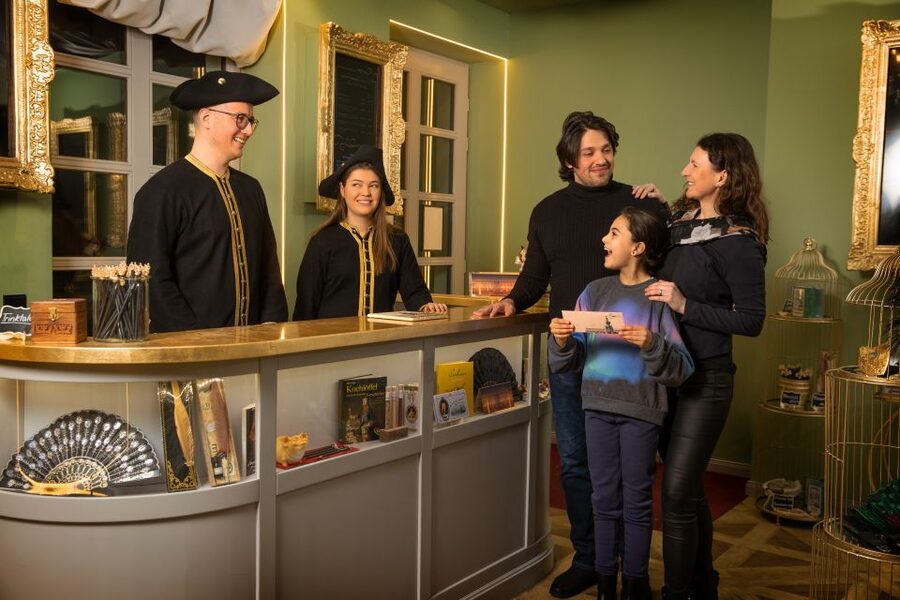
Dresden’s past comes alive in a 45-minute virtual reality journey set in 1719, when Augustus the Strong ruled Saxony and court life reached its grandest scale. You begin in a Hall of Mirrors, meet a ceremonial master of ceremonies, watch jugglers, and finish with a virtual carriage ride through Baroque Dresden.
I like the clear three-part design, which moves from royal ceremony to ordinary street entertainment and then to the main VR ride. I also like the mix of animation, music, live explanation, and humor. The main drawback is simple: the carriage section may feel short if you want a long VR adventure.
- Hall of Mirrors: Meet the master of ceremonies and learn about Augustus the Strong and the Wettin dynasty.
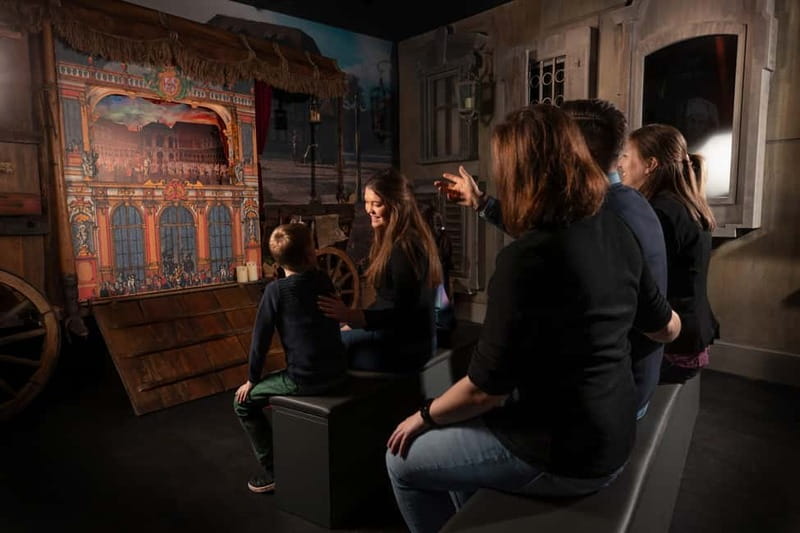
- Juggler’s Stage: See Baroque life beyond the palace through a digital paper theater and period amusements.
- Virtual carriage ride: Travel through Dresden in 1719 with a headset and a 360-degree view.
- Royal wedding: Attend the famous marriage of Friedrich August III and Maria Josepha at the Dresden Zwinger.
- Short, easy format: The full program lasts 45 minutes and fits neatly into a day of sightseeing.
- Practical access: The venue is at ground level and offers German and English guides, though the Baroque carriages are not wheelchair accessible.
A Fast Trip to Dresden in 1719
This is not a museum visit where you quietly read labels and move from case to case. It is a staged time-travel show, built around scenery, music, animation, live narration, and virtual reality.
The setting is Dresden in the Baroque era, roughly 300 years ago. The year 1719 matters because it places you in the world of Augustus the Strong, the Wettin ruler known for ceremony, court display, and grand building projects. You are not simply told about that world. You are placed inside a royal welcome, shown the amusements of the suburbs, then taken through the city in a carriage.
That structure gives the experience a useful rhythm. The first section explains the ruling family. The second shifts attention to common people and street entertainment. The final section puts you into the most visual part of the program.
I would think of this as a lively introduction to Dresden’s past, not a substitute for visiting the city’s palaces, museums, and churches in person. It gives you a broad picture quickly, with enough theatrical flair to keep the hour moving.
Starting Behind the Cholera Fountain
The meeting point is directly behind the Cholera Fountain. This is a central and recognizable place, but you should still allow enough time to find the entrance without rushing.
The experience ends at the same meeting point, so you do not need to arrange a separate return route. That is handy if you have a timed museum entry or a dinner reservation nearby.
The venue, SENSEUM Dresden, is at ground level. The activity includes skip-the-ticket-line entry, so you can move directly into the scheduled program once you arrive. Starting times vary, and you need to check availability when choosing your visit.
The ticket costs about $23 per person. I consider that fair if you enjoy staged attractions and want a compact way to understand Baroque Dresden. It is less compelling if you are mainly looking for a long headset session, since the carriage ride itself occupies only about 15 minutes of the full program.
A few more Dresden half-days to weigh up
- Dresden: Semperoper Tickets and Guided Tour
★ 4.7 · 12,102 reviews - Dresden: The Original Night Watchman Tour in Lantern Light
★ 4.6 · 6,653 reviews - Dresden: Semperoper and Old Town Tour
★ 4.8 · 5,735 reviews
The Hall of Mirrors and Augustus the Strong
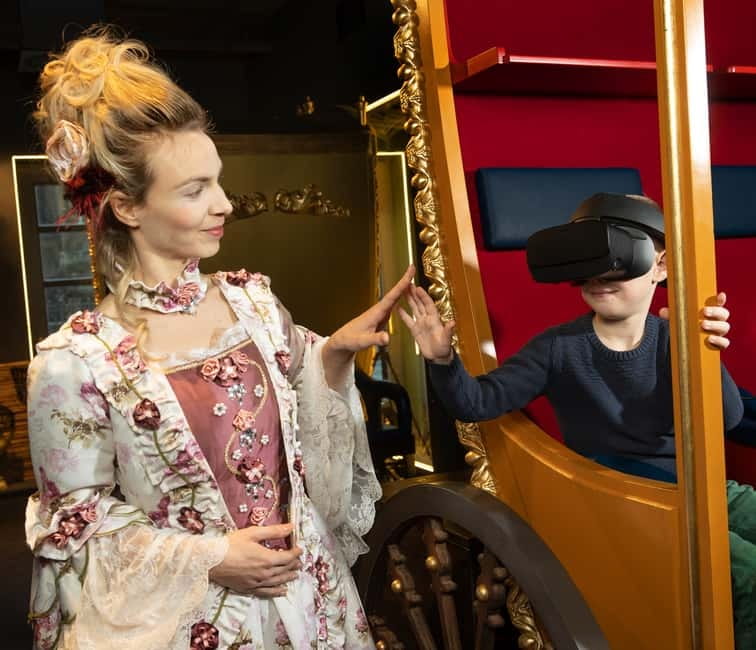
The first stop is the Hall of Mirrors, where a master of ceremonies welcomes you in the name of Augustus the Strong. The tone is formal, playful, and deliberately theatrical.
The presentation introduces the Wettin dynasty through animation and Baroque music. This opening gives you the political and social frame for the rest of the activity. You learn who held power, how court society presented itself, and why Dresden’s royal image was so carefully staged.
A live guide is important here. The guide leads the ceremony and explains what you are seeing in either German or English. The performance works best if you enjoy a little theater with your history. The guide’s role is not only to deliver facts, but also to set the mood and explain how the virtual journey will work.
The master of ceremonies also outlines the carriage route before the headsets appear. That advance explanation helps you understand the sequence of scenes later, rather than simply watching a string of digital images.
This first section lasts about 15 minutes. It may feel like an introduction rather than the main event, but it gives the carriage ride more meaning. You are not just flying over an old city. You know whose Dresden you are seeing and what sort of society shaped it.
The guide’s humor is one of the strongest features. The experience has been praised for being funny and amusingly presented, which matters because a formal royal introduction could otherwise feel stiff. Expect history with a wink rather than a dry lecture.
Jugglers, Paper Theater, and Life Beyond Court
While the carriages are prepared, you move to the Juggler’s Stage. This part turns away from royal ceremony and shows the entertainment enjoyed by ordinary people in the suburbs.
The format is a digital paper theater. That may sound modest compared with modern VR, but it serves a useful purpose. The stylized scenes create a different visual language from the grand Hall of Mirrors and the later carriage ride.
You get a look at the Baroque lifestyle of common people through contemporary amusements. Jugglers provide the energy, while the paper-theater format presents the social world in a simple, easy-to-follow way.
This section lasts about 15 minutes. I like its place in the program because it keeps the story from becoming only a parade of palaces and aristocrats. Dresden in 1719 was not just court banquets and royal weddings. It also included street performers, suburban life, and popular entertainment.
You should keep your expectations in check. This is not a full social history of Saxony, and the supplied information does not promise a detailed reconstruction of daily work, housing, or food. Instead, you get a short, entertaining glimpse of life away from the court.
The shift in tone is helpful. After the formal opening, the jugglers bring movement and humor. The result is a more balanced picture of the city, even within a short program.
The Virtual Carriage Through Golden Dresden
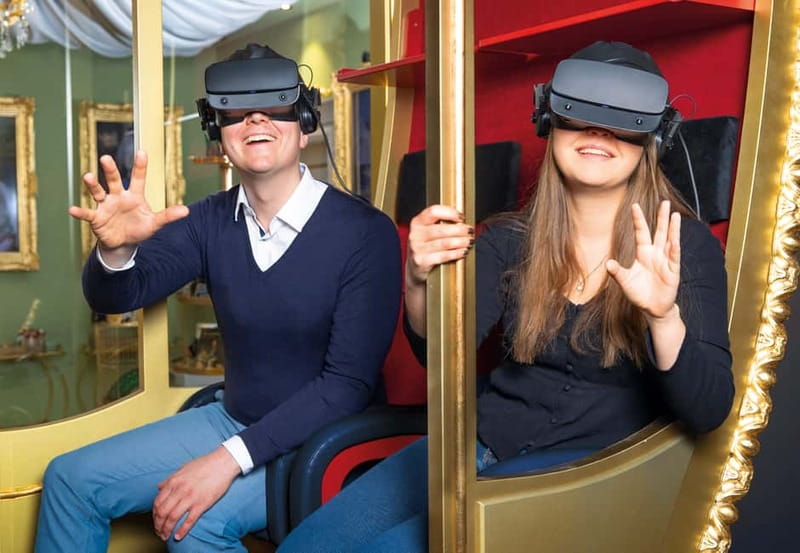
The main event begins when you take a seat in one of the Baroque carriages and put on the virtual reality glasses. The carriage setting gives the final section a physical anchor, while the headset opens up the wider city around you.
You travel through Dresden as it looked in 1719. The viewpoint lets you look around, so the experience is designed for more than simply watching a screen straight ahead. Wherever you turn your head, the digital scene can add to the sense of moving through the city.
The ride includes Dresden’s golden courtly world, the suburbs, and the setting of the period’s legendary wedding. The combination gives you several layers of the city in one short route: grand royal display, ordinary outskirts, and a major public celebration.
This is where the program makes the best use of VR. A book can describe a vanished street or a long-gone building, but a carriage ride lets you picture the scale and appearance of the city as you pass through it. You can look outward from the route and get a stronger sense of place than a standard narration would provide.
The carriage segment lasts about 15 minutes. That timing is both a strength and a weakness. It is short enough to fit into a packed sightseeing day and unlikely to tire you out. At the same time, you may wish it lasted longer once the ride gets going.
One useful tip is to treat the carriage scene as a visual overview rather than a detailed architectural tour. The program is built for atmosphere and storytelling. If you want precise information about individual buildings, you will need a separate city tour or museum visit.
Same city, a completely different sort of afternoon:
- Dresden: River Sightseeing Boat Cruise
★ 4.3 · 5,323 reviews - Dresden: Tour of VW’s Transparent Factory
★ 4.5 · 4,058 reviews - Dresden: 1-Day Hop-On-Hop-Off Bus Tour
★ 4.5 · 2,813 reviews - Dresden: Church of Our Lady Guided Tour of Gallery
★ 4.7 · 2,421 reviews
The Wedding at the Dresden Zwinger
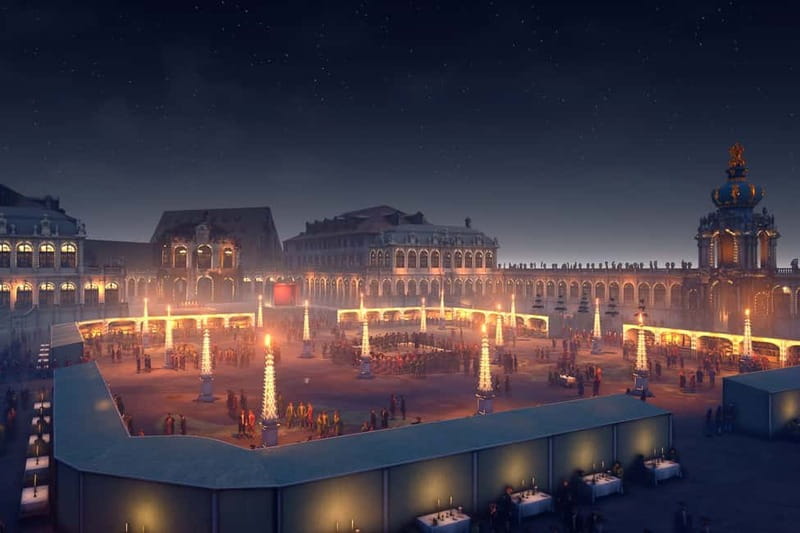
The carriage journey reaches its high point at the wedding of Friedrich August III and Maria Josepha inside the Dresden Zwinger. You take the role of an honored attendee at this major court event.
This scene ties together the first part of the experience. You have already met the ruling dynasty and learned how court society presented itself. Now you see that world at full scale, with ceremony and royal spectacle concentrated in one event.
The Zwinger is especially well suited to this kind of reconstruction. Its Baroque design was made for display, celebration, and courtly movement. In VR, the setting can show you more than a static façade. You can picture the space as an active stage for a major royal occasion.
The digital wedding is also a good reminder that dynastic marriages were political events, not only family celebrations. The activity keeps the explanation accessible rather than turning it into a long lesson in European diplomacy, but the setting gives you a clear sense of how power and ceremony worked together.
For many people, this will be the most memorable section. It has the grandest setting and the strongest connection to the royal story introduced at the start.
How the Three Stops Work Together
The program is carefully divided into three sections of roughly 15 minutes each:
- The Hall of Mirrors introduces the dynasty and court culture.
- The Juggler’s Stage presents entertainment and life outside the palace.
- The carriage ride brings you through 1719 Dresden and into the royal wedding.
That balance is one of the ticket’s best features. You are not asked to spend the whole time wearing a headset. The live guide, animated scenes, music, and theatrical settings give your eyes and attention a break before the final VR section.
The three-part format also makes the activity suitable for people who are curious about the past but do not want a traditional lecture. The presentation is described as well delivered and well animated, and that combination helps the information stay light on its feet.
Still, the short duration limits how much detail can fit into each section. You will leave with a strong visual impression of Baroque Dresden, but not a complete account of the city’s politics, architecture, or daily life.
Who Will Get the Most From This Ticket

I would recommend this experience to you if you want a quick, entertaining introduction to Dresden’s Baroque era. It works especially well for first-time visitors who plan to see the Zwinger and want some historical context before or after exploring the real site.
It is also a good choice for families with children aged six and older, provided they enjoy theatrical presentations and virtual reality. Children under six are not permitted, and younger children may find the ceremonial opening less interesting than the carriage ride.
History fans should see it as a supplement. The attraction gives you a visual framework for Augustus the Strong, the Wettin dynasty, and the 1719 court world, but it does not replace time at Dresden’s museums or historic buildings.
I would be more cautious if you dislike headsets, staged performances, or guided attractions. The experience depends on all three. It is not a quiet, self-paced exhibition.
Accessibility, Languages, and Simple Planning Tips
The experience is available with a live guide in German or English. Select the language that lets you follow the jokes and explanations easily, since the guide helps connect each scene.
The venue is at ground level and wheelchair accessible in general. There is one important limitation: wheelchair users cannot use the Baroque carriages. You can still take part in the VR tour alongside the carriage, but you should tell the operator in advance so the team can prepare.
Flash photography is not allowed. Food and drinks are not included, so plan those separately before or after the 45-minute program.
You can cancel up to 24 hours before the scheduled time for a full refund. The reserve-now, pay-later option also gives you some flexibility if your Dresden plans are still shifting.
Is $23 a Fair Price?
At around $23, the ticket sits in the range of a short paid attraction rather than a full half-day tour. The value depends on what you want from it.
I think the price is reasonable if you value presentation. You are paying for a live guide, a prepared theatrical setting, animated history, music, a digital paper theater, a carriage setup, and the VR program itself. The variety means the full 45 minutes does not rest on one technical effect.
The calculation changes if your main goal is headset time. Only the final 15 minutes involve the virtual carriage ride, and one of the clearest cautions about the activity is that the VR time can feel too short. If you want an extended virtual world, this may not satisfy you.
For a central Dresden activity that fits between larger sights, the short format is useful. You can learn the basic story, enjoy the visual effects, and still have most of the day for the Zwinger, museums, and city streets.
Final Verdict: Book It for the Story, Not Just the Headset
You should book this ticket if you want Baroque Dresden presented as a lively story rather than a list of dates. The guide-led welcome, amusing jugglers, paper theater, and royal carriage ride give the program welcome variety.
The strongest reasons to go are the well-animated presentation, the humor of the live guide, and the chance to see Dresden in 1719 through a 360-degree virtual view. The main reason to hesitate is the short VR portion.
My advice is simple: book it as a compact historical attraction and a useful companion to seeing the real Dresden. Do not book it expecting a long virtual-reality game or a detailed architectural tour. At $23, it offers good value for a lively 45-minute look at court life, street entertainment, and a royal wedding in the Baroque city.
FAQ
How long does the Dresden virtual reality experience last?
The experience lasts 45 minutes. The Hall of Mirrors, Juggler’s Stage, and virtual carriage ride each take about 15 minutes.
Where does the experience start?
The meeting point is directly behind the Cholera Fountain. The activity also ends back at the meeting point.
Which languages are available?
A live tour guide is available in German and English.
Is the experience wheelchair accessible?
SENSEUM Dresden is at ground level and wheelchair accessible in general. Wheelchair users cannot access the Baroque carriages, but they can take part in the VR tour alongside the carriage. You should notify the operator in advance.
Are children allowed to participate?
The experience is not suitable for children under six years old.
Can I cancel the ticket?
Yes. You can cancel up to 24 hours in advance for a full refund. A reserve-now, pay-later option is also available.
Just added around Dresden
- Freiberg: Scavenger Hunt Self-Guided Walking Tour★ 4.6 · 7 reviews
- Radebeul: Scavenger Hunt Self Guided Tour★ 4.6 · 9 reviews
- Discover Germany’s most exciting photo illusion world!★ 4.7 · 26 reviews
- Dresden: New Year’s Eve Concert at the Zwinger★ 4.8 · 20 reviews
- Dresden: Zwinger Skip-the-Line & 2-Day Hop-On Hop-Off Bus★ 4.5 · 160 reviews
- Dresden: Guided City Walk and Panometer Entrance Ticket★ 4.5 · 176 reviews
- Dresden: Shared Small Group Walking Tour in English★ 4.8 · 172 reviews
- Dresden with a touch of Xmas: English small group tour★ 4.7 · 41 reviews
Dresden Tours, compared.

The Original Night Watchman Tour in Lantern Light
Read our review →




Browse the lists this tour appears in