
Review · DRESDEN TOURS
Dresden: Albertinum Museum Entry Ticket
The Albertinum puts painting and sculpture under one roof, beginning with Auguste Rodin’s The Thinker and moving from German Romanticism through the present day. I like that the collection brings Caspar David Friedrich’s quiet, searching paintings into conversation with bold modern sculpture. I also like the freedom to set your own pace instead of following a guide or fixed route.
The main drawback is that this is an entry ticket, not a guided tour. You’ll need to supply your own context, and part of the museum may be closed during technical work from April 7 through April 17. Check the official museum website for current opening hours before setting out.
Key points to know before entering
- Rodin’s The Thinker greets you first, giving the visit an immediate jolt of modern artistic energy.
- Caspar David Friedrich’s paintings anchor the 19th-century collection, especially if you enjoy German Romanticism.
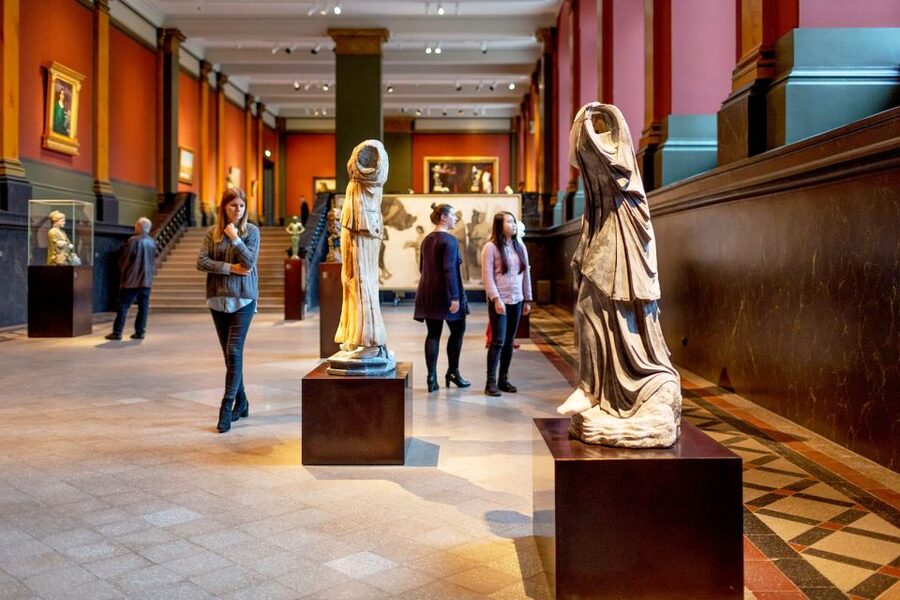
- The Galerie Neue Meister covers Romanticism to contemporary art, while the sculpture collection focuses on works from 1800 onward.
- The visit is self-guided, so you can spend five minutes or half an hour with a work, depending on your interests.
- A one-day ticket offers flexible timing, with free cancellation up to 24 hours ahead and a reserve-now, pay-later option.
- Children under 17 enter free with an adult, but a child ticket still needs to be booked.
Starting with Rodin’s famous thinker
Your first major artwork is Auguste Rodin’s The Thinker. That placement matters. Instead of easing you into a long chronological display, the Albertinum starts with a sculpture that helped point art toward the many new styles of the 20th century.
Rodin’s figure is familiar from reproductions, but seeing the work in a museum setting gives it more weight. Look at the body as a whole, not only the bent head and hand. The pose suggests thought, strain, and physical power at the same time. It is a useful first stop because it prepares you for a museum where art keeps changing shape.
The Albertinum does not treat painting and sculpture as sealed-off subjects. You move between different ways of showing the human body, the natural world, and private feeling. I like this arrangement because it makes the collection feel like a conversation rather than a row of unrelated objects.
You may want to pause at The Thinker before heading deeper into the galleries. It gives you a visual marker for the visit and helps you notice how later artists break away from the solid, recognizable forms Rodin made famous.
More museums and galleries in Dresden:
- Dresden: Church of Our Lady Guided Tour of Gallery
★ 4.7 · 2,421 reviews - Dresden: Guided Walking Tour and Chocolate Museum Ticket
★ 4.5 · 385 reviews - Dresden: Dresden Transport Museum Entrance Ticket
★ 4.6 · 189 reviews
Caspar David Friedrich and the mood of Romanticism
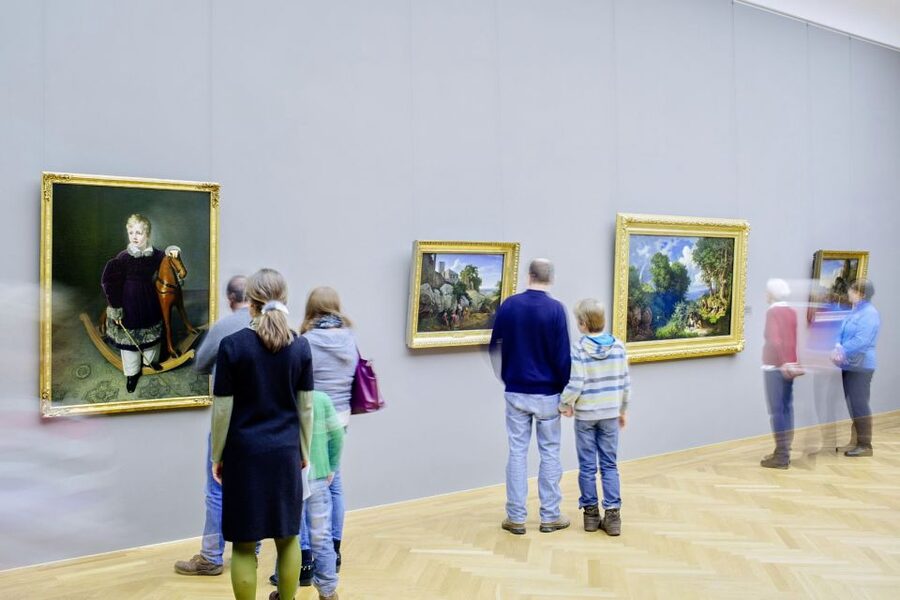
For many people, the main reason to visit the Albertinum is Caspar David Friedrich. The German Romantic artist is known for paintings that turn nature into a place of reflection, mystery, and spiritual feeling. His work rewards a quiet look, so resist the urge to treat the Friedrich rooms as a quick photo stop.
Friedrich’s paintings often ask you to slow down. Figures may appear small beside cliffs, trees, skies, or distant views. The human presence is there, but it does not dominate. That balance gives the paintings their particular emotional force.
You do not need a specialist background to connect with these works. Start by noticing where the eye travels. Then look at how the scene controls your mood through distance, weather, light, and scale. Friedrich’s art is less about a simple story and more about the feeling of standing before something larger than yourself.
This is also where the museum’s historical range becomes useful. Seeing Romantic paintings before modern sculpture lets you track a major change in artistic priorities. Friedrich creates atmosphere through paint and landscape. Later artists may reduce the figure, distort it, or replace familiar materials altogether.
If you are visiting Dresden mainly for older art, this part of the Albertinum may be your favorite. If your taste runs toward modern and contemporary work, give Friedrich a fair amount of time anyway. His paintings provide the emotional and artistic background for much of what follows.
The Galerie Neue Meister from the 19th century forward

The Galerie Neue Meister, or New Masters Gallery, carries the collection beyond Romanticism into later 19th-century and 20th-century art. The precise display can change, so you should check current museum information before your visit, but the broad sweep is clear: this is not a museum devoted to one narrow period.
That range is valuable when you want to see how artists respond to one another across time. A painting from the 19th century may emphasize atmosphere, the human figure, or recognizable space. A later work may question those same ideas through abstraction, unusual materials, or a sharply altered point of view.
I would plan to return to works that seem difficult at first. Contemporary art can look spare or strange when you give it only a passing glance. A longer look often reveals decisions about shape, surface, balance, or material that are easy to miss from the doorway.
The museum’s pairing of painting and sculpture also helps if you are unsure how to approach modern art. You can compare what a painter does with color and flat space to what a sculptor does with weight, volume, and physical placement. That comparison is one of the strongest reasons to choose the Albertinum over a smaller single-focus gallery.
Sculpture from Wilhelm Lehmbruck to Tony Cragg
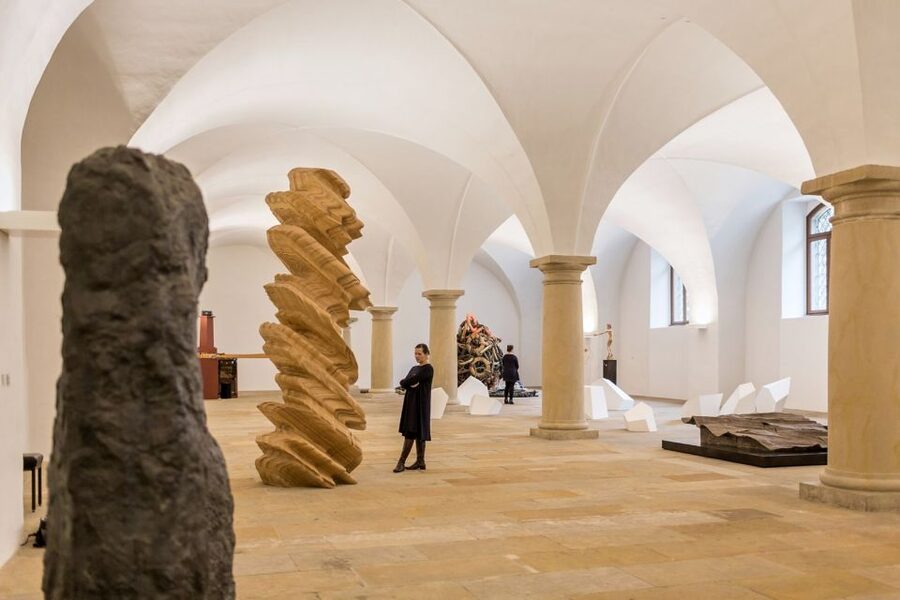
The sculpture collection covers works from 1800 onward, with several pieces that give the visit a clear sense of artistic change. Wilhelm Lehmbruck’s 1911 Kneeling Woman is one important stop. Its date places it near the shift from traditional figure sculpture toward more expressive and simplified forms.
Look at how the body is treated. The title gives you a recognizable subject, but the work is not simply a polished portrait of an ordinary pose. Lehmbruck uses the figure to suggest vulnerability and inner feeling. That makes it a useful companion to Rodin, whose sculpture feels more muscular and physically charged.
You will also find Birgit Diecker’s Seelenfänger, a work from a much later period. The title suggests a different kind of artistic concern than the classical figure: less a direct depiction of the body and more a work that invites questions about identity, emotion, and the things that hold our attention.
Tony Cragg’s mathematically stacked cube is another memorable change of pace. It is made from wood, fabric scraps, and loose-leaf binders, materials that sound ordinary until they are reorganized into a carefully structured form. This is a good example of how contemporary sculpture can ask you to think about construction, order, and everyday objects rather than only about beauty or realistic likeness.
The Cragg piece is especially useful for families and visitors who think they do not understand contemporary art. Ask yourself how the materials change once they are grouped together. Notice the tension between the mathematical arrangement and the casual, used quality of the objects. You do not need to find one correct meaning. The physical choices are already part of the work’s message.
A few more Dresden half-days to weigh up
- Dresden: Semperoper Tickets and Guided Tour
★ 4.7 · 12,102 reviews - Dresden: The Original Night Watchman Tour in Lantern Light
★ 4.6 · 6,653 reviews - Dresden: Semperoper and Old Town Tour
★ 4.8 · 5,735 reviews - Dresden: River Sightseeing Boat Cruise
★ 4.3 · 5,323 reviews
A self-guided visit that lets you set the pace
This ticket is valid for one day, which gives you room to plan the Albertinum around the rest of your time in Dresden. You can make a short visit between other sights, or give the museum a longer stretch if Friedrich and modern sculpture are high on your list.
There is no guide and no stated fixed tour length. That can be a plus or a minus. I like being able to linger with Rodin, move quickly through pieces that do not hold my attention, and return to a favorite painting. You also avoid the pressure of keeping up with a group.
The tradeoff is that you must make your own route and decide what deserves your time. If you want detailed explanations of every work, this ticket alone will not provide them. Read the labels, use the museum’s current information, and allow yourself to look before searching for an interpretation.
Wear comfortable shoes. The museum combines paintings and sculpture, and a thoughtful visit involves more standing and walking than the ticket description may suggest. Bring a camera if photography is permitted under the museum’s current rules, but check local signage rather than assuming every gallery has the same policy.
Because the ticket is valid for one day rather than tied to a guided departure, it works well for an independent schedule. Still, do not confuse flexible validity with guaranteed all-day access at any hour. Opening times can change, so check the official website before visiting.
What the $16 price gives you
At $16 per person, the ticket is fairly priced if you plan to spend meaningful time with both major collections. You are paying for access to the Galerie Neue Meister and the sculpture collection, with works ranging from the 19th century to contemporary art.
The value is strongest for people who enjoy variety. A ticket focused only on one famous painting might feel expensive if you plan a quick look. Here, you get Rodin, Friedrich, Lehmbruck, Diecker, Cragg, and other works across a wide span of styles. That range gives you more than a single highlight and makes the museum useful even when your interests are mixed.
Families get a particularly good deal because children under 17 can enter the exhibition free when accompanied by an adult. You still need to book a child ticket, so do not assume an adult reservation covers everyone automatically.
The reserve-now, pay-later option is helpful if your Dresden schedule is still shifting. Free cancellation up to 24 hours in advance also lowers the risk of booking early. These policies do not change the art itself, but they make the ticket easier to fit into a busy trip.
Who will get the most from the Albertinum
I would choose this museum if you like seeing art change over time. The Albertinum is a good match for visitors who want German Romantic painting, major European sculpture, and contemporary work in one visit.
It also suits couples or families with different tastes. One person can spend time with Friedrich while another studies Cragg’s constructed cube or Rodin’s figure. Since the visit is self-guided, you do not need everyone to care about every room.
Art students and serious museum fans will appreciate the breadth, though they may want more information than an entry ticket provides. If you are hoping for a guided explanation, a named art historian, or a tightly organized story, this is not that kind of experience.
The museum is also a sensible choice on a rainy day or when you need a break from Dresden’s outdoor sights. The collection gives you a change of scale and mood, from quiet painted horizons to solid, three-dimensional forms.
Access, timing, and the temporary closure
The Albertinum is wheelchair accessible. That makes the collection easier to include in a Dresden plan for visitors who need step-free access, though you should still confirm current details with the museum if you have specific mobility requirements.
Technical construction work will close the second floor from April 7 through April 17. If your visit falls within that period, check exactly which works and rooms are affected before buying or using the ticket. A partial closure could change the value of the visit, especially if a particular section is your main reason for going.
Opening hours are not fixed in the information provided here. Use the local partner’s official website for the latest museum hours, and do this shortly before you go. A one-day ticket helps with flexibility, but it cannot make a closed museum open.
The ticket information gives a rating of 4.5 from 149 reviews, and the only written comment supplied simply says that everything was liked. That tells me the experience generally meets its basic promise: you get access to a strong range of painting and sculpture without a complicated tour format. It does not tell you that every room will suit every taste, so set your expectations around the collection rather than entertainment.
Tips for looking at the collection
Give The Thinker a proper first look, even if you have seen it in books. Notice the contrast between the compressed body and the force suggested by the pose.
With Friedrich, slow down. Ask what the small human figures are doing in relation to nature, and notice how the painting’s distance affects your response. You will get more from the work if you study the arrangement rather than hunting only for a famous image.
With modern sculpture, look at materials before meaning. Kneeling Woman, Seelenfänger, and Cragg’s stacked cube each use form differently. Consider what the work would lose if it were made from another material.
Do not try to see every piece with equal attention. Choose a few works from each period, then compare them. That approach gives the Albertinum a clear shape without turning your visit into a checklist.
Should you book the Albertinum ticket?
Book it if you want a flexible, self-guided museum visit that links Caspar David Friedrich, Rodin, and contemporary sculpture. The $16 price makes sense when you plan to spend enough time with both collections, and free entry for children under 17 improves the value for families.
Think twice if you want a guided tour or if your visit falls during the second-floor closure from April 7 through April 17. Check opening hours and exhibition access first. For independent art lovers, families with mixed interests, and anyone curious about the move from Romantic painting to modern materials, the Albertinum is a strong Dresden stop.
FAQ
How long is the Albertinum ticket valid?
The ticket is valid for one day. Check availability for the current starting times and confirm opening hours on the official museum website.
What collections does the ticket include?
The ticket includes the Galerie Neue Meister, or New Masters Gallery, and the sculpture collection covering works from 1800 onward.
Which artists can I see at the Albertinum?
The collection includes works by Caspar David Friedrich, Auguste Rodin, Wilhelm Lehmbruck, Birgit Diecker, and Tony Cragg, among others.
Is Auguste Rodin’s The Thinker included?
Yes. The Thinker is described as the first work you will see during the museum visit.
Can children enter the Albertinum for free?
Children under 17 can enter the exhibition free when accompanied by an adult. You still need to book a child ticket.
Is the Albertinum wheelchair accessible?
Yes. The activity information states that the Albertinum is wheelchair accessible.
Can I cancel the ticket for a refund?
Yes. You can cancel up to 24 hours in advance for a full refund. A reserve-now, pay-later option is also available.
Just added around Dresden
- Freiberg: Scavenger Hunt Self-Guided Walking Tour★ 4.6 · 7 reviews
- Radebeul: Scavenger Hunt Self Guided Tour★ 4.6 · 9 reviews
- Discover Germany’s most exciting photo illusion world!★ 4.7 · 26 reviews
- Dresden: New Year’s Eve Concert at the Zwinger★ 4.8 · 20 reviews
- Dresden: Zwinger Skip-the-Line & 2-Day Hop-On Hop-Off Bus★ 4.5 · 160 reviews
- Dresden: Guided City Walk and Panometer Entrance Ticket★ 4.5 · 176 reviews
- Dresden: Shared Small Group Walking Tour in English★ 4.8 · 172 reviews
- Dresden with a touch of Xmas: English small group tour★ 4.7 · 41 reviews
Dresden Tours, compared.

The Original Night Watchman Tour in Lantern Light
Read our review →



Browse the lists this tour appears in