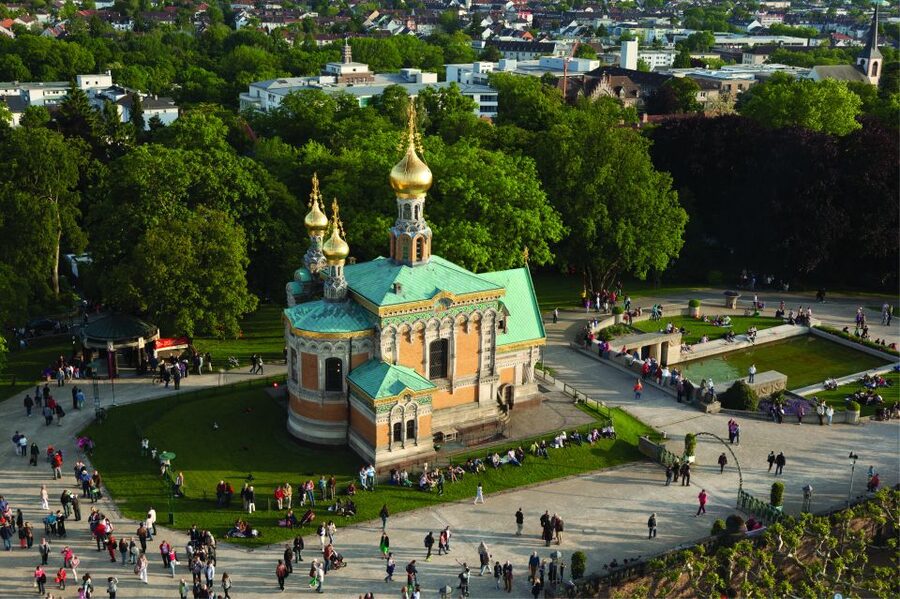
Review · GUIDED
Darmstadt: Mathildenhöhe UNESCO Site Guided Visit
Mathildenhöhe is not one grand building but a complete artistic experiment: a hilltop ensemble where artists’ homes, exhibition spaces, a studio building, and a park were planned as one place. This early 20th-century project helped move architecture and art toward modernism, making it one of Germany’s most unusual UNESCO World Heritage sites.
I like the way this 90-minute tour explains the whole setting instead of stopping at one photogenic facade. I also like the human side of the story. Guide Frau Gerhardt is known for lively explanations, including the personal relationships and private motives that shaped the artists’ work. The main catch is language: most departures are in German, with English offered only on Saturdays at 2 pm.
Key points to know
- A complete artists’ colony: See the studio building, exhibition building, artists’ homes, and park as parts of one planned ensemble.
- A turning point in design: Learn how Mathildenhöhe helped mark the shift from historic styles toward modern architecture and art.
- A lively guide matters: Frau Gerhardt has been praised for clear, professional storytelling and personal details about the artists.
- English is limited: The Saturday 2 pm tour is the only English-language departure listed.
- Good value at $17: The price covers a focused 90-minute guided visit to the UNESCO World Heritage site.
- Easy planning: Meet at the north entrance of the Museum Artists’ Colony at Olbrichweg 13A. The tour is wheelchair accessible.
Why Mathildenhöhe changed modern art
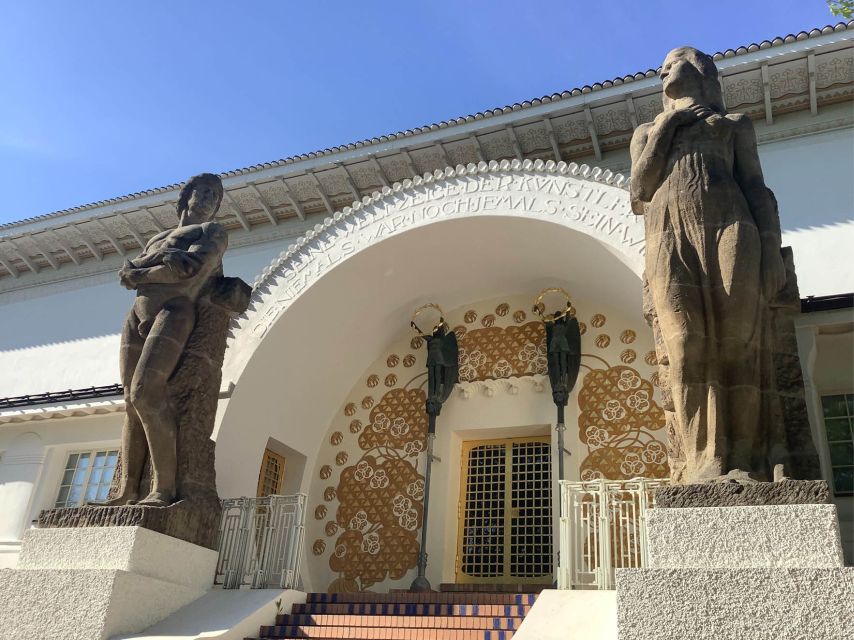
The most useful way to understand Mathildenhöhe is as a planned artistic community, not simply a collection of pretty Jugendstil buildings. At the threshold of the 20th century, artists and architects were testing new ways to live, work, and present art.
The guiding idea was ambitious: create an entire setting in which architecture, furniture, decoration, sculpture, gardens, and daily life belonged together. Joseph Maria Olbrich helped give this idea physical form. His famous vision called for a whole city built as one artistic statement, and the buildings on Mathildenhöhe show what that could mean on a smaller scale.
I find this context important because the site can otherwise seem like a series of unrelated structures. A guide helps you see the connections. The homes were not just private residences. The exhibition building was not just a place to hang pictures. The studio building was part of a working community, while the park tied the various pieces together.
This was the period of Jugendstil, Germany’s version of Art Nouveau. Yet Mathildenhöhe also points beyond decorative curves and floral patterns. The group was interested in fresh forms, new materials, new interiors, and a cleaner break from older architectural habits. That push toward modern design is the reason the site has value even if you are not normally an architecture enthusiast.
A few more Germany half-days to weigh up
- Berlin: Reichstag, Dome and Government District Guided Tour
★ 4.7 · 18,288 reviews - Dresden: Semperoper Tickets and Guided Tour
★ 4.7 · 12,102 reviews - Berlin: Government District around the Reichstag Guided Tour
★ 4.7 · 8,447 reviews
Starting at the Museum Artists’ Colony entrance
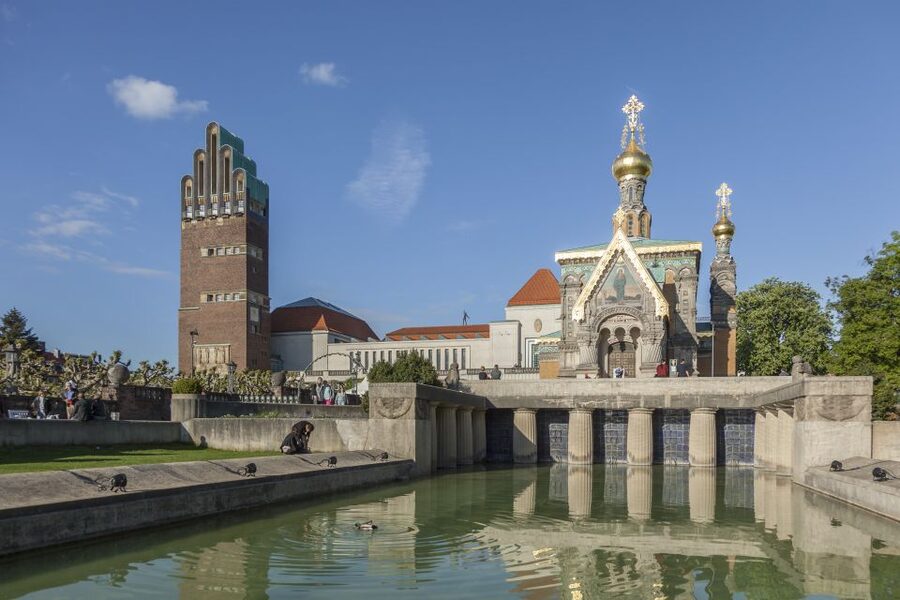
Your meeting point is the north entrance to the Museum Artists’ Colony, at Olbrichweg 13A. This detail matters because Mathildenhöhe covers a broad ensemble, and arriving at the wrong side could cost you time before the 90-minute visit begins.
The guide introduces the site from this area and sets out the story of the artists’ colony. I would arrive with a few minutes to spare, especially if you are unfamiliar with Darmstadt. The listed meeting point is specific, so keep Olbrichweg 13A in your notes rather than relying only on the general name Mathildenhöhe.
The opening explanation should help you place the buildings in time and understand the phrase Aufbruch in die Moderne, or the move toward modernity. That broad theme gives the visit a clear purpose. You are not only looking at architecture. You are following an experiment in how art could shape an entire community.
The studio building and the working artists
The studio building is one of the central parts of the ensemble. It represents the practical side of the artists’ colony: this was a place connected with making, planning, and collaboration rather than only display.
A good guide makes this stop more than a quick look at the exterior. You learn why a studio building mattered to the colony and how it related to the nearby houses and exhibition areas. The structure helps explain the group’s belief that artists should work together and that design should reach into ordinary life.
I especially like this part of the visit for the way it connects architecture with people. The artists were not working in isolation. Their friendships, rivalries, partnerships, and shared ambitions influenced what they created. Frau Gerhardt has been praised for bringing these personal details into her explanations, which can make an architectural tour feel far more human.
You should still keep your expectations realistic. The experience is a guided overview of the ensemble, not a long museum seminar focused only on studio practice. The pace needs to cover several buildings in 90 minutes, so listen closely when the guide explains how the studio fits into the larger plan.
The exhibition building and the public face of the colony
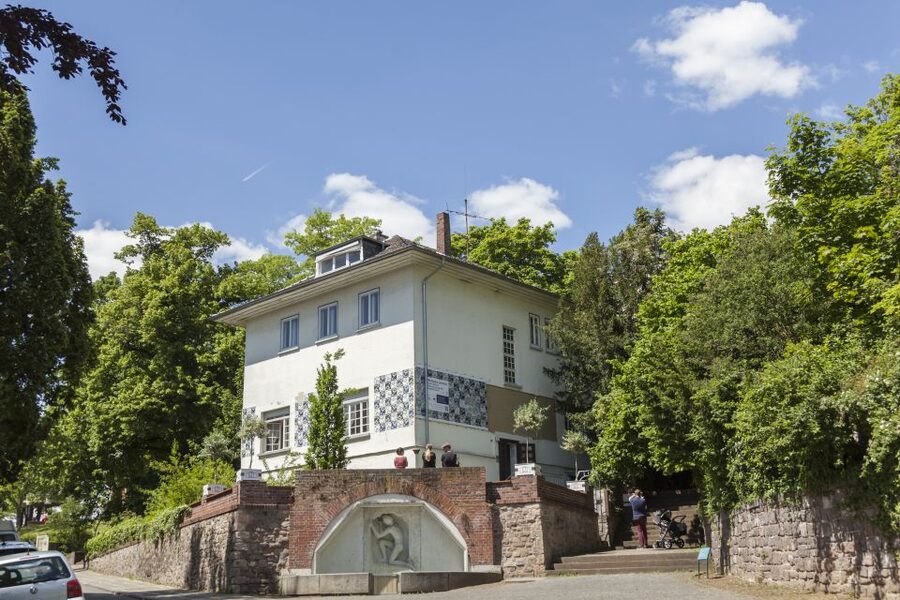
The exhibition building shows how Mathildenhöhe presented its ideas to the public. It was part of the colony’s outward-facing identity, where the artistic project could be seen and discussed beyond the homes of its members.
This stop helps you understand the difference between a private artist’s residence and a public statement. The exhibition building gave the colony a place to show its work as a unified vision. Architecture, interiors, and decorative arts could be presented together, reinforcing the idea that modern design was not limited to paintings or sculpture.
I would pay attention to how the guide links the exhibition building to the other structures. The value is in the relationship between them. The ensemble was meant to feel connected, and the tour explains that intention better than a solo walk with a camera usually can.
For visitors who already know a bit about Art Nouveau, this part may be especially satisfying. You can focus on the transition from decoration toward a more modern architectural language. If you are new to the subject, the guide’s timeline and clear explanations should keep the material manageable rather than academic.
Same city, a completely different sort of afternoon:
- Berlin: 1-Hour City Tour by Boat with Guaranteed Seating
★ 4.3 · 16,993 reviews - Hamburg: Sex and Crime in St. Pauli Tour for Ages 18+
★ 4.7 · 15,447 reviews - Hamburg: 1.5-Hour Harbor and Speicherstadt Day Cruise
★ 4.6 · 14,200 reviews - From Munich: Neuschwanstein & Linderhof Castle Full-Day Trip
★ 4.5 · 12,494 reviews
Artists’ houses and the human story behind the facades
The artists’ houses are perhaps the most personal part of Mathildenhöhe. They show how the artistic program reached into domestic space. These were homes, but they also served as examples of how an artist might live within a carefully designed environment.
The tour presents the houses as part of the colony’s larger social story. You hear about the artists who lived and worked there, along with the personal circumstances that affected their creative choices. This is where Frau Gerhardt’s style seems particularly useful. Her storytelling includes interpersonal details and the background behind the artists’ work, giving you more than dates and architectural labels.
I like this approach because famous buildings can become cold when they are presented only as objects. Personal stories give you a reason to look again at a doorway, a window, or the arrangement of a house. You begin to ask how the building expressed its owner’s ideas and position within the colony.
The houses also reveal a tension at the heart of the project. Mathildenhöhe aimed to combine art and daily life, yet such a complete artistic environment could be demanding and idealistic. The tour can help you see both sides: the excitement of creating something new and the pressures that came with living inside a grand cultural project.
Do not expect every interior or room to receive equal attention during a 90-minute visit. The published description promises the ensemble of artists’ houses, but the exact amount of access or interior viewing is not specified. Much of your experience may depend on the guide’s route and the day’s conditions.
The park ties the whole ensemble together
The park is not a spare patch of green between buildings. It helps make Mathildenhöhe feel like a planned artistic setting. The open space gives you a chance to see how the buildings relate to one another and how the colony balanced architecture with its surroundings.
I would use this part of the tour to step back from individual details. After looking at the studio, exhibition building, and homes, the park gives you a wider view of the full composition. It helps explain why the UNESCO designation applies to the ensemble rather than to a single landmark.
The park also provides a welcome change of pace. A tour packed with architectural names and design ideas can become dense. Moving through an open setting gives you time to absorb the guide’s explanation and compare the different shapes and styles around you.
The experience is still a guided visit, not a dedicated garden tour. If your main interest is plants or formal horticulture, this may not be the right focus. The park matters here because it supports the artistic plan of Mathildenhöhe.
What the 90-minute format gives you
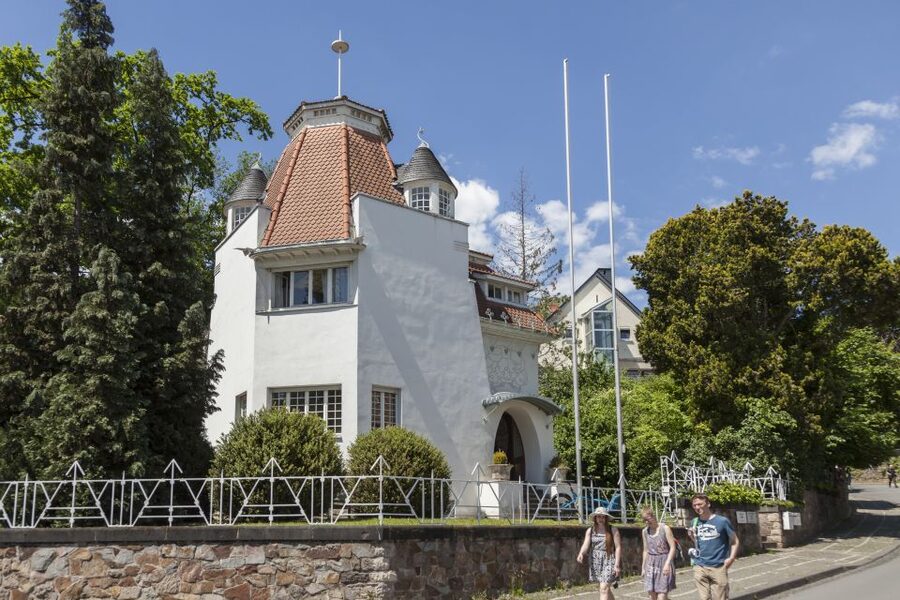
Ninety minutes is a sensible length for this site. It is long enough to explain the main buildings and the idea behind the colony without turning the visit into an exhausting lecture.
I like tours of this length when a place has several connected parts. You get a clear framework, then you can return later to the buildings that caught your attention. The format also fits well into a day in Darmstadt, leaving time for your own museum visit or a second look at the ensemble.
The tradeoff is pace. You will not get an hour at every building, and you may want more time for photographs or detailed architectural study. If you are a serious specialist, treat this as an introduction and orientation rather than a final word.
The strongest value comes from the guide’s interpretation. Without it, you can admire the shapes and decorations but miss the larger point. With it, you see Mathildenhöhe as a step toward modernism and as a social experiment involving real people.
Is $17 a fair price?
At $17 per person, I consider this a good value if you want context rather than a self-guided stroll. The ticket pays for a live, 90-minute explanation of a UNESCO World Heritage ensemble, including the studio building, exhibition building, artists’ houses, and park.
The price is easiest to justify if you are not already familiar with Darmstadt’s role in Jugendstil and early modern design. A guide can save you from reading scattered plaques or trying to work out the connection between buildings on your own.
It is less compelling for someone who only wants a quick exterior visit. You can walk through the area independently, and a visitor who prefers silence and photography may find a scheduled tour restrictive. The tour earns its fee through interpretation, not through a long list of included attractions.
The experience has a strong record of satisfaction, with a 4.7 rating from 124 ratings. The most useful pattern is not simply the high score. Praise centers on guide quality, clear explanations, professional conduct, and engaging stories. One German-language visit led by Frau Gerhardt was singled out for its lively account of the buildings, the Jugendstil movement, and the personal details behind the artists’ work.
Language is the main booking decision
The most important practical point is the language. This tour generally takes place in German. The only English-language option listed is Saturday at 2 pm.
If you understand German, you have more flexibility with departure times. If you need English, plan around that Saturday afternoon slot and check availability before you build the rest of your day.
Do not assume that a tour offered at Mathildenhöhe will automatically be bilingual. The activity details identify the live guide language as German, and the English exception is specific. This is the one issue most likely to affect your enjoyment.
The language restriction does not make the experience a poor choice for English speakers. It simply means you need to choose the correct departure. For anyone comfortable in German, the tour can offer a wider choice of dates and times. For everyone else, Saturday at 2 pm is the safe plan.
Accessibility, flexibility, and basic planning
The tour is listed as wheelchair accessible, which makes it a useful option for visitors who want a guided introduction rather than an unplanned walk. The available information does not describe every surface or building entrance, so you may still want to confirm any specific mobility needs before booking.
You can cancel up to 24 hours in advance for a full refund. A reserve-now-and-pay-later option is also available, which helps if your Darmstadt plans are not settled yet.
The meeting point is the north entrance of the Museum Artists’ Colony, Olbrichweg 13A. The activity lasts 1.5 hours. The guide is live rather than an audio recording, so you can follow the explanation as the group moves through the ensemble.
Because the tour includes several buildings and the park, wear practical shoes. This is simple advice rather than a special requirement, but a comfortable pair will make the 90-minute route easier.
Who will get the most from Mathildenhöhe
I would recommend this visit to:
- Anyone interested in Jugendstil, Art Nouveau, architecture, or early modern design
- First-time visitors who want a clear introduction to the entire Mathildenhöhe ensemble
- People who enjoy the stories behind artists and buildings
- Visitors who prefer a short, focused cultural activity
- German speakers who can choose from the regular departures
- English speakers able to attend the Saturday 2 pm tour
I would hesitate if you want a completely independent visit or if your schedule cannot accommodate the English departure. I would also manage expectations if you want extensive interior access, since the available details do not promise a room-by-room visit to every artists’ house.
Families with older children may find the story of an artists’ community easier to follow than a standard architecture lecture, especially when the guide includes personal details. Younger children may enjoy the unusual buildings and open park more than the historical explanation, but the 90-minute length is still fairly manageable.
Should you book this Mathildenhöhe tour?
Book it if you want to understand why Mathildenhöhe matters, not merely photograph its buildings. At $17, the tour offers a focused explanation of a UNESCO site that can be hard to read as a single idea when seen alone.
The best reason to go is the guide. A strong storyteller such as Frau Gerhardt can connect the architecture with the people, ambitions, and private tensions behind it. That human detail gives the ensemble more life than a list of construction dates.
Skip it if you prefer to set your own pace, or if you cannot attend the Saturday 2 pm English tour and do not understand German. For everyone else, this is a reasonably priced, well-focused introduction to one of Germany’s key early modern art sites.
FAQ
Where does the Mathildenhöhe guided visit meet?
The meeting point is the north entrance of the Museum Artists’ Colony at Olbrichweg 13A.
How long does the tour last?
The guided visit lasts 90 minutes, or 1.5 hours.
Is the tour offered in English?
Most tours take place in German. The Saturday tour at 2 pm is the English-language departure listed.
What does the tour cover?
The visit explains the full Mathildenhöhe UNESCO World Heritage ensemble, including the studio building, exhibition building, artists’ houses, and park.
Is the tour wheelchair accessible?
Yes, the activity is listed as wheelchair accessible.
What is the cancellation policy?
You can cancel up to 24 hours in advance for a full refund. A reserve-now-and-pay-later option is also available.
Just added around Germany
- Konstanz Scavenger Hunt and Sights Self-Guided Tour★ 4.5 · 14 reviews
- e-Scavenger hunt Koblenz: Explore the city at your own pace★ 4.0 · 20 reviews
- Private city tour in Constance★ 4.0 · 5 reviews
- Koblenz Guided tour of the Ehrenbreitstein Fortress★ 4.5 · 7 reviews
- Koblenz – Old Town with the Ehrenbreitstein Fortress★ 4.0 · 7 reviews
- Koblenz – Old Town including the Deutsches Eck★ 4.5 · 16 reviews
- Kiel – Private Historic Walking Tour★ 5.0 · 4 reviews
- Lubeck Private Walking Tour With A Professional Guide★ 4.5 · 10 reviews
Guided, compared.

Reichstag, Dome and Government District Guided Tour
Read our review →