
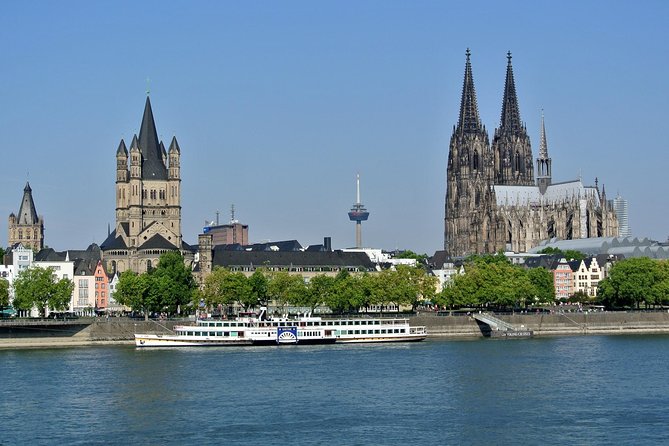
Review · COLOGNE TOURS
Cologne City Tour Experience cathedral city on the Rhine
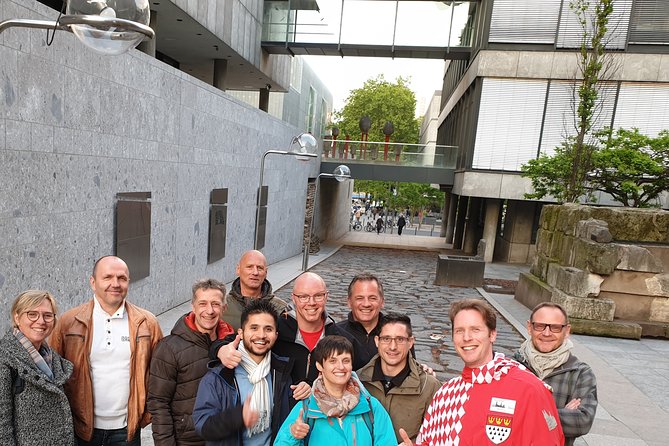
Cologne’s cathedral is easy to admire and easy to misunderstand. This two-hour walking tour helps you notice the small details around Germany’s most famous church, then connects them to Roman Cologne, medieval legends, Rhine commerce, and the city’s famously playful sense of humor. Guides such as Sascha and Ralf keep the pace moving and the talk lively.
I like the way the route covers a lot without demanding a long hike. I also like its mix of major sights and overlooked details, from the Roman North Gate and old harbor road to statues, fountains, carnival figures, and the outside of Cologne Central Station. The main consideration is weather: most of the experience takes place outdoors, and one cold, wet day can make the tour less enjoyable.
Key points to know before booking
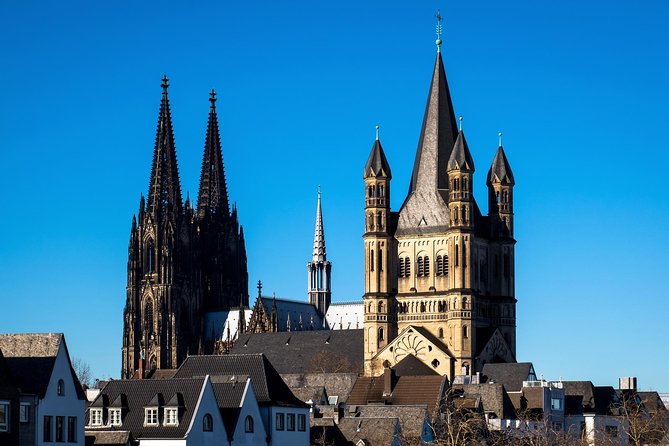
- A cathedral-centered route with much more than the cathedral: You see the Dom, Roncalliplatz, Roman remains, historic markets, the Rhine promenade, and the Hohenzollern Bridge.
- English commentary with humor: Sascha is praised for his energy, clear English, and comic touch. Ralf is also noted for combining facts with jokes and even a German song.
- Excellent for first-day orientation: The walk links Cologne’s main sights, making it easier for you to plan museums, meals, and further exploring afterward.
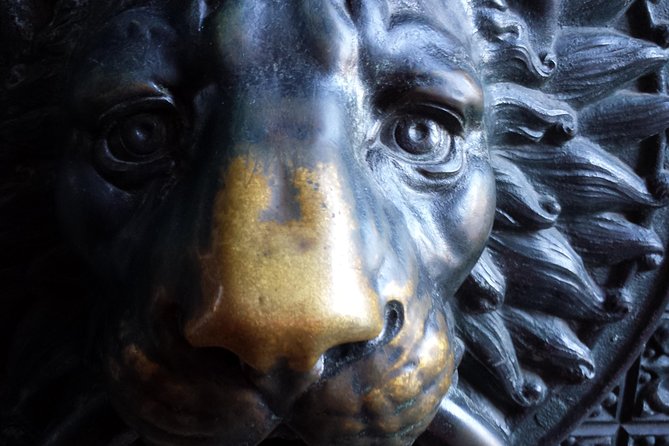
- Small details are the point: Look for unusual features on buildings, statues, fountains, and street monuments that you could easily pass without a guide.
- A manageable two-hour outing: The route is built around short stops and does not cover a huge distance, making it a good choice for most people who can walk around the old town.
- Outdoor touring requires sensible clothing: Rain and winter cold can affect the experience, and the advertised length may be shortened in severe conditions.
Starting beneath Cologne Cathedral
The meeting point is the Petrus Fountain on the Papstterrasse beside Cologne Cathedral, at Roncalliplatz 2. This is a practical place to begin because the cathedral is hard to miss, and Cologne Central Station and public transport are nearby.
I would arrive a little early. The cathedral forecourt can feel confusing when it is crowded, and the fountain is more useful as a precise landmark than a general instruction to meet near the Dom. The tour ends back at the same meeting point, which makes the walk easy to fit into a day of sightseeing.
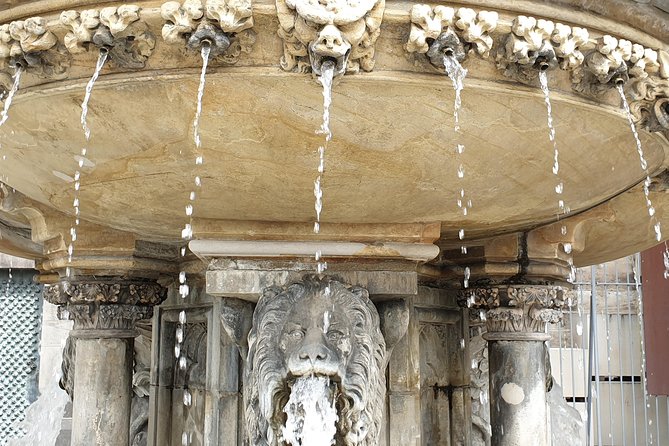
The first minutes introduce the Petrus Fountain and the surrounding square. That opening matters because the fountain is not simply a convenient meeting marker. It becomes part of the story, and the guide uses it to point out details you might otherwise ignore while looking up at the cathedral.
A few more Cologne half-days to weigh up
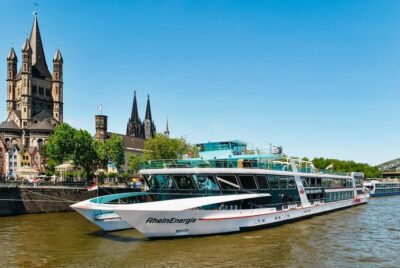
- Cologne: Panoramic City Cruise
★ 4.3 · 5,698 reviews - Cologne: Brewery Tour with 3 Kölsch Beer Tastings
★ 4.7 · 3,108 reviews - Cologne: Top Sights Rhine River Cruise – Skyline Tour
★ 4.4 · 3,030 reviews
Seeing the cathedral from the pavement
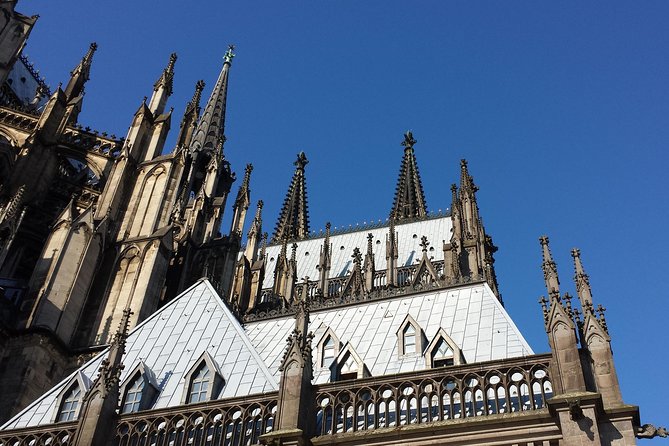
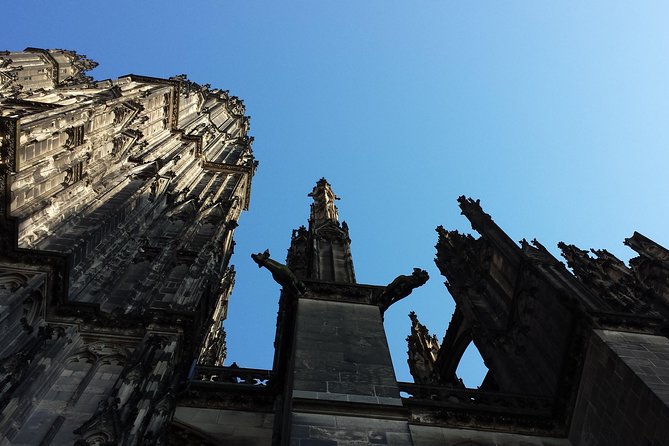
Cologne Cathedral receives only about ten minutes in the formal route, but that does not mean it is treated as a quick photo stop. The focus is the exterior: carvings, architectural details, and features that are difficult to read when you are standing directly in front of such a huge building.
The route also includes a model of the cathedral spire in Roncalliplatz. This gives you a better sense of the building’s extraordinary height and its place in architectural history. The model is especially useful after seeing the real structure, since the full cathedral can be hard to take in from ground level.
You do not enter the cathedral on this experience. That is an important distinction. If you want the interior, stained glass, or the famous shrine of the Three Kings, you will need to arrange that separately. The tour instead gives you context for the exterior and helps you appreciate details you might miss during an independent visit.
Nearby, St. Maria Himmelfahrt adds a completely different architectural note. The church is described as a special Baroque building in Cologne, and the guide explains why it matters. This contrast is one of the route’s strengths: you are not simply moving from one similar church to another.
Roman Cologne around the station and museum quarter
Cologne was a major Roman city, and this tour keeps returning to that earlier layer. At the Roman-Germanic Museum, the discussion is based on what you can see from outside, since admission is not included. The same is true of several other museum-related stops, so you should not expect an indoor museum tour.
The Roman Harbor Road offers a more physical connection to the past. Here, the guide traces an approximately 2,000-year-old road from the Roman period and explains what it reveals about Cologne’s beginnings. A visible fragment or line in the modern city can be more memorable than a long lecture, especially when the guide shows you exactly where to look.
The Roman Praetorium provides another reminder of Cologne’s importance under Roman rule. The Roman North Gate then brings the story back to street level, with information about the city’s foundation around 2,000 years ago. These stops give the walk a useful backbone. Cologne is not only a medieval cathedral city, and the tour makes sure you do not forget that.
Cologne Central Station is included for an unexpected reason. It is a major transport hub, but the guide points out details that are easy to miss at first glance. This is the kind of stop I find useful on a city walk: it shows you that history and design are not limited to postcard monuments.
Art, music, and the Rhine edge
The walk continues toward Museum Ludwig and the Cologne Philharmonie. Both are discussed from the outside, and admission is not included. Museum Ludwig is an important European art museum, but this tour only introduces its exterior and surrounding setting. If modern art is a priority for you, make time for a separate museum visit.
The Philharmonie provides another change of pace. The building has details that become more interesting when the guide draws your attention to them. The tour does not replace a concert or a museum visit, but it helps you read the modern city alongside the older one.
At the equestrian statue of Kaiser Wilhelm II, the guide brings out the monument’s eventful past. This is a good example of the tour’s method: the object may seem self-explanatory, yet its meaning changes once you know why it was built and how it has been viewed over time.
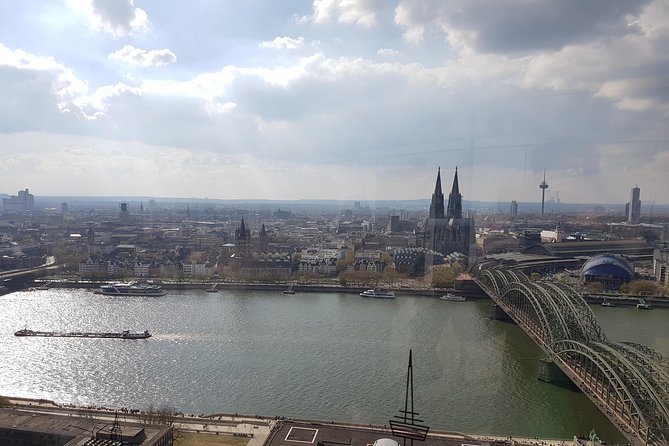
The Rhine section is one of the most pleasant parts of the walk. From Frankenwerft, you get a broad view along the river promenade, with stories tied to the historic waterfront. The route also reaches the Hohenzollern Bridge, famous for its enormous collection of love locks and its strong view back toward the old town and cathedral.
You will also hear about the KölnTriangle across the Rhine. The tour does not include admission to the viewing platform, but the guide explains what the building is and what views can be enjoyed from there. If you want a high panorama, treat this as a useful suggestion rather than part of your ticket.
Same city, a completely different sort of afternoon:
- Cologne: Chocolate Museum Entrance Ticket
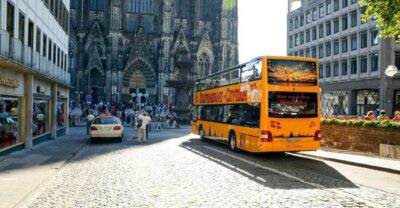
★ 4.4 · 2,790 reviews - Cologne: 24h Hop-On Hop-Off Sightseeing Bus Ticket
★ 4.3 · 2,735 reviews - Cologne: Melaten Cemetery Life, Love and Death Tour
★ 4.9 · 2,728 reviews - Cologne: Virtual Reality Time Travel Experience Ticket
★ 4.6 · 1,958 reviews
Medieval markets and Cologne’s comic side
The route turns back through Gross St. Martin, one of the city’s most recognizable churches. The guide points out that it is older than the cathedral and shares details about its setting. Its position near the old market area makes it a natural bridge between church history and daily city life.
Heumarkt and Alter Markt are central to understanding Cologne as a lived-in city rather than a collection of monuments. These old market squares have long been places of trade, celebration, and public life. They are also good spots for you to pause and get your bearings after the longer sequence of riverside and Roman stops.
At the Jan von Werth Fountain, the subject turns to love, drama, and local legends. The Heinzelmännchen Fountain takes you into Cologne’s myths and fairy tales, including the story of the helpful house elves associated with local folklore. These moments keep the tour from becoming a list of dates and rulers.
The Historic Town Hall adds another major stop. It is described as Germany’s oldest town hall, and the guide focuses on its visible details rather than taking you inside. The building is especially rewarding when you slow down and inspect the carvings and decorative elements around it.
Cologne humor gets a clear turn at the Tünnes and Schäl figures. These characters represent the city’s fondness for teasing, contradiction, and comic personalities. The Willi Ostermann Monument then connects that humor to carnival and Cologne’s musical culture. Carnival is not treated as a side note here. It is part of the city’s identity, and the guide uses these stops to explain why.
This is where guide personality matters most. Sascha is repeatedly praised for keeping the mood lively, explaining difficult material clearly, and mixing jokes with useful facts. Ralf is also described as warm, informed, and entertaining. The humor will not suit every person, and one assessment found the repeated spelling out of dates irritating. If you prefer a quiet, academic lecture, this may not be your ideal walk.
How the route feels on foot
The listed itinerary contains many stops, but most are brief, often around five minutes. That means you keep moving, see a broad part of the central old town, and avoid standing in one place for too long.
The route is not presented as a strenuous hike. It covers a modest distance through the cathedral area, old town, and Rhine promenade. Most people who can comfortably walk around a city should manage it, but the paving and outdoor conditions still make sensible shoes a good idea.
The group can include up to 30 people. That is not an intimate private walk, yet the experience can feel manageable when the guide keeps everyone together. Clear volume matters in a group, and Sascha is specifically praised for being easy to hear. If you have hearing concerns, staying near the guide is wise.
Because nearly every stop is outside, plan around the forecast. Rain, wind, snow, and cold can change the pace. Bring a coat, warm shoes, and, in winter, a hat and scarf. In poor conditions, the tour may be shortened or canceled. A severe-weather cancellation offers either another date or a full refund.
What the $35.07 price buys you
At $35.07 per person, this is not the cheapest way to stroll through Cologne, since you can walk past most of the sights without paying admission. The value lies in the interpretation. A guide connects the cathedral, Roman remains, markets, fountains, monuments, and Rhine views into one understandable story.
The price is easier to justify if Cologne is new to you or if you have only a short time in the city. In two hours, you get a useful orientation, several photo locations, local legends, and suggestions for food and drink afterward. Snacks, bottled water, and alcoholic drinks are not included, but the guide can recommend places to buy them.
It is also a sensible choice if you want to avoid spending your first morning figuring out the old town on your own. After the walk, you will know where the main squares, museums, cathedral approaches, station, riverfront, and bridge are located.
The value is weaker if you already know central Cologne well, dislike comic commentary, or mainly want interior access to the cathedral and museums. This is an exterior-focused city walk, not a museum ticket or cathedral tour.
Who will enjoy this Cologne walk
I would recommend it most to first-time visitors, short-stay visitors, and anyone who wants history delivered in plain English rather than through a long formal lecture. Families and mixed-age groups may appreciate the short stops and jokes, although the group format means the guide cannot tailor every moment to one party.
It also suits people who like local character. The Roman material gives the tour substance, while Tünnes and Schäl, Willi Ostermann, the fountains, and carnival references show you how Cologne sees itself.
You should think twice if you need a fully indoor activity, have limited mobility on city paving, or want a slow photographic walk. The schedule is active, with frequent transitions. You can take pictures, but you will also need to keep pace with the group.
The tour is offered in English and can be booked with a mobile ticket. Group discounts are available. Confirmation arrives at booking, and the experience is near public transportation. Most people can participate, but the provider requires a minimum number of participants and may cancel if that number is not reached.
Should you book it?
Book this tour if you want a friendly two-hour introduction to Cologne that combines the cathedral with Roman sites, old markets, Rhine views, local folklore, and carnival humor. The 4.8 rating from 852 ratings and 95 percent recommendation figure fit the experience’s main strengths: strong guide personality, clear historical explanations, and good coverage without a punishing walk.
I would schedule it early in your stay, then use the guide’s orientation to choose where to return. Wear weatherproof clothing, arrive at the Petrus Fountain with time to spare, and stay close enough to hear the commentary.
Skip it if you want to go inside the cathedral or museums during the tour, or if you prefer a serious, joke-free lecture. For most first-time visitors, though, the combination of practical orientation and overlooked city details makes the $35.07 fare reasonable.
FAQ
How long does the Cologne City Tour last?
The tour lasts approximately two hours.
Where does the tour start?
It starts at the Petrus Fountain on the Papstterrasse of Cologne Cathedral, Roncalliplatz 2, 50667 Cologne, Germany.
Where does the tour end?
The activity ends back at the meeting point.
Is the tour offered in English?
Yes. The tour is offered in English.
Is entry to Cologne Cathedral included?
No interior admission is listed. The tour focuses on the cathedral’s exterior and the details visible while walking around it.
Are museum admissions included?
No. Admission to places such as the Roman-Germanic Museum, Museum Ludwig, Cologne Philharmonie, KölnTriangle, and the Historic Town Hall is not included.
What is included in the price?
A professional tour guide is included. Snacks, bottled water, and alcoholic beverages are not included.
What happens if I need to cancel?
You can cancel up to 24 hours before the local start time for a full refund. Changes or cancellations made less than 24 hours before the start time are not accepted for a refund.
Just added around Cologne
- From Amsterdam: Cologne Private Sightseeing Tour★ 5.0 · 4 reviews
- Cologne: entertaining guided tour to old town highlights★ 4.8 · 22 reviews
- Cologne: WWII Sites with Optional EL-DE Haus Private Tour★ 4.9 · 22 reviews
- Cologne: Virtual escape game adventure at 7th Space★ 4.3 · 15 reviews
- Cologne Walking Tour: The essential and unmissable one★ 4.3 · 10 reviews
- Cologne: The Dark Side of the City Walking Tour★ 4.8 · 142 reviews
- Cologne: Ehrenfeld District Street Art Walking Tour★ 4.9 · 202 reviews
- Cologne: Street Art Walking Tour in the Ehrenfeld District★ 4.9 · 45 reviews
Cologne Tours, compared.

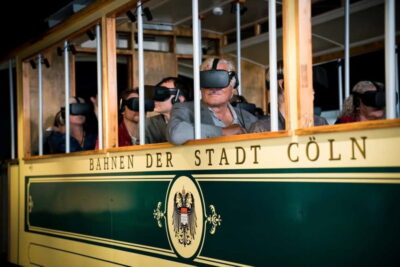
Virtual Reality Time Travel Experience Ticket
Read our review →
The Night Watchman Old Town Walking Tour in German
Read our review →Browse the lists this tour appears in