
Review · COLOGNE TOURS
Bonn: Former Government District Private Tour
Bonn’s former government district tells the story of West Germany before Berlin took back the capital. This private walk connects the places where that young republic worked, argued, and presented itself to the world, from Museum Koenig and Adenauerallee to the UN Campus and the little Bundesbüdchen kiosk.
I like the small private format, which gives you room to ask about postwar politics and Bonn’s unusual role. I also like the route’s mix of grand state buildings and ordinary street details, especially the original corner store at the end. The main drawback is that this is almost entirely outdoors, with only a brief look inside Museum Koenig, and the tour is offered in German only.
Key points to know
- Follow the Bonn Republic on foot: The route links the former Federal Press Office, government villas, the Plenary Hall, and today’s UN Campus.
- See Adenauer’s monument up close: The Konrad Adenauer monument at Bundeskanzlerplatz receives a full part of the walk.
- Expect exterior sightseeing: Museum Koenig’s foyer is the only indoor glimpse, so dress for the weather.
- Finish at the Bundesbüdchen: This small kiosk provides a more personal ending than another grand government building.
- Private pricing favors pairs: At $117 for a group of up to two, the cost works out to $58.50 per person when two people book together.
- German is the tour language: You should be comfortable following a spoken German history tour.
Why Bonn’s former capital district matters
Bonn can feel modest beside Berlin, but that is part of its appeal. From 1949 until reunification, it served as the capital of West Germany, a role that shaped this stretch of the city. The government quarter gathered ministries, diplomatic residences, press offices, and symbolic public buildings along the Rhine.
This tour gives you a clear way to read that district. Instead of seeing a row of impressive buildings without context, you follow the route used to explain how the Federal Republic took shape after the Second World War.
The story is not only about politicians. It is also about how a new democracy presented itself through architecture, ceremony, public access, and everyday routines. The grand buildings show the official face of the republic. The corner store at the Bundesbüdchen brings the scale back down to street level.
A private guide is useful here because many of the buildings are easier to understand as part of a political story than as isolated sights. You do not need a specialist background in German history, but you should enjoy listening and asking questions. This is a guided history walk, not a museum visit or a casual stroll.
A few more Bonn half-days to weigh up
- Bonn: 24-Hour Hop-On Hop-Off Sightseeing Bus Ticket
★ 4.5 · 454 reviews - From Bonn: Rhine River to Linz Sightseeing Boat Tour
★ 4.5 · 358 reviews - Bonn: 1.5-Hour River Cruise on the Rhine
★ 4.5 · 109 reviews
Starting at Museum Koenig
Meet your guide in front of Museum Koenig. The museum is a fitting starting point because it is one of the district’s most recognizable buildings and gives the route an immediate sense of ceremony.
The schedule allows about 20 minutes at Museum Koenig, followed by a shorter return to the building for more guided sightseeing. The only indoor portion is a brief look into the bright hall from the foyer. You should not book this walk expecting a full museum tour, exhibit access, or time to study collections.
That limitation is worth knowing before you arrive. Museum Koenig may tempt you to plan a longer visit, but the experience described here uses the building mainly as a landmark and historical doorway. If you want to explore the museum properly, plan that separately.
From the museum, the route continues on foot. The short walks between stops make the tour easy to follow, though the frequent movement means you should wear comfortable clothes and shoes. The activity is listed as wheelchair accessible, which is helpful for visitors who need an accessible route, but the exact surface conditions and restroom arrangements are not specified.
Walking Adenauerallee toward the government quarter
The walk along Adenauerallee shifts the focus from museum architecture to the former political center. This broad route connects several places tied to the Bonn Republic, and your guide uses the surroundings to explain how the district functioned when Bonn was West Germany’s capital.
The tour turns toward the former Federal Press Office before heading toward the present-day United Nations Plaza. That change of direction matters. The route is not simply a line of famous buildings. It shows how media, government, and international institutions occupied the same small part of town.
You will pass rather than enter several important sites. That is both a strength and a limit. From outside, you get a useful overview and can connect the buildings spatially. But anyone hoping to go through the doors of every government building will find the format too brief.
The short duration keeps the outing focused. Ninety minutes is enough to learn the basic structure of the district without giving up half a day. It is not enough for extended interior visits or a detailed political lecture on every chancellor and policy dispute.
Villa Hammerschmidt and Palais Schaumburg
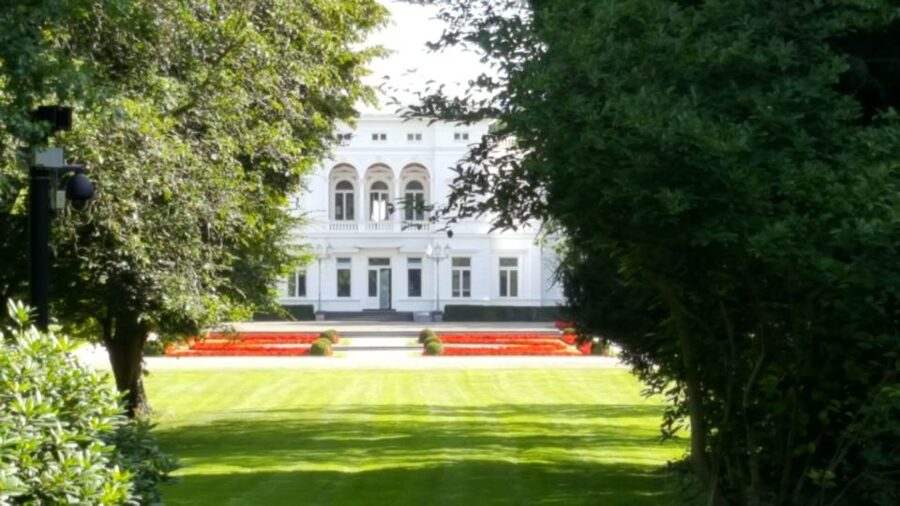
Villa Hammerschmidt appears as a pass-by stop, with about eight minutes of guided explanation. Its place on the route helps you understand the formal side of the West German state. The villa is one of the district’s key political addresses, and viewing it from outside gives the guide a chance to explain its role within the federal center.
You will then pass Palais Schaumburg, with about five minutes devoted to the site. These stops work best when you treat them as pieces of one larger picture. Bonn’s political power was spread through a group of villas, offices, and official residences rather than concentrated in one giant capital complex.
That makes the walk especially useful for first-time visitors who want a map of the area in their heads. You will learn which buildings mattered and how they related to one another. You will also see why Bonn’s capital district feels quieter and more residential than many national capitals.
Do not expect to enter Villa Hammerschmidt or Palais Schaumburg on this tour. The schedule identifies them as exterior pass-by sights, so your experience depends on the guide’s explanation and the view from the street.
Same city, a completely different sort of afternoon:
- Bonn: Evening Sightseeing Cruise on the Rhine River
★ 4.5 · 78 reviews - Bonn: Private City Highlights Walking Tour
★ 4.9 · 35 reviews - From Bonn: Christmassy Advent Cruise on the Rhine
★ 4.7 · 19 reviews - Bonn: Private Guided Walking Tour
★ 4.3 · 15 reviews
The Adenauer monument at Bundeskanzlerplatz
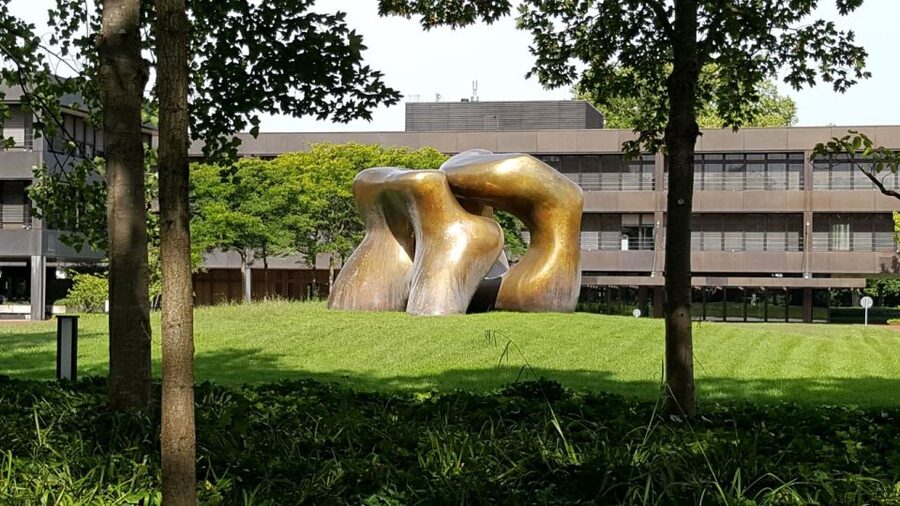
The Konrad Adenauer monument receives one of the longest stops, about 15 minutes. This is a sensible centerpiece. Adenauer was the first Federal Chancellor of West Germany, and his political era belongs at the heart of any introduction to the Bonn Republic.
At Bundeskanzlerplatz, the guide can connect the monument with the early Federal Republic and the physical setting around it. The value here is not only the sculpture itself. It is the chance to pause and consider how a new state used public symbols to establish continuity, authority, and a sense of national direction after the war.
If you have only a general interest in German history, this stop gives you a useful anchor. You can attach names and events to a real place rather than trying to remember an abstract timeline. If you already know the political story, the private format lets you ask for more detail about Adenauer’s role and the meaning of the monument.
The focus remains introductory rather than academic. You will leave with a basic understanding of the period and its main landmarks, not a full study of Adenauer’s policies or the complexities of postwar German politics.
Views toward the Rhine and the UN Campus
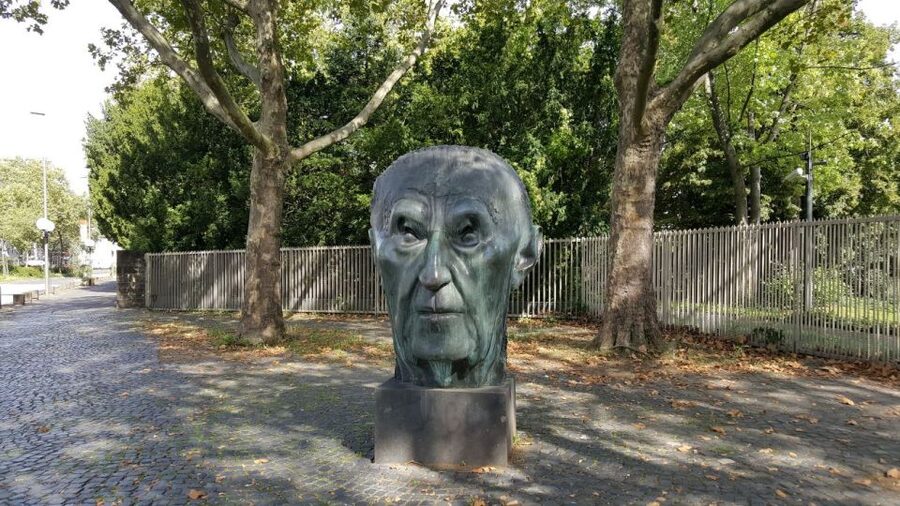
The route includes a viewpoint with about five minutes of sightseeing, then continues toward Quay Bonn-Bundeshaus. These pauses add a wider sense of place to a walk otherwise centered on individual buildings.
You will also get distant views of Villa Hammerschmidt, Palais Schaumburg, and the former Federal Chancellery. Distance can be a disadvantage if you want close architectural details, but it helps you see how the district fits together. The guide can point out the buildings as part of one former capital zone rather than treating each one as a separate photo stop.
The route reaches the present-day UN Campus, another sign of how Bonn’s role changed after the capital moved to Berlin. The city did not simply lose its political identity. Parts of the former government district gained new international functions, and the tour uses that shift to bring the story into the present.
You will also see Bonn’s tall landmarks, including Langer Eugen and the Post Tower. Their different shapes and eras add contrast to the older villas and official buildings. Together, they show a city that moved from national government center to an important international location.
Passing the Plenary Hall and former government buildings
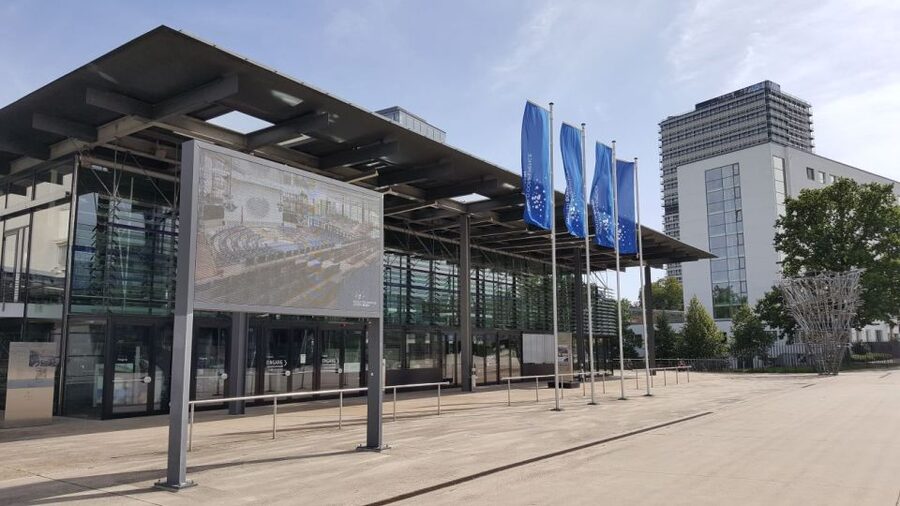
The Plenary Hall, or Plenarsaal, is a pass-by stop with about eight minutes of guided explanation. It gives you another look at the practical side of democracy: not just residences and monuments, but the place where political debate took place.
Again, the tour does not promise entry. You should think of this section as an outdoor introduction to the former parliamentary district. The guide’s job is to explain what you are seeing and why it mattered, while you build a visual connection between the Plenary Hall, the former Chancellery, and the surrounding institutions.
This is where the tour’s structure pays off. In a short time, you move from the museum to the press, executive, parliamentary, and international parts of the district. That broad sweep gives you a useful first orientation.
The tradeoff is depth. Eight minutes at the Plenary Hall cannot cover the full history of parliamentary life in Bonn. If you want extensive political detail, you may prefer a longer specialist program. For a first visit, though, the stop helps put the former capital on a human scale.
Ending at the Bundesbüdchen
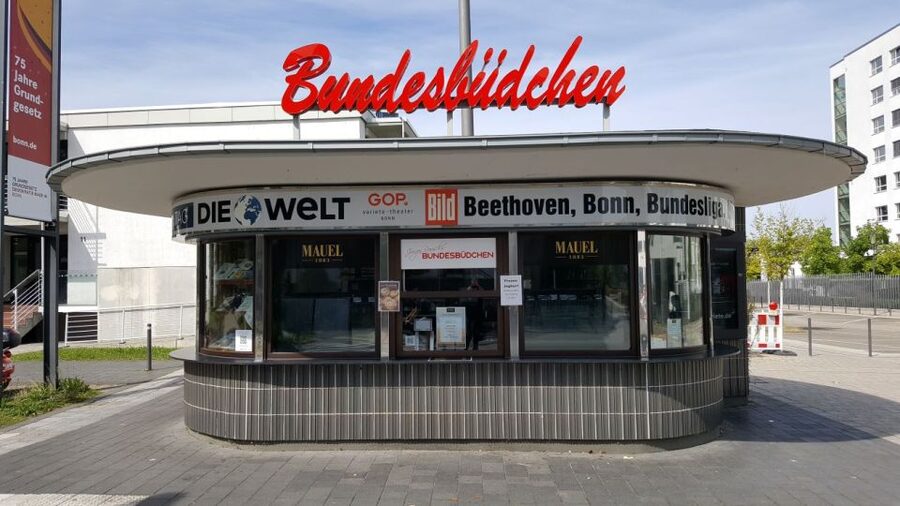
The route ends at the Bundesbüdchen, a small kiosk that once served as a familiar local checkpoint in the government district. It is a charming contrast to the formal buildings earlier in the walk.
This ending is one of the tour’s more distinctive choices. A government quarter can become a parade of official names, but the Bundesbüdchen reminds you that workers, journalists, officials, and residents also needed ordinary places for quick purchases and conversation.
The stop lasts about six minutes. It is described as the cheerful finish to the route, and that tone matters. After hearing about chancellors, federal offices, and postwar institutions, you finish with something approachable and local.
The tour then includes a 10-minute subway or metro ride back to Museum Koenig. The available information does not specify whether transport tickets are included, so check that point when booking or carry a valid ticket. The return arrangement is practical, since it brings you back near the starting area instead of leaving you to find your own way across the district.
What $117 means for a private group of two
The price is $117 per group of up to two people. For two participants, that is $58.50 each for 90 minutes with a private guide. You are paying for personal attention and a route shaped around your group, not for entry to several attractions.
That price makes the most sense if you care about asking questions, setting the pace, or avoiding a large group. It is less compelling if you prefer to wander independently and simply take photographs of the buildings.
There are no listed admission costs for museums or interiors because the walk does not include a full indoor visit. Museum Koenig is viewed briefly from the foyer, while the villas, former offices, Plenary Hall, and other government sites are seen from outside.
For a pair with a real interest in German political history, the private rate is reasonable. For a solo visitor, the full group price is less favorable, since the listed rate covers up to two people rather than charging per person.
Who should book this Bonn walking tour
I would choose this experience if you want a clear introduction to Bonn’s former capital role in a short window. It suits adults who enjoy political history, architecture, and stories about how cities change after a country’s capital moves elsewhere.
The age rule matters: children under 16 are not suitable for this activity. The subject matter and 90-minute walking format are better matched to older teenagers and adults.
You should also be comfortable with German. The live guide speaks German, and there is no other language listed. If you understand German well enough to follow a spoken historical explanation, the private setting should make it easier to ask questions and clarify points.
Bring comfortable clothing, and prepare for an outdoor experience in changing weather. One German-language review described the group remaining enthusiastic despite unpleasant conditions, but that is a reminder to dress sensibly rather than a promise that the weather will cooperate.
The experience is also a good fit for visitors who have already seen Bonn’s central sights and want to understand the former government district. It gives you a second layer of context without requiring a full museum day.
Practical strengths and limitations
The strongest feature is the route’s focus. In 90 minutes, you cover the museum, Adenauerallee, official residences, the Adenauer monument, the UN Campus, the Plenary Hall, Bonn’s newer towers, and the Bundesbüdchen.
The guide’s tone is another important factor. Recent German and Dutch feedback praised a presentation that was humorous, lively, and packed with useful information about postwar Germany. You should expect a guide who can make the political material approachable, rather than a silent escort between buildings.
The limitations are just as clear. There is very little indoor time, no full museum visit, and no access listed for the official buildings. The tour also cannot cover every detail of Bonn’s political past in an hour and a half.
The language restriction may be the biggest practical concern. A private tour is valuable only if you can follow the explanation. If you need English, you will need to confirm another option, since German is the stated language.
Cancellation is flexible, with a full refund available when you cancel at least 24 hours in advance. You can also reserve and pay later, which helps if your Bonn plans are still shifting.
Should you book it?
Book this tour if you want a compact, private introduction to the Bonn Republic, especially if you are interested in Adenauer, postwar Germany, and the city’s change from federal capital to UN location. The combination of grand official buildings and the modest Bundesbüdchen gives the route more character than a simple architecture walk.
Skip it if you want extensive museum time, indoor access, or an English-language guide. Also think twice if your group dislikes walking outdoors or prefers a broad city tour with Bonn’s cathedral and old town.
For two German-speaking adults, the value is strongest. You get a focused route, a private professional guide, and a useful political framework for understanding one of Germany’s most unusual former capitals.
FAQ
Where does the tour begin?
The meeting point is in front of Museum Koenig in Bonn.
How long does the tour last?
The tour lasts 90 minutes.
What language is the tour offered in?
The live tour guide speaks German.
Is this a private tour?
Yes. The tour is exclusive to your private group.
How many people does the listed price cover?
The price of $117 covers a group of up to two people.
Is Museum Koenig visited indoors?
The tour includes only a brief look into the bright hall from the museum foyer. It is not a full indoor museum visit.
Which Adenauer sight is included?
The route includes the Konrad Adenauer monument at Bundeskanzlerplatz, with about 15 minutes of guided sightseeing.
Can I see the former Chancellery and Palais Schaumburg?
Yes. You can see distant views of the former Federal Chancellery and pass by Palais Schaumburg during the walk.
Does the tour include the UN Campus?
Yes. The route leads toward the present-day United Nations Plaza and includes the surrounding former government district.
Is the tour wheelchair accessible?
Yes. The activity is listed as wheelchair accessible.
Are children under 16 allowed?
No. The tour is not suitable for children under 16.
What should I bring?
Wear comfortable clothing, since most of the experience takes place outdoors and includes walking.
Can I cancel for a refund?
Yes. You can cancel up to 24 hours in advance for a full refund.
Do I have to pay when I book?
No. The reserve-now, pay-later option lets you book without paying immediately.
Just added around Bonn
- Bonn: Private Guided Walking Tour★ 4.3 · 15 reviews
- Bonn: Sunset Boat Tour on the Rhine★ 4.7 · 11 reviews
- Bonn Regio WelcomeCard with Guidebook★ 4.3 · 15 reviews
- Bonn : Private Walking Tour With A Guide ( Private Tour )★ 4.5 · 9 reviews
- Bonn: Sunday Brunch Buffet with Cologne live music★ 5.0 · 5 reviews
- Bonn: Private City Highlights Walking Tour★ 4.9 · 35 reviews
- Bonn: Escape Room Games★ 4.8 · 6 reviews
- Bonn: 3,5 hours Guided Bike Tour★ 4.4 · 8 reviews
Cologne Tours, compared.

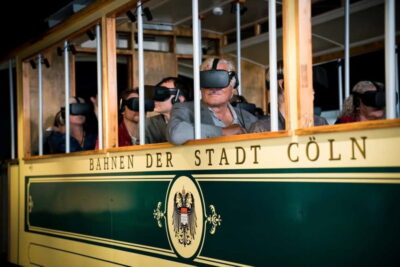
Virtual Reality Time Travel Experience Ticket
Read our review →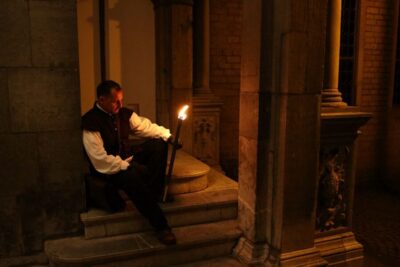
The Night Watchman Old Town Walking Tour in German
Read our review →Browse the lists this tour appears in