
Review · BAMBERG TOURS
Bamberg: Where Hollywood dreams and movies are born
Bamberg has played school grounds, Paris, and a stage for German film favorites. This two-hour movie walk connects real streets with scenes from The Flying Classroom, The Sams, The Three Musketeers, and The Empress, so you see the old town with a fresh purpose.
I like the scene photos shown at the exact filming spots, and I like the way the walk mixes movie craft with Bamberg’s major sights. The main caution is group size: one tour was much larger than the intended 25 people, making guide Brid hard to hear.
Key points at a glance
- Film locations with scene photos: Compare Bamberg as it looks today with its on-screen appearance.
- Several eras of cinema: The route covers productions from 1973 through the Netflix series The Empress in 2022.
- A strong Three Musketeers focus: Learn how Bamberg became 17th-century Paris for a production that brought as many as 400 filmmakers to town.
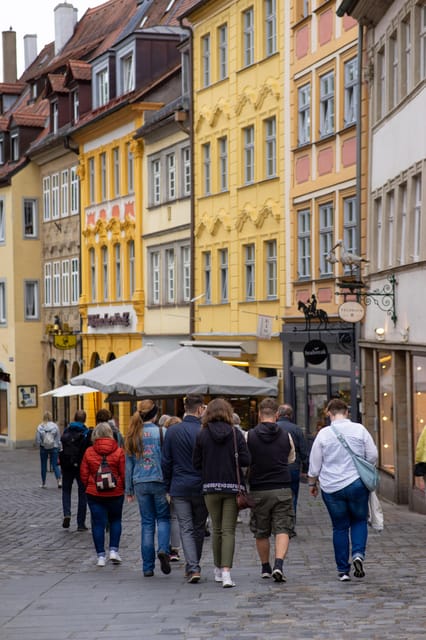
- Classic Bamberg stops: Walk from the Old Town Hall through Pfahlplätzchen, Schlenkerla, the Residence area, the Old Court, and the cathedral.
- Family-friendly storytelling: Guide Emma answered children’s questions well, making this a good choice for families who enjoy film.
- German only: The tour is wheelchair accessible, costs $15 per person, and allows free cancellation up to 24 hours ahead.
Bamberg becomes a film set at the Obere Brücke
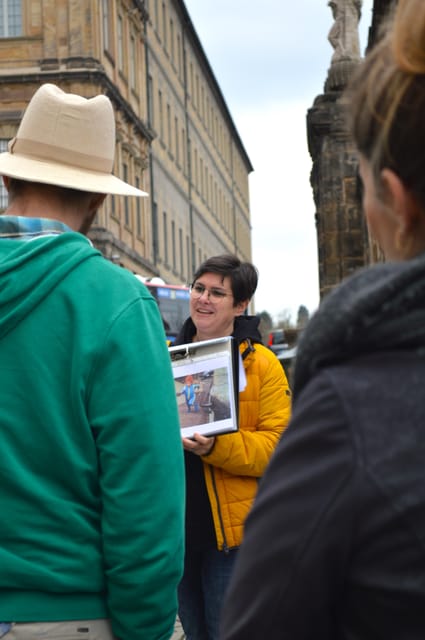
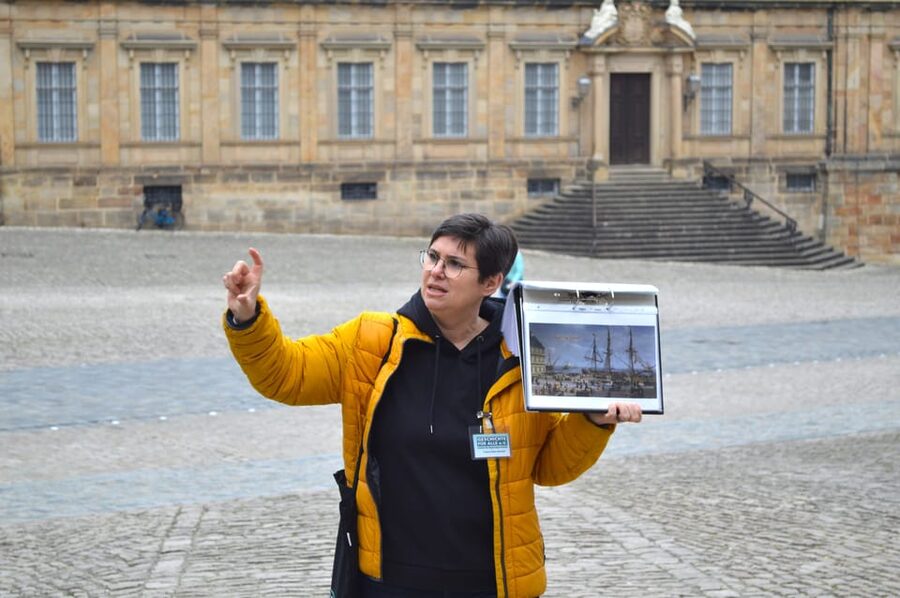
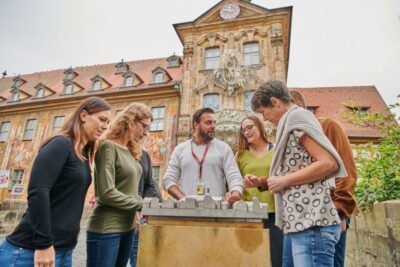
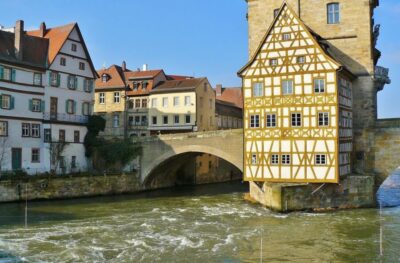
Meet at Obere Brücke 2, beside the entrance to the Altes Rathaus, Bamberg’s Old Town Hall. Look for a guide carrying a picture folder and wearing a Geschichte Für Alle e.V. name tag. This is a useful meeting point because you begin beside one of Bamberg’s most recognizable sights, rather than spending the first part of the tour finding an office or waiting for transport.
The opening idea is simple but effective: Bamberg does not need to be rebuilt to appear on camera. Its medieval streets, bridges, façades, and public squares already provide much of the needed setting. Filmmakers only have to dress selected corners, adjust signs or props, and control the camera angle.
That makes this more than a list of filming addresses. You get to see how a familiar street can suggest another city and another century. The guide explains what appeared in front of the camera and what happened behind it, including the practical work of turning an operating historic town into a temporary movie set.
The tour is led in German. Guides named in the feedback include Emma and Brid. Emma was praised for making the walk interesting, relaxed, and easy for children to follow. Brid was also described as friendly and helpful, though the larger-than-planned group made it difficult for some people to catch every word.
A few more Germany half-days to weigh up
- Bamberg: Guided Walking Tour
★ 4.6 · 3,202 reviews - Bamberg: Guided Beer History Tour with Optional Tasting
★ 4.6 · 772 reviews - Bamberg: City Highlights Walking Tour
★ 4.6 · 679 reviews
The Flying Classroom at the Aufseesianum
One early film connection is the Aufseesianum, used in the 1973 version of The Flying Classroom with Joachim Fuchsberger. The stop gives the tour a useful starting point because it shows that Bamberg’s screen life is not limited to grand palaces or postcard views.
The appeal here is the comparison between a working building and its film identity. A school setting can look quite different once a camera, actors, costumes, and a carefully chosen angle are added. If you know the film, this stop gives you a physical link to it. If you do not, the guide’s photos help explain what to look for.
I like this kind of stop because it rewards attention rather than prior film knowledge. You do not need to be an expert on German cinema to understand the basic trick: the production uses a real Bamberg location, then makes the audience believe it belongs to the story’s world.
The stop also sets up one of the walk’s recurring themes. Bamberg is not just a pretty backdrop. Its buildings have enough character to carry a scene, but they can also be adapted for a story set somewhere else.
Following The Sams through the old town
The route then moves through winding medieval lanes connected with The Sams, the 2001 family film. The tour follows the film’s playful world through the old town, including the Samshaus. Ottfried Fischer, Günter Strack, and the mischievous Sams are part of this section.
This is likely the most accessible part for families. The Sams connection gives children a character to follow, while adults get a closer look at the lanes and small corners that can be easy to pass without noticing. Guide Emma’s ability to answer children’s questions is worth noting if you are choosing a walk for a mixed-age group.
The Samshaus is not presented simply as a stop for a quick photograph. You learn how the film used Bamberg’s narrow passages and old façades to support its story. The picture folder matters here. Seeing a movie frame beside the real location helps you notice changes in framing, decoration, and atmosphere.
The route is on foot, with short transfers between stops. The supplied schedule lists walks of roughly two to five minutes at a time. That keeps the pace manageable, but you should still wear comfortable shoes. Cobblestones and narrow lanes are part of the old-town setting, and the walk includes several separate stops rather than one long talk in a single square.
Pfahlplätzchen and the art of dressing up a city
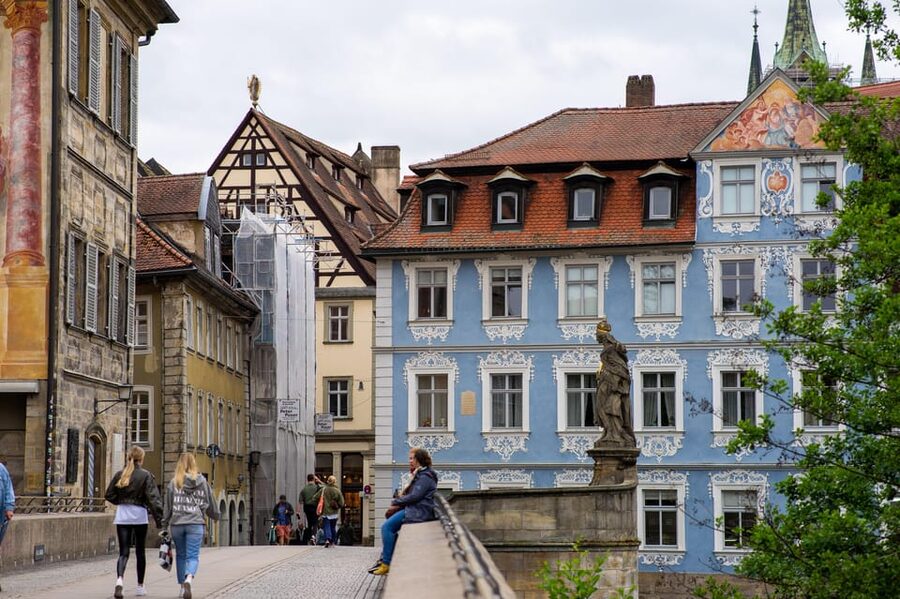
From the Samshaus, the group continues to Pfahlplätzchen. This is where the tour’s idea of dressing up Bamberg becomes especially useful. Historic streets may look untouched at first glance, but a film crew can change their period with signs, market goods, costumes, vehicles, extras, and selective camera views.
You learn to separate the permanent city from the temporary production. That is one of the best reasons to choose a film walk instead of a standard sightseeing tour. A regular guide may tell you what a building is. This tour asks how the same building can perform a different role.
The tour also explains aspects of filmmaking itself. You hear about the craft of creating a believable place, not only the finished scenes. For anyone interested in production design, location work, or historical dramas, these details add substance to the walk.
At $15 per person, this kind of behind-the-scenes angle gives the experience good value. You are not paying for transport, admission tickets, or a special attraction. You are paying for a focused story that connects several free public places and makes them easier to read.
Same city, a completely different sort of afternoon:
- Berlin: Reichstag, Dome and Government District Guided Tour
★ 4.7 · 18,288 reviews - Berlin: 1-Hour City Tour by Boat with Guaranteed Seating
★ 4.3 · 16,993 reviews - Hamburg: Sex and Crime in St. Pauli Tour for Ages 18+
★ 4.7 · 15,447 reviews - Hamburg: 1.5-Hour Harbor and Speicherstadt Day Cruise
★ 4.6 · 14,200 reviews
Bamberg as 17th-century Paris in The Three Musketeers
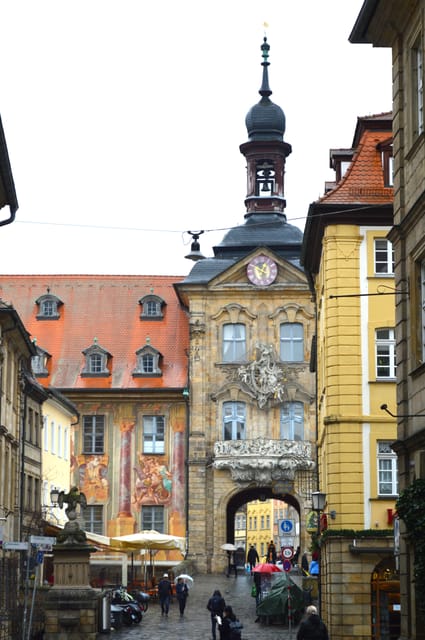
The strongest film section centers on The Three Musketeers, the 2011 production. Bamberg was transformed into 17th-century Paris, and as many as 400 filmmakers came to the city for the shoot.
That scale helps explain why the film connection matters. This was not a single camera crew taking a few background shots. A major production needed locations that could suggest another place and another period. Bamberg’s old town supplied the structure, while the crew added the details needed to support the story.
The guide’s photos are especially valuable here. You can compare the present-day street with the staged version and see how much depends on framing. A small change outside the camera’s view can make the wider setting disappear. The result may look like Paris on screen, even though the real location is Bamberg.
I like the way this section gives you a practical lesson in movie illusion. You do not need to accept the film location as magic. You can look at the façades, street width, sightlines, and added decoration, then understand how the production made the change work.
This is also the part most likely to appeal to adults who do not know The Sams or The Flying Classroom. The large production, historical setting, and transformation of a German cathedral city into Paris provide a clear story on their own.
Schlenkerla, the Residence, and Domplatz
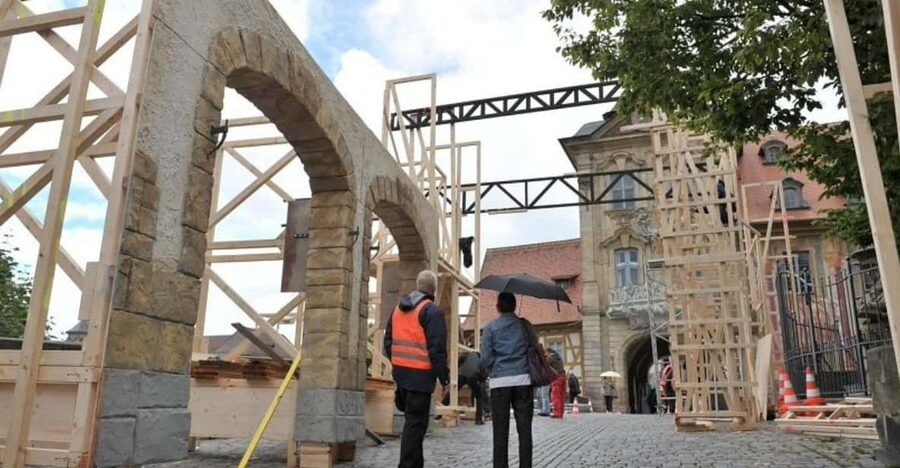
The walking route includes a guided stop at Schlenkerla before continuing toward Domplatz. Schlenkerla is a well-known Bamberg name, and its place on the route helps connect the movie theme with everyday old-town streets. The tour does not simply move from one famous sight to the next. It uses the spaces between them as part of the film story.
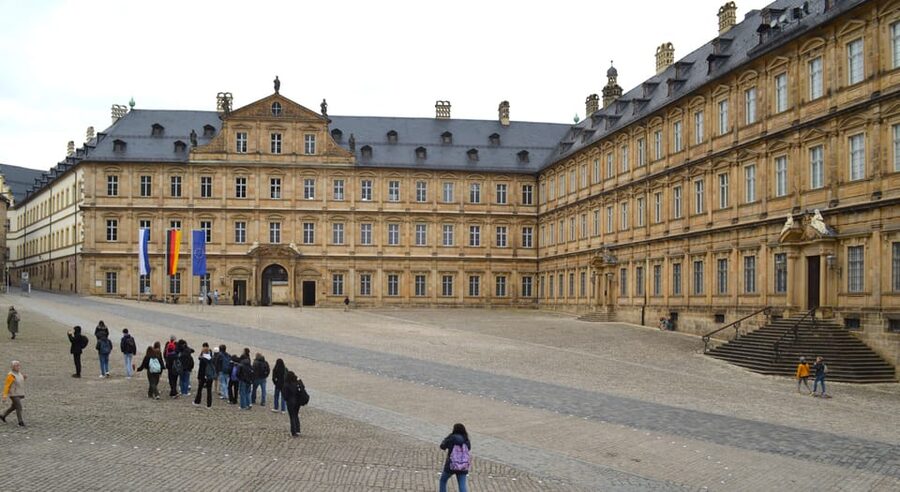
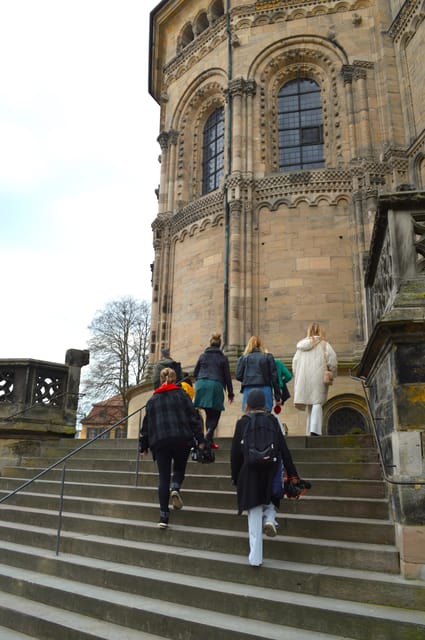
At Domplatz, the scale changes. The group reaches one of Bamberg’s major open spaces, with the Residence area, the Old Court, and Bamberg Cathedral close together. These locations give the guide room to explain how larger buildings and formal squares can help a production create a period setting.
The schedule places the Residence, Old Court, and cathedral near the end of the walk, with short two-minute transfers between several of the final stops. That makes the ending efficient. You finish at Domplatz rather than returning to the starting point, so plan your next activity from there.
This part is useful even if you care more about Bamberg than cinema. You get an introduction to several old-town highlights while learning why directors might choose them. The film angle adds a second layer to places you might otherwise photograph and leave.
The Empress and Bamberg’s screen life today
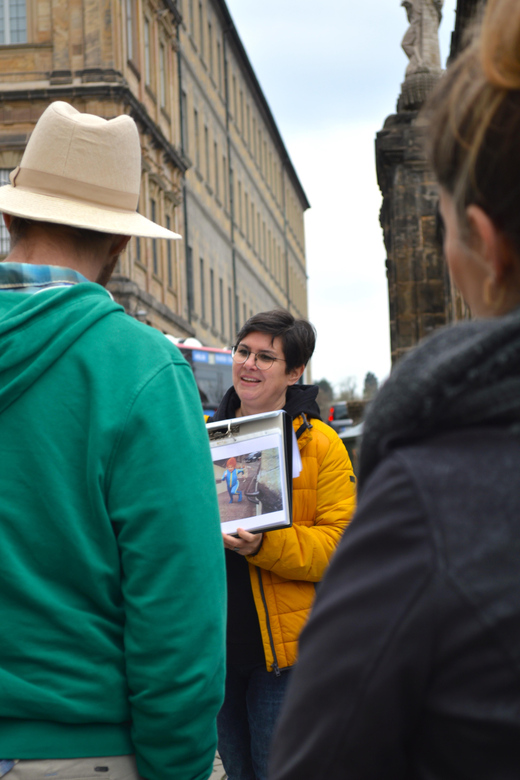
The route also includes The Empress, the Netflix series released in 2022. Its presence shows that Bamberg’s film identity is not limited to older German productions. The city continues to offer historic settings for period stories made for a modern international audience.
The supplied details do not identify a separate filming stop for The Empress, so you should think of this title as part of the wider cinematic story rather than expect a dedicated set visit. The guide can place the production within Bamberg’s changing role as a screen location.
That range is one of the walk’s strengths. You move from a 1973 film to a 2001 family hit, then to a 2011 historical adventure and a 2022 streaming series. The point is not that every production used Bamberg in the same way. The point is that the city can support very different stories.
A note about the Nuremberg references
One practical detail deserves clarification before you reserve. The supplied tour information mentions the history of witch hunts in Nuremberg and medieval prisons called the Lochgefängnisse, but the stated route begins and ends in Bamberg and includes Bamberg’s old-town locations, the Residence, Old Court, and cathedral.
Because Nuremberg is a different city, do not assume those subjects are a major part of this Bamberg walk. If witch hunts or the Lochgefängnisse are the main reason you are interested, contact Geschichte Für Alle e.V. before booking and ask how those references relate to the tour. This is a simple way to avoid expecting a Nuremberg history tour from a Bamberg route.
Group size, language, and walking comfort
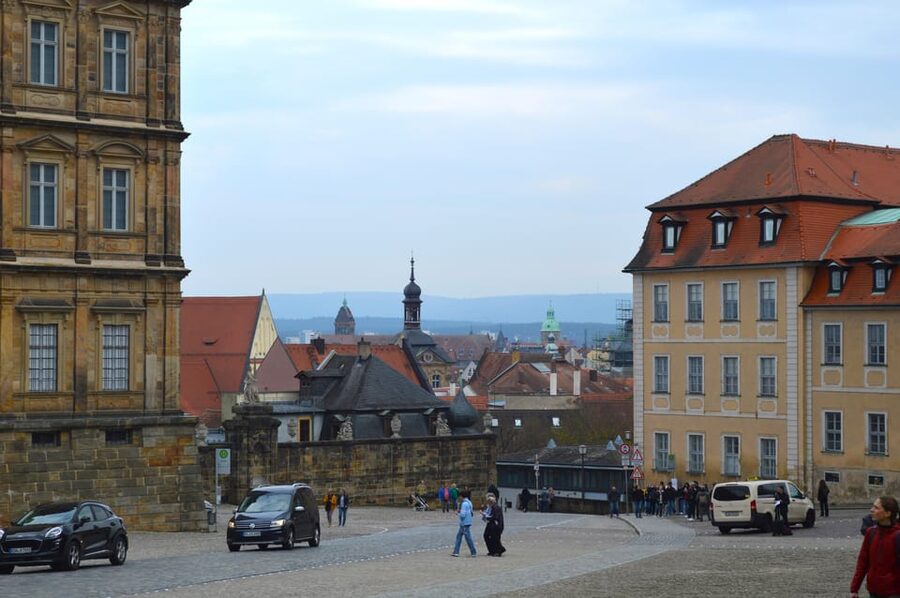
The official experience is listed as wheelchair accessible and lasts two hours. It is a walking tour, with the route broken into short sections of roughly two to five minutes between guided stops. The exact ease of the route can still depend on the old-town streets and the size of the group, so contact the provider if you need detailed route information.
The language is German only. That is the most important booking consideration. If you understand German well, the photo comparisons and explanations of filming technique should be easy to follow. If you do not, this is not presented as a multilingual tour.
The intended group size is up to 25 people. One booking had a much larger group, and the result was a real problem: some people could not hear the guide. I would arrive early, stay near the guide, and ask the provider about group size if hearing every detail matters to you.
The tone can vary by guide, but the available names give you some useful expectations. Emma made the walk relaxed and handled children’s questions well. Brid guided the route effectively, but the oversized group reduced audibility. The guide’s picture folder is an important tool, so staying close enough to see it will improve the experience.
Is $15 a good value?
At $15 per person, the price is reasonable for a two-hour guided walk in central Bamberg. The value comes from the focus. You are not getting a general film lecture or a standard old-town stroll. You are getting connected locations, movie stills, local sightseeing, and an explanation of how productions alter a real city.
The price is especially fair if you already plan to explore Bamberg on foot. The tour adds a clear theme to places you might visit anyway, including the Old Town Hall, Schlenkerla, Domplatz, the Old Court, and the cathedral.
It is less useful if you want a full tour of Bamberg’s interiors or detailed architectural instruction. The included service is the guided walk. No admission to a film museum or production facility is listed, and the focus remains on public streets and exterior locations.
Flexible booking also helps. You can reserve now and pay later, and cancellation is free up to 24 hours before the start time. No invoice is issued for bookings made through GetYourGuide, with the booking confirmation serving as proof of payment.
Who should book this Bamberg film walk?
I would choose this tour if you enjoy seeing familiar places used in unfamiliar ways. It suits film fans, families who know The Sams, and anyone curious about historical productions such as The Three Musketeers.
It also works for first-time visitors who want a gentle introduction to central Bamberg. You see major sights without spending two hours on a broad list of dates and architectural terms. The movie theme gives the route a story and helps children stay interested.
I would skip it if you need an English tour, want extensive interior visits, or are mainly seeking Nuremberg’s witch-hunt history and the Lochgefängnisse. I would also think twice if your schedule is tight and you cannot tolerate a potentially crowded group, since hearing the guide is central to the experience.
FAQ
Where does the tour start?
The tour starts at Obere Brücke 2 in Bamberg, at the entrance of the Altes Rathaus, or Old Town Hall.
Where does the tour finish?
The walk finishes at Domplatz in Bamberg.
How long does the experience last?
The guided walk lasts two hours.
What language is the tour in?
The live tour guide speaks German. No other tour language is listed.
Which films are covered?
The tour covers The Flying Classroom from 1973, The Sams from 2001, The Three Musketeers from 2011, and the Netflix series The Empress from 2022.
Is the tour wheelchair accessible?
Yes. The activity is listed as wheelchair accessible.
Can I cancel the booking?
Yes. You can cancel up to 24 hours in advance for a full refund. You can also reserve now and pay later.
Should you book it?
Book this $15 walk if you want Bamberg’s old town to feel more readable and you enjoy film locations, scene comparisons, and stories about production work. The best features are the photos shown at the actual locations, the large-scale Three Musketeers story, and the family-friendly handling reported for guide Emma.
Before paying, confirm that German is suitable for you and ask about the expected group size. Also clarify the references to Nuremberg and the Lochgefängnisse, since the stated route is in Bamberg. With those points settled, this is a good-value, focused way to see the cathedral city as both a historic place and a working movie set.
Just added around Germany
- From Berlin: Gardens & Palaces of Potsdam Bike Tour★ 5.0 · 61 reviews
- Berlin: Battle for Seelow Heights WW2 tour -Clash of Titans★ 5.0 · 27 reviews
- From Amsterdam: Cologne Private Sightseeing Tour★ 5.0 · 4 reviews
- From Berlin: Historical Gems of Potsdam Private Day Trip★ 4.4 · 4 reviews
- Freiburg: Veni, vidi, vino – wine hike and tasting★ 4.5 · 144 reviews
- From Alken: Return Day Trip by Boat to Cochem★ 4.6 · 141 reviews
- Fritz Haarmann – Die Mördertour★ 4.6 · 41 reviews
- Freiburg: Tour of the city with cathedral visit★ 4.7 · 167 reviews
Bamberg Tours, compared.

Browse the lists this tour appears in