
Review · BAMBERG TOURS
Bamberg Free Walking Tour
Bamberg’s story comes in layers: medieval bishops, grand Baroque buildings, witch trials, fishermen, students, basketball players, and beer. This two-hour German-language walk gives you a useful first look at the UNESCO-listed old town, with stops at Little Venice, the old town hall, the cathedral, and the Old Residence.
I like the clear overview and the human scale of the route. I also like that guides such as Thomas and Julia bring in present-day Bamberg, not only dates and architecture. The main drawback is the language: this is a German-only tour, and the tip-based price means you should plan to reward the guide separately if the experience serves you well.
Key points for your Bamberg visit
- A two-hour introduction: See Bamberg’s major sights without giving up a full day.
- A walk through the UNESCO old town: The route focuses on the historic center and island district.
- More than church towers: Learn about fishermen, students, basketball, brewers, and local life.
- Tip-based pricing: The listed price is about $3.54 per person, but guides work for tips.
- German-language guiding: The live tour is conducted in German, with some content shown in its original language.
- A practical meeting point: Find the Centurione statue near the Lower Bridge and look for a white umbrella with a green logo.
Starting beneath the Centurione statue
Your meeting point is the Centurione statue, a black-faced figure not far from Bamberg’s Lower Bridge. The white umbrella with the green logo is the useful landmark, especially if you arrive in a busy part of the old town and need to spot the group quickly.
This is a sensible place to begin. The Lower Bridge puts you close to the historic core, so the tour can move straight into Bamberg’s old streets instead of spending time on transport. You should arrive with comfortable shoes and enough time to locate the statue before the scheduled start. The supplied details do not give an exact meeting time, group size, or route order, so check the available departure when booking.
The guides work on a tip basis. That explains the very low listed cost of about $3.54 per person, but it does not mean the guide’s work is fully covered by that amount. Bring the experience into your budget as a low booking price plus a tip at the end.
More walking tours in Germany:
- Discover Berlin Half-Day Walking Tour
★ 5.0 · 9,624 reviews - Berlin: Third Reich and Cold War 2 Hour Walking Tour
★ 4.9 · 6,830 reviews - Munich: Third Reich & WWII Walking Tour
★ 4.6 · 6,181 reviews
Bamberg’s first thousand years in two hours
The guide’s main job is to give you a framework. Bamberg was first mentioned in 907 as Castrum Babenberch, then grew in importance after 1007 under its bishops. That shift shaped the city you see today, from the cathedral and ecclesiastical buildings to the grand residences that give the center its formal look.
Two hours is enough for an overview, not a full study of Bamberg. I see that as a strength if you have only one day in town. You can learn how the major sights connect, then decide where to return for a closer look.
The tour also touches on a less comfortable part of the past: the persecution of people accused of witchcraft. This matters because Bamberg’s polished Baroque appearance can make the city seem like a simple story of bishops, art, and fine buildings. The darker chapter gives you a more honest view of how power worked here.
The pace should suit people who want context while walking rather than a long indoor lecture. Still, the amount of detail depends on the guide and on how much German you understand. If you are not comfortable with German, the history may be difficult to follow even when the buildings are easy to appreciate.
Little Venice and Bamberg’s waterside character
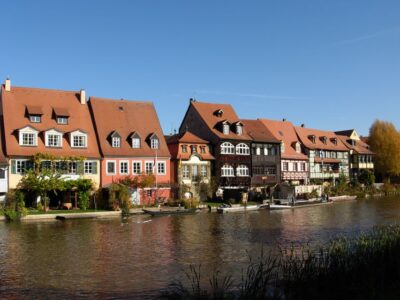
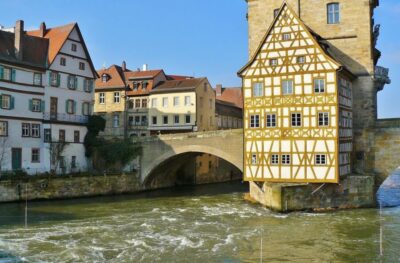
Little Venice is one of the tour’s most appealing visual stops. The name points to the row of former fishermen’s houses along the water, an area where Bamberg’s working life feels close at hand. The view gives you more than a pretty photo. It helps explain why fishermen are part of the city’s identity alongside brewers and bishops.
Look for the contrast between the narrow historic homes and the waterway in front of them. The scene is more intimate than grand. That change of scale is useful because Bamberg is often introduced through its monumental churches and palaces, while Little Venice shows how ordinary work and daily life helped shape the city.
The tour does not promise a boat trip or an interior visit here. You see the area as part of a walking route, with the guide adding cultural and historical context. If you want extended time for photographs, keep that in mind. A group walk has to maintain its pace, and the exact amount of time at each stop is not specified.
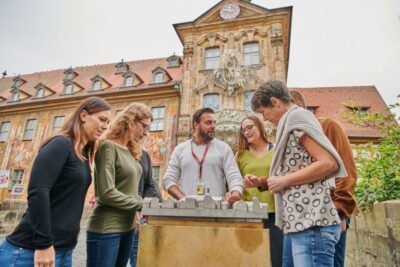
The old town hall above the river
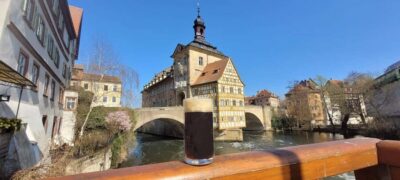
Bamberg’s old town hall is among the city’s most memorable buildings because of its unusual position over the waterway. It links the historic districts and makes a strong talking point for the guide. The building’s setting is easy to understand on foot, and the surrounding bridges provide useful views back toward the old town.
This is a good example of why a local guide helps. You can see an ornate building on your own, but the tour places it within Bamberg’s civic story. The old town hall is not simply another decorated façade. Its location and role point to the city’s divided districts and long civic development.
The supplied information does not include an interior visit. Expect to discuss and view the exterior as part of the walking tour rather than assume entry is included. That keeps the two-hour route moving and gives you a list of places to explore later if you want more time indoors.
A few more Germany half-days to weigh up
- Bamberg: Guided Walking Tour
★ 4.6 · 3,202 reviews - Bamberg: Guided Beer History Tour with Optional Tasting
★ 4.6 · 772 reviews - Bamberg: City Highlights Walking Tour
★ 4.6 · 679 reviews - Bamberg: Guided Historical Culinary Tour
★ 4.6 · 461 reviews
The Romanesque cathedral and the Old Residence
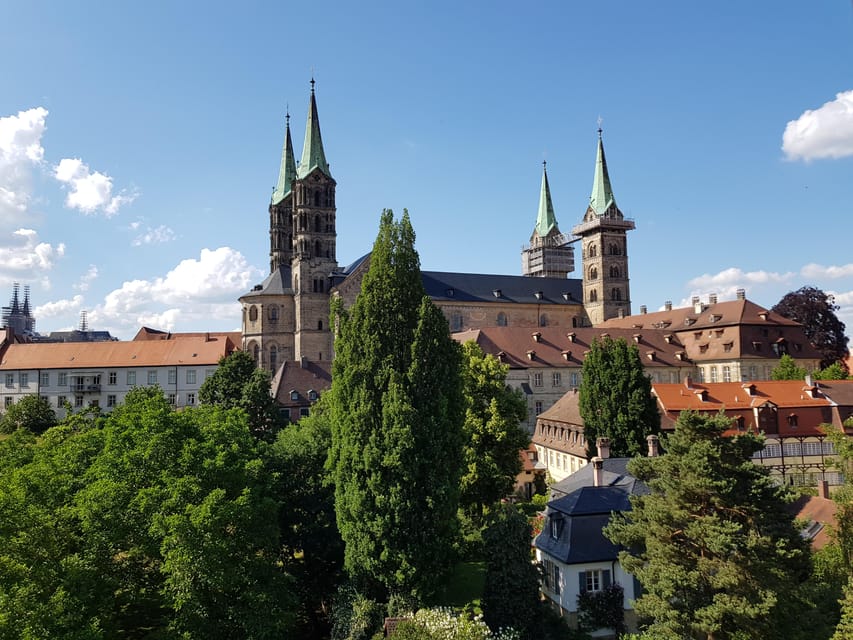
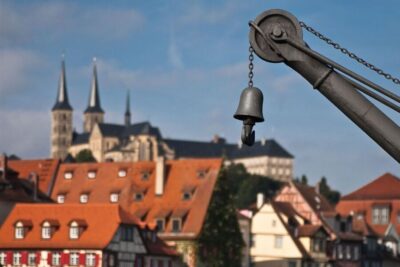
The Romanesque cathedral brings the tour back to Bamberg’s religious and political power. Its age and scale help explain how the city grew under the bishops after 1007. Your guide can connect the cathedral with the wider development of Bamberg, rather than treating it as an isolated monument.
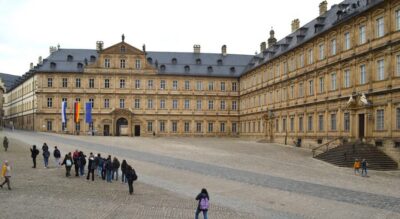
The Old Residence adds a different mood. Its Baroque splendor shows the wealth and authority that accumulated over the centuries. Put beside the cathedral, it lets you read Bamberg as a city shaped by both Romanesque religious foundations and later courtly display.
The route includes these architectural highlights, but it does not state that admission to the cathedral or Old Residence is included. If you want to study interiors, art, or rooms in detail, save time after the walk and confirm opening arrangements separately. The tour’s purpose is to help you understand what you are seeing and how the sights fit together.
This is where the tour earns much of its value for a first visit. You get the broad outline quickly, then you can choose which building deserves a second look. That is a better use of limited time than wandering without knowing which landmarks carry the most weight.
Bamberg beyond beer
Bamberg is widely known as Franconia’s beer capital, and the tour does talk about brewing. But it does not reduce the city to beer halls and smoky glasses. The guide also brings in fishermen, basketball players, and students, which gives you a clearer picture of the city as a living place.
I especially like this promise because beer is an easy subject to overuse. It is part of Bamberg’s identity, but it is not the whole identity. The mention of basketball is a reminder that modern local pride can grow from sports as much as from old buildings. Students add another layer, showing that the historic center is not only a preserved backdrop.
The tour does not include a tasting, brewery visit, or meal. You should treat the beer discussion as cultural context, then choose your own place to drink afterward. That separation is helpful if you want the freedom to select a brewery or tavern based on your own schedule and taste.
The walk’s cultural angle also makes it useful for repeat visitors who already know the postcard views. You may still see the same famous sights, but the questions become broader: Who lived here? Who worked here? Who shaped the city after the bishops and Baroque builders?
A guide-led route with room for questions
The experience is led live in German. Guides such as Thomas and Julia have received specific praise for making the tour informative, entertaining, and easy to follow. The available comments describe Thomas as giving a useful account of the most important parts of Bamberg, while Julia is associated with a lively, engaging city walk.
Those details suggest a conversational style rather than a dry list of dates, though the exact delivery can vary by guide. At the end, the guides remain available for questions and offer suggestions for things to do in and around Bamberg. That final exchange may be one of the most practical parts of the experience.
Prepare a few questions before you arrive. You might ask which sight deserves extra time, where to continue walking, or what to see outside the central route. The information promises advice, but it does not name specific restaurants, museums, or nearby trips, so do not book the tour expecting a fixed list of recommendations.
The German-only format is the clearest limitation. If you follow German comfortably, you can benefit from the full explanation and humor. If you do not, you may still enjoy the architecture and scenery, but this is not presented as a multilingual tour or an English-language alternative.
What the rating tells you about the experience
The tour has a 4.7 rating from 84 reviews, with recent ratings praising the amount of information, the attractive sights, and the entertaining pace. Several short comments describe it as a good fit for a single day in Bamberg, which matches the tour’s strongest use: a compact orientation walk.
The praise is consistent in a few areas. People value learning about Bamberg while seeing the old town and island district. They also respond well to a tour that stays interesting rather than becoming a long, heavy lecture. That combination is important in a city where the history can quickly become a list of bishops, dates, and building styles.
One practical suggestion appeared in the feedback: make clear that a toilet is available during the tour. Since the comment does not specify the exact location or arrangement, ask the guide at the start if you need to plan a stop. It is a small point, but useful during a two-hour walk.
The high rating should not hide the fit issue. The experience may be excellent for a German speaker looking for a brisk introduction, yet much less useful for someone who needs English. Ratings tell you about general satisfaction, not whether the language and pace match your own needs.
Is $3.54 a good value?
At about $3.54 per person, the booking price is unusually low for a guided city walk. The value looks strong if you want an affordable introduction to Bamberg’s main sights and are willing to add a fair tip for the guide’s time.
The tip-based model changes the calculation. You are not really buying a fully priced private service for $3.54. You are reserving a place on a public walk at a small upfront cost, then deciding how much the guide’s work was worth to you. Budget for that tip from the beginning rather than treating it as an optional surprise.
The two-hour length also helps the value. You get enough time to cover major landmarks without surrendering an entire morning or afternoon. For a day trip, that matters. You can take the walk first, use the guide’s overview to plan the rest of your visit, and still have time for your own sightseeing.
Reserve now and pay later is available, and free cancellation is allowed up to 24 hours before the tour for a full refund. Those terms are useful when your Bamberg plans may shift. Starting times depend on availability, so check the date and departure time before you commit.
Who should book this Bamberg walk?
I would choose this tour if you are visiting Bamberg for one day, want the main sights explained in context, and understand German. It is also a good first activity for anyone who prefers to get oriented before choosing museums, interiors, or beer stops independently.
The walk suits:
- German-speaking couples and families wanting a short city introduction
- First-time visitors who want the UNESCO old town explained
- Budget-conscious people comfortable with a tip-based tour
- Visitors interested in both medieval and modern Bamberg
- Anyone who wants local suggestions after the formal route ends
I would hesitate if you need English guiding, a private group, a detailed interior tour, or a brewery tasting. None of those are part of the stated experience. I would also look elsewhere if you prefer a slow photographic walk, since the route aims to cover several important sights within two hours.
Should you book the Bamberg Free Walking Tour?
Book it if the German language works for you and you want a quick, low-cost map of Bamberg’s story. The strongest reasons are the central route, the mix of architecture and current city life, and the chance to ask Thomas, Julia, or another guide what to do next.
Skip it if you need English, a guaranteed interior visit, or a beer-focused outing. For the right audience, this is a sensible first look at Bamberg: short, inexpensive, history-minded, and broad enough to help you plan the rest of your day. Just remember that the low price comes with a tip-based expectation.
FAQ
Where does the Bamberg Free Walking Tour meet?
The tour meets at the Centurione statue, a black-faced statue near the Lower Bridge. Look for the white umbrella with the green logo.
How long does the tour last?
The guided walk lasts two hours.
What sights are included?
The route visits architectural highlights including Little Venice, Bamberg’s old town hall, the Romanesque cathedral, the Old Residence, and other parts of the UNESCO World Heritage Old Town.
What language is the tour conducted in?
The live tour guide speaks German. Some content is shown in its original language.
How much does the tour cost?
The listed price is about $3.54 per person. The guides work exclusively on a tip basis, so you should plan to reward the guide at the end.
Does the tour cover Bamberg’s history?
Yes. The guide gives an overview of more than 1,000 years of Bamberg’s history, including the city’s first mention in 907, its growth under the bishops after 1007, Baroque development, and the persecution of people accused of witchcraft.
Does the walk discuss more than beer?
Yes. Beer is part of the discussion, but the tour also covers fishermen, basketball players, students, and other parts of Bamberg’s cultural life.
Can I cancel the booking?
You can cancel up to 24 hours in advance for a full refund.
Can I reserve now and pay later?
Yes. You can reserve your place and pay nothing today, which keeps your plans flexible.
Just added around Germany
- From Berlin: Gardens & Palaces of Potsdam Bike Tour★ 5.0 · 61 reviews
- Berlin: Battle for Seelow Heights WW2 tour -Clash of Titans★ 5.0 · 27 reviews
- From Amsterdam: Cologne Private Sightseeing Tour★ 5.0 · 4 reviews
- From Berlin: Historical Gems of Potsdam Private Day Trip★ 4.4 · 4 reviews
- Freiburg: Veni, vidi, vino – wine hike and tasting★ 4.5 · 144 reviews
- From Alken: Return Day Trip by Boat to Cochem★ 4.6 · 141 reviews
- Fritz Haarmann – Die Mördertour★ 4.6 · 41 reviews
- Freiburg: Tour of the city with cathedral visit★ 4.7 · 167 reviews
Bamberg Tours, compared.
Browse the lists this tour appears in