
Review · CITY TOURS
City tour Chemnitz
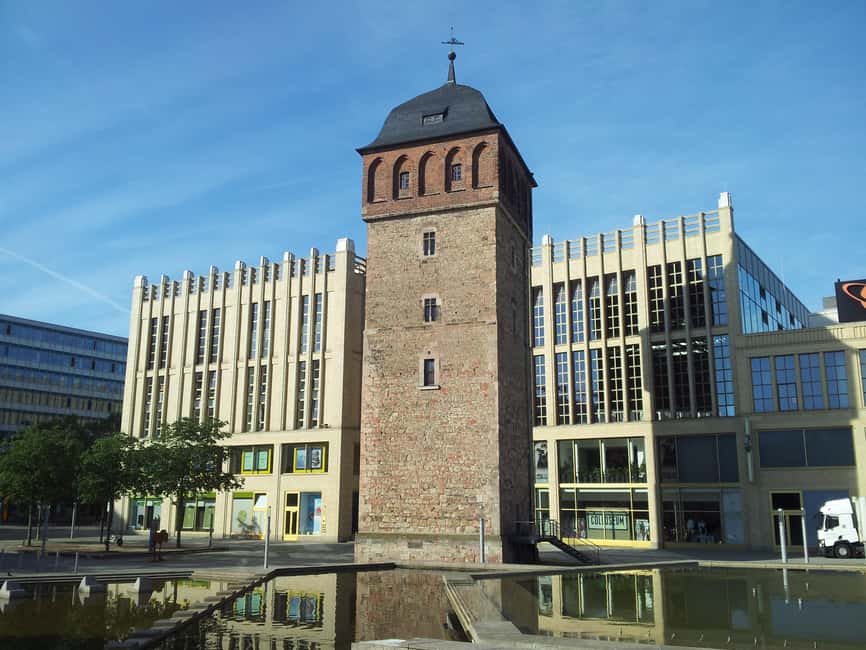
Chemnitz is easiest to understand when you see its many different faces in one short ride. This 90-minute minibus tour moves from the Karl Marx head and the modern center to old industrial streets, the grand Kaßberg district, GDR-era Heckert, and the castle quarter. It gives you the city’s full story without asking you to cover large distances on foot.
I like two things in particular: the small vehicle, which keeps the tour personal, and the clear focus on Chemnitz’s industrial past and changing identity. The tour also earns a very strong 4.9 rating from 30 reviews, with Guter Überblick, kurzweilig, or a good, entertaining overview, capturing its main strength. The possible drawback is that 90 minutes goes quickly, so this is an introduction rather than a detailed visit inside major sights.
Key points at a glance
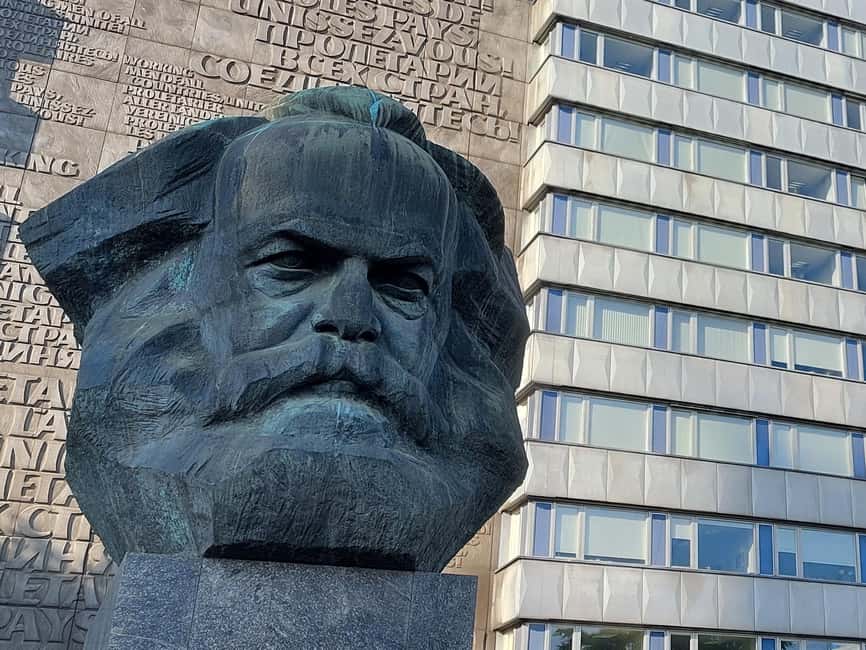
- A compact view of Chemnitz: Cover the modern center, industrial streets, Kaßberg, Heckert, and the castle district in 90 minutes.
- A city shaped by industry: Learn how textiles, machines, locomotives, bicycles, cars, mining, and wartime production changed Chemnitz.
- The Karl Marx head: See the city’s best-known monument and a direct reminder of its years as Karl-Marx-Stadt.
- A small minibus group: The vehicle holds up to eight people, a useful format for a guided city overview.
- English or German guiding: Choose the language that works best for you when booking.
- Central start and return: Begin and finish at either Straße der Nationen or Hotel Chemnitzer Hof, depending on the option selected.
Why Chemnitz makes a strong city tour
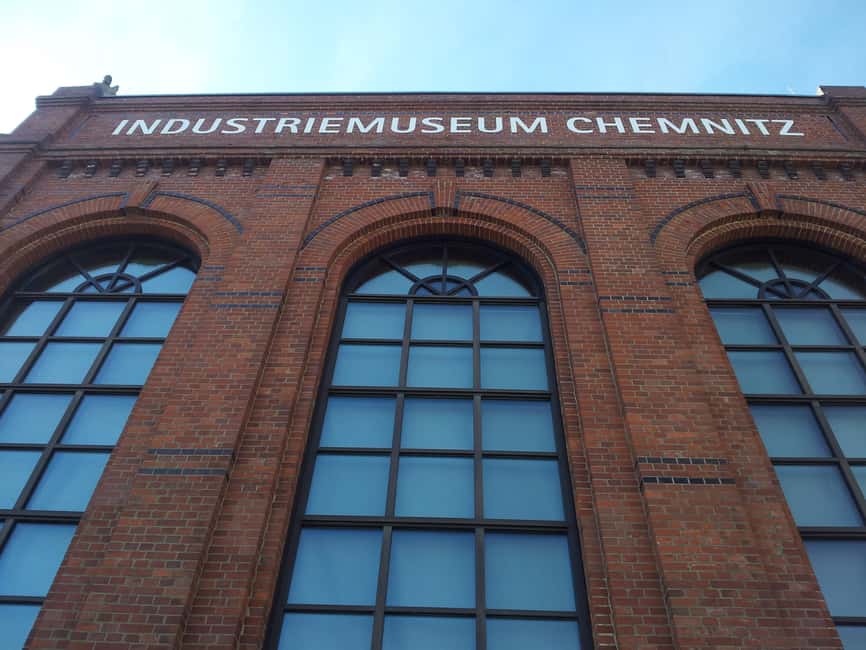
Chemnitz does not reveal itself in one postcard view. Its story is spread across districts built in different eras, and that makes a minibus tour useful. In 90 minutes, you can connect the pieces instead of seeing only the central square.
The city began as a Slavic settlement and grew into one of Germany’s major industrial centers. Its early textile trade, access to the Ore Mountains, and the development of new machinery helped turn it into a city of factories and chimneys. Chemnitz became known as the Manchester of Saxony, and the nickname Rußchamtz, roughly smoky Chemnitz, reflected the soot and smoke of industrial growth.
I find that background important because Chemnitz is not simply an old industrial city trying to preserve its past. It is still tied to industry, but it is also looking for a new public identity. The title of European Capital of Culture 2025 gives that search a clear cultural setting.
The tour presents that story in a practical order. You see the current city center, then the older castle area, the neighborhoods shaped by industrial wealth, and the large housing developments built during the GDR period. You are not just ticking off monuments. You are watching a city change through architecture.
A few more Germany half-days to weigh up
- Berlin: 1-Hour City Tour by Boat with Guaranteed Seating
★ 4.3 · 16,993 reviews - Leipzig: City History Canal Sightseeing Tour on a Motorboat
★ 4.7 · 6,232 reviews - Cologne: Panoramic City Cruise
★ 4.3 · 5,698 reviews
Starting at Straße der Nationen or Hotel Chemnitzer Hof
You have two possible starting points: Straße der Nationen or Hotel Chemnitzer Hof. The exact meeting point depends on the option you book, so check that detail before setting out. Both locations are in the central part of Chemnitz, making this a convenient activity to fit into a day of sightseeing.
The tour ends back at the meeting point. That matters if you are planning lunch, another guided activity, or a train connection. Since the whole experience lasts about an hour and a half, you can place it early in your visit and use what you learn to decide which districts deserve a closer look later.
The minibus carries up to eight people. That is a useful middle ground. You get more comfort and coverage than on a walking tour, but the group remains small enough for a local certified guide to keep the commentary focused.
A minibus also solves a basic Chemnitz problem: the city’s sights are spread out. Kaßberg, Heckert, the industrial corridors, and the castle district do not all sit within a compact old town. You can see the relationship between them without spending much of your visit crossing streets and waiting for transport.
The Karl Marx head and the modern center
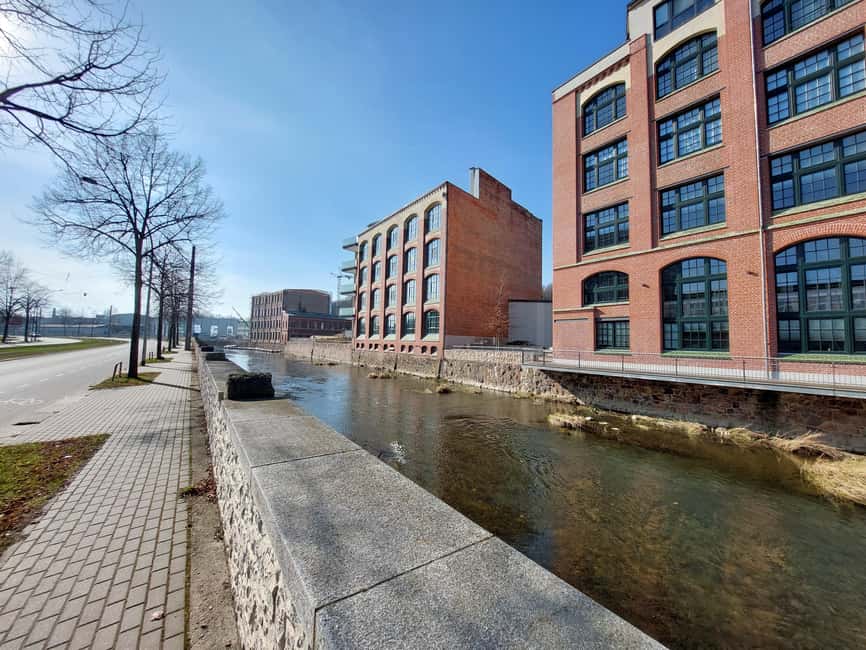
The Karl Marx head is the obvious symbol of Chemnitz’s difficult twentieth-century story. The monument sits in the center and recalls the period when the city was renamed Karl-Marx-Stadt. After German reunification, the name Chemnitz returned.
Seeing the head in person gives the name change a physical focus. It is not just a line in a history book. The monument remains part of the city center, while the city around it has moved through several political and architectural periods.
The central area also introduces modern Chemnitz. The tour does not present the city as a preserved medieval town, because that would give you the wrong idea. Modern buildings and postwar changes are a major part of what you see.
For me, this is one of the tour’s best choices. The Karl Marx head is easy to photograph, but its real value comes from the explanation around it. A guide can connect the monument to the city’s name, its GDR past, and the effort to define Chemnitz in the present day.
Do not expect a long stop with time for a museum visit. The tour is built around seeing and understanding the city from the minibus. If you want an in-depth look at the monument or the surrounding buildings, plan a separate walk afterward.
Industrial Chemnitz between Zwickauer and Annaberger Straße
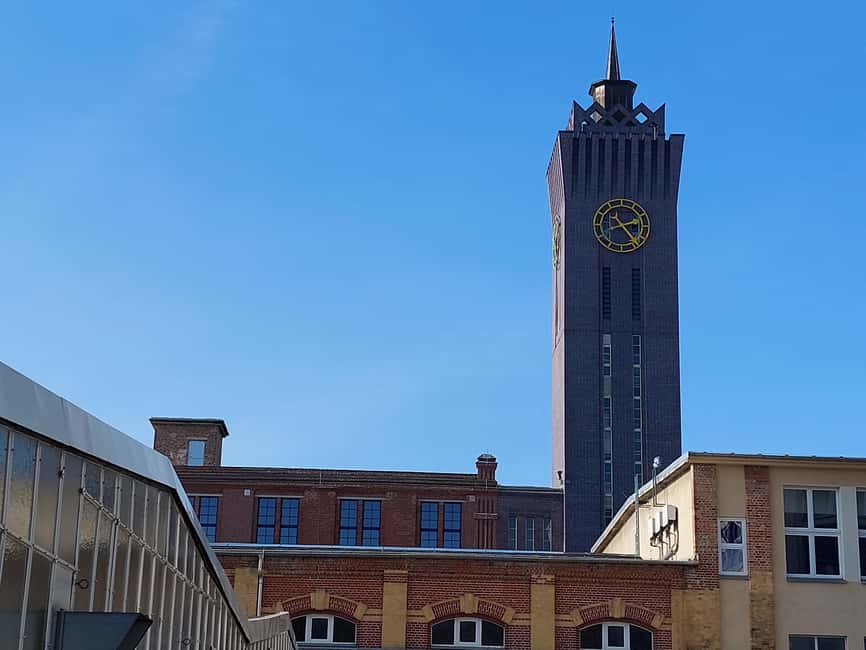
The route through the areas between Zwickauer and Annaberger Straße gets to the heart of Chemnitz’s reputation. This is where the city’s industrial story becomes more than a list of inventions.
Textile production played an early role. Saxony’s linen bleaching monopoly helped create favorable conditions, while the nearby Ore Mountains supported mining and related trades. When the spinning jenny and steam engine changed production in England, Chemnitz was ready to expand.
The city built nearly everything connected with the new industrial age: textile machinery, locomotives, bicycles, and cars. It also became important to the German arms industry before and during the Second World War. That industrial power brought wealth, jobs, and urban growth, but it also left a difficult legacy after the war.
Chemnitz was once the home of Auto-Union, the company that later became associated with Audi. That connection makes the city especially interesting for anyone who follows German motoring history. The tour does not promise a museum visit or a detailed factory tour, but it places the automobile story within the wider industrial setting.
I like this section because it helps you see why Chemnitz looks different from a classic tourist city. Industry was not a side activity here. It shaped the streets, the economy, the neighborhoods, and the city’s sense of itself.
The drawback is simple: from a minibus, you will gain context rather than close architectural study. If factory buildings or industrial design are your main interest, use the tour as a first look and then seek out specific sites on foot.
Same city, a completely different sort of afternoon:
- Berlin: Reichstag, Dome and Government District Guided Tour
★ 4.7 · 18,288 reviews - Hamburg: Sex and Crime in St. Pauli Tour for Ages 18+
★ 4.7 · 15,447 reviews - Hamburg: 1.5-Hour Harbor and Speicherstadt Day Cruise
★ 4.6 · 14,200 reviews - From Munich: Neuschwanstein & Linderhof Castle Full-Day Trip
★ 4.5 · 12,494 reviews
Kaßberg and the city’s industrial wealth
Kaßberg shows another side of Chemnitz. The district is known for Wilhelminian-style buildings, reflecting the prosperity and population growth that came with industrialization.
This part of the route helps answer a useful question: where did the successful factory owners, managers, and professionals live? The grander buildings of Kaßberg point to an era when Chemnitz was expanding quickly and private wealth was reshaping the city.
You can expect a change in architectural mood here. After the practical industrial corridors and the modern center, Kaßberg offers a more decorative urban setting. Its buildings help you read the social side of industrialization, not just the machinery and factories.
The minibus format is helpful because you can take in the district as a whole. You are not limited to one street or one building. At the same time, the short tour means you should not expect detailed commentary on every façade, courtyard, or architectural feature.
If you enjoy architecture, keep your camera ready and note the streets or buildings you want to revisit. The tour gives you the framework. Your later walk can provide the slower look.
Heckert and the GDR residential city
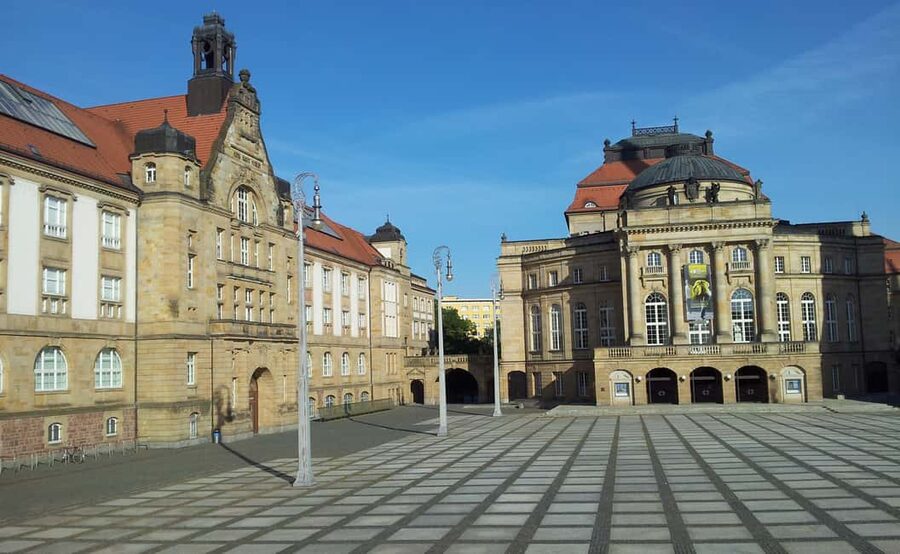
The Heckert area brings you into a very different chapter. It is a large residential district shaped during the GDR period, when Chemnitz was known as Karl-Marx-Stadt.
This stop matters because it shows how the city changed after the industrial boom and the Second World War. Instead of elegant nineteenth-century apartment buildings, you see the planning priorities of a socialist state: large-scale housing designed for many residents.
Heckert also keeps the tour from becoming a simple celebration of old industrial glory. Chemnitz has lived through rebuilding, political change, and shifts in how people work and live. The GDR housing area is part of that daily history.
I appreciate the inclusion of this district. Many city tours focus only on old centers and attractive façades. Here, you get a more honest view of the city’s full development. The modern housing areas may not be the first places you would choose to visit alone, but they help explain Chemnitz in a way that a historic center cannot.
As with the industrial section, the minibus gives you a broad view rather than an intimate neighborhood walk. The value comes from seeing Heckert alongside Kaßberg and the center. Together, they show how different political and economic systems left their mark on the same city.
The castle district and Chemnitz’s early beginnings
The castle district brings the route back to Chemnitz’s older roots. The tour presents today’s Schloßviertel as connected to the city’s beginnings, giving you a useful counterpoint to the later industrial neighborhoods.
This is an important part of the story because Chemnitz did not begin with factories. The industrial city grew from an older settlement and developed over many centuries. By placing the castle district alongside the nineteenth-century areas, the tour shows the long arc from early settlement to modern urban center.
The castle district also adds visual variety near the end of the route. After seeing industrial corridors, Wilhelminian buildings, and GDR housing, you get a sense of the older city that existed before modern industry changed everything.
Do not book this tour expecting a full castle or church visit. The activity is a guided city circuit, not a series of extended interior stops. You will get orientation and historical context, then can decide if the district deserves more of your own time.
What the 90-minute format does well
The short length is one of the tour’s main advantages. If you have only part of a day in Chemnitz, you can gain a working understanding of the city without committing to a long excursion.
The route covers a lot: the center, Karl Marx head, industrial culture, Kaßberg, Heckert, and the castle district. That is a strong range for 90 minutes, especially because several areas are not right next to one another.
The tradeoff is depth. You will not have much time for long photo stops, museum entries, shopping, or extended conversations at each location. The guide has to keep moving, and you should think of this as a city orientation rather than a complete historical course.
I would choose this tour near the start of a Chemnitz visit. It can help you understand the city’s layout and decide where to return. If you already know Chemnitz well and want detailed architecture or industrial history, you may find the pace too quick.
Price, group size, and languages
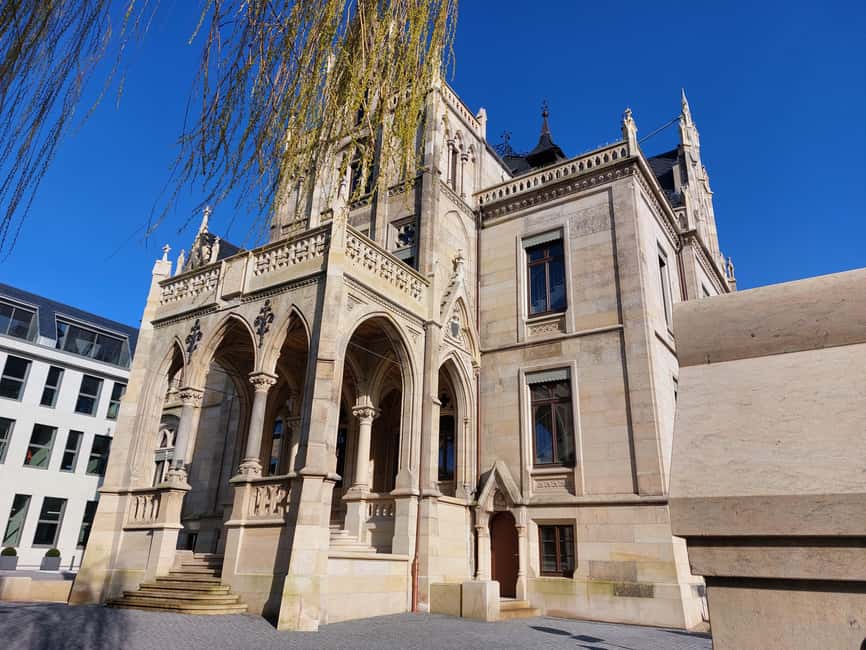
At $23 per person, the tour is reasonably priced for a 90-minute guided outing, especially when you consider the distance covered and the small group limit of eight people. A private or small-group format can also make more sense than paying for several separate taxi rides between districts.
The value depends on what you want. You are paying for a local certified guide, transport, and a connected explanation of the city. You are not paying for museum admission, a meal, or long stops at individual attractions.
English and German tours are available. That makes the activity practical for international visitors as well as German-speaking guests. Since the tour depends on spoken explanation, choose the language in which you can best follow details about Chemnitz’s political and industrial past.
The tour has a 4.9 rating from 30 reviews, and the strongest praise centers on getting a good overview in an entertaining 90 minutes. That matches the experience’s design: it aims to make a complex city understandable without dragging you through a full-day program.
You can cancel up to 24 hours ahead for a full refund, and you can reserve now and pay later. Those policies are useful if your schedule in Saxony is still shifting.
Who should book this Chemnitz tour
I would recommend it to first-time visitors, people staying briefly in Chemnitz, and anyone who wants to understand the city beyond the central monuments. It also suits visitors interested in industrial history, German automotive development, GDR urban planning, or twentieth-century political change.
Families and older visitors may appreciate the reduced walking, though the available information does not specify accessibility features. If mobility is a concern, ask the provider before booking.
Architecture fans will find Kaßberg and the castle district useful, but should plan extra time for walking afterward. The tour offers a broad introduction, not a close study of building details.
You may want to skip it if you prefer a slow walking tour with long stops, museum interiors, or a highly specialized subject. You may also find it less useful if you already know Chemnitz’s districts and industrial background.
Should you book the Chemnitz minibus tour?
Book this tour if you want a fast, clear introduction to a complicated city. Its best feature is the range: one short ride connects Chemnitz’s industrial rise, Karl-Marx-Stadt years, modern center, grand Kaßberg buildings, GDR housing, and older castle district.
At $23, it offers good value for a small group and a local certified guide, especially if you are visiting for a day or arriving without a clear plan. Just keep your expectations in check. You will leave with a useful map in your head and several ideas for further exploration, not a detailed visit to every sight.
FAQ
How long does the Chemnitz city tour last?
The tour lasts 90 minutes, or one and a half hours.
Where does the tour start?
The available starting points are Straße der Nationen and Hotel Chemnitzer Hof. The exact meeting point depends on the option you book.
Where does the tour end?
The activity ends back at the meeting point, either Hotel Chemnitzer Hof or Straße der Nationen, depending on the selected option.
What language is the tour offered in?
The live guided tour is available in English and German.
How many people can join the minibus tour?
The minibus tour is designed for up to eight people. Private and small-group options are available.
What is the cancellation policy?
You can cancel up to 24 hours before the tour for a full refund. You can also reserve your place and pay later.
Just added around Germany
- From Berlin: Gardens & Palaces of Potsdam Bike Tour★ 5.0 · 61 reviews
- Berlin: Battle for Seelow Heights WW2 tour -Clash of Titans★ 5.0 · 27 reviews
- From Amsterdam: Cologne Private Sightseeing Tour★ 5.0 · 4 reviews
- From Berlin: Historical Gems of Potsdam Private Day Trip★ 4.4 · 4 reviews
- Freiburg: Veni, vidi, vino – wine hike and tasting★ 4.5 · 144 reviews
- From Alken: Return Day Trip by Boat to Cochem★ 4.6 · 141 reviews
- Fritz Haarmann – Die Mördertour★ 4.6 · 41 reviews
- Freiburg: Tour of the city with cathedral visit★ 4.7 · 167 reviews
City Tours, compared.
1-Hour City Tour by Boat with Guaranteed Seating
Read our review →
City History Canal Sightseeing Tour on a Motorboat
Read our review →
Browse the lists this tour appears in