

Review · OLD TOWN WALKING TOURS
Osnabrück: Altstadt-Highlights (Stadtführung)
Osnabrück’s best one-hour introduction begins with a practical question: why did merchants once need the city’s medieval scales between the town hall and St. Mary’s Church? That small detail opens the door to the city’s trading past, while the town hall brings in the Peace of Westphalia, one of Osnabrück’s defining chapters.
I like two things here. First, the route covers a lot without asking you to give up half a day. Second, the cathedral and cloister add real atmosphere to what could otherwise be a simple walk around old buildings. The possible drawback is that the tour is in German, and the cathedral visit depends on opening hours.
- The medieval city scales reveal how merchants handled trade in old Osnabrück.
- The town hall connects the city to the Peace of Westphalia.
- The cathedral and cloister may be included when opening hours allow.
- The Hexengang adds a darker, less obvious detail to the city’s story.
- The one-hour route works well before a train, museum visit, or evening plan.
- The German-speaking guides are praised for clear structure, humor, and energy.
A Fast Walk Through Osnabrück’s Old Town
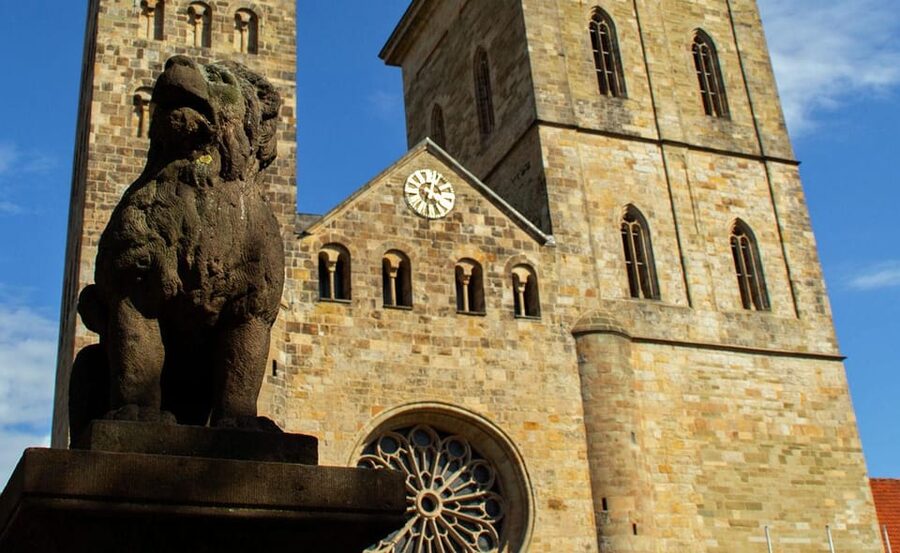
This tour is built for the hour when you want a useful first look at Osnabrück, not an exhaustive study of every street and church. The route runs from one edge of the old town to the other, linking the main sights with short explanations of how the city developed.
That format matters. Osnabrück’s center contains several major historical points, but they do not always make sense when seen as separate photo stops. A guide gives you the thread connecting trade, religion, war, diplomacy, and modern city life.
You should expect a steady walking tour rather than a long stop inside one building. The pace is described as enjoyable and concise, though one recent booking lasted about an hour and a half. That is worth keeping in mind if you have a hard departure time.
The tour begins at Bierstraße 28, behind the town hall and opposite the Tourist Information office. This is a handy location because you start near the civic heart of the old town instead of spending the first part of the tour finding the main sights.
The Town Hall and the Peace of Westphalia
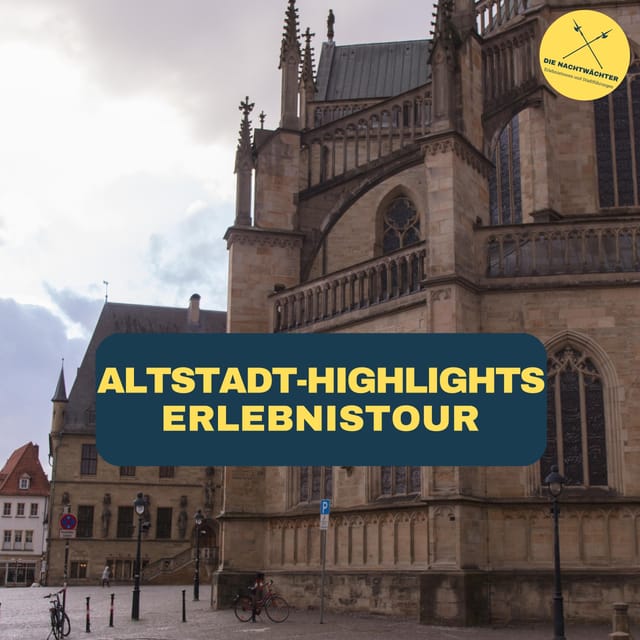
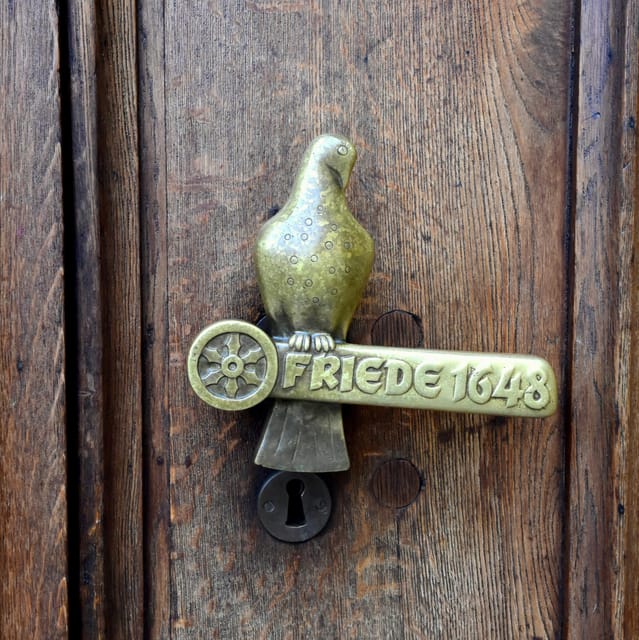
The town hall is the most important historical stop on the route. Here, the guide explains Osnabrück’s role in the Peace of Westphalia, the settlement that helped bring the Thirty Years’ War to an end in 1648.
You do not need to arrive with a long list of dates. The value of this stop is the sense of place. Political agreements can seem remote when read in a book, but the town hall gives the story a physical setting. Osnabrück was one of the cities involved in the negotiations, along with Münster, and that connection remains central to its identity.
A short guided explanation also helps you understand why the town hall is more than a handsome historic building. It represents Osnabrück’s place in European diplomacy and its role in a conflict that affected much of the continent.
The one-hour limit means you should not expect a detailed study of every stage of the peace talks. Instead, you get the essential story, tied to the building in front of you. For a first visit, that is often the right balance.
More old town walks in Germany:
- Dresden: Semperoper and Old Town Tour
★ 4.8 · 5,735 reviews - Nuremberg: Old Town Guided Walking Tour
★ 4.6 · 2,416 reviews - Munich: Old Town & Viktualienmarkt City Walk in German
★ 4.7 · 2,304 reviews
Medieval City Scales Between Two Landmark Buildings
One of the tour’s most appealing details is the medieval city scales, located between the town hall and St. Mary’s Church. It is easy to walk past a feature like this without knowing what it meant.
The scales served merchants and traders who came to sell goods at Osnabrück’s market. Their presence points to a time when commerce depended on public systems of trust. A seller could not simply weigh goods at a private stall and expect every buyer to accept the result. The official scales helped confirm the amount being sold.
That simple explanation gives the market area a new purpose. You begin to see the space not just as an attractive part of the old town, but as a working center of trade. The guide uses the scales to open up questions about merchants, goods, and the rules that kept business moving.
I especially like this kind of stop because it is concrete. You are not just hearing that Osnabrück had commercial importance. You are looking at a surviving object that shows how trade operated.
The location between the town hall and St. Mary’s Church also makes this an efficient part of the route. There is no separate detour, and the stop helps tie civic power, religious life, and commerce together in one compact part of town.
Osnabrück Cathedral and the Cloister

At times when the cathedral is open, the tour includes access to Osnabrück Cathedral and its cloister. The wording matters: this part is not guaranteed at every departure, so check the timing if seeing the interior is important to you.
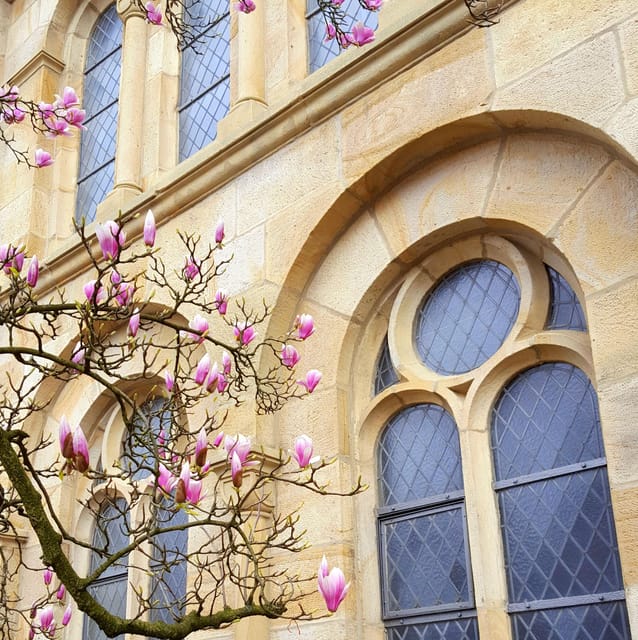
The cathedral gives the tour a change of mood. Outside, the walk focuses on streets, markets, and public buildings. Inside, the focus shifts to religious life and the long development of the city. The cloister adds a quieter architectural space, with a more enclosed feel than the open streets around the old town.
You can expect the guide to discuss the cathedral as part of Osnabrück’s story rather than treat it as a quick photo stop. The included access is a useful bonus, especially for anyone who would otherwise have only time for an exterior look.
There is one practical point to remember. Cathedral access depends on opening times, and those can affect what you see on the day. If the interior is unavailable, the tour still includes its main old-town route, but the experience will be less complete for anyone focused on church architecture.
The Hexengang and Osnabrück’s Less Comfortable Past
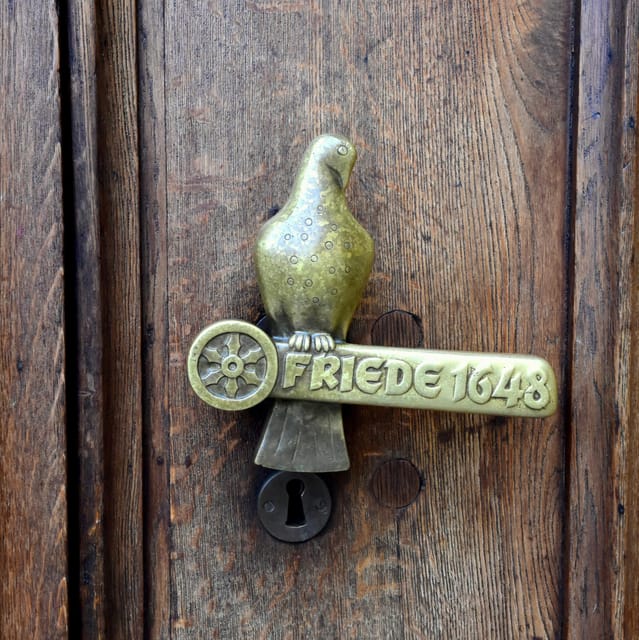
The tour also introduces the so-called Hexengang. Even without a long stop, this detail adds a different layer to the city’s past.
The name points toward the darker side of Osnabrück’s history. Rather than presenting the old town as a collection of pleasant façades, the guide brings in stories connected with fear, accusation, and the treatment of people in earlier times.
This is useful because historic city tours can become too polished. The Hexengang helps balance the grand story of peace negotiations and trade with the harder experiences that shaped ordinary life.
The supplied information does not give a full description of the passage itself, so you should not book this expecting a long underground visit or a theatrical presentation. Think of it as one memorable historical detail within a broader walk.
Same city, a completely different sort of afternoon:
- Berlin: Reichstag, Dome and Government District Guided Tour
★ 4.7 · 18,288 reviews - Berlin: 1-Hour City Tour by Boat with Guaranteed Seating
★ 4.3 · 16,993 reviews - Hamburg: Sex and Crime in St. Pauli Tour for Ages 18+
★ 4.7 · 15,447 reviews - Hamburg: 1.5-Hour Harbor and Speicherstadt Day Cruise
★ 4.6 · 14,200 reviews
From the Hanseatic League to VfL

The tour reaches across a wide span of Osnabrück’s past. The guide covers the city’s connection with the Hanseatic League, then brings the story forward to VfL, the city’s modern football club.
That range is a strong feature for anyone who wants more than medieval architecture. The Hanseatic reference places Osnabrück within the trading network of northern Europe. The VfL reference shows that the city’s identity is not frozen in the past.
You will not get a full lecture on either subject in one hour. Instead, these references help you see the city as a place that has changed over time. Trade, church life, diplomacy, and sport all belong to the same urban story.
This broad sweep also makes the tour useful for families and mixed-age groups. Adults can follow the political and commercial material, while children may connect more quickly with the unusual city scales, the Hexengang, or the football reference.
Guides Who Keep the Hour Moving
The strongest feature in the feedback is the quality of the guiding. The tour is praised for clear structure, an engaging manner, and a good sense of timing. One guide was specifically noted for handling children well, using a pleasant voice and keeping the route organized.
Another guide was praised for making the most of poor weather. That matters in Osnabrück, where the tour runs in all wind and weather. You should wear a proper coat and shoes rather than treating this as a purely indoor activity.
The German-speaking format is both a strength and a limit. If you understand German, you can expect explanations delivered with humor and local detail rather than a dry list of dates. If you do not understand German, this is not the right choice unless someone in your group can translate as you walk.
Some tours become stiff when the guide tries to finish every point at exactly the advertised minute. Here, the feedback suggests a more relaxed approach. One group found the guide willing to run beyond the basic hour when the discussion called for it. That can make the walk feel more natural, but it also means you should leave extra time afterward.
What the $15 Price Buys You
At $15 per person, this is a modestly priced introduction to Osnabrück. You are paying for a live guide, a planned route through the historic center, and cathedral and cloister access when opening hours permit.
The value is strongest if you are in town for only a short visit. A self-guided walk costs nothing, but it also leaves you to piece together the purpose of the town hall, scales, churches, and less obvious details on your own. Here, the guide does that work in one hour.
The price is also reasonable for a first orientation. After the walk, you can decide which building or subject deserves more of your own time. You may want to return to the cathedral, spend longer around the town hall, or explore the old town at a slower pace.
The value is weaker if you want an in-depth historical seminar, an English-language experience, or a long interior visit. This is a highlights tour by design. You pay for a concise overview, not a specialist study.
Free cancellation up to 24 hours before the start and a reserve-now, pay-later option add useful flexibility. Those terms are helpful if your Osnabrück plans depend on weather or a changing rail schedule.
Who Should Book This Osnabrück Tour?
I would choose this tour for several kinds of visitors:
- First-time visitors who want the city to make sense quickly.
- Rail-based day visitors with only a limited window in the center.
- Families who benefit from a short route and varied subjects.
- History fans interested in the Peace of Westphalia, trade, and church life.
- German speakers who want local explanations rather than a generic audio guide.
- People with limited mobility, since the activity is listed as wheelchair accessible.
The one-hour format is particularly useful before lunch, a museum visit, or a train departure. You get a framework for the city without giving the entire day to a formal tour.
I would hesitate if your German is limited. The guide language is German, and the experience depends on spoken explanations. I would also think twice if the cathedral interior is your main goal, since access depends on opening times.
Practical Advice Before You Go
Meet at Bierstraße 28, 49074 Osnabrück, behind the town hall and opposite the Tourist Information office. Arrive with enough time to identify the meeting point, since the location is described in relation to nearby buildings rather than as a separate landmark.
Wear clothing suited to the forecast. The tour operates in all weather, and even a short walk can feel long if you are cold or wet. Comfortable walking shoes are sensible, though the route is described as wheelchair accessible.
Keep your schedule a little open after the advertised finish. The official duration is one hour, but a recent tour ran closer to one and a half hours, and the guides may allow extra time when the group is engaged.
If the cathedral matters to you, check the available start times and opening hours before booking. The old-town route remains the main product, but the cathedral and cloister can make the experience more satisfying.
Is This One-Hour Tour Worth Booking?
Yes, if you want a compact, German-language introduction to Osnabrück with more substance than a simple stroll. The town hall and Peace of Westphalia provide the major historical anchor, while the city scales, Hexengang, cathedral, cloister, Hanseatic past, and VfL reference keep the route varied.
At $15, the tour offers good value for a tight schedule. Book it if you want a guide to connect the sights and give you useful context quickly. Skip it if you need English, a long cathedral visit, or a detailed specialist tour. For everyone else, it is a practical first hour in Osnabrück, with enough memorable details to guide the rest of your visit.
FAQ
How long does the Osnabrück old-town tour last?
The advertised duration is one hour. Some tours may run longer, so allow extra time if you have a fixed departure or another appointment.
Where is the meeting point?
The meeting point is Bierstraße 28, 49074 Osnabrück, behind the town hall and opposite the Tourist Information office.
What language is the tour conducted in?
The live tour guide speaks German.
Does the tour include Osnabrück Cathedral?
The tour can include access to Osnabrück Cathedral and the cloister when the cathedral is open. Cathedral access depends on opening times.
Is the tour wheelchair accessible?
Yes, the activity is listed as wheelchair accessible.
Does the tour run in bad weather?
Yes. The tours take place in all wind and weather conditions, so you should dress appropriately.
Can I cancel and receive a full refund?
Yes. You can cancel up to 24 hours before the tour for a full refund. You can also reserve now and pay later.
Just added around Germany
- Konstanz Scavenger Hunt and Sights Self-Guided Tour★ 4.5 · 14 reviews
- e-Scavenger hunt Koblenz: Explore the city at your own pace★ 4.0 · 20 reviews
- Private city tour in Constance★ 4.0 · 5 reviews
- Koblenz Guided tour of the Ehrenbreitstein Fortress★ 4.5 · 7 reviews
- Koblenz – Old Town with the Ehrenbreitstein Fortress★ 4.0 · 7 reviews
- Koblenz – Old Town including the Deutsches Eck★ 4.5 · 16 reviews
- Kiel – Private Historic Walking Tour★ 5.0 · 4 reviews
- Lubeck Private Walking Tour With A Professional Guide★ 4.5 · 10 reviews
Old Town Walking Tours, compared.

Old Town & Viktualienmarkt City Walk in German
Read our review →
The Night Watchman Old Town Walking Tour in German
Read our review →
Browse the lists this tour appears in