
Review · LEIPZIG TOURS
Leipzig: Courtyards, Houses, Trade – Passage Tour in German
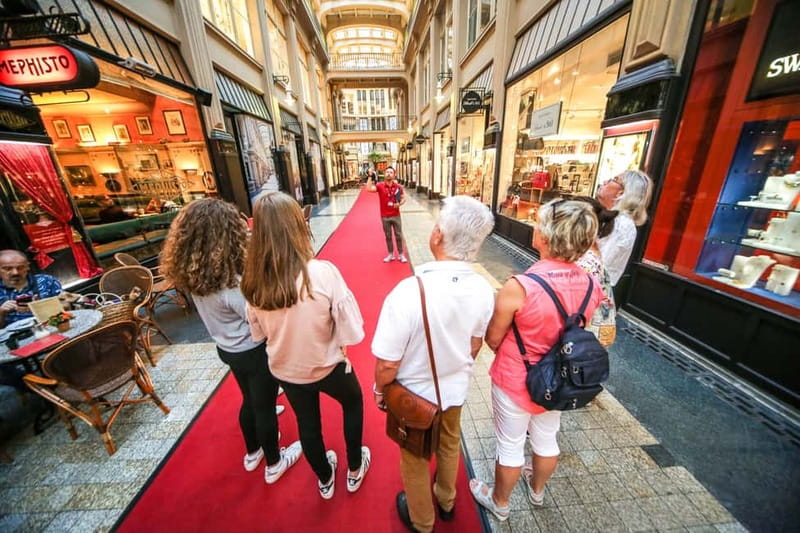
Leipzig’s shopping passages began as practical trade routes, but they grew into some of the city’s most elegant public spaces. This two-hour walk takes you through courtyards, exhibition houses, and corridors shaped by the needs of the Leipziger Messe, ending with the grand Mädler Passage.
I like the way this tour connects architecture with commerce, rather than treating pretty buildings as isolated sights. I also like its compact price of $18, which gives you a focused introduction to central Leipzig without adding entrance fees or extra costs. The main drawback is simple: the tour is only in German, so you need a good grasp of the language to get the full story.
Key points to know before booking
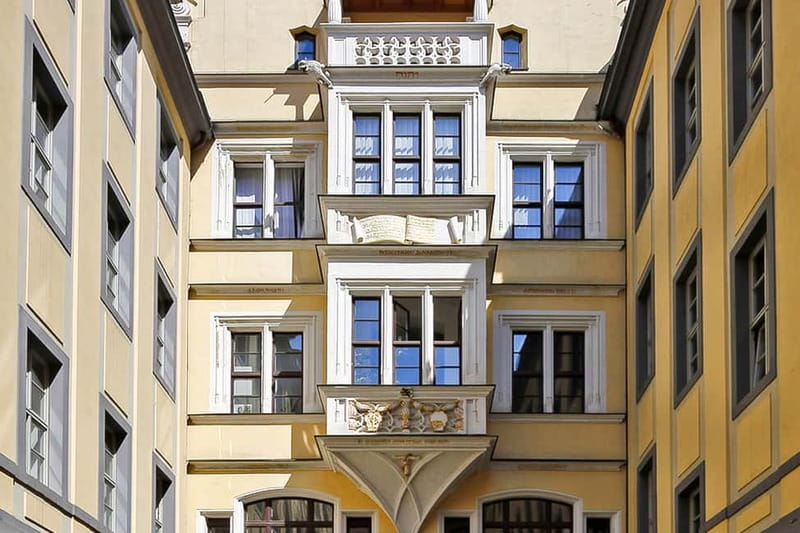
- Mädler Passage is the visual highlight: See Leipzig’s best-known and most splendid passage, with its special history and impressive design.
- Trade shaped the route: Learn how Leipzig’s fair culture created courtyards and passageways where goods, horses, merchants, and shoppers could move efficiently.
- The tour lasts two hours: That is enough time for a proper introduction without taking over your whole day.
- The route begins and ends at the tourist information office: Meet at Katharinenstr. 8 in central Leipzig and return there afterward.
- The experience is conducted in German: There is no stated English-language option.
- The price is easy to justify: At $18 per person, you are paying for a trained guide and a useful introduction to a distinctive part of Leipzig’s city center.
Why Leipzig’s passages tell the city’s story

Leipzig is often introduced through its churches, music, and major squares. Those are important, but the city’s passages reveal another side: Leipzig as a place built around buying, selling, displaying, and moving goods.
The passages are not simply covered shopping arcades added for modern convenience. They grew out of the city’s trade-fair economy. Merchants needed places where goods could be shown, stored, and reached without forcing horse-drawn carriages to make awkward turns through tight streets.
That practical problem helped shape a linked system of courtyards, exhibition houses, and covered routes. The result is a city center where you can leave an ordinary street, pass through an elegant building, and emerge into another public space without always realizing how the pieces connect.
I find that idea useful because it changes the way you look at the buildings. A decorative courtyard was not merely decoration. A passage was not only a shortcut. Each one helped Leipzig function as a major trading town.
The tour’s central theme is this meeting of need and beauty. Leipzig’s merchants wanted efficient spaces. Architects and builders produced places that also had visual character. You get to see how those two goals worked together.
A few more Leipzig half-days to weigh up
- Leipzig: City History Canal Sightseeing Tour on a Motorboat
★ 4.7 · 6,232 reviews - Leipzig: 1.5-Hour Public Tour with Night Watchman Bremme
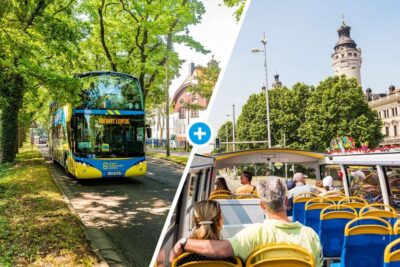
★ 4.6 · 3,116 reviews - Combo Tour in Leipzig: Guided City Tour & City Sightseeing
★ 4.7 · 2,317 reviews
Meeting at Katharinenstrasse 8
The tour starts at the tourist information office at Katharinenstr. 8. It also ends there, so you do not need to arrange transport back from another part of the city.
That start and finish make the activity easy to fit into a day of sightseeing. You can book it near the beginning of your Leipzig visit to get oriented, or take it later after you have already seen the main streets and want a closer look at what lies behind them.
The exact starting time depends on availability, so check the schedule before planning lunch, a museum visit, or a train connection. The stated length is two hours. That is long enough for a meaningful walking tour, but short enough to leave room for other central Leipzig sights.
A trained guide leads the experience. No guide names are provided, so you should not expect to select a particular person when booking. The important point is the language: the live tour is in German, and all explanations are designed around that language.
From trade-fair courtyards to modern passageways
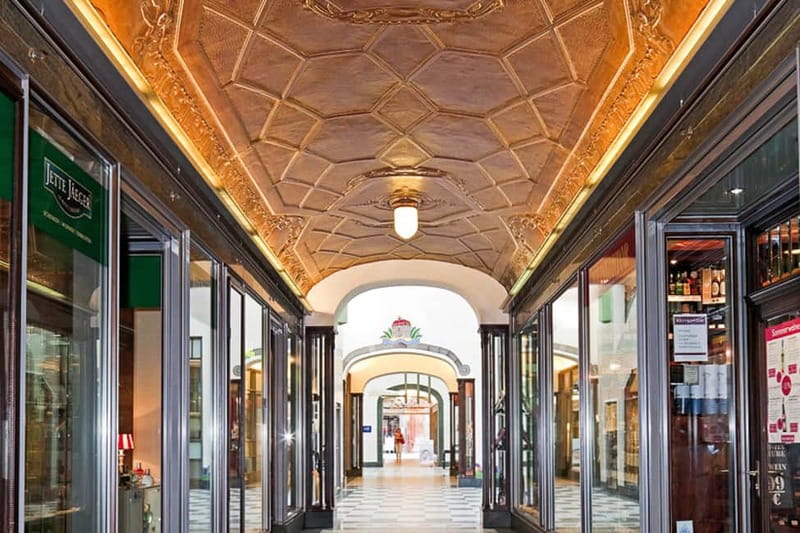
Early in the tour, the guide explains how Leipzig’s fair tradition influenced the city center. The courtyards connected to the Leipziger Messe were among the first forms of shopping center in the city.
That comparison is helpful. Modern shopping centers gather shops, displays, and customers under one planned system. Leipzig’s historic courtyards did something similar, but in a form suited to merchants, carts, and trade fairs.
The old arrangement also solved a basic transport problem. Horse-drawn carriages could pass through the small city without turning around. For a merchant arriving with goods, that was more than a clever design feature. It saved time and made the commercial center easier to use.
You will hear how exhibition houses later helped create the passages familiar today. The architecture developed as trade changed, but the older logic remained visible. Goods needed to be accessible. Merchants needed display areas. Shoppers needed routes through the center.
The city’s importance as a meeting point for commerce is summed up by the old description of Leipzig as the world gathered in a nutshell. The tour uses that trading identity as a lens for the streets and buildings around you.
Walking through large, small, old, and new spaces
The route includes a mix of passageways and courtyards. Some are large and formal. Others are smaller, less obvious, or used less often. This variety is one of the best reasons to take the guided walk rather than simply search for the main shopping streets on your own.
A casual walk might show you a handsome entrance and a polished arcade. A guide can explain why that entrance exists, how it relates to the buildings around it, and how the passage fits the wider system.
You should expect an architectural tour, but not one limited to famous facades. The experience includes visible and less-used corridors, old and new spaces, and exhibition houses connected with Leipzig’s commercial past.
That range gives the walk a pleasant rhythm. You move from grand design to practical planning, from open courtyards to enclosed routes. The contrast helps you understand that Leipzig’s passage system is not one style repeated over and over.
It is also a good reminder to look upward and behind you. The street-facing side of a building may appear ordinary, while the interior reveals the real purpose and character of the property. Stay alert for transitions between public streets, courtyards, and covered walkways.
Same city, a completely different sort of afternoon:
- Leipzig: 1.5-Hour Historical Walking Tour in German
★ 4.7 · 2,217 reviews - Leipzig: 2-Hour Guided Walking Tour in German
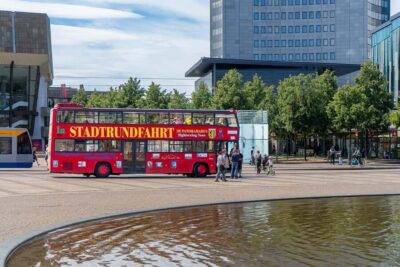
★ 4.8 · 1,612 reviews - Leipzig: 13-Stop Hop-on/Hop-off Bus Ticket
★ 4.6 · 1,468 reviews - Gruseltour Leipzig: A Haunted Guided Tour
★ 4.5 · 1,385 reviews
Mädler Passage, the grand finale
Mädler Passage is the tour’s signature stop. It is described as Leipzig’s most splendid passage, and it earns special attention because of both its history and its architecture.
You can think of it as the clearest expression of the city’s passage tradition. It shows how a route designed for commerce could also become a prestigious address. The passage is not simply a way to get from one street to another. It is a destination in its own right.
The guide explains what makes Mädler Passage special, then places it within Leipzig’s wider network of courtyards and exhibition houses. That context matters. Without it, you might admire the design but miss the reason the passage system developed in the first place.
This is also the point where the tour’s central theme comes together. Trade created the need for such spaces. Architecture gave them identity. The result is a part of Leipzig that still feels useful, attractive, and closely tied to the city’s past.
Do not expect a long independent visit inside a single attraction. The tour is a walking route through several spaces, and Mädler Passage is one important part of that route. Entrance fees are not included, but no separate entrance costs are listed for the walk itself.
Why a German-only tour changes the experience
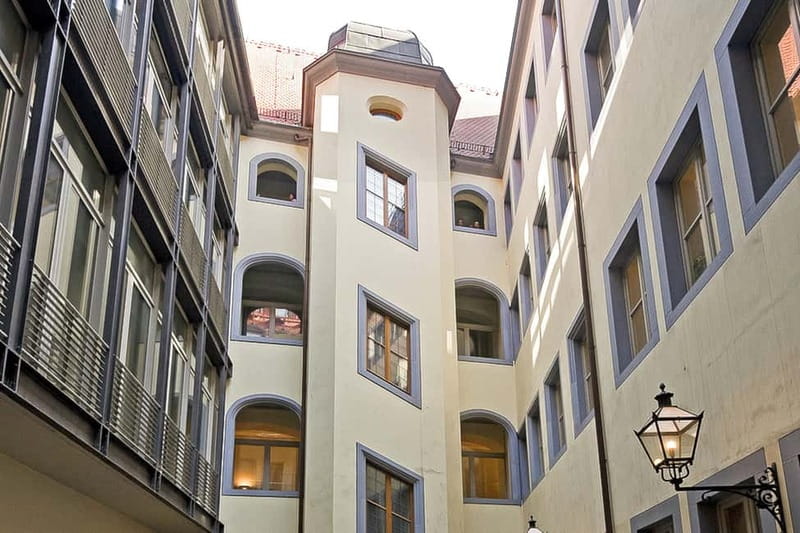
The German-language format is the most important booking consideration. If you understand German comfortably, the tour offers a direct way to hear the city’s story from a live guide without relying on translated signs or a written summary.
If your German is limited, you may still enjoy the buildings and the physical route, but you could miss the finer points. The subject depends on details: why the courtyards were arranged as they were, how exhibition houses changed the city, and what makes Mädler Passage historically important.
The rating of 4.8 from 185 ratings suggests strong overall satisfaction, and the written praise focuses on the tour being informative and interesting. One clear piece of useful criticism is that the two hours can leave you wanting even more detail about the passages.
I see that as both a compliment and a warning. The guide gives you a solid introduction, but this is not an exhaustive architectural study. If you have a special interest in Leipzig’s buildings, plan time afterward to revisit the spaces at your own pace.
You may also want to note down the names of passages or buildings that catch your attention. Since the route covers a broad group of spaces, a quick personal list can help you return later for photographs, shopping, or a closer look.
What the $18 price really covers
At $18 per person, this is a reasonably priced city walking tour. You pay for two hours with a trained guide and receive an organized explanation of a part of Leipzig that can be easy to overlook.
The value comes from the subject. You are not paying for entry to a major museum or a special performance. You are paying for the links between ordinary city spaces, commercial buildings, and historic passageways. Those connections are difficult to understand from a map alone.
Personal expenses, food, drinks, and entrance fees are not included. Since the tour is built around walking through passages, courtyards, and exhibition houses, you should budget separately only if you plan to shop, eat, or visit another attraction along the way.
The price is especially fair for a first visit to Leipzig. You get a structured overview, a chance to see Mädler Passage with context, and a clearer idea of how trade shaped the city center.
It is less useful if you already know Leipzig’s passage system well or if you prefer to explore without a fixed route. In that case, the main benefit is the guide’s interpretation, not access to a ticketed site.
Who will enjoy this walk most

I would recommend this tour to anyone who likes city architecture, old commercial districts, and the practical reasons behind urban design. It is also a good choice if you have already seen Leipzig’s headline sights and want a different way to read the city center.
History fans should appreciate the link between the Leipziger Messe and the buildings around it. Shoppers may enjoy seeing how earlier forms of retail space still influence the central streets. Photographers will find changing views as the route moves between open courtyards, narrow corridors, and formal arcades.
The tour can also suit first-time visitors who want an easy introduction to Leipzig’s urban structure. Since it returns to the starting point, it does not leave you trying to find your way across town after two hours.
I would hesitate to recommend it to anyone who cannot follow German spoken by a live guide. The visual side remains accessible, but the explanations are the reason to book a guided tour instead of taking a self-guided stroll.
Practical tips for getting more from the route
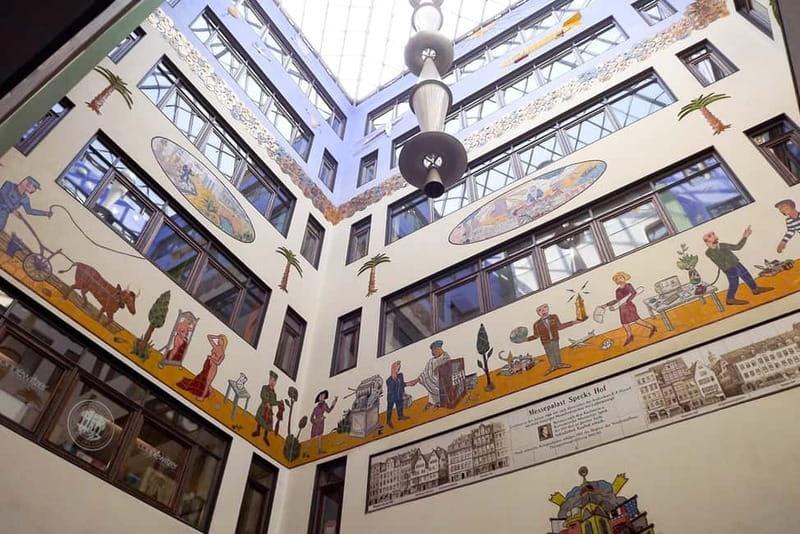
Arrive at the tourist information office on Katharinenstr. 8 with enough time to find the meeting point. The tour starts there and returns there, so use that location as your anchor for planning the rest of the day.
Wear comfortable shoes. The experience lasts two hours and includes a walking route through several public spaces. The supplied details do not specify the exact distance, group size, or accessibility arrangements, so contact the provider if those points matter to you.
Keep your schedule flexible around the start time. Booking availability determines when the tour runs, and the exact departure is not fixed in the information provided.
If you want to make the tour more useful, think of it as an introduction rather than a final word. Pay attention to how the guide explains the relationship between street, courtyard, passage, and exhibition house. Afterward, you can return to the spaces that interested you most.
The provider is Leipzig Erleben GmbH. You can reserve now and pay later, which helps if your plans are still changing. Cancellation is free up to 24 hours before the tour for a full refund.
Should you book Leipzig’s passage tour?
Book it if you want to understand why Leipzig’s city center looks and works the way it does. For $18, the two-hour walk gives you a focused look at courtyards, exhibition houses, and passages shaped by the city’s long trade-fair tradition, with Mädler Passage as the main architectural prize.
The decision depends almost entirely on language. German speakers should find this a useful and well-priced introduction, especially early in a Leipzig stay. If you need an English tour, this is not the right choice.
I also recommend it if you prefer context over a checklist of famous sights. The tour does not promise a long list of attractions. Instead, it explains the commercial logic behind a distinctive part of Leipzig, helping you see familiar streets with sharper eyes.
FAQ
Where does the tour start?
The tour starts at the tourist information office at Katharinenstr. 8 in Leipzig.
Where does the tour end?
The activity ends back at the meeting point at the tourist information office.
How long does the tour last?
The tour lasts two hours. Starting times depend on availability.
What language is the tour in?
The tour is conducted only in German with a live German-speaking guide.
What is included in the price?
The price includes the guided tour with a trained guide.
Are food, drinks, and personal expenses included?
No. Food, drinks, and personal expenses are not included.
Are entrance fees included?
No entrance fees are included in the tour price.
Can I cancel the booking for a refund?
Yes. You can cancel up to 24 hours in advance for a full refund. You can also reserve now and pay later.
Just added around Leipzig
- City tour on foot, by S-Bahn and tram★ 4.5 · 12 reviews
- Schkeuditz: 4-Hour Vintage East German Trabant Rental★ 4.9 · 15 reviews
- Leipzig City Centre: Scavenger Hunt Self-Guided Tour★ 4.4 · 114 reviews
- Tour on Lake Cospuden★ 4.7 · 58 reviews
- Leipzig Spirits Manufacture: Guided Tour and Tasting★ 4.8 · 79 reviews
- Leipzig: True or false? Walking Tour and Interactive Game★ 4.8 · 28 reviews
- Leipzig: Scavenger Hunt Self-Guided Tour★ 4.7 · 11 reviews
- Leipzig: Segway tour to the Battle of the Nations Monument★ 5.0 · 4 reviews
Leipzig Tours, compared.
City History Canal Sightseeing Tour on a Motorboat
Read our review →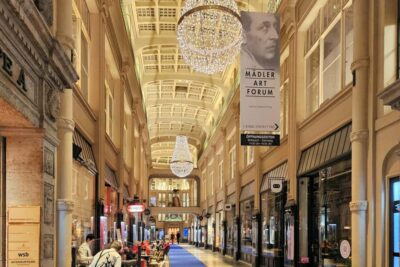
1.5-Hour Public Tour with Night Watchman Bremme
Read our review →
Combo Tour in Leipzig: Guided City Tour & City Sightseeing
Read our review →


Browse the lists this tour appears in