
Review · LEIPZIG TOURS
Guided tour of the Federal Administrative Court in Leipzig
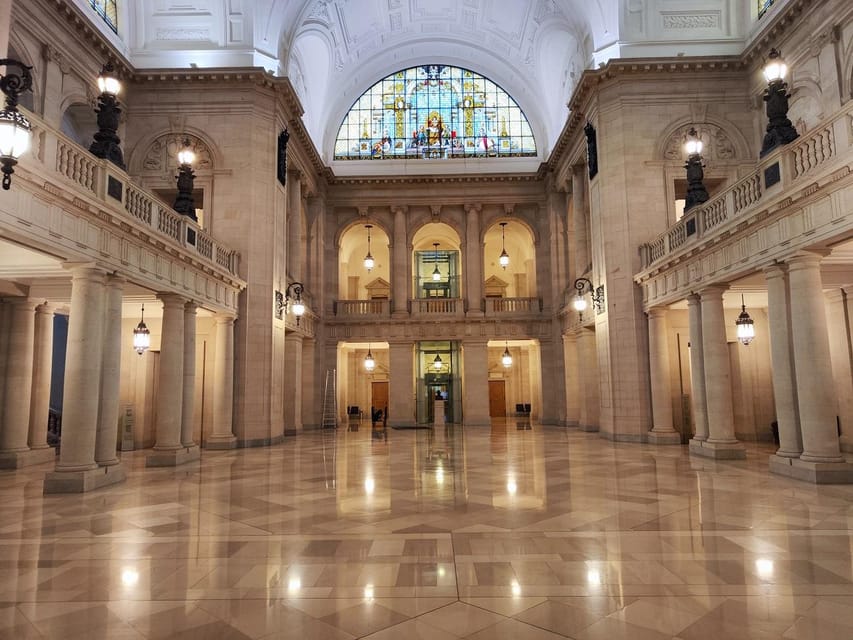
The most striking part of this Leipzig tour is that you enter Germany’s largest Palace of Justice, a grand 19th-century building still used for serious legal work today. Inside, you see rooms tied to the Imperial Court of Justice, Karl Liebknecht’s treason case, and the 1933 Reichstag Fire Trial.
I like the mix of ornate architecture and working government. I also like that the guide explains what the Federal Administrative Court actually does, rather than leaving you with pretty rooms and vague dates. The main drawback is practical: the tour is in German, and you cannot enter once it has started, so punctuality matters.
Key points
- Domed hall: See one of the building’s most impressive interior spaces.
- Historic courtrooms: Visit rooms connected with the former Imperial Court of Justice.
- Reichstag Fire Trial setting: Enter the large hall where the 1933 trial took place.
- President’s apartment: Tour the ceremonial hall in the former apartment of the court president.
- Federal court today: Learn how Germany’s highest administrative court handles disputes.
- Useful planning detail: The 1.5-hour tour begins in the foyer, with a 1 euro coin needed for the luggage compartment.
Entering Leipzig’s Former Imperial Court of Justice
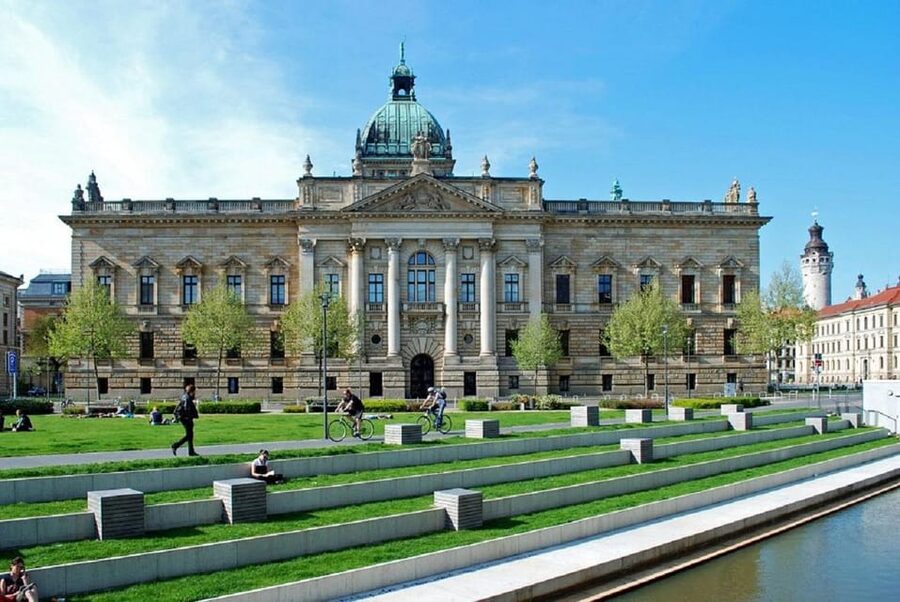
This is not a museum built to imitate a courthouse. It is a real judicial building with a long institutional life, and that gives the tour its purpose.
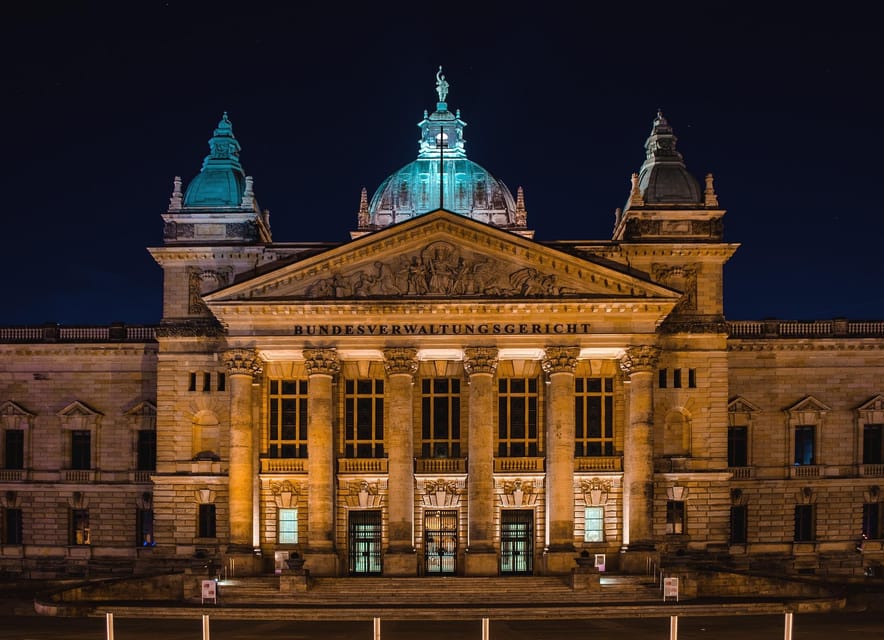
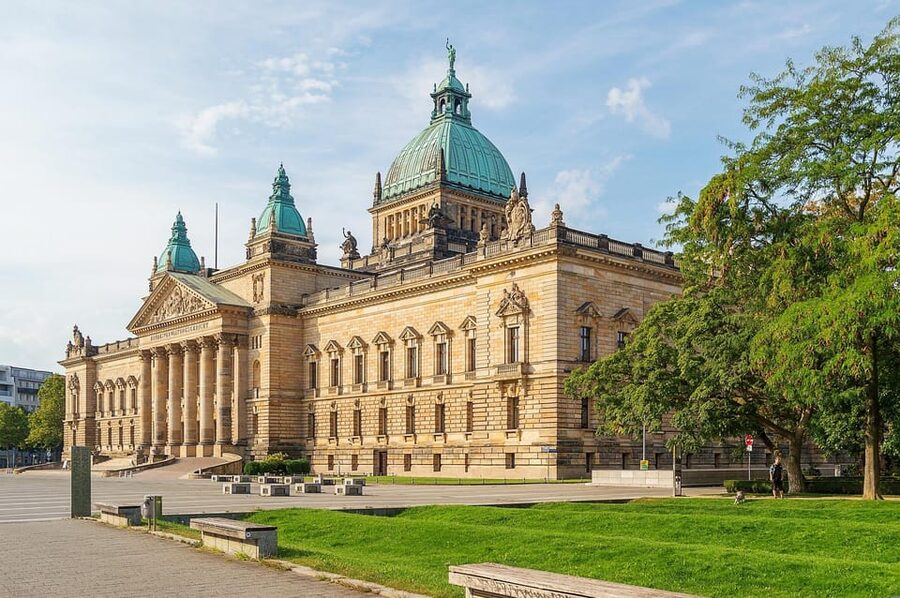
The Imperial Court of Justice was founded in 1879 as the supreme court of the German Reich. Its representative building was designed to express the importance of law through scale, ornament, and ceremony. Since 2002, the building has housed the Federal Administrative Court, known in Germany as the BVerwG.
That change of use makes the visit more interesting than a simple architecture walk. You are looking at rooms built for the German Empire, then hearing how a modern federal court works in the same setting. The past is not sealed behind glass. It remains part of a functioning court complex.
You meet your certified guide in the foyer. Plan to arrive 10 minutes early. This is especially important here because entry is not possible after the tour begins. The starting point and ending point are the same, which keeps the visit simple, but security and court access make the timing firm.
The tour lasts about 1.5 hours. That is long enough to give the building proper attention without taking over your day in Leipzig. It is a good fit before or after other city sightseeing, provided you allow time to get to the courthouse and arrive early.
A few more Leipzig half-days to weigh up
- Leipzig: City History Canal Sightseeing Tour on a Motorboat
★ 4.7 · 6,232 reviews - Leipzig: 1.5-Hour Public Tour with Night Watchman Bremme
★ 4.6 · 3,116 reviews - Combo Tour in Leipzig: Guided City Tour & City Sightseeing
★ 4.7 · 2,317 reviews
The Domed Hall and the Building’s Public Face
The domed hall is one of the central sights on the tour. It gives you an immediate sense of how the Imperial Court of Justice wanted to present itself: formal, imposing, and built to make law feel weighty.
A space like this is useful for understanding the building’s original role. Courts do more than settle disputes. They also project authority, and the architecture was designed with that in mind. A guide can point out how the public areas, ceremonial rooms, and courtrooms fit together as part of one large judicial complex.
I would pay attention to the contrast between the grand setting and the practical work carried out here today. The Federal Administrative Court does not deal with criminal trials in the popular sense. It is Germany’s highest administrative court, ruling on disputes involving administrative law.
That might sound dry at first. In practice, administrative law affects the way public authorities use their powers and how disputes with those authorities are decided. The tour gives you a clearer sense of the court’s role, which is valuable if you want more than a decorative building visit.
The domed hall also helps you get your bearings. You can begin to understand the scale of the courthouse before moving into the more specific rooms tied to legal events and court tradition.
Historic Courtrooms and the Work of the BVerwG
The tour includes historic courtrooms, where the guide connects the building’s past to the court’s current duties. These rooms are likely to appeal most to visitors who enjoy seeing places where legal decisions were once heard, argued, and recorded.
The important point is that the tour does not stop with the old Imperial Court of Justice. You also receive information about the Federal Administrative Court’s work and decisions. That balance matters. Without it, the visit could feel like a history lesson focused only on imperial architecture and famous cases.
The German-speaking guide explains the court’s place in the Federal Republic of Germany. Since the official tour language is German, you should be comfortable following a live explanation in German to get the full benefit of the visit. The supplied information does not list an English tour option or provide written translations, so English-only visitors should check current availability before booking.
The courtrooms also offer a chance to think about how legal buildings change meaning over time. The rooms were created for the supreme court of the German Reich. They later became associated with political cases during a turbulent period, and they now form part of a federal administrative court.
That sequence is the core of the experience. You are not simply admiring carved details and large doors. You are tracing how one building has been used by different German states and institutions.
Karl Liebknecht and the Court’s Political Past
One of the building’s notable stories concerns Karl Liebknecht, who defended himself here against accusations of high treason.
You do not need to know every detail of the case to see why this matters. A courtroom gains extra weight when you know that a well-known political figure once stood there to answer serious charges. The guide places that event within the building’s judicial setting, giving the room a connection to German political history as well as legal history.
This part of the tour is likely to appeal to anyone interested in the political tensions of the German Empire. It also shows why the courthouse cannot be understood only through its architecture. Its rooms have been used in moments when law and politics were closely tied.
Still, keep your expectations measured. This is a guided building tour, not a full seminar on Karl Liebknecht or German constitutional history. The value comes from seeing the setting and hearing how it fits into the court’s past.
Same city, a completely different sort of afternoon:
- Leipzig: 1.5-Hour Historical Walking Tour in German
★ 4.7 · 2,217 reviews - Leipzig: 2-Hour Guided Walking Tour in German
★ 4.8 · 1,612 reviews - Leipzig: 13-Stop Hop-on/Hop-off Bus Ticket
★ 4.6 · 1,468 reviews - Gruseltour Leipzig: A Haunted Guided Tour
★ 4.5 · 1,385 reviews
The Large Hall of the 1933 Reichstag Fire Trial
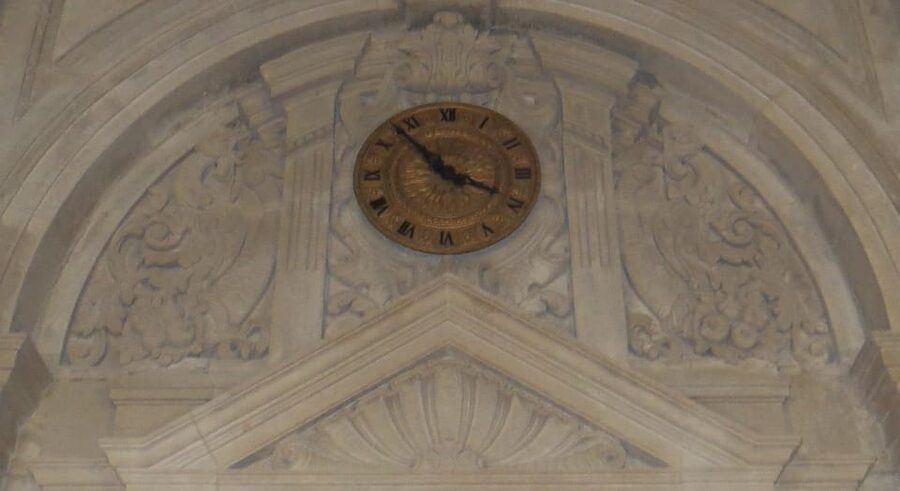
The large hall where the Reichstag Fire Trial took place is one of the tour’s strongest historical stops. The trial occurred in 1933, soon after the Reichstag building in Berlin was set on fire, and it has a lasting place in the history of Nazi Germany.
Being in the actual hall gives the event a physical setting. Dates and political events can feel distant when read in a book. A room connected to a major trial makes the past more immediate, even though the tour remains focused on the building and its judicial use.
The hall also adds a darker note to an otherwise grand architectural visit. The ornate setting should not be mistaken for a simple symbol of fairness. Courts operate within political systems, and this site reminds you that impressive institutions can be involved in deeply troubling periods.
I appreciate that this stop gives the tour more substance than a standard sightseeing circuit. It asks you to consider how justice is presented, how courts function under different governments, and how a building can carry several layers of meaning.
The exact amount of time spent on the Reichstag Fire Trial is not specified, so do not book this expecting a standalone, detailed account of the event. You will see the hall and receive historical context as part of the wider 1.5-hour visit.
The Judges’ Ancestral Gallery
The ancestral gallery of the judges offers a different view of the building. Instead of focusing on one courtroom or one political event, it presents the institution through the people who served as judges.
Portrait galleries can sometimes feel repetitive. Here, the setting has a clear purpose: it shows how courts preserve their own institutional memory. The gallery connects individual judges to the authority and continuity of the court.
I would treat this stop as a chance to ask how judicial traditions are built and remembered. The building’s decoration and portraits help explain the court’s older identity, while the guide’s discussion of the BVerwG brings the story into the present.
The information provided does not specify the number of portraits or the names shown, so I would not plan the visit around a particular judge. The gallery is most useful as part of the broader explanation of court tradition.
The President’s Apartment and Ceremonial Hall
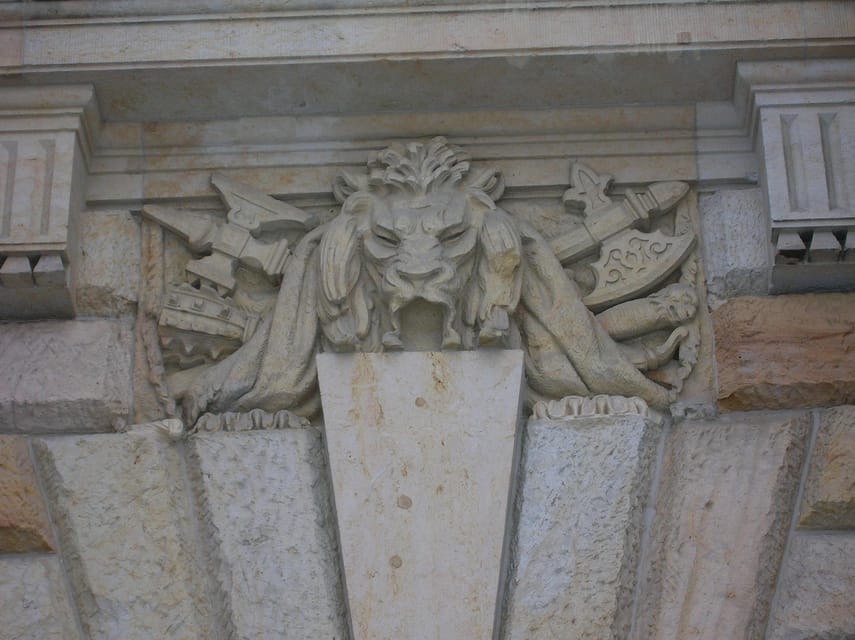
The tour also enters the former president’s apartment, including its ceremonial hall. This is an unusual feature for a courthouse tour and gives you a glimpse of the social and representative side of judicial life.
The ceremonial hall was not simply a workroom. Its purpose was to receive people and mark important occasions, which helps explain the building’s carefully planned hierarchy of spaces. Public courtrooms, official galleries, and private or semi-private rooms all had their own roles.
For you, this stop provides a change of pace. After courtrooms and legal cases, the apartment shows how the court’s senior office was connected to ceremony and status. It also lets you see another part of the building that would not normally be open during an ordinary walk through Leipzig.
The visit is described as an exclusive interior tour, so the main value here is access. You are not viewing the building only from the entrance hall. You are being taken through rooms that reveal how the institution functioned beyond the courtroom.
What the Tour Says About Administrative Law

The modern Federal Administrative Court is the highest administrative court in Germany. Its job is to rule on disputes in the field of administrative law.
That explanation is important because many visitors may associate a grand courthouse with criminal trials or constitutional cases. Administrative law concerns disputes involving public administration, and the court’s work helps define how those disputes are decided at the federal level.
The guide presents the tasks and work of the BVerwG in an accessible way during the tour. The exact cases and decisions discussed can vary, and no particular current case is promised. Still, the visit gives you a basic framework for understanding why the court matters today.
I find this modern section useful because it keeps the tour from becoming a display of old rooms. You leave with some sense of what happens in the building now, not just what happened there in the German Empire or in 1933.
If you have a strong interest in law, government, or German political history, this part may be the main reason to book. If your interest is mainly decorative architecture, you will still see impressive spaces, but the legal explanation forms a large part of the experience.
Price, Timing, and Practical Details
At $16 per person, the tour offers solid value for a 1.5-hour guided visit through rooms that are not part of ordinary public sightseeing. The price includes the certified guide, access to the domed hall and historic courtrooms, the judges’ ancestral gallery, the ceremonial hall in the president’s apartment, and an explanation of the Federal Administrative Court.
That is a reasonable cost if you value restricted access and expert interpretation. You are paying not just to enter a building, but to understand why its rooms matter.
The tour starts and finishes in the foyer of the Federal Administrative Court. Starting times depend on availability, so check the schedule before arranging the rest of your day. The activity allows cancellation up to 24 hours in advance for a full refund, and you can reserve now while paying later, which helps if your Leipzig plans are still shifting.
A 1 euro coin is required for the luggage compartment. Pets are not allowed, although assistance dogs are permitted. Party groups and bachelor or bachelorette groups are also not accepted, which suits the serious setting.
The tour is wheelchair accessible. The information provided does not spell out every detail of the accessible route, so you may want to confirm any specific needs when booking.
Who Will Enjoy This Leipzig Court Tour?
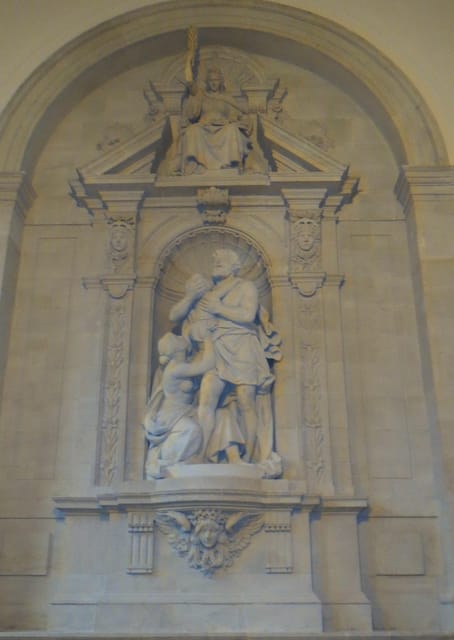
I would recommend this experience to you if you enjoy architecture with a clear purpose. The building is not presented as a pretty shell. Its halls and rooms are explained through the legal and political events connected with them.
It also suits people interested in German government, the history of courts, and the way institutions change over time. The combination of the Imperial Court of Justice, Karl Liebknecht’s case, the Reichstag Fire Trial, and the modern BVerwG gives the tour a serious range.
You should think twice if you want a casual sightseeing stop with no formal content. The tour is guided in German, and its subject is judicial history and administrative law. It is not designed as a party activity or a quick photo visit.
Families with older children may find the building and trial history worthwhile, but the best fit is for anyone who can follow a German-language explanation and stay engaged with institutional history.
Should You Book the Federal Administrative Court Tour?
Book it if you want to see a part of Leipzig that most city walks cannot provide. The domed hall, historic courtrooms, judges’ gallery, and president’s apartment give you strong interior access, while the Reichstag Fire Trial hall adds serious historical weight.
The $16 price is fair for the access and the length of the visit. I would make this a priority for anyone who likes architecture, German history, or the workings of government. Arrive early, bring a 1 euro coin for the luggage compartment, and confirm that a German-language tour suits you.
Skip it if your time in Leipzig is very limited and you prefer art museums, music sites, or outdoor sightseeing. For the right audience, though, this is a focused and unusual way to understand both a remarkable courthouse and the German legal system that uses it today.
FAQ
Where does the guided tour begin?
The tour begins in the foyer of the Federal Administrative Court in Leipzig.
Where does the tour end?
The activity ends back at the meeting point in the foyer.
How long does the tour last?
The guided tour lasts 1.5 hours.
What language is the tour in?
The live tour guide speaks German.
What rooms and areas are included?
The tour includes the domed hall, historic courtrooms, the judges’ ancestral gallery, and the ceremonial hall in the president’s apartment.
Does the tour explain the Federal Administrative Court?
Yes. The guide explains the work and decisions of the Federal Administrative Court, Germany’s highest administrative court.
Can I see the hall connected with the Reichstag Fire Trial?
Yes. The tour includes the large hall where the 1933 Reichstag Fire Trial took place.
Is the tour wheelchair accessible?
Yes, the activity is wheelchair accessible.
What should I know before arriving?
Arrive 10 minutes early because entry is not possible once the tour has started. A 1 euro coin is required for the luggage compartment. Pets are not allowed, but assistance dogs are permitted.
Just added around Leipzig
- City tour on foot, by S-Bahn and tram★ 4.5 · 12 reviews
- Schkeuditz: 4-Hour Vintage East German Trabant Rental★ 4.9 · 15 reviews
- Leipzig City Centre: Scavenger Hunt Self-Guided Tour★ 4.4 · 114 reviews
- Tour on Lake Cospuden★ 4.7 · 58 reviews
- Leipzig Spirits Manufacture: Guided Tour and Tasting★ 4.8 · 79 reviews
- Leipzig: True or false? Walking Tour and Interactive Game★ 4.8 · 28 reviews
- Leipzig: Segway tour to the Battle of the Nations Monument★ 5.0 · 4 reviews
- Leipzig: Scavenger Hunt Self-Guided Tour★ 4.7 · 11 reviews
Leipzig Tours, compared.
City History Canal Sightseeing Tour on a Motorboat
Read our review →
1.5-Hour Public Tour with Night Watchman Bremme
Read our review →
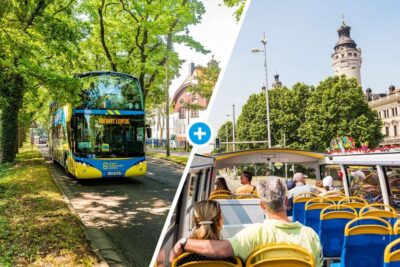
Combo Tour in Leipzig: Guided City Tour & City Sightseeing
Read our review →


Browse the lists this tour appears in