
Review · GOSLAR TOURS
Goslar: Rathausführung – historisch & multimedial
Goslar’s town hall is not one tidy medieval building. It grew for more than 400 years, beginning with its 15th-century east wing and expanding as the city’s needs changed. The reward is a walk through several building periods, ending with the Huldigungssaal, a late Gothic council room covered in paintings.
I like the tour’s close look at the Rathausdiele, with its starry ceiling, and the careful multimedia presentation inside the Homage Hall. I also like that your ticket includes the World Heritage Information Center, so you get more than a quick look at one ornate room.
The main drawback is practical: the town hall has many stairs and is not suitable for wheelchairs or rollators. The tour is in German, so you will get the most from it if you understand German or are happy to appreciate the rooms, displays, and visual presentation without following every word.
Key points to know before you book
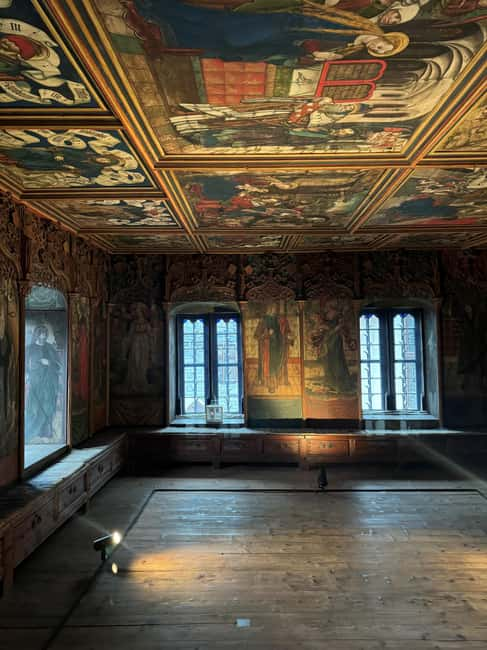
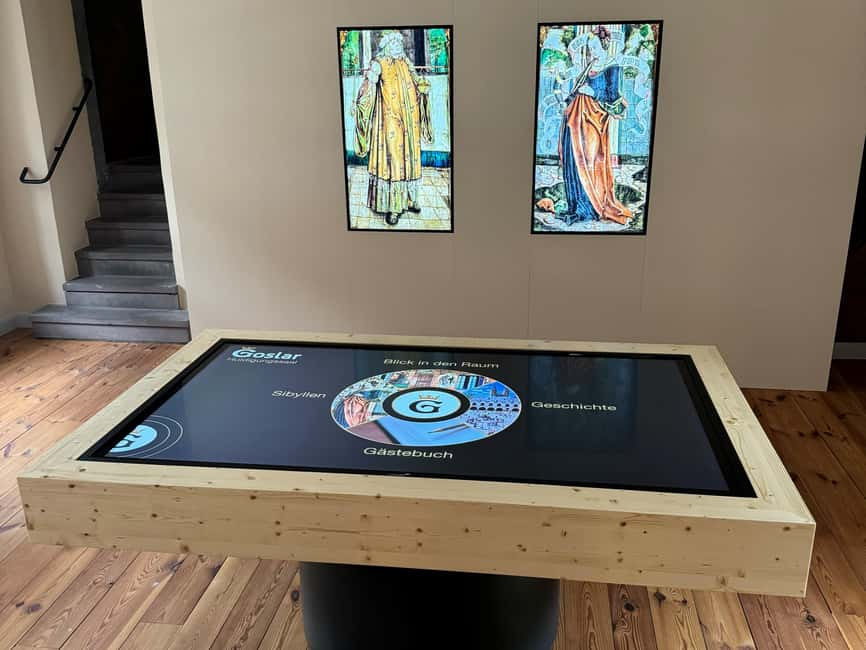
- The Homage Hall is the main event: Its walls, ceiling, and window recesses are covered with painted panels from the early 16th century.
- The town hall grew over 400 years: The building lets you see how Goslar’s civic center changed from the mid-15th century onward.
- The Rathausdiele has a starry ceiling: This entry hall gives the tour a memorable start and a sense of the building’s ceremonial purpose.
- A multimedia presentation protects the art: Modern light, climate, and security systems help preserve the Homage Hall while making it easier to understand.
- The basement adds UNESCO context: A free World Heritage exhibition explains the Harz region’s wider cultural importance.
- German is the only listed tour language: Ask questions if you can, since direct questions can make the 90-minute visit more useful.
Goslar Town Hall, a civic building shaped over four centuries
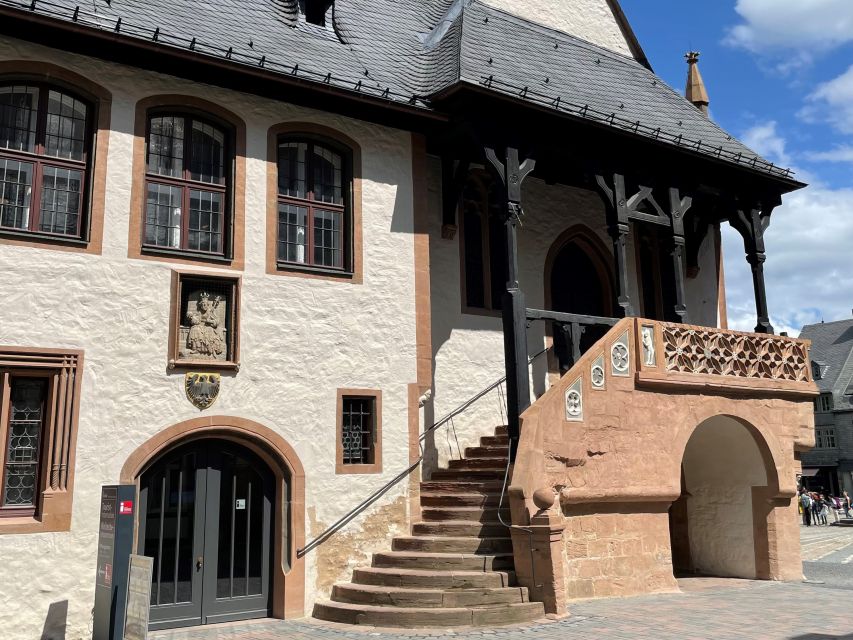
I like starting with the building itself rather than treating the town hall as a single old monument. Goslar’s Rathaus began in the middle of the 15th century with the east wing, whose arcades open toward the market square. Later additions continued for more than 400 years.
That long building period matters. You are not simply looking at one decorative style repeated from room to room. The structure records changing civic needs, tastes, and ideas about how a city should present its government.
A guided tour helps you read those changes. Without context, a series of halls and stairs can blur together. With a guide, each section can be placed within the town hall’s long development, from the first east wing to later extensions.
The tour lasts about 90 minutes. That is enough time for a serious look at the main rooms without taking up your whole day in Goslar. I would plan it for a morning or early afternoon, then use the rest of your time to explore the town around the market square.
A few more Goslar half-days to weigh up
- Night Watchman Tour through Quedlinburg
★ 4.5 · 1,040 reviews - Premiumstadtführung (historische Altstadt und Schlossberg)
★ 4.4 · 627 reviews - Goslar: Tausend Schritte durch die Altstadt
★ 4.7 · 417 reviews
The Rathausdiele and its starry ceiling
The Rathausdiele is one of the first details to watch for. Its name refers to the town hall hall or entrance space, and the ceiling’s starry design gives the room a distinct character.
This is not just a pretty ceiling to photograph. A civic hall had to make an impression. The design helped turn an administrative building into a place of ceremony and public authority. As you stand below it, look at how the decoration changes your sense of the room. The ceiling draws your eyes upward and gives the hall a formal, almost theatrical quality.
I would take a moment here before rushing toward the better-known Homage Hall. The Rathausdiele provides useful preparation. It shows how Goslar’s city government used architecture and decoration to express importance, then sets up the more elaborate room that follows.
The starry ceiling is also a good reason to bring patience rather than just a camera. Look across the whole hall, then study the details overhead. The guided explanation should help you understand how this space fit into the town hall’s working and ceremonial life.
The Huldigungssaal, Goslar’s painted late Gothic showpiece
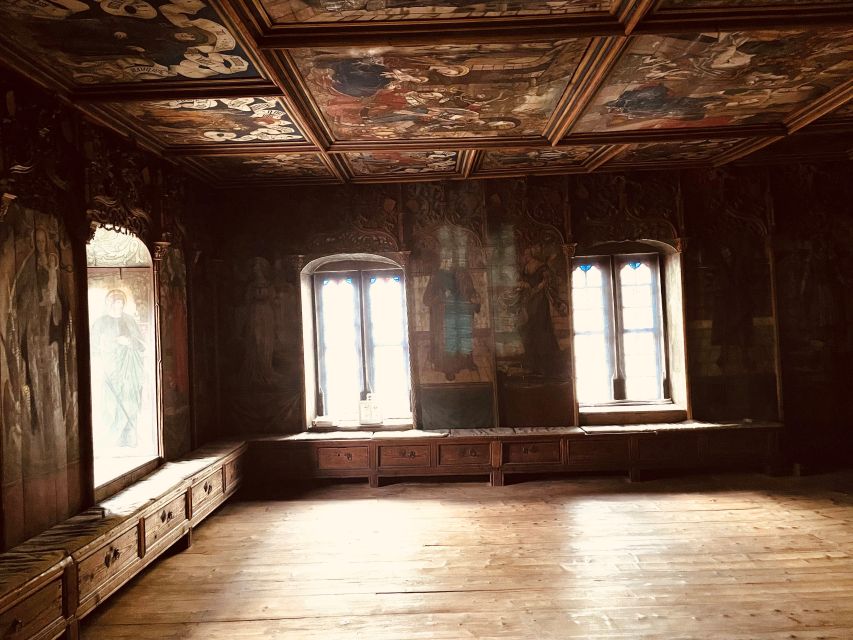
The Homage Hall was created as a council meeting room between 1505 and 1520. Its name points to homage and civic loyalty, but the room is best remembered for its extraordinary painted interior.
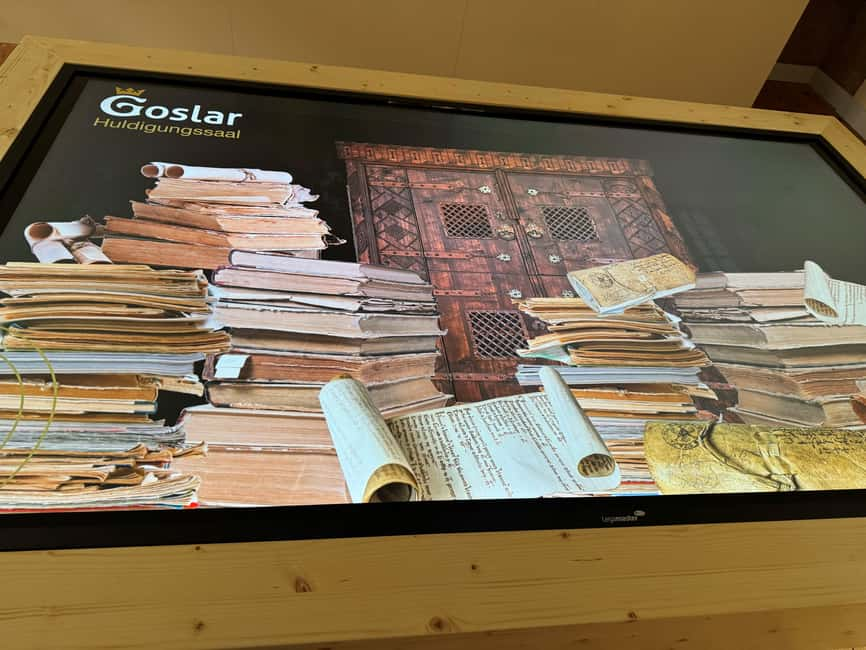
Every major surface is involved. The walls, ceiling, and even the recesses around the windows are lined with panel paintings. Each panel is an artwork in its own right, yet the effect comes from seeing them together as one carefully planned room.
I find this kind of interior more rewarding than a single isolated painting. You can look at individual scenes and details, but you should also step back mentally and take in the full composition. The room was designed as a complete work of art, not as a plain council chamber with a few pictures added later.
The Homage Hall also gives the tour its strongest sense of time. It was arranged more than 500 years ago, but you see it through modern conservation systems. The room is protected by specialized security, climate, and lighting technology because the paintings are vulnerable to decay.
That technology may not sound romantic, but it is important. Old paint, wood, changing humidity, and strong light are a difficult combination. The controlled conditions help protect the room without leaving it sealed away from the public.
A multimedia presentation that makes conservation visible
The multimedia presentation gives you a way to understand the Homage Hall beyond a short spoken explanation. It helps make the room accessible as a piece of art and as a carefully protected historic interior.
The supplied information does not specify the exact format or length of the presentation, so I would not expect a particular type of projection or interactive display. What you can count on is a multimedia element designed to make the Homage Hall understandable again after its restoration.
This matters because the room’s details are easy to miss. Painted panels fill the space, and the overall effect can be overwhelming. A presentation can guide your attention toward the purpose of the room, its decoration, and the work required to preserve it.
I would listen closely here and ask questions if you speak German. The strongest advice for getting more from the tour is simple: do not stay silent if something interests you. A question about one painting, the restoration, or the room’s use can turn a formal tour into a more personal learning experience.
Same city, a completely different sort of afternoon:
- Quedlinburg: Guided City Highlights Walking Tour
★ 4.5 · 353 reviews - Quedlinburg: Historical Old Town Evening Walking Tour
★ 4.5 · 148 reviews - Goslar: Führung durch die Kaiserpfalz
★ 4.5 · 50 reviews - Goslar: On the road with the night watchman’s wife
★ 4.6 · 34 reviews
What the restoration means for your visit
The Homage Hall has undergone years of restoration. That tells you two things. First, the room is fragile and valuable. Second, the present-day visit is shaped by preservation needs, not just by the desire to show off a beautiful interior.
You may notice that access, lighting, or the way the room is presented feels controlled. That is part of the bargain. You are seeing a historic work that cannot be treated like an ordinary hallway or museum room.
The tour does not offer the freedom of wandering alone through every part of the building. In return, you get an explanation of why the room requires special care and how modern systems help keep it safe.
For me, that balance adds value. The building is not frozen in the past. It is an active historic site, using present-day tools to protect a fragile medieval and early modern interior.
The UNESCO World Heritage Information Center in the basement
Your admission also includes the World Heritage Information Center in the basement of the town hall. This is a free exhibition about the UNESCO World Heritage site in the Harz region.
The center broadens the visit. The Homage Hall focuses on Goslar’s town government, art, and architecture. The basement exhibition connects the town hall to the wider Harz setting and its UNESCO importance.
I would make time for this display rather than treating it as an optional extra. If you are already planning to see Goslar as part of a Harz trip, the information can help you understand how the town fits into the region’s larger story.
The exhibition is especially useful before or after the guided tour. Beforehand, it may give you context for Goslar’s importance. Afterwards, it can help you place the town hall within the wider World Heritage area.
The available details do not specify the exhibition’s exact size or languages. Plan for an informative add-on rather than a second full museum visit. Its main value is context, and it is included in the admission.
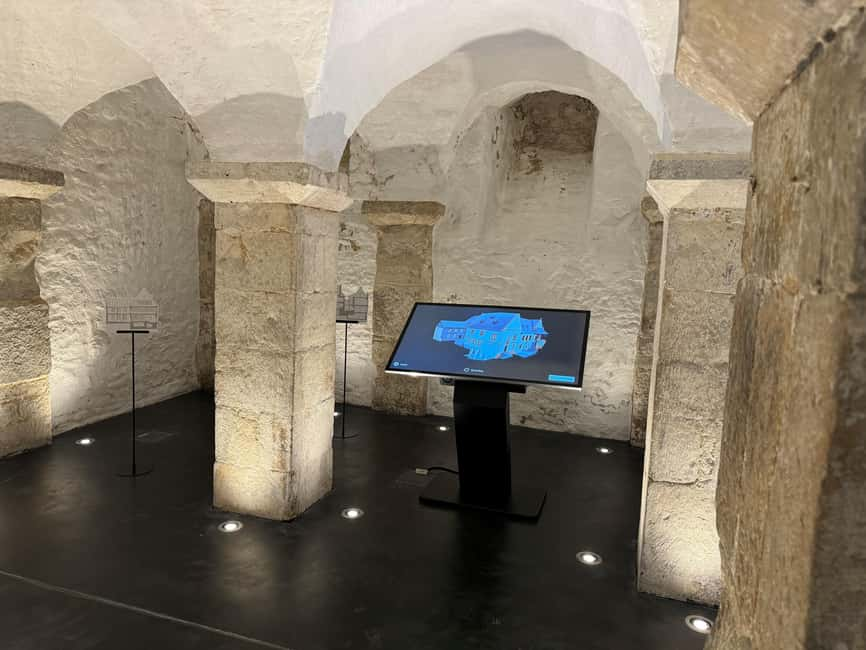
The Beinkeller and the town hall’s building history
Another presentation is located in the Beinkeller. This display focuses on the construction history of the town hall, which is central to understanding the building.
The Beinkeller gives you a chance to connect the visible architecture with the process behind it. The Rathaus was not completed in a single campaign. Its additions spread across more than four centuries, and that extended growth is the key fact to keep in mind as you move through the building.
I would use the Beinkeller to review what you have seen upstairs. Notice how the first east wing and later additions fit into the larger story. The display should be most useful if you are curious about how the building changed over time, rather than looking only for decorative highlights.
Details about the Beinkeller’s size and exact display format are not provided, so I would keep expectations sensible. It is a focused presentation on construction history, not a promise of a large underground attraction.
Why the German-language guide matters
The live guide speaks German, and no other tour language is listed. That is the most important booking consideration for international visitors.
If you understand German, you can expect the guide to explain the building’s different periods, the purpose of the Homage Hall, and the role of the displays. The tour’s value depends heavily on this spoken context because the building’s story is not obvious from its rooms alone.
If you do not speak German, you can still see the Rathausdiele, the painted hall, and the exhibitions. But you may miss the details that connect them. I would book only if you are comfortable accepting a visual visit or arranging your own translation support.
The tour is also a good fit for anyone who likes to ask questions. Direct questions can clarify what you are seeing and help you focus on the parts that matter most to you. The experience is described as informative and lively, so participation should make the time more rewarding.
Accessibility, timing, and the $11 price
The tour costs about $11 per person and lasts 1.5 hours. For a historic town hall with access to the Homage Hall, the Rathausdiele, the World Heritage Information Center, and the Beinkeller presentation, I consider that a fair price.
The value is strongest if you already plan to spend time in Goslar. You are paying not only to enter an old civic building, but also to receive a guided explanation of a complicated structure and one unusually complete late Gothic room.
It is less useful if you want a quick, independent look. The tour takes 90 minutes, uses a fixed guided format, and is conducted in German. If your schedule is tight or you mainly want exterior photographs, you may prefer to admire the town hall from the market square.
Book with the stairs in mind. The town hall is unfortunately not suitable for wheelchair users or people using rollators. The information does not describe every stair or offer an alternate route, so anyone with limited mobility should confirm suitability before booking.
You can cancel up to 24 hours before the tour for a full refund, and the reserve-now, pay-later option keeps you from paying at once. Those policies are useful if your Goslar schedule depends on weather or a changing Harz itinerary, but the main decision remains the language and stair access.
Who will get the most from this Goslar tour
I would recommend this tour to you if you enjoy historic interiors, civic architecture, painted rooms, and guided interpretation. It suits people who want to understand how Goslar developed, not just collect a quick photograph of an ornate hall.
It is also a strong choice for anyone interested in conservation. The combination of restoration, climate control, lighting, and multimedia presentation shows how a fragile historic room can remain open to the public.
Families with older children may find the multimedia element more engaging than a standard room-by-room talk. German-speaking history fans should get the fullest value, especially if they ask questions.
I would be more cautious if you dislike stairs, have limited mobility, or need a tour in English. The visual material remains appealing, but the spoken guide is German only. The listing does not promise an English handout or translation, so do not assume one will be available.
Should you book Rathausführung, historisch & multimedial?
Book it if you want the inside story of Goslar’s town hall, especially the painted Homage Hall and the way a centuries-old civic building is being preserved today. The $11 price is reasonable, and the included UNESCO exhibition adds useful regional context.
Skip it if you have trouble with stairs or need an English-language tour. For everyone else, I would give the tour a place in a Goslar day, with extra attention to the Rathausdiele, the painted surfaces of the Homage Hall, and the Beinkeller’s account of the building’s long growth.
FAQ
How long does the Goslar Town Hall tour last?
The tour lasts 1.5 hours. Starting times vary, so check availability when choosing a date.
What language is the guided tour in?
The live guided tour is in German. No other tour language is listed.
What is included in the admission?
Admission includes entry to Goslar Town Hall, a view of the Homage Hall, and access to the World Heritage Information Center exhibition in the basement.
Can I see the Homage Hall during the tour?
Yes. The tour includes a view of the Homage Hall, the late Gothic council room created between 1505 and 1520.
Is the town hall suitable for wheelchair users or rollators?
No. The town hall has many stairs and is not suitable for wheelchair users or people using rollators.
Can I cancel the booking for a refund?
You can cancel up to 24 hours in advance for a full refund. A reserve-now, pay-later option is also available.
Just added around Goslar
- Quedlinburg UNESCO World Heritage Group Tour (private)★ 4.6 · 32 reviews
- Quedlinburg: Guided City Walk – Highlights tour (private)★ 4.7 · 12 reviews
- Quedlinburg: Historical Old Town Evening Walking Tour★ 4.5 · 148 reviews
- Goslar: Witches – From delusion to myth★ 4.7 · 16 reviews
- Goslar: Ganz schön gruselig – das Mittelalter wird lebendig!★ 4.2 · 26 reviews
- Goslar: Führung durch die Kaiserpfalz★ 4.5 · 50 reviews
- Goslar: On the road with the night watchman’s wife★ 4.6 · 34 reviews
- Goslar: Executioner Caspar Kruse III. – If you dare!★ 4.8 · 12 reviews
Goslar Tours, compared.
Premiumstadtführung (historische Altstadt und Schlossberg)
Read our review →
Quedlinburg: Guided City Highlights Walking Tour
Read our review →
Quedlinburg: Historical Old Town Evening Walking Tour
Read our review →
Browse the lists this tour appears in