
Review · GOSLAR TOURS
Premiumstadtführung (historische Altstadt und Schlossberg)
Quedlinburg’s story is written in timber, stone, and crooked medieval lanes. This two-hour walk links the market square with the UNESCO-listed old town and the Schlossberg, where the imposing St. Servatii collegiate church crowns the hill.
I like the route’s variety: you get both famous sights and small details in the half-timbered streets, plus useful suggestions for places to eat. I also like the price, about $10 per person, with free admission for children and teenagers through age 16.
The main catch is the Schlossberg climb. Cobblestones and a steeper section can be awkward in poor weather, and the tour runs in rain or sunshine. In icy conditions, the hill may force a cancellation or change of plan.
Key points to know before you book
- A compact look at 1,100 years of history: The route connects Quedlinburg’s main historic sights in two hours.
- A strong mix of town and hilltop sights: You visit the market area, old lanes, churches, museums, gardens, and Schlossberg.
- Half-timbered houses are a major attraction: The walk helps you notice the variety of building styles rather than simply passing old façades.
- Practical food advice is included: Your guide points out culinary hotspots and gives recommendations for eating in town.
- The tour is in German: It suits German speakers best, since the live guide does not offer another listed language.
- Bring sensible shoes and weather gear: Expect cobblestones, a hill, and a tour that operates outdoors in all weather.
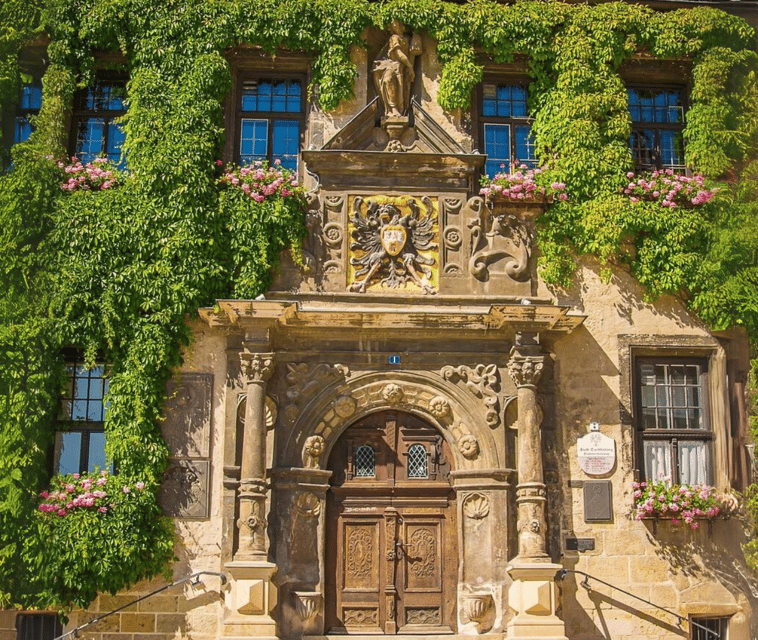
Starting at Quedlinburg’s market square
The meeting point is the Quedlinburg city information office on the Marktplatz. Look for the green sign, and arrive with your ticket ready for the guide.
This is a sensible starting point. The market square gives you an immediate sense of Quedlinburg’s character, with historic civic buildings around an open public space. You are not beginning at the edge of town and spending half the tour simply getting oriented. Instead, the guide can place the town hall and nearby churches into the larger story from the first minutes.
The opening section is especially useful if you have just arrived in Quedlinburg. A guide can point out which lanes lead toward the older quarters, explain the importance of the hill above town, and help you recognize the difference between a church, civic building, museum, and private half-timbered house.
The tour has a 4.4 rating from 627 ratings, which suggests a generally dependable experience, though not every departure goes perfectly. One winter booking was cancelled because the Schlossberg was dangerously slippery. The issue was not just inconvenience: the participant felt the offered refund did not match the amount paid. If you book in a cold or snowy period, keep your schedule flexible and check the hill conditions.
More old town walks in Germany:
- Dresden: Semperoper and Old Town Tour
★ 4.8 · 5,735 reviews - Nuremberg: Old Town Guided Walking Tour
★ 4.6 · 2,416 reviews - Munich: Old Town & Viktualienmarkt City Walk in German
★ 4.7 · 2,304 reviews
Reading the town hall and St. Benedikti Church
From the market square, the route includes Quedlinburg’s town hall and the market church of St. Benedikti. These stops give you two useful angles on the town: how it was governed and how religious life shaped daily routines.
The town hall is the natural place to discuss civic power, trade, and the growth of an urban community. You will learn more from a guide here than from a quick photograph because the building becomes part of Quedlinburg’s story, not just another attractive façade.
St. Benedikti adds a different layer. Historic churches can be easy to skim past when a town has so many old buildings, but this stop helps explain why religious institutions mattered so much to the city’s development.
The tour is delivered in German, so you should be comfortable following a spoken historical explanation. If you understand German, this format keeps the walk direct and personal. If you do not, you may get more from the architecture and streets than from the historical detail, since no other live language is listed.
Medieval lanes, Schuhhof, and Hölle
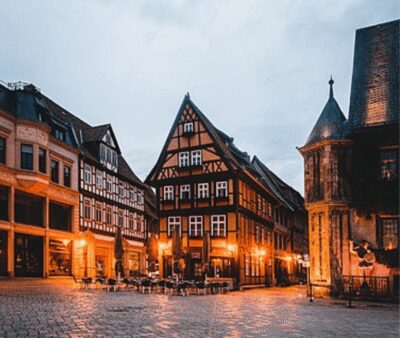
The route then moves into narrower parts of the old town, including Schuhhof and the lane called Hölle. These are the sections where Quedlinburg feels less like a collection of monuments and more like a lived-in historic town.
I like this part of the route because it gives the old town some scale. A large church or town hall tells you about public life, but a tight lane shows how people moved through the city and how buildings were fitted into limited space.
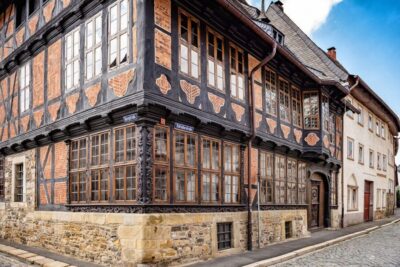
Schuhhof is also a good place to pay attention to the half-timbered construction. Look at the beams, upper floors, entrances, and the way each house differs from its neighbor. The appeal is not one perfect building. It is the sheer range of designs packed into a walkable area.
The name Hölle adds a touch of medieval atmosphere, though the value here is the street itself and the guide’s explanation. Quedlinburg rewards slow looking. You will notice decorative timber work, uneven lines, and small changes in the façades that are easy to miss when walking alone.
Cobblestones are part of the experience. Wear shoes with a firm sole, and do not expect a smooth, accessible pavement throughout. The supplied information does not describe full step-free access, so anyone with mobility concerns should ask before booking.
Blasii Church and the Half-Timbered Museum
The itinerary continues to Blasii Church and the Half-Timbered Museum. Together, these stops turn the walk from sightseeing into a lesson in how Quedlinburg was built.
Blasii Church adds another religious landmark, but the museum provides the practical context many old-town walks lack. Instead of only admiring timber-framed houses, you can better understand the construction tradition behind them.
This matters because half-timbered architecture can blur together after a while. A museum stop gives you a chance to compare techniques and details, then return to the streets with a sharper eye. You may begin noticing the arrangement of beams, the height of the buildings, and the way façades were adapted over time.
The route is well suited to people who enjoy architectural detail without wanting a full-day academic program. It is short enough to keep moving, but long enough to show that Quedlinburg’s old town is not simply a pretty backdrop.
A few more Germany half-days to weigh up
- Night Watchman Tour through Quedlinburg
★ 4.5 · 1,040 reviews - Goslar: Tausend Schritte durch die Altstadt
★ 4.7 · 417 reviews - Quedlinburg: Guided City Highlights Walking Tour
★ 4.5 · 353 reviews
Climbing the Schlossberg
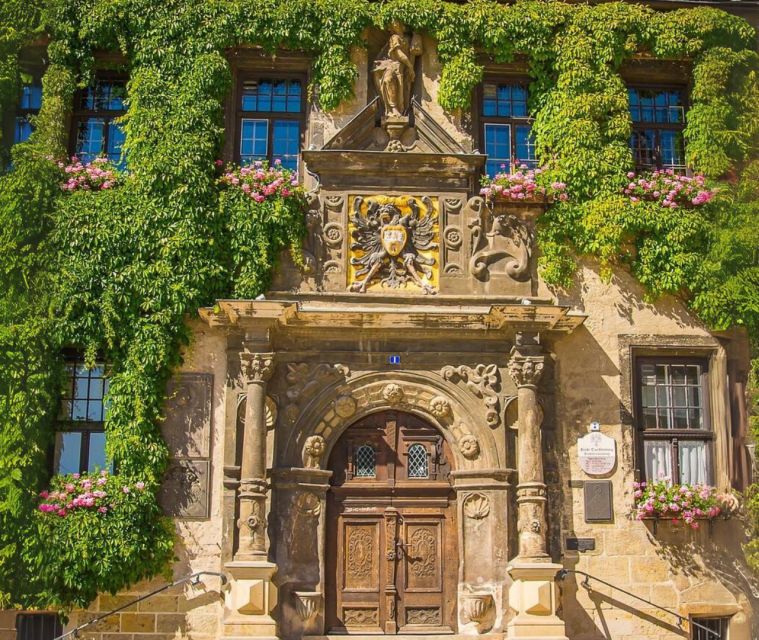
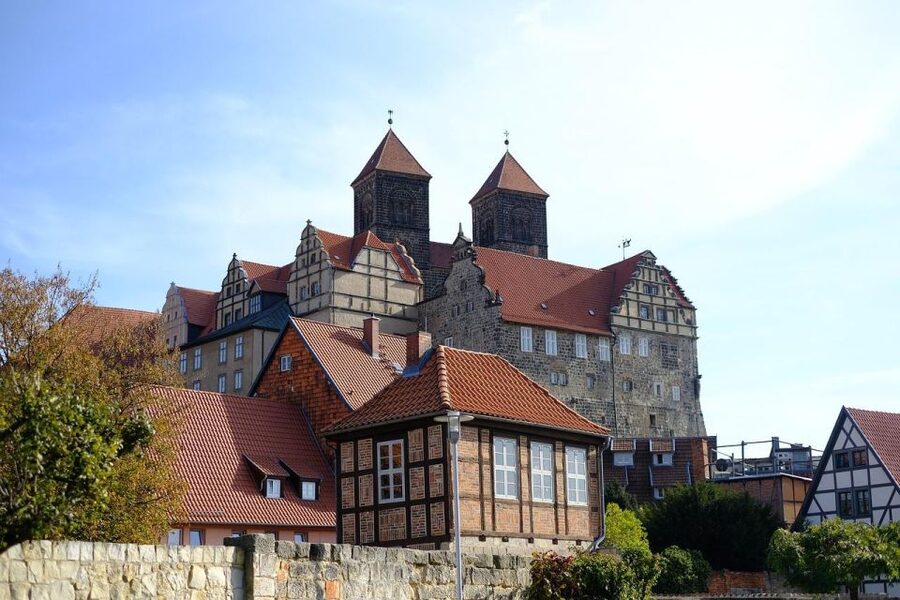
The biggest change in the tour comes when you leave the flatter old-town streets and head toward the Schlossberg. The hill is the physical and historical high point of the walk.
The climb is not described as long, but you should take the warning seriously: the route includes a steeper section. Add cobblestones and winter ice, and this can be the hardest part of the experience. Comfortable shoes are essential, and careful pacing is sensible.
The reward is the hilltop setting and the concentration of important sights. The Schlossberg gives you a different view of Quedlinburg than the lanes below. It also explains why this site mattered so much across the town’s 1,100-year story.
The tour includes the Klopstock-Haus, the Museum Lyonel-Feininger, the Schlossgarten, and St. Servatii collegiate church. Even if you do not enter every building, the guide connects the hilltop attractions and introduces important people associated with Quedlinburg.
Famous Quedlinburg personalities and hilltop museums
The Klopstock-Haus brings a literary figure into the walk. Friedrich Gottlieb Klopstock was born in Quedlinburg, and the house helps connect the town to a person whose work reached far beyond its walls.
The Museum Lyonel-Feininger adds a modern artistic note to a tour otherwise dominated by medieval and early historic buildings. Lyonel Feininger was an important modern artist, and the museum gives you another way to understand Quedlinburg’s cultural life.
These stops are valuable because they keep the city from being reduced to old architecture. You are introduced to people and ideas tied to Quedlinburg, not only dates and building names.
The information provided does not say that museum interiors are entered during the walk, so treat these as exterior or orientation stops unless your guide tells you otherwise. The one clear interior exclusion is St. Servatii collegiate church, which is not included inside the tour.
St. Servatii and the Schlossgarten
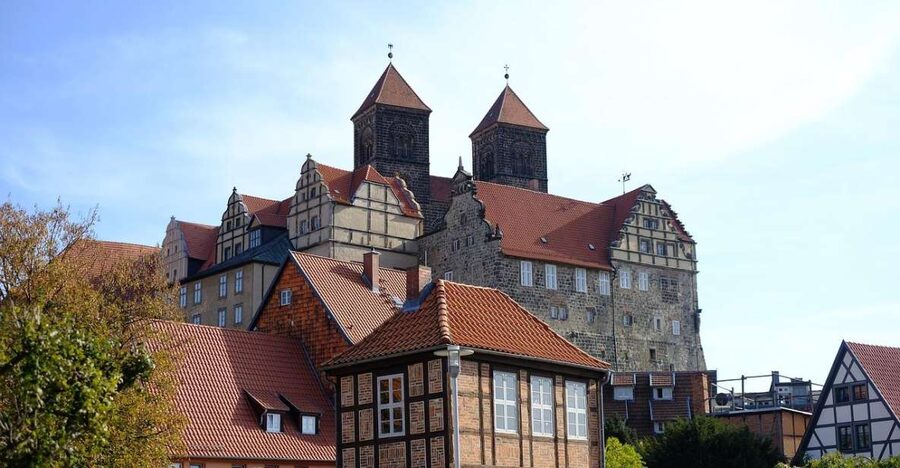
St. Servatii collegiate church is the main landmark on the Schlossberg. Its position gives the final section of the walk a strong sense of place, and the guide explains why the church and hill are central to Quedlinburg’s past.
You will see the church from outside, but the admission price does not include the interior. That distinction matters if you are hoping to see the church’s inside during the same visit. Plan a separate visit if interior access is important to you, and confirm opening arrangements independently.
The Schlossgarten provides a calmer setting around the hilltop sights. It is a useful pause after the climb and a chance to appreciate how the church, gardens, and town fit together.
The hilltop is also where weather matters most. In wet conditions, stone and cobblestone surfaces can be slick. In snow or freezing weather, the operator may decide that the route is unsafe. One cancelled departure offered another time the next day, but that alternative did not suit the schedule and raised doubts about whether the hill would be safer after more snow. My advice is simple: avoid placing this tour immediately before an important train or timed attraction in winter.
Food advice that helps after the walk
A small but useful feature is the presentation of culinary hotspots and restaurant recommendations. You are not only shown monuments, then left to figure out lunch on your own.
This matters in Quedlinburg because opening hours can vary sharply by season. In January, one booking found many restaurants closed at the same time, leaving only a café as a practical lunch option. That is not a criticism of the walking route, but it is a good reason to ask your guide about current options and keep a backup plan.
The food advice is likely most useful at the end, when you know which part of town you want to explore next. It can save you from wandering hungry through closed doors, especially outside the busiest season.
Do not expect a food tour or tastings. The inclusion is guidance, not a meal.
How much value do you get for $10?
At around $10 per person, the tour is priced well for a two-hour city walk, particularly because it covers both the old town and the Schlossberg. You get a live German-speaking guide, a planned route, historical context, and food suggestions without paying museum-entry prices on top.
The value is strongest if you are visiting Quedlinburg for the first time. You can cover many key locations efficiently, then return later to the places that caught your attention.
Families get an especially good deal because children and teenagers up to age 16 are free. For a family that wants an introduction before exploring independently, the price is hard to fault.
The value drops if you cannot follow German or if you mainly want interior visits. St. Servatii is not entered, and the tour does not promise admission to the museums or other buildings. In that case, think of this as a guided orientation walk, not an entry-ticket package.
You can reserve now and pay later, and cancellation is free up to 24 hours before the start time for a full refund. Those terms help if the weather forecast is uncertain, but they do not remove the need to check icy conditions close to the departure.
Who will enjoy this Quedlinburg walk?
I would choose this tour if you like history, architecture, and a clear introduction to a complicated old town. It suits couples, families, and independent visitors who want two hours of structure before exploring on their own.
It is also a good fit for German speakers who enjoy asking questions. One strong departure was praised for detailed explanations, a friendly guide, and a group size that left room for questions. The operator says the tour runs even with one participant, though the actual group size can vary.
You should think twice if you need a completely level route, dislike uneven paving, or want a tour in English. The hill is a real part of the walk, and the listed live language is German.
The tour works best early in your stay. Afterward, you will know the main districts, the position of the Schlossberg, and where to spend more time. You can also use the guide’s food suggestions instead of making a random choice at lunchtime.
My booking advice
Book this tour if you want a reasonably priced introduction to Quedlinburg’s old town, especially if half-timbered architecture and local history interest you. The combination of market square, medieval lanes, museums, churches, and Schlossberg gives you a useful picture of the city in only two hours.
Choose a dry, mild day if you can. If your visit falls in winter, leave room in your schedule for a cancellation caused by ice, and wear shoes suited to cobblestones and the hill.
I would not book it solely to see inside St. Servatii, since that is not included. But if you want the city to make sense before you explore it independently, this compact German-language walk offers solid value and a pleasant amount of detail.
FAQ
Where does the Quedlinburg tour begin?
The tour begins at the Quedlinburg city information office on Quedlinburger Marktplatz. Look for the green city information sign and have your ticket ready.
How long does the tour last?
The walking tour lasts two hours.
What language is the tour in?
The live tour guide conducts the tour in German.
Is the tour suitable for children?
Yes. Children and adolescents up to age 16 can join free of charge.
Does the tour enter St. Servatii collegiate church?
No. The inside of St. Servatii collegiate church is not included.
Does the route include hills and cobblestones?
Yes. The tour includes cobblestone paths and a steeper section on the Schlossberg.
What happens if the weather is bad?
The tour takes place in rain or sunshine. In icy conditions, the Schlossberg section may be unsafe and the departure may be cancelled or changed.
Can I cancel the booking?
Yes. You can cancel up to 24 hours in advance for a full refund. You can also reserve and pay later, which keeps your plans flexible.
Just added around Germany
- From Berlin: Gardens & Palaces of Potsdam Bike Tour★ 5.0 · 61 reviews
- Berlin: Battle for Seelow Heights WW2 tour -Clash of Titans★ 5.0 · 27 reviews
- From Amsterdam: Cologne Private Sightseeing Tour★ 5.0 · 4 reviews
- From Berlin: Historical Gems of Potsdam Private Day Trip★ 4.4 · 4 reviews
- Freiburg: Veni, vidi, vino – wine hike and tasting★ 4.5 · 144 reviews
- From Alken: Return Day Trip by Boat to Cochem★ 4.6 · 141 reviews
- Fritz Haarmann – Die Mördertour★ 4.6 · 41 reviews
- Freiburg: Tour of the city with cathedral visit★ 4.7 · 167 reviews
Goslar Tours, compared.
Quedlinburg: Guided City Highlights Walking Tour
Read our review →Browse the lists this tour appears in