
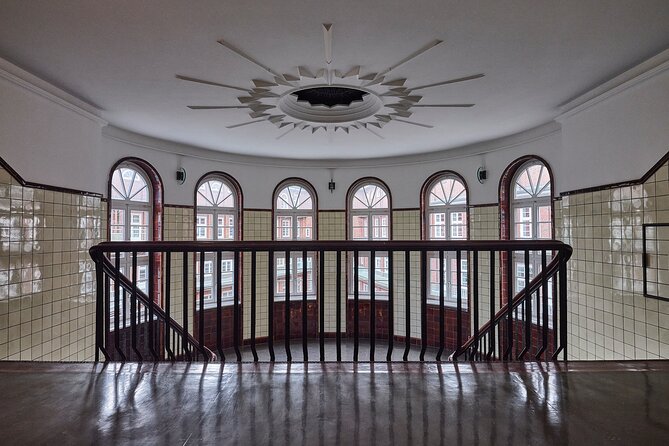
Review · HAMBURG TOURS
private city tour of Hamburg’s UNESCO World Heritage Site
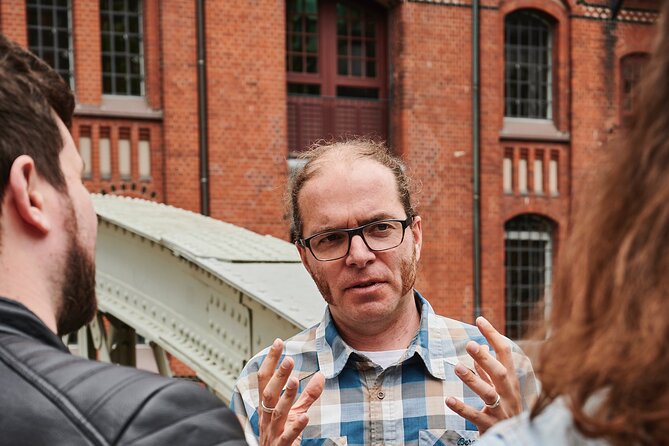
Hamburg’s UNESCO quarter makes most sense on foot, where Hammaburg Platz, the Kontorhausviertel, and Speicherstadt form one clear historical route. Guide Marius Gebhardt links the city’s name, merchant offices, port workers, coffee traders, and container ships into a story that feels much bigger than two hours.
I like the private format, which lets you ask questions and keep the pace suited to your group. I also like the unusual details: the port’s founding charter has its own contradictions, and Speicherstadt’s Schutenschupser and Ewerführer reveal the working lives behind the grand brick buildings. The main drawback is simple: at $208.28, the tour is costly for one or two people, though the price becomes reasonable when shared by a larger group.
Key points to know
- Three historic districts in one walk: Begin at Hammaburg Platz, continue through the Kontorhausviertel, and finish in Speicherstadt beside HafenCity.
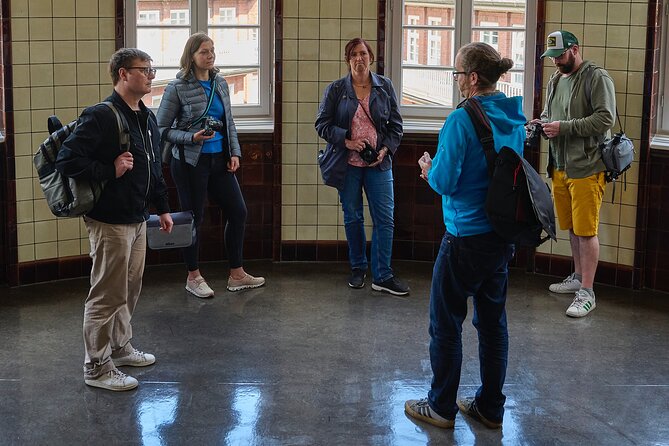
- A private guide named Marius Gebhardt: Only your group participates, with room for questions and a more flexible pace.
- Working port history, not just architecture: Learn about merchants, barge workers, warehouse labor, coffee traders, and the shift from Hanseatic cogs to container ships.
- A good family option: The route has appealed to groups with children aged 12 and 16.
- About two hours on foot: Transportation is not included, so plan to reach the start at Hammaburg-Platz independently.
- Best value for a group: The flat price covers up to 15 people, making the per-person cost far lower for a full group.
Hamburg’s story begins at Hammaburg Platz
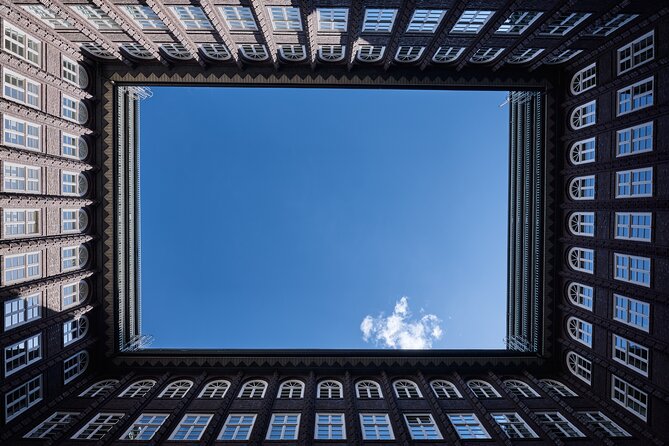
The tour starts at Hammaburg-Platz in Hamburg’s Altstadt, the place presented as the birthplace and nursery of the city. This is a useful starting point because it gives you the basic frame before the walk moves into the commercial districts that made Hamburg wealthy and powerful.
Here, Marius Gebhardt introduces the main themes and explains how Hamburg got its name. That opening matters. Without it, the later warehouses and merchant offices can look like a collection of handsome old buildings. With it, you begin to see the city as a place shaped by trade, water, movement, and arguments over power.
The first section lasts about 30 minutes. It is not a museum visit and there is no admission charge. You are standing outdoors, listening and looking, so comfortable shoes and weather-ready clothing are sensible. The tour is not built around entering paid attractions. Its value comes from the guide’s explanation of what you are seeing in the streets.
I like this approach for a first visit to Hamburg. You get an orientation before the architecture becomes the main subject, and you can ask questions right away. The private setting also helps here. If your group wants more on Hamburg’s name, early development, or the city’s wider port role, you can spend more time on those points instead of following a fixed script for a large crowd.
More history-led days in Hamburg:
- The Local Tour of Hamburg Historic Centre
★ 5.0 · 1,058 reviews - Hamburg: Historical Tour of the St. Pauli Sex Work District
★ 4.4 · 215 reviews - Hamburg: UNESCO-World Heritage Sites Tour
★ 4.7 · 137 reviews
The Kontorhausviertel and the business of modern trade
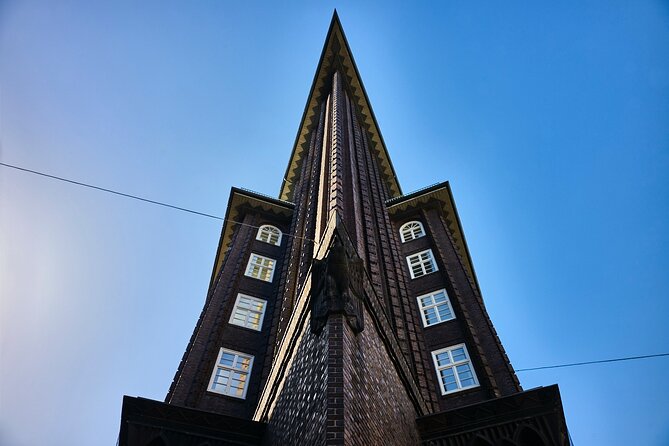
The second stop moves into the Kontorhausviertel, once the center of Hamburg’s merchants. This is where the tour shifts from early city origins to the beginning of modern world trade in the late 19th century.
The word Kontor points to the offices of trading firms. These buildings were not simply homes or grand civic monuments. They were working places for merchants and companies handling goods, money, shipping, and international business. The red brick and strong vertical forms give the area a distinct look, but the guide’s job is to explain what happened inside and why these buildings mattered.
One especially playful detail involves the prima ballerina of the Kontorhäuser, viewed beneath her pretty ballerina skirt. The description suggests an architectural feature best understood in person, with the building’s shape and ornament doing part of the storytelling. This is the sort of small, memorable detail that can make a walking tour stick in your mind long after you have stopped taking photographs.
You also look critically at the founding charter of Hamburg’s port and consider its contradictions. That is a welcome touch. A good historical walk should not present the past as a clean chain of progress. Hamburg’s port created wealth and opportunity, but its rules, privileges, and commercial interests also raised questions about who benefited and who carried the costs.
This section takes about 30 minutes. It should suit you if you enjoy architecture with a business story behind it. If you want a long interior tour of individual buildings, this experience may feel too brief. The focus is the district as a whole, with Marius connecting its design to trade and urban growth.
Speicherstadt’s red-brick canyons
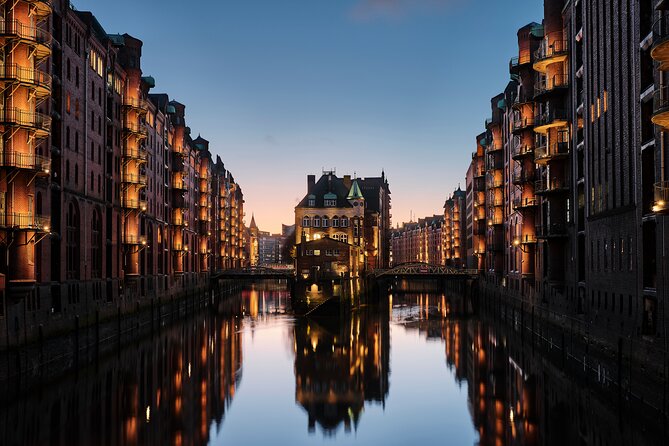
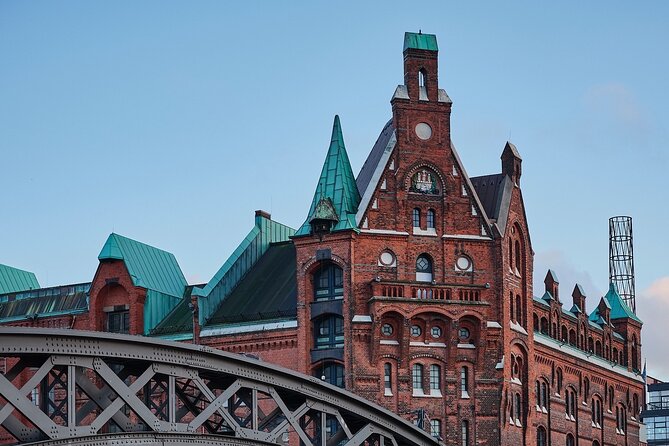
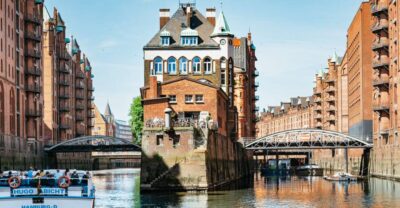
The final main stop is Speicherstadt, where the route becomes more visibly tied to Hamburg’s port. You walk through tall red-brick warehouses and hear how maritime trade developed from the Hanseatic cog to the modern container ship.
The warehouses create a powerful setting. The narrow streets and tall facades can feel almost like brick canyons, but the important point is what they were built to do. Speicherstadt was a place for storing and moving goods, and its identity comes from that practical purpose. The architecture is striking because it served commerce, not because it was designed as a decorative quarter.
Marius uses the district to explain several less familiar parts of port life. You find out what Schutenschupser and Ewerführer did, terms connected with the workers and boatmen who moved goods through Hamburg’s waterways. These jobs put human scale into a district often admired mainly for its buildings.
You also hear why Westphalia has a connection to Hamburg, why workers lived in a place compared to a castle, and how coffee barons and Persians fit into the city’s trading story. These details give the walk its character. They show that Hamburg’s port was not only about ships arriving from far away. It depended on labor, storage, local networks, specialized jobs, and commercial families dealing in particular goods.
The Speicherstadt section lasts about 30 minutes, though the full experience is listed at approximately two hours. The extra time allows for walking between areas, pauses, and questions. The tour finishes at Sankt Annenplatz, right on the border between Speicherstadt and HafenCity. That is a practical ending because you remain in one of Hamburg’s central sightseeing areas rather than being dropped far from the route.
What makes this private walk different
The biggest difference is control over the group. This is not a shared excursion with strangers. Only your party takes part, and the price covers up to 15 people.
That arrangement is especially useful for families, couples who like to ask questions, or small groups with different interests. One person may want more architecture, another may care about port work, and someone else may be curious about Hamburg’s name or merchant families. A private guide can respond to those interests more easily than a large group tour.
The available feedback also points to Marius’s flexibility. One person arriving in Hamburg on a Monday evening was able to arrange a Speicherstadt walk for the following Tuesday morning. That does not guarantee last-minute availability, since confirmation is subject to availability and can take up to 48 hours, but it suggests that contacting the provider quickly can be worthwhile if your schedule is unsettled.
The tone also appears suitable for families. A group with children aged 12 and 16 found the tour entertaining and interesting. That makes sense: the route includes castles, barge workers, coffee traders, ships, and odd contradictions in port rules. It is more active than a formal lecture, but still gives older children and teenagers something to follow.
A few more Hamburg half-days to weigh up
- Hamburg: Sex and Crime in St. Pauli Tour for Ages 18+
★ 4.7 · 15,447 reviews - Hamburg: 1.5-Hour Harbor and Speicherstadt Day Cruise
★ 4.6 · 14,200 reviews - Hamburg: 90-Minute Evening Lights Harbor Cruise
★ 4.5 · 7,728 reviews - Hamburg: 2-Hour XXL Port of Hamburg Cruise Tour
★ 4.7 · 6,979 reviews
Is $208.28 a fair price?
The price is $208.28 per group, with as many as 15 people included. For a full group, that works out to about $14 per person. For 10 people, it is about $21 per person. At that level, a private historical walk through three important parts of Hamburg offers solid value.
For two people, the calculation changes. You are paying more than $100 each for roughly two hours, so you should choose this experience because you want personal attention, not because it is the cheapest way to see Speicherstadt. A couple who only wants photographs and a quick introduction can explore parts of the area independently for less.
The price includes a personal historical city tour through the UNESCO World Heritage Site. Private transportation is not included, and there are no admission tickets listed because the route is an outdoor walking experience. You need to get to Hammaburg-Platz on your own, and you finish at Sankt Annenplatz.
I see the best value for families, friends, and larger private groups. The flat group price rewards numbers. It also gives you a guide for a subject that can otherwise feel scattered: Hamburg’s early settlement, merchant offices, warehouses, port workers, and global trade are all linked in a single route.
Timing, meeting points, and walking expectations
Allow about two hours for the complete experience. The named stops each receive around 30 minutes, with the remaining time used for walking between them and handling questions.
You begin at Hammaburg-Platz, Altstadt, 20095 Hamburg. The tour ends at Sankt Annenplatz, St. Annenplatz, 20457 Hamburg, on the edge of Speicherstadt and HafenCity. Since the start and finish are different, do not leave a bag, bicycle, or other item at the meeting point unless you have a separate plan for collecting it.
The experience uses a mobile ticket, which keeps arrival simple. Confirmation is sent within 48 hours of booking, subject to availability. The tour is near public transportation, but no private transfer is supplied.
Most people can take part, and service animals are allowed. The supplied information does not give a detailed surface, distance, or step count, so ask the provider if your group has specific mobility needs. The walk takes place outdoors, and Hamburg weather can change quickly, making a rain layer a sensible choice.
Who should book this Hamburg tour?
I would choose this walk if you want context more than a checklist. The route does not simply point out famous buildings. It explains why Hamburg grew, how merchants worked, how warehouses supported trade, and which workers handled the goods.
It also suits you if you prefer a guide-led introduction before exploring on your own. After the walk, you will have a clearer sense of how the Kontorhausviertel and Speicherstadt fit together. You can then return to the areas that caught your interest.
Families with older children should consider it. The unusual vocabulary and stories about ships, workers, castles, coffee, and port rules give the route enough variety to hold attention. Very young children may find two hours of historical explanation demanding, but the private format lets your group keep moving and ask for shorter explanations.
This is less suitable if you want extensive interior access, a boat ride, or private transportation. None of those are part of the experience. It is also not the best pick if you want a broad survey of all Hamburg sights, since the route concentrates on the UNESCO quarter and its commercial and maritime story.
How to get the most from the two hours
Read a little about Hamburg’s port before you arrive, but do not overprepare. The tour’s appeal is the way separate facts are joined together while you walk.
Bring questions. The private format is most valuable when you use it. Ask about the port charter, the merchant offices, the workers’ jobs, or the connection between Hamburg and Westphalia. A large group tour often discourages interruptions. Here, questions are part of the point.
Keep the rest of your schedule flexible around the finish. Sankt Annenplatz places you at the boundary of Speicherstadt and HafenCity, so the walk ends in a useful location for continued sightseeing. The tour is short enough to fit into a busy day, but do not book a tightly timed activity immediately afterward in case the group spends extra time discussing a building or story.
For cancellation, you can receive a full refund if you cancel at least 24 hours before the local start time. Cancellations or changes made within 24 hours are not accepted for a refund. That is a fair policy, but remember the booking confirmation may take up to 48 hours and depends on availability.
Should you book it?
Book this private Hamburg walk if you want Marius Gebhardt to connect the city’s origins, merchant architecture, and port labor in one focused route. The strongest reasons to go are the private setting, the unusual working-history details, and the efficient finish at Speicherstadt and HafenCity.
The price is easiest to justify with a group of four or more. Solo visitors and couples should compare the cost against their interest in personal guiding. If you want only a quick look at the brick warehouses, save your money and walk independently. If you want to understand why Hamburg’s UNESCO quarter matters, this is the more rewarding choice.
FAQ
How long does the private Hamburg UNESCO tour last?
The experience lasts approximately two hours. The three main stops are planned for about 30 minutes each, with additional time for walking between them and questions.
Where does the tour begin?
The tour begins at Hammaburg-Platz in Hamburg’s Altstadt, at 20095 Hamburg, Germany.
Where does the tour end?
The tour ends at Sankt Annenplatz, at the border between Speicherstadt and HafenCity.
Who leads the tour?
The experience is provided by Marius Gebhardt Fotografie & Stadtführungen. The guide named for the tour is Marius Gebhardt.
Is transportation included?
No. Private transportation is not included. The tour is a walking experience, and the meeting point is near public transportation.
What is the cancellation policy?
You can cancel at least 24 hours before the local start time for a full refund. Cancellations or changes made less than 24 hours before the start time are not refunded or accepted.
Just added around Hamburg
- Winter Alster tour★ 4.0 · 12 reviews
- World War 2 Hamburg Private Guided Tour★ 5.0 · 6 reviews
- UNESCO World Heritage – Speicherstadt and Kontorhaus district★ 4.5 · 12 reviews
- Ticket for the Emigration Museum BallinStadt Hamburg★ 4.0 · 57 reviews
- hamburg Experienced differently with wish rental bike relaxed enjoy★ 5.0 · 5 reviews
- Hamburg Private Food Tours with a Local: 100% Personalized★ 5.0 · 3 reviews
- The Beatles in Hamburg – Private Tour★ 5.0 · 16 reviews
- The Beatles on St. Pauli★ 5.0 · 3 reviews
Hamburg Tours, compared.
1.5-Hour Harbor and Speicherstadt Day Cruise
Read our review →

Browse the lists this tour appears in