
Review · HAMBURG TOURS
Private 2-Hour Hamburg Highlights Walking Tour
Hamburg’s story unfolds in a remarkably compact route, from the grand Town Hall to the red-brick warehouses and the broad harbor. This private two-hour walk gives you the city’s main ideas quickly, with guides such as Evan, Ilika, Ilke, Kristina, Isabel, and Stephanie bringing different personalities and local knowledge to the route.
I like the private format, which keeps the pace in your hands, and I like the sharp contrast between old Hamburg, wartime destruction, modern architecture, and port life. It is a strong choice for a first look, especially if your time is tight.
The main caution is simple: two hours goes fast. The stops are brief, and a group of 10 had trouble hearing the guide at times, so you should stay close and ask the guide to speak up if needed.
Key points at a glance
- Eight central sights in two hours: The route links the Town Hall, St. Petri, Trostbrücke, St. Nikolai, Deichstrasse, Speicherstadt, the Elbphilharmonie, and Landungsbrücke.
- Private attention for up to 15 people: You do not share the activity with another booking, and the guide can respond to your questions.
- A useful history timeline: Hamburg’s medieval core, city expansion, trading past, World War II destruction, and modern harbor all appear in one walk.
- Strong English-language guiding: Evan is praised for clear English, humor, current local context, and detailed historical explanations.
- A harbor-side finish: The tour ends beside the Elbphilharmonie at Sandtorhafen, with the harbor nearby.
- Good for short stays: The route works well on a first day, before a dinner reservation, or during a limited stop in Hamburg.
Why this private Hamburg walk works
This tour is less about entering attractions and more about learning how Hamburg fits together. You move from the old town toward the port, watching the city change from civic center to historic warehouse district and then to modern waterfront.
That direction matters. Hamburg is not a city of isolated sights. Its Town Hall, canals, warehouses, churches, and harbor grew from trade, shipping, politics, fire, war, and rebuilding. A guide can connect those pieces in a way a self-guided stroll often cannot.
You pay $302.34 per group of up to 15 people. That is a serious price for a two-hour walk if you are alone or traveling as a couple. For a larger family or group, though, the per-person cost drops quickly. At 10 people, it works out to about $30 per person. At the full 15-person limit, it is about $20 per person.
The value is therefore tied to group size and your preference for a private guide. If you are content with a large public tour, cheaper choices may exist. If you want to ask questions, adjust the pace, or keep the group entirely your own, the price makes more sense.
The tour is offered in English and receives a five-star average from 105 ratings, with 100 percent of participants recommending it. The most consistent praise centers on the guides’ command of Hamburg’s past, friendly manner, humor, and ability to add less obvious places and current local context.
More walking tours in Hamburg:
- Hamburg: Guided Walking Tour for Magic Fans
★ 4.8 · 1,992 reviews - Reeperbahn Walking Tour with St. Pauli Local
★ 4.8 · 577 reviews - Hamburg: Speicherstadt Walking Tour with Coffee Tasting
★ 4.6 · 360 reviews
Starting at Hamburg’s grand Town Hall
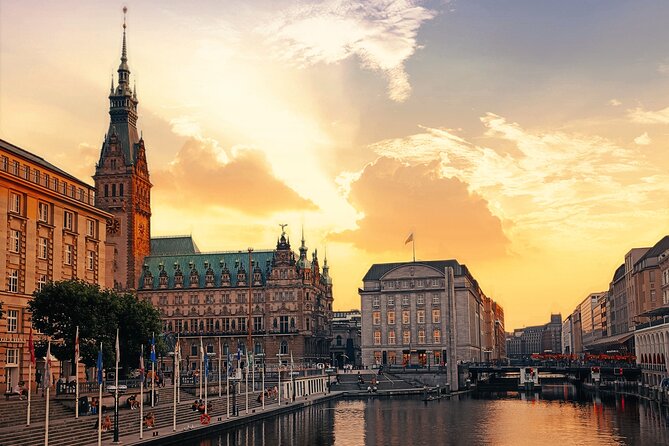
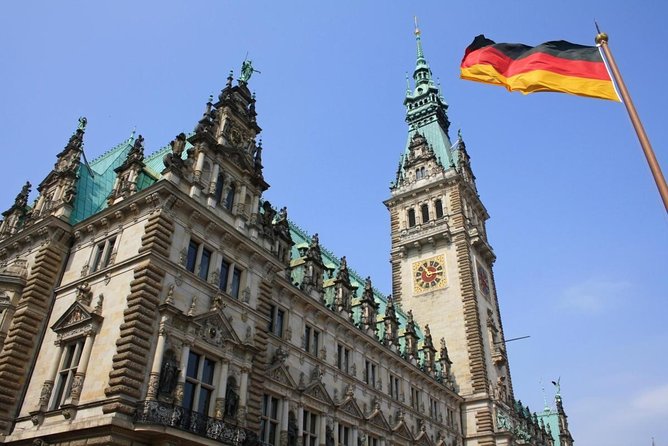
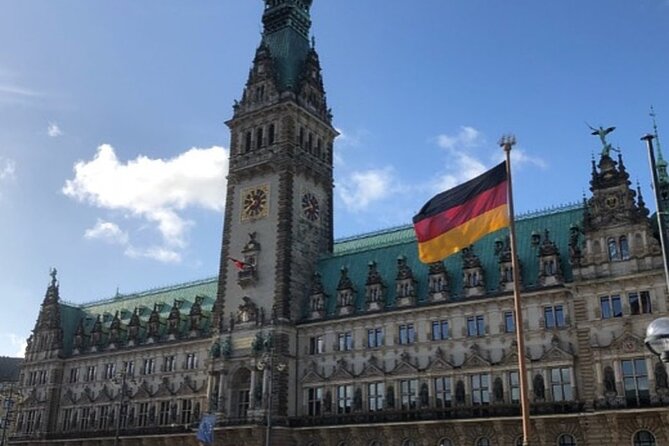
The meeting point is by the monument for those killed in both world wars at Schlienbrücke 1, near Hamburg’s old town. The first major stop is Hamburg Town Hall, or Hamburger Rathaus, completed in 1897.
This is the right place to begin. The Town Hall is Hamburg’s civic showpiece and a clear focal point for the old town. The five-minute listed stop is not meant to replace a full interior visit. Instead, you get an introduction to the building and its place in Hamburg’s political life.
One especially useful detail from the guiding style is the explanation of the local political system inside the Town Hall. If your guide takes you through the building or discusses its functions, listen closely. That context turns a grand facade into a working seat of city government.
You should also use this first stop to tell the guide what interests you. The private setup makes it easier to ask about architecture, politics, trade, family connections, or the city’s modern direction.
St. Petri and the old city core
St. Petri Kirche was built on the historic core of Hamburg. The church stop is brief, but its location helps explain how the city developed around an early central point.
You may not have time for a full church visit during the two-hour route, and admission is not included as a separate paid feature. Think of St. Petri as a piece of the city’s foundation rather than a long interior stop.
This is also where a good guide earns the private-tour price. A list of dates and names is easy to find. A clear explanation of how the old center grew, and why this church matters within it, is harder to get from a map.
If you want more time inside St. Petri, ask your guide at the beginning if the route can be adjusted. The tour is private, but the published plan still includes eight stops, so any change may mean less time elsewhere.
Trostbrücke and Hamburg’s dividing line
At Trostbrücke, the route reaches a spot that once divided Hamburg’s old town from its new town. That makes this short stop one of the most useful for understanding urban growth.
The bridge is not simply a place to pause for a photograph. It brings the city’s changing boundaries into view. Your guide can use it to explain how Hamburg expanded beyond its earliest center and how separate parts of the city became connected.
This is the kind of stop that rewards a question. Ask how the old and new town differed, or how the bridge relates to the streets you have already walked. Since you are not tied to a large group, you can make the explanation more personal and easier to follow.
A few more Hamburg half-days to weigh up
- Hamburg: 2-Hour XXL Port of Hamburg Cruise Tour
★ 4.7 · 6,979 reviews - Hamburg: Speicherstadt and HafenCity 2-Hour Tour
★ 4.8 · 1,063 reviews - Hamburg: 2-Hour Harbor Cruise
★ 4.6 · 504 reviews - Hamburg: 2-Hour Sightseeing Cruise to Blankenese
★ 4.6 · 279 reviews
The St. Nikolai memorial and the cost of war
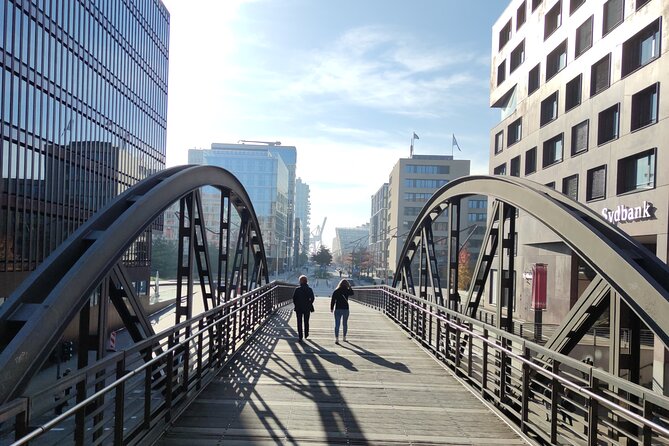
Mahnmal St. Nikolai is a burned-out church preserved as a memorial to the destruction of World War II. It is one of the most serious points on the walk.
The remains are not polished or restored to look complete. Their damaged form is the point. The site asks you to pause and consider what Hamburg experienced during the war and how the city chose to remember it.
The published stop is only about five minutes, so do not expect a long museum visit. Still, the memorial gives the tour emotional weight. Without it, the route could feel like a pleasant parade of architecture. With it, Hamburg’s modern appearance is placed against the damage and loss that shaped its rebuilding.
This is also a point where the guide’s delivery matters. You may want a respectful explanation rather than a rushed list of facts. The private format allows you to ask for more context, though the two-hour limit remains.
Deichstrasse, where old Hamburg survives
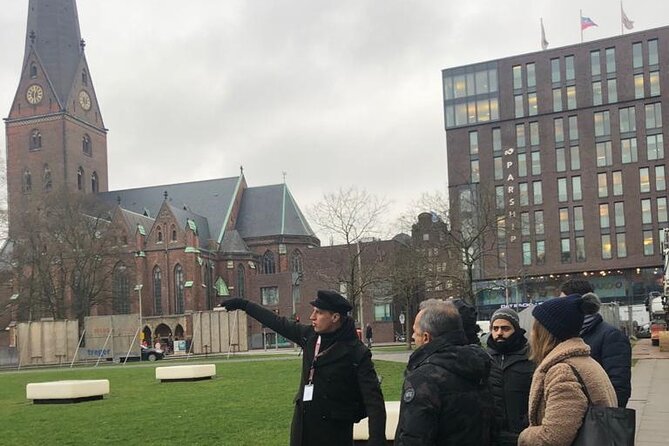
Deichstrasse offers a sharp change of mood. Here, the route feels like a step back toward 17th-century Hamburg, with historic buildings lining the street.
The value of Deichstrasse is visual. After the political scale of the Town Hall and the solemnity of St. Nikolai, this area gives you a sense of how Hamburg once looked at street level. It helps you picture a port city built from narrow lanes, merchant houses, and water access.
Allow a little time for photographs, but stay aware of the group. The tour has several short stops, and the guide needs to keep the walk moving toward Speicherstadt and the harbor.
You might find Deichstrasse more memorable than a grand building because it gives the city a human scale. It is a good place to ask how ordinary homes, trade, and canals shaped daily life.
Speicherstadt and Hamburg’s trading past
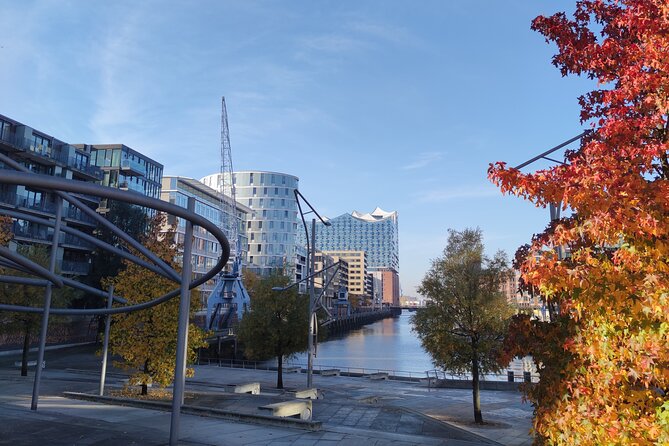
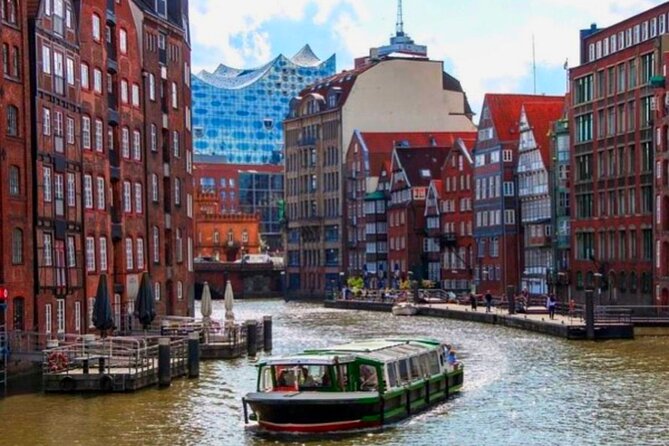
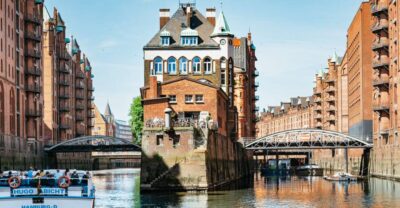
Speicherstadt is the route’s major historic centerpiece. Built in 1888, the warehouse district is now a UNESCO World Heritage site, and its red-brick blocks and waterways show how closely Hamburg’s identity has always been tied to commerce.
The five-minute listing understates the importance of this area. You will spend time walking between stops, and the guide’s explanation is what makes the warehouses more than attractive scenery. Ask how the district functioned, what was stored there, and why its design mattered to Hamburg’s port economy.
Several participants have particularly enjoyed this section, and that makes sense. Speicherstadt combines architecture, trade, engineering, and atmosphere in one place. It also gives you the clearest visual link between historic Hamburg and the port you will see later.
Evan is frequently praised for explaining the city from its early development through modern times, and for adding places that are easy to miss alone. Other guides, including Ilika, Ilke, Kristina, Isabel, and Stephanie, are also described as friendly, flexible, and well prepared.
The only practical issue is sound. With a group of 10, some people found it hard to hear everything. Stay near the guide, especially in open or busy areas, and ask for a louder voice early rather than missing half the explanation.
The Elbphilharmonie and a modern Hamburg
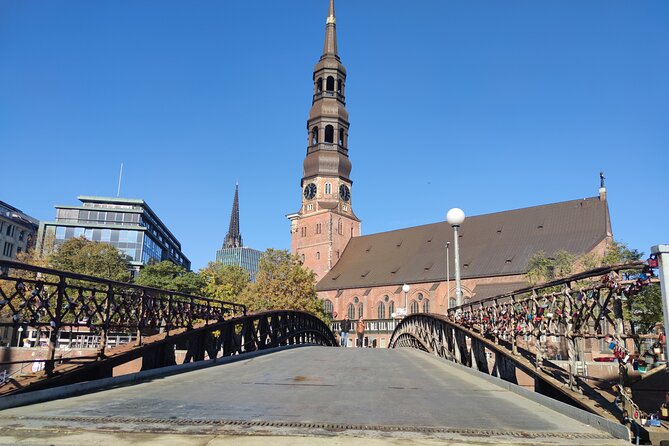
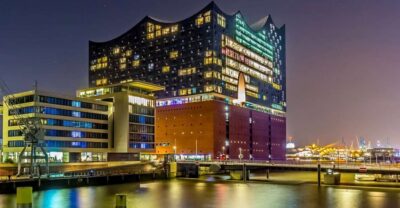
The Elbphilharmonie is the tour’s modern architectural high point. Locally known as the Elbphi, it is described as the crowning feature of Hamburg’s harbor and is widely loved by residents and visitors alike.
The building gives the route a strong final act. You begin with the 19th-century Town Hall, pass through older streets and warehouses, and finish with a bold concert hall overlooking the port.
The stop is listed as free admission, which means the walking tour does not include a concert ticket or a separate paid entry. You should see the building from the outside and hear about its place in modern Hamburg. If you want a concert or an interior visit, that would need to be arranged separately.
The tour finishes beside the Elbphilharmonie at Harry’s Hamburger Hafenbasar on the Sandtorhafen pontoon, number 2. That is useful planning information. You can continue exploring the waterfront afterward, but you should not assume the tour includes a full Elbphilharmonie visit.
Landungsbrücke and the harbor view
Landungsbrücke is described as the old heart of Hamburg’s harbor and a fine place to see the city as a whole. This stop widens the view after the close streets of the old town and Speicherstadt.
Here, the harbor is not just scenery. It explains Hamburg’s scale and purpose. The city grew through its connection to shipping, and the waterfront helps you see why the port remains central to its identity.
The route information names Landungsbrücke as a stop while also giving the final meeting point at Sandtorhafen beside the Elbphilharmonie. Treat the route as a broad harbor walk rather than a promise of extended time at every waterfront point. Your guide will determine the exact flow within the two-hour schedule.
If you have a dinner reservation, tell the guide at the start. One party with a fixed booking found that their guide, Ilke, finished on time and left enough time to walk to dinner. That is a useful sign for anyone working around a tight evening plan, but you should still allow your own margin.
Guides, pace, and the private advantage
The strongest part of this experience is the human element. Evan receives repeated praise for his humor, clear English, warmth, local history, current Hamburg observations, and ability to make a solo participant feel at ease. One solo English-speaking participant chose the private option specifically to have the tour entirely in English.
That matters if you want conversation rather than a lecture. You can ask about places to eat, what to see next, or how Hamburg has changed. A Spanish-speaking participant also received food and sightseeing suggestions, though the advertised tour language is English.
The guide roster includes several people, so your experience will depend partly on who leads it. Ilika is described as especially strong on Hamburg’s history. Ilke is praised for timing and for keeping a group with four children engaged. Kristina is noted as accommodating with children, while Stephanie is described as enthusiastic and willing to make extra effort.
The private format also helps families. Most people can participate, and service animals are allowed. A party traveling with a wheelchair user received patient help during bad weather, but the supplied information does not promise a fully step-free route. If mobility access is important, ask the provider before booking.
Weather can affect any two-hour walking tour. The route is outdoors, and a wet day may make the experience less comfortable. One guide adjusted the timing during rain, but flexibility should not be assumed as a guaranteed feature.
Who should book this tour?
I would choose this walk for a first visit to Hamburg, especially if you have only one day or a short port stop. It gives you a clear framework for the old town, memorial sites, warehouse district, modern waterfront, and harbor.
It also suits families, small work groups, solo visitors who want conversation, and anyone who prefers a private English-speaking guide. The larger your group, the better the price looks.
I would think twice if you want long interior visits, museum time, or a slow photography walk. The itinerary moves quickly, and the eight listed stops receive only about five minutes each before walking time and commentary are added.
Book it if you want Hamburg explained rather than simply photographed. Skip it if your main goal is to tour the inside of the Town Hall or Elbphilharmonie, since this experience focuses on the city streets, exterior sights, history, and connections between them.
Free cancellation is available up to 24 hours before the local start time. Within 24 hours, the payment is not refunded, and changes are not accepted.
FAQ
How long is the Hamburg walking tour?
The tour lasts approximately two hours.
What does the tour cost?
The price is $302.34 per group, with up to 15 people included.
Is the tour private?
Yes. Only your own group participates in the activity.
What language is offered?
The tour is offered in English.
Where does the tour start?
The listed starting point is Denkmal für die Gefallenen beider Weltkriege, Schlienbrücke 1, 20354 Hamburg, Germany.
Where does the tour finish?
The listed endpoint is Harry’s Hamburger Hafenbasar at Sandtorhafen, Ponton number 2, 20457 Hamburg. The tour finishes beside the Elbphilharmonie concert hall.
Which sights are included?
The route includes Hamburg Town Hall, St. Petri Kirche, Trostbrücke, Mahnmal St. Nikolai, Deichstrasse, Speicherstadt, the Elbphilharmonie, and Landungsbrücke.
Are admission tickets included?
The listed stops show free admission. The experience is a walking tour and does not include a concert ticket for the Elbphilharmonie.
Can I cancel for a full refund?
Yes. You must cancel at least 24 hours before the experience start time for a full refund. Cancellations within 24 hours are not refunded.
Just added around Hamburg
- Winter Alster tour★ 4.0 · 12 reviews
- World War 2 Hamburg Private Guided Tour★ 5.0 · 6 reviews
- UNESCO World Heritage – Speicherstadt and Kontorhaus district★ 4.5 · 12 reviews
- Ticket for the Emigration Museum BallinStadt Hamburg★ 4.0 · 57 reviews
- hamburg Experienced differently with wish rental bike relaxed enjoy★ 5.0 · 5 reviews
- Hamburg Private Food Tours with a Local: 100% Personalized★ 5.0 · 3 reviews
- The Beatles in Hamburg – Private Tour★ 5.0 · 16 reviews
- The Beatles on St. Pauli★ 5.0 · 3 reviews
Hamburg Tours, compared.
1.5-Hour Harbor and Speicherstadt Day Cruise
Read our review →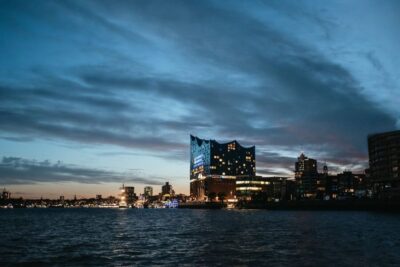

Browse the lists this tour appears in